
Can Biomechanical Models Improve Injury Prevention and Human
Can Biomechanical Models Improve Injury Prevention and Human Performance? ACSM 2019 Symposium C-03 Chair: Ross Miller
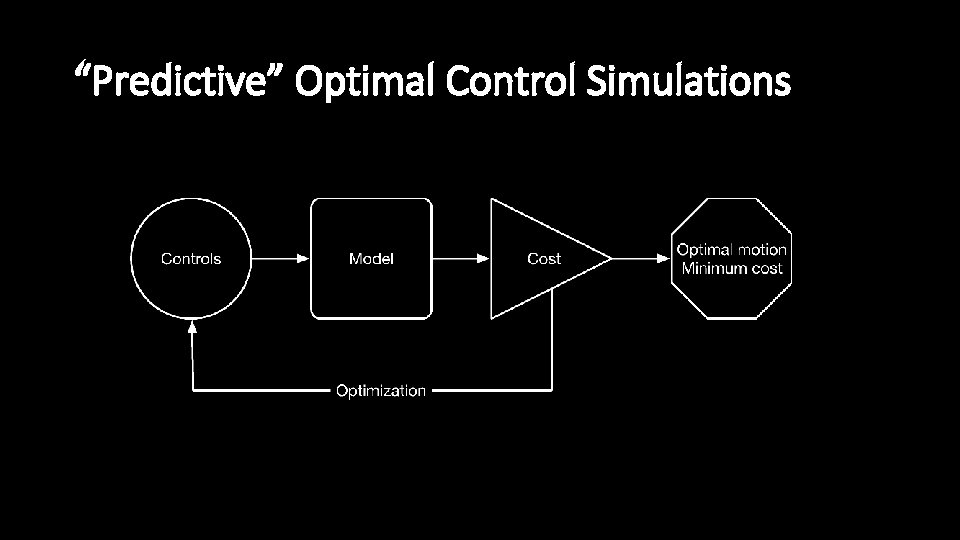
“Predictive” Optimal Control Simulations
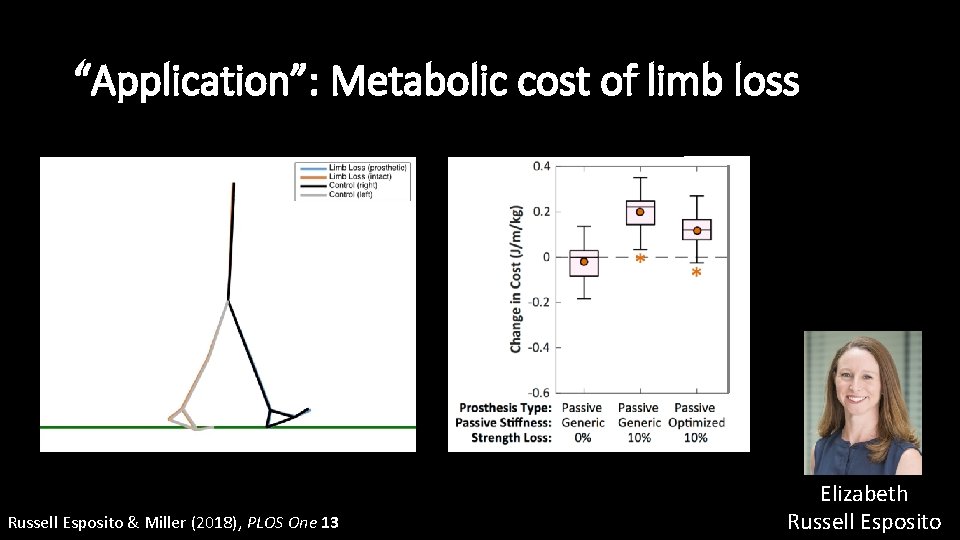
“Application”: Metabolic cost of limb loss Russell Esposito & Miller (2018), PLOS One 13 Elizabeth Russell Esposito
Can we use models like this in a more applied way? “Subject-specific models allow scientists and surgeons to make subject-specific recommendations regarding rehabilitation strategies and surgical intervention, as well as provide coaches and biomechanists the insight needed to make recommendations regarding optimal technique and equipment design. ” --Neptune (2000) “Success in applying optimal programming techniques to human locomotion could yield better design procedures for prostheses and could allow eventual realization of the dream of programmed stimulation of many paralyzed persons. ” --Chow & Jacobson (1971)
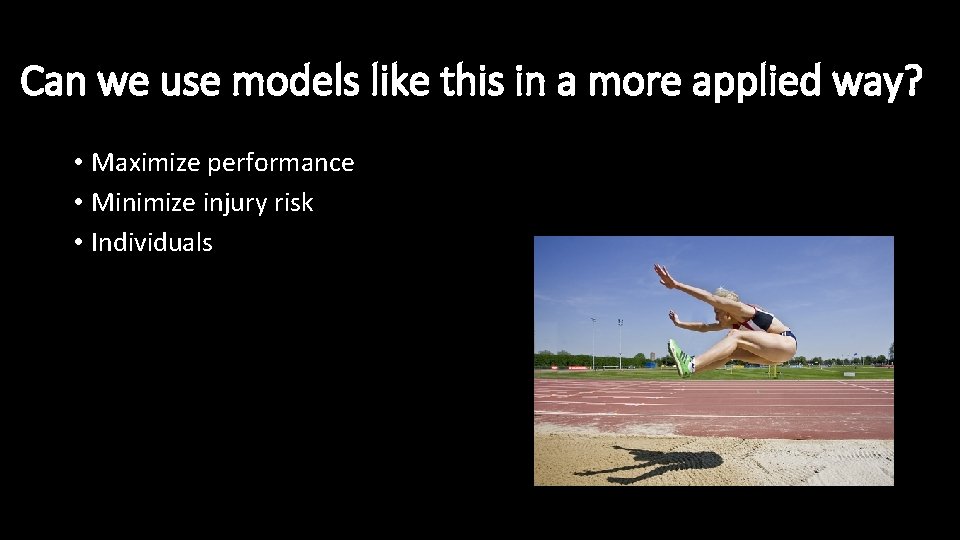
Can we use models like this in a more applied way? • Maximize performance • Minimize injury risk • Individuals
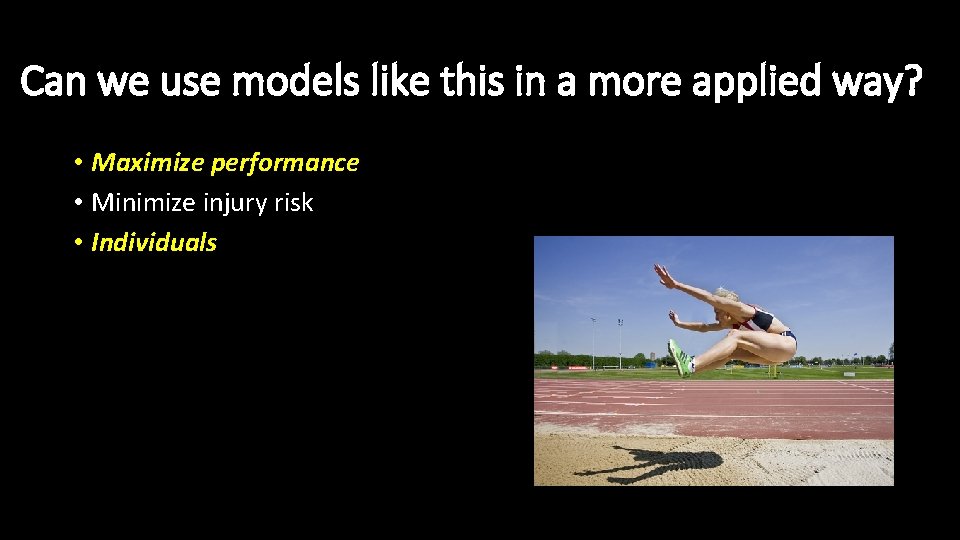
Can we use models like this in a more applied way? • Maximize performance • Minimize injury risk • Individuals
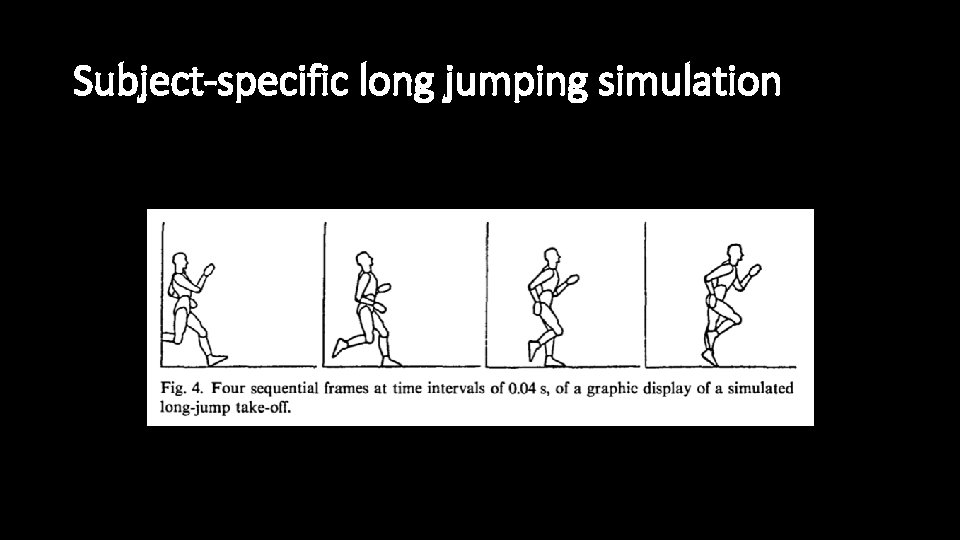
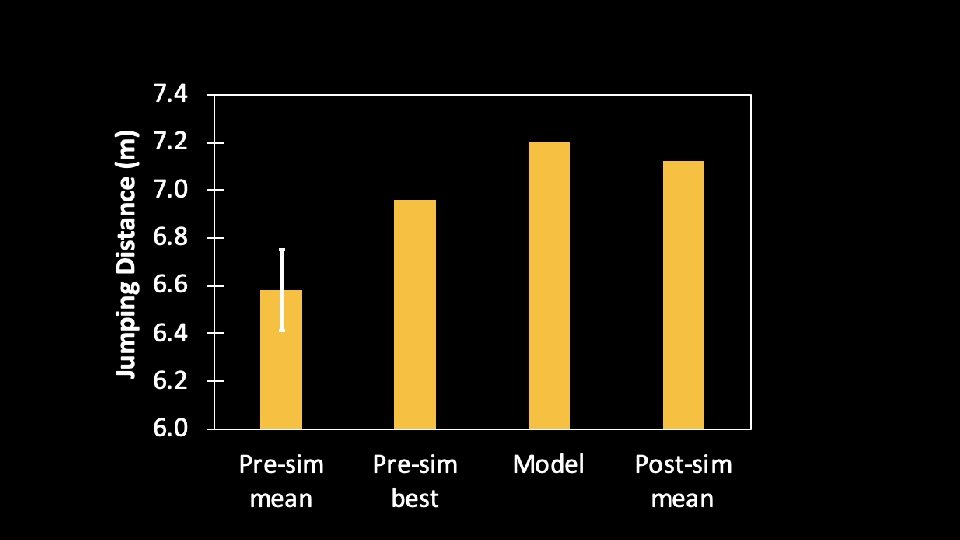
Subject-specific long jumping simulation
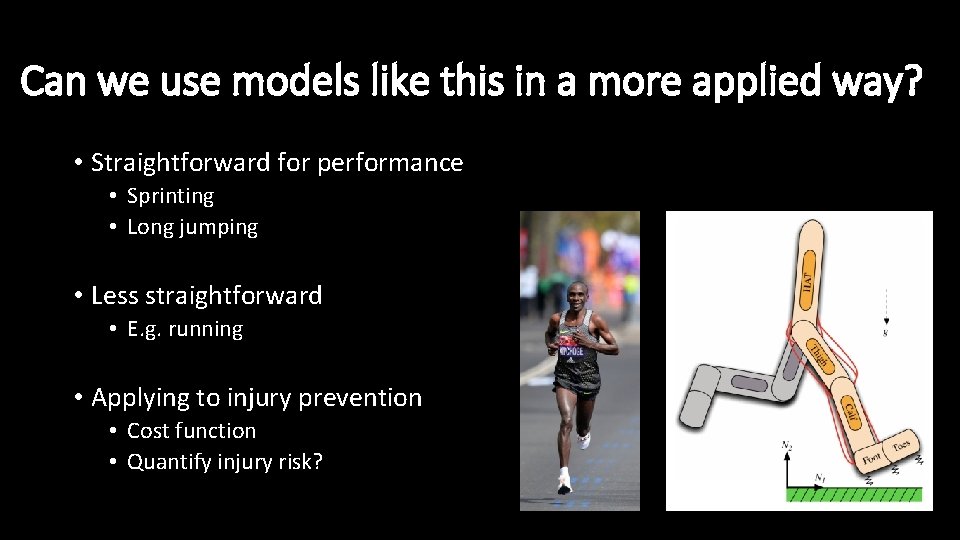
Can we use models like this in a more applied way? • Straightforward for performance • Sprinting • Long jumping • Less straightforward • E. g. running • Applying to injury prevention • Cost function • Quantify injury risk?
Speakers Irene Davis, Harvard University, USA “External mechanics: what do they do and do not tell us about injuries? ” Ross Miller, University of Maryland, USA “Internal joint loading in running” Eva Dorschky, Friedrich-Alexander University, Germany “Predicting metabolic cost differences between running shoes” Ryan Mizner, University of Montana, USA “Value and feasibility of biomechanical models in sports clinical practice”
- Slides: 11