
CAMPBELL BIOLOGY IN FOCUS URRY CAIN WASSERMAN MINORSKY
CAMPBELL BIOLOGY IN FOCUS URRY • CAIN • WASSERMAN • MINORSKY • REECE 36 Reproduction and Development Lecture Presentations by Kathleen Fitzpatrick and Nicole Tunbridge, Simon Fraser University © 2016 Pearson Education, Inc. SECOND EDITION
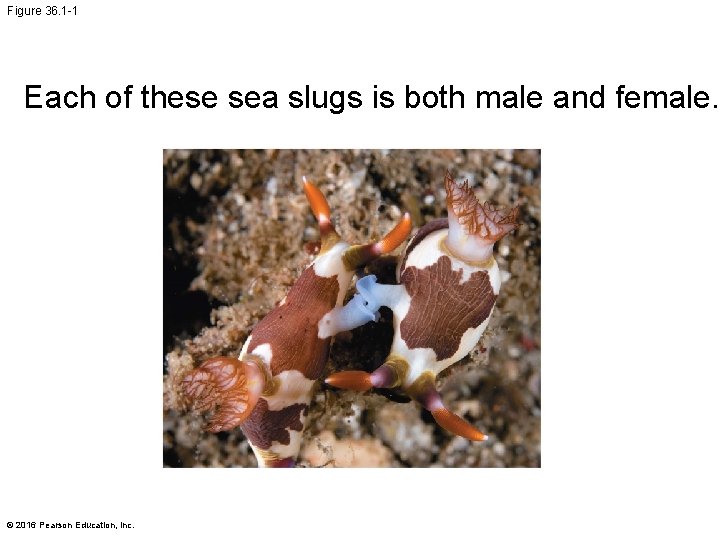
Figure 36. 1 -1 Each of these sea slugs is both male and female. © 2016 Pearson Education, Inc.
Concept 36. 1: Both asexual and sexual reproduction occur in the animal kingdom § Asexual reproduction: § The creation of offspring without the fusion of egg and sperm § Involves a single parent § Offspring are clones (genetically identical) to the parent § Eg. Binary fission or mitosis; budding; fragmentation; or parthenogenesis (new individual from unfertilized egg) © 2016 Pearson Education, Inc.
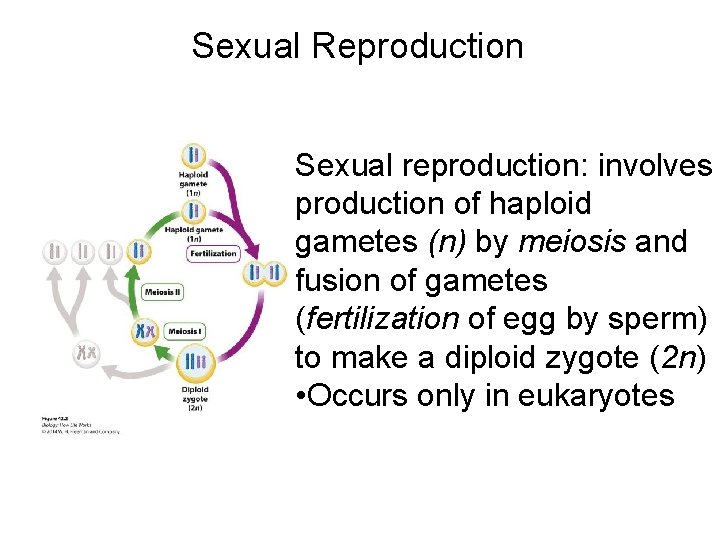
Sexual Reproduction Sexual reproduction: involves production of haploid gametes (n) by meiosis and fusion of gametes (fertilization of egg by sperm) to make a diploid zygote (2 n) • Occurs only in eukaryotes
Sexual Reproduction: An Evolutionary Enigma § Sexual reproduction: § The creation of an offspring by fusion of a male gamete (haploid sperm) and female gamete (haploid egg) to form a diploid zygote § Sexual females have 1/2 as many daughters as asexual females; this is the “twofold cost” of sexual reproduction § However, almost all eukaryotic species reproduce sexually § Results in genetically distinct offspring from one another and from parents © 2016 Pearson Education, Inc.

Figure 36. 3 -s 3 Reproductive Cost of Sexual Reproduction Asexual reproduction Female Sexual reproduction Generation 1 Female Generation 2 Male Generation 3 Generation 4 © 2016 Pearson Education, Inc.
Cost of Sexual Reproduction Advantages of sexual reproduction: • Produces genetically unique offspring • Explains why most eukaryotes reproduce sexually at least some of the time • Organisms can adapt faster because of beneficial mutations • Allows population to purge itself of harmful mutations • May be a mechanism of parasite defense…the Red Queen hypothesis Disadvantages: • 2 -fold cost of sex = only females can reproduce • Slower rate of population growth

QUICK CHECK • Sexual reproduction results in offspring that are genetically different from one another and from their parents. Describe 4 mechanisms that produce genetic variation. Do any of these mechanisms occur in asexual reproduction?
ANSWER Sexual reproduction results in genetically unique offspring by: • Chance mutations • Recombination between homologues during meiosis I • Random segregation of homologues during meiosis I • Random fertilization Asexual reproduction: chance mutations

R & K-Strategists R-strategists: produce many offspring with low probability of survival; I. e. fish K-strategists: produce few offspring and put a lot of care into raising young; I. e. primates
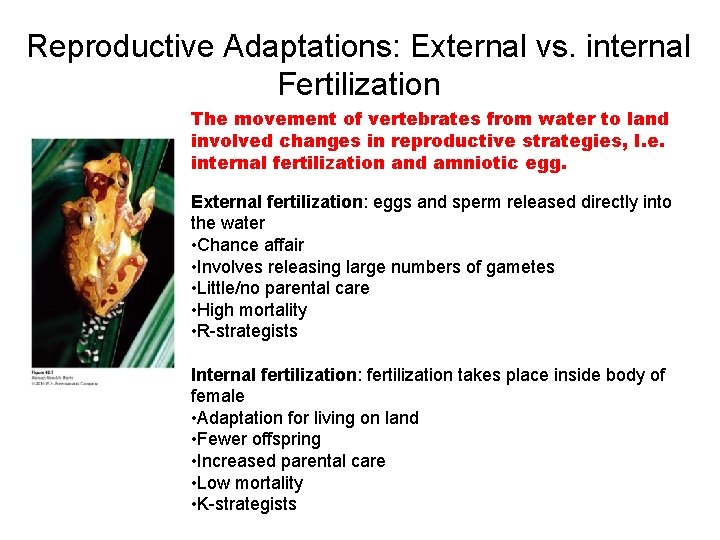
Reproductive Adaptations: External vs. internal Fertilization The movement of vertebrates from water to land involved changes in reproductive strategies, I. e. internal fertilization and amniotic egg. External fertilization: eggs and sperm released directly into the water • Chance affair • Involves releasing large numbers of gametes • Little/no parental care • High mortality • R-strategists Internal fertilization: fertilization takes place inside body of female • Adaptation for living on land • Fewer offspring • Increased parental care • Low mortality • K-strategists
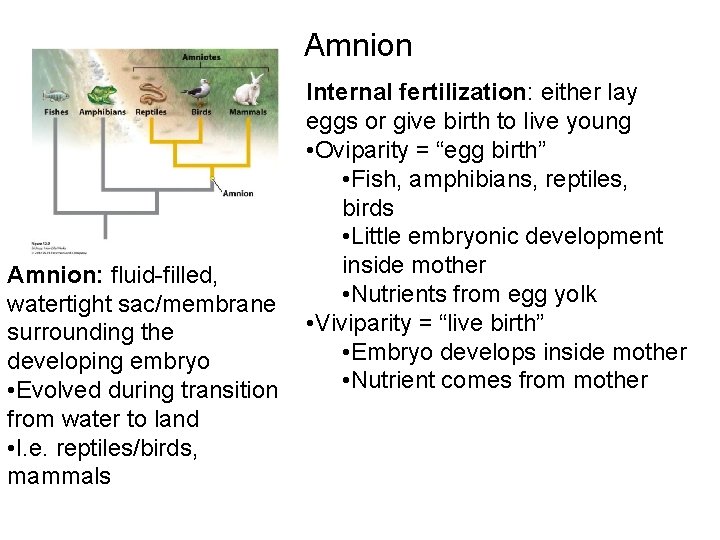
Amnion: fluid-filled, watertight sac/membrane surrounding the developing embryo • Evolved during transition from water to land • I. e. reptiles/birds, mammals Internal fertilization: either lay eggs or give birth to live young • Oviparity = “egg birth” • Fish, amphibians, reptiles, birds • Little embryonic development inside mother • Nutrients from egg yolk • Viviparity = “live birth” • Embryo develops inside mother • Nutrient comes from mother
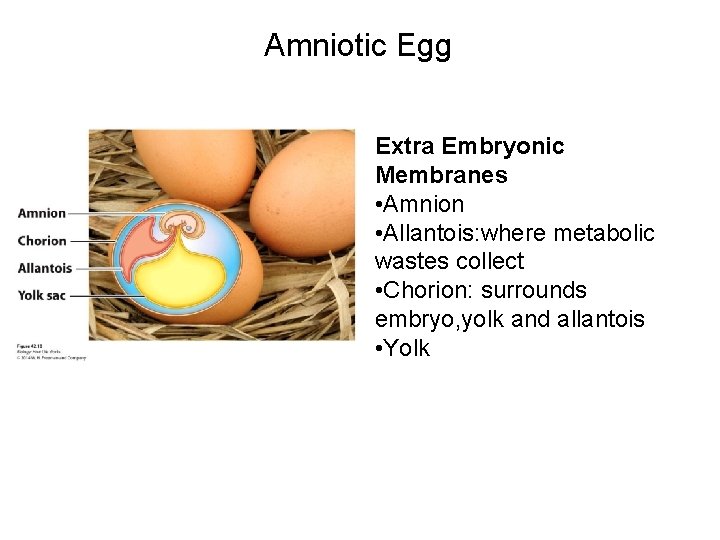
Amniotic Egg Extra Embryonic Membranes • Amnion • Allantois: where metabolic wastes collect • Chorion: surrounds embryo, yolk and allantois • Yolk
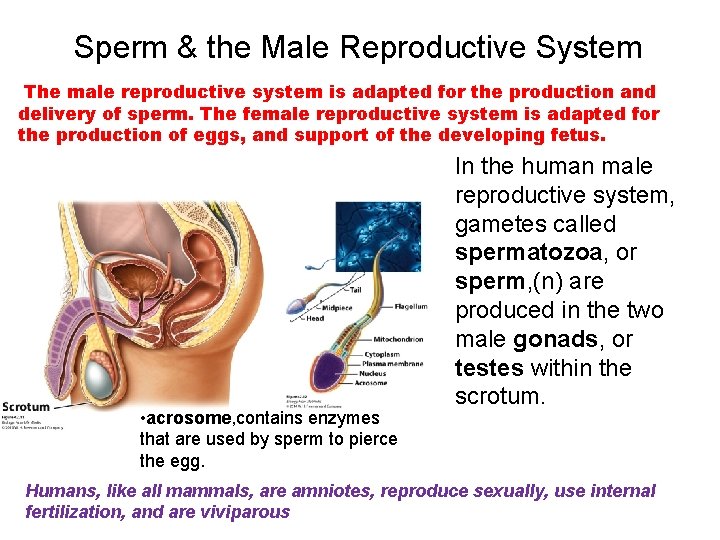
Sperm & the Male Reproductive System The male reproductive system is adapted for the production and delivery of sperm. The female reproductive system is adapted for the production of eggs, and support of the developing fetus. • acrosome, contains enzymes that are used by sperm to pierce the egg. In the human male reproductive system, gametes called spermatozoa, or sperm, (n) are produced in the two male gonads, or testes within the scrotum. Humans, like all mammals, are amniotes, reproduce sexually, use internal fertilization, and are viviparous
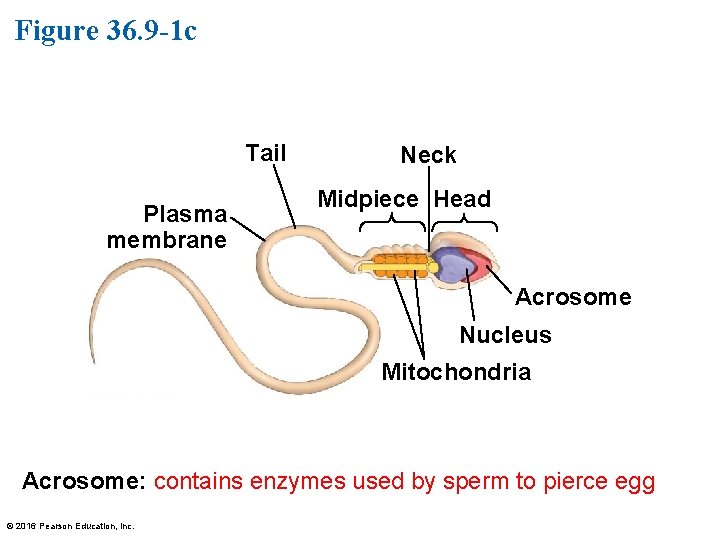
Figure 36. 9 -1 c Tail Plasma membrane Neck Midpiece Head Acrosome Nucleus Mitochondria Acrosome: contains enzymes used by sperm to pierce egg © 2016 Pearson Education, Inc.

Seminiferous tubules, Epididymis, & Vas Deferens Sperm are made in the seminiferous tubules of the testes……. travel to epididymis (sperm become motile here and are stored) …. . vas deferens……ejaculatory duct…. . urethra (used by both urinary and reproductive systems in males)
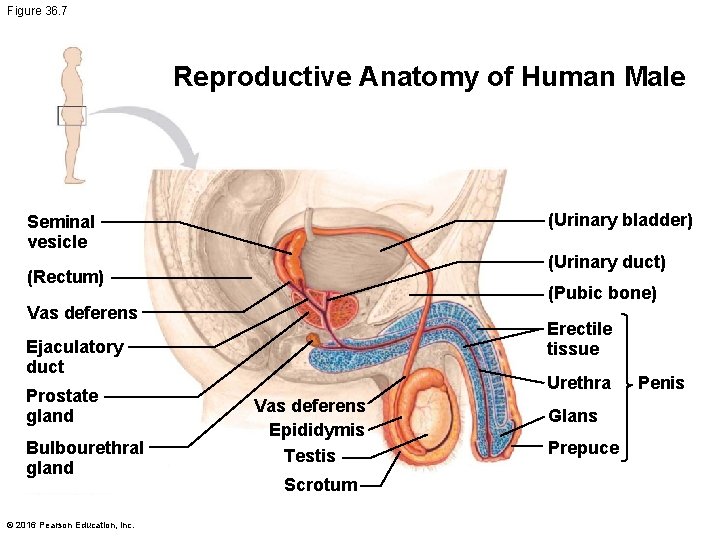
Figure 36. 7 Reproductive Anatomy of Human Male (Urinary bladder) Seminal vesicle (Urinary duct) (Rectum) (Pubic bone) Vas deferens Erectile tissue Ejaculatory duct Prostate gland Bulbourethral gland © 2016 Pearson Education, Inc. Urethra Vas deferens Epididymis Testis Scrotum Glans Prepuce Penis

Semen: sperm plus fluid from 3 sets of glands: • Seminal vesicles: • Contribute most of fluid • Provides energy for sperm motility • Prostate: • Secretes directly into urethra • Counteracts acidity of female tract • Bulbourethral glands: • Lubricates urethra for sperm passage • May have 1 or 2 sperm cells in it

HORMONAL CONTROL OF THE TESTES • Hypothalamus releases Gn. RH • Stimulates anterior pituitary to release FSH and LH • FSH: acts on Sertoli cells of seminiferous tubules/testes to produce sperm • LH: acts on Leydig cells/testes to produce testosterone • Testosterone: important for primary sex characteristics during embryogenesis; development of secondary sex characteristics at puberty Hypothalamus Gn. RH Anterior Pituitary Gland FSH LH Testes Sertoli cells Leydig cells Testosterone Spermatogenesis
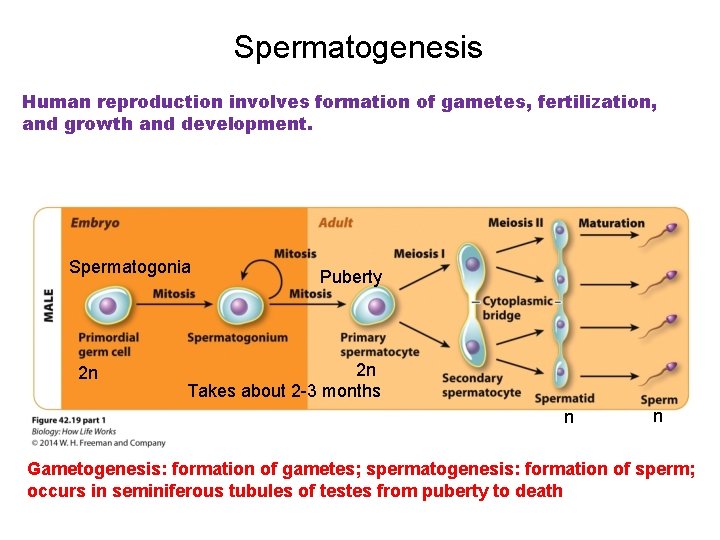
Spermatogenesis Human reproduction involves formation of gametes, fertilization, and growth and development. Spermatogonia 2 n Puberty 2 n Takes about 2 -3 months n n Gametogenesis: formation of gametes; spermatogenesis: formation of sperm; occurs in seminiferous tubules of testes from puberty to death
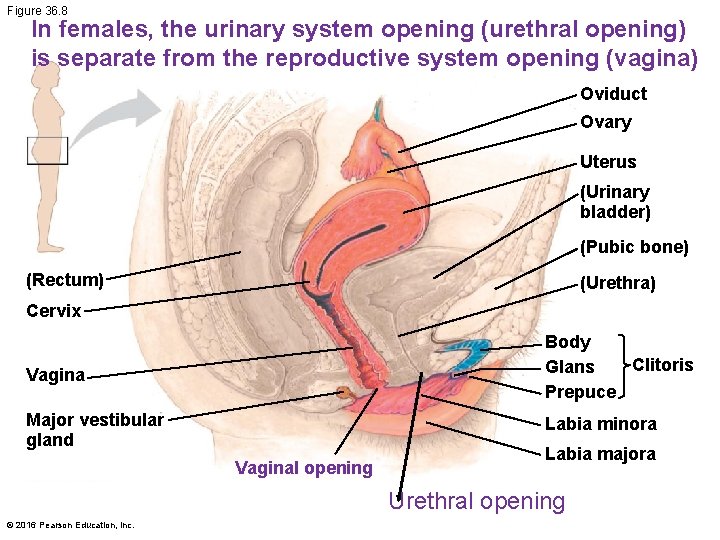
Figure 36. 8 In females, the urinary system opening (urethral opening) is separate from the reproductive system opening (vagina) Oviduct Ovary Uterus (Urinary bladder) (Pubic bone) (Rectum) (Urethra) Cervix Vagina Body Clitoris Glans Prepuce Major vestibular gland Labia minora Vaginal opening Labia majora Urethral opening © 2016 Pearson Education, Inc.

Female Reproductive System Fallopian tubes Fimbria Endometrium Neck of uterus Vagina (birth canal) An oocyte is released from an ovary…. travels through fallopian tube……implants in uterus (womb) if fertilized.

• Hypothalamus • Gn. RH Menstrual Cycle • Anterior pituitary • FSH & LH • Stimulate follicle to grow • Estrogen secreted by growing follicle in increasing amounts • Peak of estrogen causes LH surge • LH surge triggers ovulation releasing secondary oocyte from ovary • Follicle stays behind in ovary and becomes corpus luteum • Progesterone and estrogen secreted by corpus luteum • Progesterone and estrogen promote thickening of

Hormonal Control of Female Reproductive Cycles § There are two closely linked reproductive cycles in human females § Cyclic events in the ovaries define the ovarian cycle, which releases an oocyte once per cycle § Changes in the uterus define the menstrual cycle, also called the uterine cycle § During each cycle, the endometrium thickens with blood vessels in preparation for embryo implantation § If an oocyte is not fertilized and pregnancy does not occur, the uterine lining is sloughed off in a process called menstruation © 2016 Pearson Education, Inc.
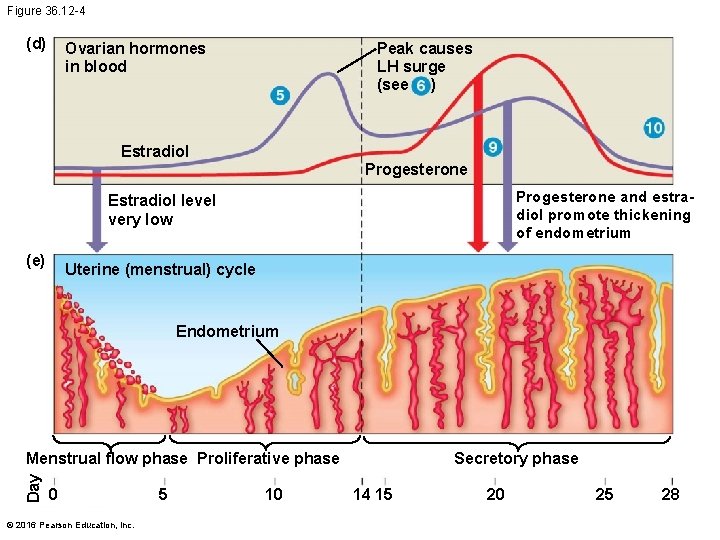
Figure 36. 12 -4 (d) Ovarian hormones in blood Peak causes LH surge (see ) Estradiol Progesterone and estradiol promote thickening of endometrium Estradiol level very low (e) Uterine (menstrual) cycle Endometrium Day Menstrual flow phase Proliferative phase 0 © 2016 Pearson Education, Inc. 5 10 Secretory phase 14 15 20 25 28
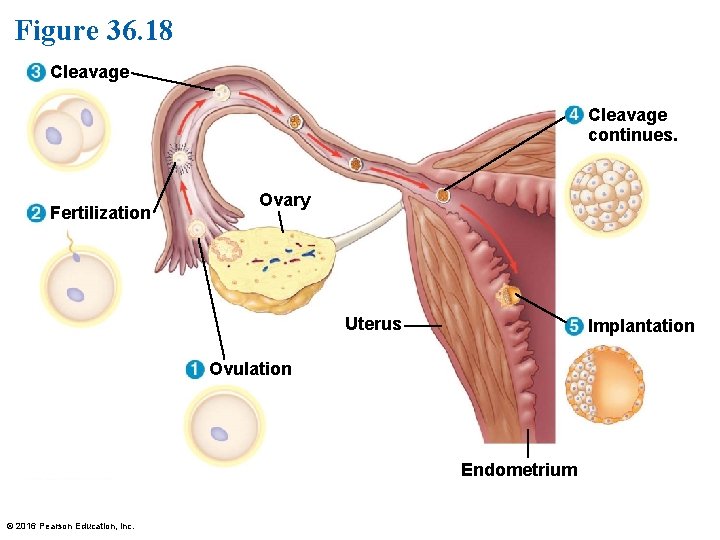
Figure 36. 18 Cleavage continues. Fertilization Ovary Uterus Implantation Ovulation Endometrium © 2016 Pearson Education, Inc.
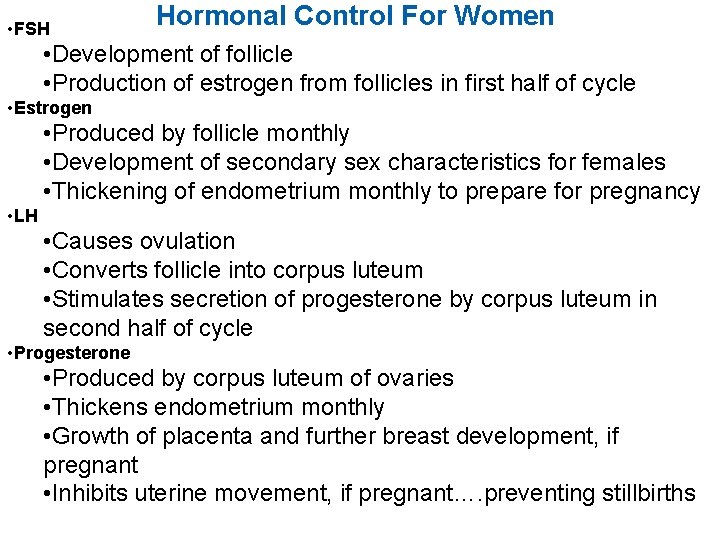
• FSH Hormonal Control For Women • Development of follicle • Production of estrogen from follicles in first half of cycle • Estrogen • Produced by follicle monthly • Development of secondary sex characteristics for females • Thickening of endometrium monthly to prepare for pregnancy • LH • Causes ovulation • Converts follicle into corpus luteum • Stimulates secretion of progesterone by corpus luteum in second half of cycle • Progesterone • Produced by corpus luteum of ovaries • Thickens endometrium monthly • Growth of placenta and further breast development, if pregnant • Inhibits uterine movement, if pregnant…. preventing stillbirths
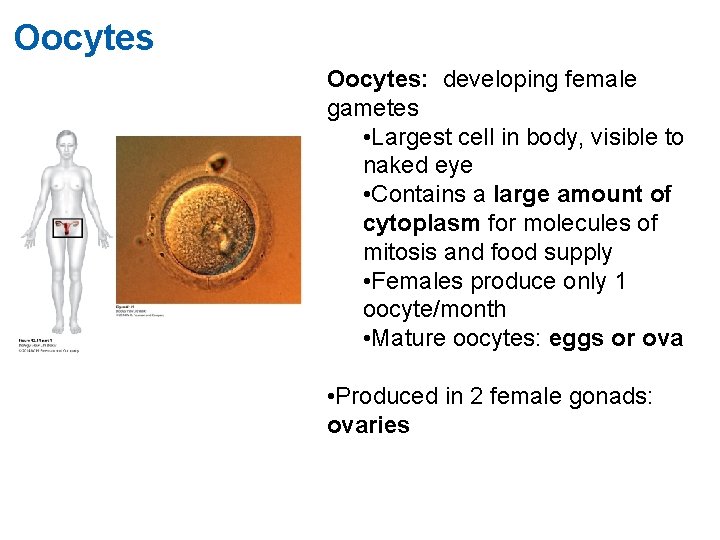
Oocytes: developing female gametes • Largest cell in body, visible to naked eye • Contains a large amount of cytoplasm for molecules of mitosis and food supply • Females produce only 1 oocyte/month • Mature oocytes: eggs or ova • Produced in 2 female gonads: ovaries
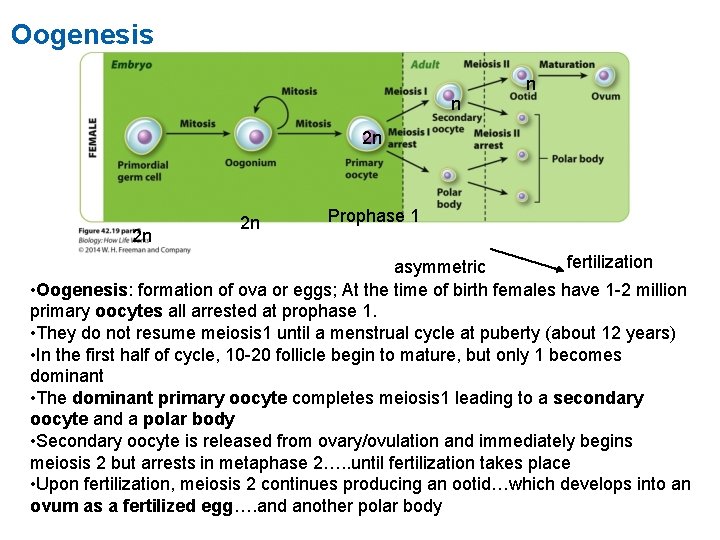
Oogenesis n n 2 n 2 n 2 n Prophase 1 fertilization asymmetric • Oogenesis: formation of ova or eggs; At the time of birth females have 1 -2 million primary oocytes all arrested at prophase 1. • They do not resume meiosis 1 until a menstrual cycle at puberty (about 12 years) • In the first half of cycle, 10 -20 follicle begin to mature, but only 1 becomes dominant • The dominant primary oocyte completes meiosis 1 leading to a secondary oocyte and a polar body • Secondary oocyte is released from ovary/ovulation and immediately begins meiosis 2 but arrests in metaphase 2…. . until fertilization takes place • Upon fertilization, meiosis 2 continues producing an ootid…which develops into an ovum as a fertilized egg…. and another polar body
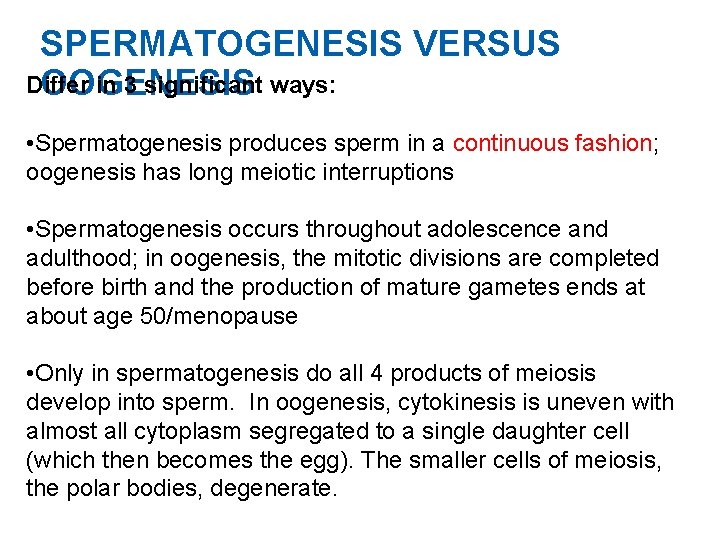
SPERMATOGENESIS VERSUS Differ in 3 significant ways: OOGENESIS • Spermatogenesis produces sperm in a continuous fashion; oogenesis has long meiotic interruptions • Spermatogenesis occurs throughout adolescence and adulthood; in oogenesis, the mitotic divisions are completed before birth and the production of mature gametes ends at about age 50/menopause • Only in spermatogenesis do all 4 products of meiosis develop into sperm. In oogenesis, cytokinesis is uneven with almost all cytoplasm segregated to a single daughter cell (which then becomes the egg). The smaller cells of meiosis, the polar bodies, degenerate.

Figure 36. 9 -1 Epididymis Spermatogenesis Diploid (2 n) Seminiferous tubule Haploid (n) Lumen Primordial germ cell in embryo Mitotic divisions Testis Spermatogonial stem cell Sertoli cell nucleus 2 n Embryo Mitotic divisions Spermatogonium 2 n Mitotic divisions Primary spermatocyte Puberty 2 n Meiosis I n Secondary spermatocyte Lumen of seminiferous tubule Neck Tail Midpiece Head n Meiosis II Spermatids (two stages) Early spermatid n n Differentiation (Sertoli cells provide nutrients) Plasma membrane Acrosome Nucleus Mitochondria © 2016 Pearson Education, Inc. Sperm cell n n
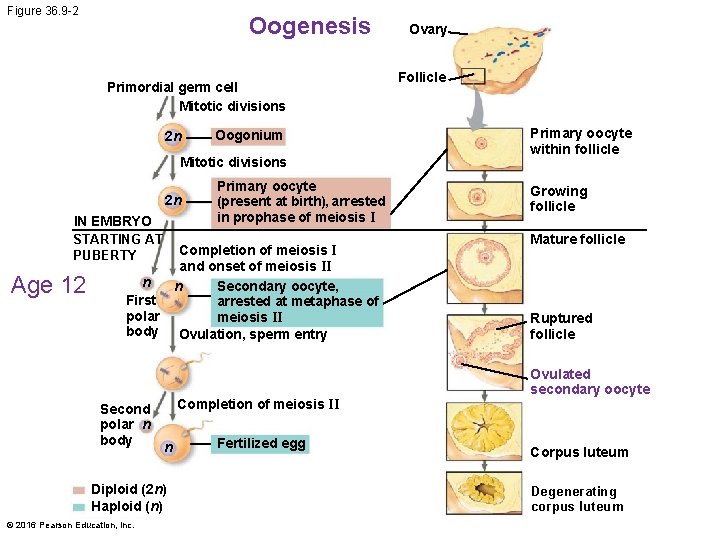
Figure 36. 9 -2 Oogenesis Primordial germ cell Mitotic divisions 2 n Oogonium Mitotic divisions 2 n IN EMBRYO STARTING AT PUBERTY Age 12 Primary oocyte (present at birth), arrested in prophase of meiosis I Completion of meiosis I and onset of meiosis II n Secondary oocyte, n First arrested at metaphase of polar meiosis II body Ovulation, sperm entry Second polar n body Completion of meiosis II n Diploid (2 n) Haploid (n) © 2016 Pearson Education, Inc. Fertilized egg Ovary Follicle Primary oocyte within follicle Growing follicle Mature follicle Ruptured follicle Ovulated secondary oocyte Corpus luteum Degenerating corpus luteum
QUICK CHECK § Where are primary oocytes and spermatocytes produced, and how many gametes result from one diploid cell in females and males?

ANSWER Females: § Oogonia differentiate into primary oocytes before birth § Only 1 out of 4 products of meiosis become a gamete in females Males: § Spermatogonia do not differentiate into primary spermatocytes until puberty, but sperm can be produced during an entire male’s lifetime § All 4 products of meiosis become sperm in males.
Concept 36. 3: The interplay of tropic and sex hormones regulates reproduction in mammals § Mammalian reproduction is coordinated by hormones from the hypothalamus, anterior pituitary, and gonads § Hypothalamus releases Gn. RH § Directs Anterior Pituitary Gland to release FSH and LH § FSH and LH regulate processes in the gonads and the production of sex hormones § The major androgen is testosterone and major estrogens are estradiol and progesterone § Both males and females produce androgens and estrogens but differ in their blood concentrations of particular hormones § For example, males have testosterone levels about 10 times higher than females © 2016 Pearson Education, Inc.
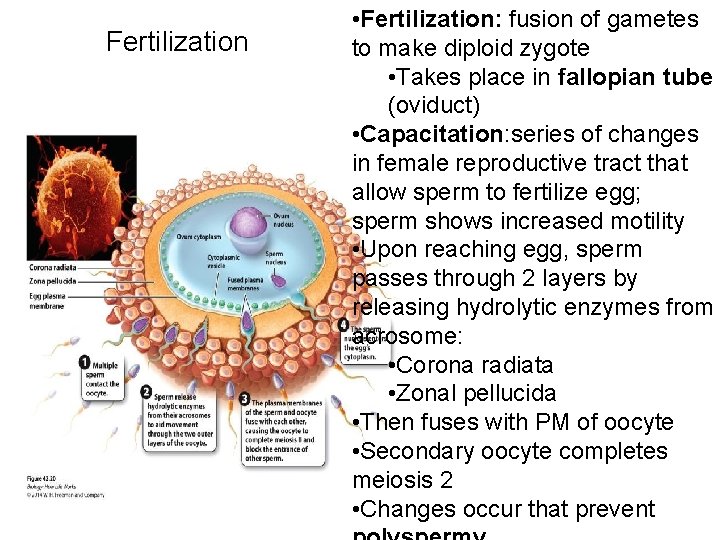
Fertilization • Fertilization: fusion of gametes to make diploid zygote • Takes place in fallopian tube (oviduct) • Capacitation: series of changes in female reproductive tract that allow sperm to fertilize egg; sperm shows increased motility • Upon reaching egg, sperm passes through 2 layers by releasing hydrolytic enzymes from acrosome: • Corona radiata • Zonal pellucida • Then fuses with PM of oocyte • Secondary oocyte completes meiosis 2 • Changes occur that prevent
Concept 36. 4: Fertilization, cleavage, and gastrulation initiate embryonic development § Fertilization: fusion of gametes to make a diploid zygote; takes place in fallopian tubes (oviducts) § Cleavage Stage: a series of mitoses divide the zygote into a many-celled embryo (no growth) § Results in a blastula; many celled hollow ball; fluidfilled center called a blastocoel § Gastrulation: blastula undergoes differentiation (or specialization) into a 2 - or 3 -layered embryo § Results in a differentiated gastrula § Organogenesis: developing organs © 2016 Pearson Education, Inc.
Gastrulation § The cell layers produced by gastrulation are called germ layers § The ectoderm forms the outer layer and the endoderm the inner layer § In vertebrates and other animals with bilateral symmetry, a third germ layer, the mesoderm, forms between the endoderm and ectoderm § One distinction among animals: § Whether the mouth develops at the first opening that forms in the embryo (protostomes) or the second (deuterostomes) § Sea urchins are deuterostomes, as are humans and other vertebrates © 2016 Pearson Education, Inc.
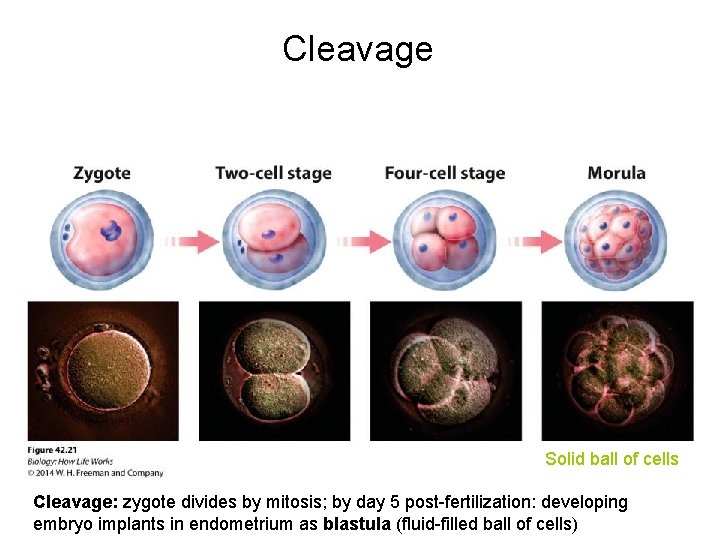
Cleavage Solid ball of cells Cleavage: zygote divides by mitosis; by day 5 post-fertilization: developing embryo implants in endometrium as blastula (fluid-filled ball of cells)
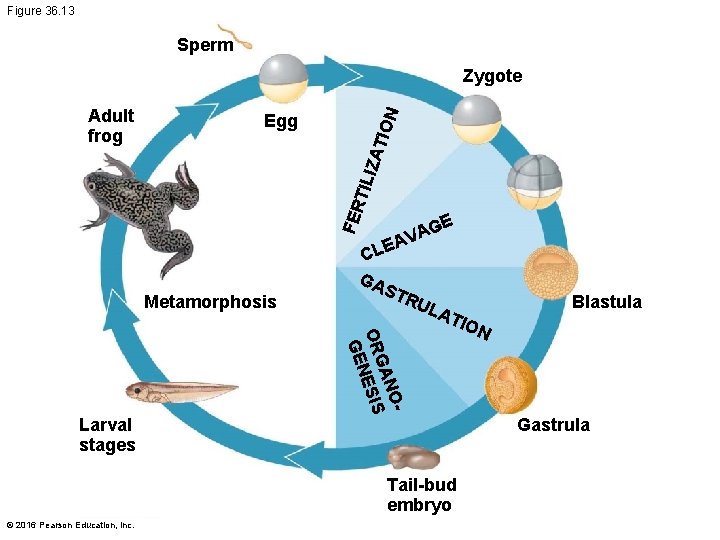
Figure 36. 13 Sperm ATI Egg FER TIL IZ Adult frog ON Zygote Metamorphosis E CL GA ST RU LA TIO NO GA OR ESIS GEN Larval stages GE A AV Tail-bud embryo © 2016 Pearson Education, Inc. Blastula N Gastrula
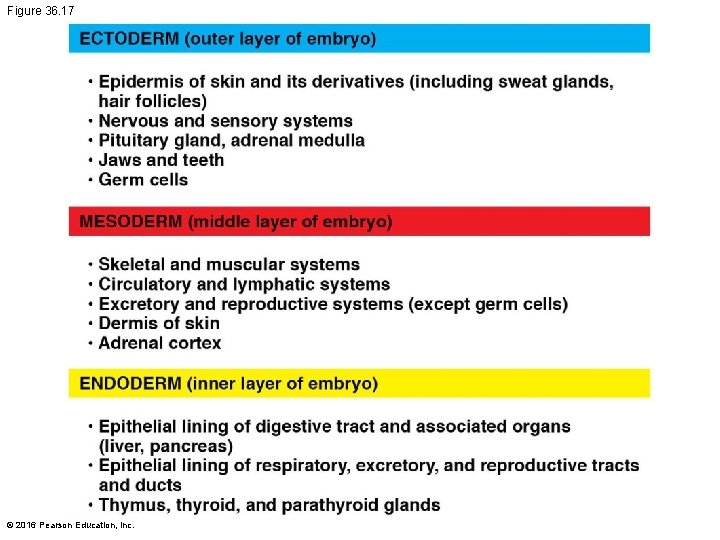
Figure 36. 17 © 2016 Pearson Education, Inc.

QUICK CHECK • A multicellular organism starts off as a single cell, which divides by mitosis to produce many cells. Therefore, all cells in a multicellular organism are genetically identical, yet in time different groups of cells look different and function differently from one another. How does this happen?

ANSWER • In the process of development, cells differentiate into different cell types. • The process of differentiation involves turning on and off specific genes. • i. e. genes expressed in a skin cell differ from those expressed in a liver or muscle cell • These changes in gene expression, once established, are stable through mitotic divisions.

DEVELOPMENT OF PRIMARY SEX CHARACTERISTICS • Both male and female genitalia develop from a bipotential gonad • Has both male duct (Wolffian) and female duct (Mullerian) • At about 8 weeks of gestation (2 month fetus), sex determination is achieved by the presence or absence of Y chromosome • Y chromosome contains a gene…SRY…. that encodes a protein called TDF (testes-determining factor) • TDF acts on bipotential gonad to develop it into testes • For XY: bipotential gonads become testes • Testes secrete testosterone and AMH (anti-Mullerian hormone) • Testerone makes vas deferens and seminal vesicles • AMH causes female ducts to disintegrate • For XX: absence of TDF & testes hormones causes male ducts to degenerate
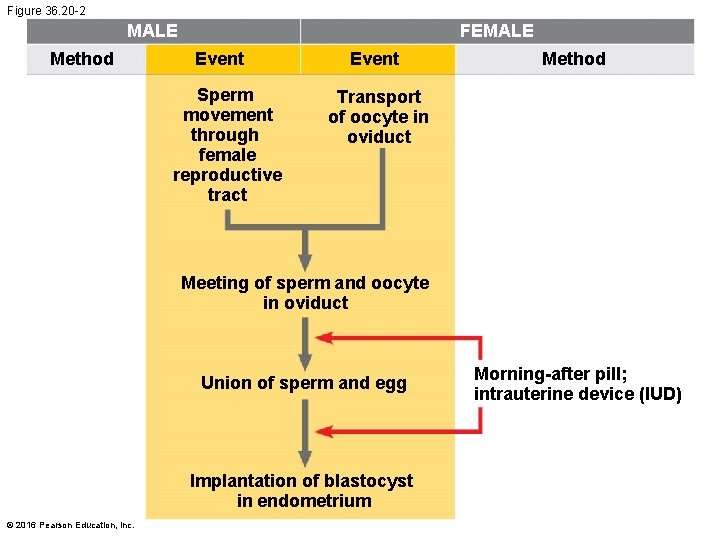
Figure 36. 20 -2 MALE Method FEMALE Event Sperm movement through female reproductive tract Event Method Transport of oocyte in oviduct Meeting of sperm and oocyte in oviduct Union of sperm and egg Implantation of blastocyst in endometrium © 2016 Pearson Education, Inc. Morning-after pill; intrauterine device (IUD)
- Slides: 45