
CAMPBELL BIOLOGY IN FOCUS URRY CAIN WASSERMAN MINORSKY
CAMPBELL BIOLOGY IN FOCUS URRY • CAIN • WASSERMAN • MINORSKY • REECE 26 The Colonization of Land: Fungi and Plants Lecture Presentations by Kathleen Fitzpatrick and Nicole Tunbridge, Simon Fraser University © 2016 Pearson Education, Inc. SECOND EDITION
The Greening of Earth § Cyanobacteria and protists existed on land 1. 2 bya § Around 500 mya, small plants, fungi, and animals emerged on land § Plants and fungi are NOT closely related; but they colonized land as partners before animals arrived § Plants supply oxygen and are the ultimate source of most food eaten by land animals § Fungi break down organic material and recycle nutrients © 2016 Pearson Education, Inc.
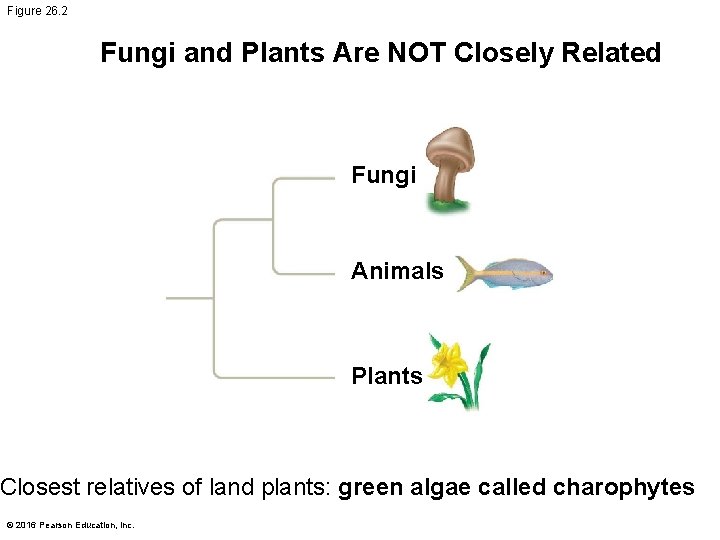
Figure 26. 2 Fungi and Plants Are NOT Closely Related Fungi Animals Plants Closest relatives of land plants: green algae called charophytes © 2016 Pearson Education, Inc.
Adaptations Enabling the Move to Land § Sporopollenin: durable polymer that prevents charophytes and land plants from drying out is also found in plant spore walls § Moving to Land: § Positives: § Unfiltered sunlight § More plentiful CO 2 § Nutrient-rich soil § Challenges: § Not enough water § Lack of structural support © 2016 Pearson Education, Inc.
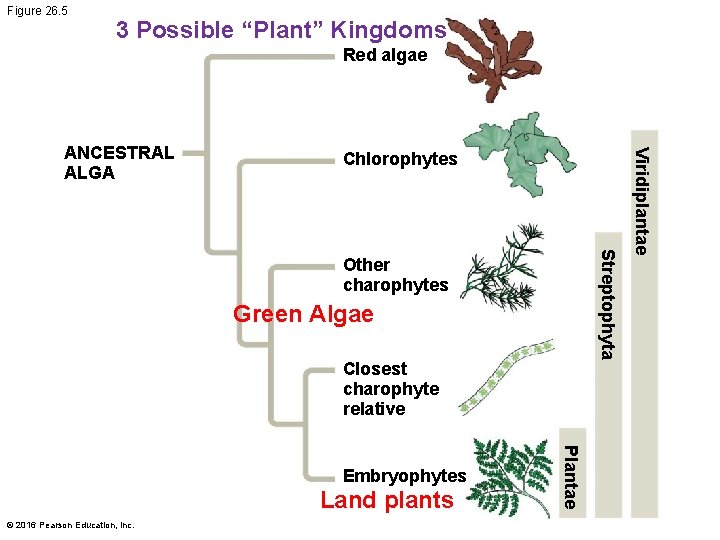
Figure 26. 5 3 Possible “Plant” Kingdoms Red algae Chlorophytes Streptophyta Other charophytes Green Algae Closest charophyte relative Land plants © 2016 Pearson Education, Inc. Plantae Embryophytes Viridiplantae ANCESTRAL ALGA
Derived Traits of Plants § 4 Key traits of land plants that are absent in charophytes: § § Apical meristems Multicellular, dependent embryos Walled spores produced in sporangia Alternation of generations © 2016 Pearson Education, Inc.
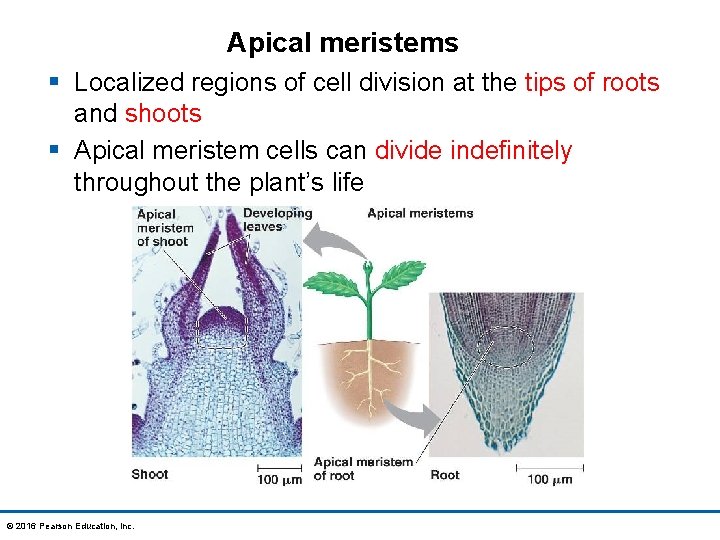
Apical meristems § Localized regions of cell division at the tips of roots and shoots § Apical meristem cells can divide indefinitely throughout the plant’s life © 2016 Pearson Education, Inc.
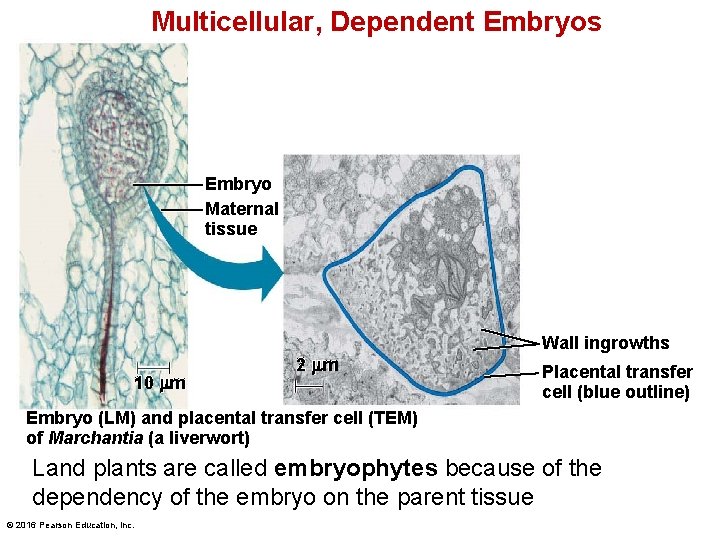
Multicellular, Dependent Embryos Embryo Maternal tissue 10 µm mm 2 µm mm Wall ingrowths Placental transfer cell (blue outline) Embryo (LM) and placental transfer cell (TEM) of Marchantia (a liverwort) Land plants are called embryophytes because of the dependency of the embryo on the parent tissue © 2016 Pearson Education, Inc.
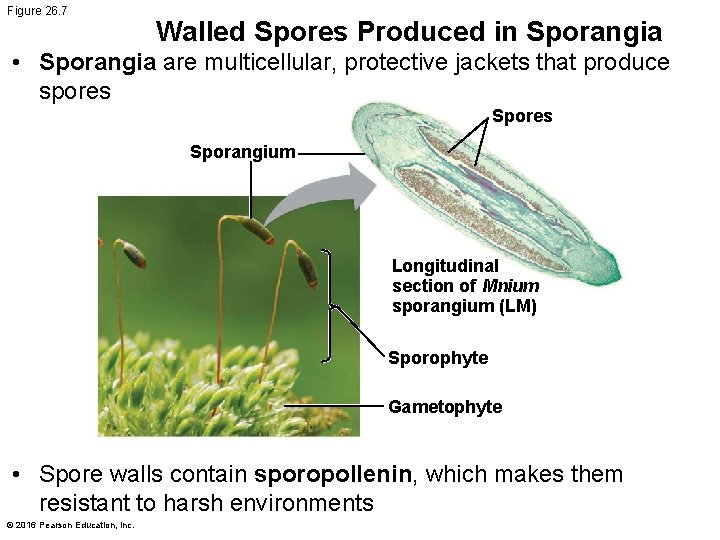
Figure 26. 7 Walled Spores Produced in Sporangia • Sporangia are multicellular, protective jackets that produce spores Sporangium Longitudinal section of Mnium sporangium (LM) Sporophyte Gametophyte • Spore walls contain sporopollenin, which makes them resistant to harsh environments © 2016 Pearson Education, Inc.
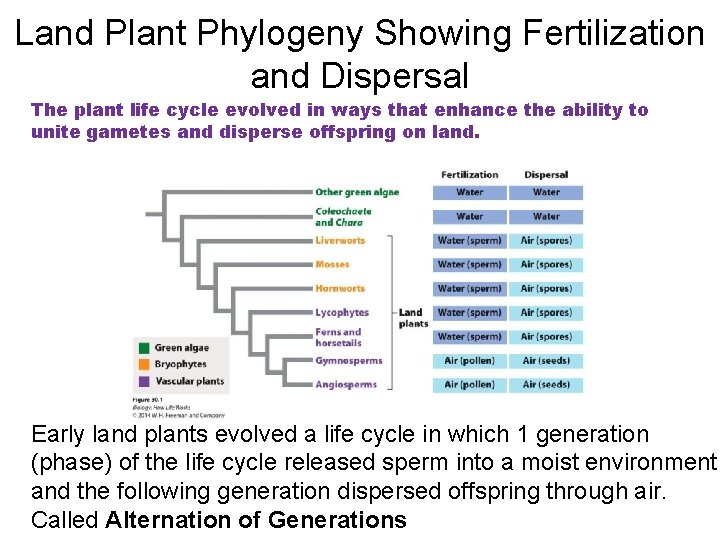
Land Plant Phylogeny Showing Fertilization and Dispersal The plant life cycle evolved in ways that enhance the ability to unite gametes and disperse offspring on land. Early land plants evolved a life cycle in which 1 generation (phase) of the life cycle released sperm into a moist environment and the following generation dispersed offspring through air. Called Alternation of Generations
Alternation of Generations • All land plants have life cycles with an alternation of gametophyte (“gamete-plant”) and sporophyte (“spore-plant”) generations – 1 generation is the gametophyte: the multicellular organism with haploid cells (n) – other generation is the sporophyte: the multicellular organism with diploid cells (2 n) – the 2 generations alternate, each producing the other
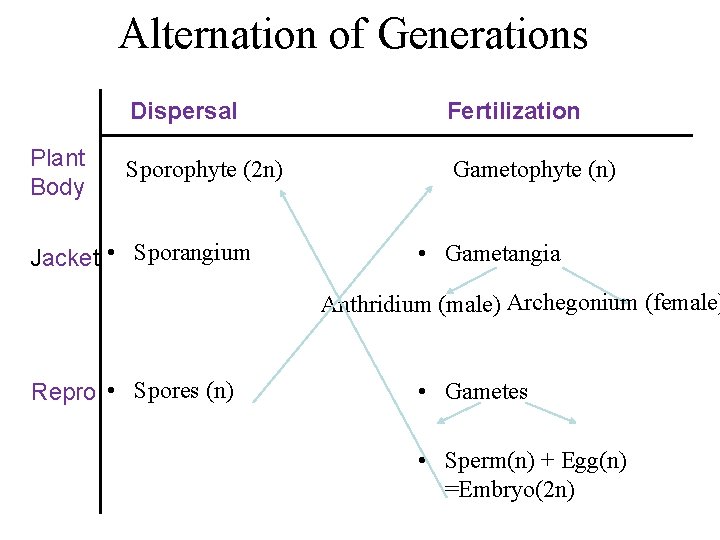
Alternation of Generations Plant Body Dispersal Fertilization Sporophyte (2 n) Gametophyte (n) Jacket • Sporangium • Gametangia Anthridium (male) Archegonium (female) Repro. • Spores (n) • Gametes • Sperm(n) + Egg(n) =Embryo(2 n)
Alternation of Generations Cont’d • The 2 plant forms are named for the type of reproductive cells they produce: – Gametophytes (n) • Form gametes by mitosis in gametangia • Gametes: haploid reproductive cells that cannot develop directly into organisms • Must unite sperm and egg gametes in water to form diploid zygote • In mosses only, the haploid gametophyte is the dominant generation – Sporophytes (2 n) • Produce spores by meiosis in sporangia • Spore: haploid reproductive cell, but one that develops directly into an organisms (the haploid gametophyte) without fusing with another • In all other plant groups (other than mosses/bryophytes), the sporophyte generation is the dominant one
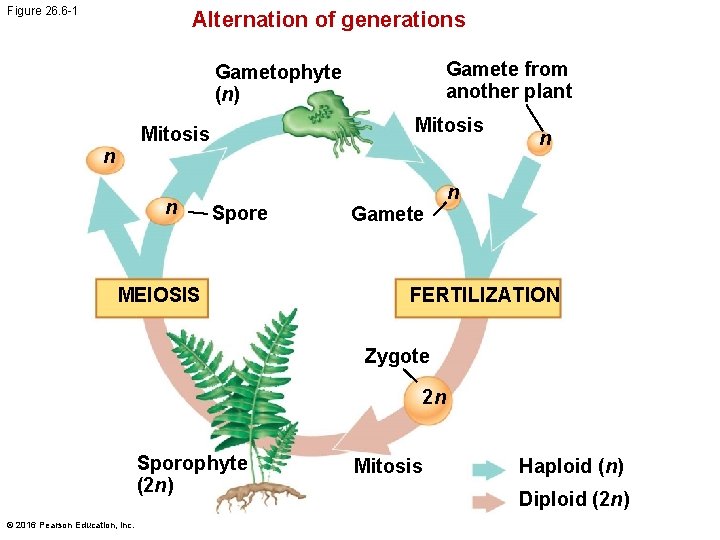
Figure 26. 6 -1 Alternation of generations Gamete from another plant Gametophyte (n) Mitosis n n Spore MEIOSIS Gamete n n FERTILIZATION Zygote 2 n Sporophyte (2 n) © 2016 Pearson Education, Inc. Mitosis Haploid (n) Diploid (2 n)
§ Additional derived traits for Land Plants: § Cuticle, a waxy covering of the epidermis that functions in preventing water loss and microbial attack § Stomata, specialized pores that allow the exchange of CO 2 and O 2 between the outside air and the plant © 2016 Pearson Education, Inc.
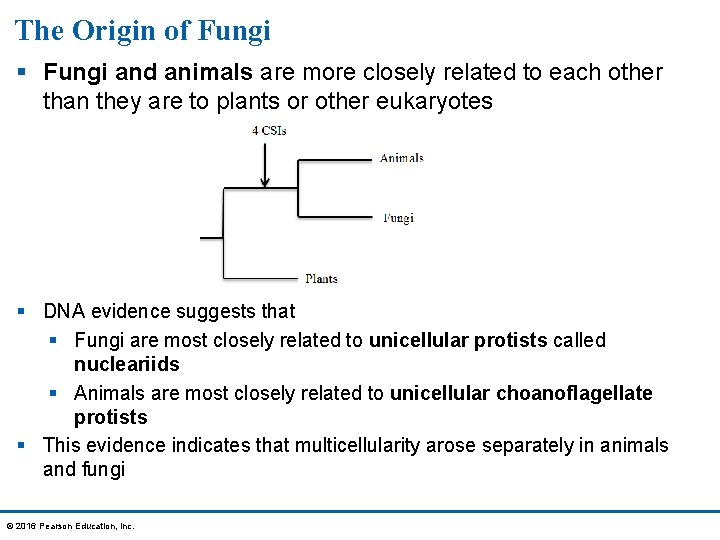
The Origin of Fungi § Fungi and animals are more closely related to each other than they are to plants or other eukaryotes § DNA evidence suggests that § Fungi are most closely related to unicellular protists called nucleariids § Animals are most closely related to unicellular choanoflagellate protists § This evidence indicates that multicellularity arose separately in animals and fungi © 2016 Pearson Education, Inc.
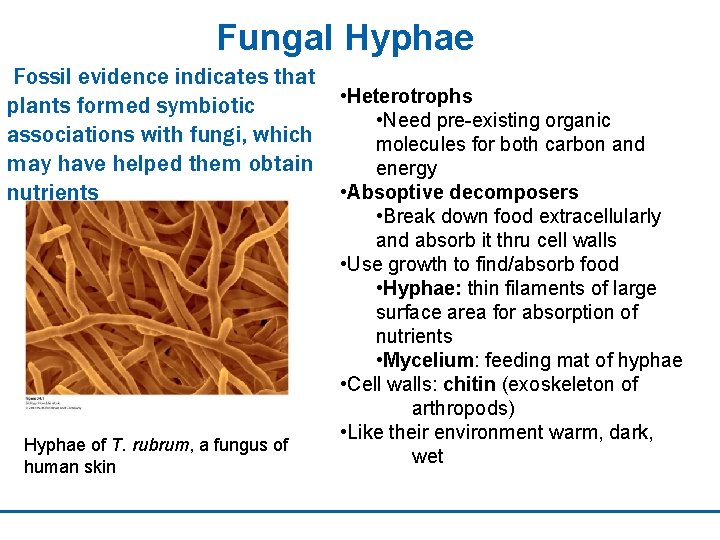
Fungal Hyphae Fossil evidence indicates that plants formed symbiotic associations with fungi, which may have helped them obtain nutrients Hyphae of T. rubrum, a fungus of human skin • Heterotrophs • Need pre-existing organic molecules for both carbon and energy • Absoptive decomposers • Break down food extracellularly and absorb it thru cell walls • Use growth to find/absorb food • Hyphae: thin filaments of large surface area for absorption of nutrients • Mycelium: feeding mat of hyphae • Cell walls: chitin (exoskeleton of arthropods) • Like their environment warm, dark, wet
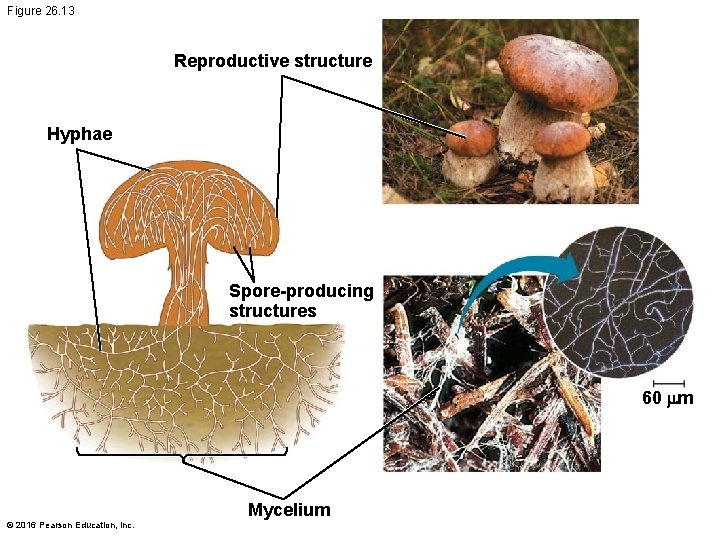
Figure 26. 13 Reproductive structure Hyphae Spore-producing structures 60 mm Mycelium © 2016 Pearson Education, Inc.
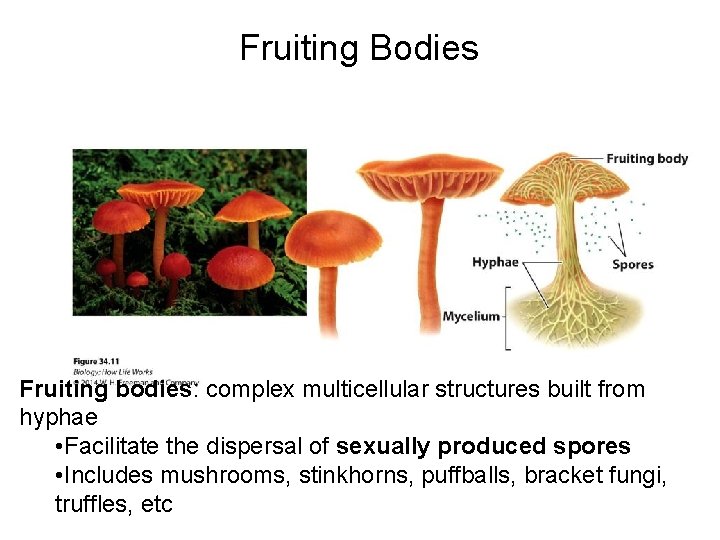
Fruiting Bodies Fruiting bodies: complex multicellular structures built from hyphae • Facilitate the dispersal of sexually produced spores • Includes mushrooms, stinkhorns, puffballs, bracket fungi, truffles, etc
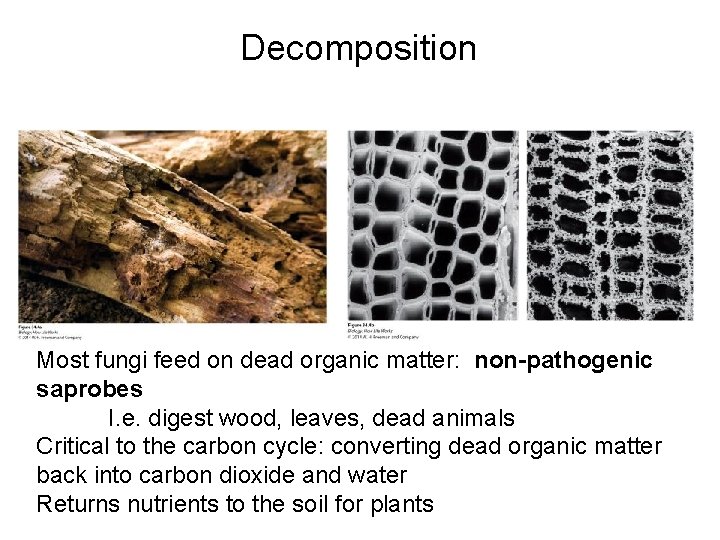
Decomposition Most fungi feed on dead organic matter: non-pathogenic saprobes I. e. digest wood, leaves, dead animals Critical to the carbon cycle: converting dead organic matter back into carbon dioxide and water Returns nutrients to the soil for plants
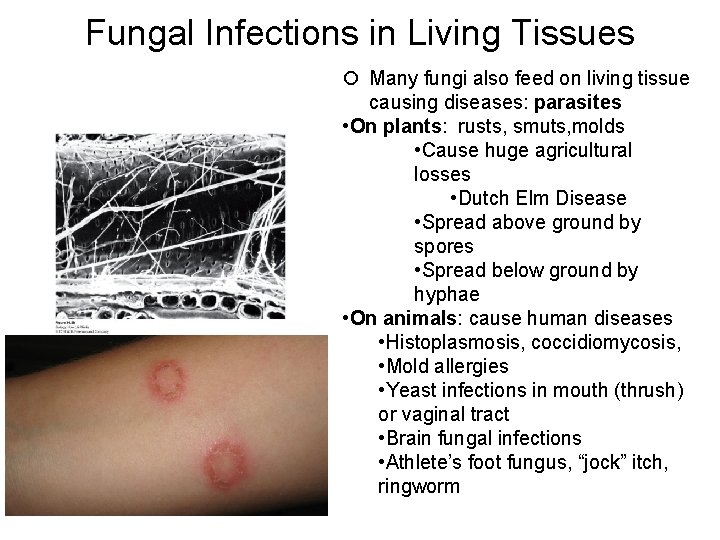
Fungal Infections in Living Tissues Many fungi also feed on living tissue causing diseases: parasites • On plants: rusts, smuts, molds • Cause huge agricultural losses • Dutch Elm Disease • Spread above ground by spores • Spread below ground by hyphae • On animals: cause human diseases • Histoplasmosis, coccidiomycosis, • Mold allergies • Yeast infections in mouth (thrush) or vaginal tract • Brain fungal infections • Athlete’s foot fungus, “jock” itch, ringworm
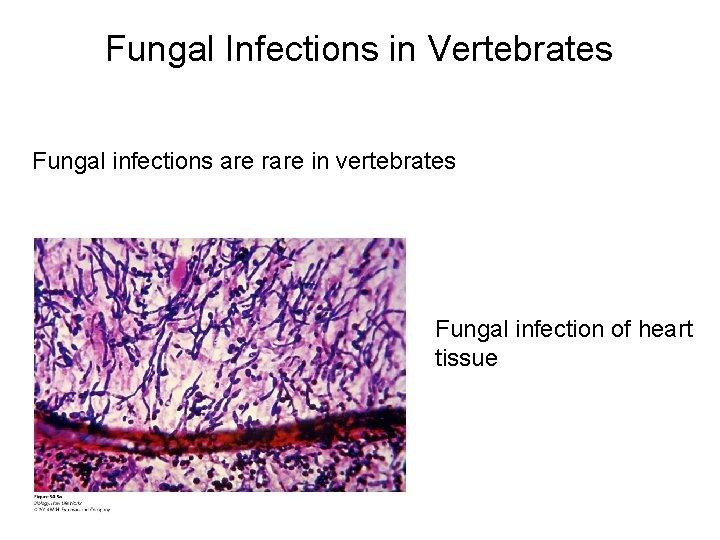
Fungal Infections in Vertebrates Fungal infections are rare in vertebrates Fungal infection of heart tissue
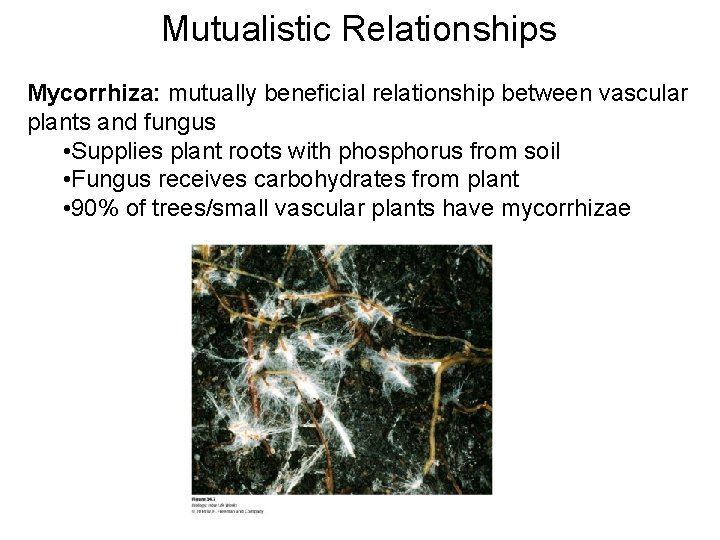
Mutualistic Relationships Mycorrhiza: mutually beneficial relationship between vascular plants and fungus • Supplies plant roots with phosphorus from soil • Fungus receives carbohydrates from plant • 90% of trees/small vascular plants have mycorrhizae
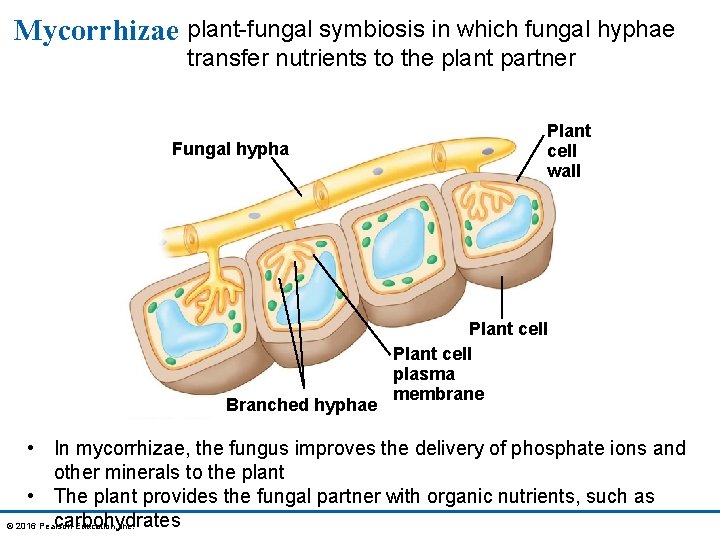
Mycorrhizae plant-fungal symbiosis in which fungal hyphae transfer nutrients to the plant partner Fungal hypha Branched hyphae Plant cell wall Plant cell plasma membrane • In mycorrhizae, the fungus improves the delivery of phosphate ions and other minerals to the plant • The plant provides the fungal partner with organic nutrients, such as carbohydrates © 2016 Pearson Education, Inc.
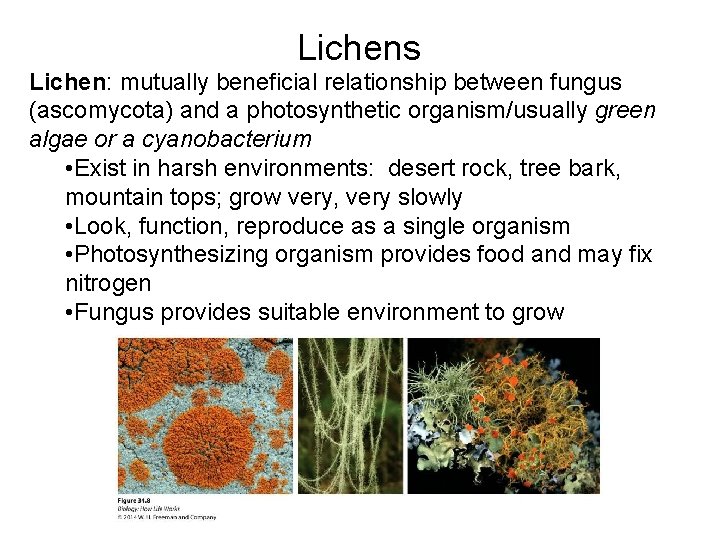
Lichens Lichen: mutually beneficial relationship between fungus (ascomycota) and a photosynthetic organism/usually green algae or a cyanobacterium • Exist in harsh environments: desert rock, tree bark, mountain tops; grow very, very slowly • Look, function, reproduce as a single organism • Photosynthesizing organism provides food and may fix nitrogen • Fungus provides suitable environment to grow
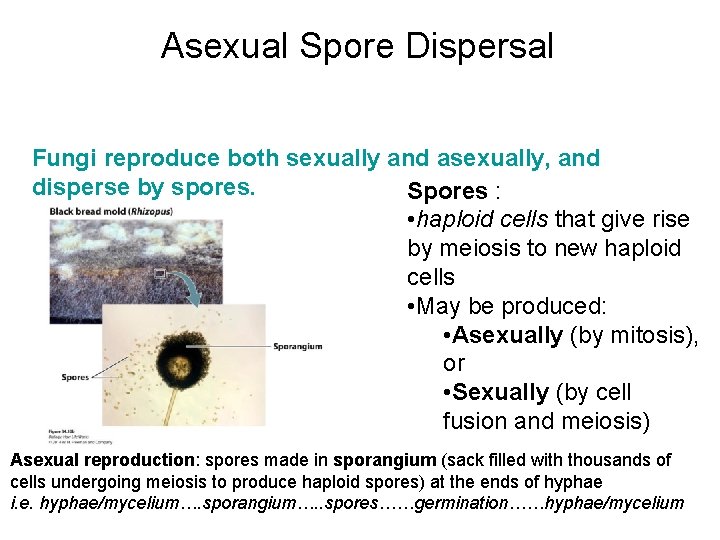
Asexual Spore Dispersal Fungi reproduce both sexually and asexually, and disperse by spores. Spores : • haploid cells that give rise by meiosis to new haploid cells • May be produced: • Asexually (by mitosis), or • Sexually (by cell fusion and meiosis) Asexual reproduction: spores made in sporangium (sack filled with thousands of cells undergoing meiosis to produce haploid spores) at the ends of hyphae i. e. hyphae/mycelium…. sporangium…. . spores……germination……hyphae/mycelium
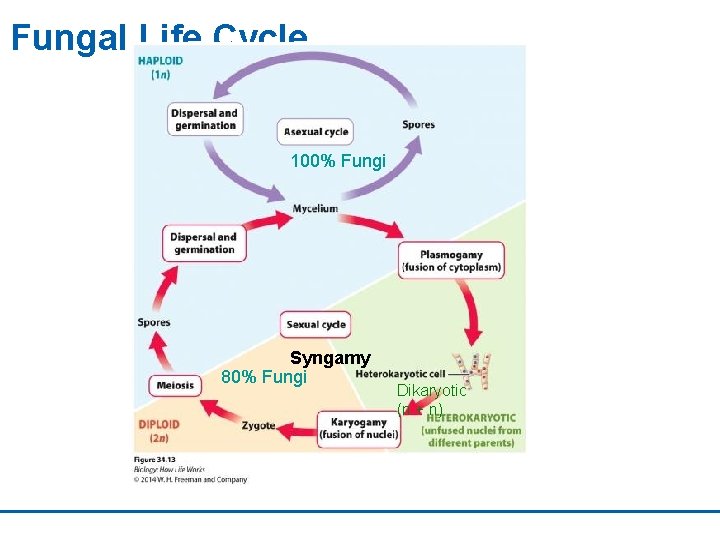
Growth and Reproduction • Mycelia grow in length to maximize surface area for absorption • Reproduction is mainly asexual—by spores • Carried by wind or rain • Mycelium…. . spore-producing structure…. Spores …. germination…. . mycelium • Reproduction can be sexual under stressful conditions: cold, sunny, dry • Called syngamy • Spores…. germination…. mycelium…. plasmogamy (fusion of cytoplasm)…. heterokaryotic stage (unfused nuclei from different parents)…. . karyogamy (fusion of nuclei)…. zygote…meiosis…. spores © 2016 Pearson Education, Inc.
Fungal Life Cycle 100% Fungi Syngamy 80% Fungi Dikaryotic (n + n)
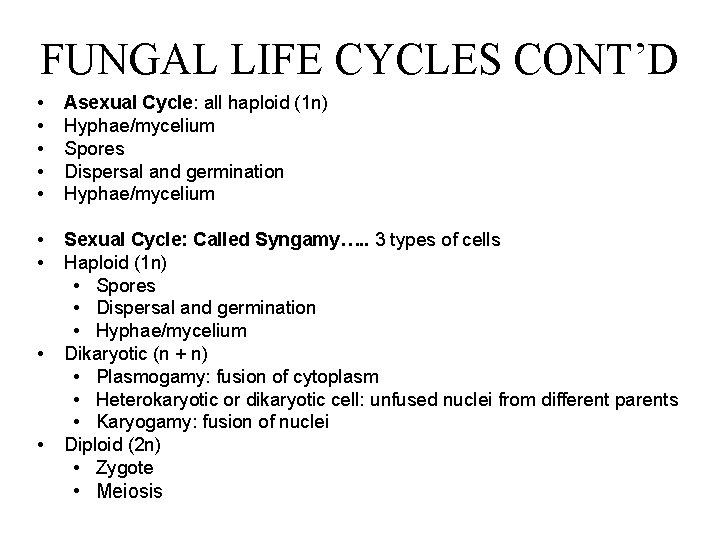
FUNGAL LIFE CYCLES CONT’D • • • Asexual Cycle: all haploid (1 n) Hyphae/mycelium Spores Dispersal and germination Hyphae/mycelium • • Sexual Cycle: Called Syngamy…. . 3 types of cells Haploid (1 n) • Spores • Dispersal and germination • Hyphae/mycelium Dikaryotic (n + n) • Plasmogamy: fusion of cytoplasm • Heterokaryotic or dikaryotic cell: unfused nuclei from different parents • Karyogamy: fusion of nuclei Diploid (2 n) • Zygote • • • Meiosis
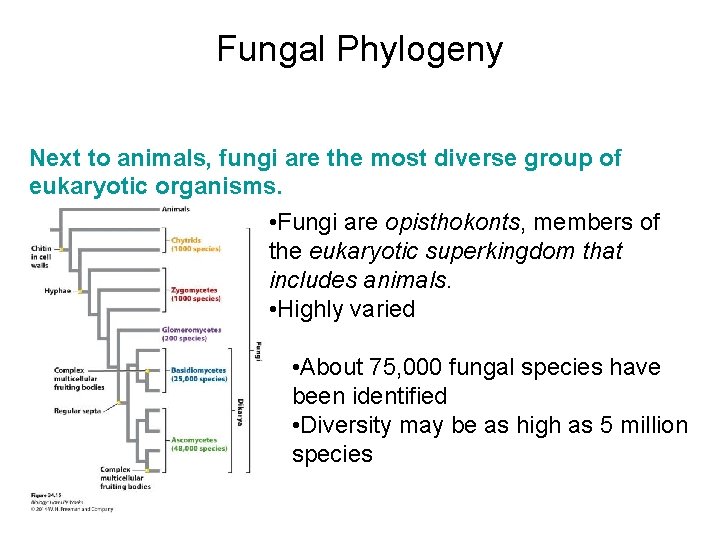
Fungal Phylogeny Next to animals, fungi are the most diverse group of eukaryotic organisms. • Fungi are opisthokonts, members of the eukaryotic superkingdom that includes animals. • Highly varied • About 75, 000 fungal species have been identified • Diversity may be as high as 5 million species
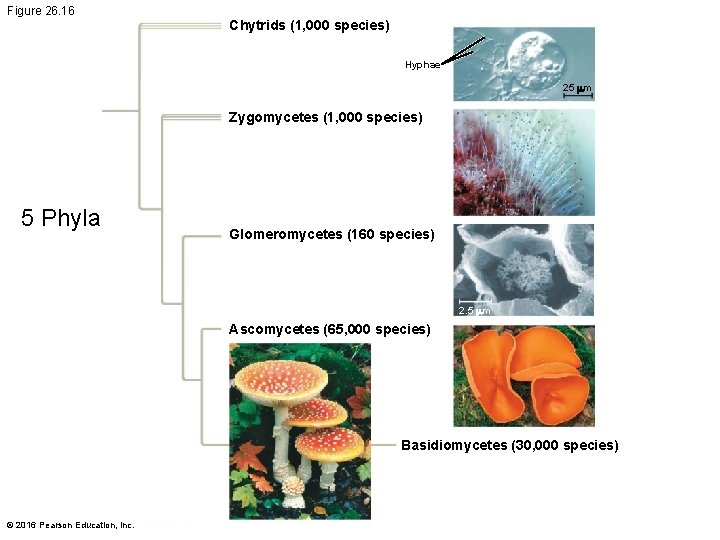
Figure 26. 16 Chytrids (1, 000 species) Hyphae 25 mm Zygomycetes (1, 000 species) 5 Phyla Glomeromycetes (160 species) 2. 5 mm Ascomycetes (65, 000 species) Basidiomycetes (30, 000 species) © 2016 Pearson Education, Inc.
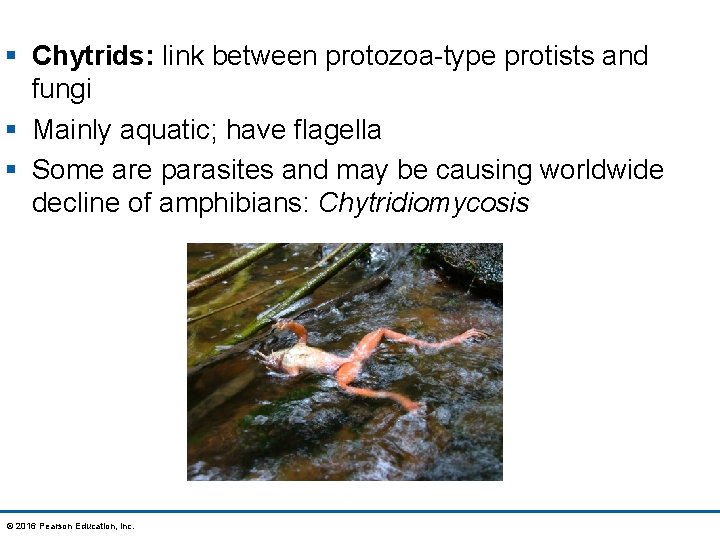
§ Chytrids: link between protozoa-type protists and fungi § Mainly aquatic; have flagella § Some are parasites and may be causing worldwide decline of amphibians: Chytridiomycosis © 2016 Pearson Education, Inc.
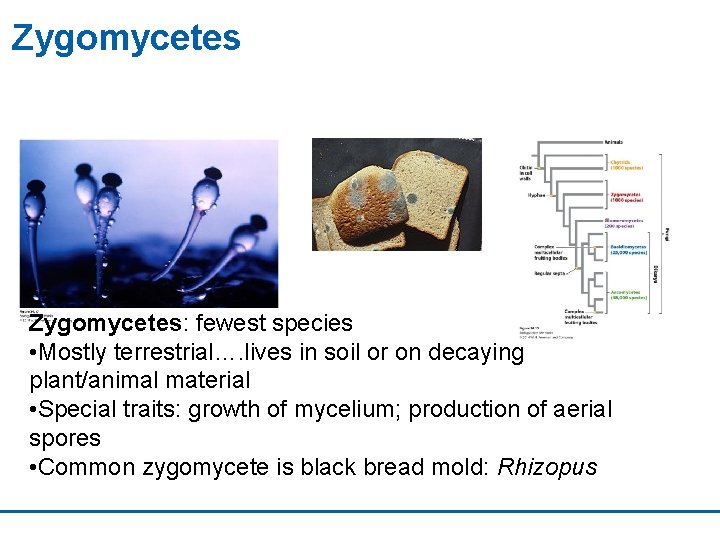
Zygomycetes: fewest species • Mostly terrestrial…. lives in soil or on decaying plant/animal material • Special traits: growth of mycelium; production of aerial spores • Common zygomycete is black bread mold: Rhizopus
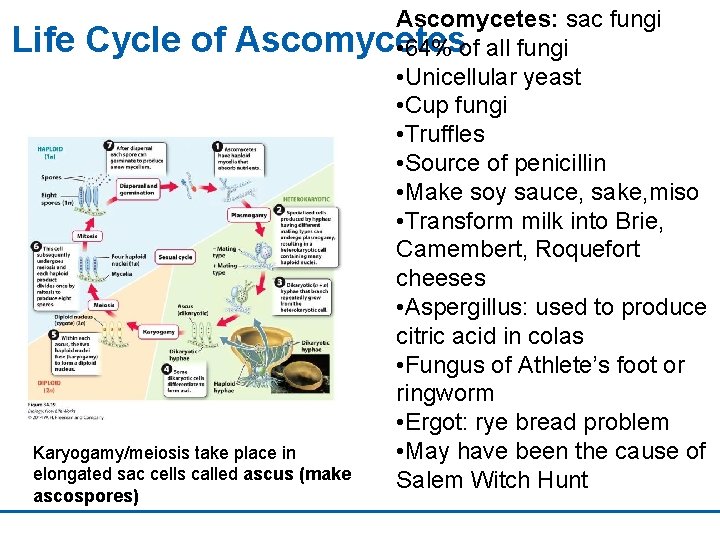
Ascomycetes: sac fungi Life Cycle of Ascomycetes • 64% of all fungi • Unicellular yeast • Cup fungi • Truffles • Source of penicillin • Make soy sauce, sake, miso • Transform milk into Brie, Camembert, Roquefort cheeses • Aspergillus: used to produce citric acid in colas • Fungus of Athlete’s foot or ringworm • Ergot: rye bread problem Karyogamy/meiosis take place in • May have been the cause of elongated sac cells called ascus (make Salem Witch Hunt ascospores)
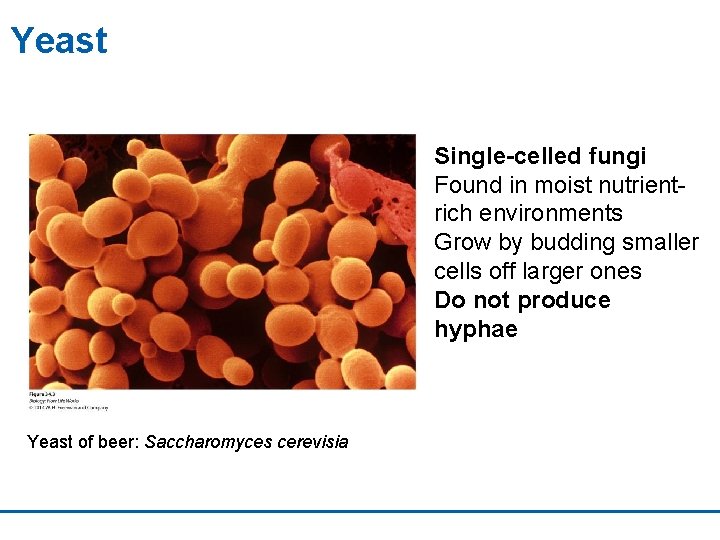
Yeast Single-celled fungi Found in moist nutrientrich environments Grow by budding smaller cells off larger ones Do not produce hyphae Yeast of beer: Saccharomyces cerevisia
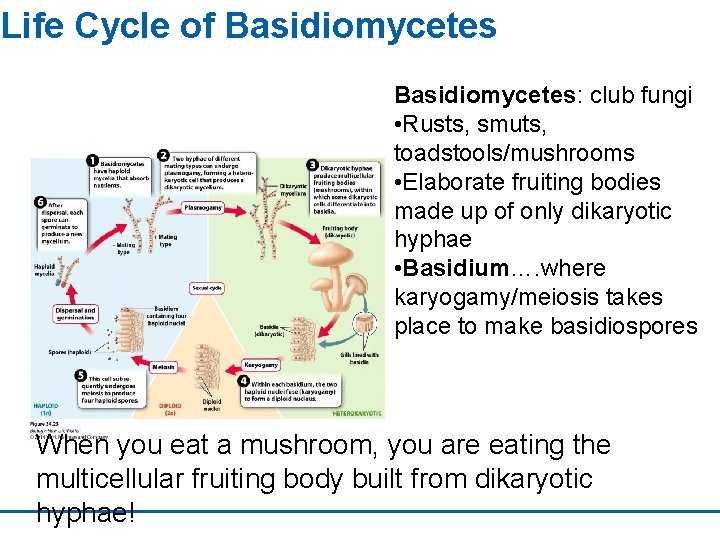
Life Cycle of Basidiomycetes: club fungi • Rusts, smuts, toadstools/mushrooms • Elaborate fruiting bodies made up of only dikaryotic hyphae • Basidium…. where karyogamy/meiosis takes place to make basidiospores When you eat a mushroom, you are eating the multicellular fruiting body built from dikaryotic hyphae!
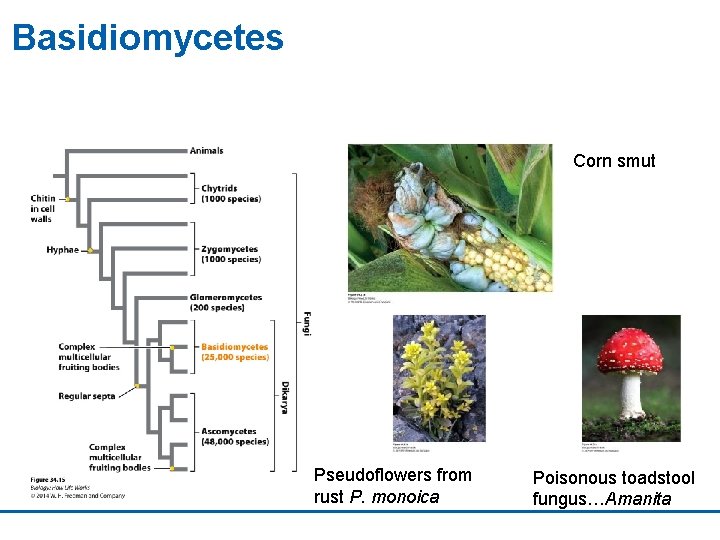
Basidiomycetes Corn smut Pseudoflowers from rust P. monoica Poisonous toadstool fungus…Amanita
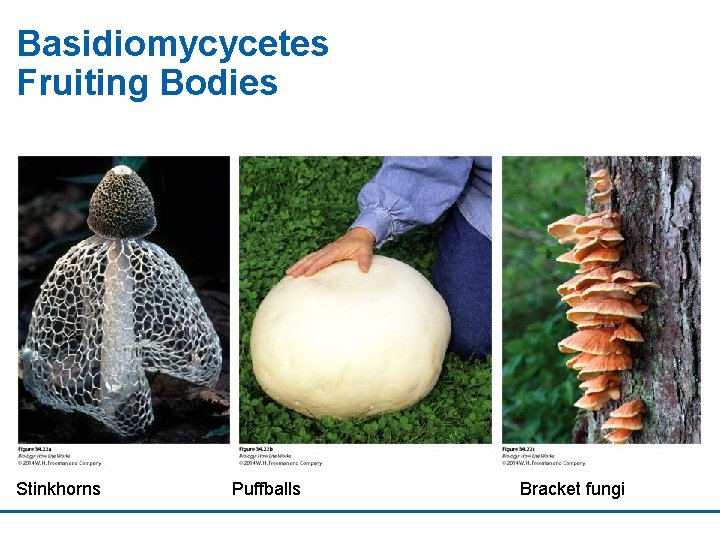
Basidiomycycetes Fruiting Bodies Stinkhorns Puffballs Bracket fungi
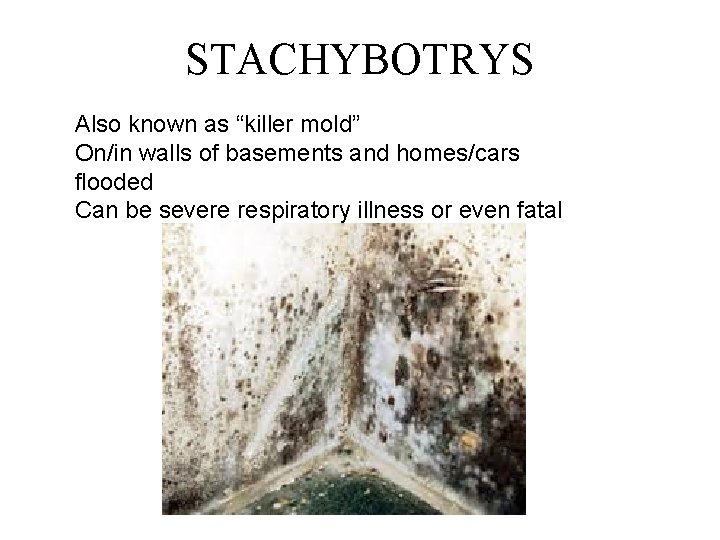
STACHYBOTRYS Also known as “killer mold” On/in walls of basements and homes/cars flooded Can be severe respiratory illness or even fatal
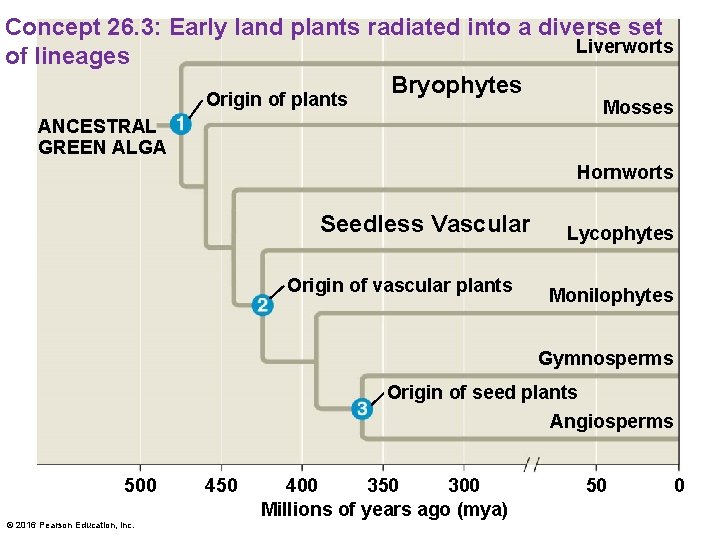
Concept 26. 3: Early land plants radiated into a diverse set Liverworts of lineages Bryophytes Origin of plants Mosses ANCESTRAL GREEN ALGA Hornworts Seedless Vascular Origin of vascular plants Lycophytes Monilophytes Gymnosperms Origin of seed plants Angiosperms 500 © 2016 Pearson Education, Inc. 450 400 350 300 Millions of years ago (mya) 50 0
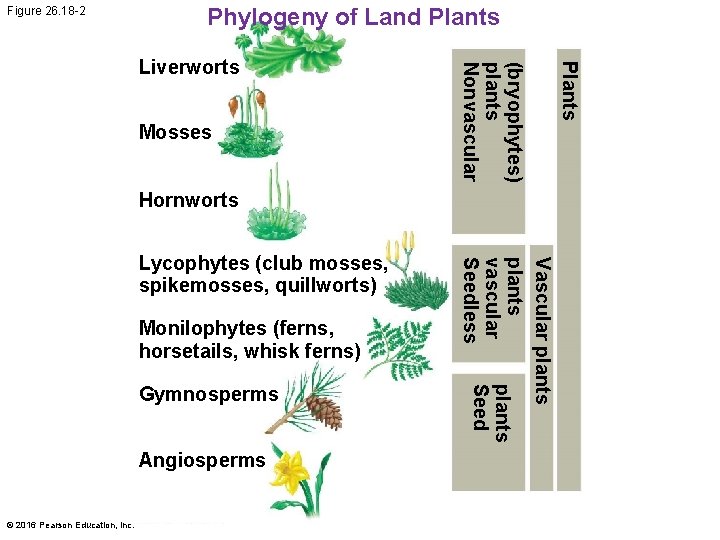
Figure 26. 18 -2 Phylogeny of Land Plants Hornworts Monilophytes (ferns, horsetails, whisk ferns) Gymnosperms Angiosperms © 2016 Pearson Education, Inc. Vascular plants vascular Seedless Lycophytes (club mosses, spikemosses, quillworts) Plants Mosses (bryophytes) plants Nonvascular Liverworts
Land Plants or Embryophytes § Land plants can be informally grouped based on the presence or absence of vascular tissue § Nonvascular plants are commonly called bryophytes; they have no vasculature or tubes § Most plants have vascular tissue for the transport of water and nutrients; these constitute the vascular plants § Xylem for water § Phloem for food © 2016 Pearson Education, Inc.
Bryophytes: A Collection of Basal Plant Lineages § Bryophytes are represented today by 3 clades of small herbaceous (nonwoody) plants § Liverworts § Mosses § Hornworts § These are thought to be the earliest lineages diverged from the common ancestor of land plants © 2016 Pearson Education, Inc.
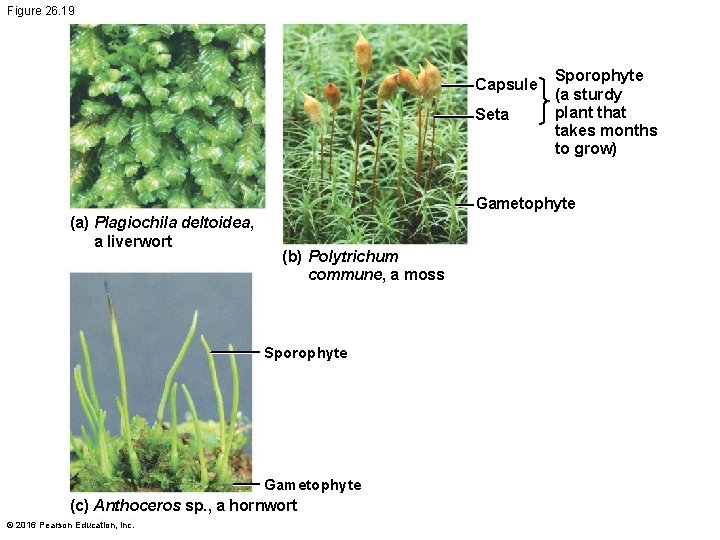
Figure 26. 19 Capsule Seta Sporophyte (a sturdy plant that takes months to grow) Gametophyte (a) Plagiochila deltoidea, a liverwort (b) Polytrichum commune, a moss Sporophyte Gametophyte (c) Anthoceros sp. , a hornwort © 2016 Pearson Education, Inc.
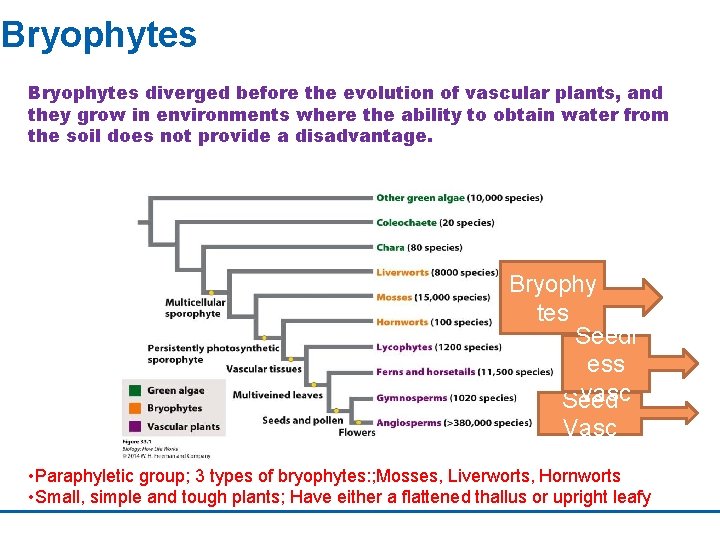
Bryophytes diverged before the evolution of vascular plants, and they grow in environments where the ability to obtain water from the soil does not provide a disadvantage. Bryophy tes Seedl ess vasc Seed Vasc • Paraphyletic group; 3 types of bryophytes: ; Mosses, Liverworts, Hornworts • Small, simple and tough plants; Have either a flattened thallus or upright leafy
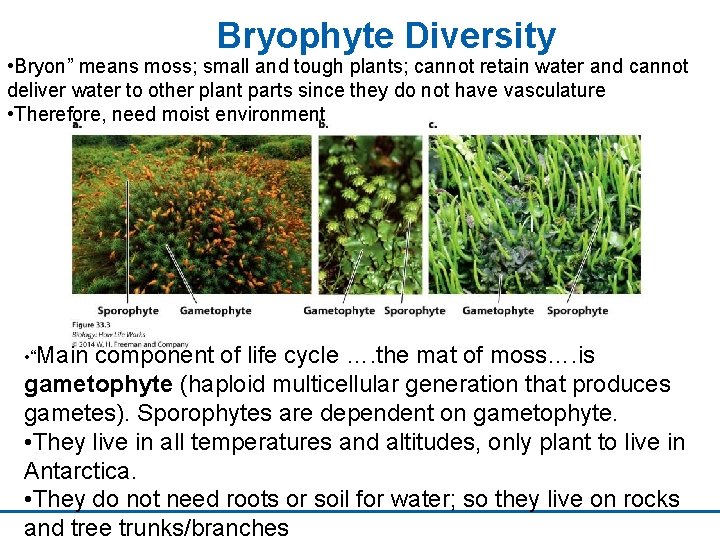
Bryophyte Diversity • Bryon” means moss; small and tough plants; cannot retain water and cannot deliver water to other plant parts since they do not have vasculature • Therefore, need moist environment • “Main component of life cycle …. the mat of moss…. is gametophyte (haploid multicellular generation that produces gametes). Sporophytes are dependent on gametophyte. • They live in all temperatures and altitudes, only plant to live in Antarctica. • They do not need roots or soil for water; so they live on rocks and tree trunks/branches
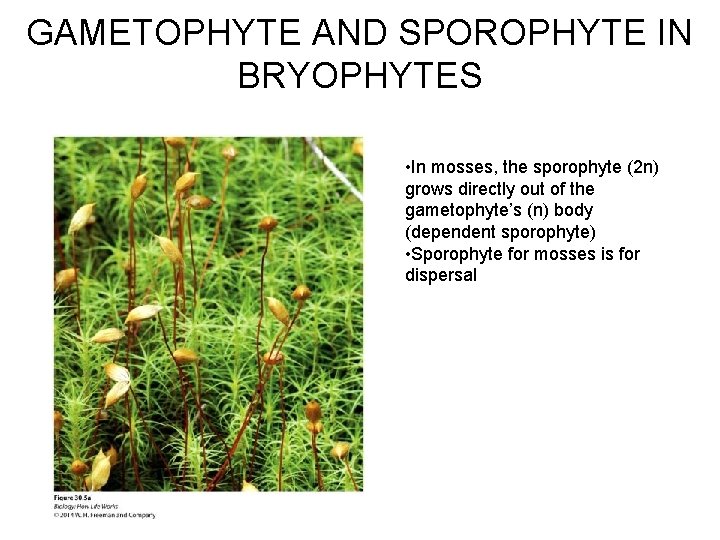
GAMETOPHYTE AND SPOROPHYTE IN BRYOPHYTES • In mosses, the sporophyte (2 n) grows directly out of the gametophyte’s (n) body (dependent sporophyte) • Sporophyte for mosses is for dispersal
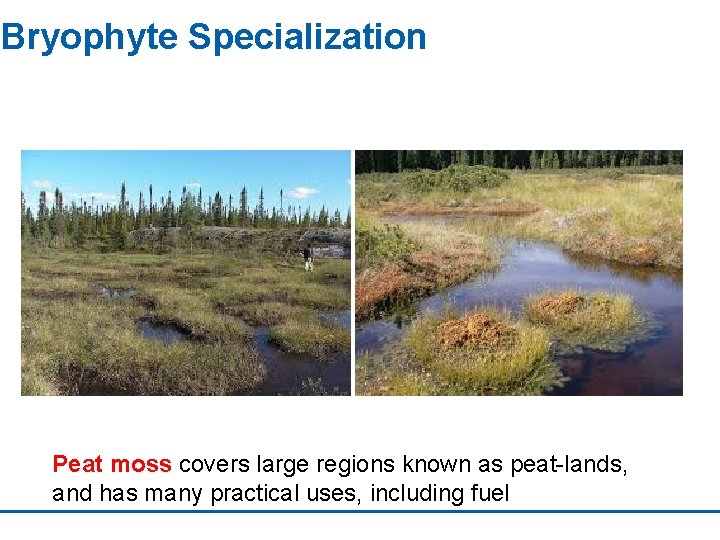
Bryophyte Specialization Peat moss covers large regions known as peat-lands, and has many practical uses, including fuel
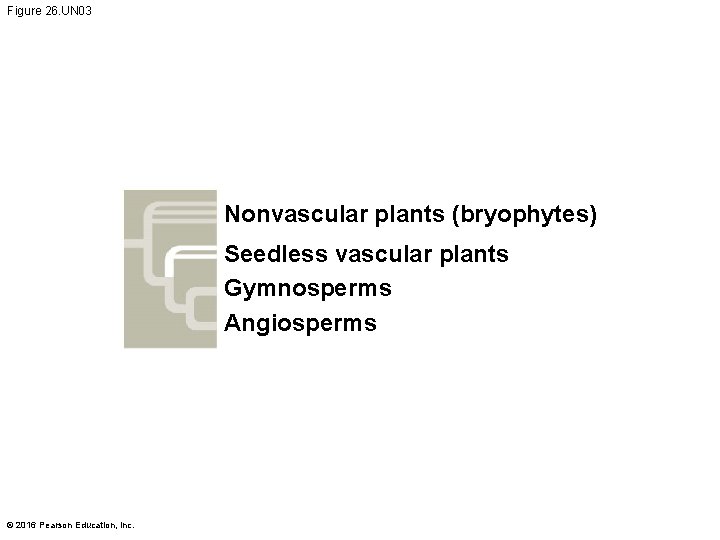
Figure 26. UN 03 Nonvascular plants (bryophytes) Seedless vascular plants Gymnosperms Angiosperms © 2016 Pearson Education, Inc.
Seedless Vascular Plants: The First Plants to Grow Tall § Vascular tissue allowed these plants to grow tall § Early vascular plants lacked seeds § Seedless vascular plants can be divided into two clades § Lycophytes (club mosses and their relatives) § Monilophytes (ferns and their relatives © 2016 Pearson Education, Inc.
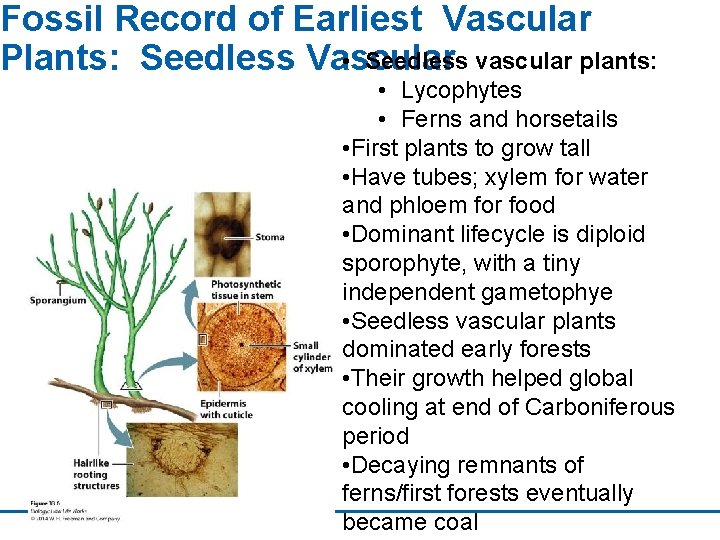
Fossil Record of Earliest Vascular • Seedless vascular plants: Plants: Seedless Vascular • Lycophytes • Ferns and horsetails • First plants to grow tall • Have tubes; xylem for water and phloem for food • Dominant lifecycle is diploid sporophyte, with a tiny independent gametophye • Seedless vascular plants dominated early forests • Their growth helped global cooling at end of Carboniferous period • Decaying remnants of ferns/first forests eventually became coal
SEEDLESS VASCULAR PLANTS Seedless vascular plants: • Ferns, horsetails, lycophytes • Depend on swimming sperm for fertilization and dispersal of spores into air • 1 st plants to grow tall…. xylem and phloem present in sporophyte generation • Large PS diploid sporophyte is dominant generation; height is crucial for spore dispersal • Gametophytes are small and close to ground to increase chances of fertilization Other difference with mosses: • In mosses…the gametophyte is PS generation • In vascular plants…. the sporophyte dominates in physical size and PS output
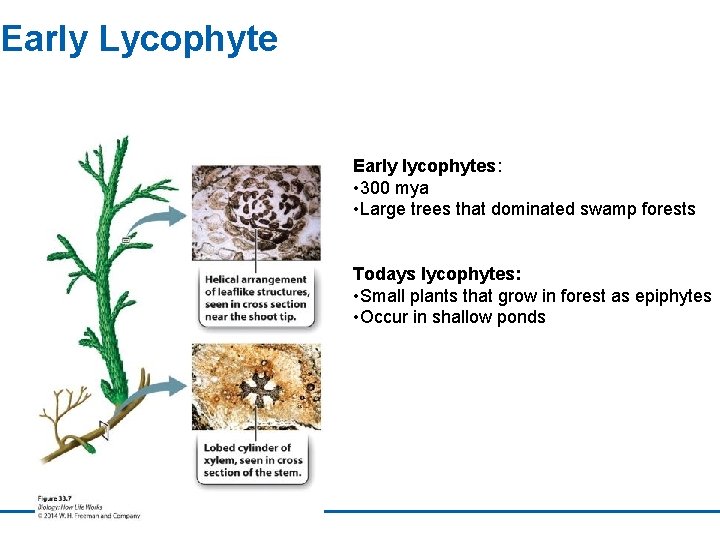
Early Lycophyte Early lycophytes: • 300 mya • Large trees that dominated swamp forests Todays lycophytes: • Small plants that grow in forest as epiphytes • Occur in shallow ponds
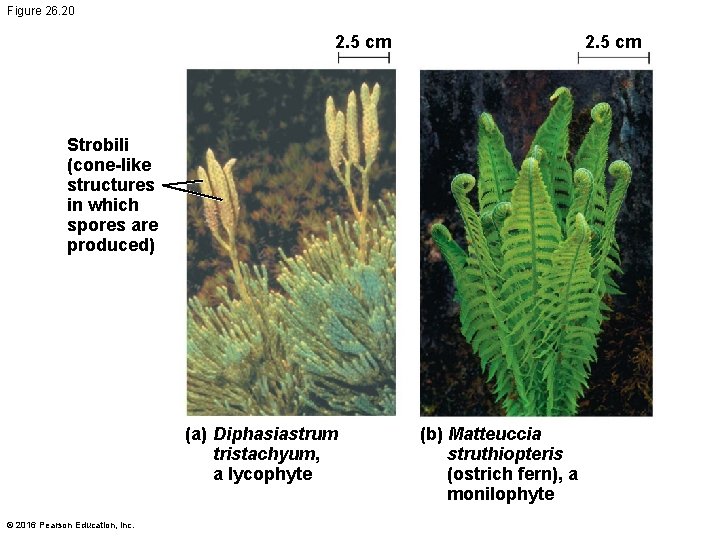
Figure 26. 20 2. 5 cm Strobili (cone-like structures in which spores are produced) (a) Diphasiastrum tristachyum, a lycophyte © 2016 Pearson Education, Inc. (b) Matteuccia struthiopteris (ostrich fern), a monilophyte
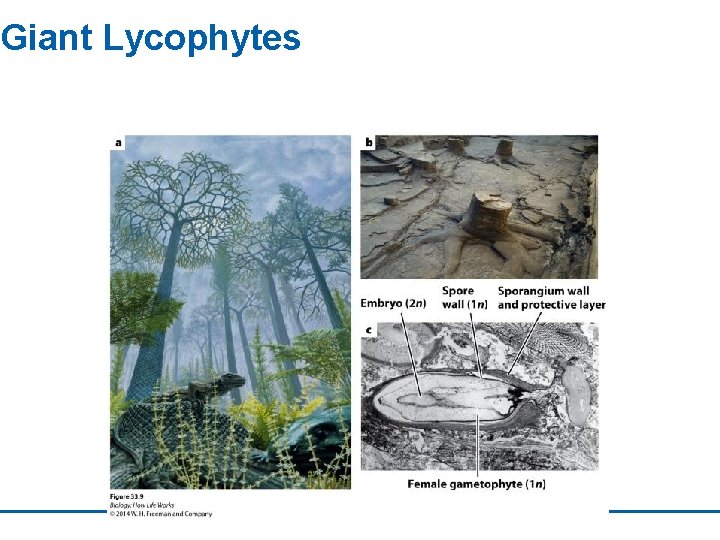
Giant Lycophytes
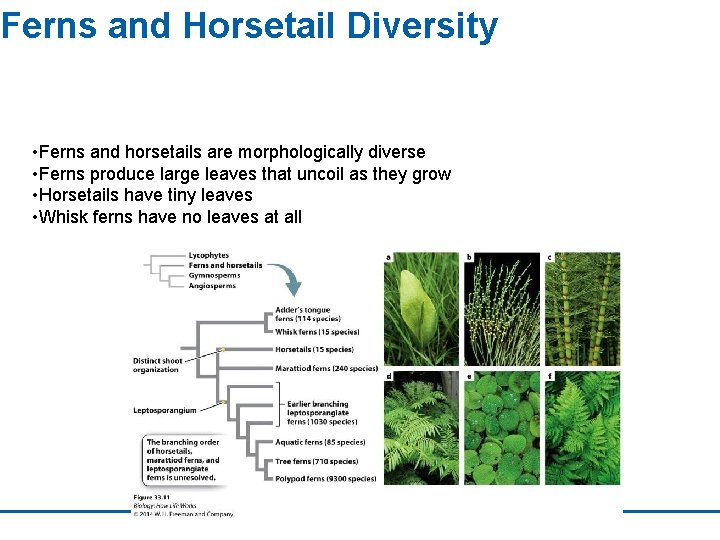
Ferns and Horsetail Diversity • Ferns and horsetails are morphologically diverse • Ferns produce large leaves that uncoil as they grow • Horsetails have tiny leaves • Whisk ferns have no leaves at all
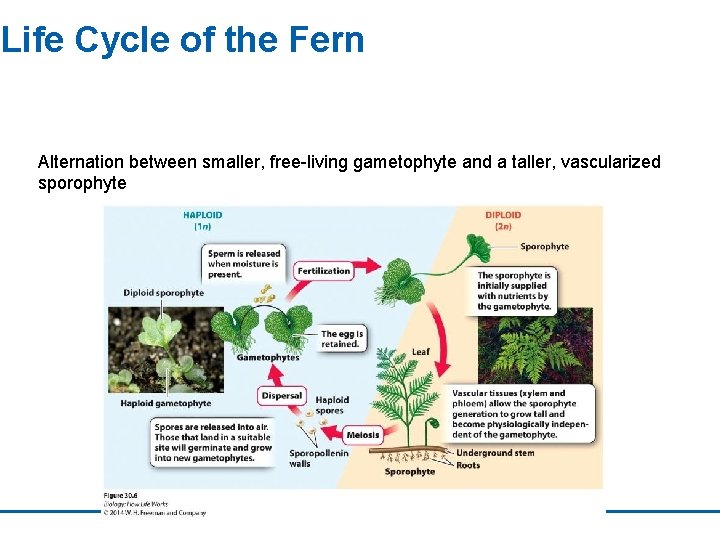
Life Cycle of the Fern Alternation between smaller, free-living gametophyte and a taller, vascularized sporophyte
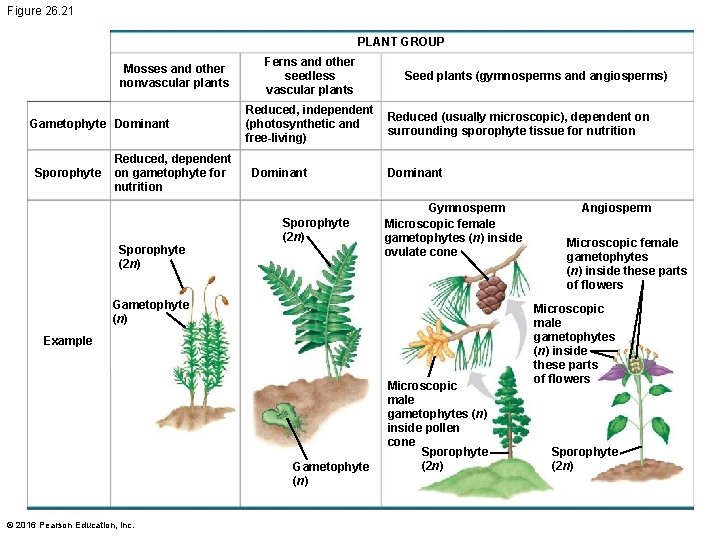
Figure 26. 21 PLANT GROUP Mosses and other nonvascular plants Gametophyte Dominant Sporophyte Reduced, dependent on gametophyte for nutrition Sporophyte (2 n) Ferns and other seedless vascular plants Reduced, independent (photosynthetic and free-living) Dominant Sporophyte (2 n) Seed plants (gymnosperms and angiosperms) Reduced (usually microscopic), dependent on surrounding sporophyte tissue for nutrition Dominant Gymnosperm Microscopic female gametophytes (n) inside ovulate cone Gametophyte (n) Example Gametophyte (n) © 2016 Pearson Education, Inc. Microscopic male gametophytes (n) inside pollen cone Sporophyte (2 n) Angiosperm Microscopic female gametophytes (n) inside these parts of flowers Microscopic male gametophytes (n) inside these parts of flowers Sporophyte (2 n)
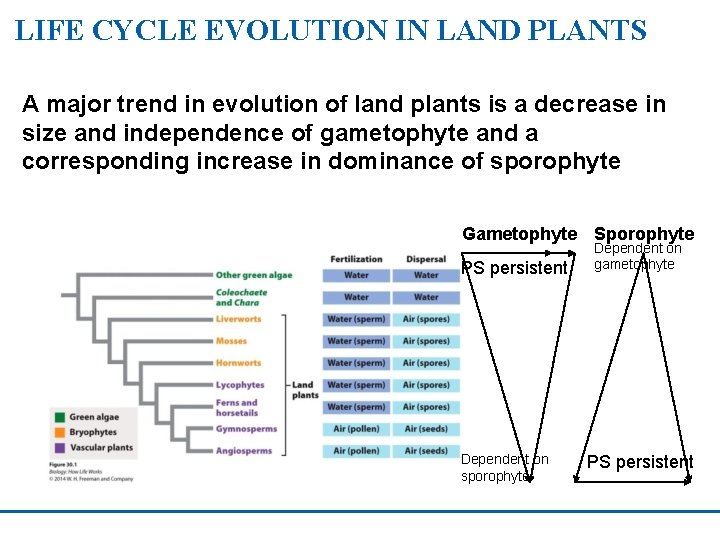
LIFE CYCLE EVOLUTION IN LAND PLANTS A major trend in evolution of land plants is a decrease in size and independence of gametophyte and a corresponding increase in dominance of sporophyte Gametophyte Sporophyte PS persistent Dependent on sporophyte Dependent on gametophyte PS persistent
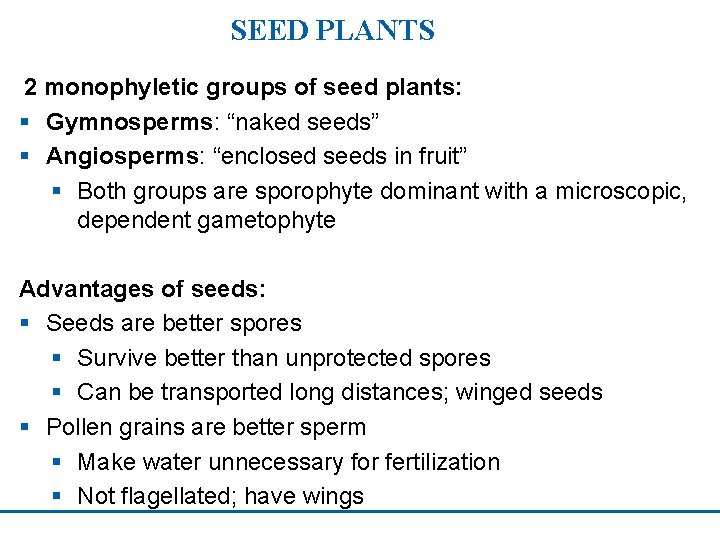
SEED PLANTS 2 monophyletic groups of seed plants: § Gymnosperms: “naked seeds” § Angiosperms: “enclosed seeds in fruit” § Both groups are sporophyte dominant with a microscopic, dependent gametophyte Advantages of seeds: § Seeds are better spores § Survive better than unprotected spores § Can be transported long distances; winged seeds § Pollen grains are better sperm § Make water unnecessary for fertilization § Not flagellated; have wings
Terrestrial Adaptations in Seed Plants § Common to all seed plants: § § Seeds Reduced gametophytes Ovules Pollen © 2016 Pearson Education, Inc.
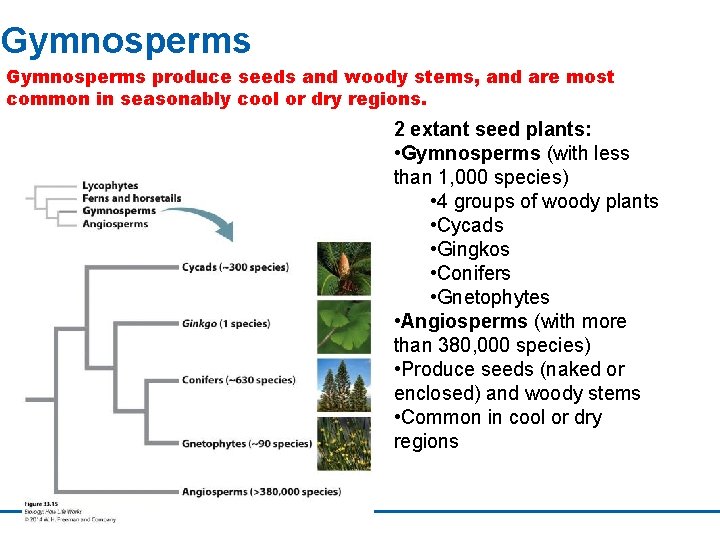
Gymnosperms produce seeds and woody stems, and are most common in seasonably cool or dry regions. 2 extant seed plants: • Gymnosperms (with less than 1, 000 species) • 4 groups of woody plants • Cycads • Gingkos • Conifers • Gnetophytes • Angiosperms (with more than 380, 000 species) • Produce seeds (naked or enclosed) and woody stems • Common in cool or dry regions
GYMNOSPERMS § Gymnosperms bear “naked seeds” (not in fruit), typically on cones ; I. e. conifers (pine trees), ginkos, cycads § Key features of life cycle: § Dominance of sporophyte generation § Development of seeds from fertilized ovules (female gametophyte) § Role of pollen (male gametophyte) in transferring sperm to ovules § Ovule: haploid female gametophyte; found on ovulate cones on the tree (sporophyte) § The ovule will become the seed when pollinated § Pollen grains: haploid male gametophytes; found on pollen cones’Airborne, resistant sperm cells that lack flagella; have wings instead § Fertilization by pollen transforms ovule into seed § Gymnosperms are wind pollinated
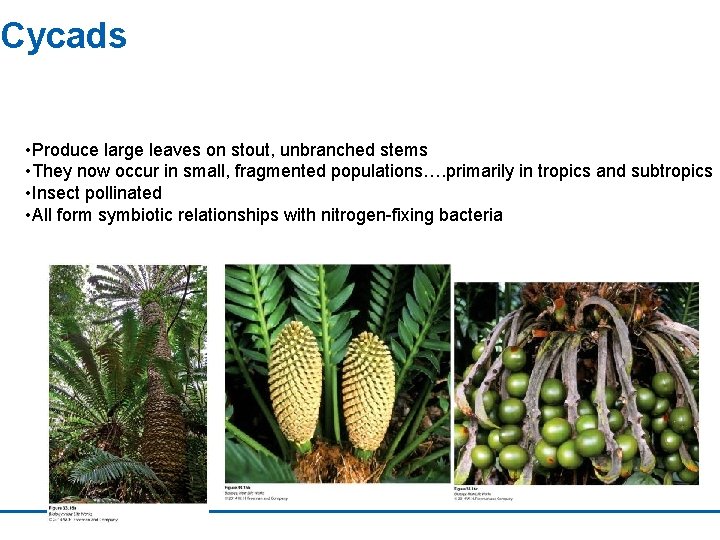
Cycads • Produce large leaves on stout, unbranched stems • They now occur in small, fragmented populations…. primarily in tropics and subtropics • Insect pollinated • All form symbiotic relationships with nitrogen-fixing bacteria
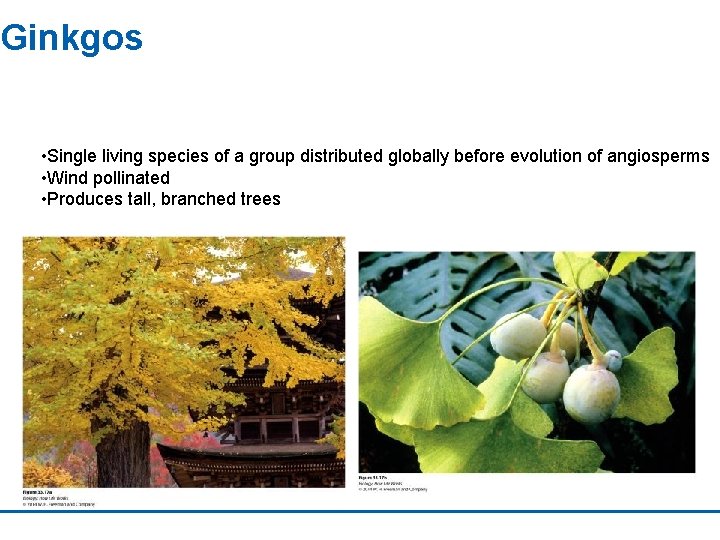
Ginkgos • Single living species of a group distributed globally before evolution of angiosperms • Wind pollinated • Produces tall, branched trees
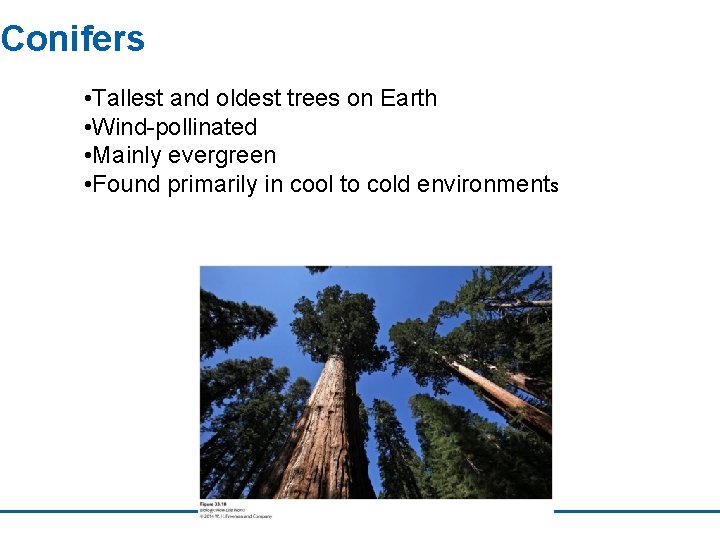
Conifers • Tallest and oldest trees on Earth • Wind-pollinated • Mainly evergreen • Found primarily in cool to cold environments
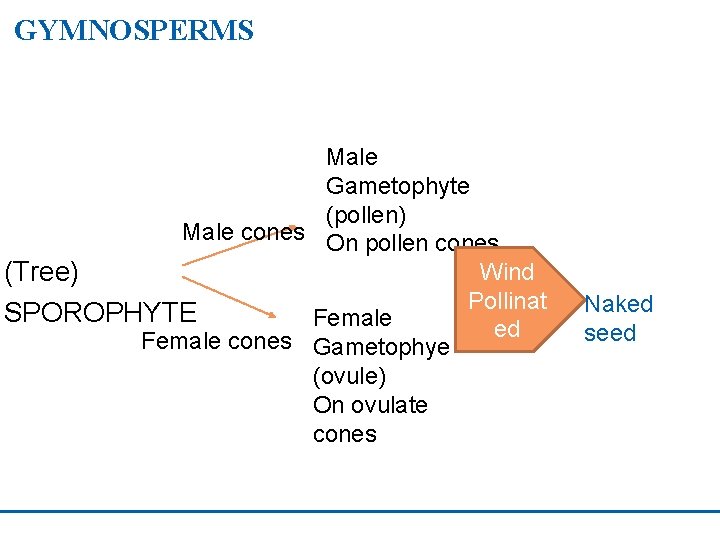
GYMNOSPERMS Male Gametophyte (pollen) Male cones On pollen cones Wind (Tree) Pollinat SPOROPHYTE Female ed Female cones Gametophye (ovule) On ovulate cones Naked seed
§ Gymnosperms were better suited than nonvascular plants to drier conditions due to adaptations including § Seeds and pollen § Thick cuticles § Leaves with small surface area © 2016 Pearson Education, Inc.
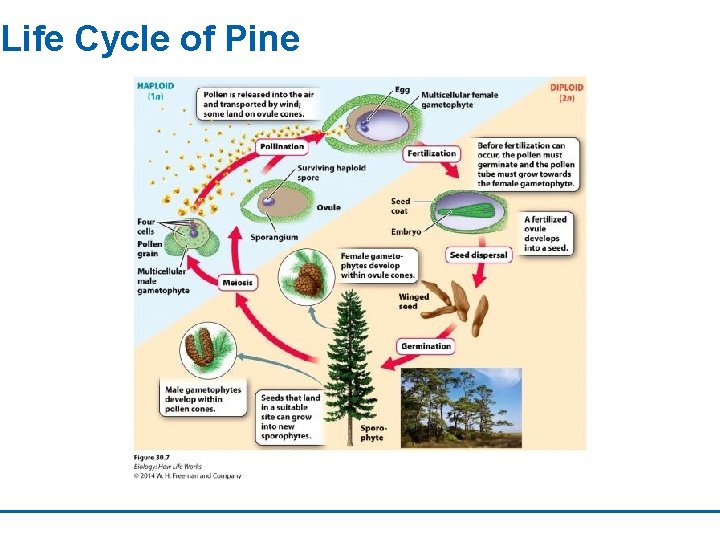
Life Cycle of Pine
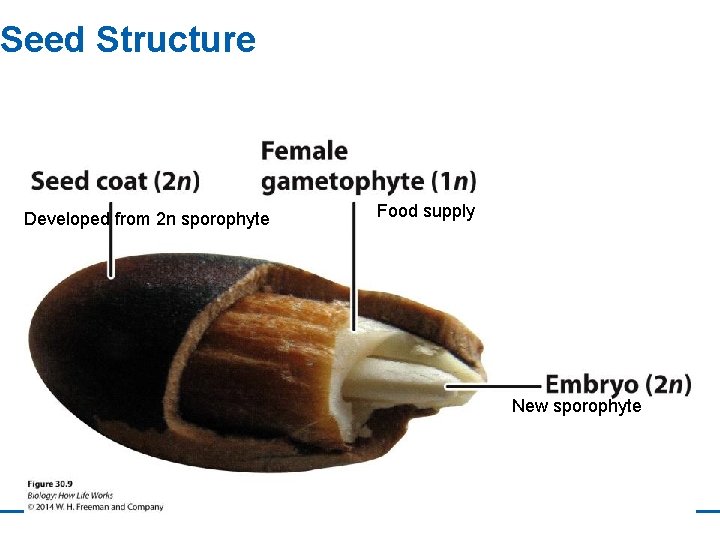
Seed Structure Developed from 2 n sporophyte Food supply New sporophyte
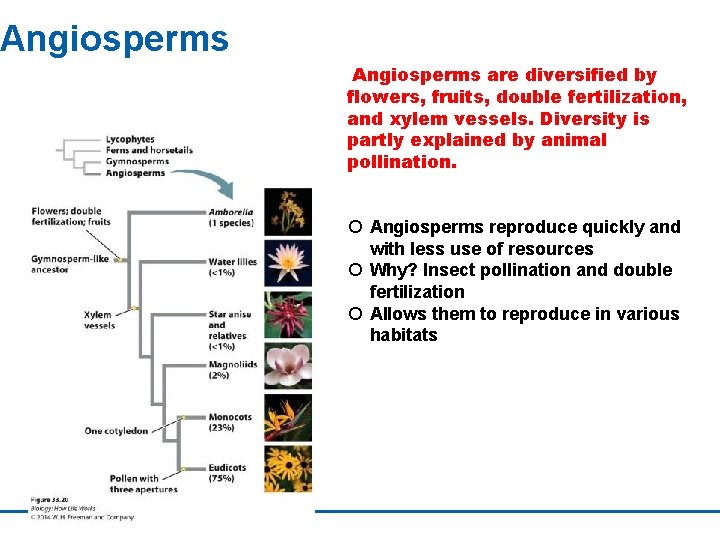
Angiosperms are diversified by flowers, fruits, double fertilization, and xylem vessels. Diversity is partly explained by animal pollination. Angiosperms reproduce quickly and with less use of resources Why? Insect pollination and double fertilization Allows them to reproduce in various habitats
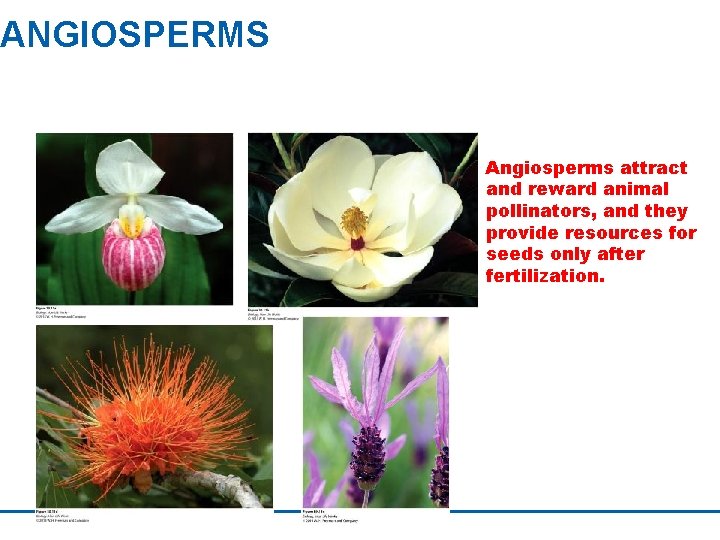
ANGIOSPERMS Angiosperms attract and reward animal pollinators, and they provide resources for seeds only after fertilization.
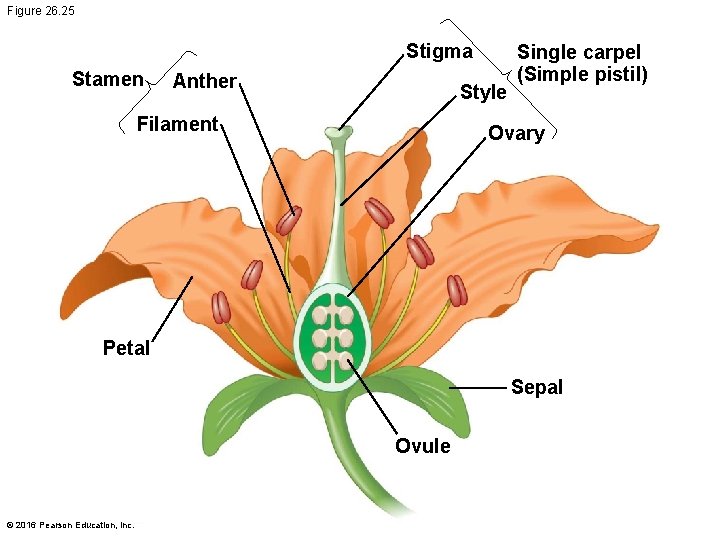
Figure 26. 25 Stigma Stamen Anther Style Filament Single carpel (Simple pistil) Ovary Petal Sepal Ovule © 2016 Pearson Education, Inc.
§ A flower is a specialized shoot with up to four types of modified leaves called floral organs § Sepals, which enclose the flower § Petals, which are brightly colored and attract pollinators § Stamens, which produce pollen § Carpels, which produce ovules © 2016 Pearson Education, Inc.
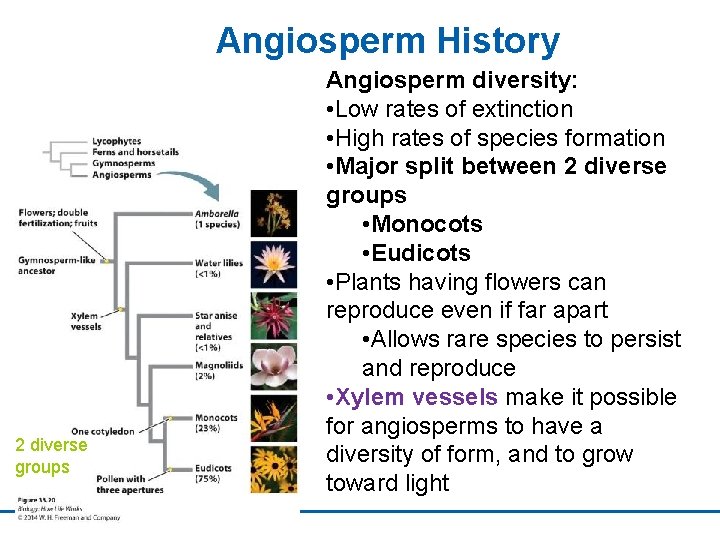
Angiosperm History 2 diverse groups Angiosperm diversity: • Low rates of extinction • High rates of species formation • Major split between 2 diverse groups • Monocots • Eudicots • Plants having flowers can reproduce even if far apart • Allows rare species to persist and reproduce • Xylem vessels make it possible for angiosperms to have a diversity of form, and to grow toward light
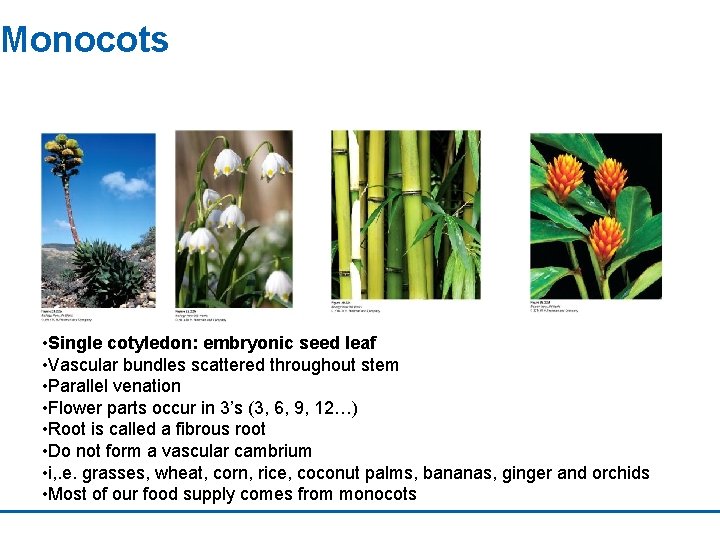
Monocots • Single cotyledon: embryonic seed leaf • Vascular bundles scattered throughout stem • Parallel venation • Flower parts occur in 3’s (3, 6, 9, 12…) • Root is called a fibrous root • Do not form a vascular cambrium • i, . e. grasses, wheat, corn, rice, coconut palms, bananas, ginger and orchids • Most of our food supply comes from monocots
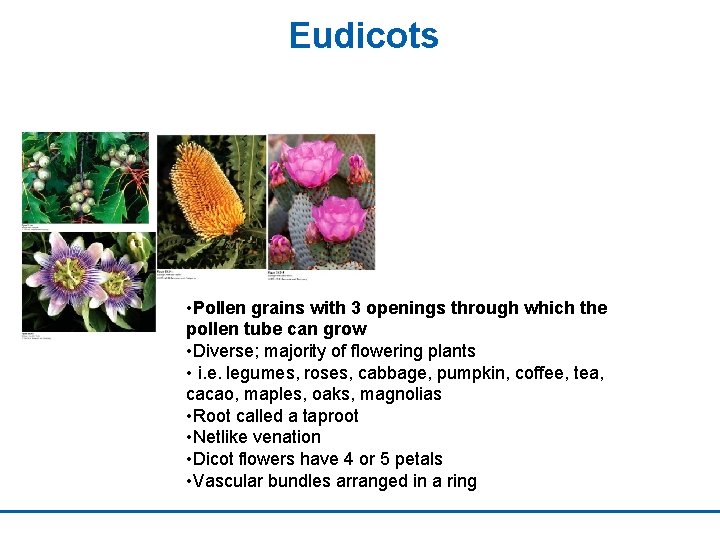
Eudicots • Pollen grains with 3 openings through which the pollen tube can grow • Diverse; majority of flowering plants • i. e. legumes, roses, cabbage, pumpkin, coffee, tea, cacao, maples, oaks, magnolias • Root called a taproot • Netlike venation • Dicot flowers have 4 or 5 petals • Vascular bundles arranged in a ring
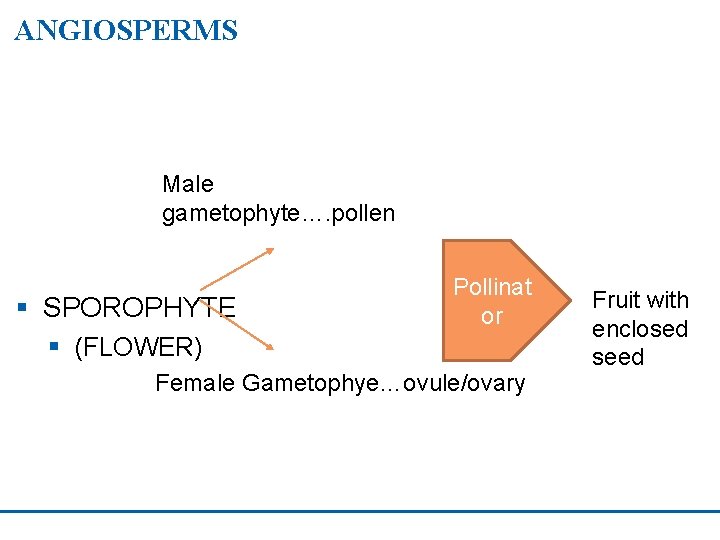
ANGIOSPERMS Male gametophyte…. pollen § SPOROPHYTE Pollinat or § (FLOWER) Female Gametophye…ovule/ovary Fruit with enclosed seed
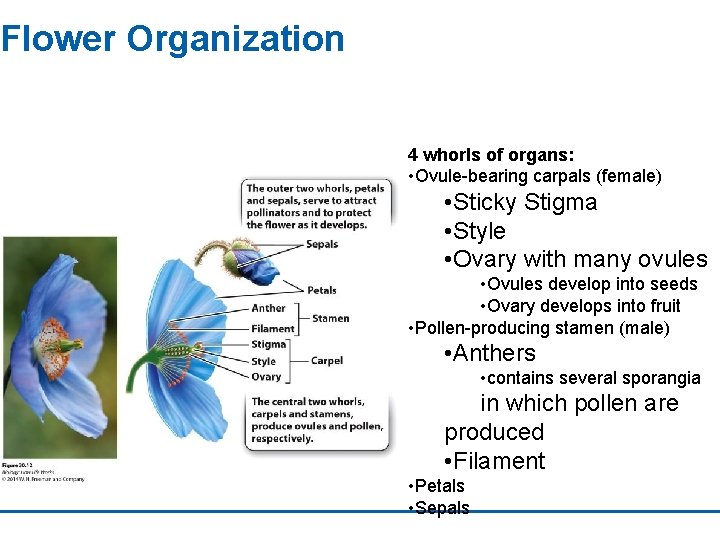
Flower Organization 4 whorls of organs: • Ovule-bearing carpals (female) • Sticky Stigma • Style • Ovary with many ovules • Ovules develop into seeds • Ovary develops into fruit • Pollen-producing stamen (male) • Anthers • contains several sporangia in which pollen are produced • Filament • Petals • Sepals
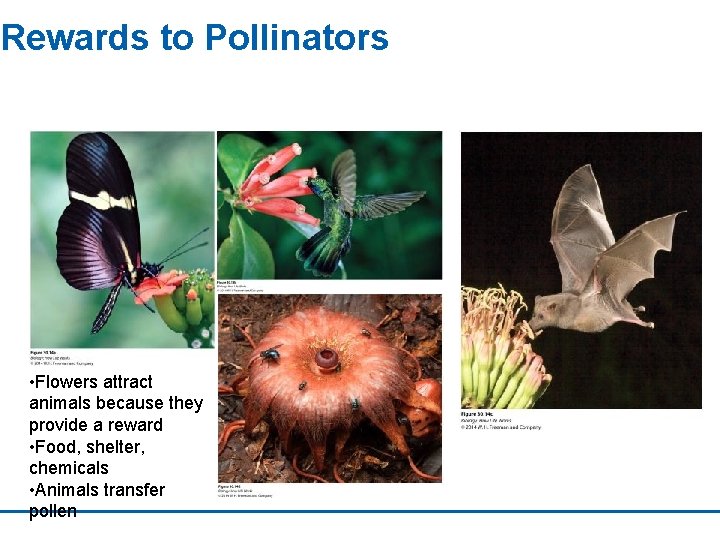
Rewards to Pollinators • Flowers attract animals because they provide a reward • Food, shelter, chemicals • Animals transfer pollen
POLLINATION AND DOUBLE FERTILIZATION IN ANGIOSPERMS § Pollination: Pollen carried by pollinator to stigma § Pollinators…. bees, hummingbirds, butterflies § Fly to flower to eat nectar; get pollen on their legs from anthers § Pollen Tube Germination: Pollen lands on sticky stigma § Pollen has 2 types of cells: § Tube cell: burrows down to ovules § Generative cell: divides to form 2 sperm cells which travel down to ovule
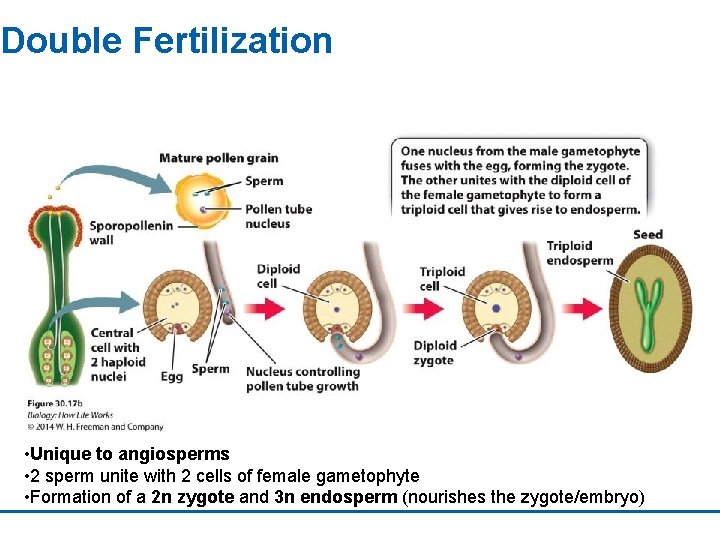
Double Fertilization • Unique to angiosperms • 2 sperm unite with 2 cells of female gametophyte • Formation of a 2 n zygote and 3 n endosperm (nourishes the zygote/embryo)
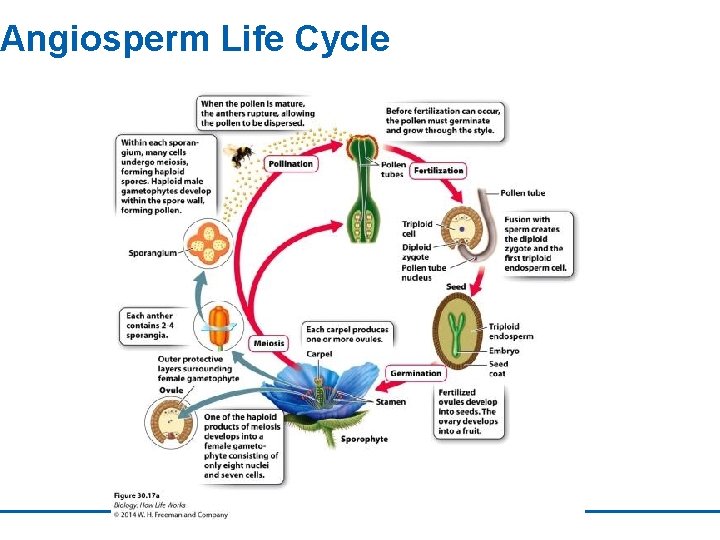
Angiosperm Life Cycle
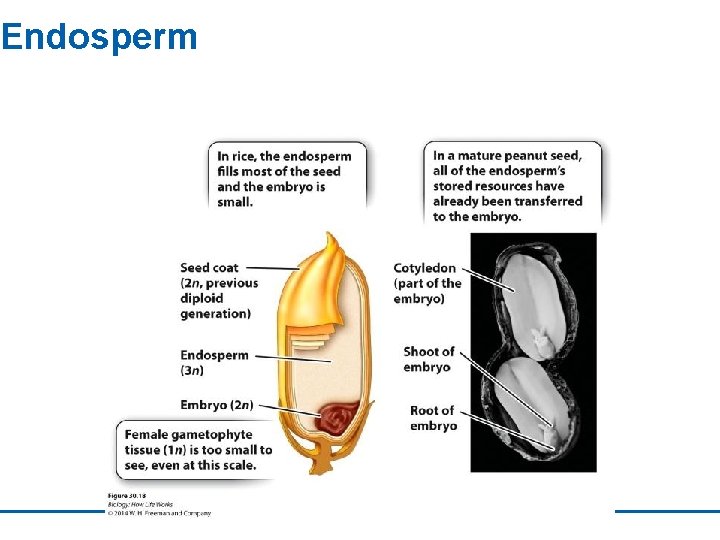
Endosperm
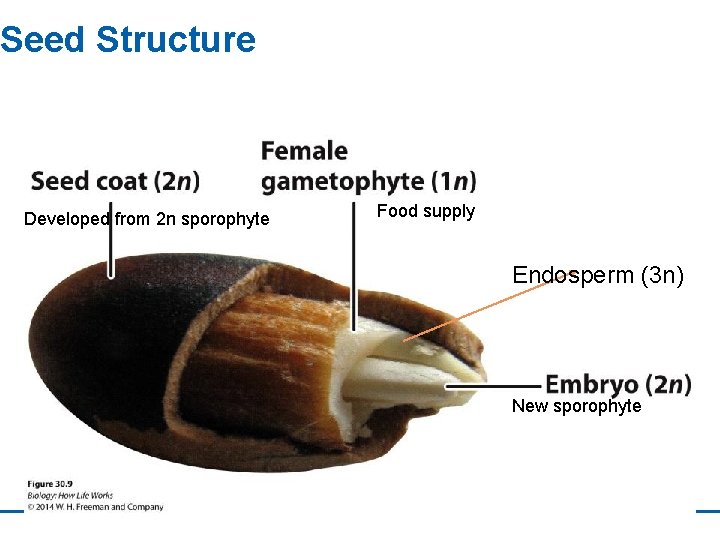
Seed Structure Developed from 2 n sporophyte Food supply Endosperm (3 n) New sporophyte
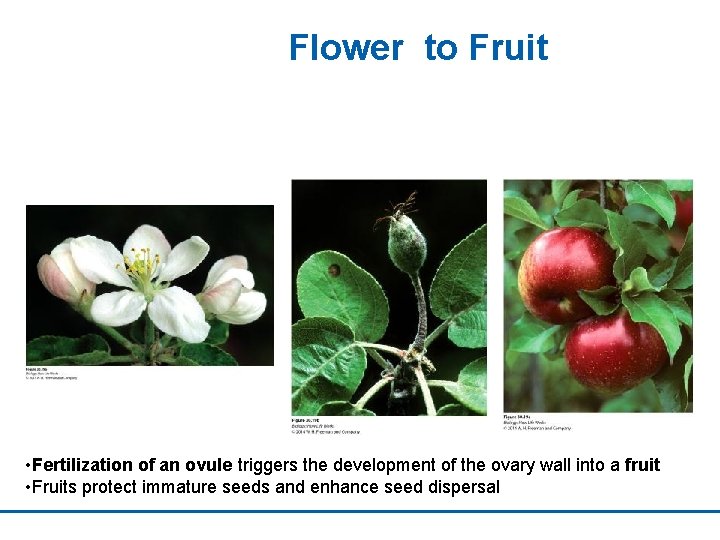
Flower to Fruit • Fertilization of an ovule triggers the development of the ovary wall into a fruit • Fruits protect immature seeds and enhance seed dispersal
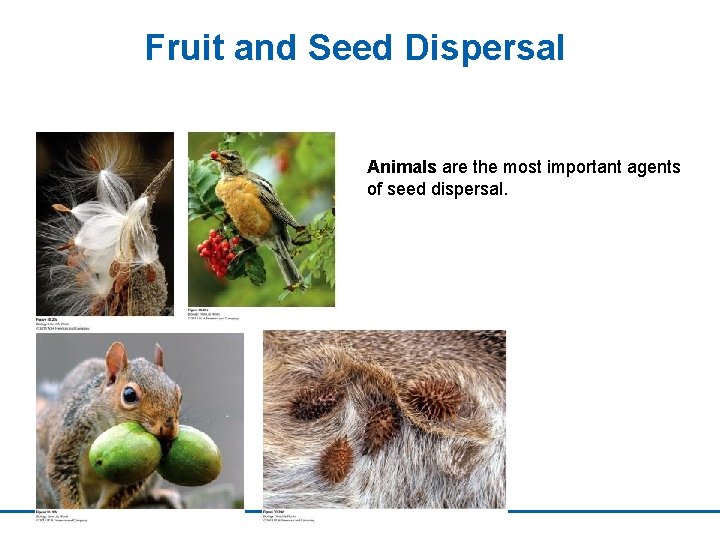
Fruit and Seed Dispersal Animals are the most important agents of seed dispersal.
- Slides: 87