
CAMPBELL BIOLOGY CONCEPTS CONNECTIONS NINTH EDITION Power Point
CAMPBELL BIOLOGY: CONCEPTS & CONNECTIONS, NINTH EDITION Power. Point Lectures Chapter 22 Gas Exchange TAYLOR SIMON DICKEY HOGAN REECE © 2018 Pearson Education, Inc. Lecture by Edward J. Zalisko
Introduction • The health risks of smoking have been linked to the thousands of substances in tobacco smoke, including • • nicotine, a highly addictive substance, tar, carbon monoxide, and dozens of chemicals that are known to cause cancer. © 2018 Pearson Education, Inc.
Introduction • E-cigarettes are battery-powered devices that vaporize a liquid containing nicotine, thus enabling users to inhale the drug without burning tobacco. • The flavoring liquids used in many e-cigarettes contain chemicals that have been linked to severe respiratory diseases. © 2018 Pearson Education, Inc.
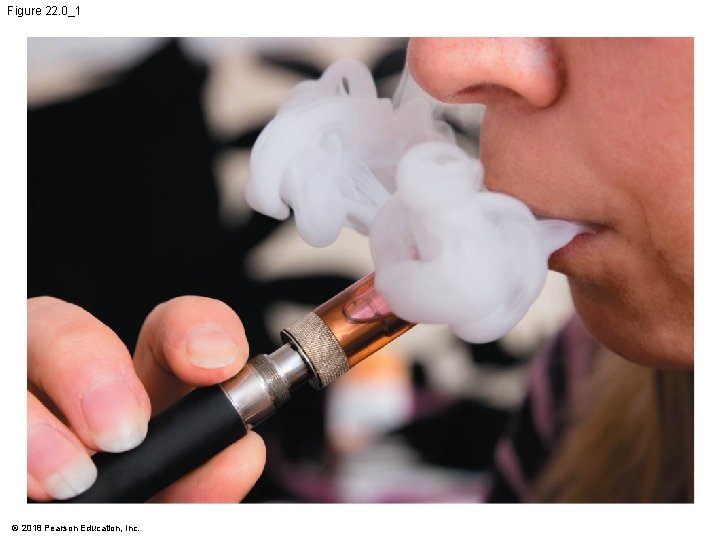
Figure 22. 0_1 © 2018 Pearson Education, Inc.
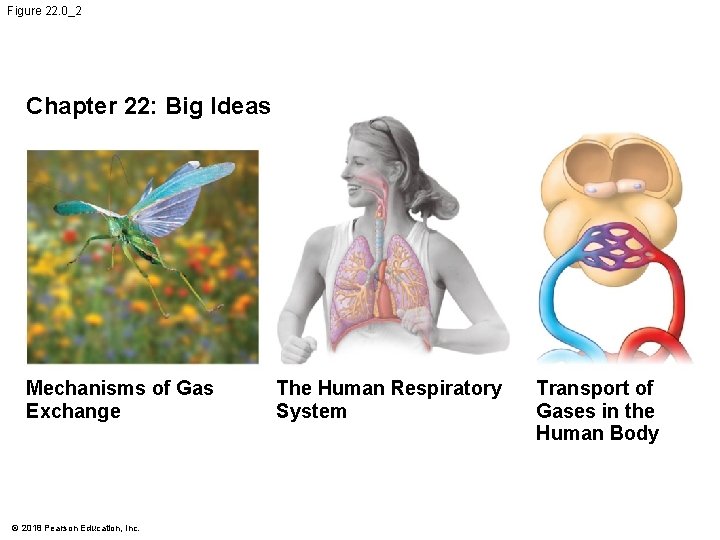
Figure 22. 0_2 Chapter 22: Big Ideas Mechanisms of Gas Exchange © 2018 Pearson Education, Inc. The Human Respiratory System Transport of Gases in the Human Body
MECHANISMS OF GAS EXCHANGE © 2018 Pearson Education, Inc.
22. 1 Gas exchange in humans involves breathing, transport of gases, and exchange with body cells • Gas exchange, the interchange of O 2 and CO 2 between an organism and its environment, • provides O 2 for cellular respiration and • removes its waste product, CO 2. © 2018 Pearson Education, Inc.
22. 1 Gas exchange in humans involves breathing, transport of gases, and exchange with body cells • Three phases of gas exchange occur in humans and other animals with lungs: 1. breathing, 2. transport of gases by the circulatory system, and 3. exchange of gases with body cells: Body tissues take up O 2 from the blood and release CO 2 to the blood. Checkpoint question Humans cannot survive for more than a few minutes without O 2. Why? © 2018 Pearson Education, Inc.
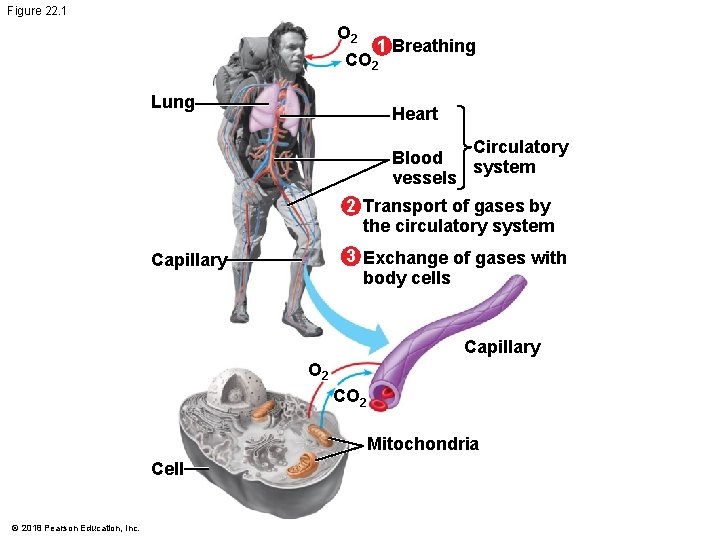
Figure 22. 1 O 2 1 Breathing CO 2 Lung Heart Circulatory Blood system vessels 2 Transport of gases by the circulatory system 3 Exchange of gases with body cells Capillary O 2 CO 2 Mitochondria Cell © 2018 Pearson Education, Inc.
22. 2 Animals exchange O 2 and CO 2 across moist body surfaces • Respiratory surfaces must be thin and moist for diffusion of O 2 and CO 2 to occur. • Some animals use their entire skin as a gas exchange organ. • In most animals, gills, a tracheal system, or lungs provide large respiratory surfaces for gas exchange. Checkpoint question How does the structure of the respiratory surface of a gill or lung fit its function? © 2018 Pearson Education, Inc.
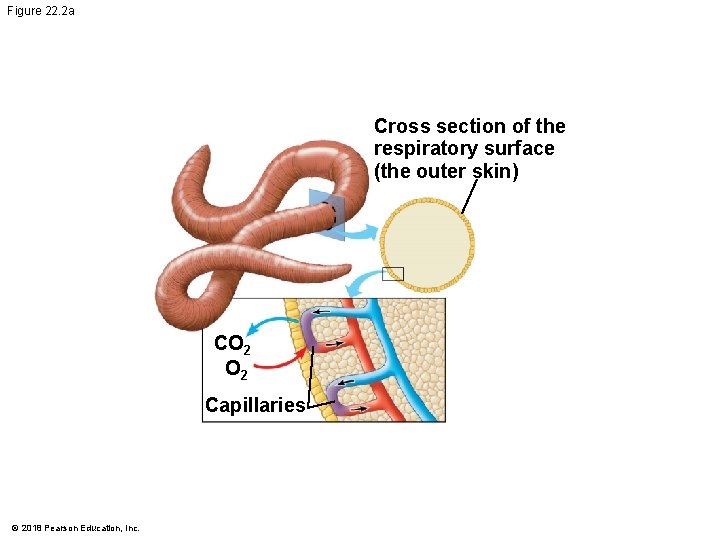
Figure 22. 2 a Cross section of the respiratory surface (the outer skin) CO 2 Capillaries © 2018 Pearson Education, Inc.
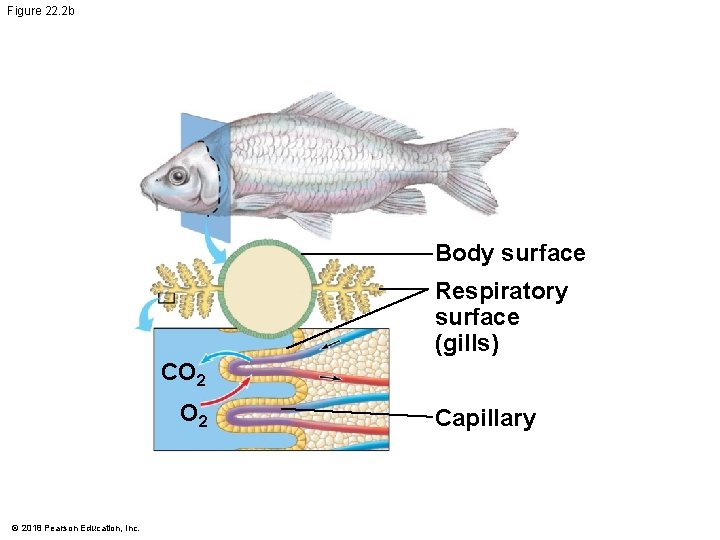
Figure 22. 2 b Body surface Respiratory surface (gills) CO 2 © 2018 Pearson Education, Inc. Capillary
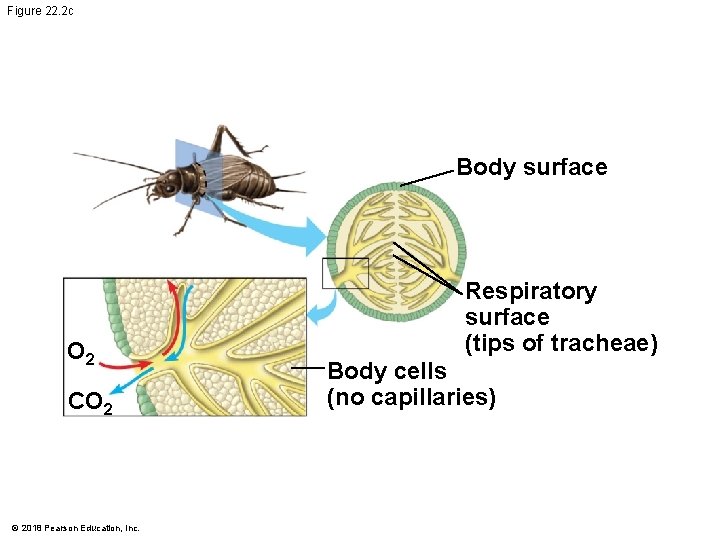
Figure 22. 2 c Body surface O 2 CO 2 © 2018 Pearson Education, Inc. Respiratory surface (tips of tracheae) Body cells (no capillaries)
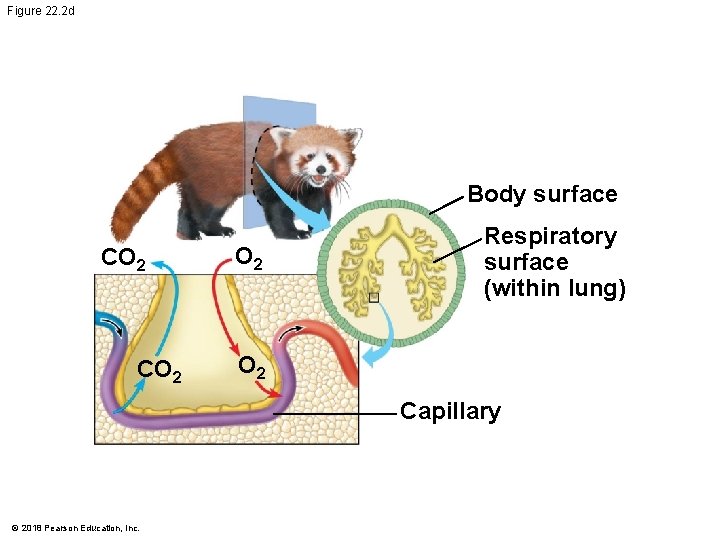
Figure 22. 2 d Body surface CO 2 O 2 Respiratory surface (within lung) O 2 Capillary © 2018 Pearson Education, Inc.
22. 3 VISUALIZING THE CONCEPT: Gills are adapted for gas exchange in aquatic environments • Gills absorb O 2 dissolved in water. • In a fish, gas exchange is enhanced by ventilation, the flow of water (or air) over the respiratory surface, and countercurrent exchange, the transfer of a substance such as oxygen between two fluids flowing in opposite directions. © 2018 Pearson Education, Inc.

Figure 22. 3_s 1 GILL STRUCTURE Blood vessels Water flow Gill arch Operculum (gill cover) Water flow Gill filaments bearing many platelike lamellae © 2018 Pearson Education, Inc.

Figure 22. 3_s 2 GILL STRUCTURE Blood vessels Water flow Gill arch Operculum (gill cover) Direction of blood flow through capillaries in lamellae Water flow Gill filaments bearing many platelike lamellae Oxygen-poor Oxygen-rich blood coming from blood going to the heart body tissues Lamella Oxygen-rich water © 2018 Pearson Education, Inc. Oxygen-poor water
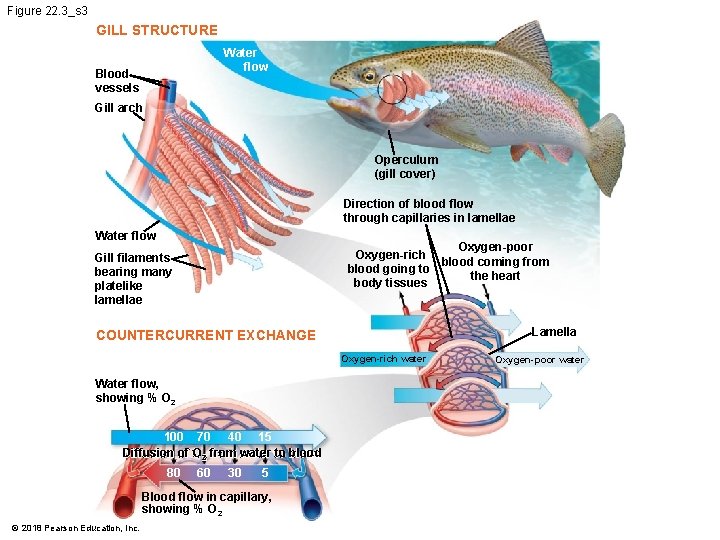
Figure 22. 3_s 3 GILL STRUCTURE Water flow Blood vessels Gill arch Operculum (gill cover) Direction of blood flow through capillaries in lamellae Water flow Oxygen-poor Oxygen-rich blood coming from blood going to the heart body tissues Gill filaments bearing many platelike lamellae Lamella COUNTERCURRENT EXCHANGE Oxygen-rich water Water flow, showing % O 2 100 70 40 15 Diffusion of O 2 from water to blood 80 60 30 5 Blood flow in capillary, showing % O 2 © 2018 Pearson Education, Inc. Oxygen-poor water

Figure 22. 3_1 GILL STRUCTURE Blood vessels Water flow Gill arch Operculum (gill cover) Water flow Gill filaments bearing many platelike lamellae © 2018 Pearson Education, Inc.
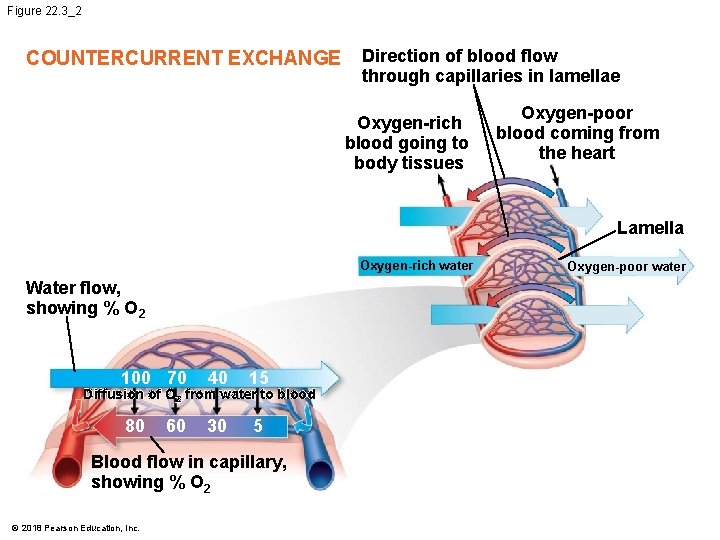
Figure 22. 3_2 COUNTERCURRENT EXCHANGE Direction of blood flow through capillaries in lamellae Oxygen-rich blood going to body tissues Oxygen-poor blood coming from the heart Lamella Oxygen-rich water Water flow, showing % O 2 100 70 40 15 80 30 5 Diffusion of O 2 from water to blood 60 Blood flow in capillary, showing % O 2 © 2018 Pearson Education, Inc. Oxygen-poor water
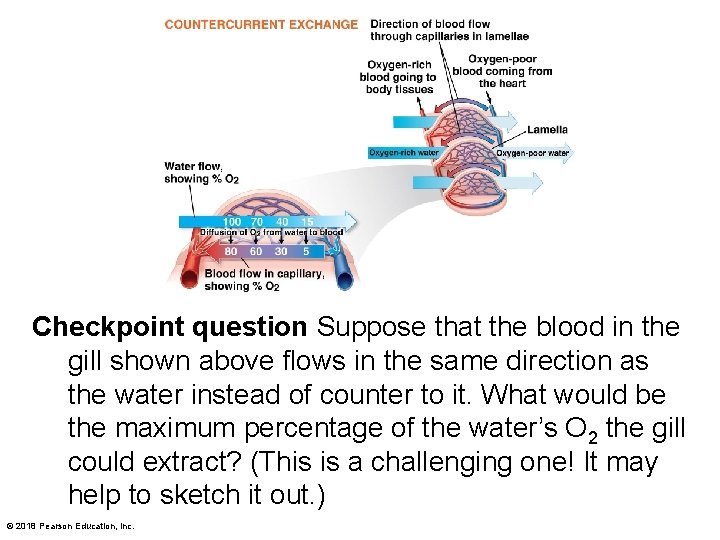
Checkpoint question Suppose that the blood in the gill shown above flows in the same direction as the water instead of counter to it. What would be the maximum percentage of the water’s O 2 the gill could extract? (This is a challenging one! It may help to sketch it out. ) © 2018 Pearson Education, Inc.
22. 4 The tracheal system of insects provides direct exchange between the air and body cells • There are two big advantages to breathing air: 1. Air contains a much higher concentration of O 2 than does water. 2. Air is much lighter and easier to move than water. © 2018 Pearson Education, Inc.
22. 4 The tracheal system of insects provides direct exchange between the air and body cells • The tracheal system of insects, with respiratory surfaces at the tips of tiny branching tubes inside the body, • transports O 2 directly to body cells and moves CO 2 away from them and • greatly reduces evaporative water loss. • The largest tubes, called tracheae, connect to external openings spaced along the body. © 2018 Pearson Education, Inc.
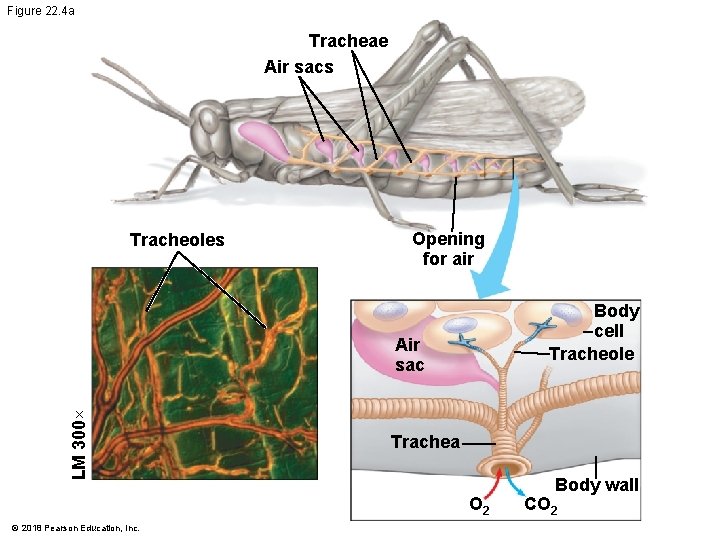
Figure 22. 4 a Tracheae Air sacs Tracheoles Opening for air Body cell Tracheole LM 300× Air sac Trachea O 2 © 2018 Pearson Education, Inc. Body wall CO 2
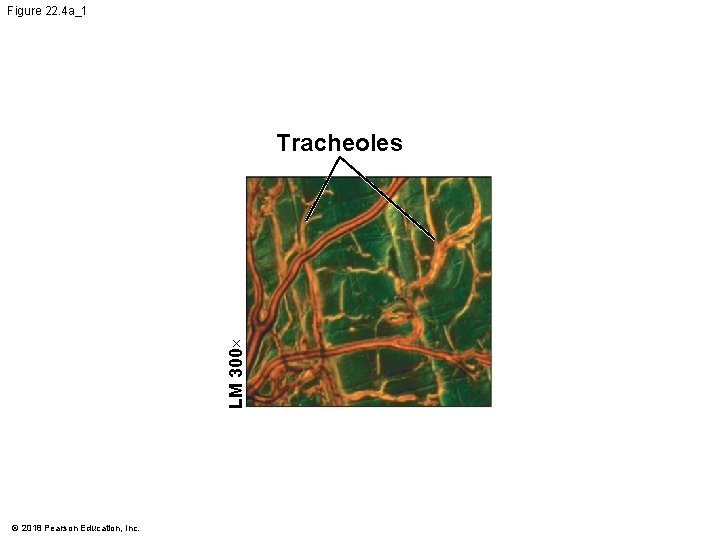
Figure 22. 4 a_1 LM 300× Tracheoles © 2018 Pearson Education, Inc.
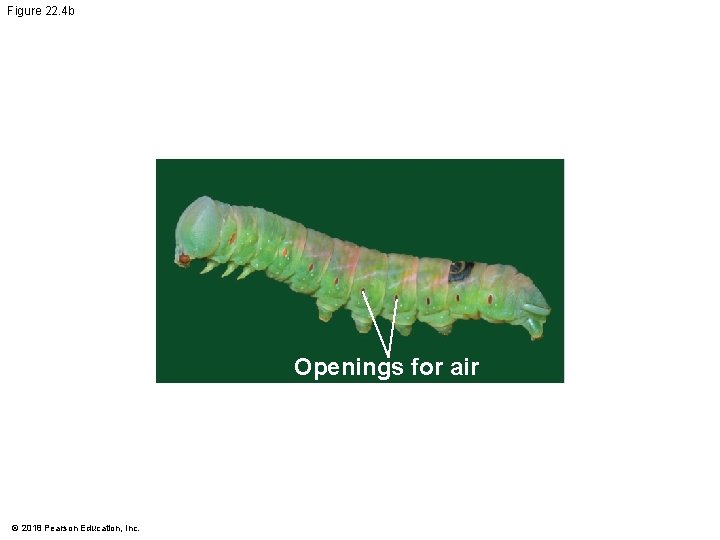
Figure 22. 4 b Openings for air © 2018 Pearson Education, Inc.
Figure 22. 4 c © 2018 Pearson Education, Inc.
22. 4 The tracheal system of insects provides direct exchange between the air and body cells Checkpoint question In what fundamental way does the process of gas exchange in insects differ from that in both fishes and humans? © 2018 Pearson Education, Inc.
22. 5 EVOLUTION CONNECTION: The evolution of lungs facilitated the movement of tetrapods onto land • The colonization of land by vertebrates was one of the pivotal milestones in the history of life. • The evolution of legs from fins may be the most obvious change in body design, but the refinement of lung breathing was just as important. • Skeletal adaptations of air-breathing fish such as Tiktaalik may have helped early tetrapods move onto land. © 2018 Pearson Education, Inc.
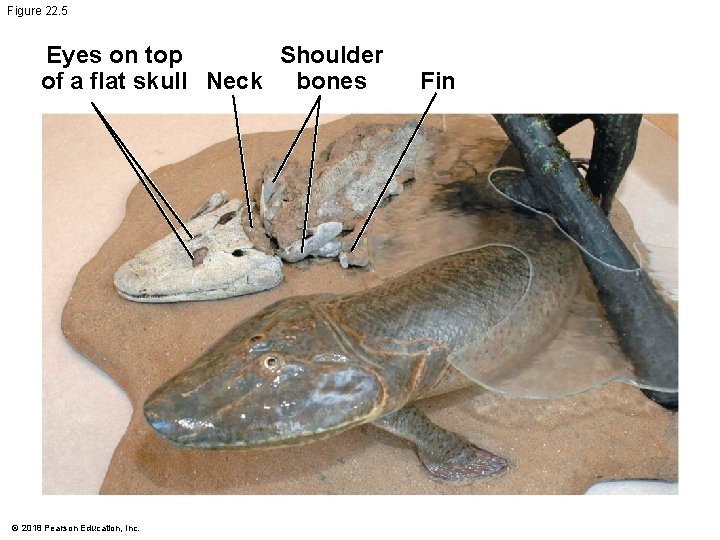
Figure 22. 5 Eyes on top Shoulder of a flat skull Neck bones © 2018 Pearson Education, Inc. Fin
THE HUMAN RESPIRATORY SYSTEM © 2018 Pearson Education, Inc.
22. 6 In mammals, branching tubes convey air to lungs located in the chest cavity • The diaphragm • separates the abdominal cavity from the thoracic cavity and • helps ventilate the lungs. • In mammals, air is • • inhaled through the nostrils into the nasal cavity, filtered by hairs and mucous surfaces, warmed and humidified, and sampled for odors. © 2018 Pearson Education, Inc.
22. 6 In mammals, branching tubes convey air to lungs located in the chest cavity • Inhaled air then passes through the pharynx and larynx into the trachea, bronchi, and bronchioles to the alveoli. • Specialized secretions called surfactants prevent the moist surfaces of alveoli from sticking shut. • Mucus and cilia in the respiratory passages protect the lungs. Checkpoint question How does the structure of alveoli match their function? © 2018 Pearson Education, Inc.
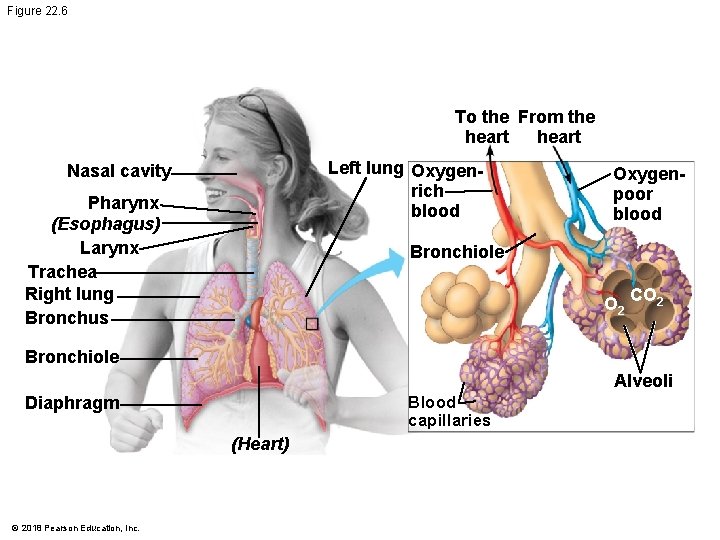
Figure 22. 6 To the From the heart Left lung Oxygenrich blood Nasal cavity Pharynx (Esophagus) Larynx Trachea Right lung Bronchus Oxygenpoor blood Bronchiole O 2 CO 2 Bronchiole Alveoli Blood capillaries Diaphragm (Heart) © 2018 Pearson Education, Inc.
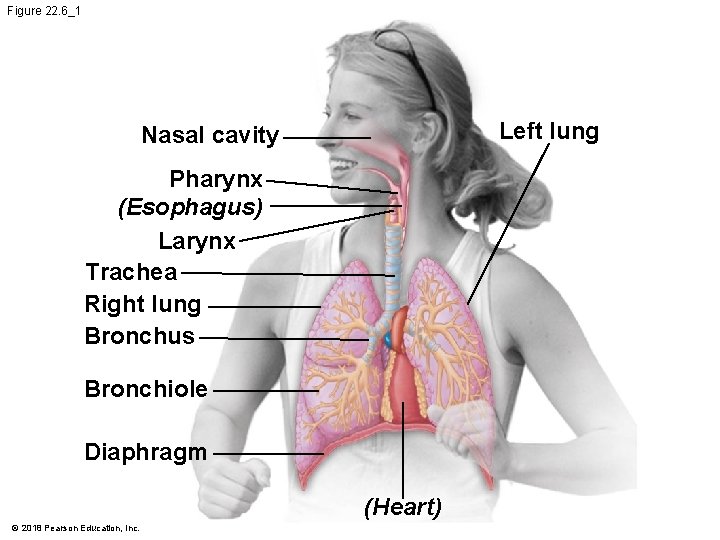
Figure 22. 6_1 Left lung Nasal cavity Pharynx (Esophagus) Larynx Trachea Right lung Bronchus Bronchiole Diaphragm (Heart) © 2018 Pearson Education, Inc.
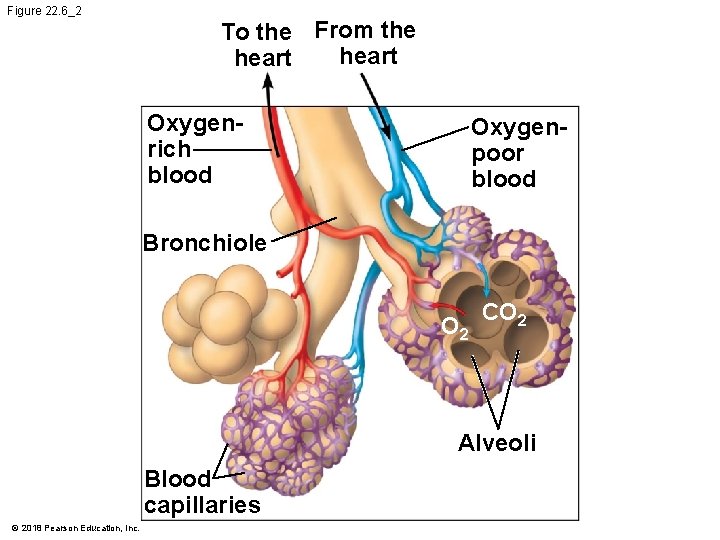
Figure 22. 6_2 To the From the heart Oxygenrich blood Oxygenpoor blood Bronchiole O 2 CO 2 Alveoli Blood capillaries © 2018 Pearson Education, Inc.
22. 7 SCIENTIFIC THINKING: Warning: Cigarette smoking is hazardous to your health • Evidence accumulated from thousands of studies has shown that smoking causes lung cancer and other respiratory diseases. © 2018 Pearson Education, Inc.
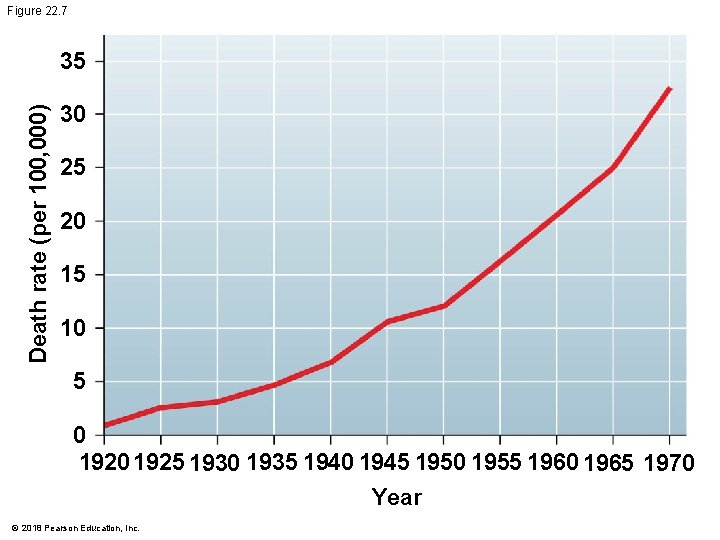
Figure 22. 7 Death rate (per 100, 000) 35 30 25 20 15 10 5 0 1925 1930 1935 1940 1945 1950 1955 1960 1965 1970 Year © 2018 Pearson Education, Inc.
22. 8 Negative pressure breathing ventilates your lungs • Breathing is ventilation of the lungs through alternating inhalation and exhalation. • In humans and other mammals, ventilation occurs by negative pressure breathing, a system in which air is pulled into the lungs. • The contraction of rib muscles and the diaphragm expands the thoracic cavity, reducing air pressure in the alveoli and drawing air into the lungs. © 2018 Pearson Education, Inc.
22. 8 Negative pressure breathing ventilates your lungs Checkpoint question Explain why inhalation is an active process (requiring work), whereas exhalation is usually passive. © 2018 Pearson Education, Inc.
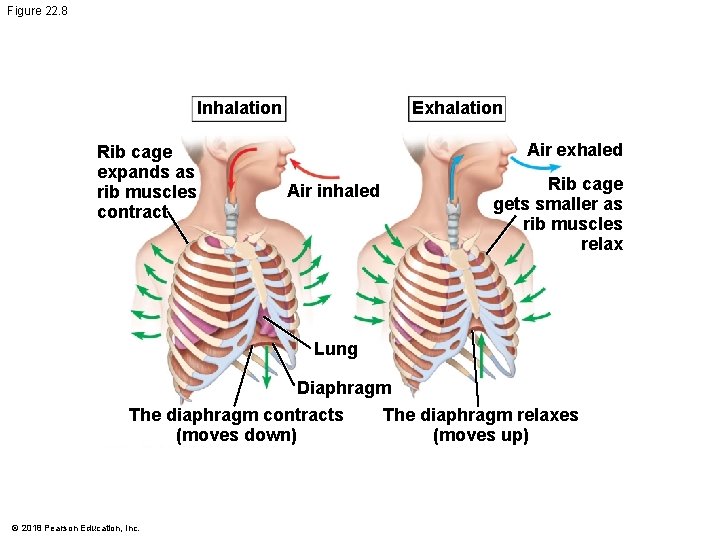
Figure 22. 8 Inhalation Rib cage expands as rib muscles contract Exhalation Air exhaled Rib cage gets smaller as rib muscles relax Air inhaled Lung Diaphragm The diaphragm contracts (moves down) © 2018 Pearson Education, Inc. The diaphragm relaxes (moves up)
22. 9 Breathing is automatically controlled • Breathing control centers in the brain coordinate breathing with body needs by sensing and responding to the p. H of the cerebrospinal fluid, which indicates CO 2 level in the blood. • A drop in blood p. H triggers an increase in the rate and depth of breathing. Checkpoint question How is the increased need for O 2 during exercise accommodated by the breathing control centers? © 2018 Pearson Education, Inc.
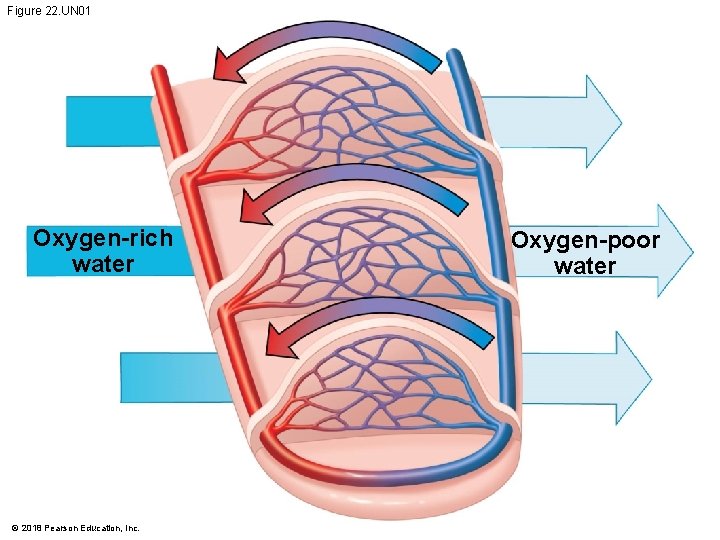
Figure 22. UN 01 Oxygen-rich water © 2018 Pearson Education, Inc. Oxygen-poor water
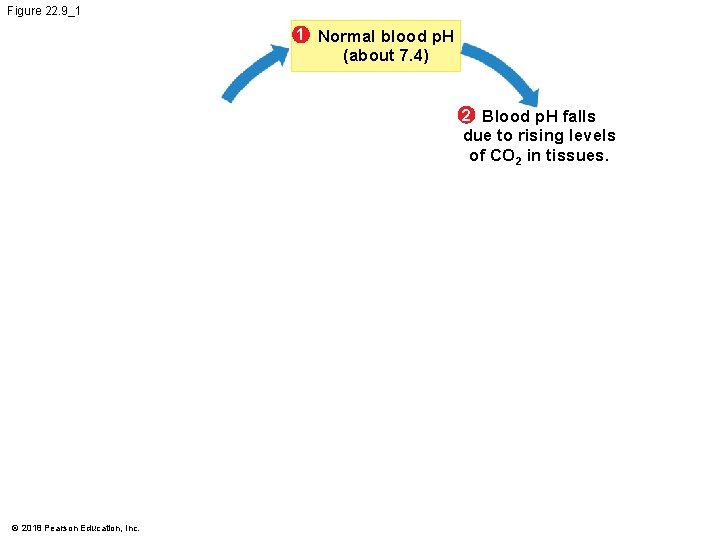
Figure 22. 9_1 1 Normal blood p. H (about 7. 4) 2 Blood p. H falls due to rising levels of CO 2 in tissues. © 2018 Pearson Education, Inc.
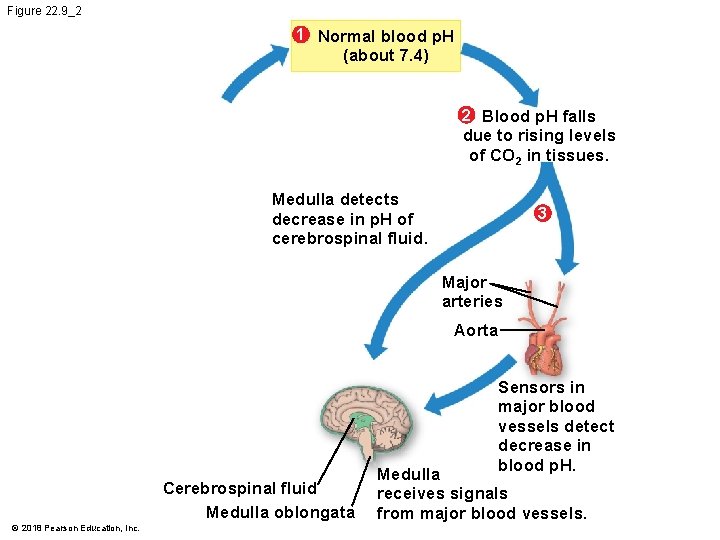
Figure 22. 9_2 1 Normal blood p. H (about 7. 4) 2 Blood p. H falls due to rising levels of CO 2 in tissues. Medulla detects decrease in p. H of cerebrospinal fluid. 3 Major arteries Aorta Sensors in major blood vessels detect decrease in blood p. H. Cerebrospinal fluid Medulla oblongata © 2018 Pearson Education, Inc. Medulla receives signals from major blood vessels.
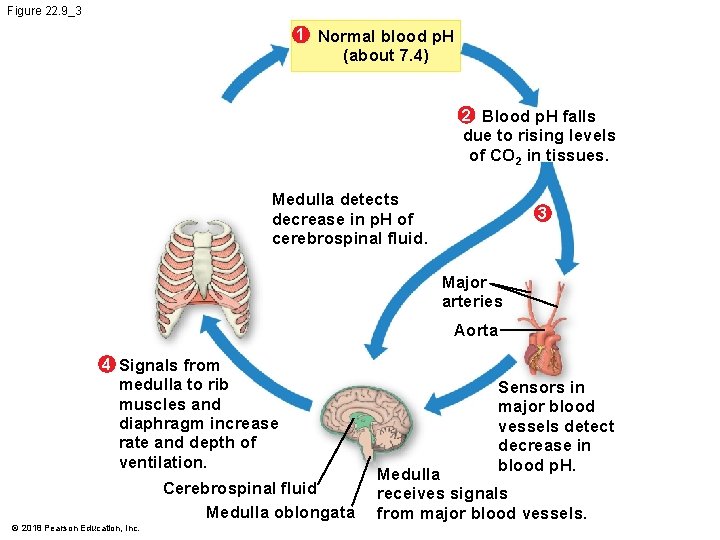
Figure 22. 9_3 1 Normal blood p. H (about 7. 4) 2 Blood p. H falls due to rising levels of CO 2 in tissues. Medulla detects decrease in p. H of cerebrospinal fluid. 3 Major arteries Aorta 4 Signals from medulla to rib muscles and diaphragm increase rate and depth of ventilation. Cerebrospinal fluid Medulla oblongata © 2018 Pearson Education, Inc. Sensors in major blood vessels detect decrease in blood p. H. Medulla receives signals from major blood vessels.
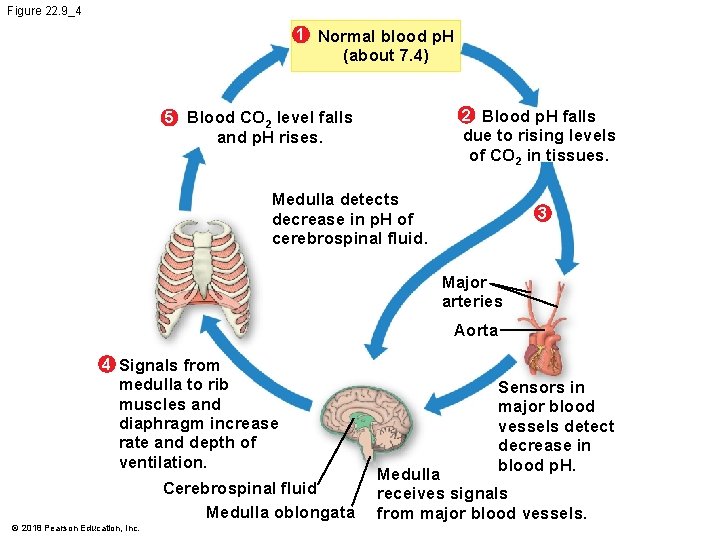
Figure 22. 9_4 1 Normal blood p. H (about 7. 4) 2 Blood p. H falls due to rising levels of CO 2 in tissues. 5 Blood CO 2 level falls and p. H rises. Medulla detects decrease in p. H of cerebrospinal fluid. 3 Major arteries Aorta 4 Signals from medulla to rib muscles and diaphragm increase rate and depth of ventilation. Cerebrospinal fluid Medulla oblongata © 2018 Pearson Education, Inc. Sensors in major blood vessels detect decrease in blood p. H. Medulla receives signals from major blood vessels.
TRANSPORT OF GASES IN THE HUMAN BODY © 2018 Pearson Education, Inc.
22. 10 Blood transports respiratory gases • The heart pumps oxygen-poor blood to the lungs, where it picks up O 2 and drops off CO 2. • Oxygen-rich blood returns to the heart and is pumped to body cells, where it drops off O 2 and picks up CO 2. © 2018 Pearson Education, Inc.
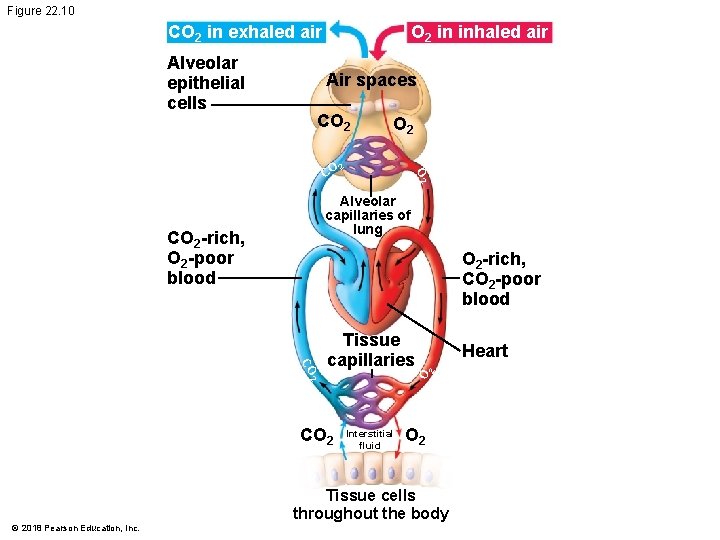
Figure 22. 10 CO 2 in exhaled air Alveolar epithelial cells O 2 in inhaled air Air spaces CO 2 2 O 2 CO O 2 Alveolar capillaries of lung CO 2 -rich, O 2 -poor blood O 2 -rich, CO 2 -poor blood 2 Heart O 2 2 O CO Tissue capillaries CO 2 Interstitial fluid O 2 Tissue cells throughout the body © 2018 Pearson Education, Inc.
22. 10 Blood transports respiratory gases • A mixture of gases, such as air, exerts pressure. • Each kind of gas in a mixture accounts for a portion of the total pressure of the mixture. • Thus, each gas has a partial pressure. • Molecules of each kind of gas diffuse down a gradient of their own partial pressure, moving from regions of higher partial pressure to those of lower partial pressure. © 2018 Pearson Education, Inc.
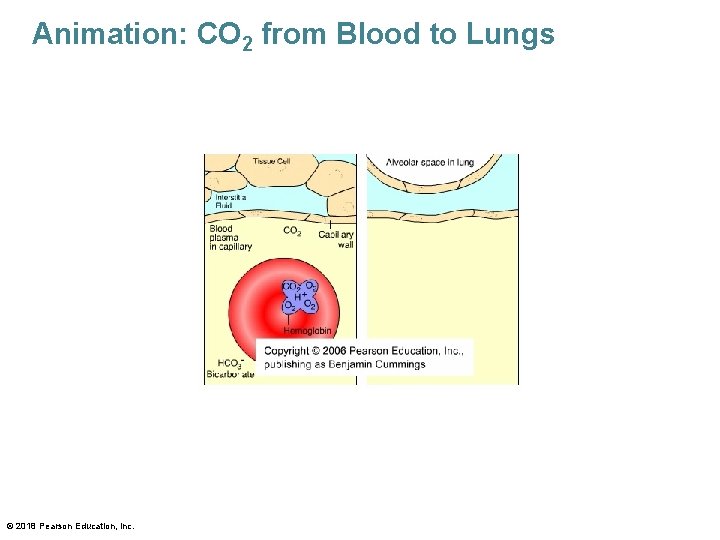
Animation: CO 2 from Blood to Lungs © 2018 Pearson Education, Inc.
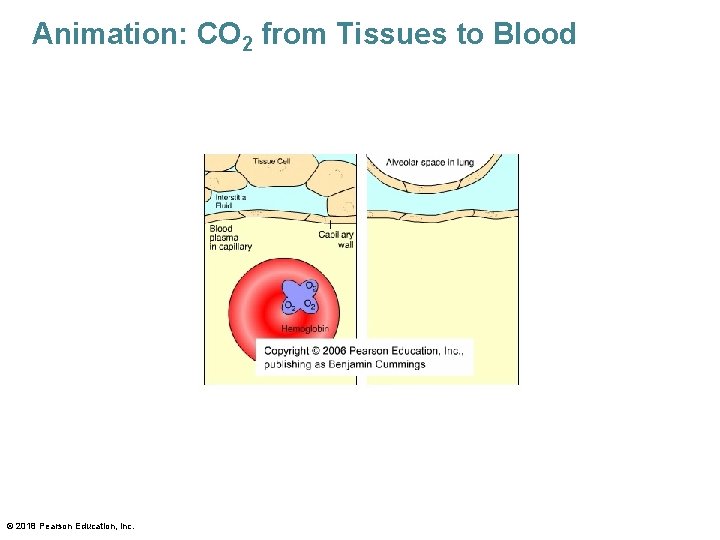
Animation: CO 2 from Tissues to Blood © 2018 Pearson Education, Inc.
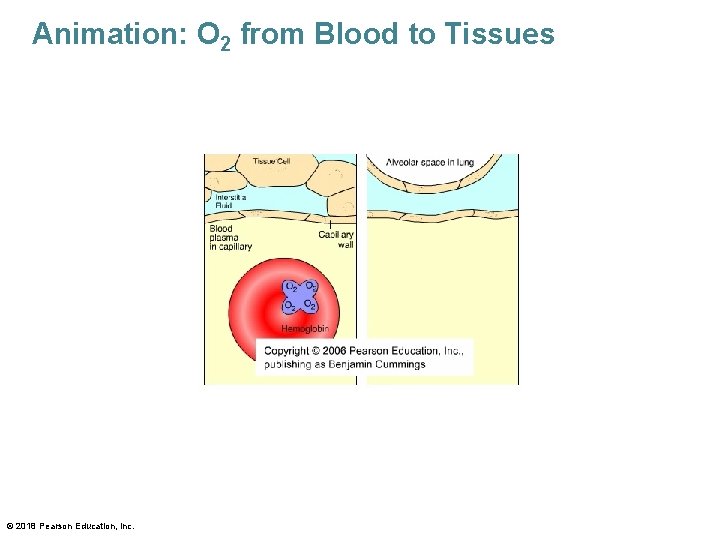
Animation: O 2 from Blood to Tissues © 2018 Pearson Education, Inc.
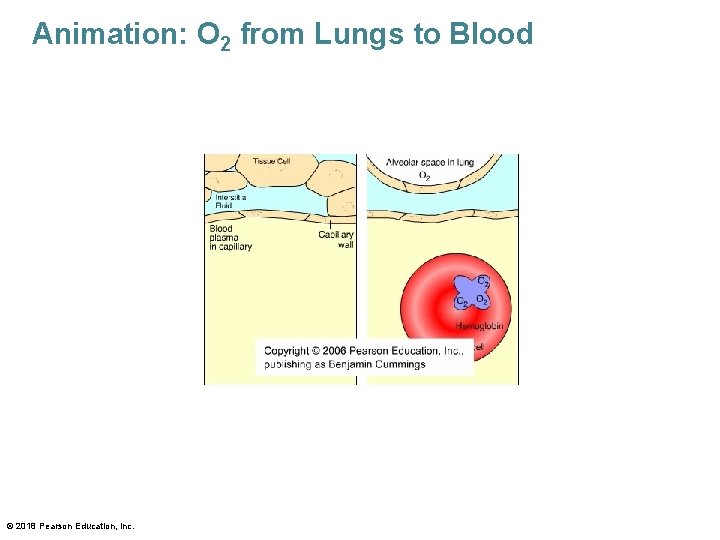
Animation: O 2 from Lungs to Blood © 2018 Pearson Education, Inc.
22. 11 Hemoglobin carries O 2, helps transport CO 2, and buffers the blood • Most animals transport O 2 bound to proteins called respiratory pigments. • A blue, copper-containing pigment is used by many molluscs and arthropods. • Red, iron-containing hemoglobin • is used by almost all vertebrates and many invertebrates, • transports oxygen and CO 2, and • buffers blood. © 2018 Pearson Education, Inc.
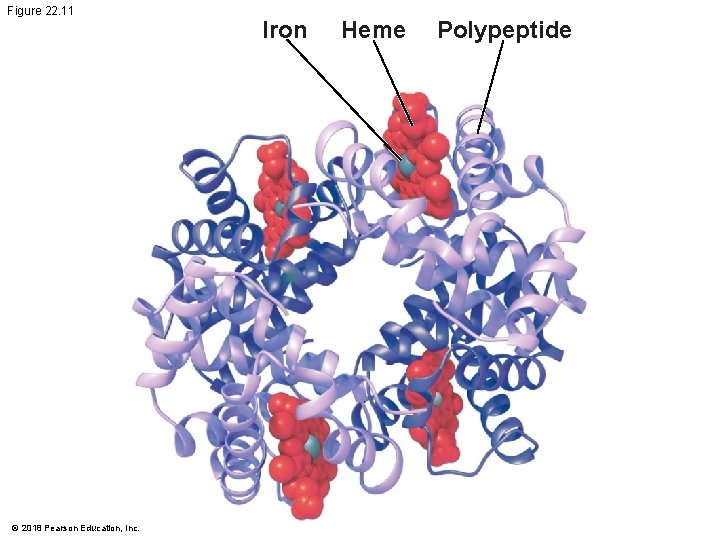
Figure 22. 11 © 2018 Pearson Education, Inc. Iron Heme Polypeptide
22. 12 CONNECTION: The human fetus exchanges gases with the mother’s blood • Fetal hemoglobin attracts O 2 more strongly than does adult hemoglobin. This enhances oxygen transfer from maternal blood in the placenta. • At birth, rising CO 2 in fetal blood stimulates the breathing control center to initiate breathing. © 2018 Pearson Education, Inc.
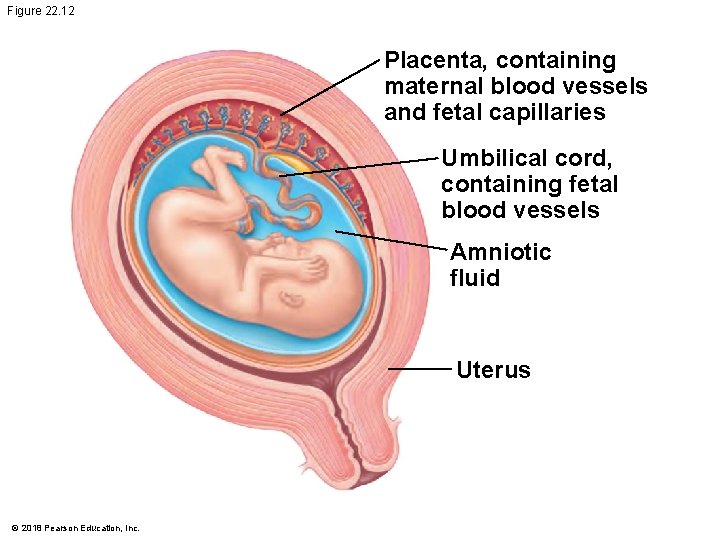
Figure 22. 12 Placenta, containing maternal blood vessels and fetal capillaries Umbilical cord, containing fetal blood vessels Amniotic fluid Uterus © 2018 Pearson Education, Inc.
You should now be able to 1. Describe three main phases of gas exchange in a human. 2. Describe four types of respiratory surfaces and the kinds of animals that use them. 3. Explain how the amount of oxygen available in air compares to that available in cold and warm fresh water and cold and warm salt water. 4. Explain how the structure of fish gills maximizes oxygen exchange. © 2018 Pearson Education, Inc.
You should now be able to 5. Explain why breathing air is easier than using water for gas exchange. 6. Describe the tracheal system of insects. 7. Describe the respiratory adaptations of the fossil animal Tiktaalik. 8. Explain how the metabolic rate of a vertebrate is related to the nature of its respiratory system. 9. Describe the structures and corresponding functions of a mammalian respiratory system. © 2018 Pearson Education, Inc.
You should now be able to 10. Describe the impact of smoking on human health. 11. Explain how breathing is controlled in humans. 12. Explain how blood transports gases between the lungs and tissues of the body. 13. Describe the functions of hemoglobin. 14. Explain how a human fetus obtains oxygen prior to and immediately after birth. © 2018 Pearson Education, Inc.
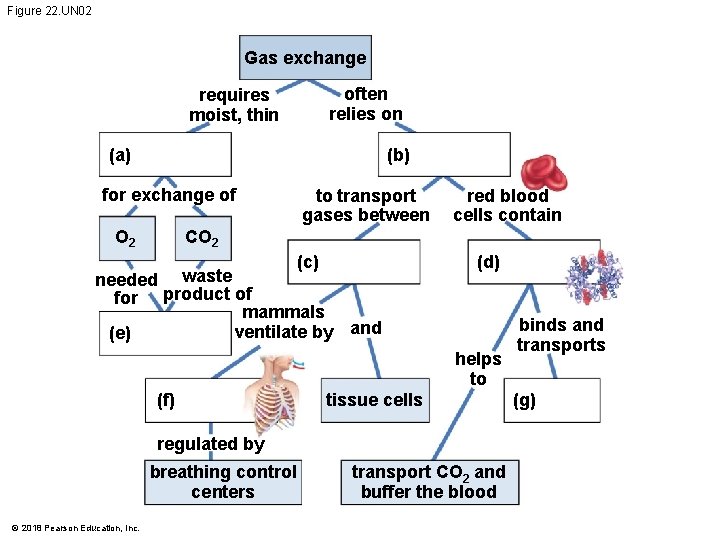
Figure 22. UN 02 Gas exchange often relies on requires moist, thin (a) (b) for exchange of O 2 to transport gases between red blood cells contain CO 2 (c) needed waste for product of mammals ventilate by and (e) (d) helps to (f) tissue cells regulated by breathing control centers © 2018 Pearson Education, Inc. transport CO 2 and buffer the blood binds and transports (g)
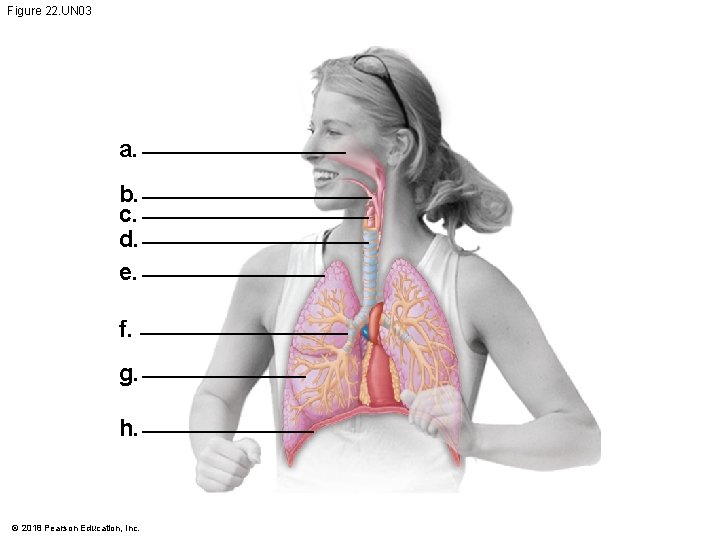
Figure 22. UN 03 a. b. c. d. e. f. g. h. © 2018 Pearson Education, Inc.
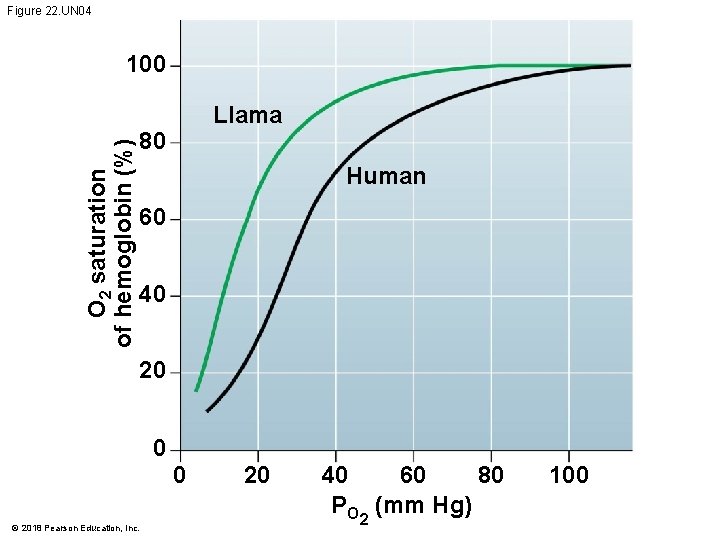
Figure 22. UN 04 O 2 saturation of hemoglobin (%) 100 Llama 80 Human 60 40 20 0 0 © 2018 Pearson Education, Inc. 20 40 60 80 PO 2 (mm Hg) 100
- Slides: 65