
CAMPANIA ERUPTION FLANGE FIELDS AND IGNIMBRITE EMISSION The

CAMPANIA ERUPTION
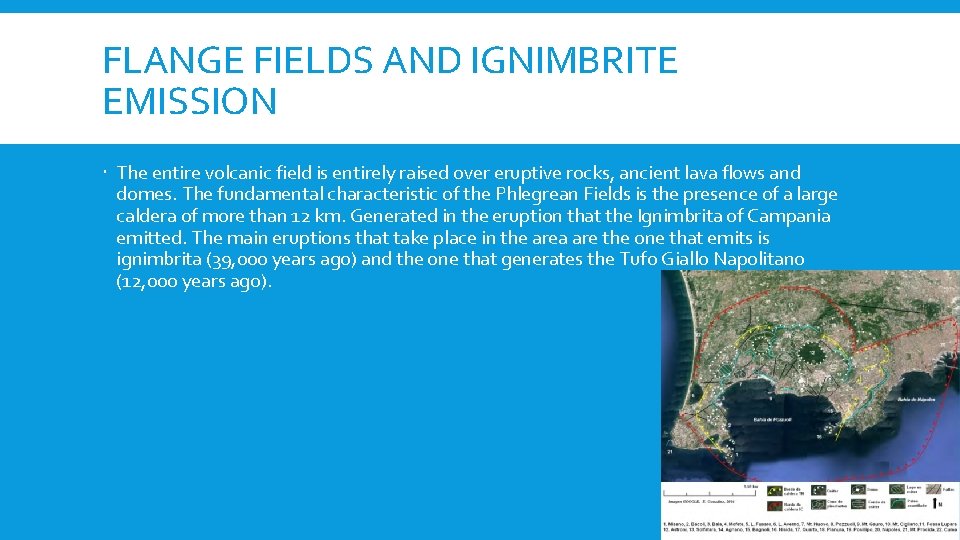
FLANGE FIELDS AND IGNIMBRITE EMISSION The entire volcanic field is entirely raised over eruptive rocks, ancient lava flows and domes. The fundamental characteristic of the Phlegrean Fields is the presence of a large caldera of more than 12 km. Generated in the eruption that the Ignimbrita of Campania emitted. The main eruptions that take place in the area are the one that emits is ignimbrita (39, 000 years ago) and the one that generates the Tufo Giallo Napolitano (12, 000 years ago).
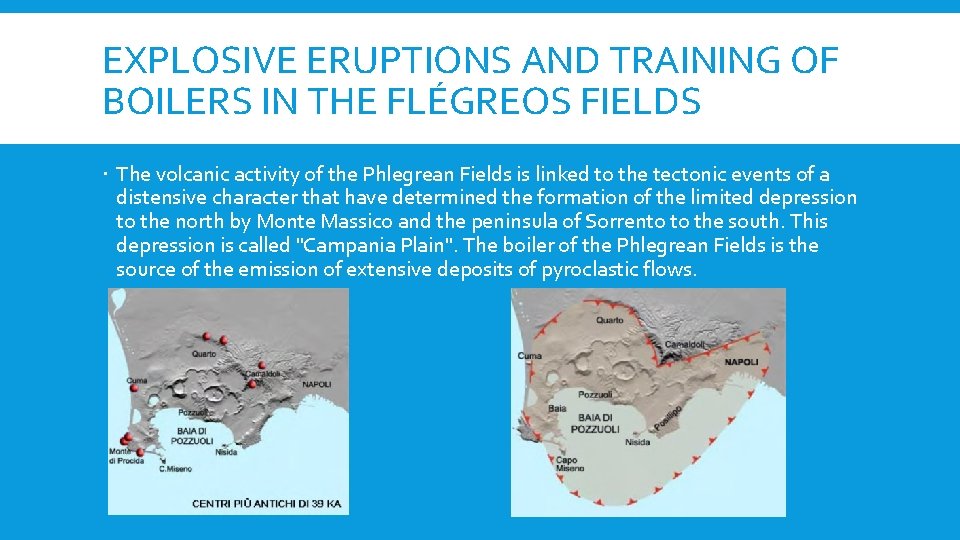
EXPLOSIVE ERUPTIONS AND TRAINING OF BOILERS IN THE FLÉGREOS FIELDS The volcanic activity of the Phlegrean Fields is linked to the tectonic events of a distensive character that have determined the formation of the limited depression to the north by Monte Massico and the peninsula of Sorrento to the south. This depression is called "Campania Plain". The boiler of the Phlegrean Fields is the source of the emission of extensive deposits of pyroclastic flows.
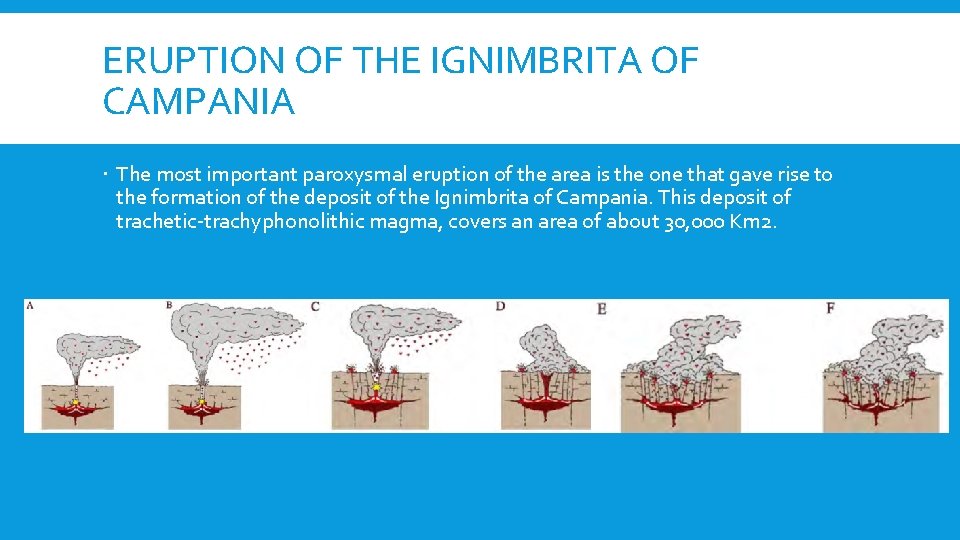
ERUPTION OF THE IGNIMBRITA OF CAMPANIA The most important paroxysmal eruption of the area is the one that gave rise to the formation of the deposit of the Ignimbrita of Campania. This deposit of trachetic-trachyphonolithic magma, covers an area of about 30, 000 Km 2.

WHAT IS IGNIMBRITA? The ignimbrite is an igneous rock and volcanic deposit consisting of hard tuff composed of rock fragments and phenocrysts in an array of vitreous fragments. The ignimbritas are usually of intermediate composition to felsica.
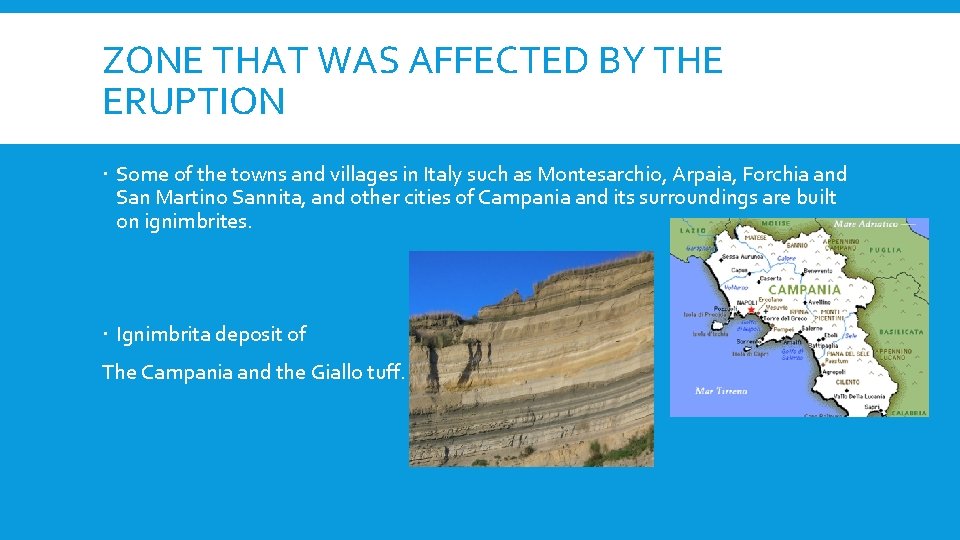
ZONE THAT WAS AFFECTED BY THE ERUPTION Some of the towns and villages in Italy such as Montesarchio, Arpaia, Forchia and San Martino Sannita, and other cities of Campania and its surroundings are built on ignimbrites. Ignimbrita deposit of The Campania and the Giallo tuff.
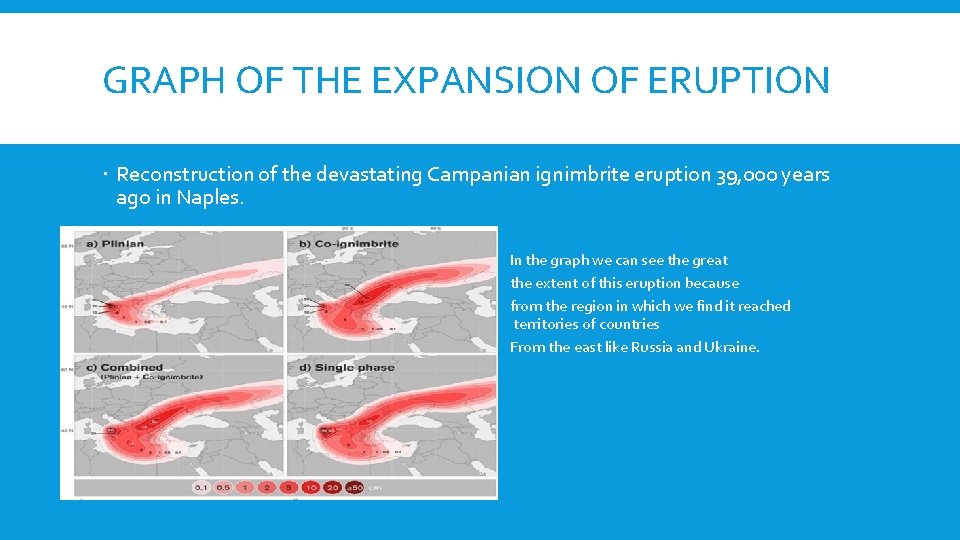
GRAPH OF THE EXPANSION OF ERUPTION Reconstruction of the devastating Campanian ignimbrite eruption 39, 000 years ago in Naples. In the graph we can see the great the extent of this eruption because from the region in which we find it reached territories of countries From the east like Russia and Ukraine.
CONSEQUENCES This eruption occurs 39, 000 years ago and is considered one of the greatest catastrophes of all time. The eruption is called "Ignimbrita Campaniana" expelled large amounts of sulfur dioxide to the atmosphere with the harmful consequences for the fauna and flora of the time.
FIRST CONSEQUENCE This event occurred in two phases during which a total ash volume of about 8 times the volume of Everest was reached between southern Italy and the Siberian plains. The overlap generated a 44 Km high smoke column and 54 Km of fall deposits in the nearest areas.
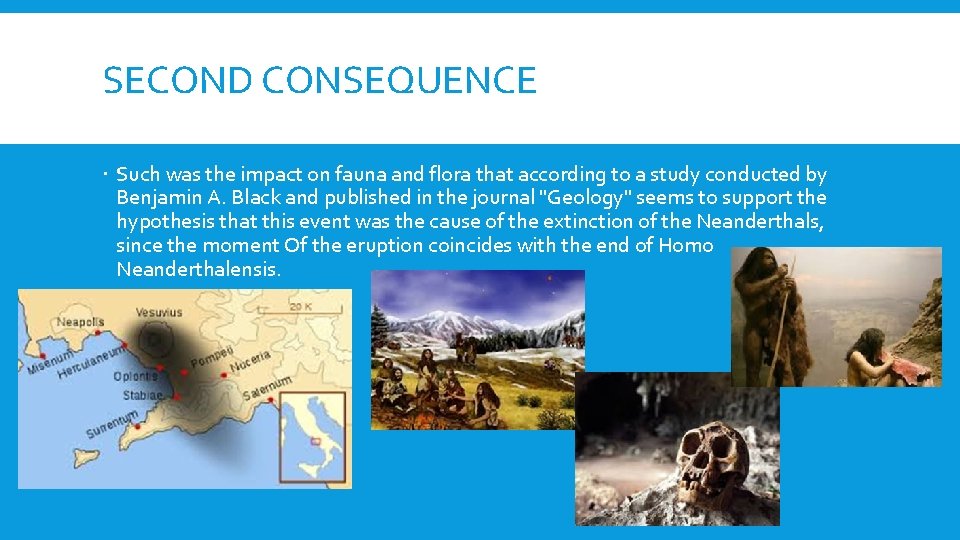
SECOND CONSEQUENCE Such was the impact on fauna and flora that according to a study conducted by Benjamin A. Black and published in the journal "Geology" seems to support the hypothesis that this event was the cause of the extinction of the Neanderthals, since the moment Of the eruption coincides with the end of Homo Neanderthalensis.
- Slides: 10