
Campaign to Prevent Antimicrobial Resistance Centers for Disease
Campaign to Prevent Antimicrobial Resistance Centers for Disease Control and Prevention National Center for Infectious Diseases Division of Healthcare Quality Promotion Clinicians hold the solution! ØLink to: Campaign to Prevent Antimicrobial Resistance Online ØLink to: Federal Action Plan to Combat Antimicrobial Resistance
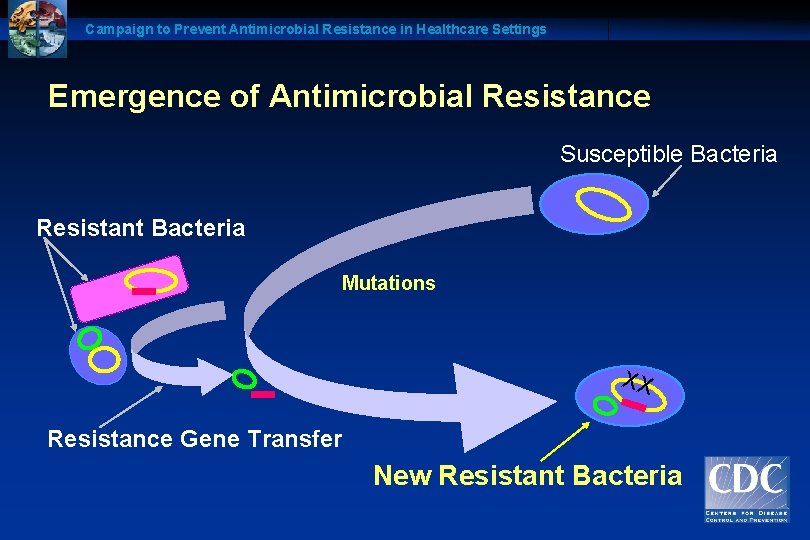
Campaign to Prevent Antimicrobial Resistance in Healthcare Settings Emergence of Antimicrobial Resistance Susceptible Bacteria Resistant Bacteria Mutations XX Resistance Gene Transfer New Resistant Bacteria
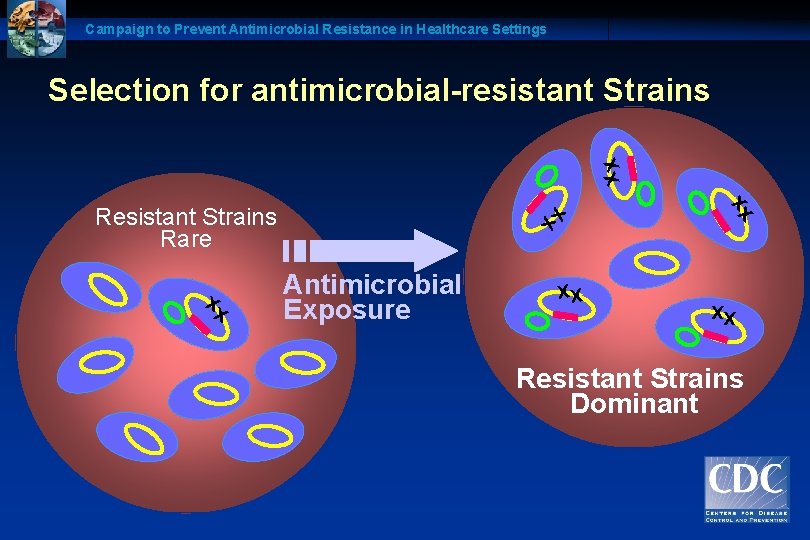
Campaign to Prevent Antimicrobial Resistance in Healthcare Settings xx Selection for antimicrobial-resistant Strains xx xx Resistant Strains Rare Antimicrobial Exposure xx xx xx Resistant Strains Dominant
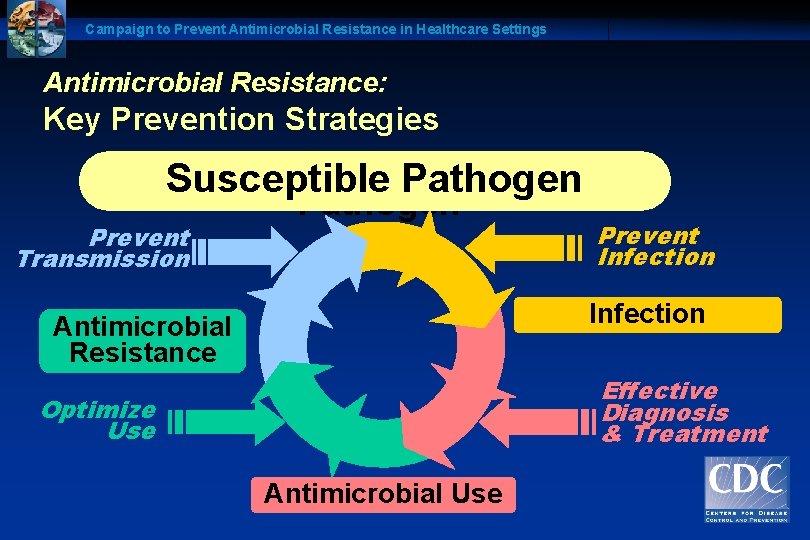
Campaign to Prevent Antimicrobial Resistance in Healthcare Settings Antimicrobial Resistance: Key Prevention Strategies Antimicrobial-Resistant Susceptible Pathogen Prevent Transmission Pathogen Prevent Infection Antimicrobial Resistance Effective Diagnosis & Treatment Optimize Use Antimicrobial Use
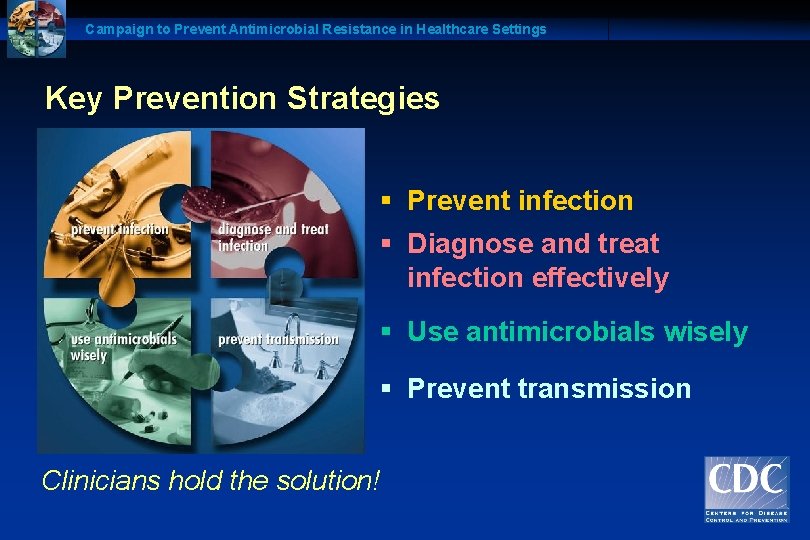
Campaign to Prevent Antimicrobial Resistance in Healthcare Settings Key Prevention Strategies § Prevent infection § Diagnose and treat infection effectively § Use antimicrobials wisely § Prevent transmission Clinicians hold the solution!
Campaign to Prevent Antimicrobial Resistance in Healthcare Settings § General health communication strategy § Goals: § inform clinicians, patients, and other stakeholders § raise awareness about the escalating problem of antimicrobial resistance in healthcare settings § motivate interest and acceptance of interventional programs to prevent resistance
Campaign to Prevent Antimicrobial Resistance in Healthcare Settings 12 Steps To Prevent Antimicrobial Resistance § Targeted intervention programs for clinicians caring for high risk patients - hospitalized adults - hospitalized children - geriatric patients - emergency patients - obstetrical patients - critical care patients - dialysis patients - surgical patients § Goal: Improve clinician practices & prevent antimicrobial resistance § Partnership with professional societies; evidence base published in peer-reviewed specialty journals § Educational tools – web-based / didactic learning modules, pocket cards, slide presentations, etc.
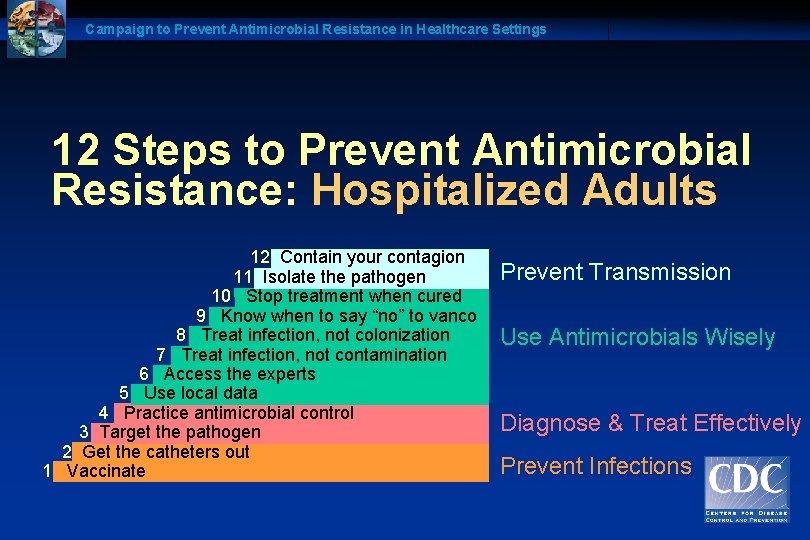
Campaign to Prevent Antimicrobial Resistance in Healthcare Settings 12 Steps to Prevent Antimicrobial Resistance: Hospitalized Adults 12 Contain your contagion 11 Isolate the pathogen 10 Stop treatment when cured 9 Know when to say “no” to vanco 8 Treat infection, not colonization 7 Treat infection, not contamination 6 Access the experts 5 Use local data 4 Practice antimicrobial control 3 Target the pathogen 2 Get the catheters out 1 Vaccinate Prevent Transmission Use Antimicrobials Wisely Diagnose & Treat Effectively Prevent Infections
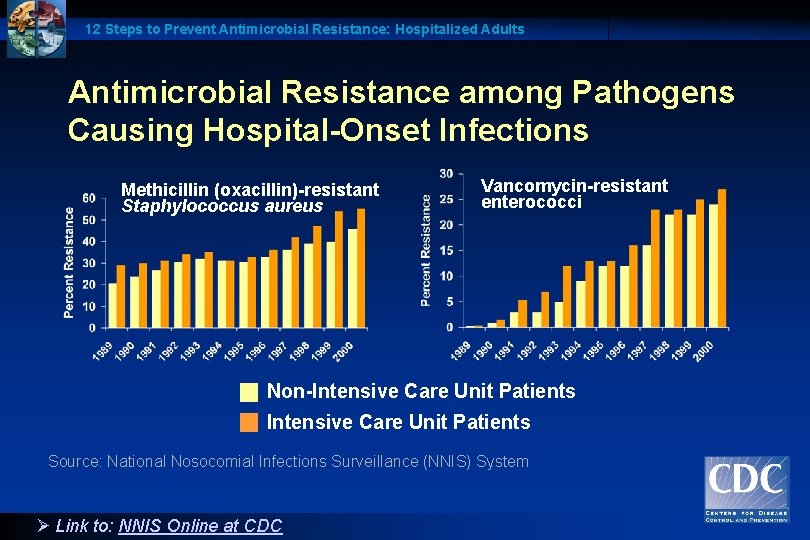
12 Steps to Prevent Antimicrobial Resistance: Hospitalized Adults Antimicrobial Resistance among Pathogens Causing Hospital-Onset Infections Methicillin (oxacillin)-resistant Staphylococcus aureus Vancomycin-resistant enterococci Non-Intensive Care Unit Patients Source: National Nosocomial Infections Surveillance (NNIS) System Ø Link to: NNIS Online at CDC
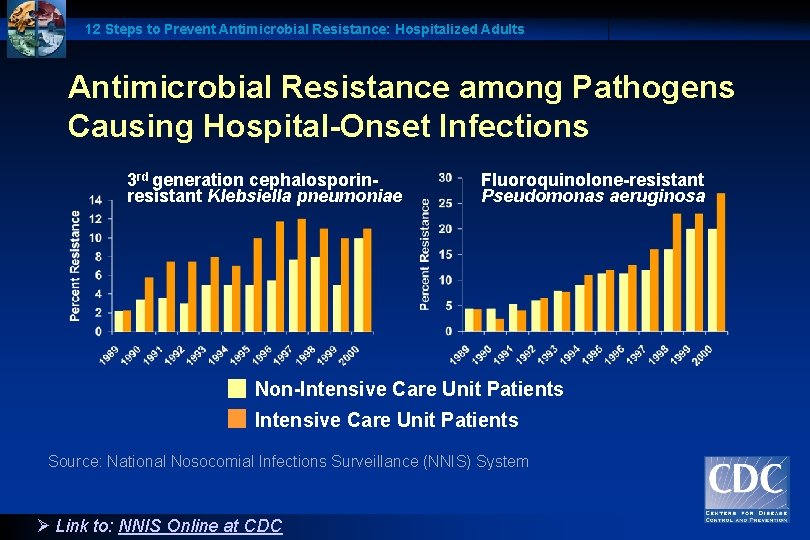
12 Steps to Prevent Antimicrobial Resistance: Hospitalized Adults Antimicrobial Resistance among Pathogens Causing Hospital-Onset Infections 3 rd generation cephalosporinresistant Klebsiella pneumoniae Fluoroquinolone-resistant Pseudomonas aeruginosa Non-Intensive Care Unit Patients Source: National Nosocomial Infections Surveillance (NNIS) System Ø Link to: NNIS Online at CDC
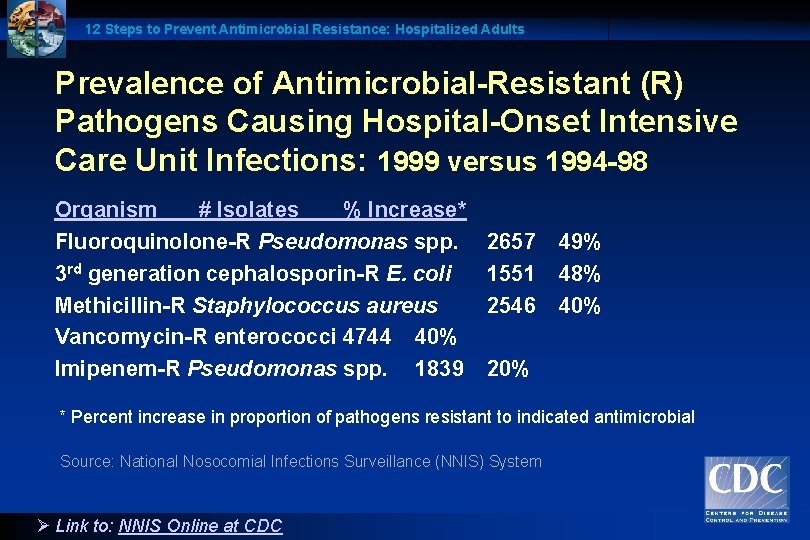
12 Steps to Prevent Antimicrobial Resistance: Hospitalized Adults Prevalence of Antimicrobial-Resistant (R) Pathogens Causing Hospital-Onset Intensive Care Unit Infections: 1999 versus 1994 -98 Organism # Isolates % Increase* Fluoroquinolone-R Pseudomonas spp. 3 rd generation cephalosporin-R E. coli Methicillin-R Staphylococcus aureus Vancomycin-R enterococci 4744 40% Imipenem-R Pseudomonas spp. 1839 2657 1551 2546 49% 48% 40% 20% * Percent increase in proportion of pathogens resistant to indicated antimicrobial Source: National Nosocomial Infections Surveillance (NNIS) System Ø Link to: NNIS Online at CDC
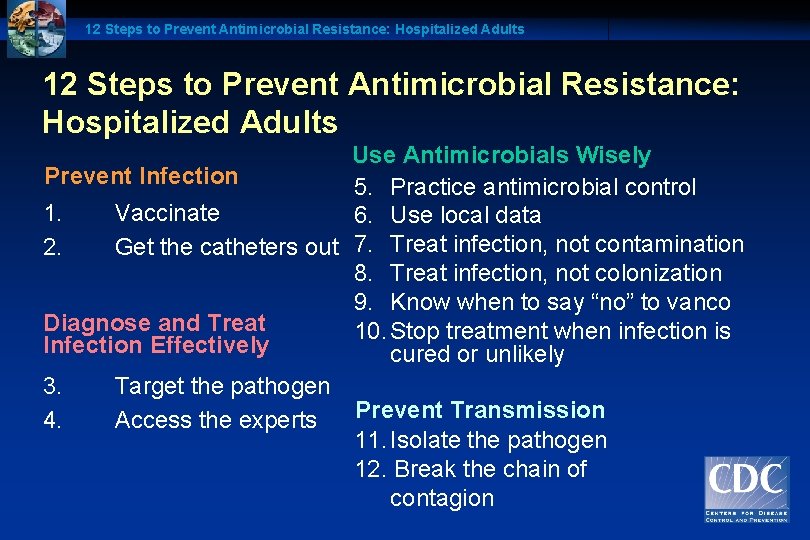
12 Steps to Prevent Antimicrobial Resistance: Hospitalized Adults Use Antimicrobials Wisely Prevent Infection 5. Practice antimicrobial control 1. Vaccinate 6. Use local data 2. Get the catheters out 7. Treat infection, not contamination 8. Treat infection, not colonization 9. Know when to say “no” to vanco Diagnose and Treat 10. Stop treatment when infection is Infection Effectively cured or unlikely 3. Target the pathogen Prevent Transmission 4. Access the experts 11. Isolate the pathogen 12. Break the chain of contagion
12 Steps to Prevent Antimicrobial Resistance: Hospitalized Adults Prevent Infection Step 1: Vaccinate Fact: Pre-discharge influenza and pneumococcal vaccination of at-risk hospital patients AND influenza vaccination of healthcare personnel will prevent infections.
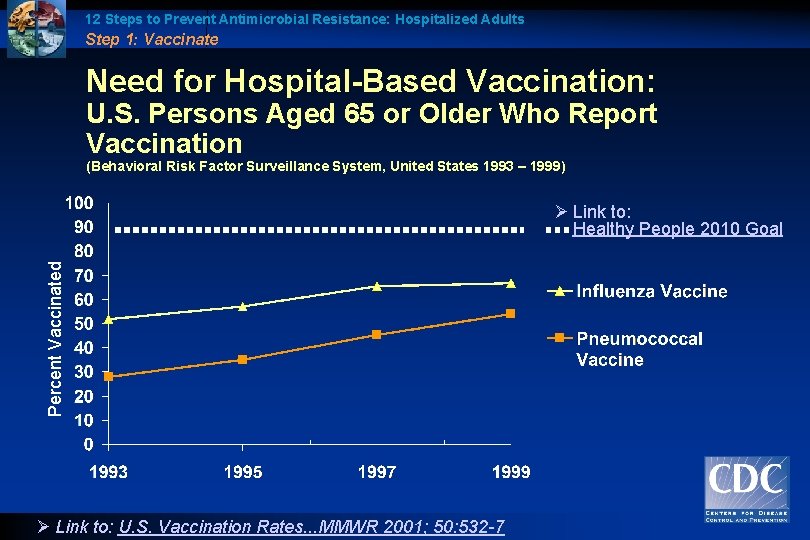
12 Steps to Prevent Antimicrobial Resistance: Hospitalized Adults Step 1: Vaccinate Need for Hospital-Based Vaccination: U. S. Persons Aged 65 or Older Who Report Vaccination (Behavioral Risk Factor Surveillance System, United States 1993 – 1999) Percent Vaccinated Ø Link to: Healthy People 2010 Goal Ø Link to: U. S. Vaccination Rates. . . MMWR 2001; 50: 532 -7
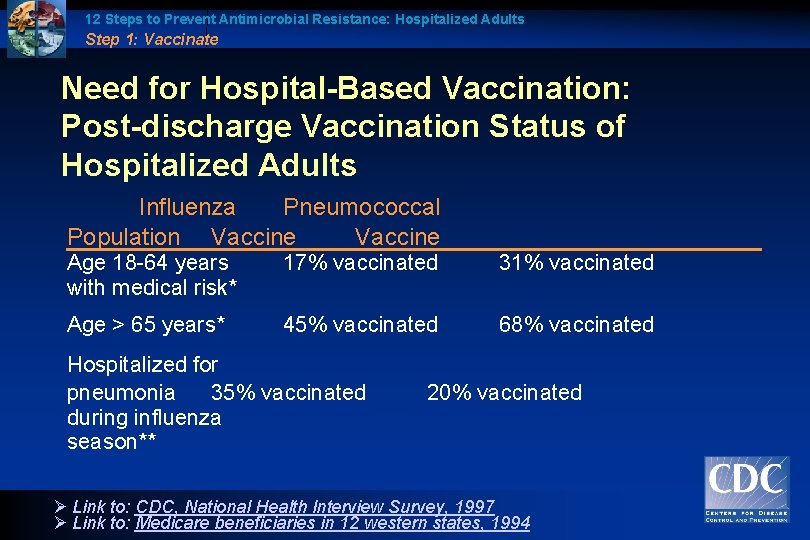
12 Steps to Prevent Antimicrobial Resistance: Hospitalized Adults Step 1: Vaccinate Need for Hospital-Based Vaccination: Post-discharge Vaccination Status of Hospitalized Adults Influenza Pneumococcal Population Vaccine Age 18 -64 years with medical risk* 17% vaccinated 31% vaccinated Age > 65 years* 45% vaccinated 68% vaccinated Hospitalized for pneumonia 35% vaccinated during influenza season** 20% vaccinated Ø Link to: CDC, National Health Interview Survey, 1997 Ø Link to: Medicare beneficiaries in 12 western states, 1994
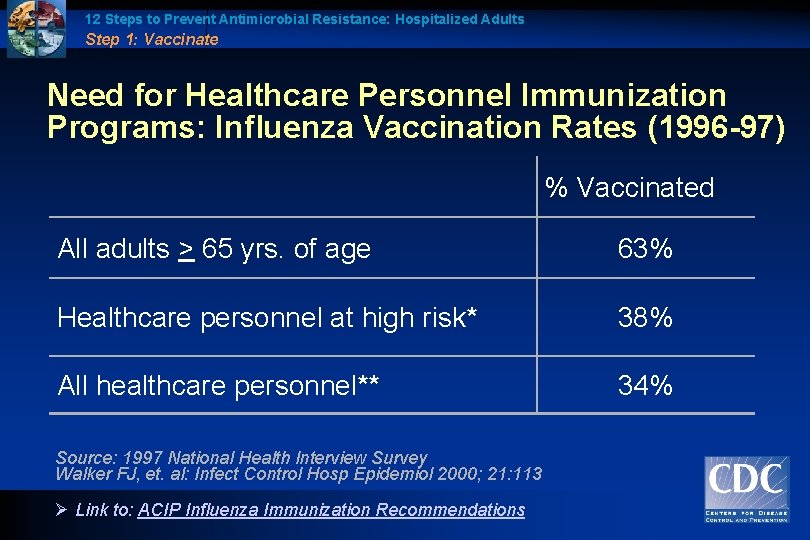
12 Steps to Prevent Antimicrobial Resistance: Hospitalized Adults Step 1: Vaccinate Need for Healthcare Personnel Immunization Programs: Influenza Vaccination Rates (1996 -97) % Vaccinated All adults > 65 yrs. of age 63% Healthcare personnel at high risk* 38% All healthcare personnel** 34% Source: 1997 National Health Interview Survey Walker FJ, et. al: Infect Control Hosp Epidemiol 2000; 21: 113 Ø Link to: ACIP Influenza Immunization Recommendations
12 Steps to Prevent Antimicrobial Resistance: Hospitalized Adults Prevent Infection Step 1: Vaccinate Fact: Pre-discharge influenza and pneumococcal vaccination of at-risk hospital patients and influenza vaccination of healthcare personnel will prevent infections. Actions: ügive influenza / S. pneumonia vaccine to atrisk patients before discharge üget influenza vaccine annually Ø Link to: ACIP Influenza immunization recommendations Ø Link to: CDC facts about influenza and pneumococcal vaccine Ø Link to: ACIP: Vaccine standing orders
12 Steps to Prevent Antimicrobial Resistance: Hospitalized Adults Prevent Infection Step 2: Get the catheters out Fact: Catheters and other invasive devices are the # 1 exogenous cause of hospital-onset infections. Ø Link to: NNIS Online at CDC
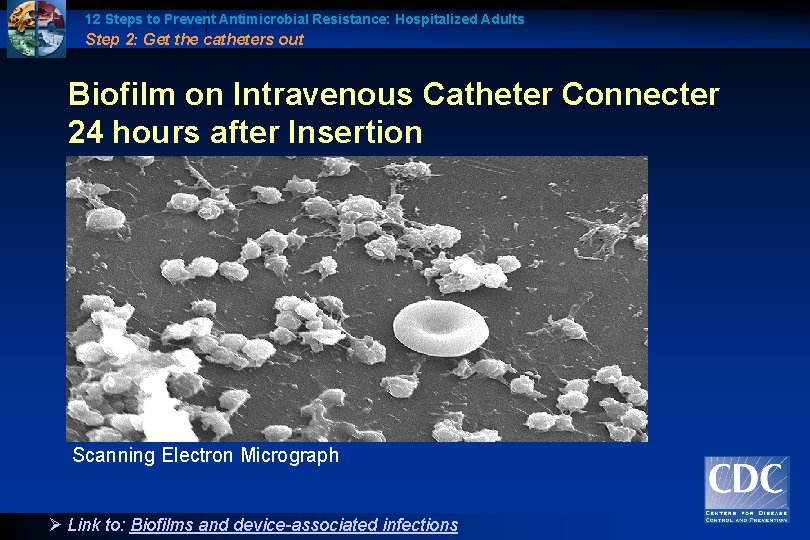
12 Steps to Prevent Antimicrobial Resistance: Hospitalized Adults Step 2: Get the catheters out Biofilm on Intravenous Catheter Connecter 24 hours after Insertion Scanning Electron Micrograph Ø Link to: Biofilms and device-associated infections
12 Steps to Prevent Antimicrobial Resistance: Hospitalized Adults Prevent Infection Step 2: Get the catheters out Fact: Catheters and other invasive devices are the # 1 exogenous cause of hospital-onset infections. Actions: üuse catheters only when essential üuse the correct catheter üuse proper insertion & catheter-care protocols üremove catheters when not essential Ø Link to: Urinary catheter infection prevention Coming soon…guidelines for preventing catheter-associated bloodstream infections
12 Steps to Prevent Antimicrobial Resistance: Hospitalized Adults Diagnose & Treat Infection Effectively Step 3: Target the pathogen Fact: Appropriate antimicrobial therapy (correct regimen, timing, dosage, route, and duration) saves lives.
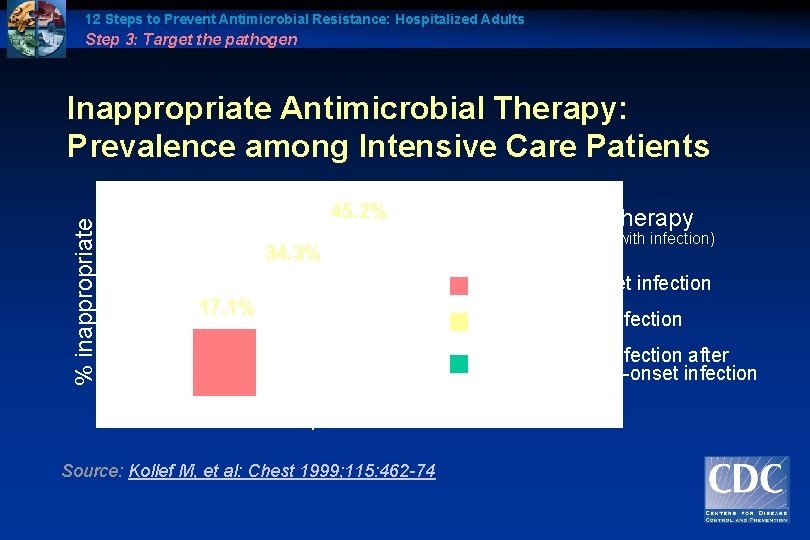
12 Steps to Prevent Antimicrobial Resistance: Hospitalized Adults Step 3: Target the pathogen % inappropriate Inappropriate Antimicrobial Therapy: Prevalence among Intensive Care Patients 45. 2% 34. 3% Inappropriate Antimicrobial Therapy (n = 655 ICU patients with infection) Community-onset infection 17. 1% Hospital-onset infection after initial community-onset infection Patient Group Source: Kollef M, et al: Chest 1999; 115: 462 -74
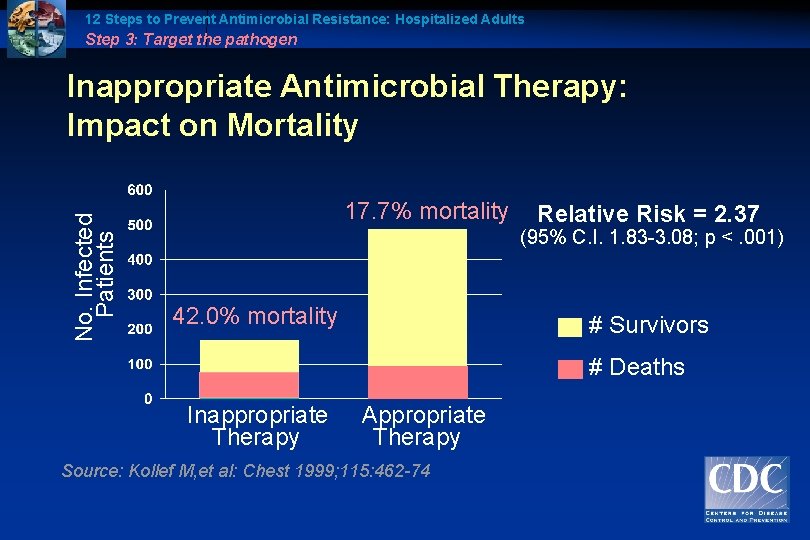
12 Steps to Prevent Antimicrobial Resistance: Hospitalized Adults Step 3: Target the pathogen No. Infected Patients Inappropriate Antimicrobial Therapy: Impact on Mortality 17. 7% mortality Relative Risk = 2. 37 (95% C. I. 1. 83 -3. 08; p <. 001) 42. 0% mortality # Survivors # Deaths Inappropriate Therapy Appropriate Therapy Source: Kollef M, et al: Chest 1999; 115: 462 -74
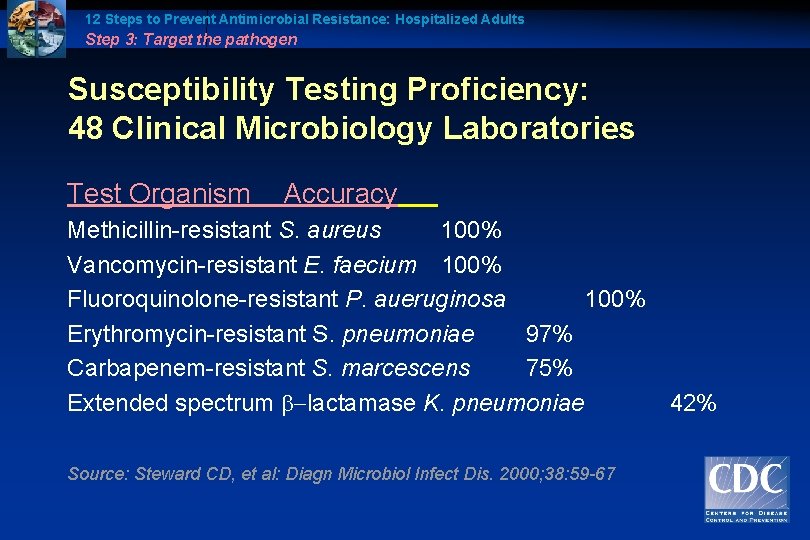
12 Steps to Prevent Antimicrobial Resistance: Hospitalized Adults Step 3: Target the pathogen Susceptibility Testing Proficiency: 48 Clinical Microbiology Laboratories Test Organism Accuracy Methicillin-resistant S. aureus 100% Vancomycin-resistant E. faecium 100% Fluoroquinolone-resistant P. aueruginosa 100% Erythromycin-resistant S. pneumoniae 97% Carbapenem-resistant S. marcescens 75% Extended spectrum b-lactamase K. pneumoniae 42% Source: Steward CD, et al: Diagn Microbiol Infect Dis. 2000; 38: 59 -67
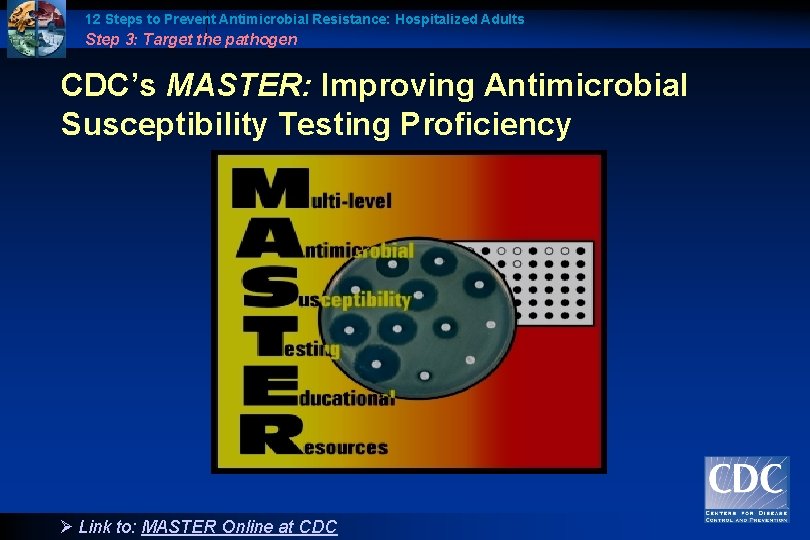
12 Steps to Prevent Antimicrobial Resistance: Hospitalized Adults Step 3: Target the pathogen CDC’s MASTER: Improving Antimicrobial Susceptibility Testing Proficiency Ø Link to: MASTER Online at CDC
12 Steps to Prevent Antimicrobial Resistance: Hospitalized Adults Diagnose & Treat Infection Effectively Step 3: Target the pathogen Fact: Appropriate antimicrobial therapy saves lives. Actions: ü culture the patient ü target empiric therapy to likely pathogens and local antibiogram ü target definitive therapy to known pathogens and antimicrobial susceptibility test results Ø Link to: IDSA guidelines for evaluating fever in critically ill adults
12 Steps to Prevent Antimicrobial Resistance: Hospitalized Adults Diagnose & Treat Infection Effectively Step 4: Access the experts Fact: Infectious diseases expert input improves the outcome of serious infections.
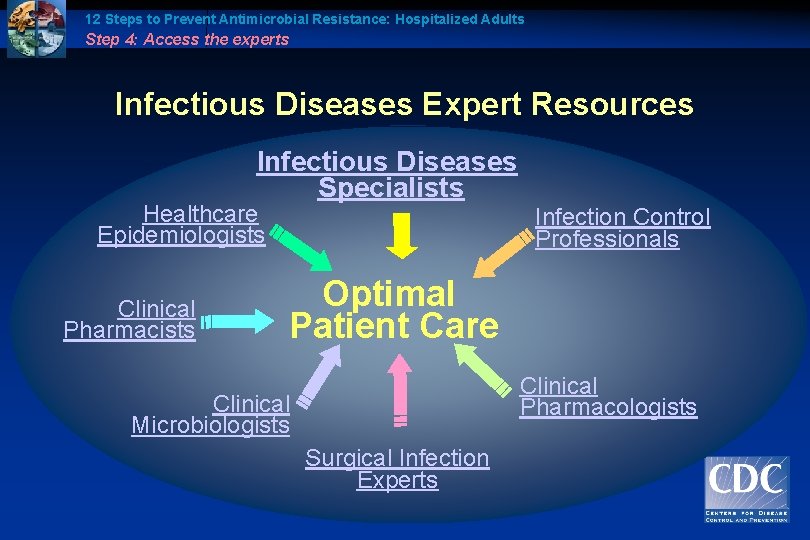
12 Steps to Prevent Antimicrobial Resistance: Hospitalized Adults Step 4: Access the experts Infectious Diseases Expert Resources Infectious Diseases Specialists Healthcare Epidemiologists Clinical Pharmacists Infection Control Professionals Optimal Patient Care Clinical Pharmacologists Clinical Microbiologists Surgical Infection Experts
12 Steps to Prevent Antimicrobial Resistance: Hospitalized Adults Diagnose & Treat Infection Effectively Step 4: Access the experts Fact: Infectious diseases expert input improves the outcome of serious infections. Action: ü consult infectious diseases experts about patients with serious infections Ø Link to: SHEA / IDSA: Guidelines for the Prevention of Antimicrobial Resistance in Hospitals
12 Steps to Prevent Antimicrobial Resistance: Hospitalized Adults Use Antimicrobials Wisely Step 5: Practice antimicrobial control Fact: Programs to improve antimicrobial use are effective.
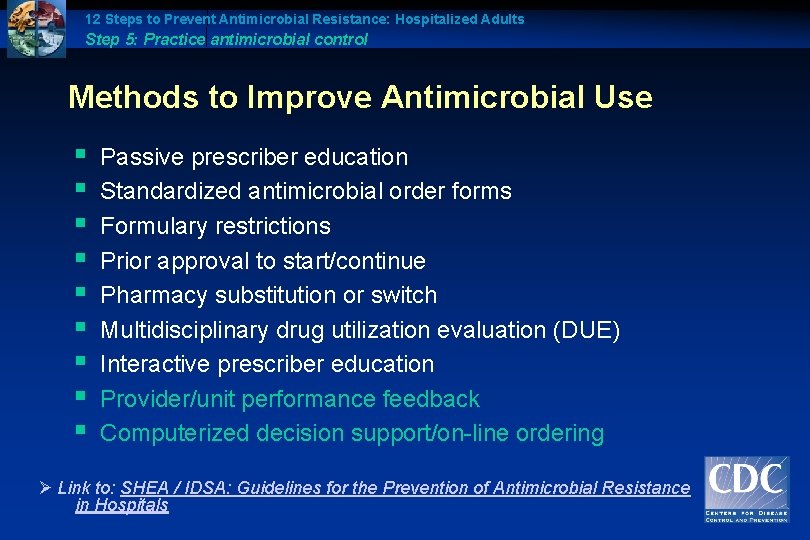
12 Steps to Prevent Antimicrobial Resistance: Hospitalized Adults Step 5: Practice antimicrobial control Methods to Improve Antimicrobial Use § § § § § Passive prescriber education Standardized antimicrobial order forms Formulary restrictions Prior approval to start/continue Pharmacy substitution or switch Multidisciplinary drug utilization evaluation (DUE) Interactive prescriber education Provider/unit performance feedback Computerized decision support/on-line ordering Ø Link to: SHEA / IDSA: Guidelines for the Prevention of Antimicrobial Resistance in Hospitals
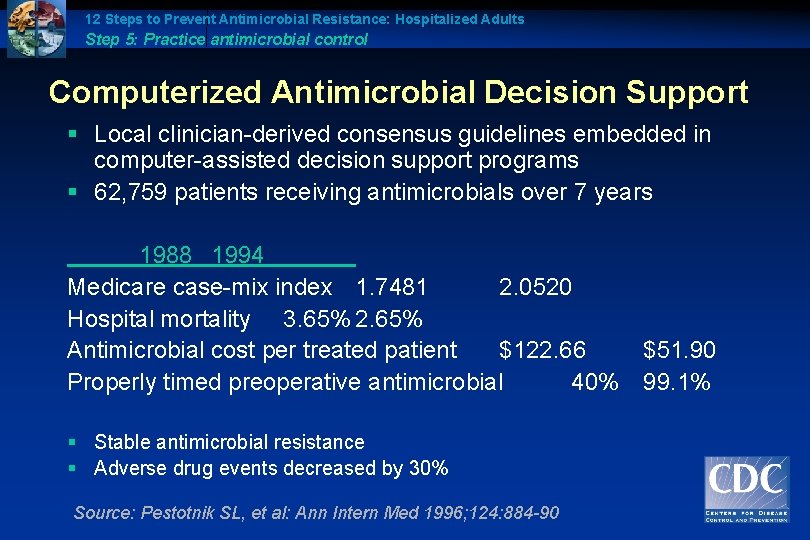
12 Steps to Prevent Antimicrobial Resistance: Hospitalized Adults Step 5: Practice antimicrobial control Computerized Antimicrobial Decision Support § Local clinician-derived consensus guidelines embedded in computer-assisted decision support programs § 62, 759 patients receiving antimicrobials over 7 years 1988 1994 Medicare case-mix index 1. 7481 2. 0520 Hospital mortality 3. 65% 2. 65% Antimicrobial cost per treated patient $122. 66 $51. 90 Properly timed preoperative antimicrobial 40% 99. 1% § Stable antimicrobial resistance § Adverse drug events decreased by 30% Source: Pestotnik SL, et al: Ann Intern Med 1996; 124: 884 -90
12 Steps to Prevent Antimicrobial Resistance: Hospitalized Adults Use Antimicrobials Wisely Step 5: Practice antimicrobial control Fact: Programs to improve antimicrobial use are effective. Action: ü engage in local antimicrobial use quality improvement efforts Source: Schiff GD, et al: Jt Comm J Qual Improv 2001; 27: 387 -402 Ø Link to: Methods to improve antimicrobial use and prevent resistance
12 Steps to Prevent Antimicrobial Resistance: Hospitalized Adults Use Antimicrobials Wisely Step 6: Use local data Fact: The prevalence of resistance can vary by time, locale, patient population, hospital unit, and length of stay.
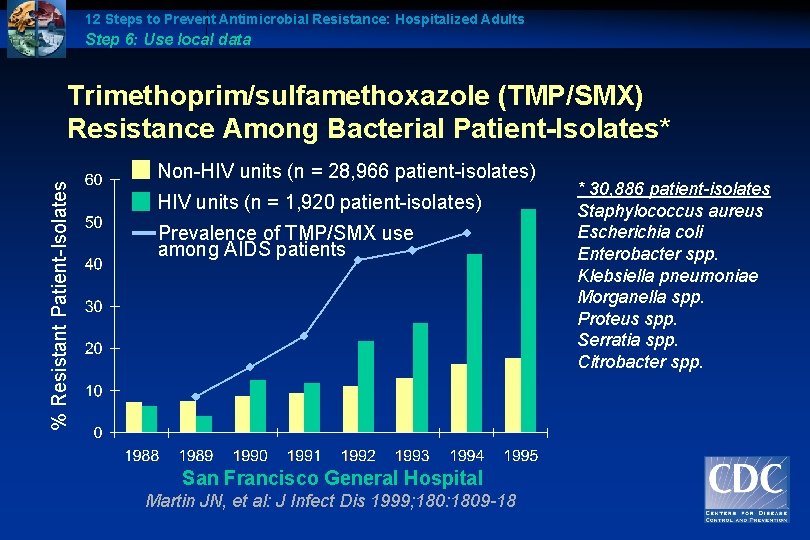
12 Steps to Prevent Antimicrobial Resistance: Hospitalized Adults Step 6: Use local data % Resistant Patient-Isolates Trimethoprim/sulfamethoxazole (TMP/SMX) Resistance Among Bacterial Patient-Isolates* Non-HIV units (n = 28, 966 patient-isolates) HIV units (n = 1, 920 patient-isolates) Prevalence of TMP/SMX use among AIDS patients San Francisco General Hospital Martin JN, et al: J Infect Dis 1999; 180: 1809 -18 * 30, 886 patient-isolates Staphylococcus aureus Escherichia coli Enterobacter spp. Klebsiella pneumoniae Morganella spp. Proteus spp. Serratia spp. Citrobacter spp.
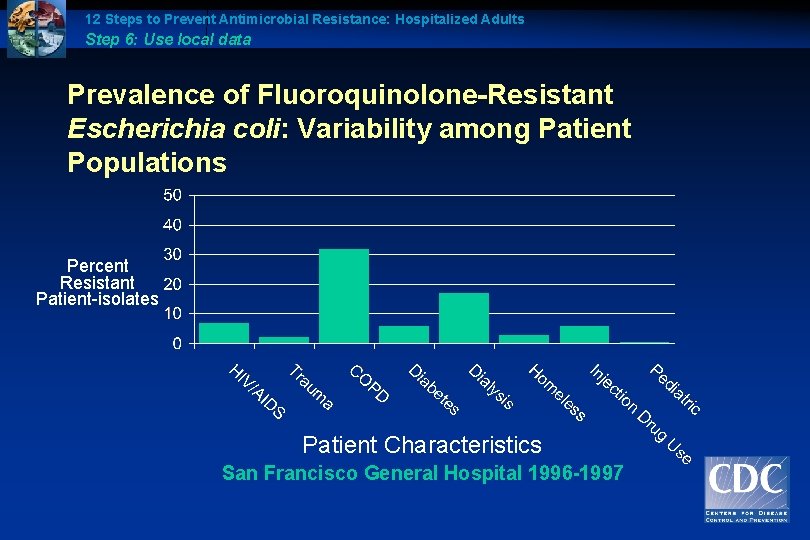
12 Steps to Prevent Antimicrobial Resistance: Hospitalized Adults Step 6: Use local data Prevalence of Fluoroquinolone-Resistant Escherichia coli: Variability among Patient Populations Percent Resistant Patient-isolates Patient Characteristics San Francisco General Hospital 1996 -1997
12 Steps to Prevent Antimicrobial Resistance: Hospitalized Adults Use Antimicrobials Wisely Step 6: Use local data Fact: The prevalence of resistance can vary by locale, patient population, hospital unit, and length of stay. Actions: üknow your local antibiogram üknow your patient population Ø Link to: NCCLS Proposed Guidance for Antibiogram Development
12 Steps to Prevent Antimicrobial Resistance: Hospitalized Adults Use Antimicrobials Wisely Step 7: Treat infection, not contamination Fact: A major cause of antimicrobial overuse is “treatment” of contaminated cultures.
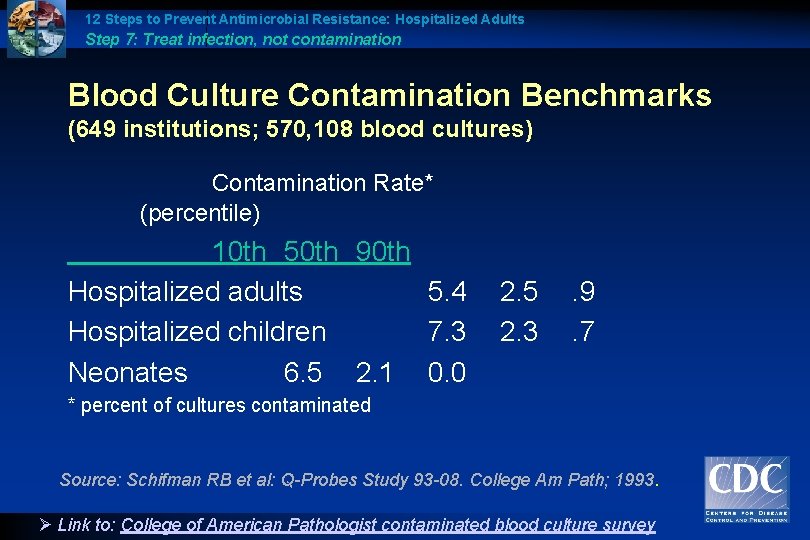
12 Steps to Prevent Antimicrobial Resistance: Hospitalized Adults Step 7: Treat infection, not contamination Blood Culture Contamination Benchmarks (649 institutions; 570, 108 blood cultures) Contamination Rate* (percentile) 10 th 50 th 90 th Hospitalized adults 5. 4 Hospitalized children 7. 3 Neonates 6. 5 2. 1 0. 0 2. 5 2. 3 . 9. 7 * percent of cultures contaminated Source: Schifman RB et al: Q-Probes Study 93 -08. College Am Path; 1993. Ø Link to: College of American Pathologist contaminated blood culture survey
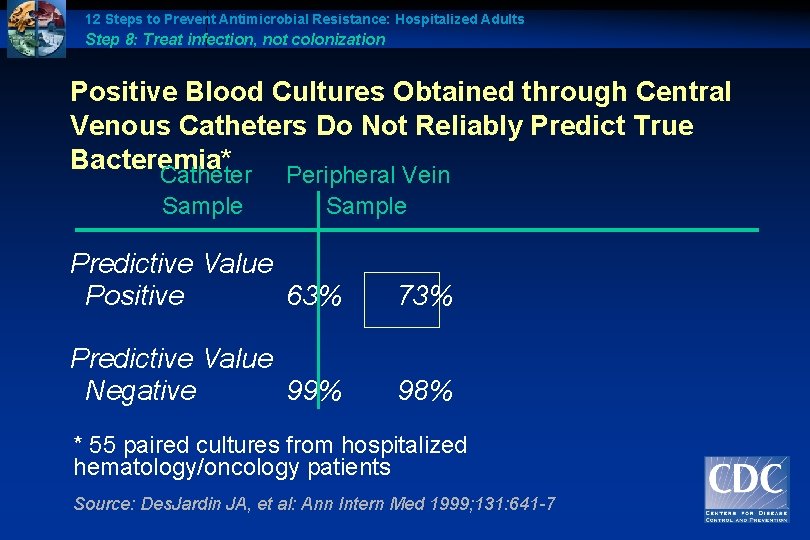
12 Steps to Prevent Antimicrobial Resistance: Hospitalized Adults Step 8: Treat infection, not colonization Positive Blood Cultures Obtained through Central Venous Catheters Do Not Reliably Predict True Bacteremia* Catheter Sample Peripheral Vein Sample Predictive Value Positive 63% 73% Predictive Value Negative 99% 98% * 55 paired cultures from hospitalized hematology/oncology patients Source: Des. Jardin JA, et al: Ann Intern Med 1999; 131: 641 -7
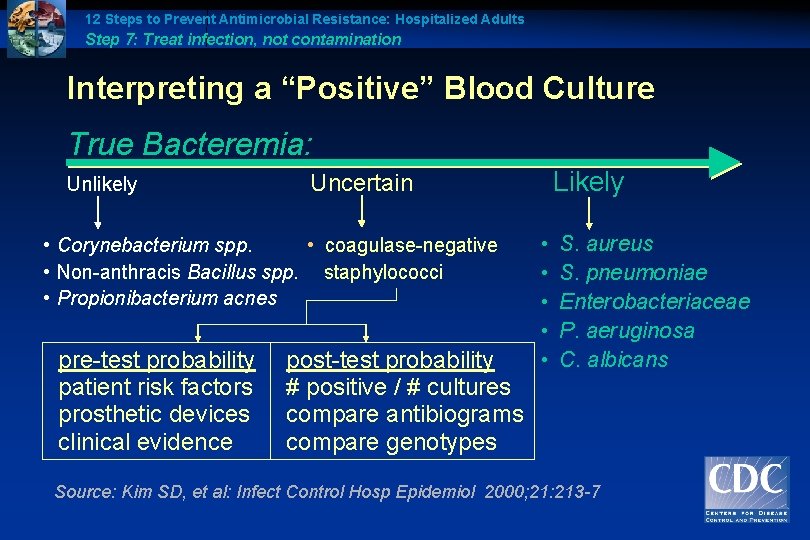
12 Steps to Prevent Antimicrobial Resistance: Hospitalized Adults Step 7: Treat infection, not contamination Interpreting a “Positive” Blood Culture True Bacteremia: Unlikely • Corynebacterium spp. • coagulase-negative • Non-anthracis Bacillus spp. staphylococci • Propionibacterium acnes pre-test probability patient risk factors prosthetic devices clinical evidence Likely Uncertain post-test probability # positive / # cultures compare antibiograms compare genotypes • • • S. aureus S. pneumoniae Enterobacteriaceae P. aeruginosa C. albicans Source: Kim SD, et al: Infect Control Hosp Epidemiol 2000; 21: 213 -7
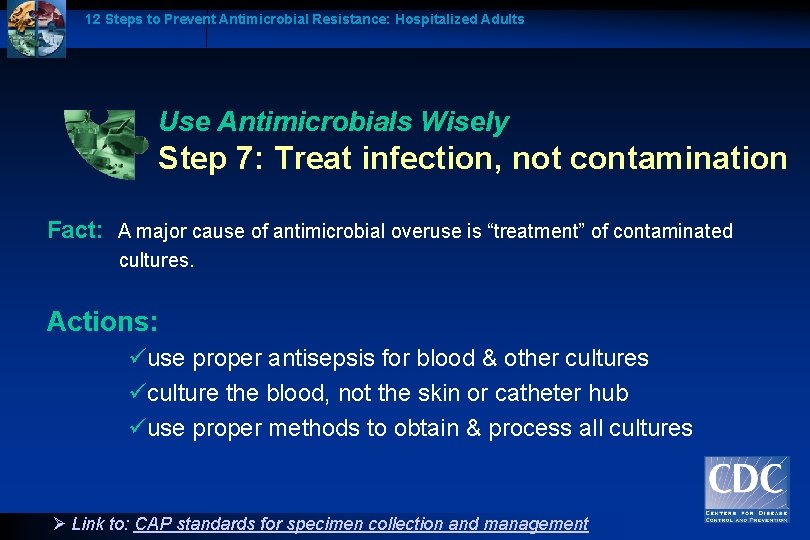
12 Steps to Prevent Antimicrobial Resistance: Hospitalized Adults Use Antimicrobials Wisely Step 7: Treat infection, not contamination Fact: A major cause of antimicrobial overuse is “treatment” of contaminated cultures. Actions: üuse proper antisepsis for blood & other cultures üculture the blood, not the skin or catheter hub üuse proper methods to obtain & process all cultures Ø Link to: CAP standards for specimen collection and management
12 Steps to Prevent Antimicrobial Resistance: Hospitalized Adults Use Antimicrobials Wisely Step 8: Treat infection, not colonization Fact: A major cause of antimicrobial overuse is “treatment” of colonization.
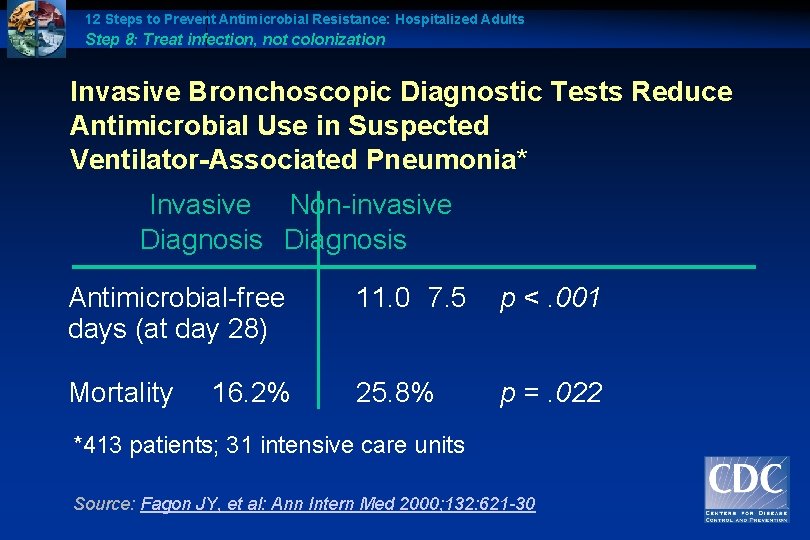
12 Steps to Prevent Antimicrobial Resistance: Hospitalized Adults Step 8: Treat infection, not colonization Invasive Bronchoscopic Diagnostic Tests Reduce Antimicrobial Use in Suspected Ventilator-Associated Pneumonia* Invasive Non-invasive Diagnosis Antimicrobial-free days (at day 28) 11. 0 7. 5 p <. 001 Mortality 25. 8% p =. 022 16. 2% *413 patients; 31 intensive care units Source: Fagon JY, et al: Ann Intern Med 2000; 132: 621 -30
12 Steps to Prevent Antimicrobial Resistance: Hospitalized Adults Use Antimicrobials Wisely Step 8: Treat infection, not colonization Fact: A major cause of antimicrobial overuse is treatment of colonization. Actions: ütreat pneumonia, not the tracheal aspirate ütreat bacteremia, not the catheter tip or hub ütreat urinary tract infection, not the indwelling catheter Ø Link to: IDSA guideline for evaluating fever in critically ill adults
12 Steps to Prevent Antimicrobial Resistance: Hospitalized Adults Use Antimicrobials Wisely Step 9: Know when to say “no” to vanco Fact: Vancomycin overuse promotes emergence, selection, and spread of resistant pathogens.
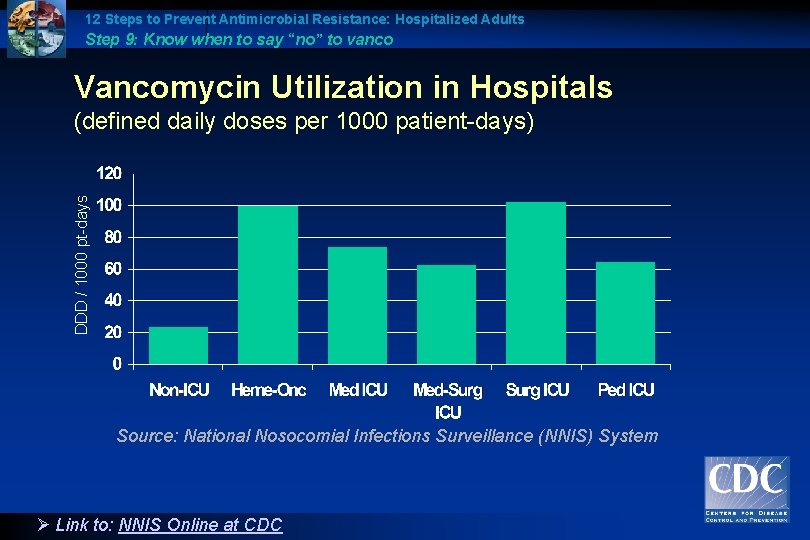
12 Steps to Prevent Antimicrobial Resistance: Hospitalized Adults Step 9: Know when to say “no” to vanco Vancomycin Utilization in Hospitals DDD / 1000 pt-days (defined daily doses per 1000 patient-days) Source: National Nosocomial Infections Surveillance (NNIS) System Ø Link to: NNIS Online at CDC
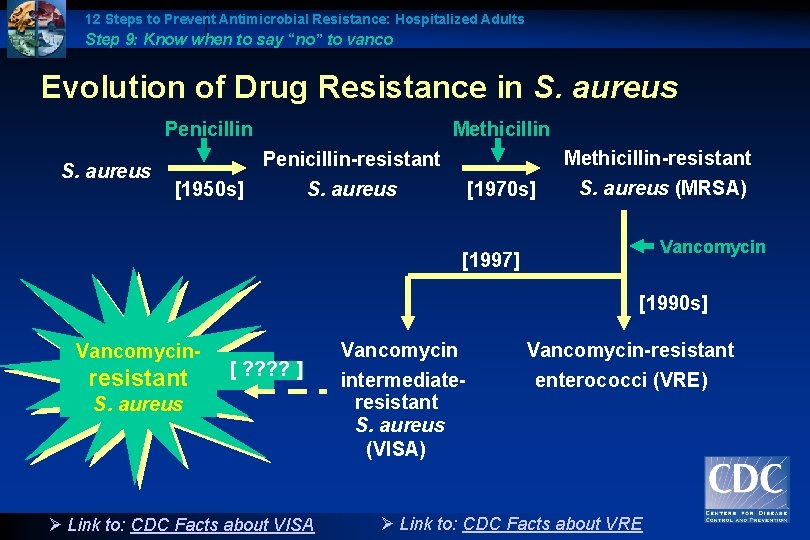
12 Steps to Prevent Antimicrobial Resistance: Hospitalized Adults Step 9: Know when to say “no” to vanco Evolution of Drug Resistance in S. aureus Penicillin S. aureus Methicillin Penicillin-resistant [1950 s] [1970 s] S. aureus Methicillin-resistant S. aureus (MRSA) Vancomycin [1997] [1990 s] Vancomycin- resistant [ ? ? ] S. aureus Ø Link to: CDC Facts about VISA Vancomycin intermediateresistant S. aureus (VISA) Vancomycin-resistant enterococci (VRE) Ø Link to: CDC Facts about VRE
12 Steps to Prevent Antimicrobial Resistance: Hospitalized Adults Use Antimicrobials Wisely Step 9: Know when to say “no” to vanco Fact: Vancomycin overuse promotes emergence, selection, and spread of resistant pathogens. Actions: ütreat infection, not contaminants or colonization üfever in a patient with an intravenous catheter is not a routine indication for vancomycin Ø Link to: CDC guidelines to prevent vancomycin resistance
12 Steps to Prevent Antimicrobial Resistance: Hospitalized Adults Use Antimicrobials Wisely Step 10: Stop treatment when infection is cured or unlikely Fact: Failure to stop unnecessary antimicrobial treatment contributes to overuse and resistance.
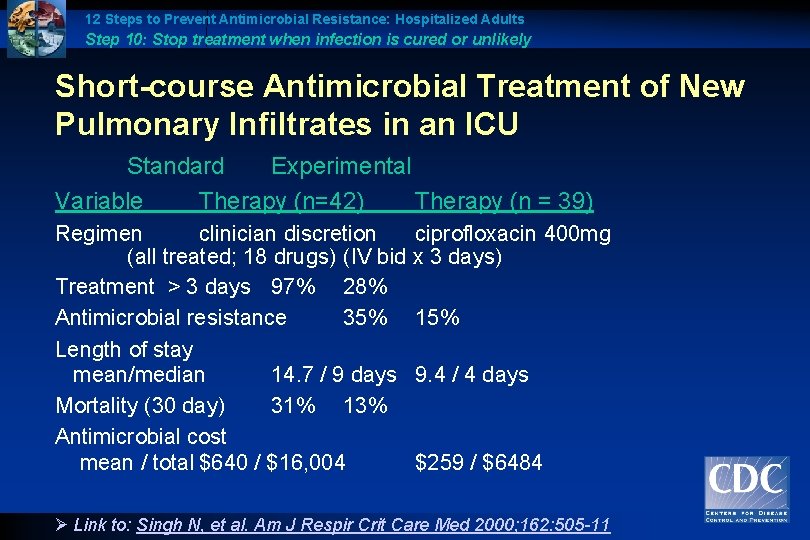
12 Steps to Prevent Antimicrobial Resistance: Hospitalized Adults Step 10: Stop treatment when infection is cured or unlikely Short-course Antimicrobial Treatment of New Pulmonary Infiltrates in an ICU Standard Experimental Variable Therapy (n=42) Therapy (n = 39) Regimen clinician discretion ciprofloxacin 400 mg (all treated; 18 drugs) (IV bid x 3 days) Treatment > 3 days 97% 28% Antimicrobial resistance 35% 15% Length of stay mean/median 14. 7 / 9 days 9. 4 / 4 days Mortality (30 day) 31% 13% Antimicrobial cost mean / total $640 / $16, 004 $259 / $6484 Ø Link to: Singh N, et al. Am J Respir Crit Care Med 2000; 162: 505 -11
12 Steps to Prevent Antimicrobial Resistance: Hospitalized Adults Step 10: Stop treatment when infection is cured or unlikely Use Antimicrobials Wisely Step 10: Stop antimicrobial treatment Fact: Failure to stop unnecessary antimicrobial treatment contributes to overuse and resistance. Actions: üwhen infection is cured üwhen cultures are negative and infection is unlikely üwhen infection is not diagnosed
12 Steps to Prevent Antimicrobial Resistance: Hospitalized Adults Prevent Transmission Step 11: Isolate the pathogen Fact: Patient-to-patient spread of pathogens can be prevented.
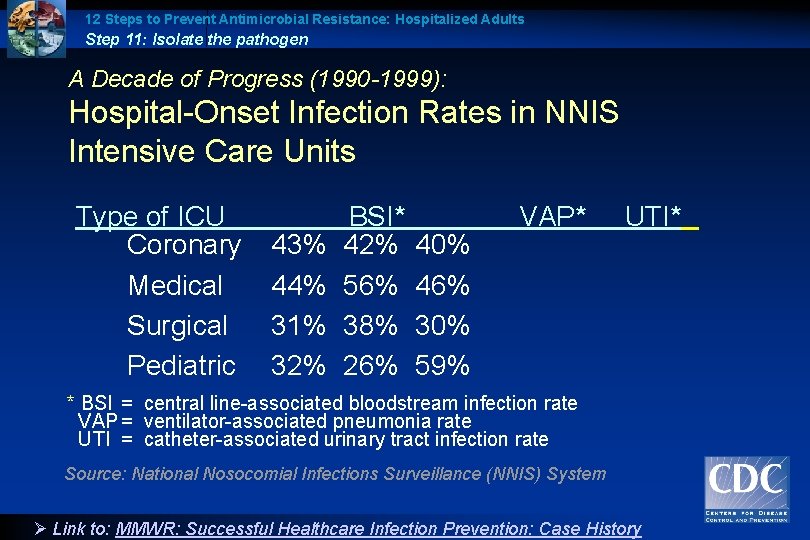
12 Steps to Prevent Antimicrobial Resistance: Hospitalized Adults Step 11: Isolate the pathogen A Decade of Progress (1990 -1999): Hospital-Onset Infection Rates in NNIS Intensive Care Units Type of ICU Coronary Medical Surgical Pediatric 43% 44% 31% 32% BSI* 42% 56% 38% 26% 40% 46% 30% 59% VAP* UTI* * BSI = central line-associated bloodstream infection rate VAP = ventilator-associated pneumonia rate UTI = catheter-associated urinary tract infection rate Source: National Nosocomial Infections Surveillance (NNIS) System Ø Link to: MMWR: Successful Healthcare Infection Prevention: Case History
12 Steps to Prevent Antimicrobial Resistance: Hospitalized Adults Step 11: Isolate the pathogen Prevent Transmission Step 11: Isolate the pathogen Fact: Patient-to-patient spread of pathogens can be prevented. Actions: ü use standard infection control precautions ü contain infectious body fluids (use approved airborne/droplet/contact isolation precautions) ü when in doubt, consult infection control experts Ø Link to: A VRE prevention success story Ø Link to: CDC isolation guidelines and recommendations
12 Steps to Prevent Antimicrobial Resistance: Hospitalized Adults Prevent Transmission Step 12: Contain your contagion Fact: Healthcare personnel can spread antimicrobial-resistant pathogens from patient-to-patient.
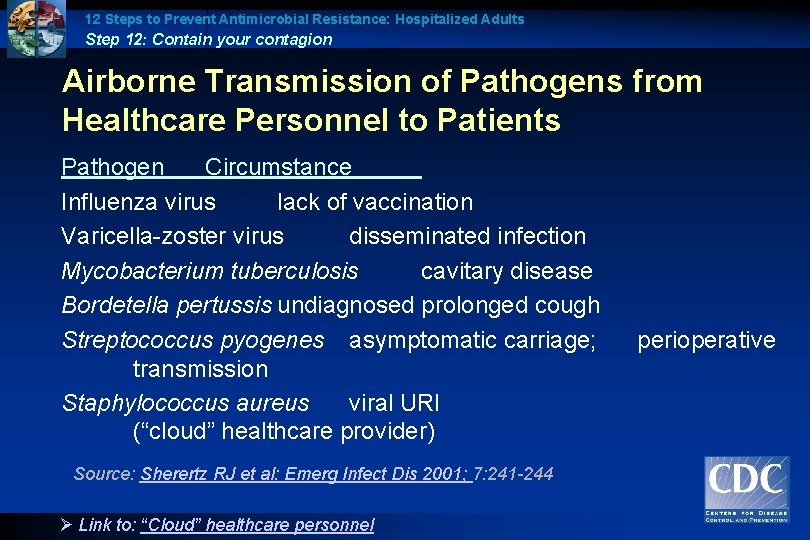
12 Steps to Prevent Antimicrobial Resistance: Hospitalized Adults Step 12: Contain your contagion Airborne Transmission of Pathogens from Healthcare Personnel to Patients Pathogen Circumstance Influenza virus lack of vaccination Varicella-zoster virus disseminated infection Mycobacterium tuberculosis cavitary disease Bordetella pertussis undiagnosed prolonged cough Streptococcus pyogenes asymptomatic carriage; transmission Staphylococcus aureus viral URI (“cloud” healthcare provider) Source: Sherertz RJ et al: Emerg Infect Dis 2001; 7: 241 -244 Ø Link to: “Cloud” healthcare personnel perioperative
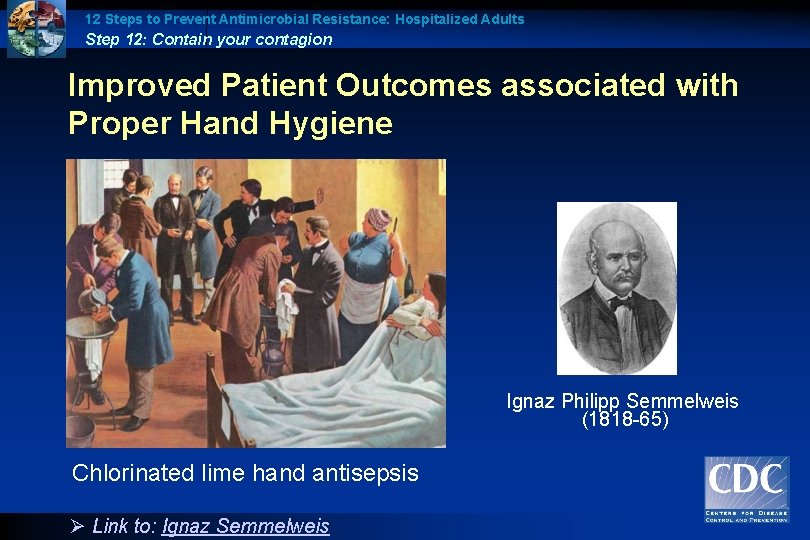
12 Steps to Prevent Antimicrobial Resistance: Hospitalized Adults Step 12: Contain your contagion Improved Patient Outcomes associated with Proper Hand Hygiene Ignaz Philipp Semmelweis (1818 -65) Chlorinated lime hand antisepsis Ø Link to: Ignaz Semmelweis
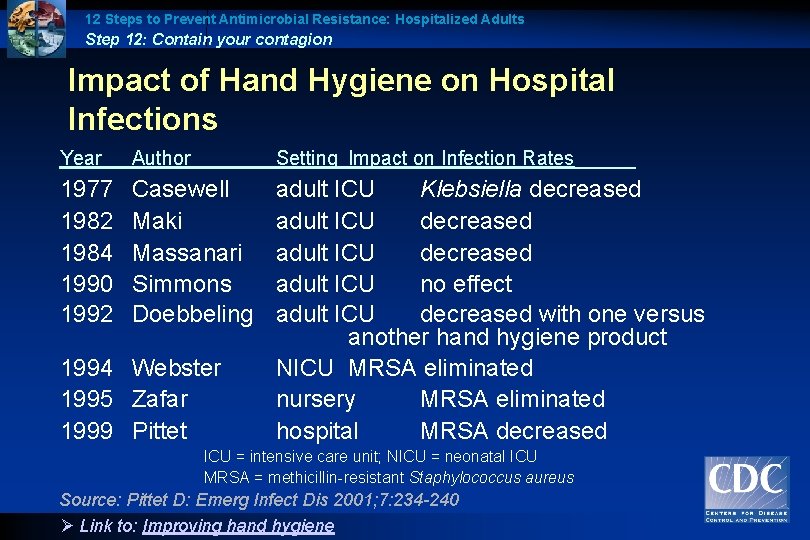
12 Steps to Prevent Antimicrobial Resistance: Hospitalized Adults Step 12: Contain your contagion Impact of Hand Hygiene on Hospital Infections Year Author Setting Impact on Infection Rates 1977 1982 1984 1990 1992 Casewell Maki Massanari Simmons Doebbeling adult ICU Klebsiella decreased adult ICU no effect adult ICU decreased with one versus another hand hygiene product NICU MRSA eliminated nursery MRSA eliminated hospital MRSA decreased 1994 Webster 1995 Zafar 1999 Pittet ICU = intensive care unit; NICU = neonatal ICU MRSA = methicillin-resistant Staphylococcus aureus Source: Pittet D: Emerg Infect Dis 2001; 7: 234 -240 Ø Link to: Improving hand hygiene
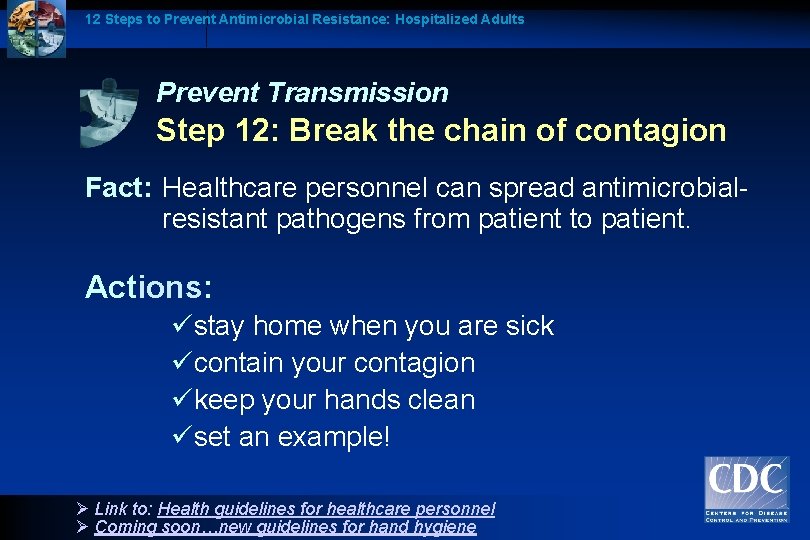
12 Steps to Prevent Antimicrobial Resistance: Hospitalized Adults Prevent Transmission Step 12: Break the chain of contagion Fact: Healthcare personnel can spread antimicrobialresistant pathogens from patient to patient. Actions: üstay home when you are sick ücontain your contagion ükeep your hands clean üset an example! Ø Link to: Health guidelines for healthcare personnel Ø Coming soon…new guidelines for hand hygiene
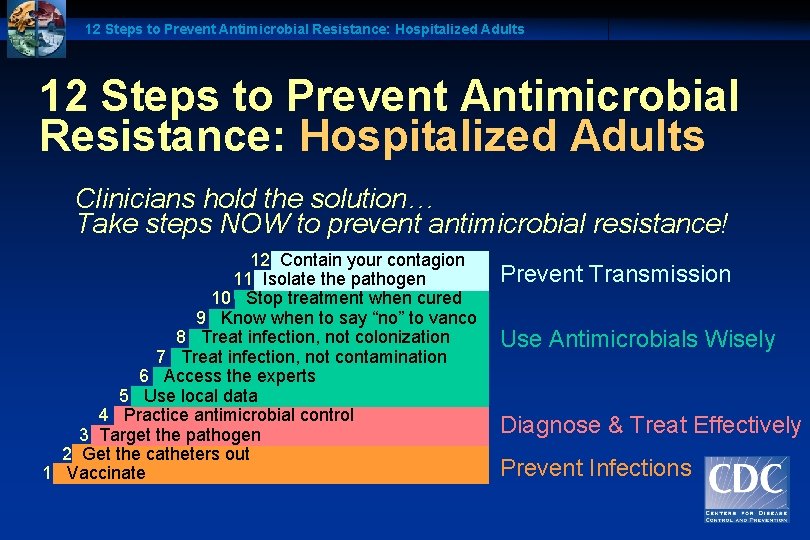
12 Steps to Prevent Antimicrobial Resistance: Hospitalized Adults Clinicians hold the solution… Take steps NOW to prevent antimicrobial resistance! 12 Contain your contagion 11 Isolate the pathogen 10 Stop treatment when cured 9 Know when to say “no” to vanco 8 Treat infection, not colonization 7 Treat infection, not contamination 6 Access the experts 5 Use local data 4 Practice antimicrobial control 3 Target the pathogen 2 Get the catheters out 1 Vaccinate Prevent Transmission Use Antimicrobials Wisely Diagnose & Treat Effectively Prevent Infections
Campaign to Prevent Antimicrobial Resistance Funded by the CDC Foundation with support from Parmacia, Inc. , Premier, Inc. , and the Sally S. Potter Endowment Fund. Endorsed by the American Society for Microbiology, Infectious Diseases Society of America, & National Foundation for Infectious Diseases Clinicians hold the solution! ØLink to: CDC Foundation
Campaign to Prevent Antimicrobial Resistance in Healthcare Settings Prevention IS PRIMARY! Protect patients…protect healthcare personnel… promote quality healthcare! Division of Healthcare Quality Promotion National Center for Infections Diseases Ø Link to: Division of Healthcare Quality Promotion Home Page
- Slides: 63