
Camera Shots Dominic Wood Very long shot VLS

- Slides: 24
Camera Shots Dominic Wood
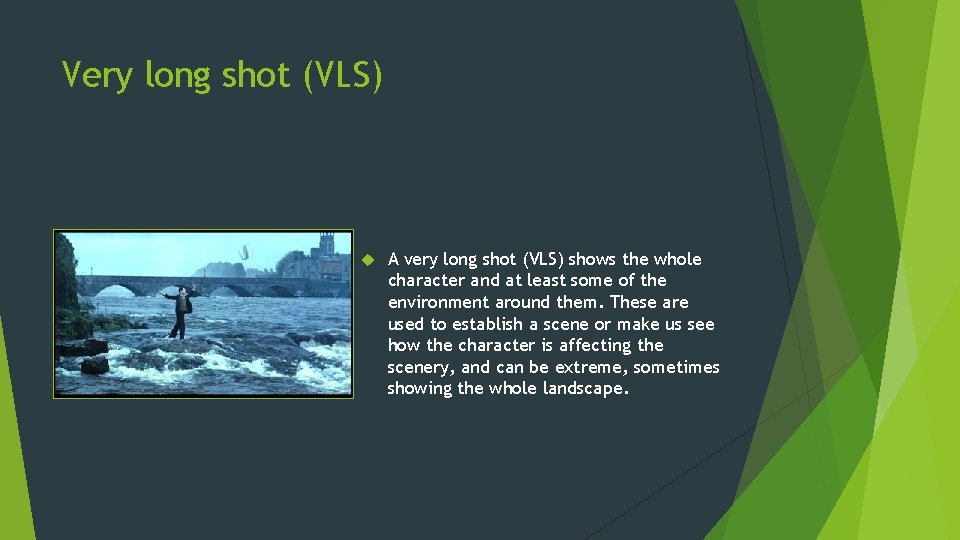
Very long shot (VLS) A very long shot (VLS) shows the whole character and at least some of the environment around them. These are used to establish a scene or make us see how the character is affecting the scenery, and can be extreme, sometimes showing the whole landscape.
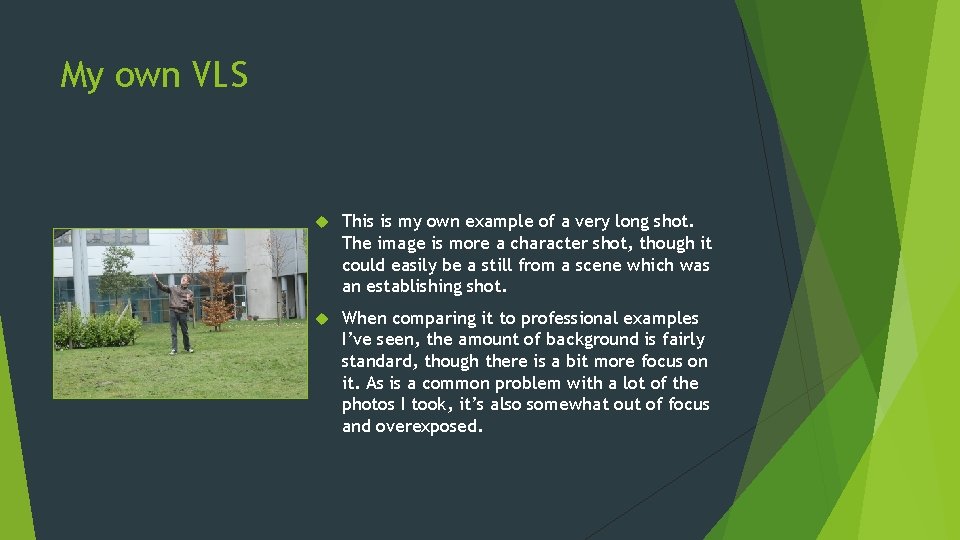
My own VLS This is my own example of a very long shot. The image is more a character shot, though it could easily be a still from a scene which was an establishing shot. When comparing it to professional examples I’ve seen, the amount of background is fairly standard, though there is a bit more focus on it. As is a common problem with a lot of the photos I took, it’s also somewhat out of focus and overexposed.
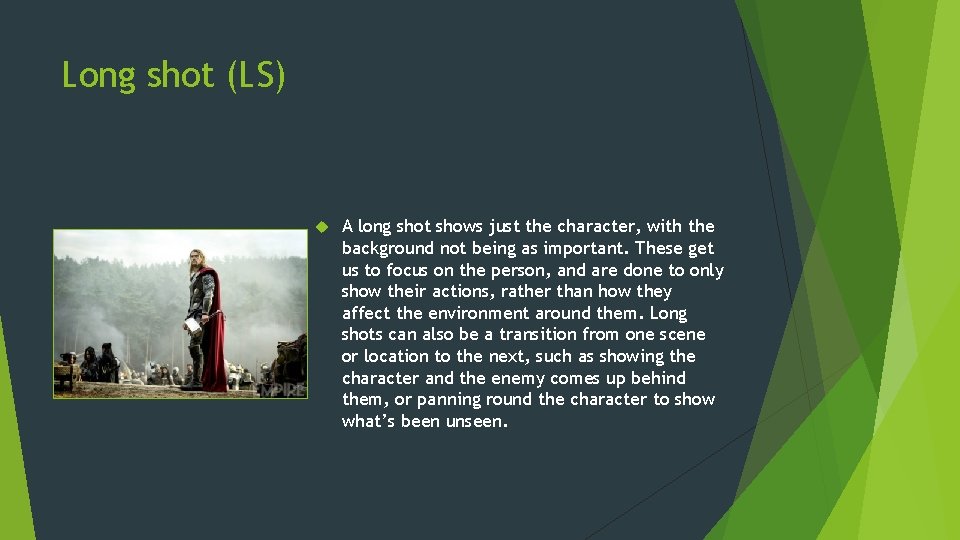
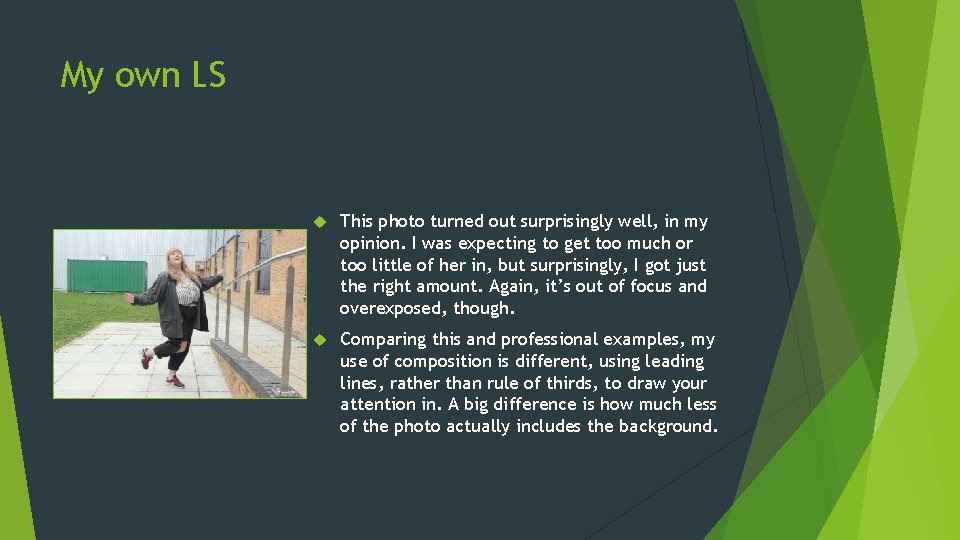
Long shot (LS) A long shot shows just the character, with the background not being as important. These get us to focus on the person, and are done to only show their actions, rather than how they affect the environment around them. Long shots can also be a transition from one scene or location to the next, such as showing the character and the enemy comes up behind them, or panning round the character to show what’s been unseen.
My own LS This photo turned out surprisingly well, in my opinion. I was expecting to get too much or too little of her in, but surprisingly, I got just the right amount. Again, it’s out of focus and overexposed, though. Comparing this and professional examples, my use of composition is different, using leading lines, rather than rule of thirds, to draw your attention in. A big difference is how much less of the photo actually includes the background.
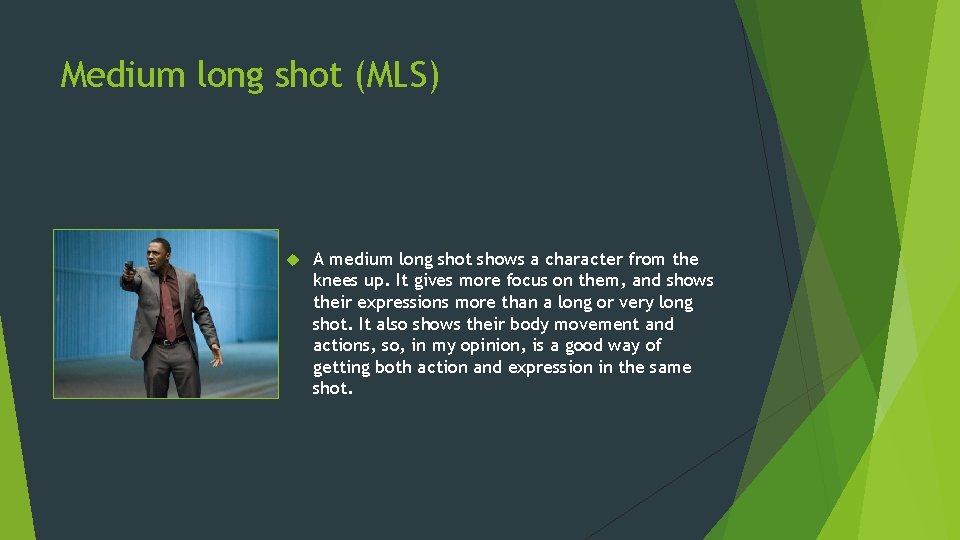
Medium long shot (MLS) A medium long shot shows a character from the knees up. It gives more focus on them, and shows their expressions more than a long or very long shot. It also shows their body movement and actions, so, in my opinion, is a good way of getting both action and expression in the same shot.
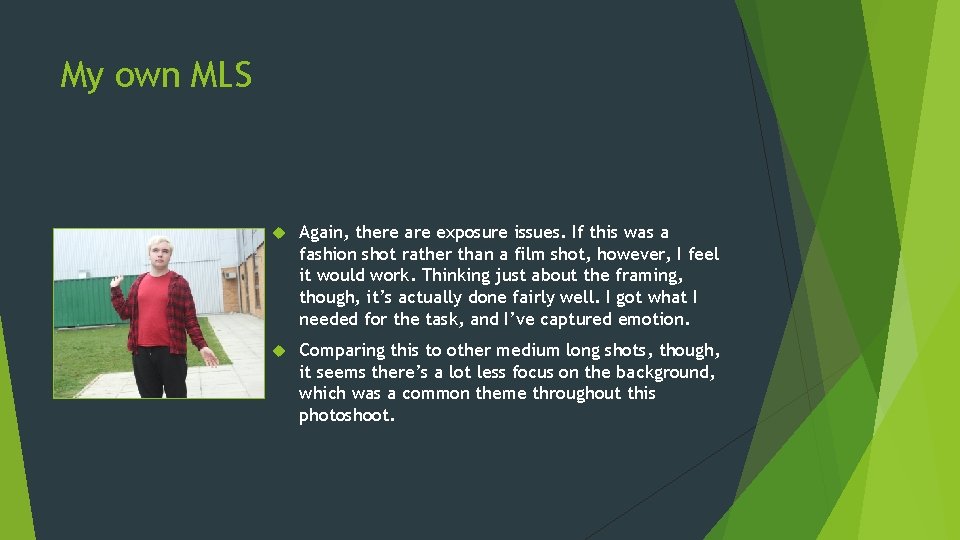
My own MLS Again, there are exposure issues. If this was a fashion shot rather than a film shot, however, I feel it would work. Thinking just about the framing, though, it’s actually done fairly well. I got what I needed for the task, and I’ve captured emotion. Comparing this to other medium long shots, though, it seems there’s a lot less focus on the background, which was a common theme throughout this photoshoot.
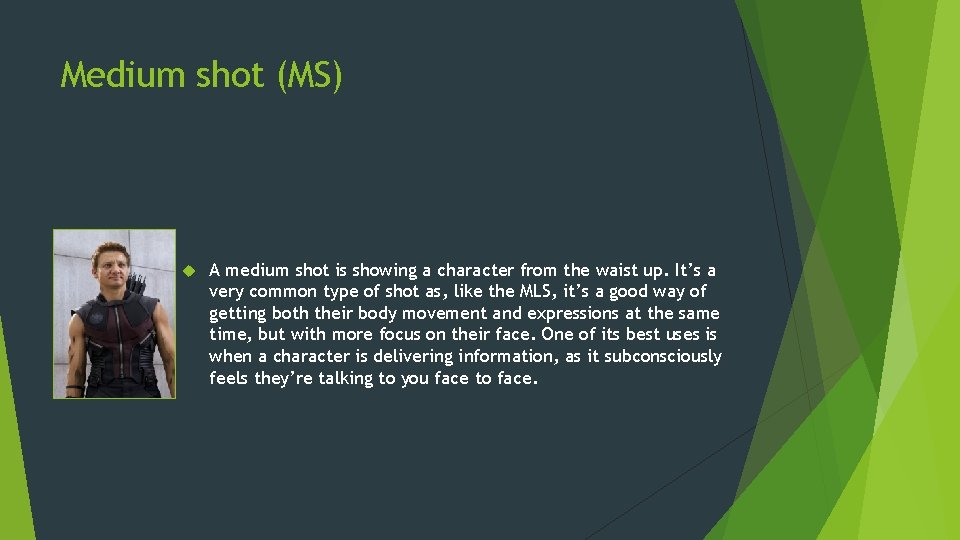
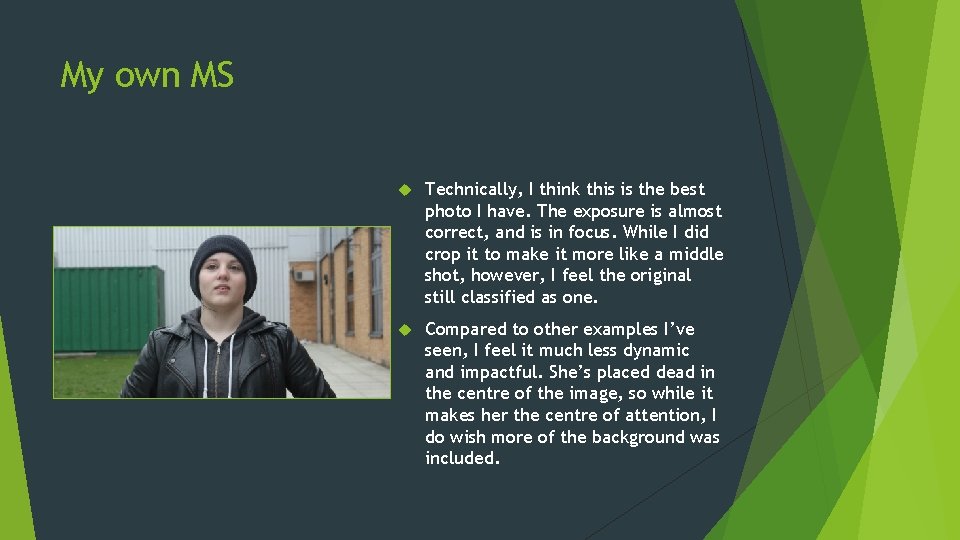
Medium shot (MS) A medium shot is showing a character from the waist up. It’s a very common type of shot as, like the MLS, it’s a good way of getting both their body movement and expressions at the same time, but with more focus on their face. One of its best uses is when a character is delivering information, as it subconsciously feels they’re talking to you face to face.
My own MS Technically, I think this is the best photo I have. The exposure is almost correct, and is in focus. While I did crop it to make it more like a middle shot, however, I feel the original still classified as one. Compared to other examples I’ve seen, I feel it much less dynamic and impactful. She’s placed dead in the centre of the image, so while it makes her the centre of attention, I do wish more of the background was included.
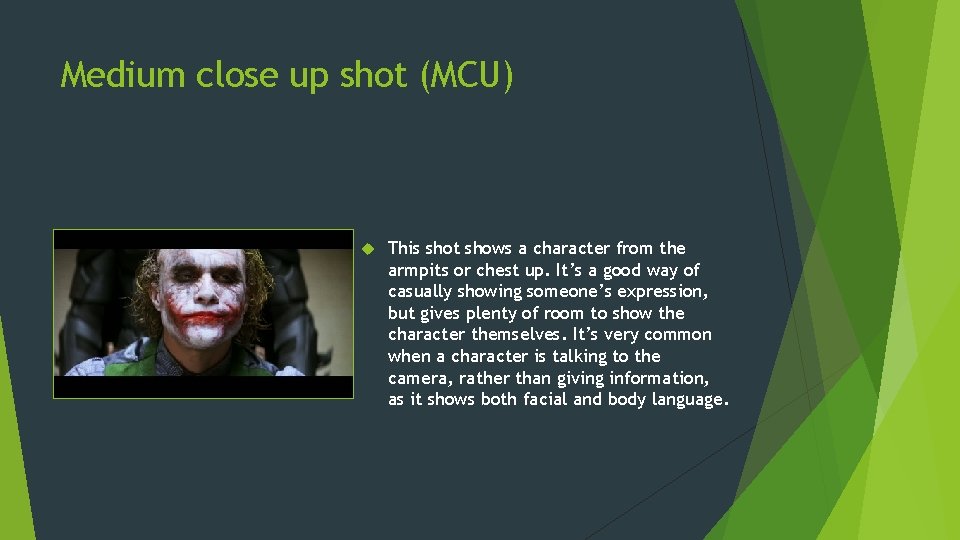
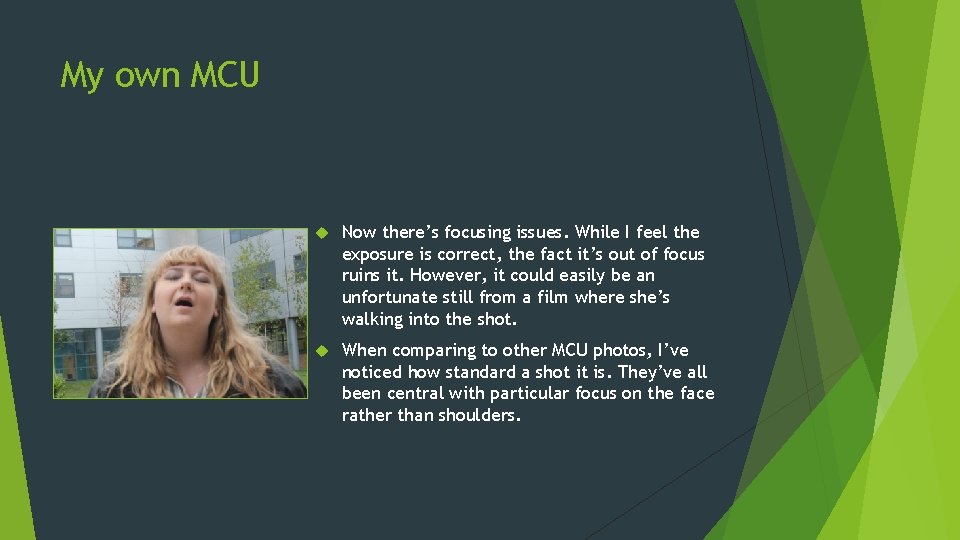
Medium close up shot (MCU) This shot shows a character from the armpits or chest up. It’s a good way of casually showing someone’s expression, but gives plenty of room to show the character themselves. It’s very common when a character is talking to the camera, rather than giving information, as it shows both facial and body language.
My own MCU Now there’s focusing issues. While I feel the exposure is correct, the fact it’s out of focus ruins it. However, it could easily be an unfortunate still from a film where she’s walking into the shot. When comparing to other MCU photos, I’ve noticed how standard a shot it is. They’ve all been central with particular focus on the face rather than shoulders.
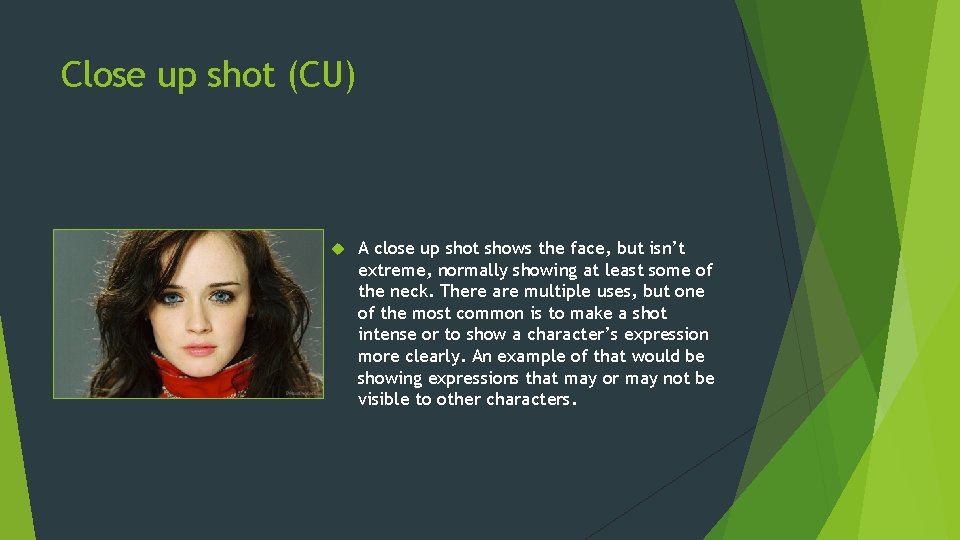
Close up shot (CU) A close up shot shows the face, but isn’t extreme, normally showing at least some of the neck. There are multiple uses, but one of the most common is to make a shot intense or to show a character’s expression more clearly. An example of that would be showing expressions that may or may not be visible to other characters.
My own CU Another photo surprisingly well-exposed, and in focus. In fact, I feel this is the sharpest photo I’ve taken. When I compared this to other photos, I began to realise how non-standard it is. Most faces are either central or slightly off-centre, and normally, the whole head is seen.
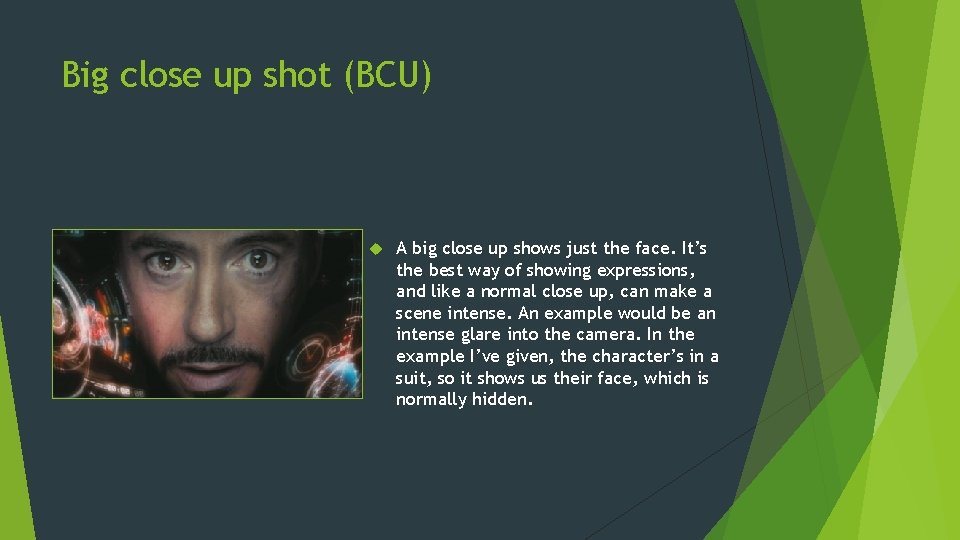
Big close up shot (BCU) A big close up shows just the face. It’s the best way of showing expressions, and like a normal close up, can make a scene intense. An example would be an intense glare into the camera. In the example I’ve given, the character’s in a suit, so it shows us their face, which is normally hidden.
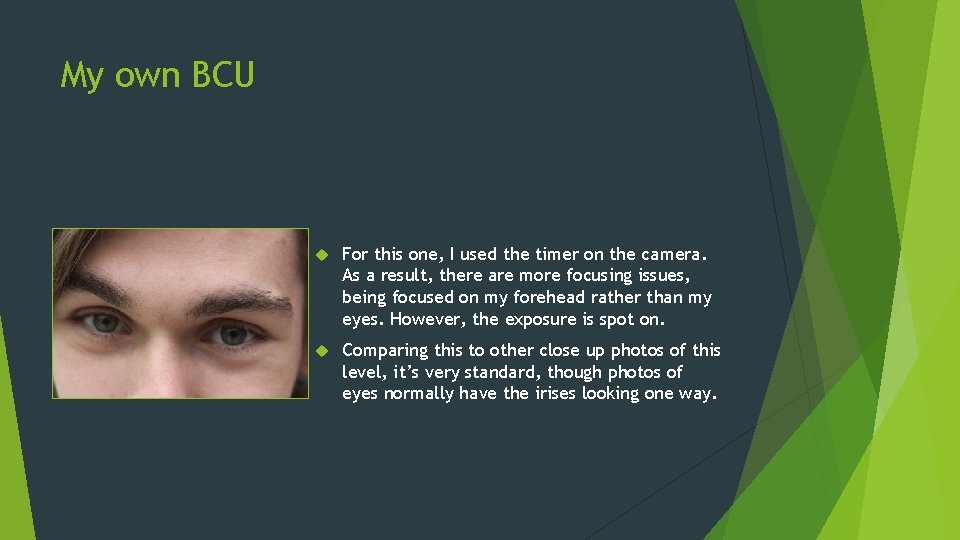
My own BCU For this one, I used the timer on the camera. As a result, there are more focusing issues, being focused on my forehead rather than my eyes. However, the exposure is spot on. Comparing this to other close up photos of this level, it’s very standard, though photos of eyes normally have the irises looking one way.
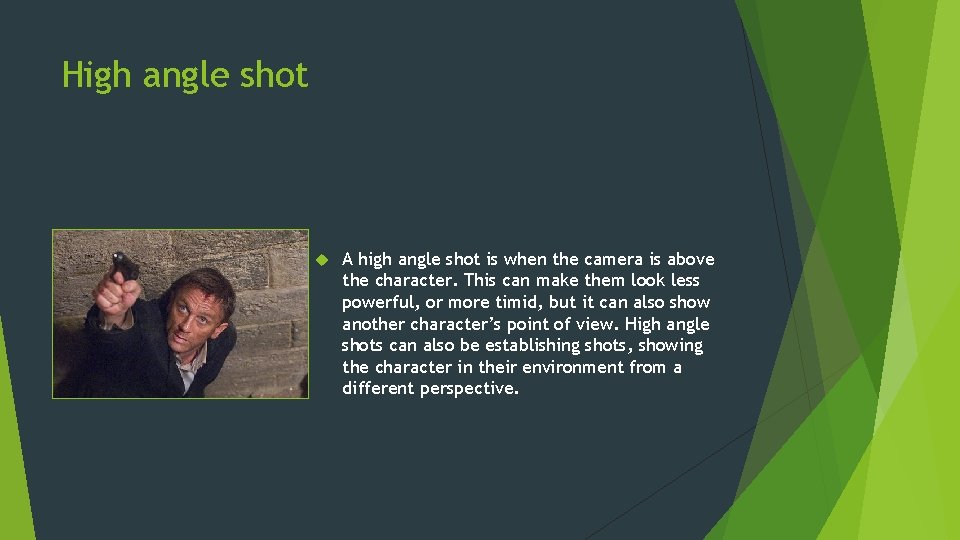
High angle shot A high angle shot is when the camera is above the character. This can make them look less powerful, or more timid, but it can also show another character’s point of view. High angle shots can also be establishing shots, showing the character in their environment from a different perspective.
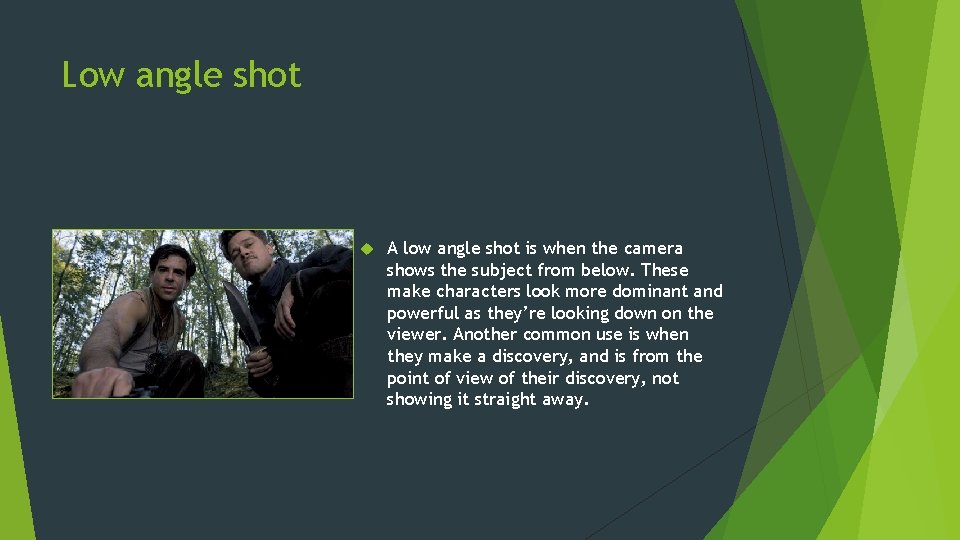
Low angle shot A low angle shot is when the camera shows the subject from below. These make characters look more dominant and powerful as they’re looking down on the viewer. Another common use is when they make a discovery, and is from the point of view of their discovery, not showing it straight away.
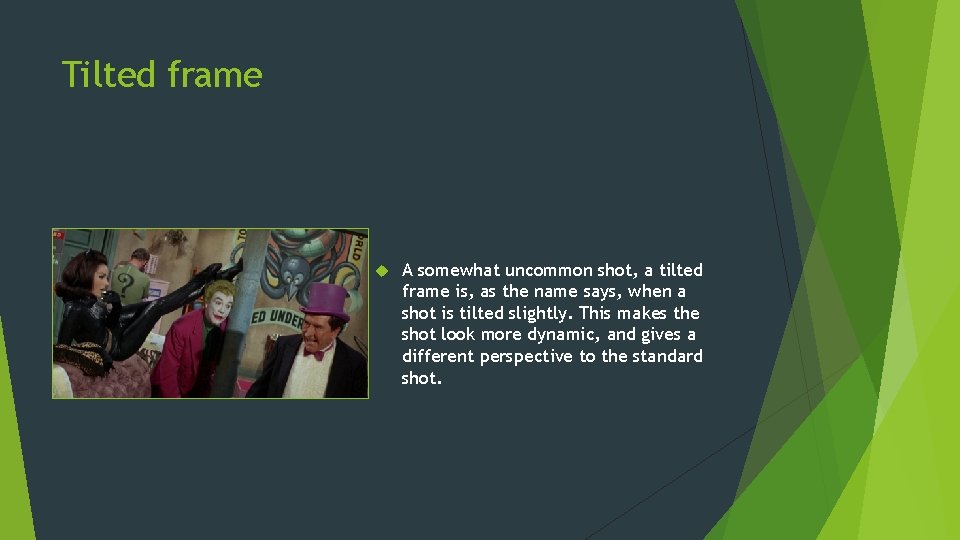
Tilted frame A somewhat uncommon shot, a tilted frame is, as the name says, when a shot is tilted slightly. This makes the shot look more dynamic, and gives a different perspective to the standard shot.
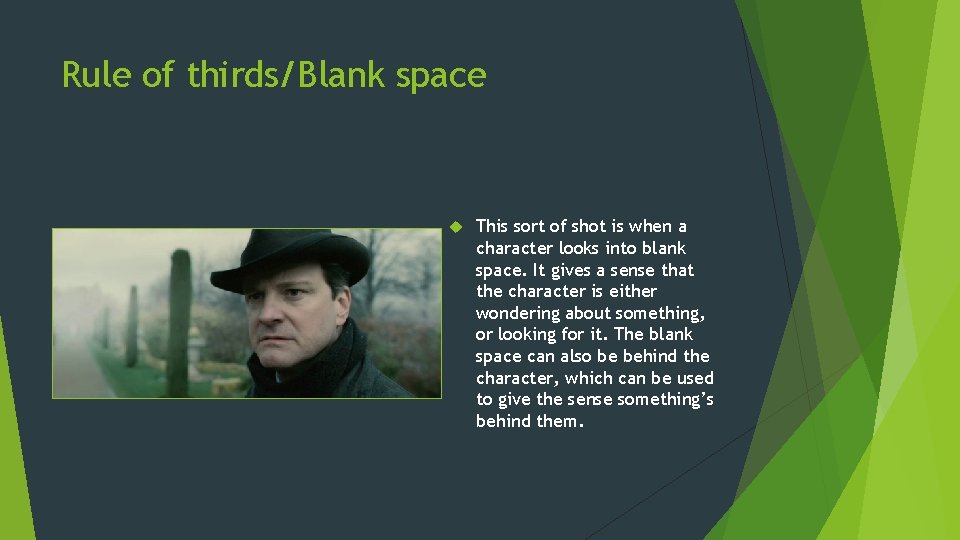
Rule of thirds/Blank space This sort of shot is when a character looks into blank space. It gives a sense that the character is either wondering about something, or looking for it. The blank space can also be behind the character, which can be used to give the sense something’s behind them.
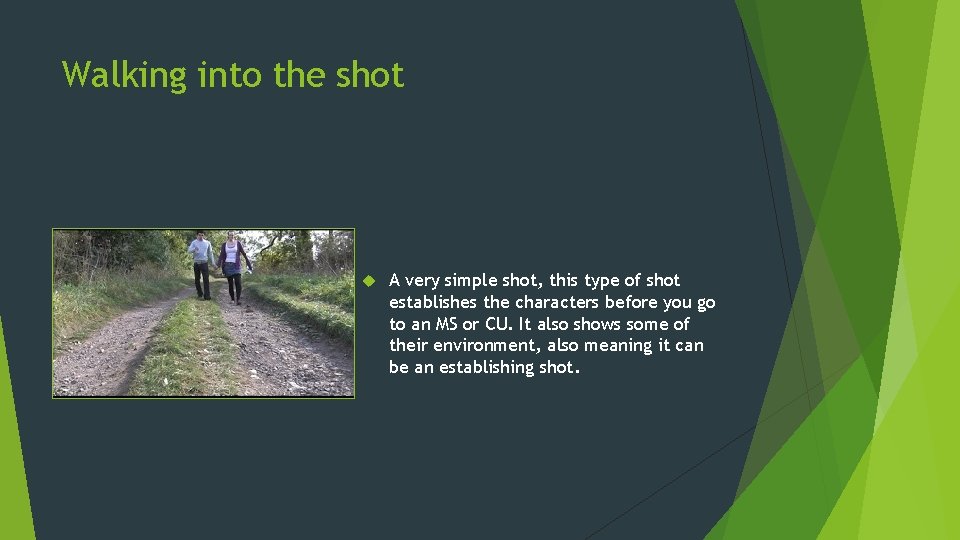
Walking into the shot A very simple shot, this type of shot establishes the characters before you go to an MS or CU. It also shows some of their environment, also meaning it can be an establishing shot.
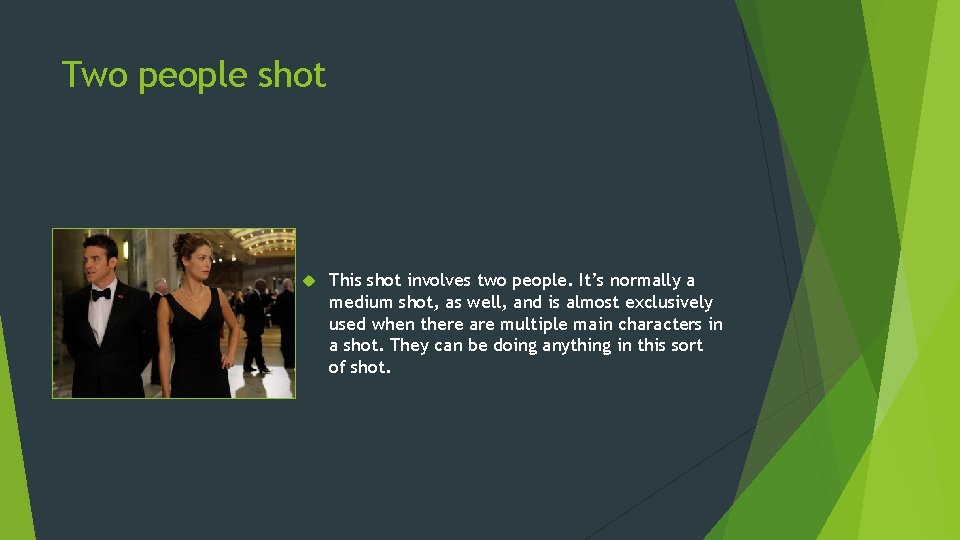
Two people shot This shot involves two people. It’s normally a medium shot, as well, and is almost exclusively used when there are multiple main characters in a shot. They can be doing anything in this sort of shot.
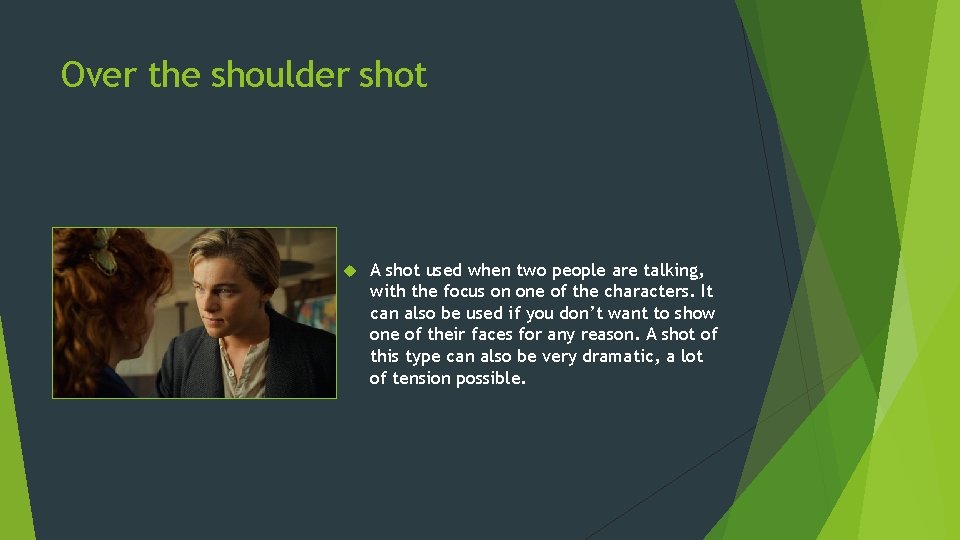
Over the shoulder shot A shot used when two people are talking, with the focus on one of the characters. It can also be used if you don’t want to show one of their faces for any reason. A shot of this type can also be very dramatic, a lot of tension possible.
Sources pt. 1 http: //1. bp. blogspot. com/_ik. Nwj 72 epsg/So. T 9 FGOq. AI/AAAAAFo/xhu. Ba. OVTL 0 I/s 400/AA+long+shot. jpg http: //rbtottonmediacoursework. weebly. com/uploads/4/2/1/9/42196619/902562 5_orig. jpg http: //1. bp. blogspot. com/Sxo 4 y. Zg 54 OU/UFCQWsr 0 xk. I/AAAAABM/Ekt. M 4 VZs 21 w/s 1600/Takers-americancrime-thriller-hollywood-film-600 x 450. jpg http: //3. bp. blogspot. com/n. VW 27 CCmc. Yc/Vo 1 k 43 S_f. ZI/AAAAAk. I/AFsehg 29 ru. E/s 1600/jeremy%2 Brenner% 2 Bmedium%2 Bshot%2 B%25281%2529. jpg http: //acephalous. typepad. com/. a/6 a 00 d 8341 c 2 df 453 ef 010536 e 89 cf 4970 b-pi https: //tosbensonkc. files. wordpress. com/2015/09/close-up. jpg https: //seandoelexamnotes. files. wordpress. com/2015/03/robert-downey-jr-theavengers-iron-man-e 1331937937379. jpg
Sources pt. 2 https: //jessicashaw 95. files. wordpress. com/2012/03/high-angle. jpg http: //pbblogassets. s 3. amazonaws. com/uploads/2015/10/Inglorious_Basterds_Lo w_Angle. jpg http: //oneperfectshotdb. com/wp-content/uploads/2015/04/batman-themovie. jpg http: //2. bp. blogspot. com/z 1 e. T 2 v. RLXzk/TVsrk. J 6 m. MAI/AAAAACA/ZWow 6 hs 6 LUo/s 1600/kings+1. jpg http: //4. bp. blogspot. com/_U 36 ZDRDB 4 fc/S 5 Dm. Wn. Db. Vs. I/AAAAACc/m. Nx. V 0 Qx Zv. M 0/s 320/Sequence+17. bmp https: //daviescqegs. files. wordpress. com/2013/02/two-shot. jpg http: //0. tqn. com/d/movies/1/S/g/n/Y/titanic-leo-dicaprio 3. jpg [All accessed on 01/11/2016]