
Cambridge Upper Secondary Science Competition Demonstrate your passion
Cambridge Upper Secondary Science Competition Demonstrate your passion for science! Presenter Name Job title Date
Overview What is the Cambridge Upper Secondary Science Competition? What will you do? How do we mark your projects? Winners Next steps

What is the Cambridge Upper Secondary Science Competition?
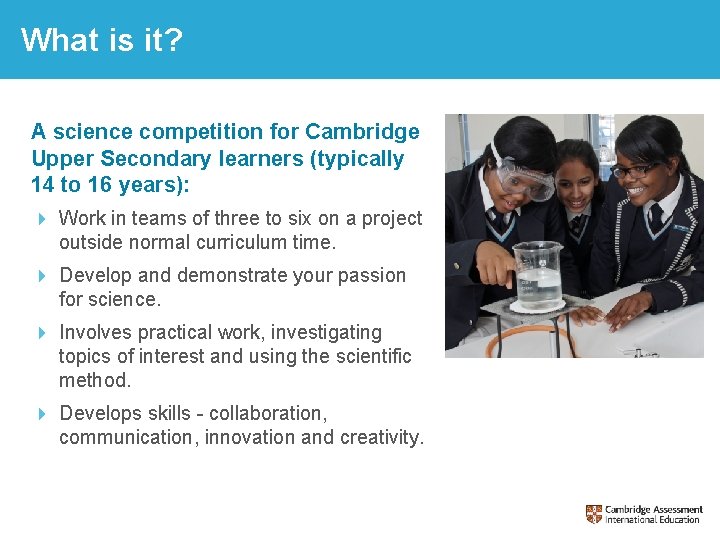
What is it? A science competition for Cambridge Upper Secondary learners (typically 14 to 16 years): Work in teams of three to six on a project outside normal curriculum time. Develop and demonstrate your passion for science. Involves practical work, investigating topics of interest and using the scientific method. Develops skills - collaboration, communication, innovation and creativity.

What will you do?
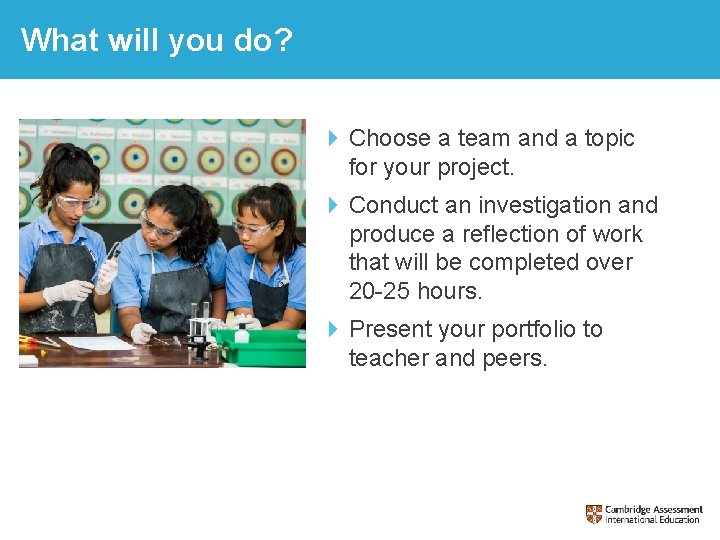
What will you do? Choose a team and a topic for your project. Conduct an investigation and produce a reflection of work that will be completed over 20 -25 hours. Present your portfolio to teacher and peers.
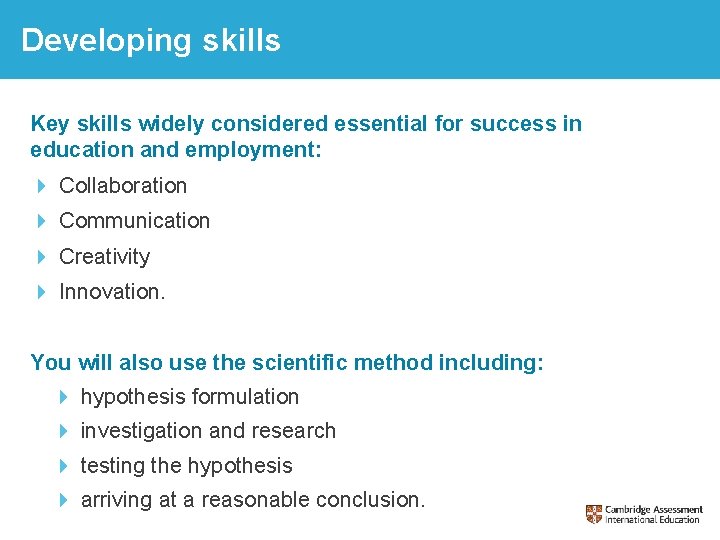
Developing skills Key skills widely considered essential for success in education and employment: Collaboration Communication Creativity Innovation. You will also use the scientific method including: hypothesis formulation investigation and research testing the hypothesis arriving at a reasonable conclusion.
How is your project marked?
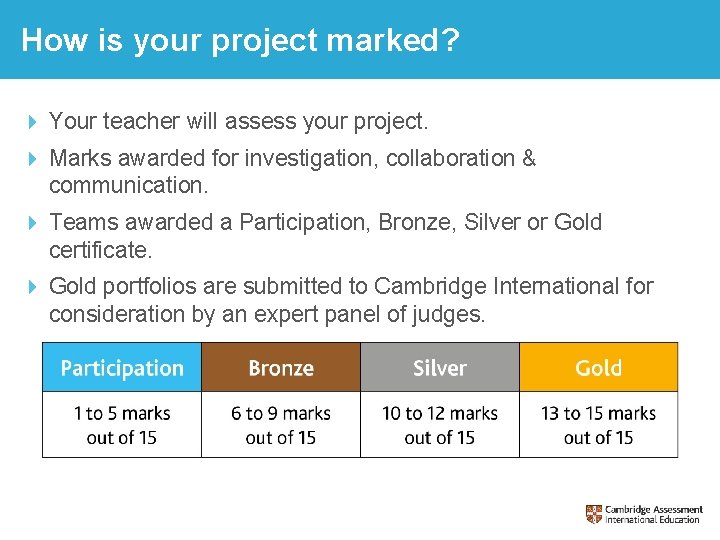
How is your project marked? Your teacher will assess your project. Marks awarded for investigation, collaboration & communication. Teams awarded a Participation, Bronze, Silver or Gold certificate. Gold portfolios are submitted to Cambridge International for consideration by an expert panel of judges.
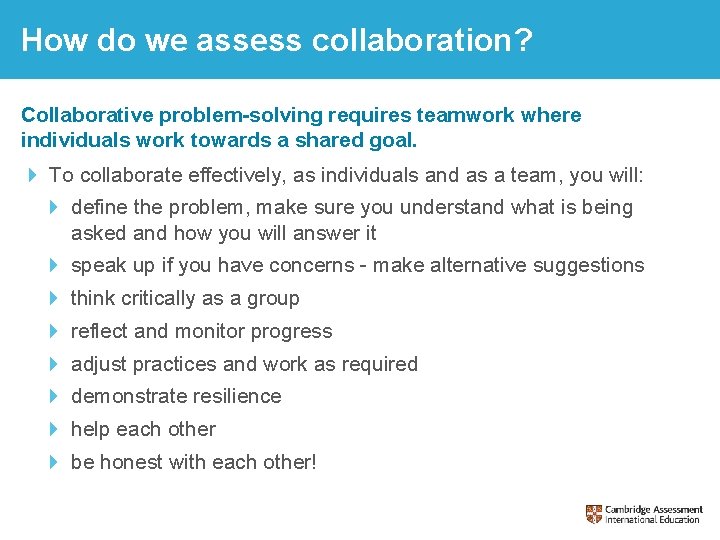
How do we assess collaboration? Collaborative problem-solving requires teamwork where individuals work towards a shared goal. To collaborate effectively, as individuals and as a team, you will: define the problem, make sure you understand what is being asked and how you will answer it speak up if you have concerns - make alternative suggestions think critically as a group reflect and monitor progress adjust practices and work as required demonstrate resilience help each other be honest with each other!
How do we assess communication? Scientists have to communicate their findings or the outcomes of a research project accurately, clearly, intelligibly and honestly. You will showcase your project and present your work to the school community. Different mediums of communication allowed. As a team that communicates effectively, you will clearly: describe objectives explain why this task was undertaken - what are the beneficial outcomes? explain methods used explain results - acknowledge what was not discovered or achieved explaining why provide an engaging presentation be able to answer questions.

How does Cambridge International select a winner?
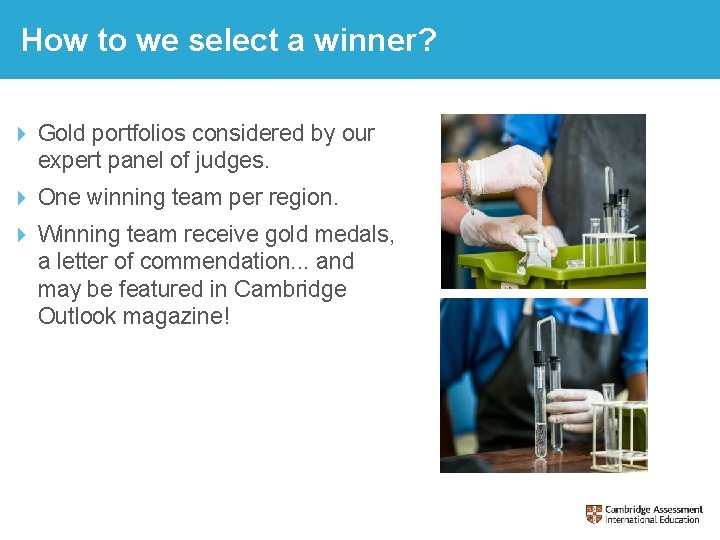
How to we select a winner? Gold portfolios considered by our expert panel of judges. One winning team per region. Winning team receive gold medals, a letter of commendation. . . and may be featured in Cambridge Outlook magazine!

Next steps
Next steps Once you have been entered for the competition, your teacher can share the Learner guide with you: Learner guide Example projects Learn more: www. cambridgeinternational. org/science-competition
Thank you Any questions?
Learn more! Getting in touch with Cambridge is easy Email info@cambridgeinternational. org or telephone +44 1223 553554
- Slides: 17