
Cambodia way forward to implement EcoSchool Initiative Mr
Cambodia way forward to implement Eco-School Initiative • • Mr. ROATH Sith, Director, Department of Environmental Education and Communication, Ministry of Environment; Mr. SUN Bunna, Deputy Director of Curriculum Development Department, Ministry of Education, Youth and Sport; Mr. HY Hok Heng, Principal of primary school Mr. SOM Som Ath, Principal of secondary school ASEAN Eco-School Awards, held at Kuala Lumpur, Malaysia, from 17 to 18 July 2012 1
Contents v Background v Highlighted Activities Child Friendly School, Ø Eco-club Ø v Problems and Challenges v Future implementation of eco-school 2
Background v MOE: Ø Provide environmental knowledge to, and strengthen the capacity of officers, Ø Successfully integrated EE into curriculum (since 1990 s), ü Primary school: Permeating into existing subjects: Khmer literature, mathematic, social study, drawing, storytelling, etc. ü Secondary schools: compulsory study with stand alone subject Provide and enhance public awareness on environmental issues and encourage them to voluntarily participating in conservation and protection of national environment, Ø Coordinate EE activities, Ø 3
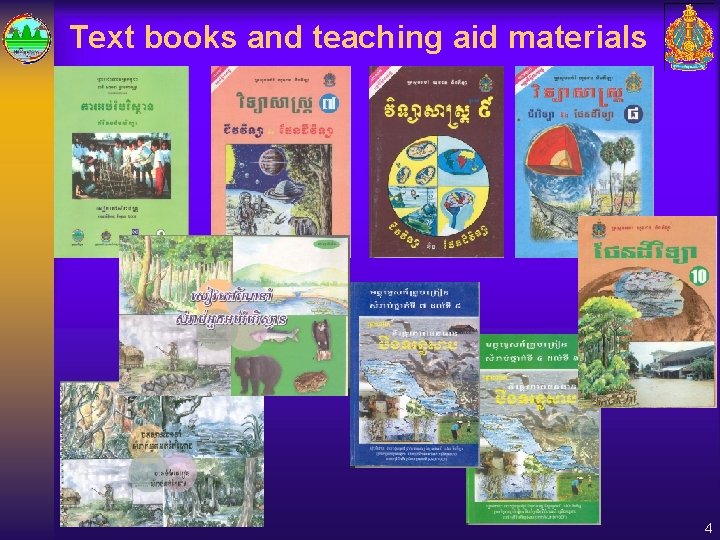
Text books and teaching aid materials 4
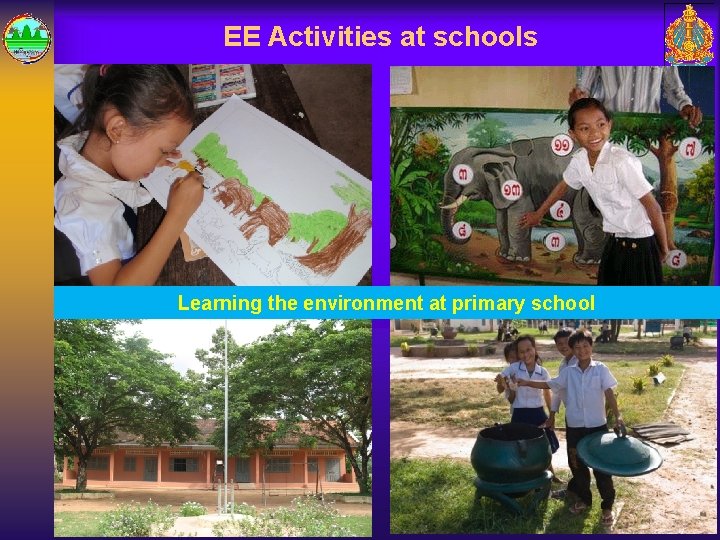
EE Activities at schools Learning the environment at primary school 5
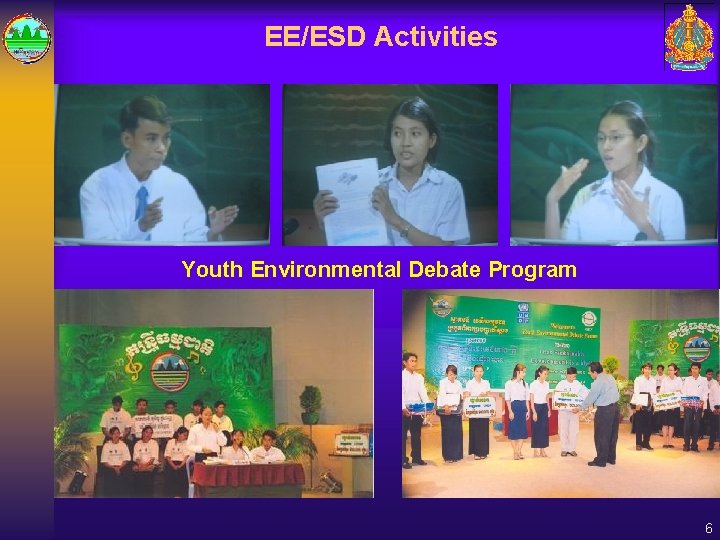
EE/ESD Activities Youth Environmental Debate Program 6
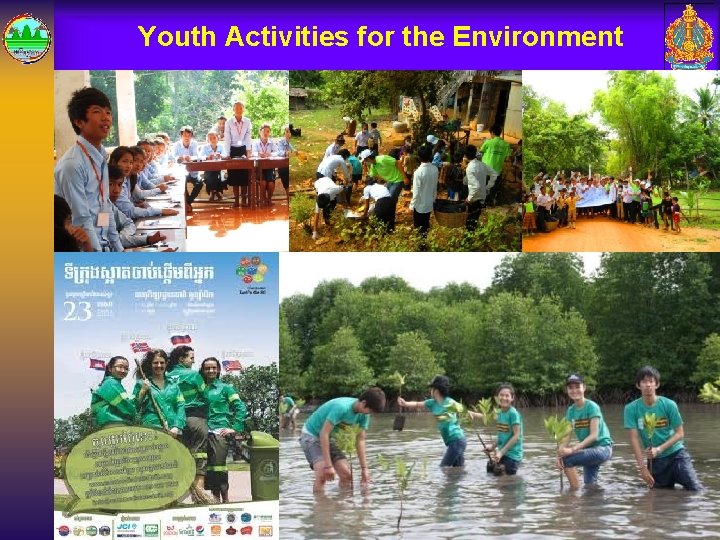
Youth Activities for the Environment 7
Background (Cont. ) v MOEYS: Ø Implementation of Education for All plan, Ø All children able to access education to at least grade 9, Ø Child Friendly School Policy/Program (since 2002) v Civil Society Organizations Mlup Baitong organization is the first CSO introduced eco-club to schools Ø The implementation of eco-club has been sporadic undertaken and support to schools, Ø 8
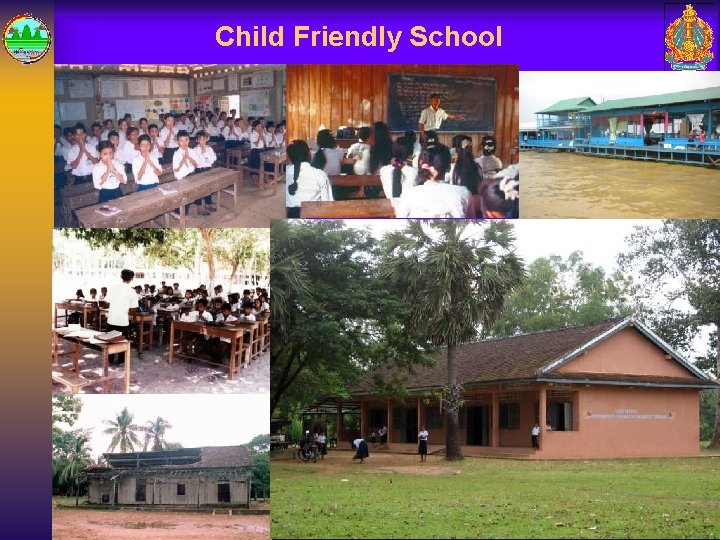
Highlighted activities v The National “Child Friendly School” (CFS) Considered as Eco-School Program, where its reflects two important considerations in education development in Cambodia: (i). assure quality of education, and (ii) attract participation from all interested institutions, jointly to support the program. Ø A child friendly school nurtures a school-friendly child, support children for development and a school friendly community Ø 9
Child Friendly School 10
Life skills learning and outreach activities 11
Highlight activities v The “Eco-Club”, Critical part of school environmental activities that support CFS program, Ø Initiated and implemented since early 2000 s by civil society organizations in random manners with strong policy support from the Ministry of Environment (MOE) and the Ministry of Education, Youth and Sport (MOEYS). Ø Purposes of an Eco-club are to raise students’ environmental awareness, to develop the skills they need to make a difference in their environment and to cultivate a sense of responsibility and caring for their surrounding school and community’s environment. Ø 12
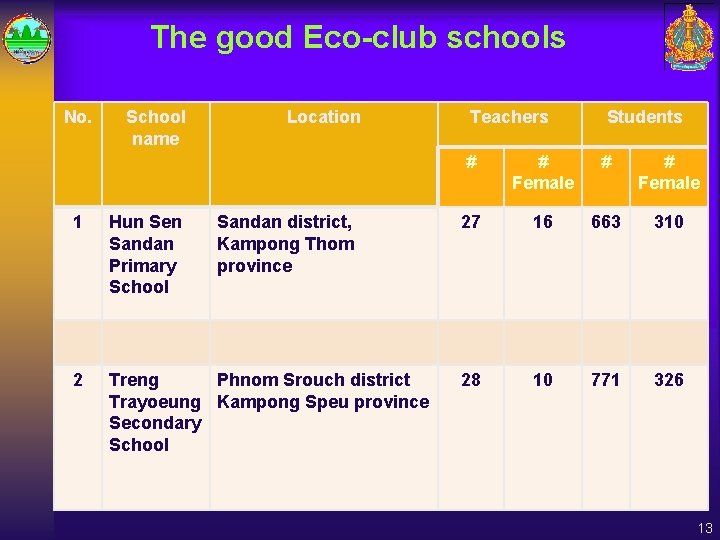
The good Eco-club schools No. School name Location 1 Hun Sen Sandan Primary School Sandan district, Kampong Thom province 2 Treng Phnom Srouch district Trayoeung Kampong Speu province Secondary School Teachers Students # # Female 27 16 663 310 28 10 771 326 13
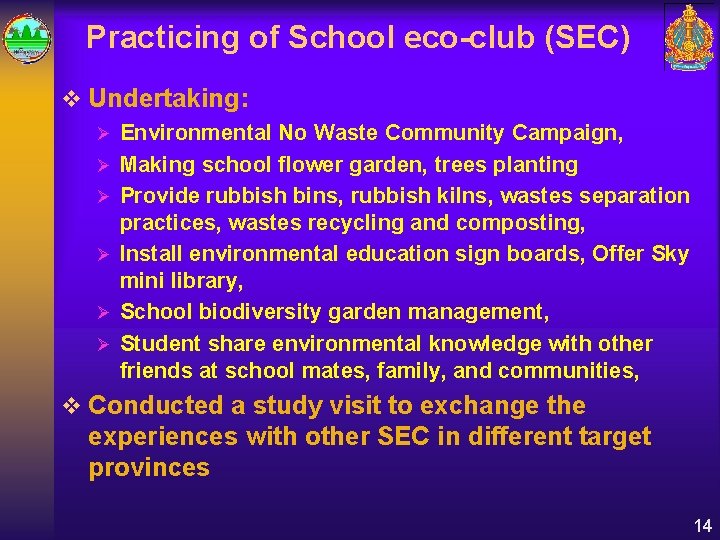
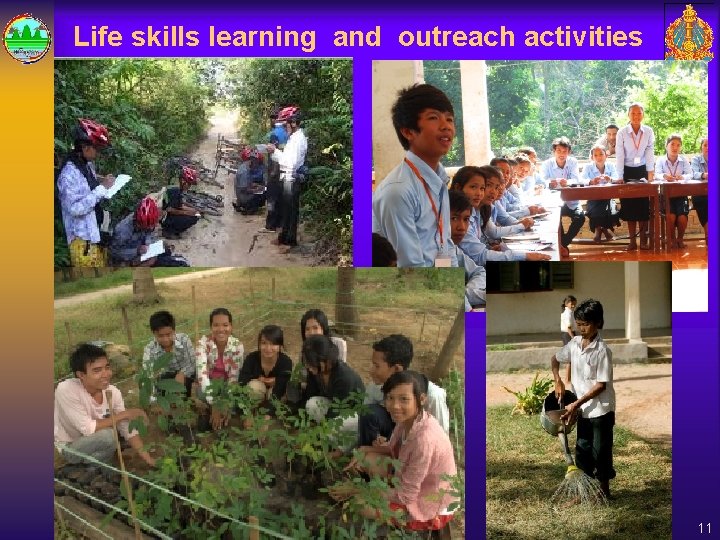
Practicing of School eco-club (SEC) v Undertaking: Ø Ø Ø Environmental No Waste Community Campaign, Making school flower garden, trees planting Provide rubbish bins, rubbish kilns, wastes separation practices, wastes recycling and composting, Install environmental education sign boards, Offer Sky mini library, School biodiversity garden management, Student share environmental knowledge with other friends at school mates, family, and communities, v Conducted a study visit to exchange the experiences with other SEC in different target provinces 14
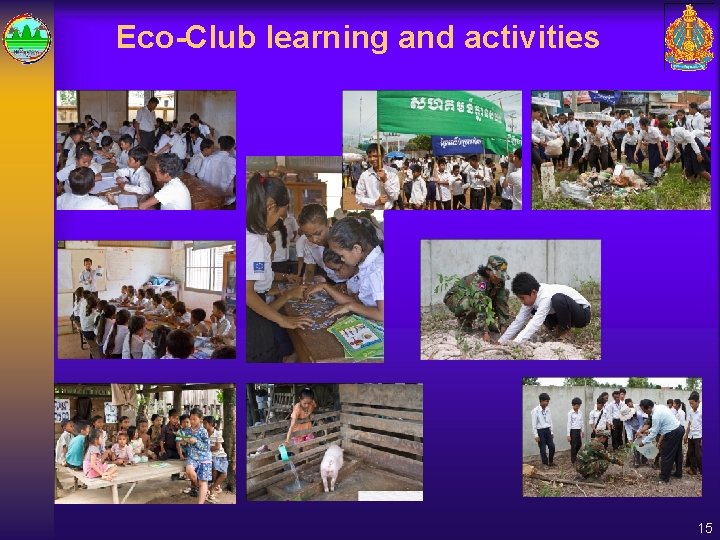
Eco-Club learning and activities 15
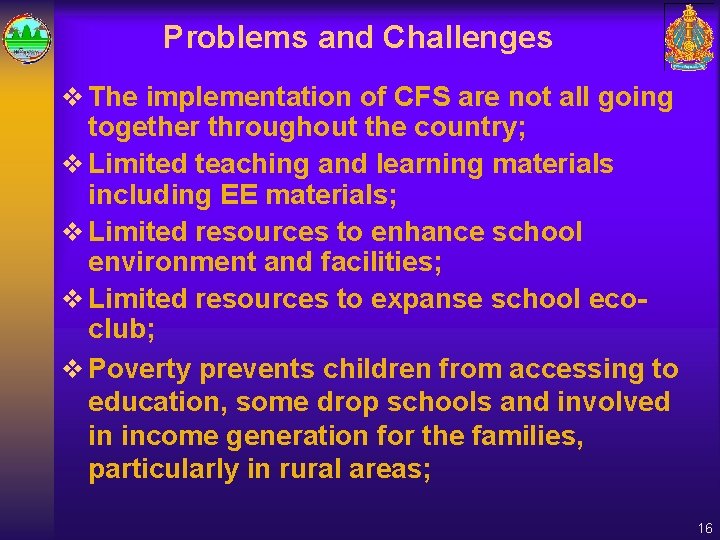
Problems and Challenges v The implementation of CFS are not all going together throughout the country; v Limited teaching and learning materials including EE materials; v Limited resources to enhance school environment and facilities; v Limited resources to expanse school ecoclub; v Poverty prevents children from accessing to education, some drop schools and involved in income generation for the families, particularly in rural areas; 16
Future implementation of Eco-school v In conclusion, eco-club activities at primary and secondary schools have been given opportunity for students to learnt, share, and voluntarily participate in the protection of the environment, which is contribution to the national and global environment. v The future implementation of “Eco-School” in Cambodia will be built on and manipulating the existing initiatives, approaches, and activities that are currently known as CFS and Eco-club practices. 17
Thank you for your attention! 18
- Slides: 18