
CALLUS CULTURE CONTENTS History Callus culture Physical appearance


- Slides: 30
CALLUS CULTURE
CONTENTS �History �Callus culture �Physical appearance of a callus �Culture establishment : media preparation, surface sterilization , inoculation and incubation conditions �Subculturing �Growth measurement of callus �Techniques to develop callus culture �References
HISTORY 1924 - Callus culture of carrots (Daucus carota)- R. Blumenthat and P. Meyer - Pathological implications , compared callus tumour growth. 1927 - L. Rehwald - Cultivation of callus from carrot slices. P. Boysen- Jensen – growth promoting substances found in plant shoot tip would diffuse across a wound covered with gelatin. 1928 – Frits Went collected this growth substance form coleptile tips in tiny blocks of Agar.
1934 – F. Kogl , A. J. Hagen Smith and H. Erxleben – isolation and chemical analyses of the substance -plant hormone or auxin- indole -3 -acetic acid (IAA) 1937 - R. Gautheret – undifferentiated carrot tissues 1939 –R. J. Gautheret and Nobecourt, France, growth of callus from carrot cambium when using auxin in the nutrient medium. P. R. White (USA) –Excised root tomatoes(Lycopersicon)in continuous culture. tips of 1939 – White reported successful culture of tobbaco (Nicotiana) callus.
1941 – J. van Overbeek, M. E. Conklin and Albert F. Blakeslee- Coconut milk stimulated callus formation in cultures of excised embryos of jimson weed (Daturastramonium). 1943 – White – A Handbook of Plant Tissue Culture, accumulated knowledge of PTC.
CALLUS CULTURE �Callus : An unorganised mass of loosely arranged parenchymatous cells which develop from parent tissues due to proliferation of cells. �Angiosperms , gymnosperms , pteridophytes and bryophytes. �Has the potentiality to produce normal roots and embryoids-plantlets. �Callus culture: development of an unorganised mass of cells from an explant on an artificial medium supplemented with suitable PGR when provided with appropriate environment (i. e. Proper incubation conditions)
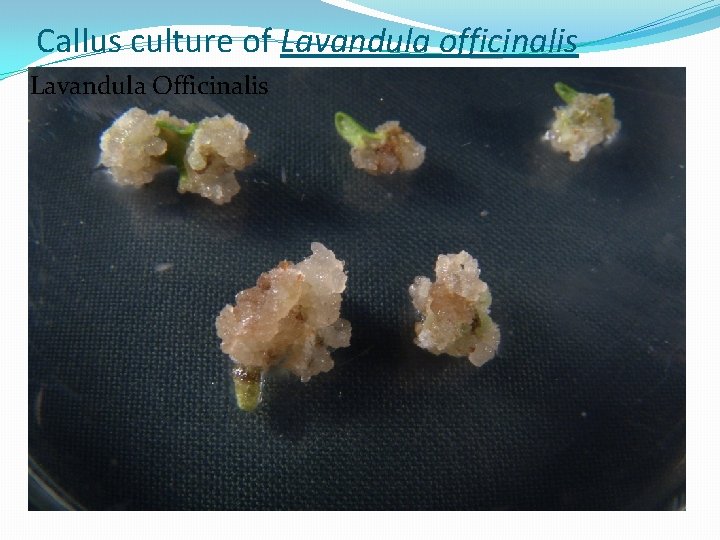
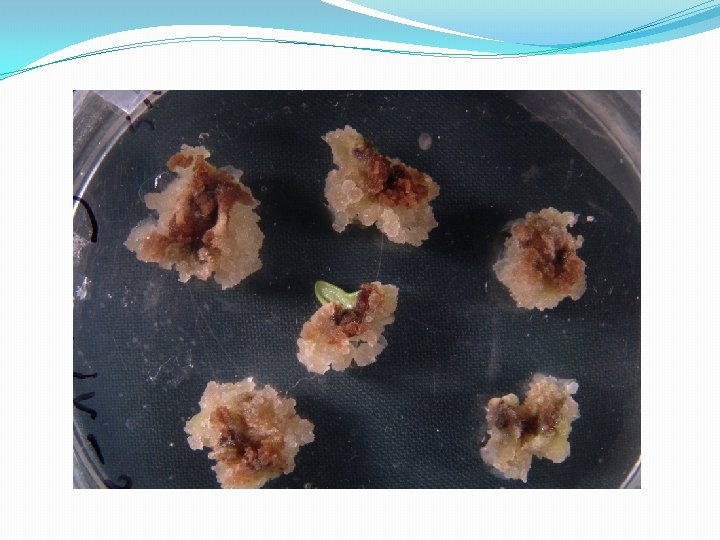
Physical Appearance Of A Callus �HARDNESS : Hard (due to lignification of cell walls), brittle or sometimes soft �COLOUR : Dirty or off white , creamish to brown or light green to dark green. Degree of darker pattern varies from plant to plant and mainly depends upon the quantity of polyphenols present in the plant species. Higher the polyphenol content darker the callus appear, i. e. Brown coloration on the culture.
Development Of Aseptic Callus Cultures �EXPLANTS : Juvenile tissues, seedlings , young shoots , buds , root tips, developing embryos: fruits, floral parts, tubers and bulbs. �CULTURE MEDIUM : �Media: MS �Hormonal balance: Auxin : Cytokinin = 1 �Carbon source : sucrose (3% w/v ) �ph = 5. 6 -6. 0, optimum 5. 8 �Gelling agent
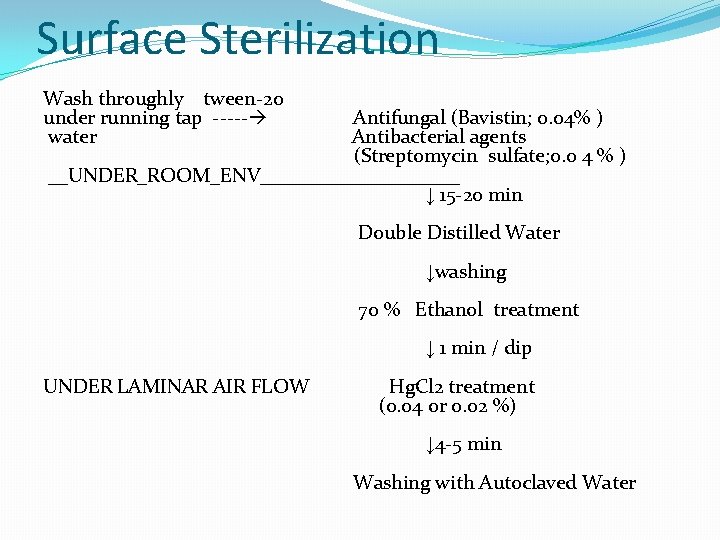
Surface Sterilization Wash throughly tween-20 under running tap ----- water Antifungal (Bavistin; 0. 04% ) Antibacterial agents (Streptomycin sulfate; 0. 0 4 % ) __UNDER_ROOM_ENV__________ ↓ 15 -20 min Double Distilled Water ↓washing 70 % Ethanol treatment ↓ 1 min / dip UNDER LAMINAR AIR FLOW Hg. Cl 2 treatment (0. 04 or 0. 02 %) ↓ 4 -5 min Washing with Autoclaved Water
Inoculation and Incubation Nodal explant �Cutting of the nodal ends that comes in contact with the surface sterilant with the sterile surgical blade �Place the explant in vertical position on medium supplemented with appropriate PGR with the help of forceps. Leaf segments, buds, root tips etc. �Segmentation of the explant into 2 -3 parts i. e. Basal medium and tip with sterile surgical blade �Place the explant with their abaxial surface in contact with the medium with the help of sterile inoculating forceps.
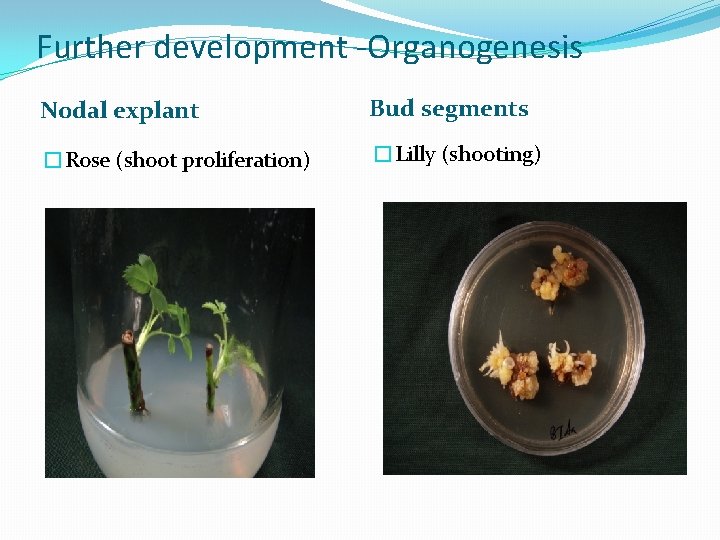
Further development -Organogenesis Nodal explant Bud segments �Rose (shoot proliferation) �Lilly (shooting)
Incubation : �Incubation conditions : The Environment Temperature : 25 ± 2⁰C Light : 5000 -10, 000 lux m Duration of incubation: 16 hr light 08 hr dark
How a piece of explant gets converted into the callus ? �Produced from the outer layers of cortical cells in a stem explant by repetitive division of cells These deviding cells create pressure on the epidermis --- rupturing of the epidermis exposing newly formed callus Separation of callus and then subculturing it. 2 -3 weeks to grow (10 -15 days) but sometimes 4 weeks.
Callus culture of Lavandula officinalis Lavandula Officinalis
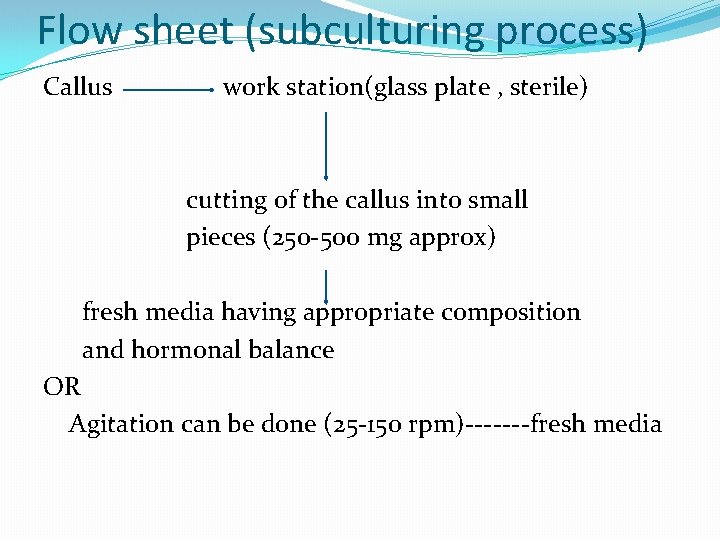
SUBCULTURING OF THE CALLUS CULTURE 3 -4 weeks � 250 -500 mg approx. pieces ---- transferred to the fresh media. NEED: 1) Nutrition depletion 2) Accumulation of toxic substances 3) Drying of media ADVANTAGES : 1)Maintains the state of viability of cells 2)Provides fresh instalment of media for further growth
DISADVANTAGES 1) Cells lose the power to regenerate to a plantlet. 2)Chromosomal abbrations : polyploidy and aneuploidy. Polyploid cells appear to originate through endoreduplication( additional rounds of DNA replication without intervening cell division) ; aneuploid cells-anaphase irregularities 3)Non chromosomal changes : changes in metabolic pathways and alteration in composition of media. 4)Selection of explant size highly dependent upon the type of glassware is being used for culture purpose.
Flow sheet (subculturing process) Callus work station(glass plate , sterile) cutting of the callus into small pieces (250 -500 mg approx) fresh media having appropriate composition and hormonal balance OR Agitation can be done (25 -150 rpm)-------fresh media
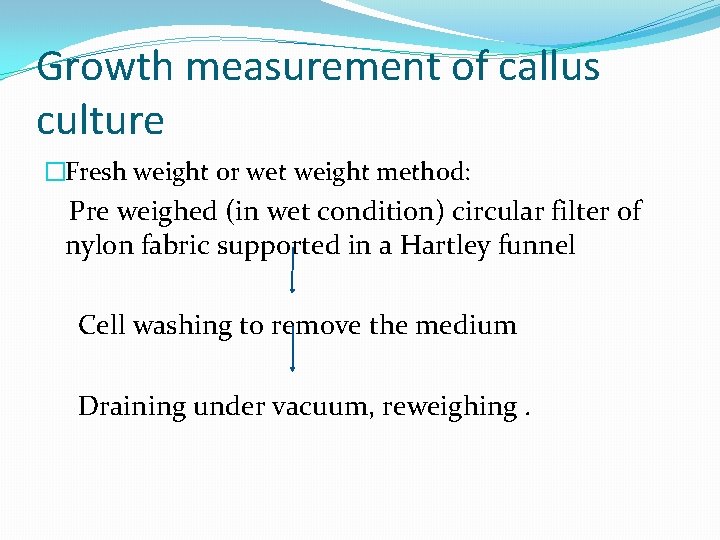
Growth measurement of callus culture �Fresh weight or wet weight method: Pre weighed (in wet condition) circular filter of nylon fabric supported in a Hartley funnel Cell washing to remove the medium Draining under vacuum, reweighing.
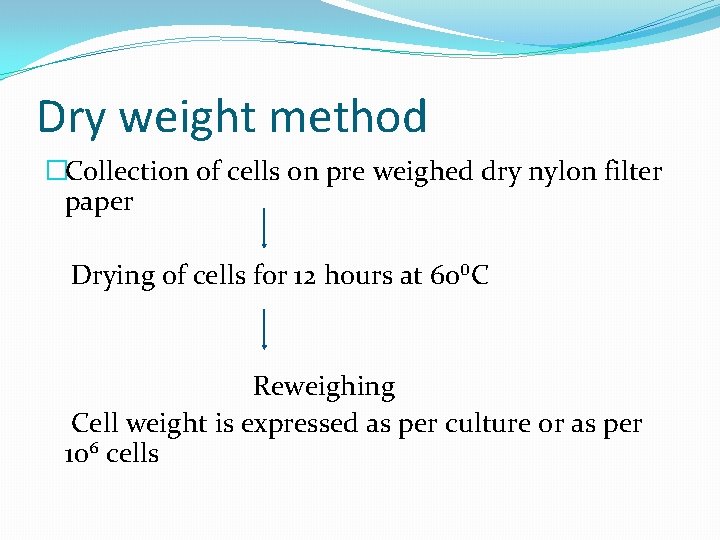
Dry weight method �Collection of cells on pre weighed dry nylon filter paper Drying of cells for 12 hours at 60⁰C Reweighing Cell weight is expressed as per culture or as per 10⁶ cells
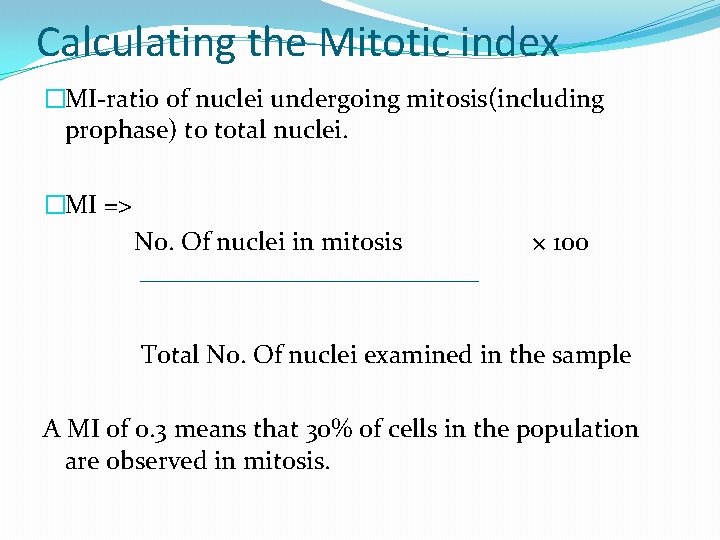
Calculating the Mitotic index �MI-ratio of nuclei undergoing mitosis(including prophase) to total nuclei. �MI => No. Of nuclei in mitosis × 100 Total No. Of nuclei examined in the sample A MI of 0. 3 means that 30% of cells in the population are observed in mitosis.
calculating the respiration rate �Utilization of carbon source and oxygen are related to metabolic activity of cells. �More is the consumption of sugar and oxygen more active are the cells.
Techniques/routes to culture callus �THE FILTER PAPER RAFT NURSE TECHNIQUE: �Muir et. al (1954)--- to culture single cells and friable calli of tobacco marigold. �Cultivating individual cells on top of an actively growing callus(of related sp). �Use of micropipette or microspatula. �Placing 8× 8 mm squares of filter paper on the nurse tissue(callus), wetted with nutrients and liquid from the nurse tissue �Colony dev-transferred to agar medium.
�A number of recalcitrant species , such as avocado, coconut, and lychee. �THE MICROCHAMBER THECHNIQUE : �Jones et. Al (1960) �Replacement of nurse tissue with conditioned media(spent media ; already supported the growth of a tissue, have certain growth factors that promote/boast the growth of another plant tissue)
Process �A drop of the medium carrying the cells of interest is isolated from suspension �Placing on a sterile microscope slide and ringed with sterile mineral oil (a drop on either side of the culture drop and coverglass placed on each drop � �Placing of third coverglass----- formation of microchamber slide placed in petri plate and incubated �development of cell colonies-------fres media
PLATING TECHNIQUES 1) POUR PLATE : Each dilution is mixed with 15 ml of molten agar medium. Temp-48 -50 ⁰C Pouring in sterile petri plate Incubation and the colonies develops
SPREAD PLATE TECHNIQUE: �Agar plate should be dried for 15 min at 55⁰C for 45 min at 37⁰C. Add 0. 2 ml of portions from each dilution and spread evenly on surface of media Disadvantage: some cells are taken up by the glass rod so this will decrease the count.
DIALYSIS TUBING TECHNIQUE: �Street and Steward (1969) �Mainly involved in cell suspension cultures �Used when cell concentration is less than the critical cell density=> 9 -15 × 10³ cells/ml �Carried out in dialysis tube �A high cell density of nursing tissues of closly related species which is more responsive is selected �Use of conditioned media, high conc of growth factors �Nurse cell grows well and the growth factors diffuses out and provide nutrition for growth of cells of interested callus of low density.
References �Plant Biotechnology by Purohit �Plant tissue culture by S. S. Bhojwani and M. K. Razdan �Introduction to Biotechnology by A. K. Panday and K. S. Bilgrami. �Biotechnology by B. D. Singh �Plant Biotechnology by K. G. Ramawat �Methods in Plant tissue culture by U. Kumar �Intenet: http: //google. com