
Californias Structured Decision Making Basic Orientation Version 3

California’s Structured Decision Making® Basic Orientation Version 3. 0
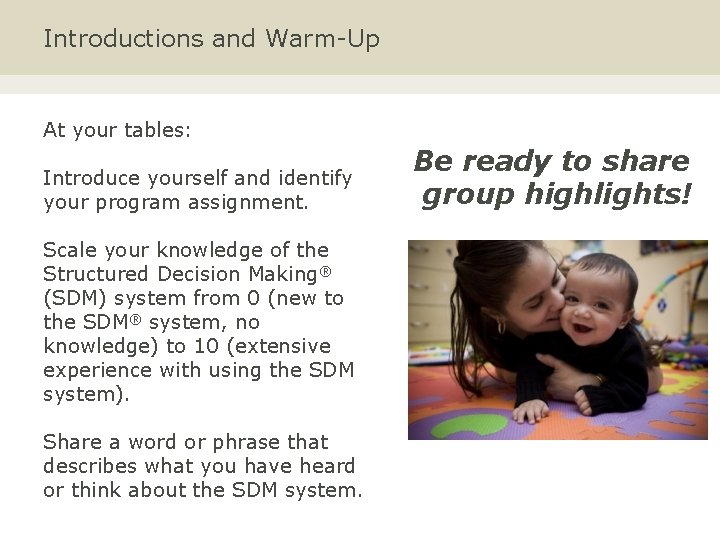
Introductions and Warm-Up At your tables: Introduce yourself and identify your program assignment. Scale your knowledge of the Structured Decision Making® (SDM) system from 0 (new to the SDM® system, no knowledge) to 10 (extensive experience with using the SDM system). Share a word or phrase that describes what you have heard or think about the SDM system. Be ready to share group highlights!
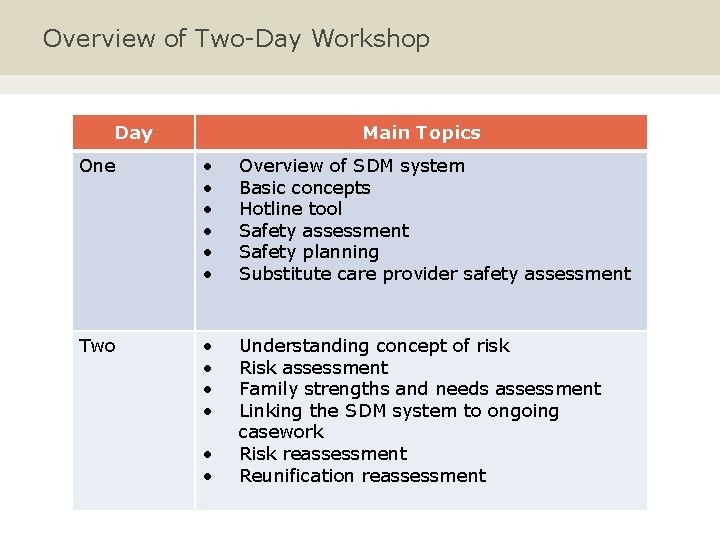
Overview of Two-Day Workshop Day Main Topics One • • • Overview of SDM system Basic concepts Hotline tool Safety assessment Safety planning Substitute care provider safety assessment Two • • Understanding concept of risk Risk assessment Family strengths and needs assessment Linking the SDM system to ongoing casework Risk reassessment Reunification reassessment • •
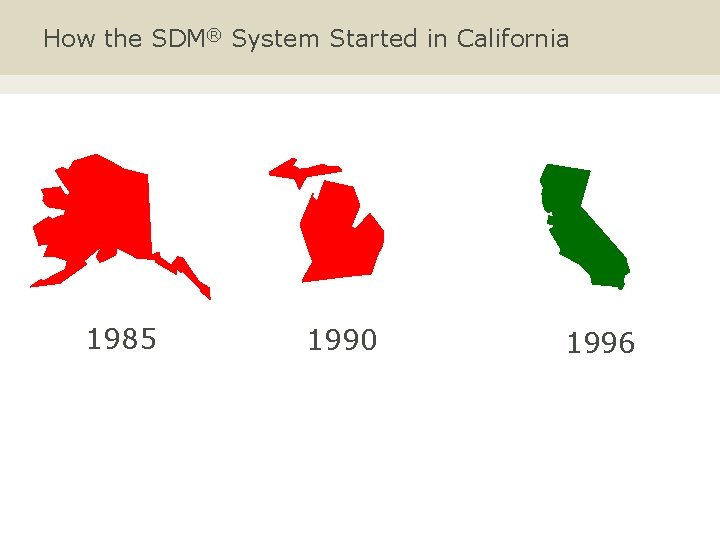
How the SDM® System Started in California 1985 1990 1996
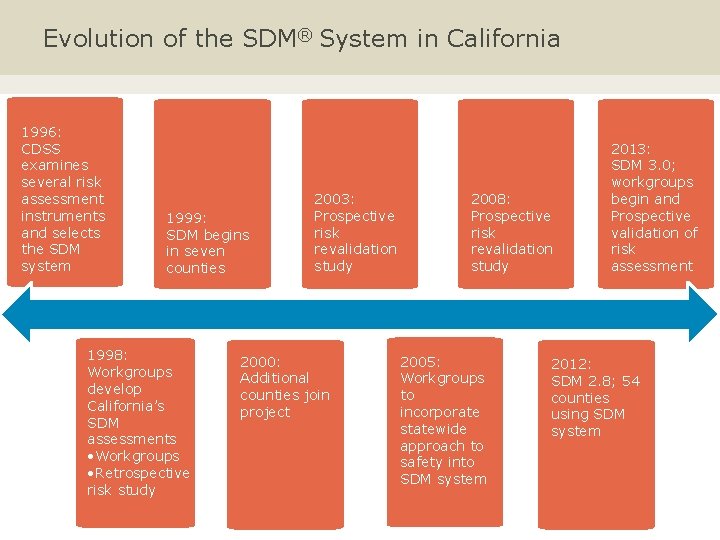
Evolution of the SDM® System in California 1996: CDSS examines several risk assessment instruments and selects the SDM system 1999: SDM begins in seven counties 1998: Workgroups develop California’s SDM assessments • Workgroups • Retrospective risk study 2003: Prospective risk revalidation study 2000: Additional counties join project 2008: Prospective risk revalidation study 2005: Workgroups to incorporate statewide approach to safety into SDM system 2013: SDM 3. 0; workgroups begin and Prospective validation of risk assessment 2012: SDM 2. 8; 54 counties using SDM system
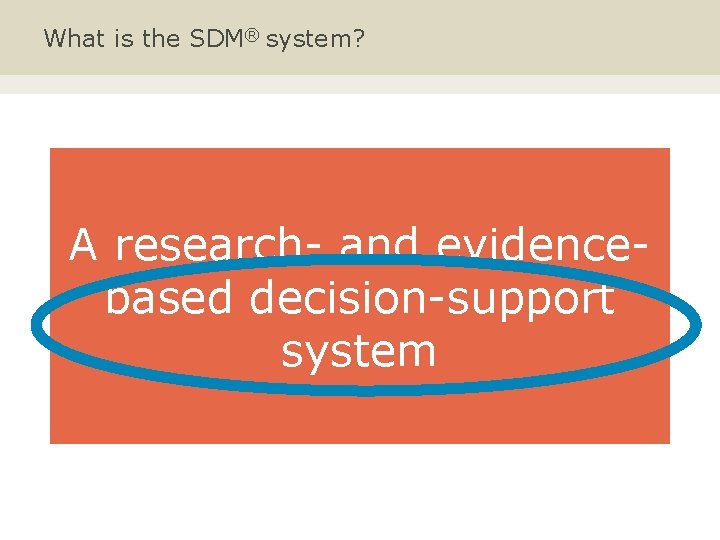
What is the SDM® system? A research- and evidencebased decision-support system
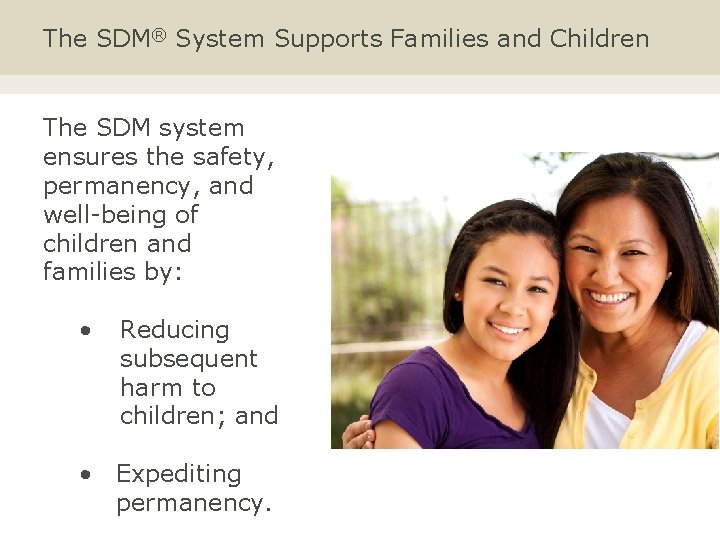
The SDM® System Supports Families and Children The SDM system ensures the safety, permanency, and well-being of children and families by: • Reducing subsequent harm to children; and • Expediting permanency.
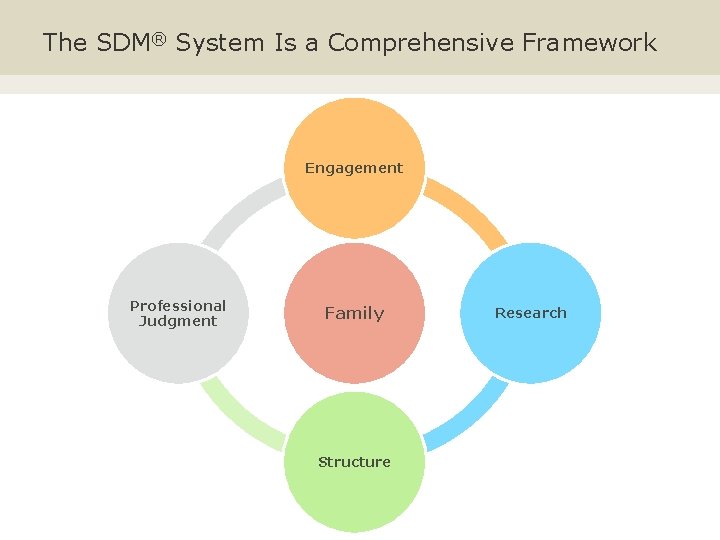
The SDM® System Is a Comprehensive Framework Engagement Professional Judgment Family Structure Research
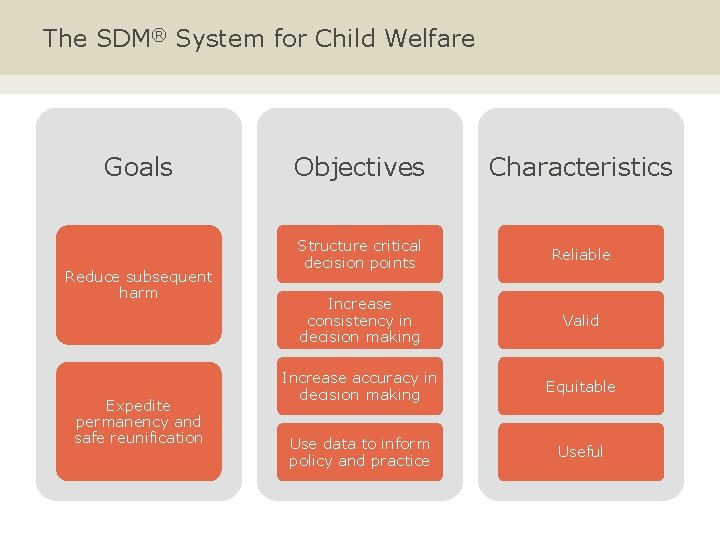
The SDM® System for Child Welfare Goals Reduce subsequent harm Expedite permanency and safe reunification Objectives Characteristics Structure critical decision points Reliable Increase consistency in decision making Valid Increase accuracy in decision making Equitable Use data to inform policy and practice Useful
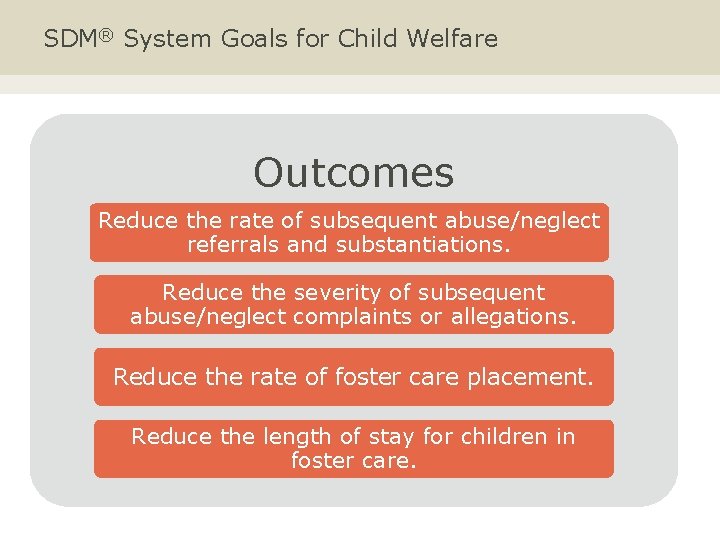
SDM® System Goals for Child Welfare Outcomes Reduce the rate of subsequent abuse/neglect referrals and substantiations. Reduce the severity of subsequent abuse/neglect complaints or allegations. Reduce the rate of foster care placement. Reduce the length of stay for children in foster care.
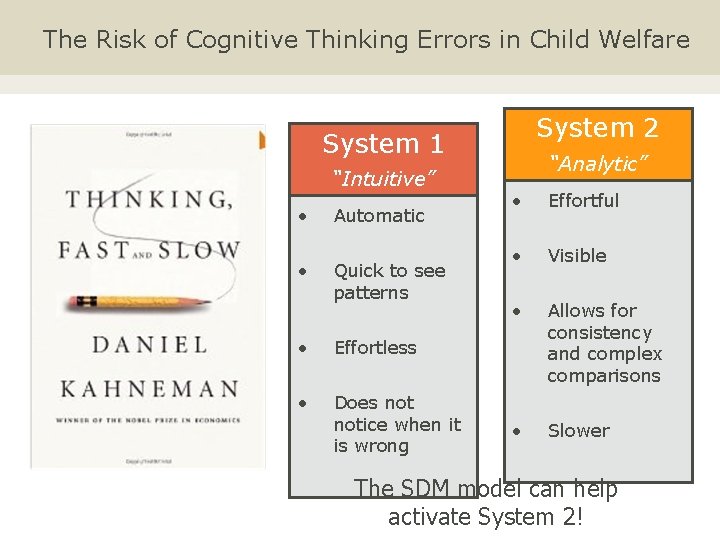
The Risk of Cognitive Thinking Errors in Child Welfare System 2 System 1 “Intuitive” • • Automatic Quick to see patterns • Effortless • Does notice when it is wrong “Analytic” • Effortful • Visible • Allows for consistency and complex comparisons • Slower The SDM model can help activate System 2!

The SDM® System Structures Key Decisions
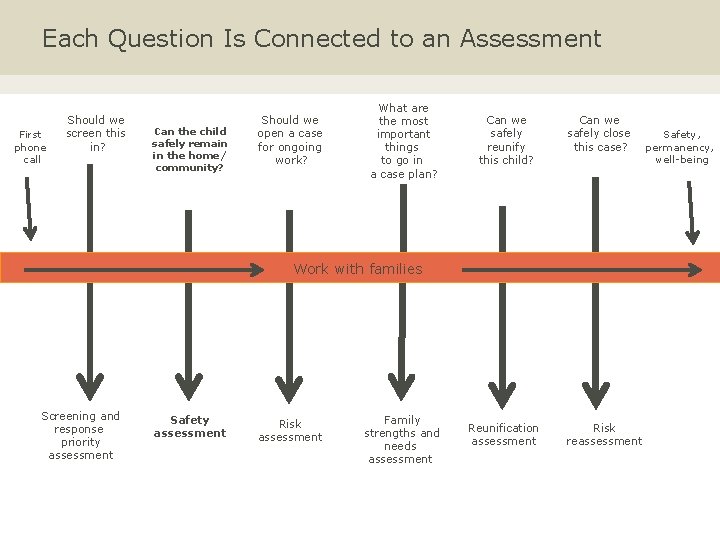
Each Question Is Connected to an Assessment First phone call Should we screen this in? Can the child safely remain in the home/ community? Should we open a case for ongoing work? What are the most important things to go in a case plan? Can we safely reunify this child? Can we safely close Safety, permanency, this case? well-being Work with families Screening and response priority assessment Safety assessment Risk assessment Family strengths and needs assessment Reunification assessment Risk reassessment
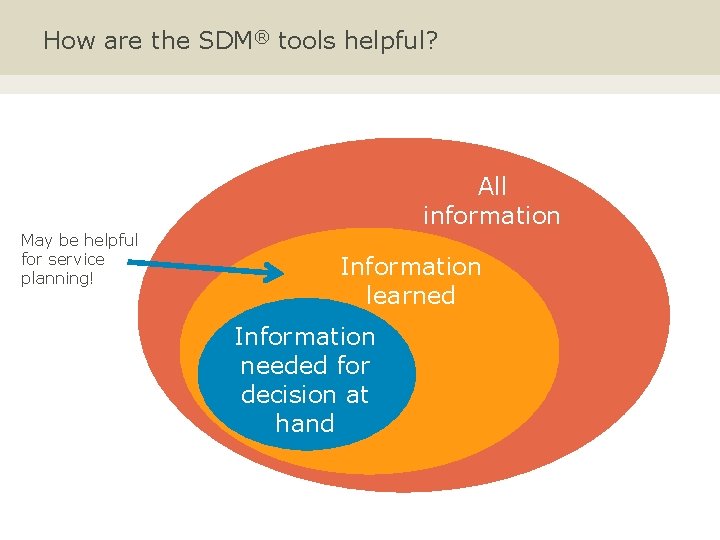
How are the SDM® tools helpful? All information May be helpful for service planning! Information learned Information needed for decision at hand
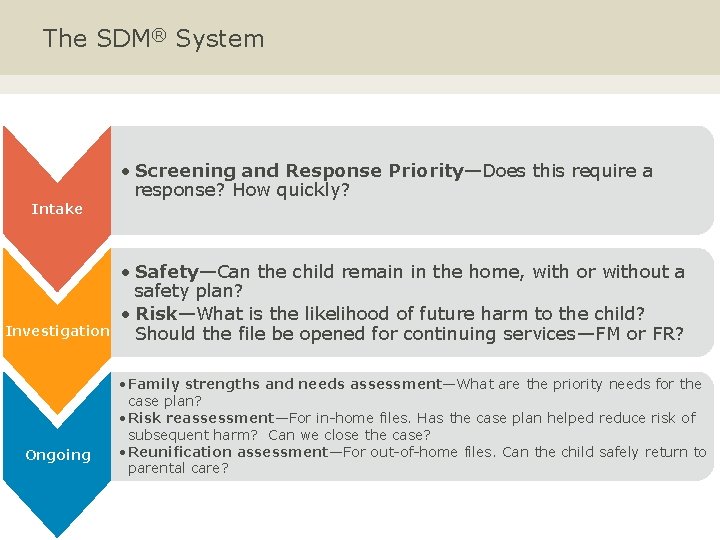
The SDM® System Intake Investigation Ongoing • Screening and Response Priority—Does this require a response? How quickly? • Safety—Can the child remain in the home, with or without a safety plan? • Risk—What is the likelihood of future harm to the child? Should the file be opened for continuing services—FM or FR? • Family strengths and needs assessment—What are the priority needs for the case plan? • Risk reassessment—For in-home files. Has the case plan helped reduce risk of subsequent harm? Can we close the case? • Reunification assessment—For out-of-home files. Can the child safely return to parental care?

Structured Decisions Increase Consistency
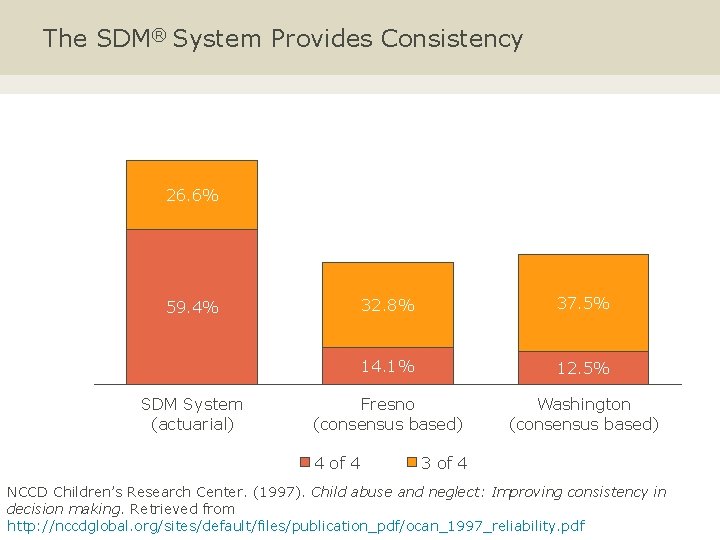
The SDM® System Provides Consistency 26. 6% 59. 4% 32. 8% 37. 5% 14. 1% 12. 5% SDM System Fresno (actuarial) (consensus based) 4 of 4 Washington (consensus based) 3 of 4 NCCD Children’s Research Center. (1997). Child abuse and neglect: Improving consistency in decision making. Retrieved from http: //nccdglobal. org/sites/default/files/publication_pdf/ocan_1997_reliability. pdf
CRC Rigorously Tests the SDM® Assessments SDM assessments undergo extensive testing to make sure that the assessments lead to at least 75% consistency in decisions between social workers.

The SDM® System Increases Accuracy
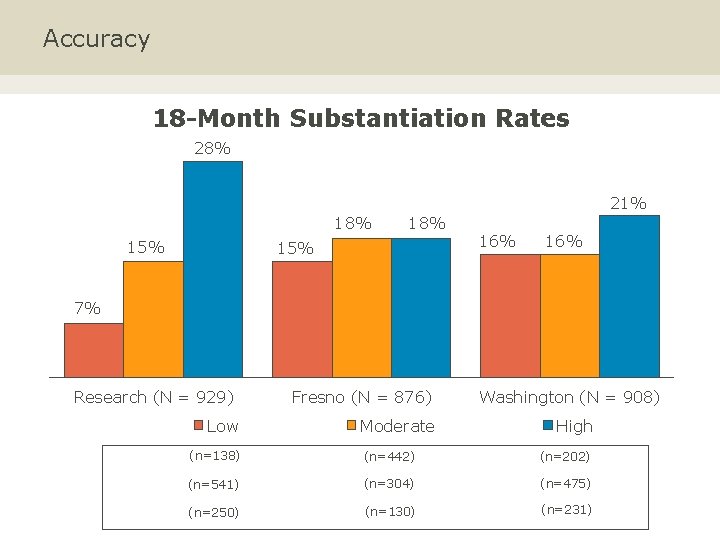
Accuracy 18 -Month Substantiation Rates 28% 21% 18% 15% 16% 7% Research (N = 929) Fresno (N = 876) Low Moderate Washington (N = 908) High (n=138) (n=442) (n=202) (n=541) (n=304) (n=475) (n=250) (n=130) (n=231)
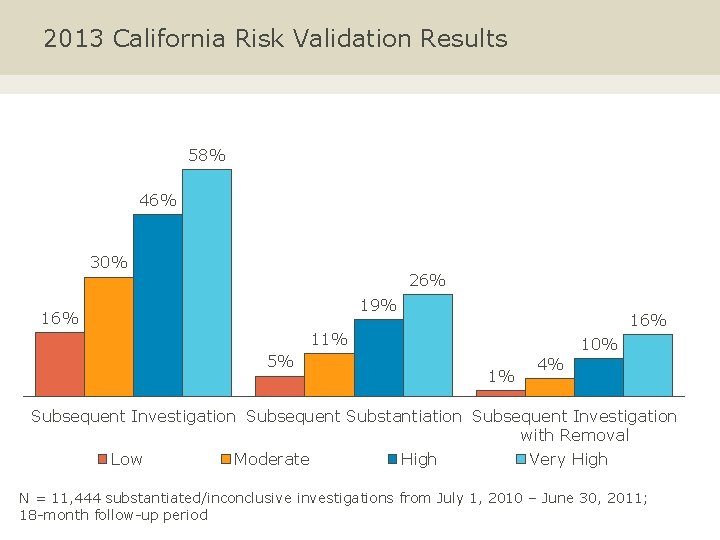
2013 California Risk Validation Results 58% 46% 30% 26% 19% 16% 11% 10% 5% 1% 4% Subsequent Investigation Subsequent Substantiation Subsequent Investigation with Removal Low Moderate High Very High N = 11, 444 substantiated/inconclusive investigations from July 1, 2010 – June 30, 2011; 18 -month follow-up period
The SDM® Model Focuses Resources
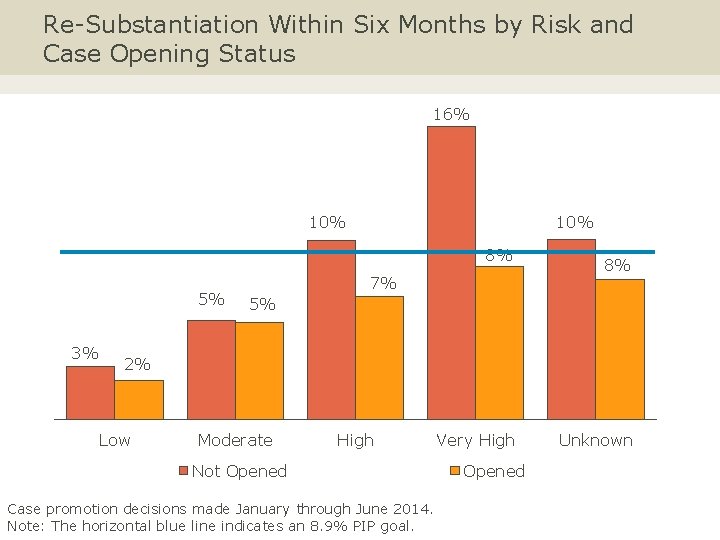
Re-Substantiation Within Six Months by Risk and Case Opening Status 16% n=992 10% n=3, 045 8% 5% 7% 5% n=892 n=4, 489 3% 2% Low 8% n=889 Moderate High Not Opened Case promotion decisions made January through June 2014. Note: The horizontal blue line indicates an 8. 9% PIP goal. Very High Opened Unknown
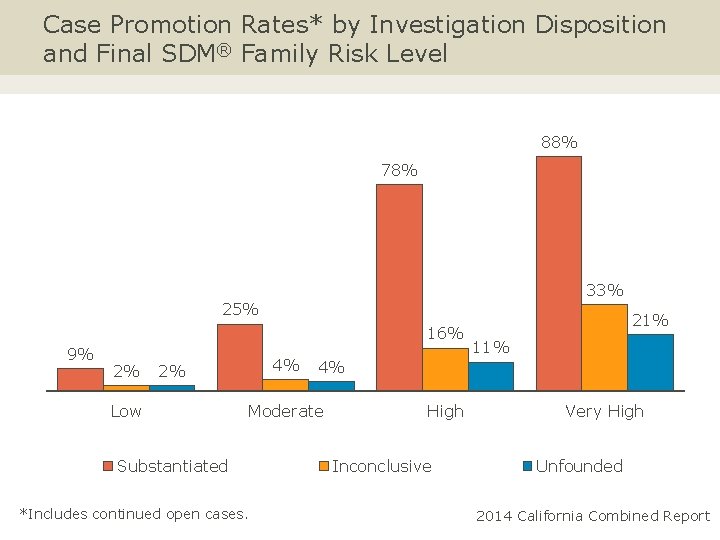
Case Promotion Rates* by Investigation Disposition and Final SDM® Family Risk Level 88% 78% 33% 25% 16% 9% 2% 4% 2% Low 4% Moderate Substantiated *Includes continued open cases. High Inconclusive 21% 11% Very High Unfounded 2014 California Combined Report
Case-Level Data Can Inform Decisions Throughout the Agency
![Safety Decision by Response Priority Ten Days* Immediate [VALUE] 12% 15% Unsafe California, 2014](http://slidetodoc.com/presentation_image_h/0d30d1ac9906a0d0d1fe28b765de075e/image-27.jpg "Safety Decision by Response Priority Ten Days* Immediate [VALUE] 12% 15% Unsafe California, 2014")
Safety Decision by Response Priority Ten Days* Immediate [VALUE] 12% 15% Unsafe California, 2014 *Five days in Los Angeles County. 15% 23% Safe With Plan 38%
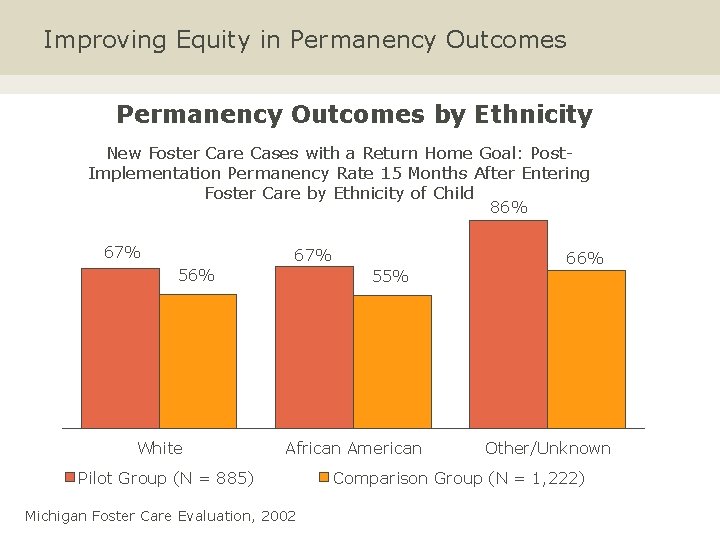
Improving Equity in Permanency Outcomes by Ethnicity New Foster Care Cases with a Return Home Goal: Post. Implementation Permanency Rate 15 Months After Entering Foster Care by Ethnicity of Child 86% 67% 56% White 55% African American Pilot Group (N = 885) Michigan Foster Care Evaluation, 2002 66% Other/Unknown Comparison Group (N = 1, 222)
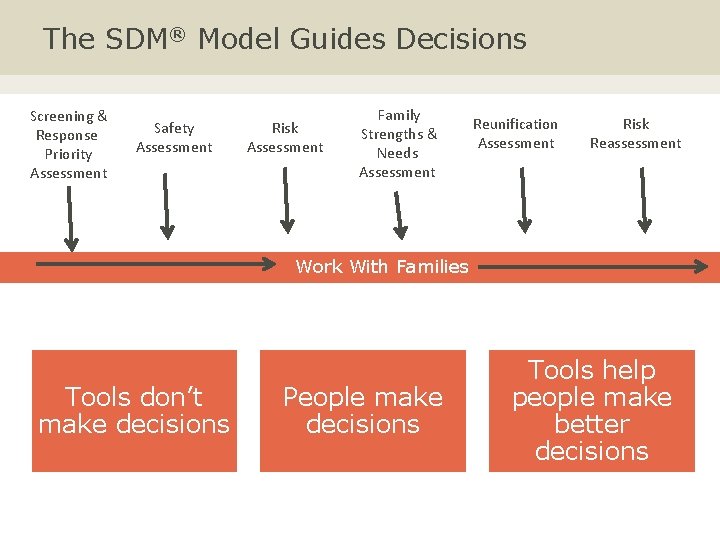
The SDM® Model Guides Decisions Screening & Response Priority Assessment Safety Assessment Risk Assessment Family Strengths & Needs Assessment Reunification Assessment Risk Reassessment Work With Families Tools don’t make decisions People make decisions Tools help people make better decisions
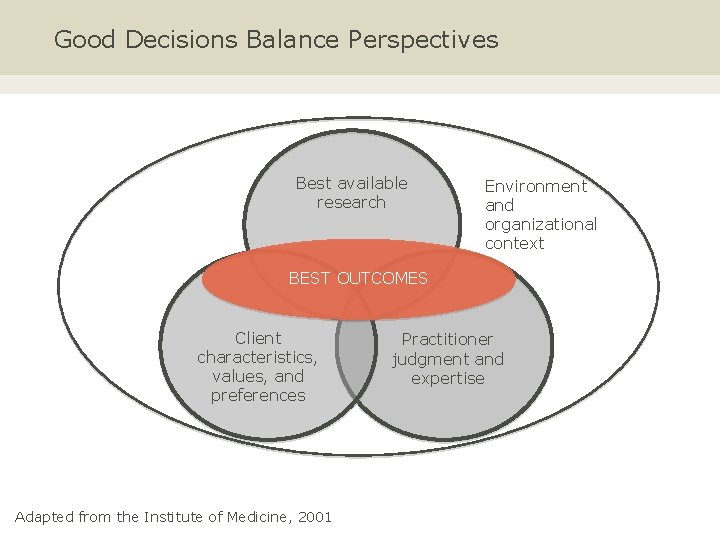
Good Decisions Balance Perspectives Best available research Environment and organizational context BEST OUTCOMES Client characteristics, values, and preferences Adapted from the Institute of Medicine, 2001 Practitioner judgment and expertise
Good Working Relationships Enrich the SDM® Model Farmer, E. , & Owen, M. (1995). Child protection practice: Private risks and public remedies. London: HMSO.

- Slides: 32