
California Standard Shaping Earths Surface Beaches are ever


California Standard: Shaping Earth’s Surface © Beaches are ever changing systems in which the sand is supplied by rivers and moved along the coast by the action of waves.
Ocean Waves ©Purpose: ©Identify wave parts ©Explain how waves move ©Describe how ocean waves form ©Analyze hazards of waves ©Describe features of erosion and deposition

Parts of a wave © Crest- the highest point of a wave © Trough- the lowest point of a wave © Wavelength- the distance between wave crests or troughs © Wave height- the vertical distance between the crest and trough
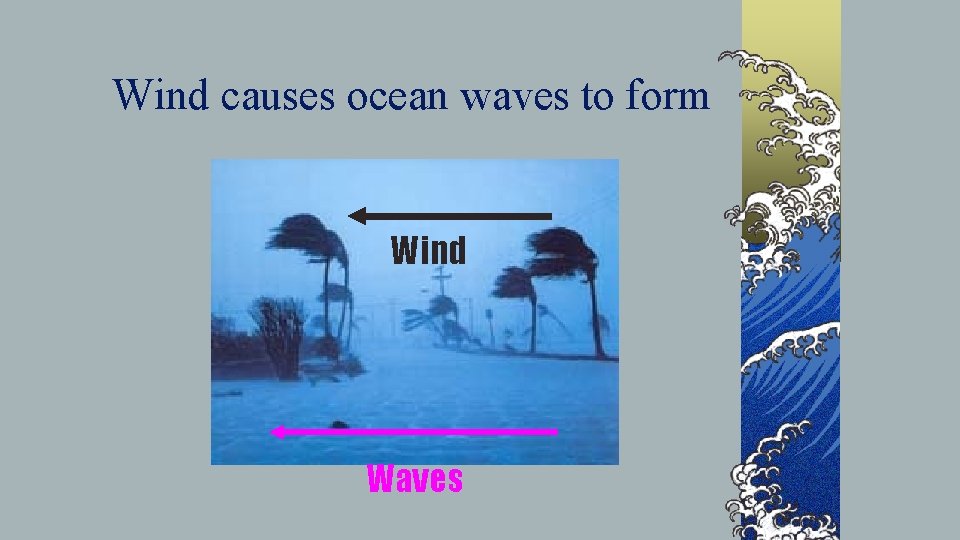
Wind causes ocean waves to form Wind Waves

Wind transfers energy to the water. ©Weak winds create ripples ©Strong winds create large waves ©Storms far out at sea create sets of waves called swell.
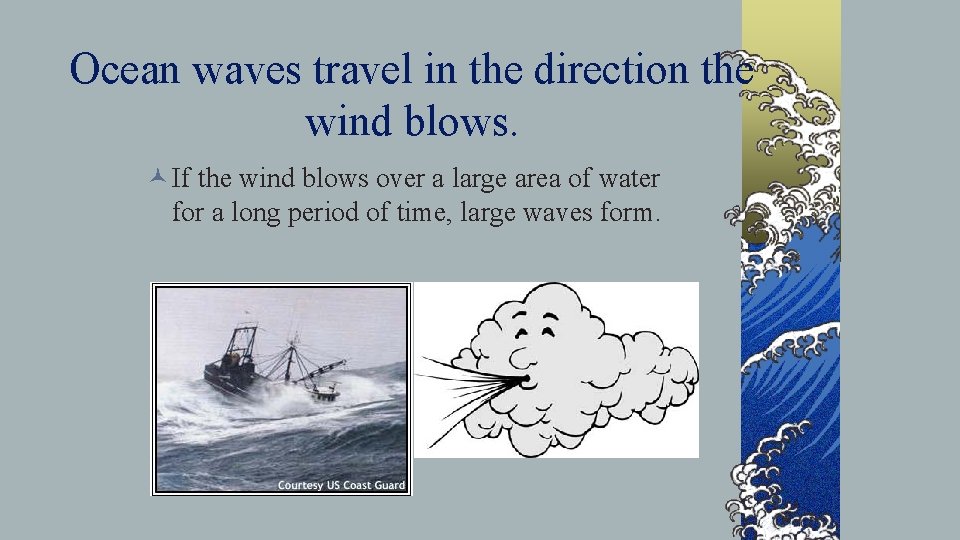
Ocean waves travel in the direction the wind blows. © If the wind blows over a large area of water for a long period of time, large waves form.
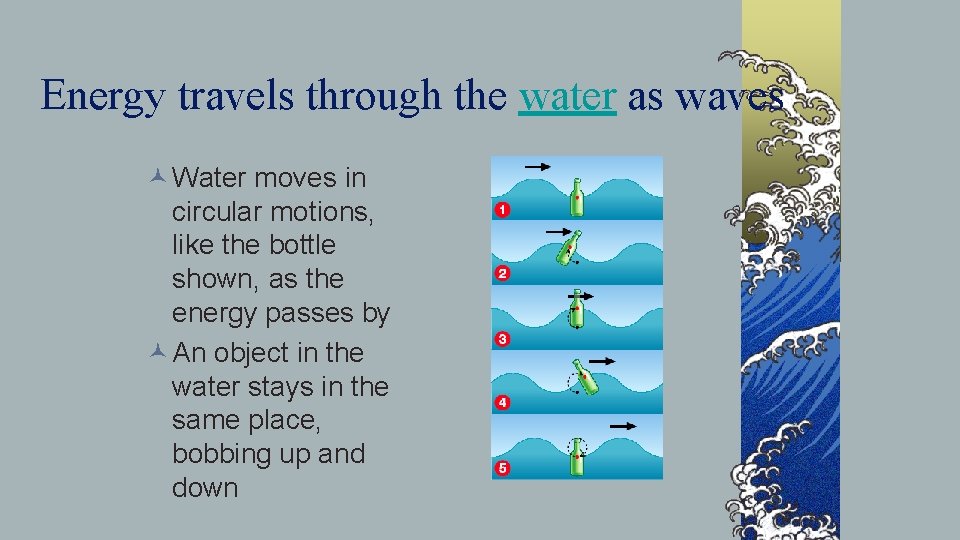
Energy travels through the water as waves © Water moves in circular motions, like the bottle shown, as the energy passes by © An object in the water stays in the same place, bobbing up and down
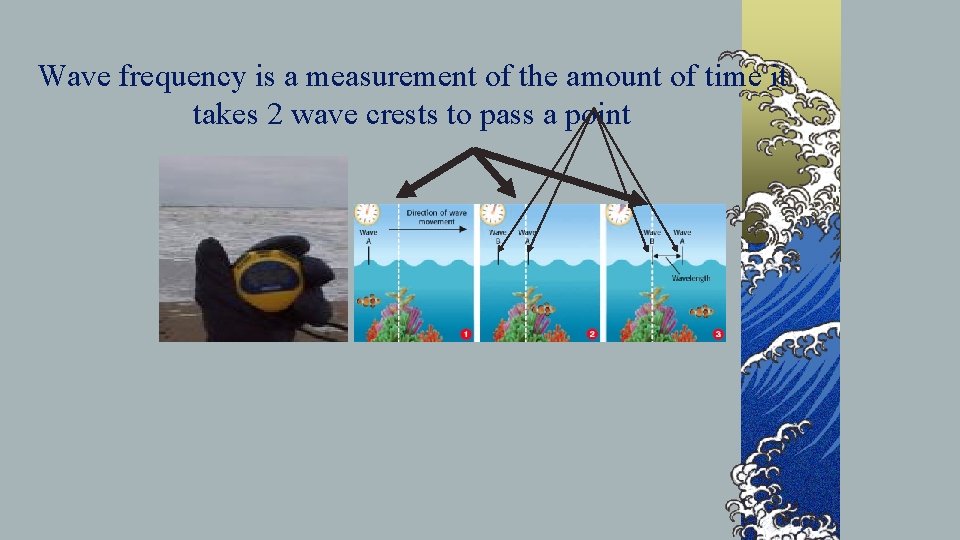
Wave frequency is a measurement of the amount of time it takes 2 wave crests to pass a point
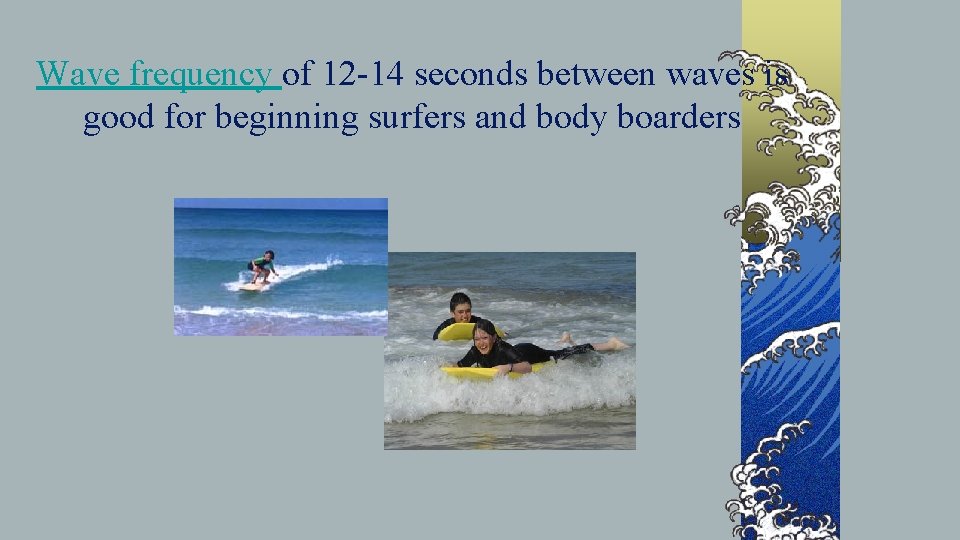
Wave frequency of 12 -14 seconds between waves is good for beginning surfers and body boarders
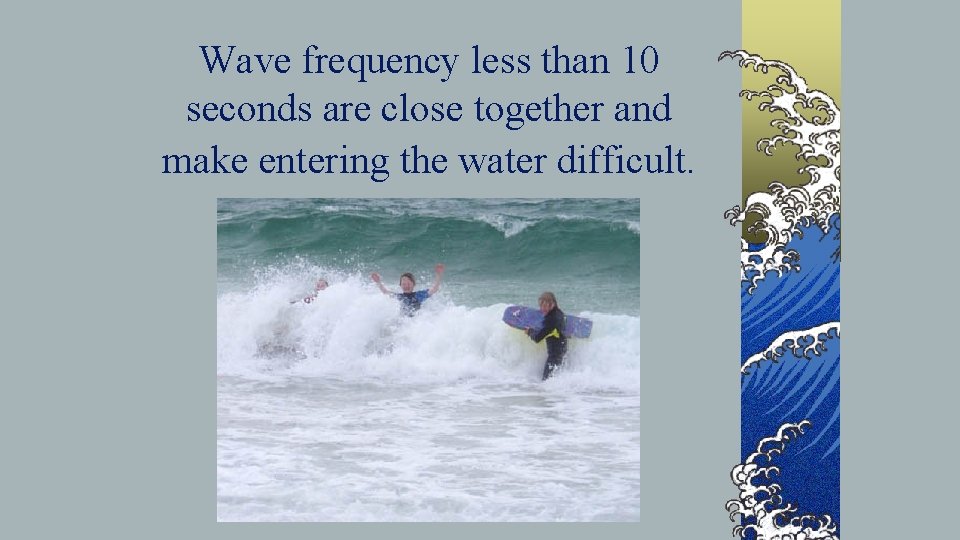
Wave frequency less than 10 seconds are close together and make entering the water difficult.
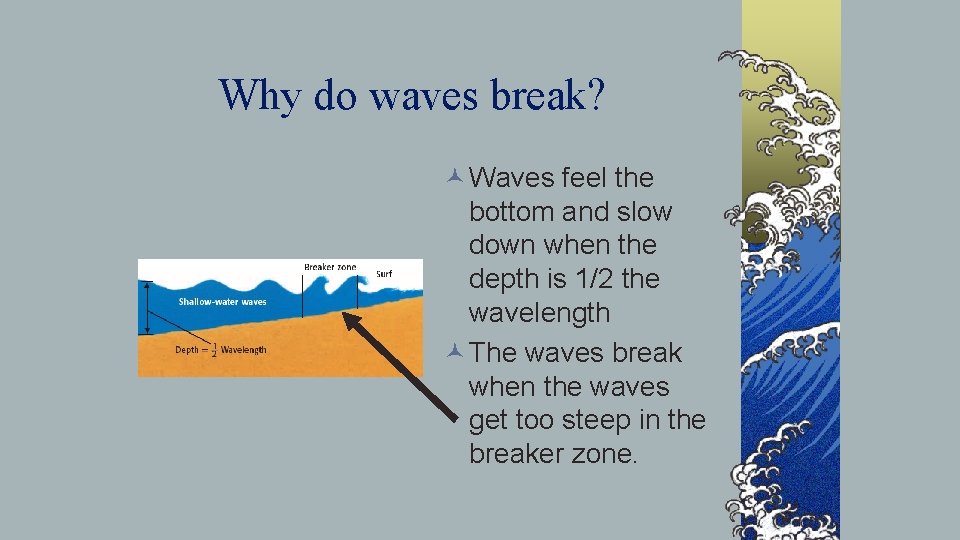
Why do waves break? © Waves feel the bottom and slow down when the depth is 1/2 the wavelength © The waves break when the waves get too steep in the breaker zone.
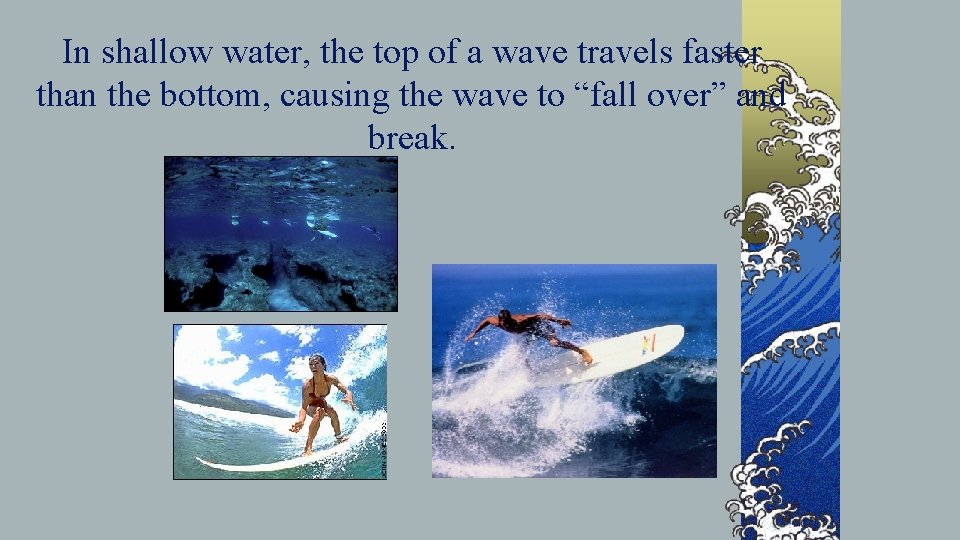
In shallow water, the top of a wave travels faster than the bottom, causing the wave to “fall over” and break.
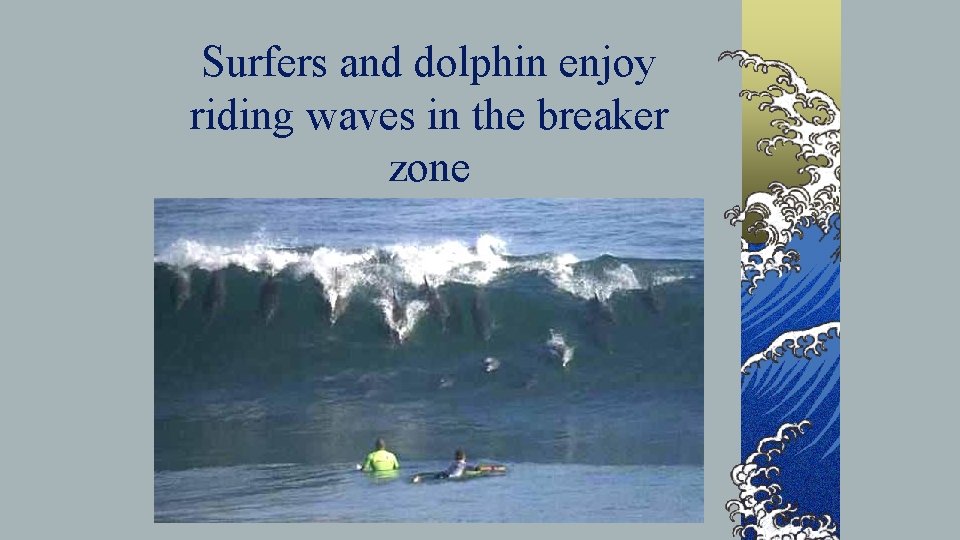
Surfers and dolphin enjoy riding waves in the breaker zone
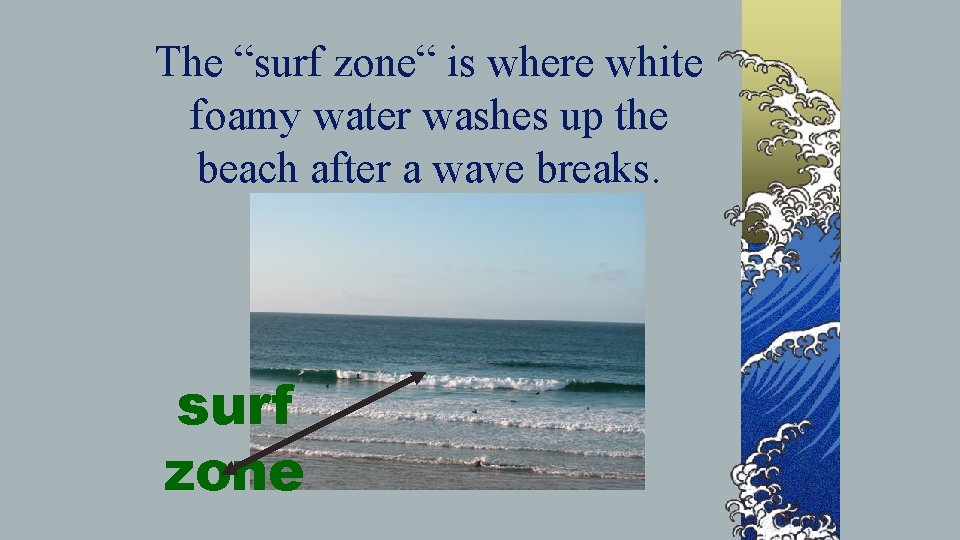
The “surf zone“ is where white foamy water washes up the beach after a wave breaks. surf zone
- Slides: 15