
California Geologic History Part 2 400 200 mya
- Slides: 12
California Geologic History Part 2
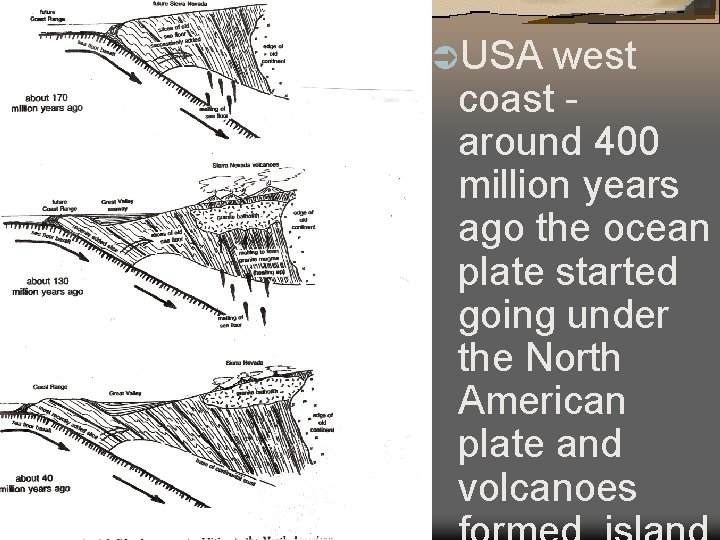
400 – 200 mya ÜUSA west coast around 400 million years ago the ocean plate started going under the North American plate and volcanoes
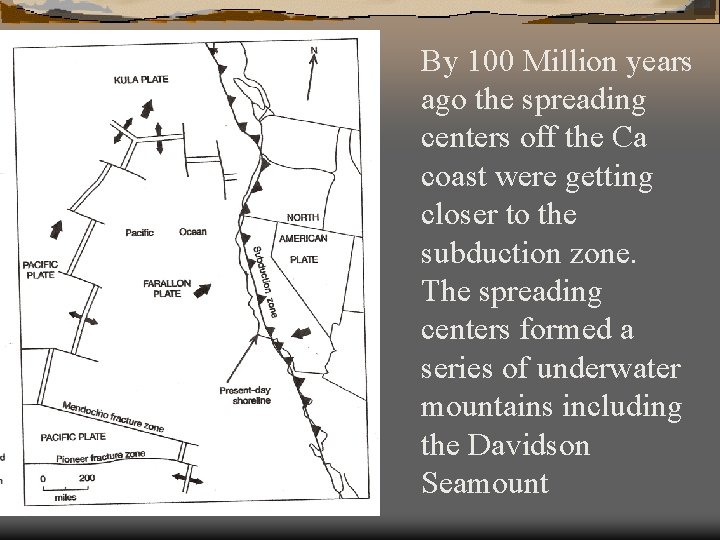
By 100 Million years ago the spreading centers off the Ca coast were getting closer to the subduction zone. The spreading centers formed a series of underwater mountains including the Davidson Seamount
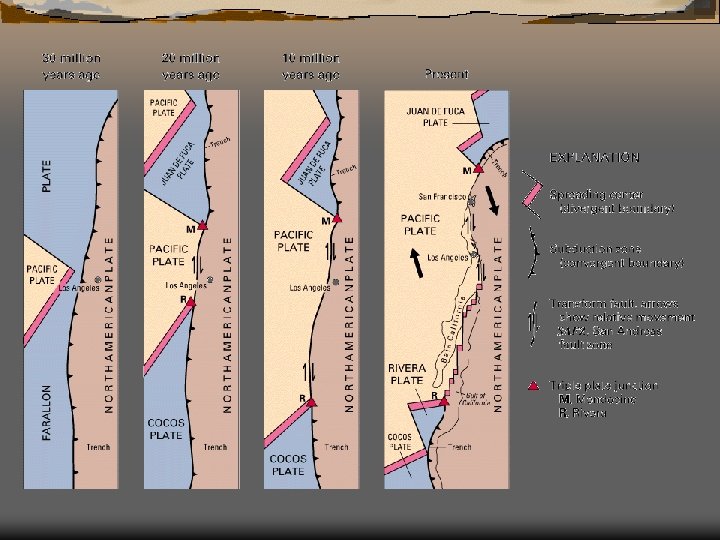
29 -0 mya (Cenozoic) Ü The oceanic plate that had been subducting beneath the western edge of North America became completely overridden and the North American and Pacific plates came into direct contact for the first time. Ü The two plates began moving sideways Ü The San Andreas Fault system was formed and continues to slide today. Ü In far northern California and the Pacific Northwest, subduction continues today.
Evidence 1 Ü Granite rocks from the southern Sierras are now at Point Lobos and other spots on N. Cal
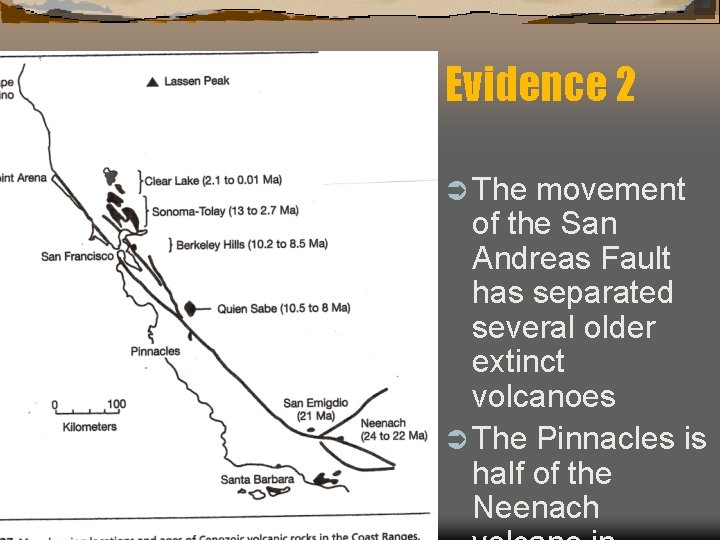
Evidence 2 Ü The movement of the San Andreas Fault has separated several older extinct volcanoes Ü The Pinnacles is half of the Neenach
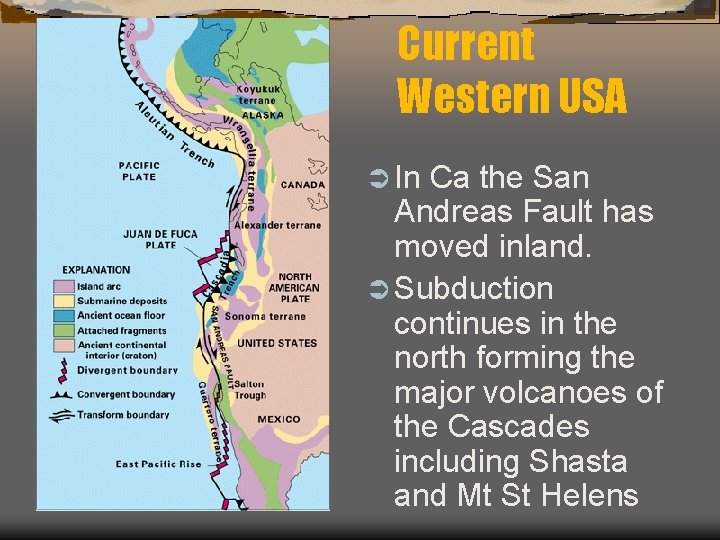
Current Western USA Ü In Ca the San Andreas Fault has moved inland. Ü Subduction continues in the north forming the major volcanoes of the Cascades including Shasta and Mt St Helens
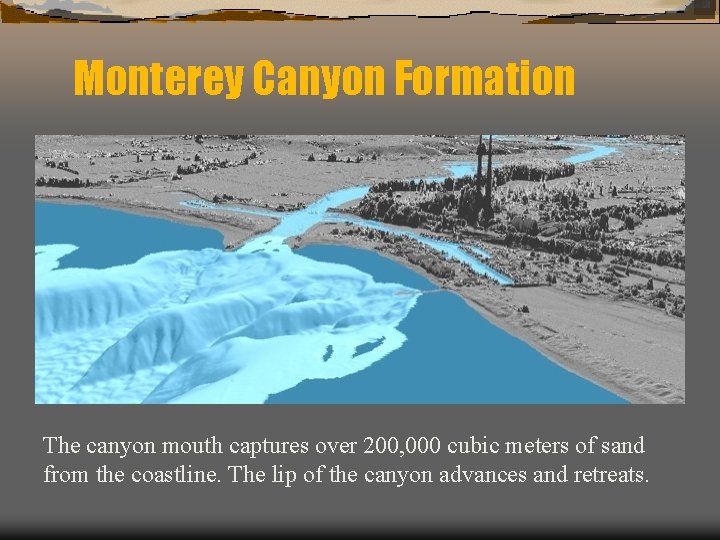
Monterey Canyon Formation The canyon mouth captures over 200, 000 cubic meters of sand from the coastline. The lip of the canyon advances and retreats.
Monterey Canyon Formation Ü Similar undersea canyons exist at the mouths of large rivers, but there is no big river at the head of Monterey Canyon today. Ü The canyon may be the old outlet of a river draining the Central Valley, which was moved north by the action of the San Andreas Fault from the Santa Barbara area. Ü The granite rocks around the bay are
Monterey Canyon Formation-cont Ü The huge flow of sand, along the bay, creates rapid currents which erode and enlarge the canyon Ü There are numerous nearby faults which trigger underwater landslides deepening the canyon Ü It’s a very unique, interesting feature still being actively investigated
Many sources were used including Ü http: //montereybay. noaa. gov/sitechar/g eol 3. html. Ü Wikipedia Ü snobear. colorado. edu/. . . /California. Mtn s/California_geologic_history. ppt Ü Several old teacher text books Ü http: //serc. carleton. edu/details/images/1 8172. html Ü USGS