
California Energy Commission California Public Utilities Commission Los
California Energy Commission California Public Utilities Commission Los Angeles Department of Water and Power Aliso Canyon Impact on Reliability: Summer 2019 May 23, 2019
Purpose of the Summer 2018 Technical Assessment • 7 th in series of assessments jointly prepared by staff at the CEC, CPUC, CAISO and LADWP • Assess risk to electric generation given pipeline outages and restricted operations at Aliso Canyon and identify measures to mitigate that risk • Calculate minimum gas required for electricity generation (“Min. Gen”), not as plan to curtail • Summer 2019 Assessment is posted in IEPR docket at: https: //www. energy. ca. gov/2019_energypolicy/documents/#05232019 – Comments due June 6 Page 2
Assessment Covers Following Key Topics • Update on So. Cal. Gas system status • Preliminary lookback at summer 2018 • Ability to meet 1 -in-10 year electricity demand peak day and resulting surplus or shortage • Storage inventory preview for winter • New mitigation measures to reduce electricity outage risk • Update on CAISO and LADWP mitigation measure results to date Page 3
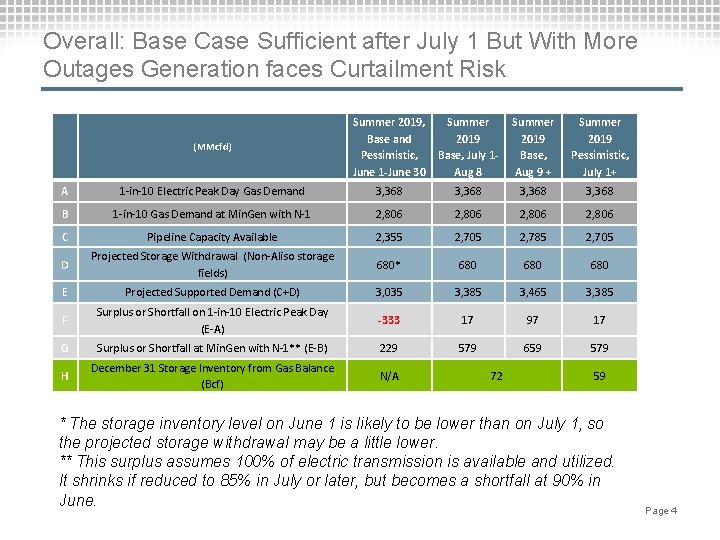
Overall: Base Case Sufficient after July 1 But With More Outages Generation faces Curtailment Risk (MMcfd) Summer 2019, Base and Pessimistic, June 1 -June 30 Summer 2019 Base, July 1 Aug 8 Summer 2019 Base, Aug 9 + Summer 2019 Pessimistic, July 1+ A 1 -in-10 Electric Peak Day Gas Demand 3, 368 B 1 -in-10 Gas Demand at Min. Gen with N-1 2, 806 C Pipeline Capacity Available 2, 355 2, 705 2, 785 2, 705 D Projected Storage Withdrawal (Non-Aliso storage fields) 680* 680 680 E Projected Supported Demand (C+D) 3, 035 3, 385 3, 465 3, 385 F Surplus or Shortfall on 1 -in-10 Electric Peak Day (E-A) -333 17 97 17 G Surplus or Shortfall at Min. Gen with N-1** (E-B) 229 579 659 579 H December 31 Storage Inventory from Gas Balance (Bcf) N/A 72 59 * The storage inventory level on June 1 is likely to be lower than on July 1, so the projected storage withdrawal may be a little lower. ** This surplus assumes 100% of electric transmission is available and utilized. It shrinks if reduced to 85% in July or later, but becomes a shortfall at 90% in June. Page 4

So. Cal. Gas’ System Remains Impaired by Multiple Pipeline Outages • • • On October 1, 2017 Line 235 -2 ruptured, burning the outside of an excavated section of Line 4000 returned to service on December 2017 at reduced pressure New leaks detected on Line 235 -2 – Line 235 -2 projected return to service delayed to June 22, 2019 After Line 235 -2 return to service, Line 4000 will be removed for remediation – Line 4000 projected to return to service August 9, 2019 at reduced pressure – Increased operating pressure projected November 1 Line 3000 returned to service September 2018 at reduced pressure Line 2000 is reduced to 980 MMcfd Page 5

So. Cal. Gas Receipt Point Capacity Reduced by 720 MMcfd due to Status of Lines 235, 3000 and 4000 Full outage Operating Restrictions Page 6
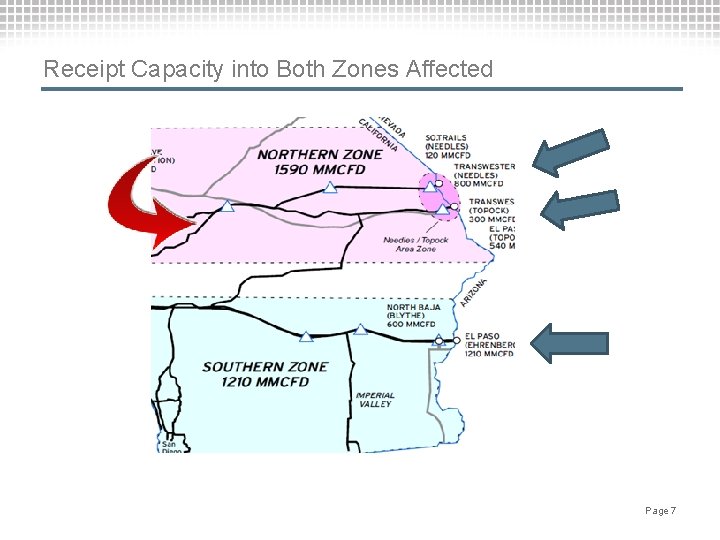
Receipt Capacity into Both Zones Affected Page 7
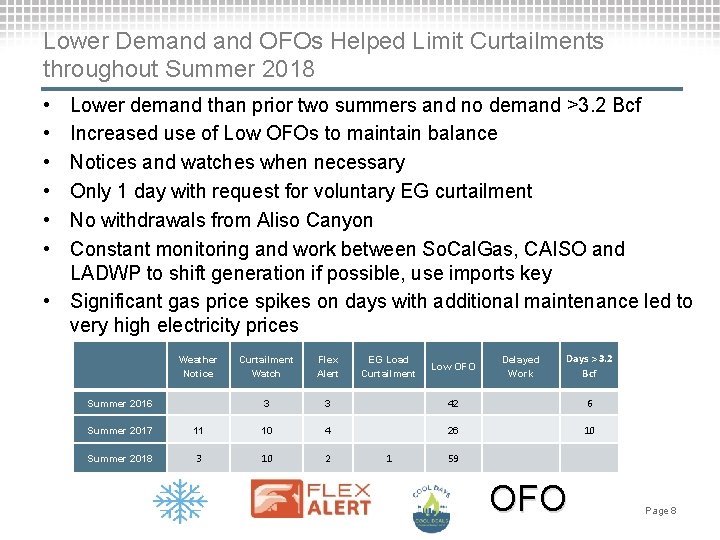
Lower Demand OFOs Helped Limit Curtailments throughout Summer 2018 • • • Lower demand than prior two summers and no demand >3. 2 Bcf Increased use of Low OFOs to maintain balance Notices and watches when necessary Only 1 day with request for voluntary EG curtailment No withdrawals from Aliso Canyon Constant monitoring and work between So. Cal. Gas, CAISO and LADWP to shift generation if possible, use imports key • Significant gas price spikes on days with additional maintenance led to very high electricity prices Weather Notice Summer 2016 Flex Alert 3 3 42 6 26 10 Summer 2017 11 10 4 Summer 2018 3 10 2 EG Load Curtailment 1 Low OFO Delayed Work Days > 3. 2 Bcf Curtailment Watch 59 OFO Page 8
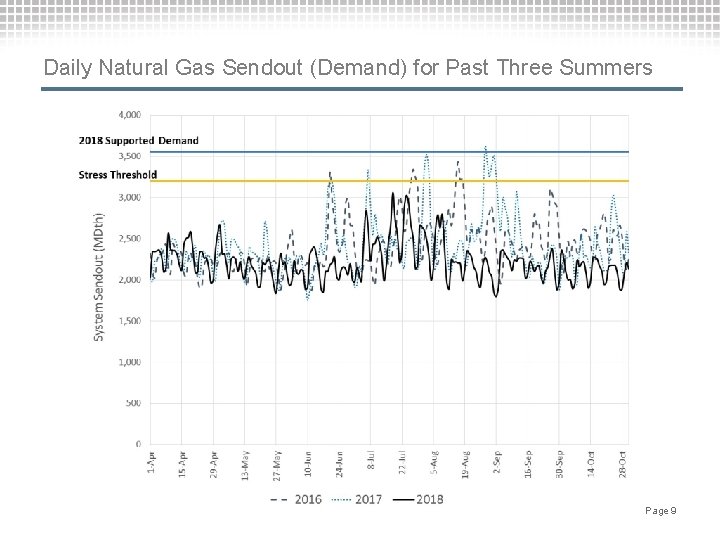
Daily Natural Gas Sendout (Demand) for Past Three Summers Page 9
New Division of Oil, Gas, and Geothermal Resources Regulations • Gas storage fields required to be shut-in twice a year for testing and inventory verification – Shut-in time dependent on field size and characteristic – Honor Rancho shut-in between April 1 to April 22, two week shut -in projected in the fall – Less opportunity for injection • So. Cal. Gas Storage Integrity Management Program – Conversion to tubing only flow – Impacts withdrawal and injection curves – Lower maximum withdrawal capacity at Honor Rancho Page 10
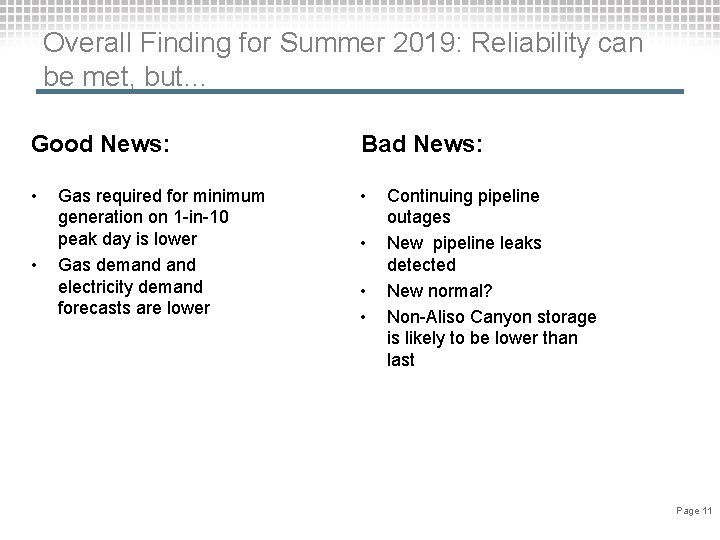
Overall Finding for Summer 2019: Reliability can be met, but… Good News: Bad News: • • • Gas required for minimum generation on 1 -in-10 peak day is lower Gas demand electricity demand forecasts are lower • • • Continuing pipeline outages New pipeline leaks detected New normal? Non-Aliso Canyon storage is likely to be lower than last Page 11
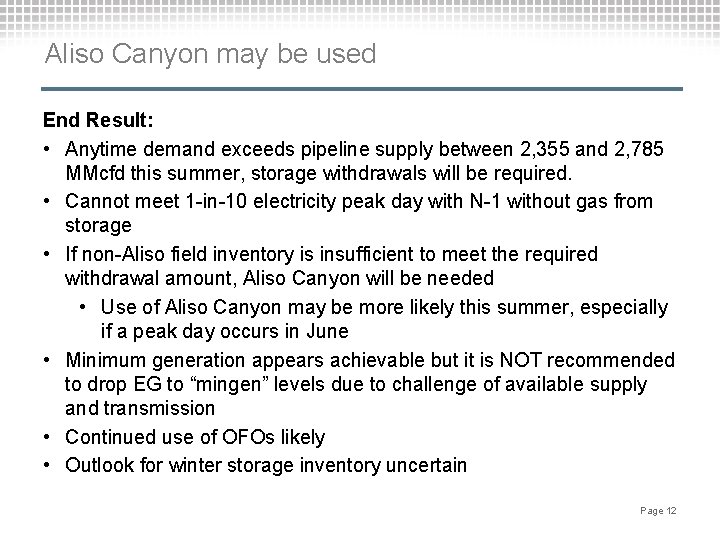
Aliso Canyon may be used End Result: • Anytime demand exceeds pipeline supply between 2, 355 and 2, 785 MMcfd this summer, storage withdrawals will be required. • Cannot meet 1 -in-10 electricity peak day with N-1 without gas from storage • If non-Aliso field inventory is insufficient to meet the required withdrawal amount, Aliso Canyon will be needed • Use of Aliso Canyon may be more likely this summer, especially if a peak day occurs in June • Minimum generation appears achievable but it is NOT recommended to drop EG to “mingen” levels due to challenge of available supply and transmission • Continued use of OFOs likely • Outlook for winter storage inventory uncertain Page 12
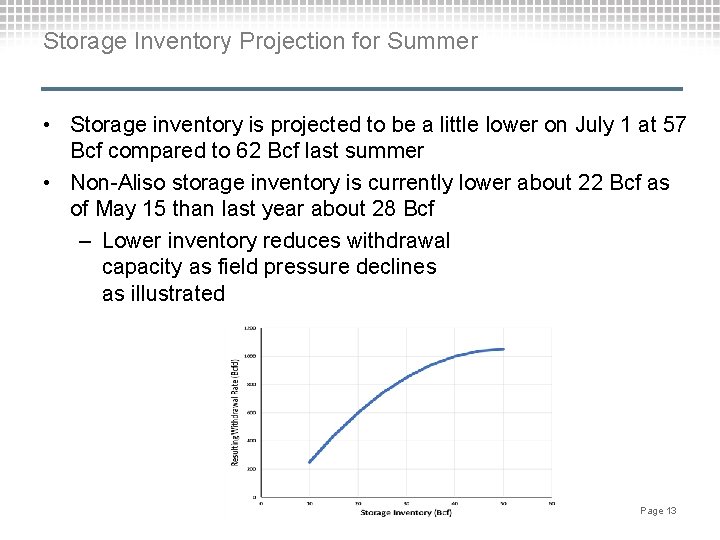
Storage Inventory Projection for Summer • Storage inventory is projected to be a little lower on July 1 at 57 Bcf compared to 62 Bcf last summer • Non-Aliso storage inventory is currently lower about 22 Bcf as of May 15 than last year about 28 Bcf – Lower inventory reduces withdrawal capacity as field pressure declines as illustrated Page 13
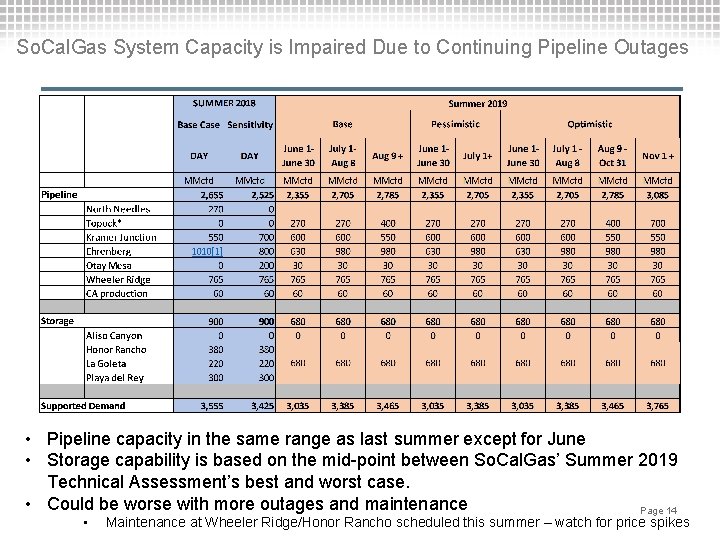
So. Cal. Gas System Capacity is Impaired Due to Continuing Pipeline Outages • Pipeline capacity in the same range as last summer except for June • Storage capability is based on the mid-point between So. Cal. Gas’ Summer 2019 Technical Assessment’s best and worst case. • Could be worse with more outages and maintenance Page 14 • Maintenance at Wheeler Ridge/Honor Rancho scheduled this summer – watch for price spikes
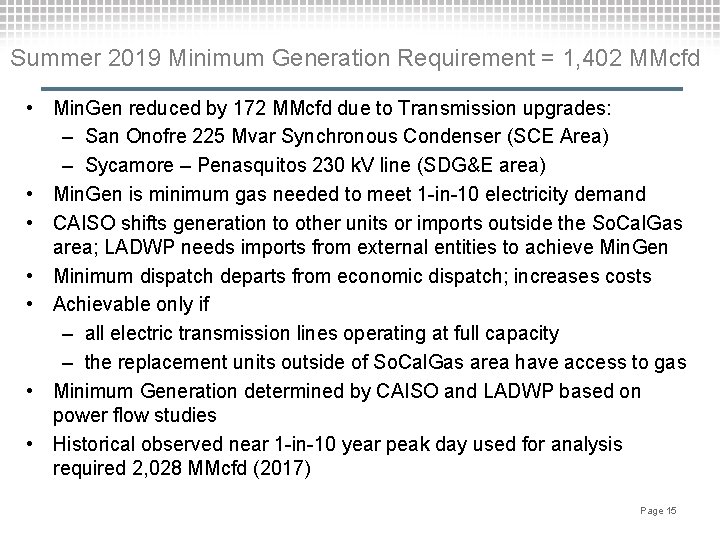
Summer 2019 Minimum Generation Requirement = 1, 402 MMcfd • Min. Gen reduced by 172 MMcfd due to Transmission upgrades: – San Onofre 225 Mvar Synchronous Condenser (SCE Area) – Sycamore – Penasquitos 230 k. V line (SDG&E area) • Min. Gen is minimum gas needed to meet 1 -in-10 electricity demand • CAISO shifts generation to other units or imports outside the So. Cal. Gas area; LADWP needs imports from external entities to achieve Min. Gen • Minimum dispatch departs from economic dispatch; increases costs • Achievable only if – all electric transmission lines operating at full capacity – the replacement units outside of So. Cal. Gas area have access to gas • Minimum Generation determined by CAISO and LADWP based on power flow studies • Historical observed near 1 -in-10 year peak day used for analysis required 2, 028 MMcfd (2017) Page 15
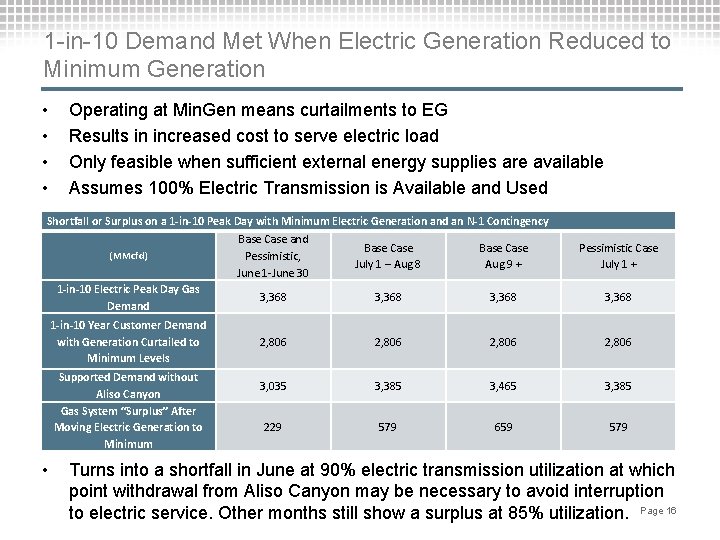
1 -in-10 Demand Met When Electric Generation Reduced to Minimum Generation • • Operating at Min. Gen means curtailments to EG Results in increased cost to serve electric load Only feasible when sufficient external energy supplies are available Assumes 100% Electric Transmission is Available and Used Shortfall or Surplus on a 1 -in-10 Peak Day with Minimum Electric Generation and an N-1 Contingency (MMcfd) Base Case and Pessimistic, June 1 -June 30 Base Case July 1 – Aug 8 Base Case Aug 9 + Pessimistic Case July 1 + 1 -in-10 Electric Peak Day Gas Demand 3, 368 1 -in-10 Year Customer Demand with Generation Curtailed to Minimum Levels 2, 806 3, 035 3, 385 3, 465 3, 385 229 579 659 579 Supported Demand without Aliso Canyon Gas System “Surplus” After Moving Electric Generation to Minimum • Turns into a shortfall in June at 90% electric transmission utilization at which point withdrawal from Aliso Canyon may be necessary to avoid interruption to electric service. Other months still show a surplus at 85% utilization. Page 16
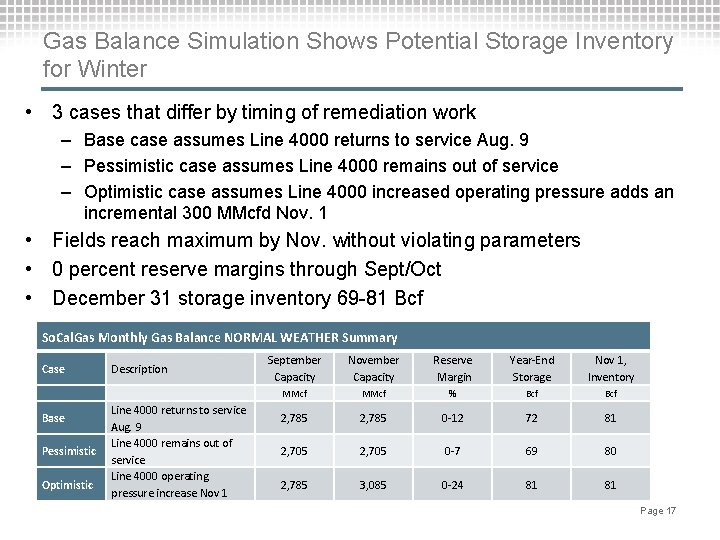
Gas Balance Simulation Shows Potential Storage Inventory for Winter • 3 cases that differ by timing of remediation work – Base case assumes Line 4000 returns to service Aug. 9 – Pessimistic case assumes Line 4000 remains out of service – Optimistic case assumes Line 4000 increased operating pressure adds an incremental 300 MMcfd Nov. 1 • Fields reach maximum by Nov. without violating parameters • 0 percent reserve margins through Sept/Oct • December 31 storage inventory 69 -81 Bcf So. Cal. Gas Monthly Gas Balance NORMAL WEATHER Summary Case Base Pessimistic Optimistic Description Line 4000 returns to service Aug. 9 Line 4000 remains out of service Line 4000 operating pressure increase Nov 1 September Capacity November Capacity Reserve Margin Year-End Storage Nov 1, Inventory MMcf % Bcf 2, 785 0 -12 72 81 2, 705 0 -7 69 80 2, 785 3, 085 0 -24 81 81 Page 17
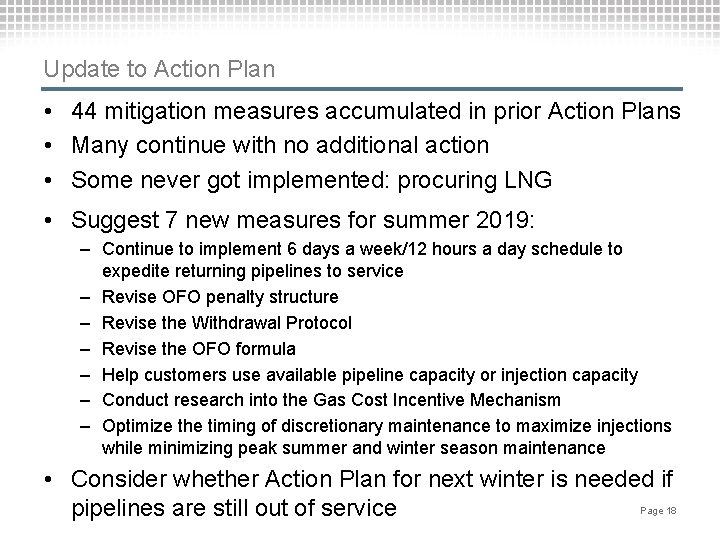
Update to Action Plan • 44 mitigation measures accumulated in prior Action Plans • Many continue with no additional action • Some never got implemented: procuring LNG • Suggest 7 new measures for summer 2019: – Continue to implement 6 days a week/12 hours a day schedule to expedite returning pipelines to service – Revise OFO penalty structure – Revise the Withdrawal Protocol – Revise the OFO formula – Help customers use available pipeline capacity or injection capacity – Conduct research into the Gas Cost Incentive Mechanism – Optimize the timing of discretionary maintenance to maximize injections while minimizing peak summer and winter season maintenance • Consider whether Action Plan for next winter is needed if Page 18 pipelines are still out of service
CAISO Impact of Mitigation Measures • Proactive coordination between CAISO, So. Cal. Gas and generators demonstrates success in reducing gas imbalances. • Sharing of Information 2 days ahead of operating day • Ongoing enhancements to the D+1 information sharing • Ad hoc proactive communications • Maintaining tools that help manage gas use • Gas burn constraint in southern CA can be used when needed • Improve gas index price and cost into markets • Identify and dispatch resources that have alternative gas supply • Use of flex-alerts to help reduce demand when needed Page 19
Facilities Planned After Summer 2019 Will Also Help • Two additional projects (previously planned) to improve transmission facilities will strengthen Southern California energy reliability and permit the electrical system to adjust more readily to changing conditions: – Suncrest Static VAR Compensator (300 MVAR) in service date expected December 2019 – Mesa 230/500 k. VLoop-In 500 k. V line expected in service March 2022 • Will contribute to declining Min. Gen Page 20
LADWP Completed Mitigation Measure Estimated Impacts • Increased Electric and Gas Operational Coordination – Improved coordination between utilities has increased LADWP’s situational awareness, particularly during critical high heat days • Updated Physical Gas Hedging Practice – Provides additional operational flexibility for LADWP in the event of gas curtailments or curtailment watch periods • Updated Economic Dispatch Practice – Provides additional operational flexibility and non-economic energy purchases reducing reliance on local gas by 1. 7 Bcf total gas burn • Updated Block Energy and Capacity Sales Practice – Provides additional operational flexibility for LADWP in the event of gas curtailments or curtailment watch periods • Maintaining Dual Fuel Capability – 1, 500 MW alternative fuel capability only as a last resort to maintain electric reliability in emergency situations. Page 21
LADWP Facilities planned to lower gas burn • Reduction of minimum generation requirement – Four In-basin 230 -k. V lines to be reconductored and have ratings increased • First two lines in process now, expected to be completed in winter 2019/2020 • Second two lines expected to be completed in spring 2021 • Additional transmission projects will be determined in the future • Transmission projects will be critical to reducing in-basin gas generation and meeting SB 100 clean energy goals • Renewable generation – Additional 90 MW of utility solar to be added in June 2019 Page 22
Comes Down to Outages, Balancing, and Weather -- Even With Mitigation Measures • Risk to electric generation is similar to last summer • Reduced transmission utilization or gas system utilization may require withdrawals from Aliso Canyon • Need system fully utilized before curtailing generators • Need demand < “Supported Demand” • Need the pipeline system restored to full capacity Page 23
Next Steps • Continue monitoring closely: – – pipeline outages pipeline utilization storage inventory natural gas prices in Southern California • Review and implement the additional mitigation measures • Consider whether Action Plan for winter is still needed if pipelines are still out of service • Comments Due June 6 to Energy Commission docket: 19 -IEPR-09–Southern California Energy Reliability Page 24
- Slides: 24