
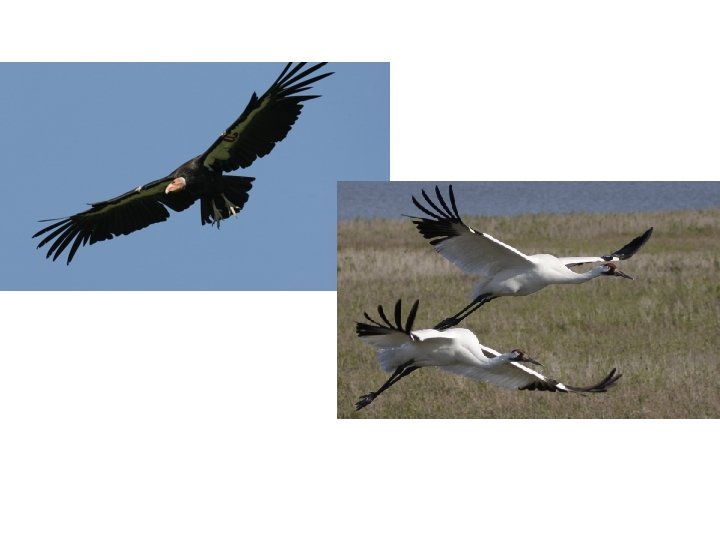
California Condor Fossils from Pleistocene Era 10 000



- Slides: 20
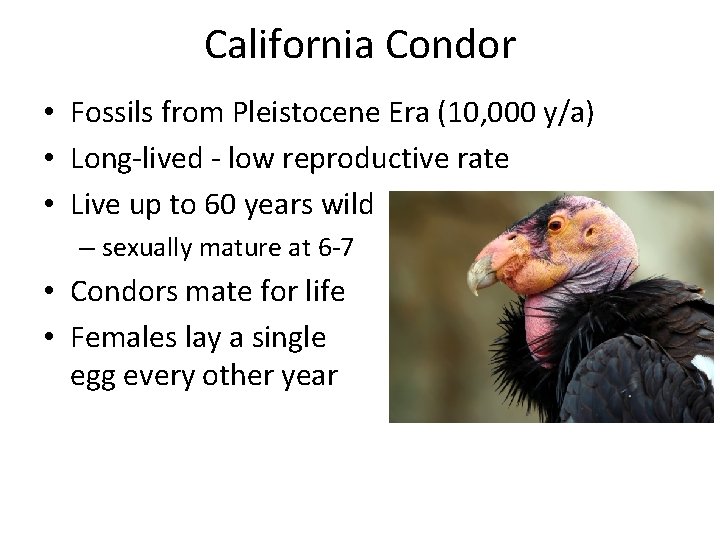
California Condor • Fossils from Pleistocene Era (10, 000 y/a) • Long-lived - low reproductive rate • Live up to 60 years wild – sexually mature at 6 -7 • Condors mate for life • Females lay a single egg every other year
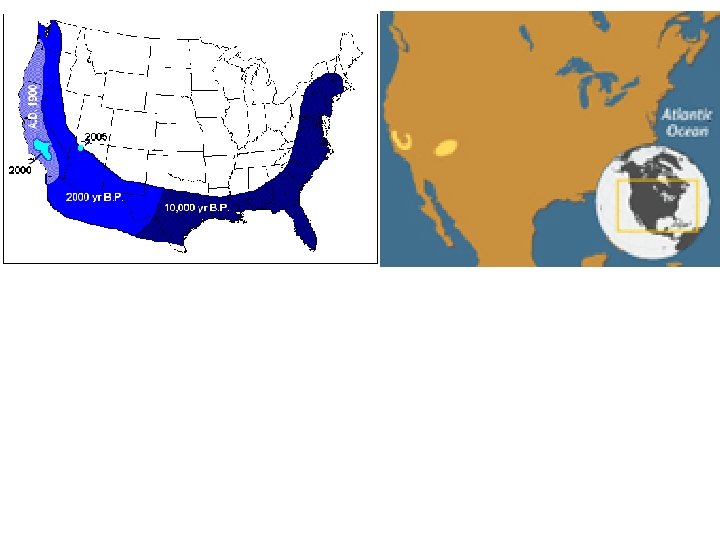
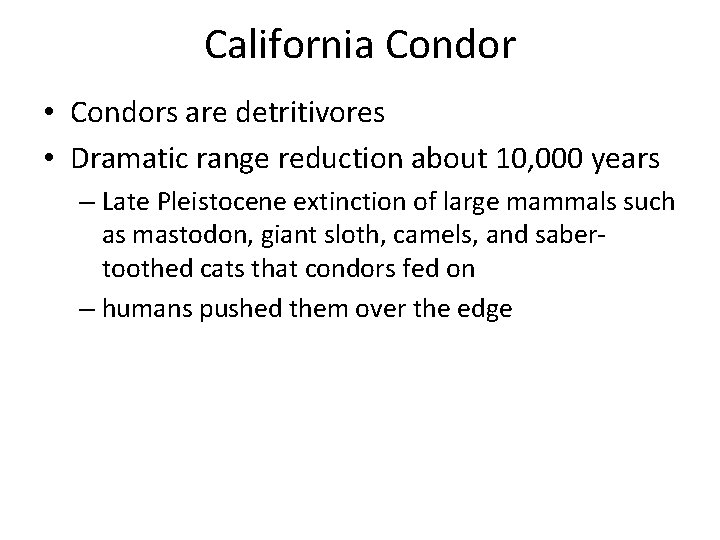
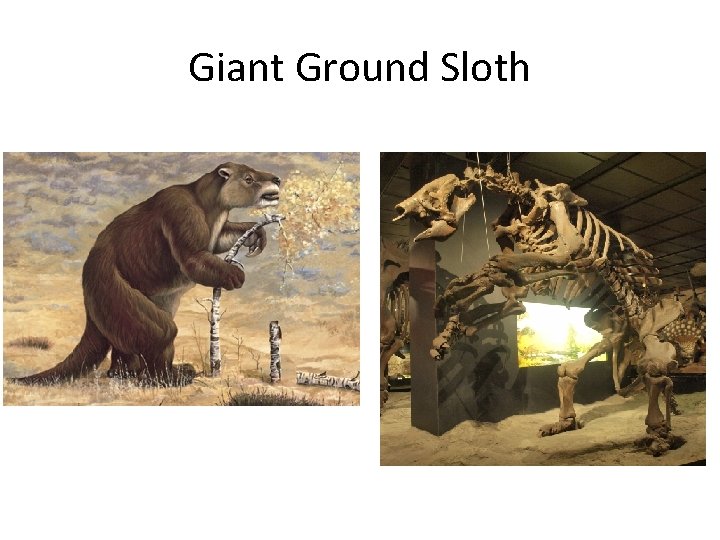
California Condor • Condors are detritivores • Dramatic range reduction about 10, 000 years – Late Pleistocene extinction of large mammals such as mastodon, giant sloth, camels, and sabertoothed cats that condors fed on – humans pushed them over the edge
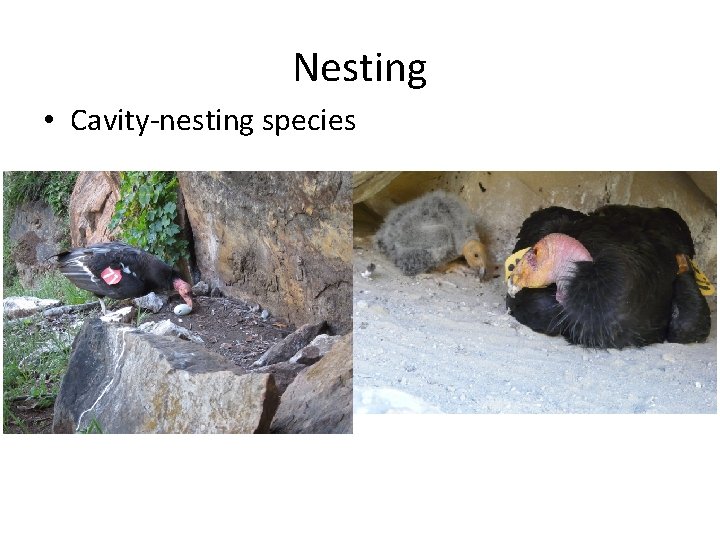
Nesting • Cavity-nesting species
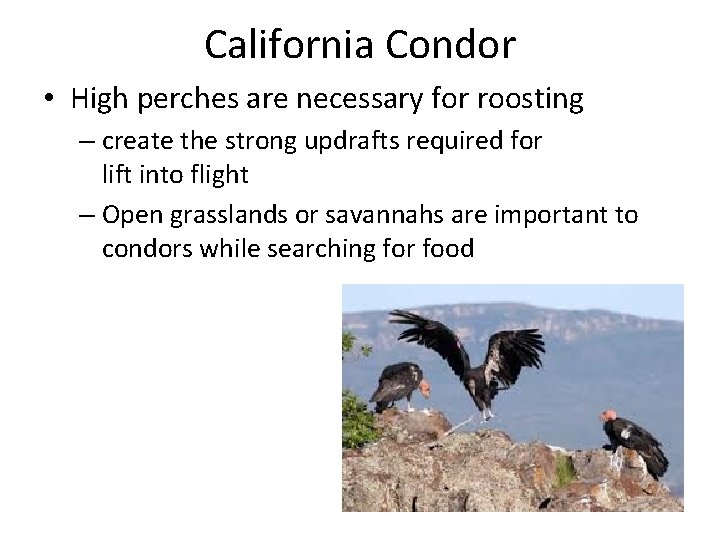
California Condor • High perches are necessary for roosting – create the strong updrafts required for lift into flight – Open grasslands or savannahs are important to condors while searching for food
California Condor • Urbanization – habitat destruction/fragmentation • Shooting – trophies, illegal sale • Poisoning from lead and DDT • Egg collecting • Climate change – shifting vegetation ranges
Condor Video • https: //www. youtube. com/watch? v=BDx. Gcg. IJ s. T 0
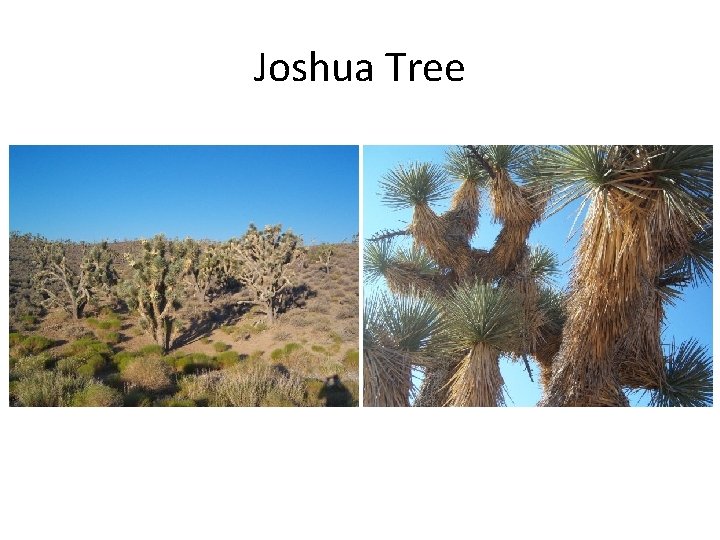
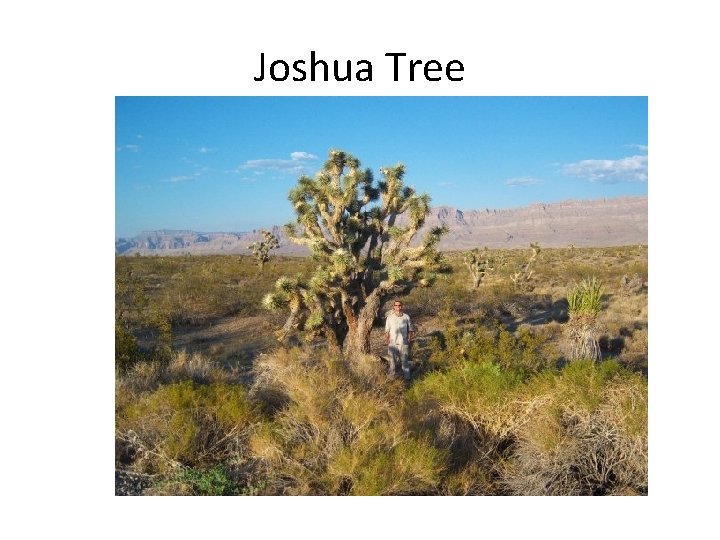
Joshua Tree
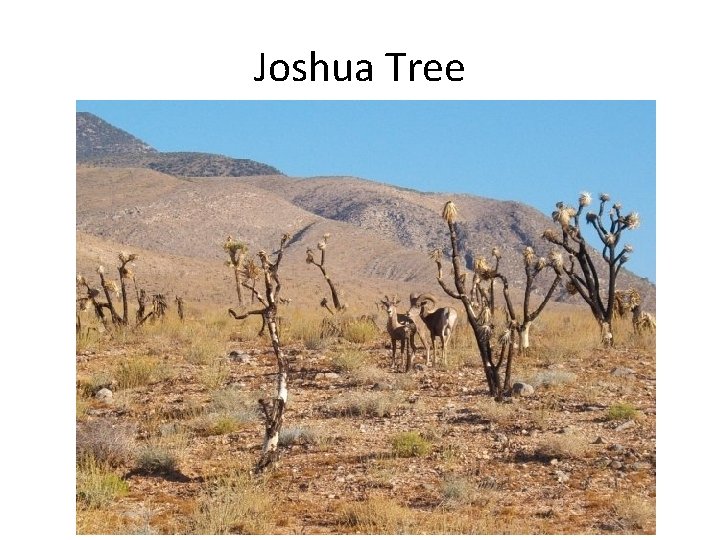
Joshua Tree
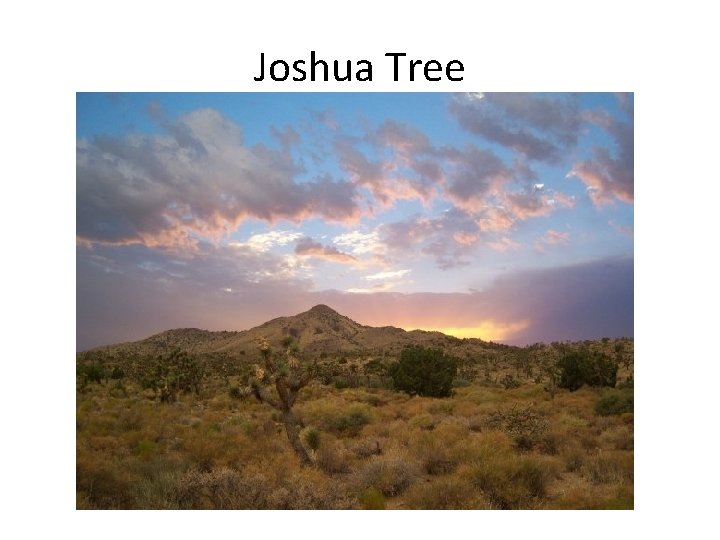
Joshua Tree
Joshua Tree
Joshua Tree • Changing climate reducing viable range • May be found only in isolated locations of higher elevation in future – Predicted as soon as 50 -100 years • Loss of widespread seed dispersal
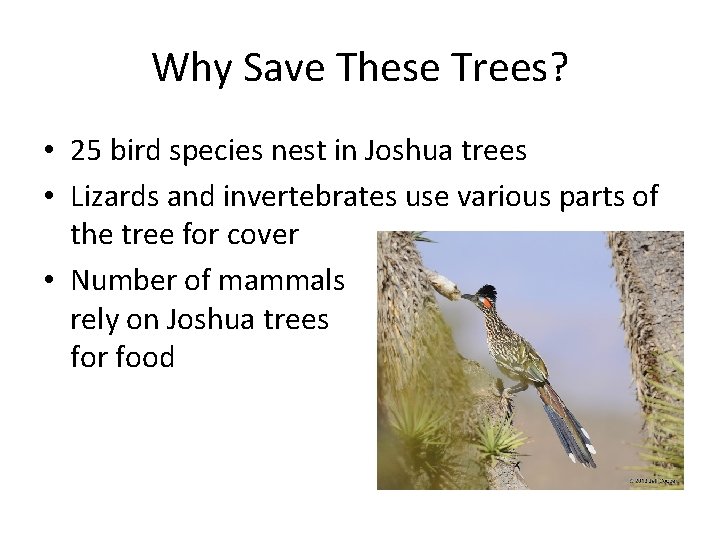
Why Save These Trees? • 25 bird species nest in Joshua trees • Lizards and invertebrates use various parts of the tree for cover • Number of mammals rely on Joshua trees for food
Giant Ground Sloth
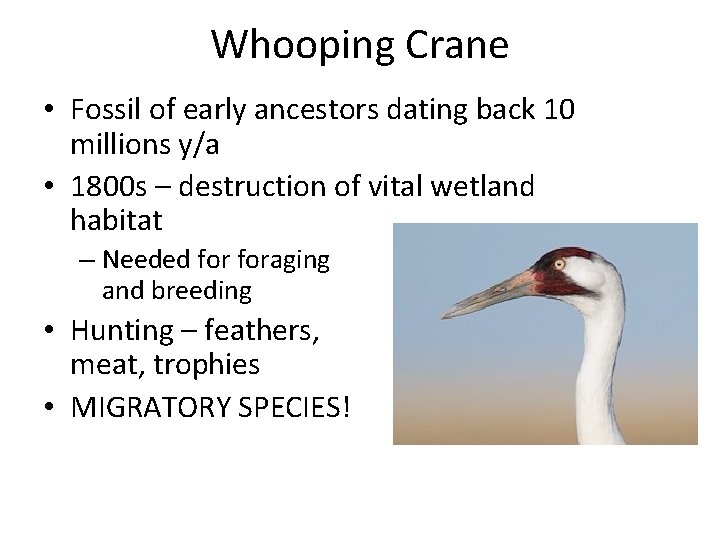
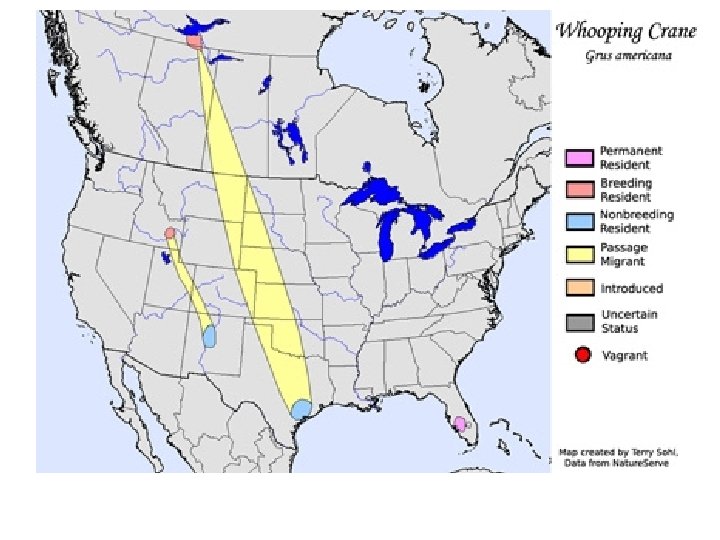
Whooping Crane • Fossil of early ancestors dating back 10 millions y/a • 1800 s – destruction of vital wetland habitat – Needed foraging and breeding • Hunting – feathers, meat, trophies • MIGRATORY SPECIES!
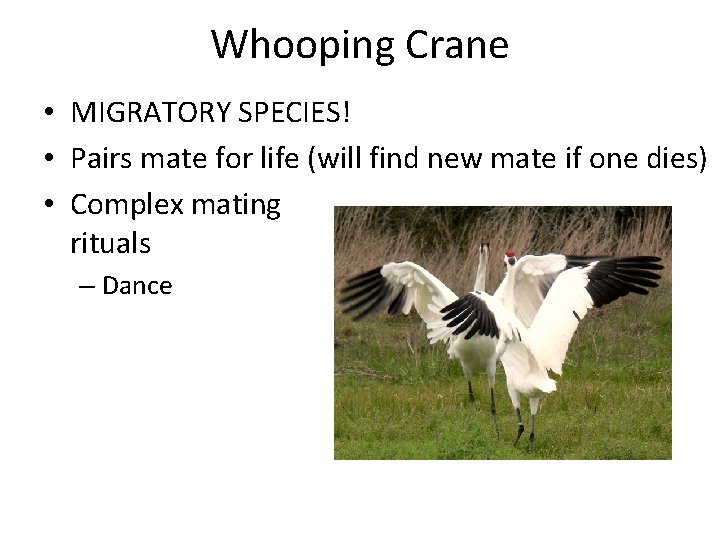
Whooping Crane • MIGRATORY SPECIES! • Pairs mate for life (will find new mate if one dies) • Complex mating rituals – Dance
Whooping Crane Courtship Dance • http: //www. arkive. org/whooping-crane/grusamericana/video-09 a. html
Whooping Crane Video • https: //www. youtube. com/watch? v=Ye 4 Swf 3 y. DM