
Calibration Overview What is calibration To determine check
Calibration Overview
What is calibration? • To determine, check, or rectify the graduation of (any instrument giving quantitative measurements). • Calibration is when you take something and make sure that it is doing what it is supposed to do. It is like calibrating a thermometer to make sure that it shows the correct temperature.
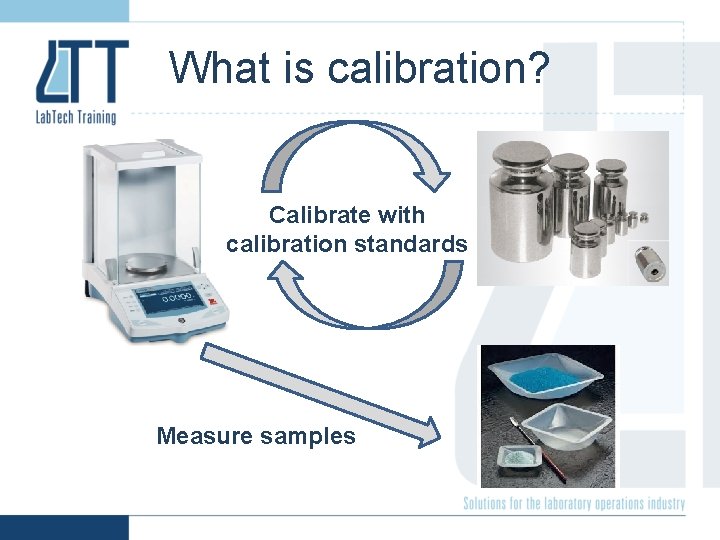
What is calibration? Calibrate with calibration standards Measure samples
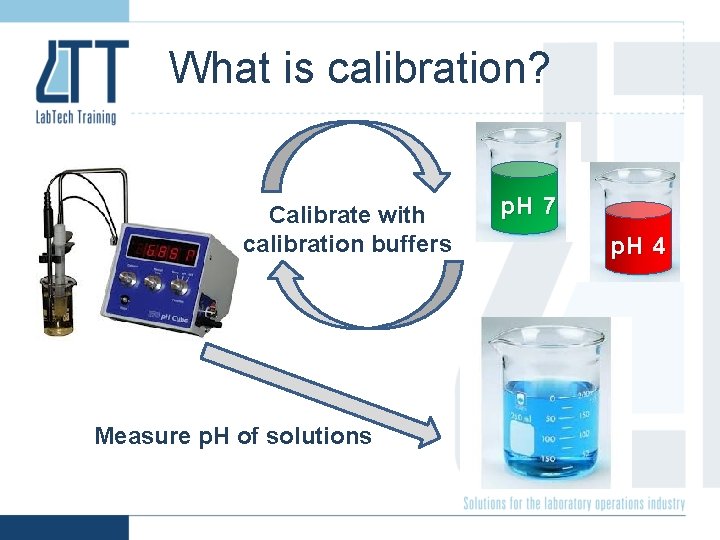
What is calibration? Calibrate with calibration buffers Measure p. H of solutions p. H 7 p. H 4
This course • Calibrate and use: Ø an analytical balance, Ø volumetric glassware, Ø a thermometer, Ø a noise meter, Ø Vernier callipers.
Calibration Laboratory Balances
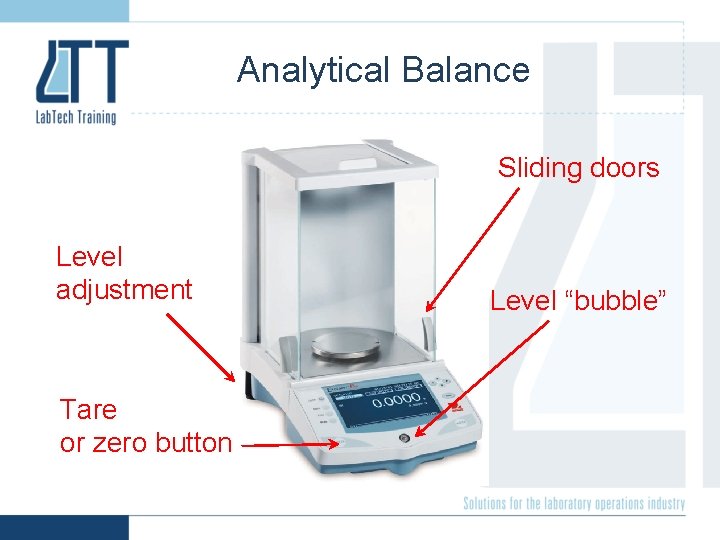
Analytical Balance Sliding doors Level adjustment Tare or zero button Level “bubble”
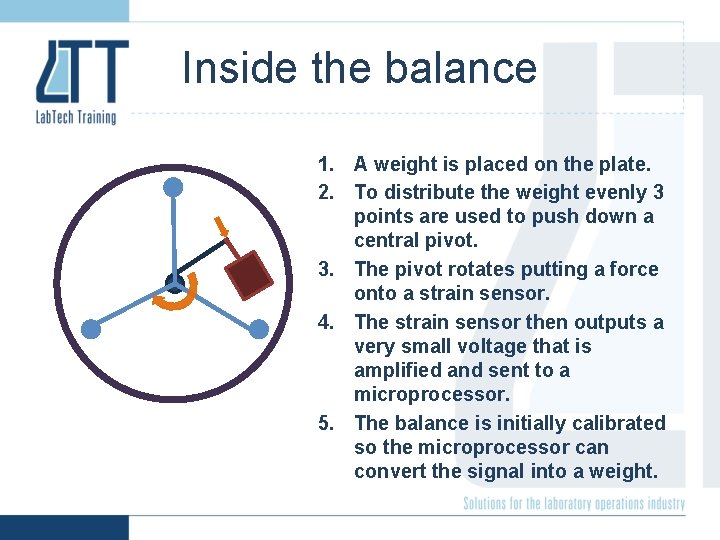
Inside the balance 1. A weight is placed on the plate. 2. To distribute the weight evenly 3 points are used to push down a central pivot. 3. The pivot rotates putting a force onto a strain sensor. 4. The strain sensor then outputs a very small voltage that is amplified and sent to a microprocessor. 5. The balance is initially calibrated so the microprocessor can convert the signal into a weight.
Calibration & NATA • NATA = National Association of Testing Authorities • NATA provides assessment, accreditation and training services to laboratories and technical facilities throughout Australia and internationally • NATA provides “Technical Notes” for calibration of various equipment • We will use NATA’s Technical Note No 13 – “User checks and maintenance of laboratory balances”
The purpose of calibration • To provide information as to the reliability of our measurement. Ø To determine the accuracy of the machine. Ø To determine the precision of the machine.
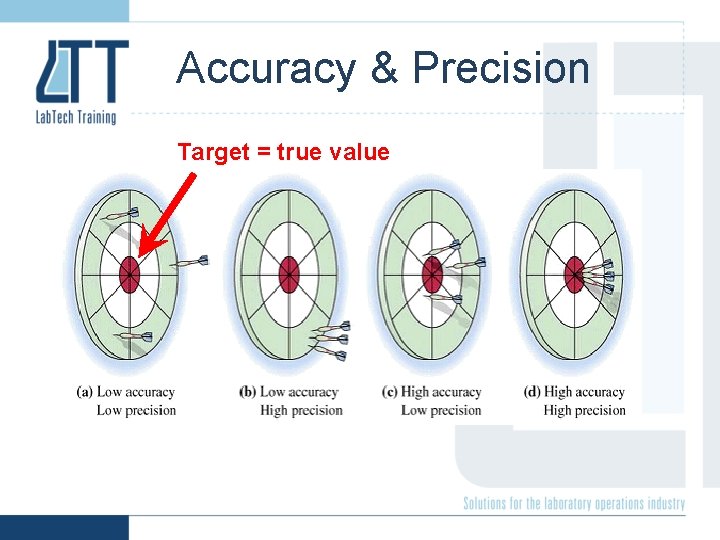
Accuracy & Precision Target = true value
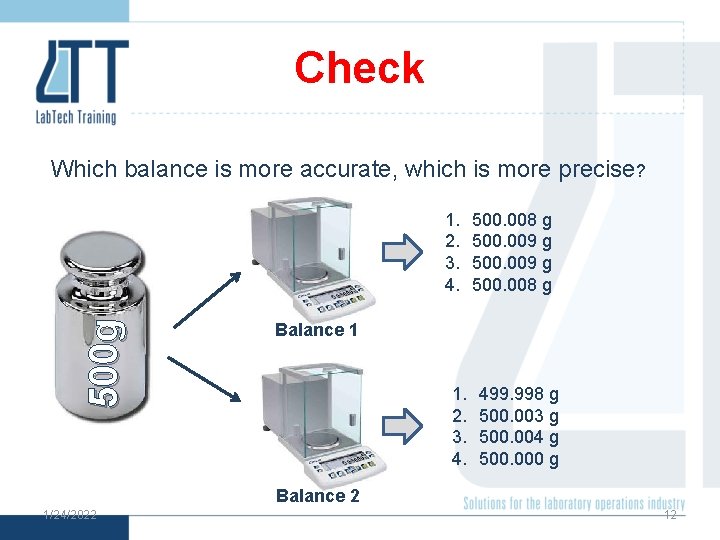
Check Which balance is more accurate, which is more precise? 500 g 1. 2. 3. 4. 500. 008 g 500. 009 g 500. 008 g Balance 1 1. 2. 3. 4. 499. 998 g 500. 003 g 500. 004 g 500. 000 g Balance 2 1/24/2022 12
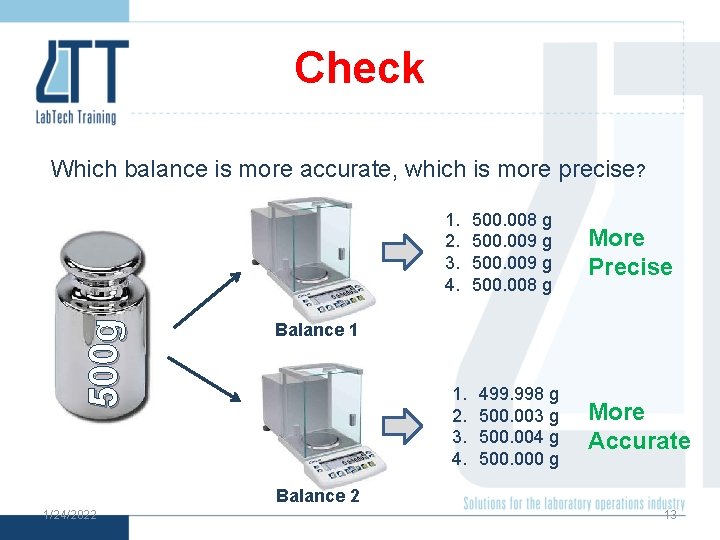
Check Which balance is more accurate, which is more precise? 500 g 1. 2. 3. 4. 500. 008 g 500. 009 g 500. 008 g More Precise Balance 1 1. 2. 3. 4. 499. 998 g 500. 003 g 500. 004 g 500. 000 g More Accurate Balance 2 1/24/2022 13
Mean & Standard Deviation • Mean is the average. It is an estimate of the true value. The difference between the mean and true value is a measure of accuracy. • Standard deviation is a measure of the spread of values. It is a measure of precision.
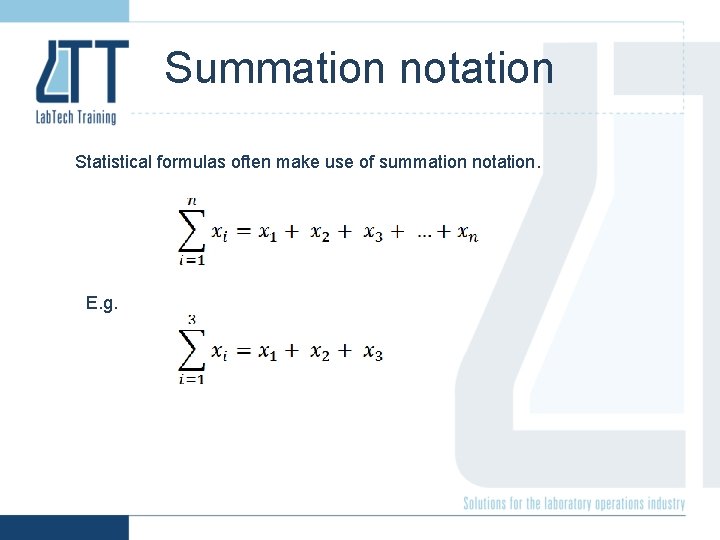
Summation notation Statistical formulas often make use of summation notation. E. g.
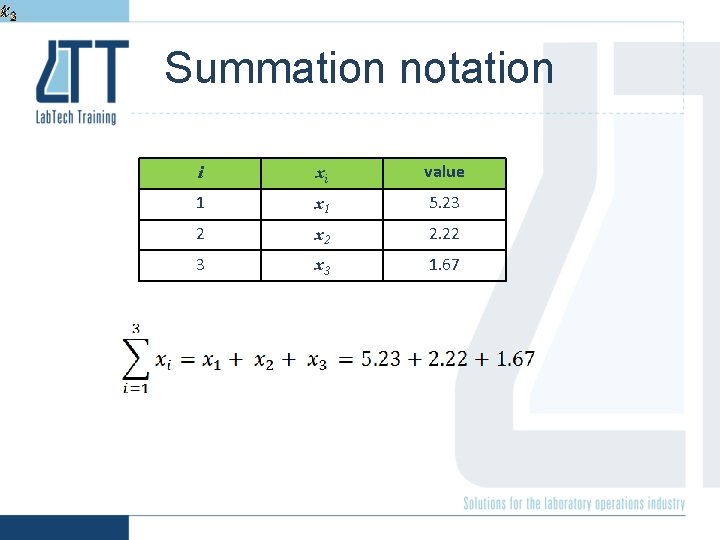
Summation notation i xi value 1 x 1 5. 23 2 x 2 2. 22 3 x 3 1. 67
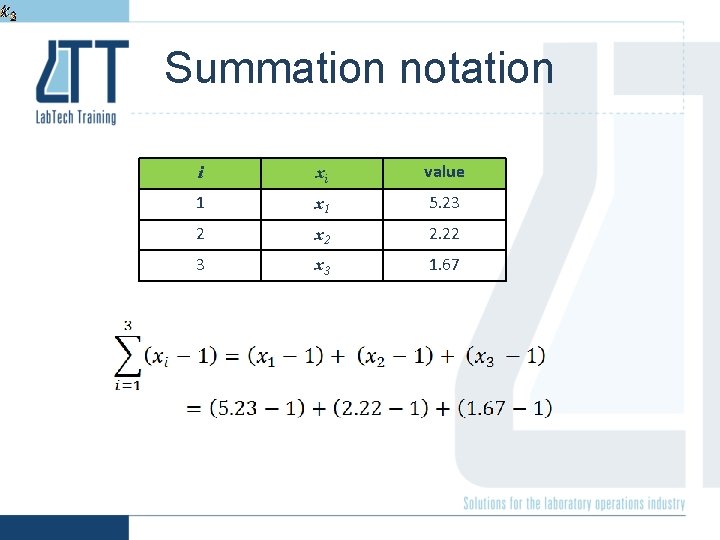
Summation notation i xi value 1 x 1 5. 23 2 x 2 2. 22 3 x 3 1. 67
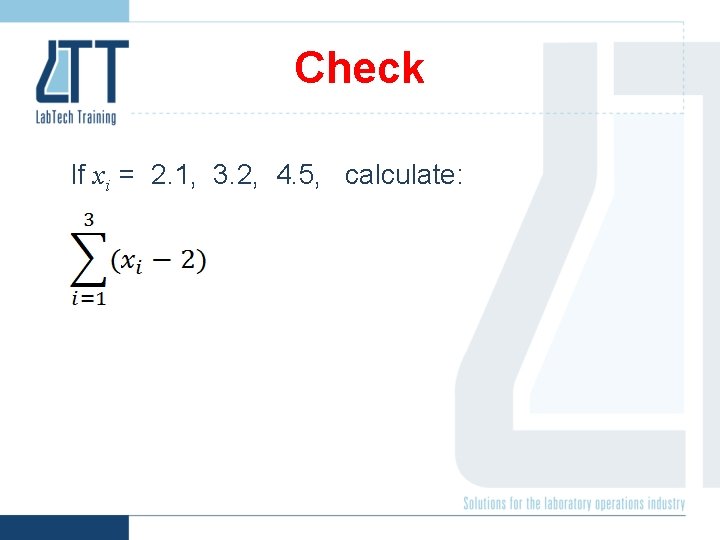
Check If xi = 2. 1, 3. 2, 4. 5, calculate:
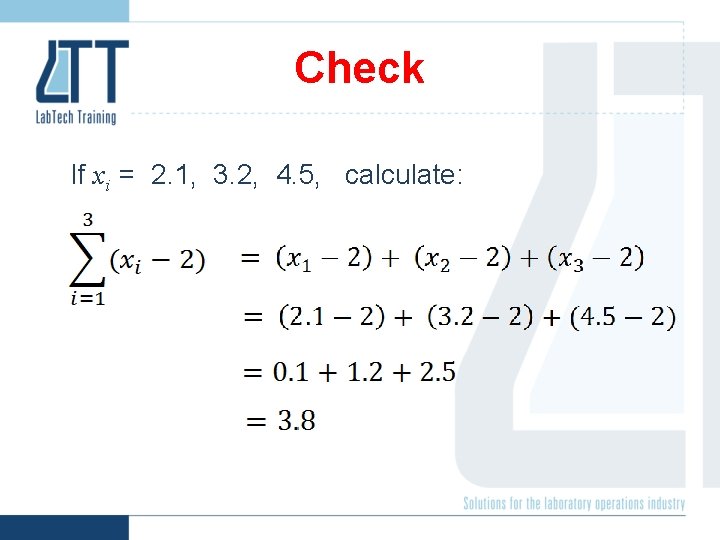
Check If xi = 2. 1, 3. 2, 4. 5, calculate:
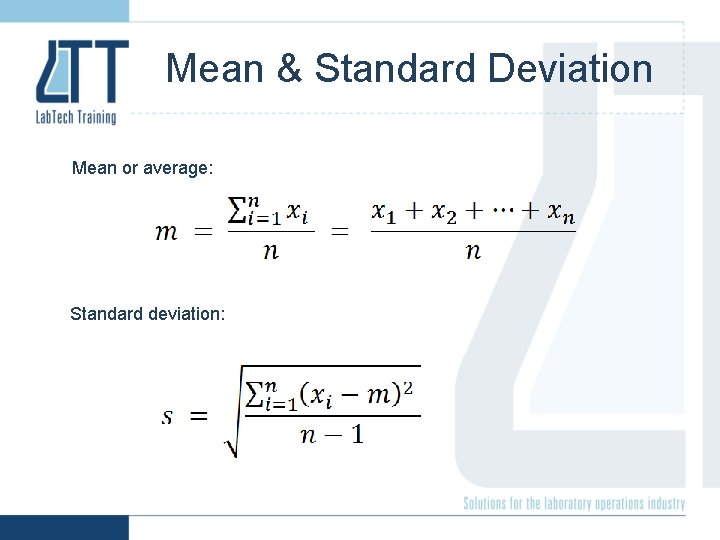
Mean & Standard Deviation Mean or average: Standard deviation:
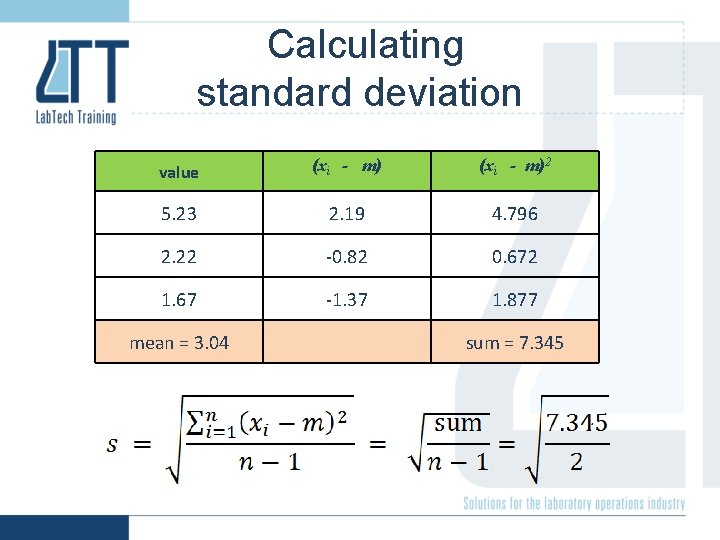
Calculating standard deviation value (xi - m)2 5. 23 2. 19 4. 796 2. 22 -0. 82 0. 672 1. 67 -1. 37 1. 877 mean = 3. 04 sum = 7. 345
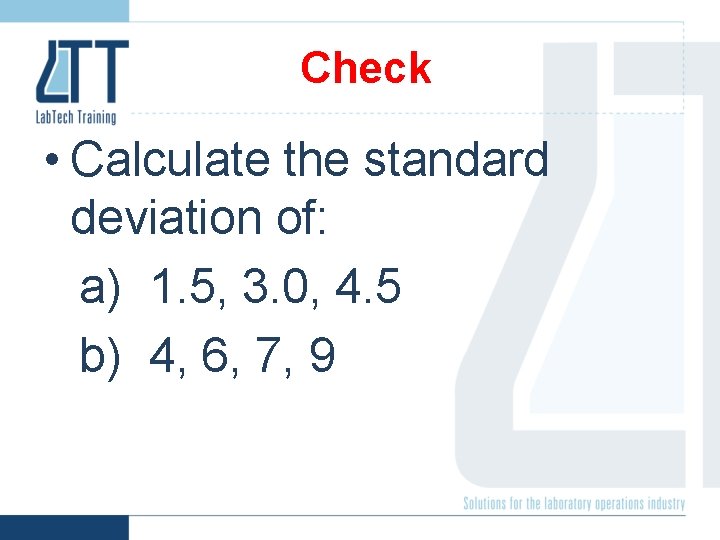
Check • Calculate the standard deviation of: a) 1. 5, 3. 0, 4. 5 b) 4, 6, 7, 9
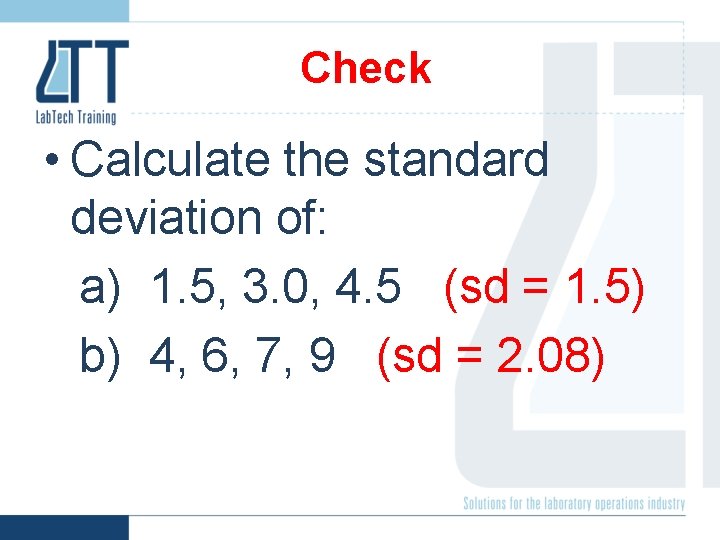
Check • Calculate the standard deviation of: a) 1. 5, 3. 0, 4. 5 (sd = 1. 5) b) 4, 6, 7, 9 (sd = 2. 08)
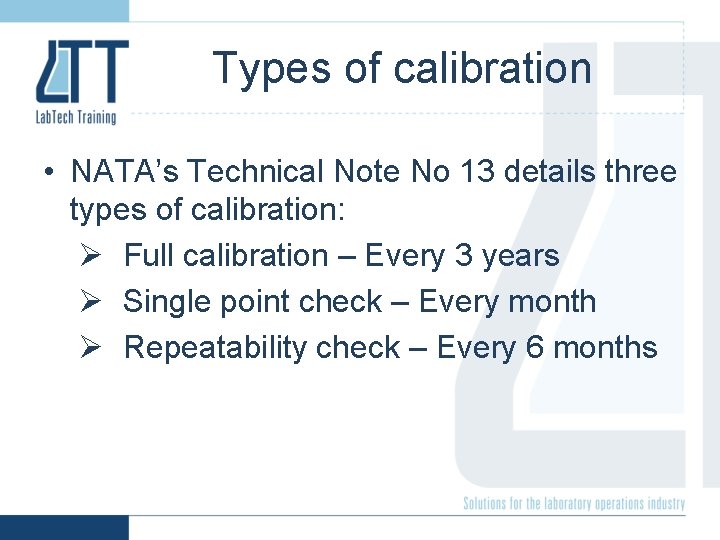
Types of calibration • NATA’s Technical Note No 13 details three types of calibration: Ø Full calibration – Every 3 years Ø Single point check – Every month Ø Repeatability check – Every 6 months
Single Point Check • Gives a crude, quick measure of the accuracy of the machine • Compares the “true value” of the mass with the “measured value” of the mass. • Carried out monthly.
Single Point Check • • Make sure balance is level Make sure balance is clean Weigh one mass twice Compare “true value” of the mass with “measured value” of the mass. • Use tongs or gloves when handling the weight.
Repeatability Test • Measures the precision of the machine • Compares how close repeated measurements are to each other. • Repeatability Test needs a calculation of the standard deviation of a series of weighings • Is used to determine whether machine is “fit for use”. • Carried out six monthly.
Repeatability Test • Make sure balance is level • Make sure balance is clean • Weigh one mass ten times and use standard deviation to determine precision and “fit for use”. • Tare only at the beginning • Use tongs or gloves when handling the weight
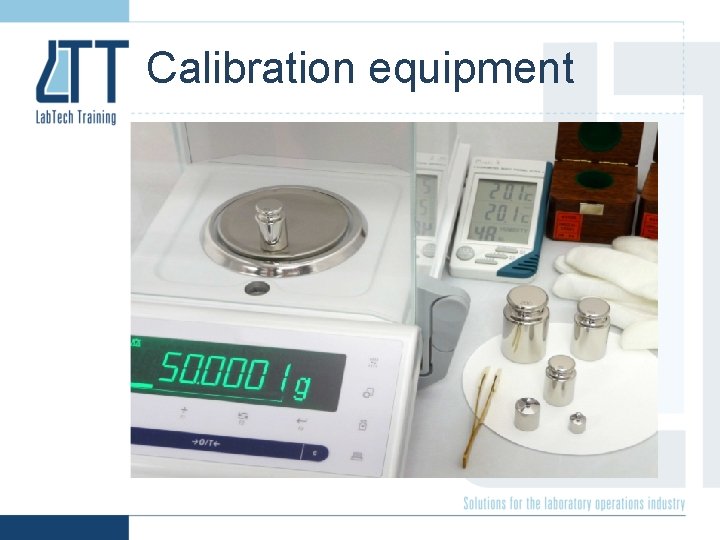
Calibration equipment
Summary • • Calibration and calibration standards Analytical balance Accuracy and precision Summation notation Mean and standard deviation NATA Single Point and Repeatability Tests
- Slides: 30