
Calibration of Booster BPMs using IPM and measurement
Calibration of Booster BPMs using IPM, and measurement of quad center relative to BPMs Meghan Mc. Ateer Alexey Petrenko 3/14/12
Part 1: Calibration of BPMs using ionization profile monitor
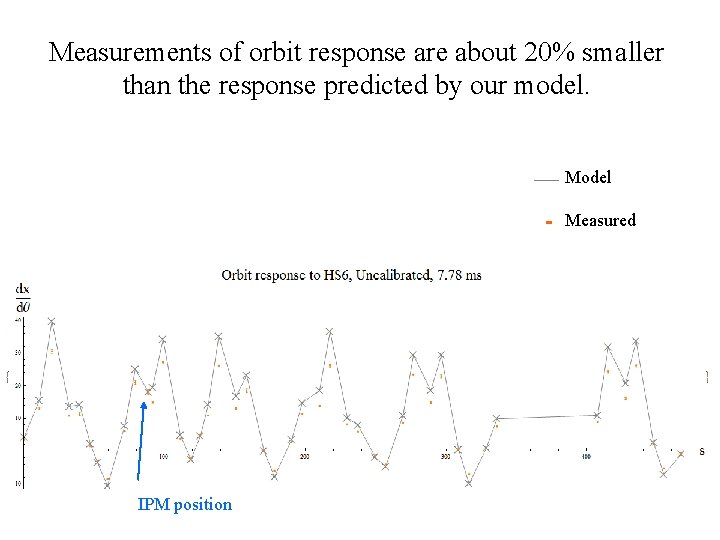
Measurements of orbit response are about 20% smaller than the response predicted by our model. Model Measured IPM position
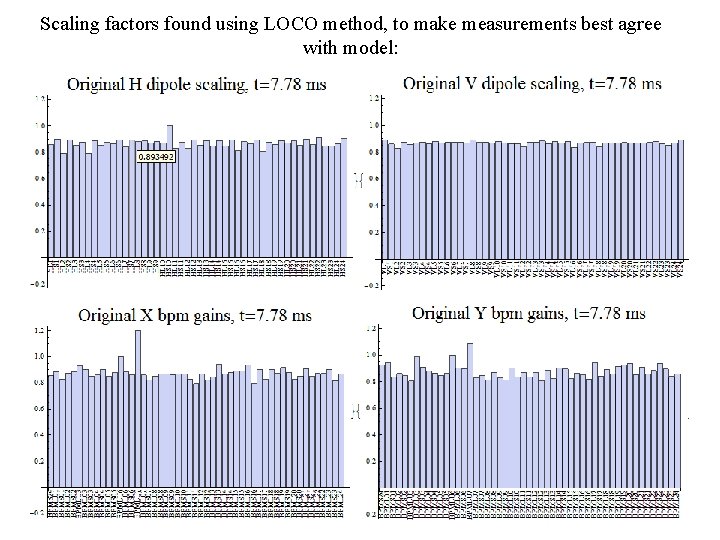
Scaling factors found using LOCO method, to make measurements best agree with model:
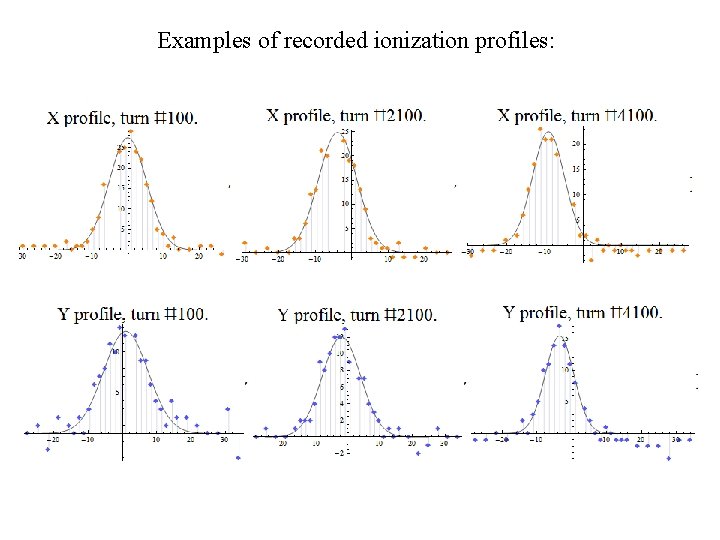
Examples of recorded ionization profiles:
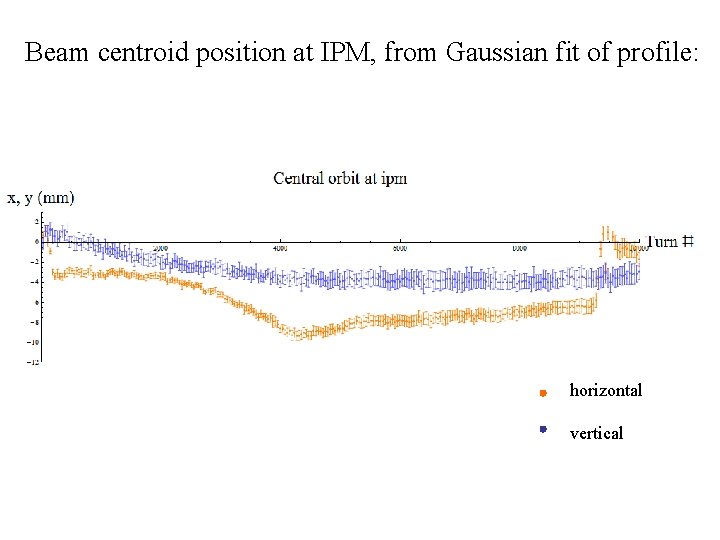
Beam centroid position at IPM, from Gaussian fit of profile: horizontal vertical
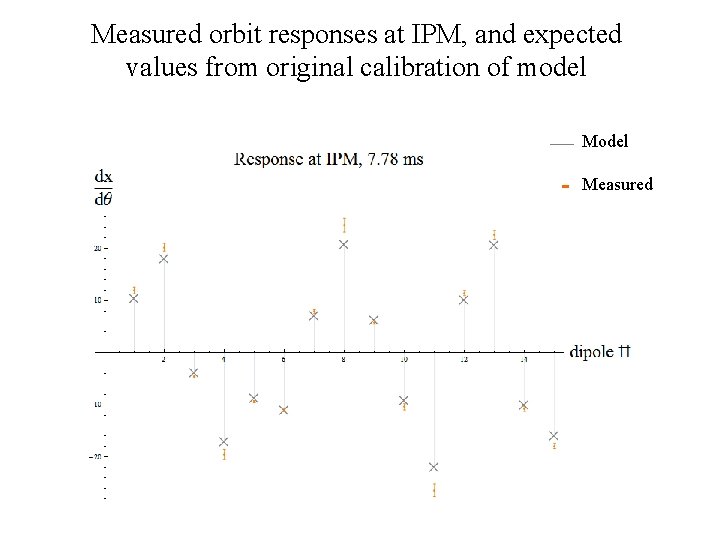
Measured orbit responses at IPM, and expected values from original calibration of model Measured
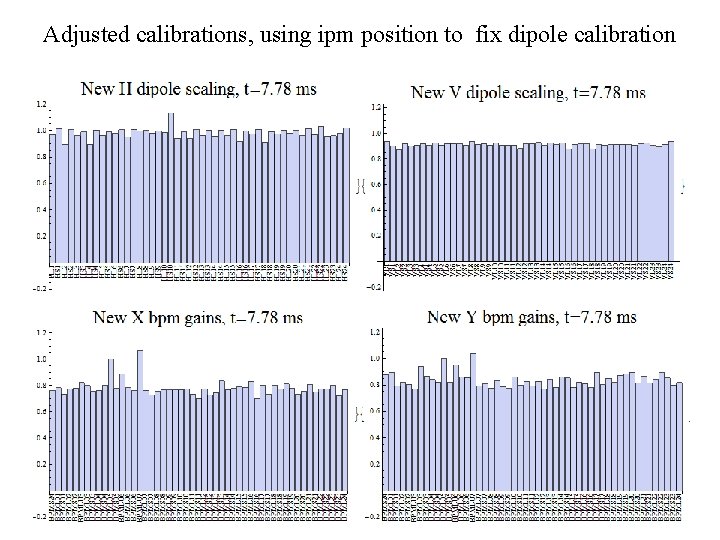
Adjusted calibrations, using ipm position to fix dipole calibration
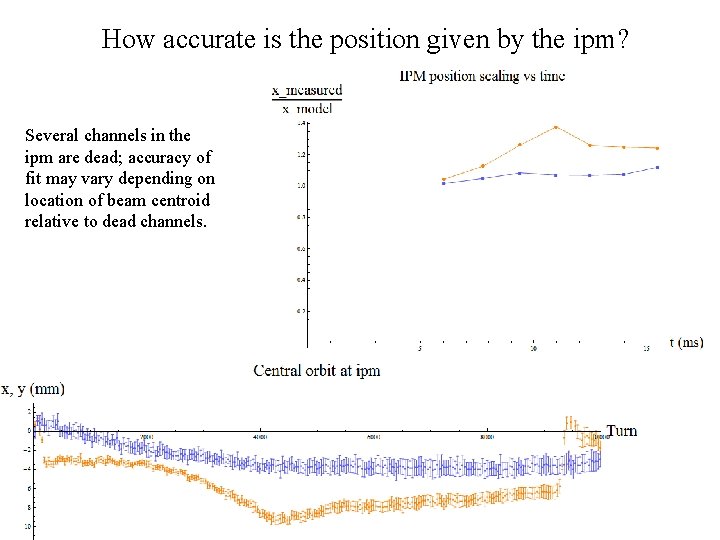
How accurate is the position given by the ipm? Several channels in the ipm are dead; accuracy of fit may vary depending on location of beam centroid relative to dead channels.
Part 2: Measurement of orbit relative to quad magnet center
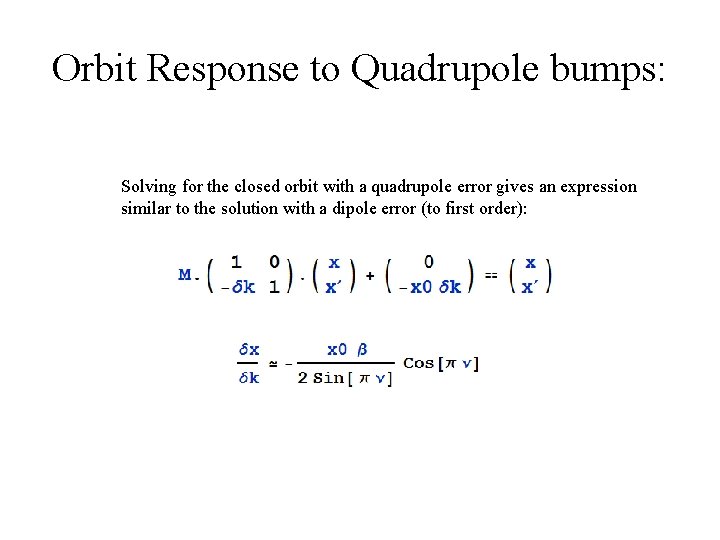
Orbit Response to Quadrupole bumps: Solving for the closed orbit with a quadrupole error gives an expression similar to the solution with a dipole error (to first order):
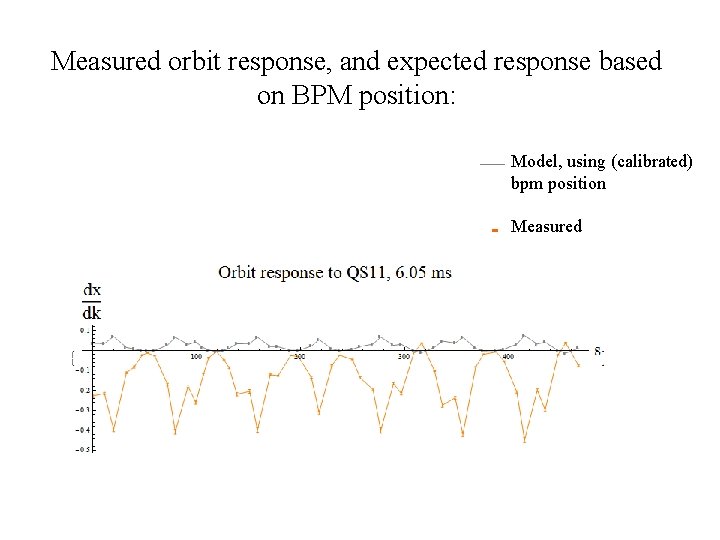
Measured orbit response, and expected response based on BPM position: Model, using (calibrated) bpm position Measured
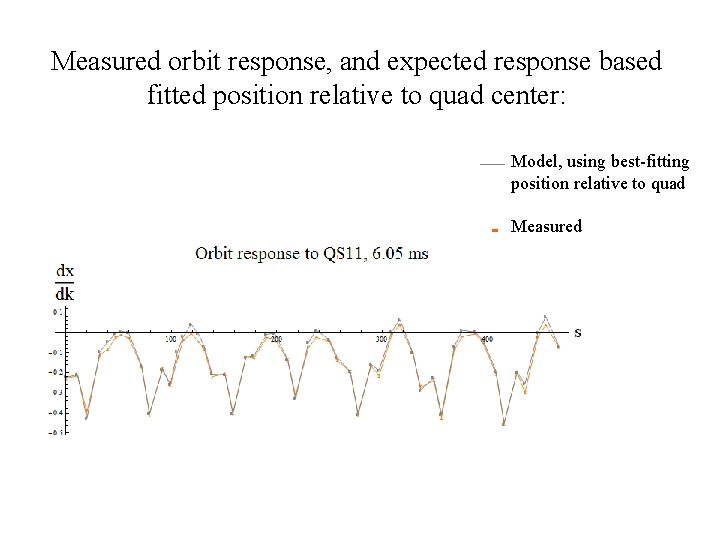
Measured orbit response, and expected response based fitted position relative to quad center: Model, using best-fitting position relative to quad Measured
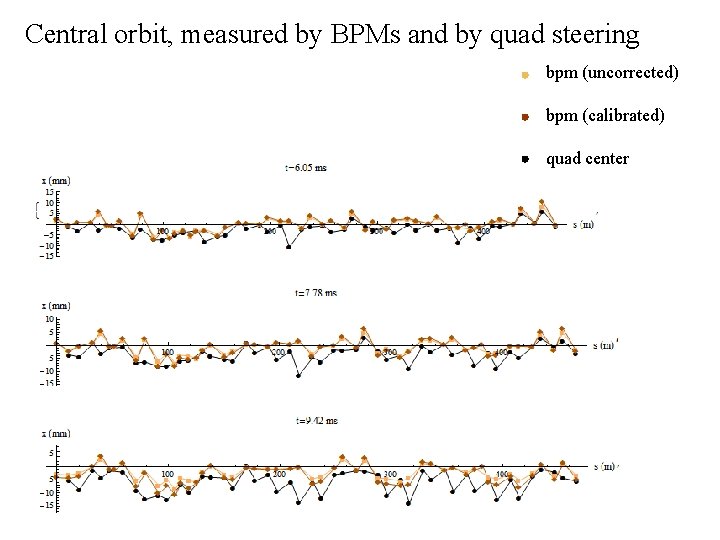
Central orbit, measured by BPMs and by quad steering bpm (uncorrected) bpm (calibrated) quad center
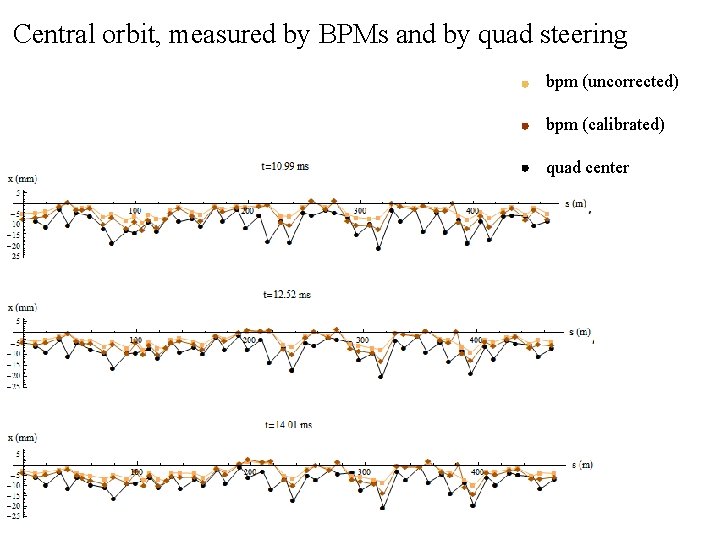
Central orbit, measured by BPMs and by quad steering bpm (uncorrected) bpm (calibrated) quad center
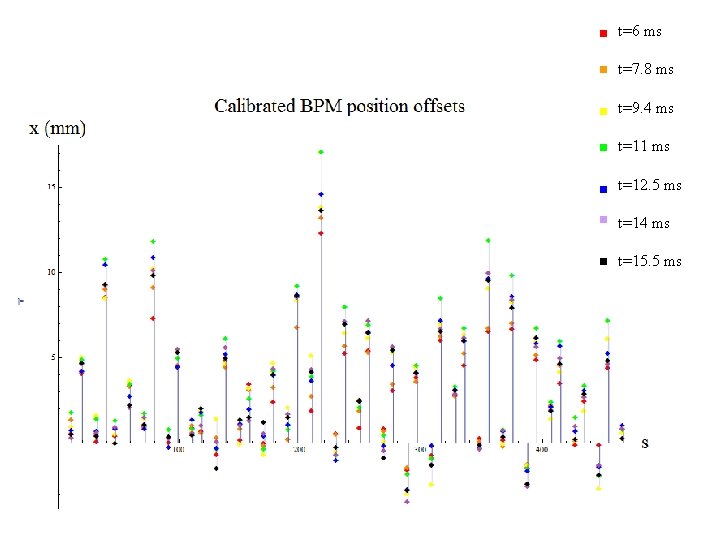
t=6 ms t=7. 8 ms t=9. 4 ms t=11 ms t=12. 5 ms t=14 ms t=15. 5 ms

Extra Slides
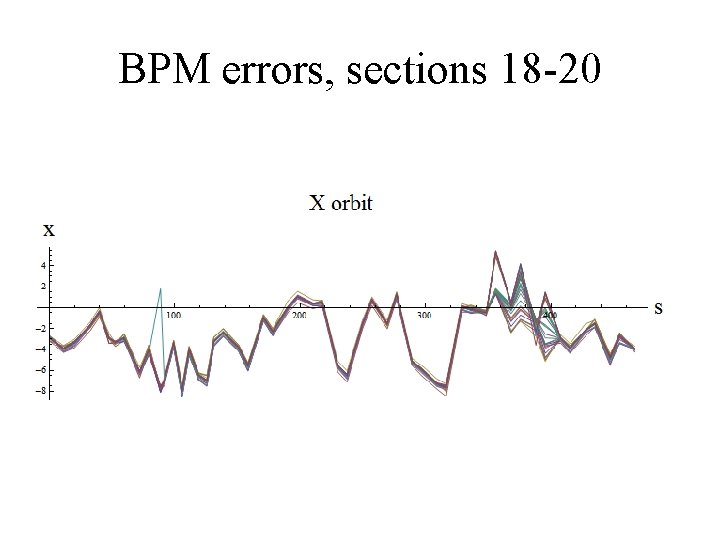
BPM errors, sections 18 -20
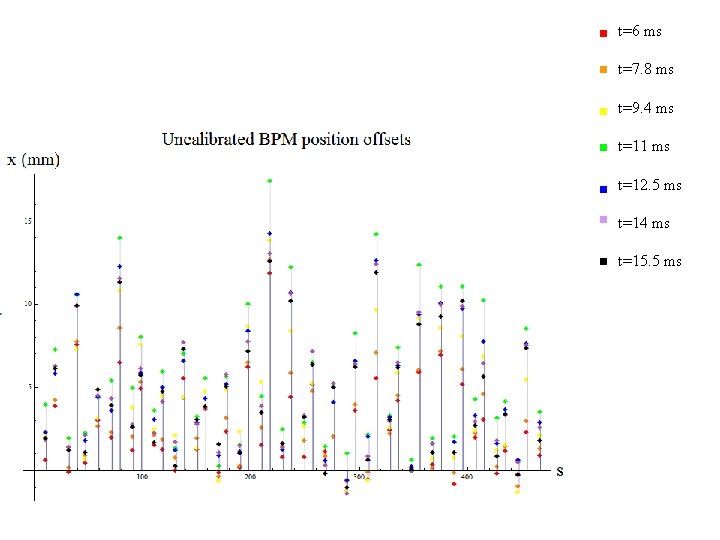
t=6 ms t=7. 8 ms t=9. 4 ms t=11 ms t=12. 5 ms t=14 ms t=15. 5 ms
- Slides: 19