
Calculus Section 3 2 The Derivative as a
- Slides: 17
Calculus, Section 3. 2
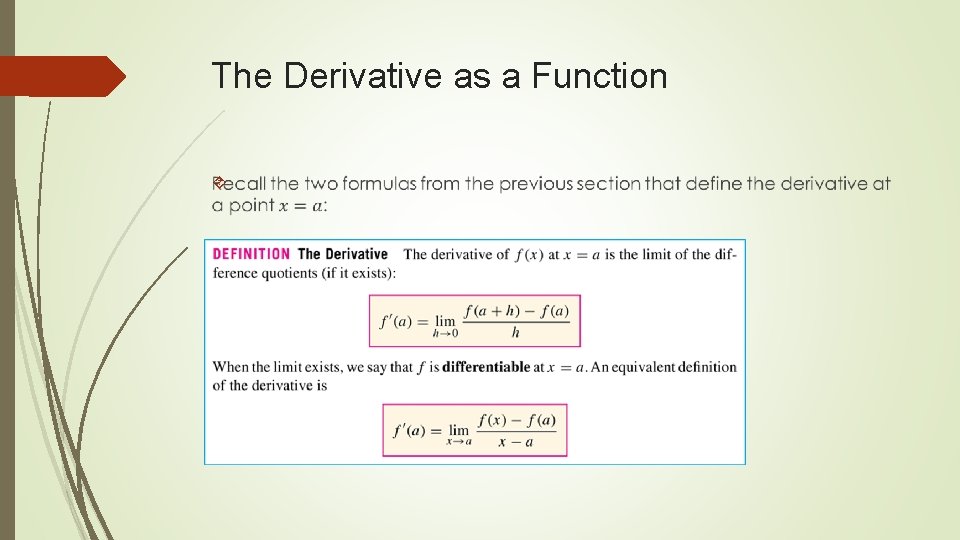
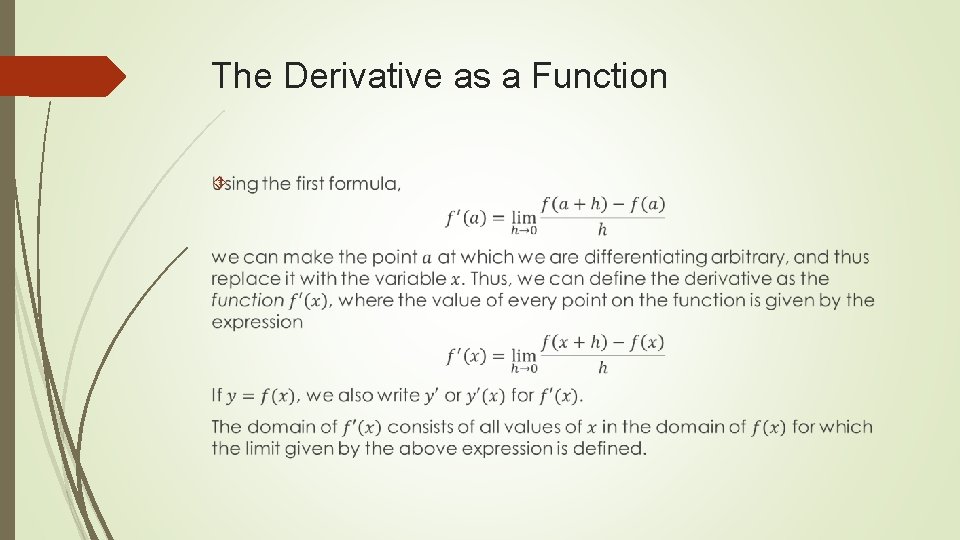
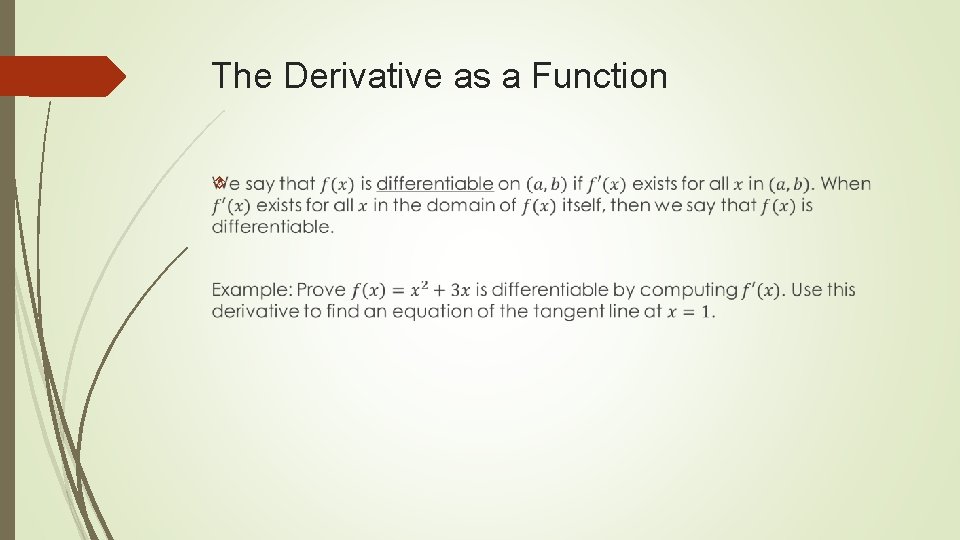
The Derivative as a Function
The Derivative as a Function
The Derivative as a Function
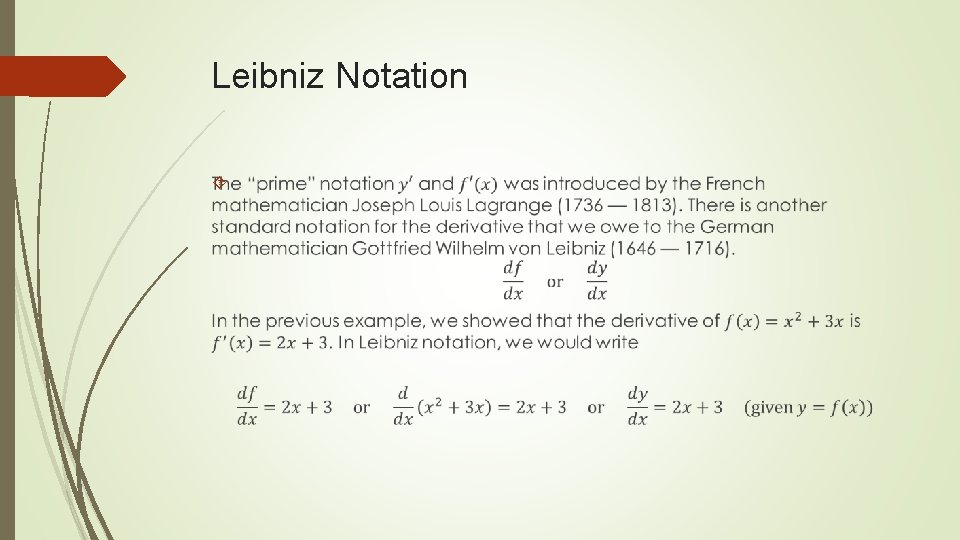
Leibniz Notation
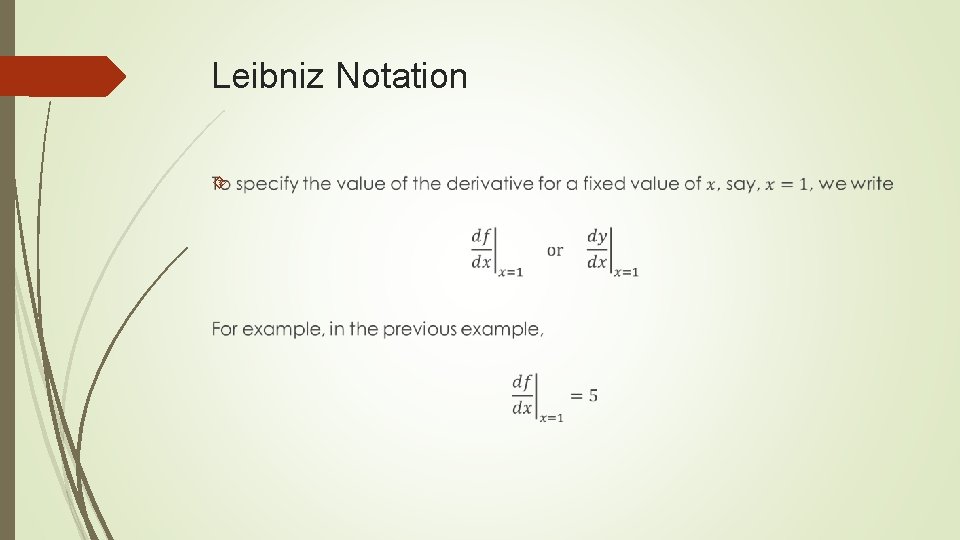
Leibniz Notation
Leibniz Notation Please take the time to note the conceptual insight at the bottom of page 130 in the textbook.
Rules of Differentiation A main goal of this chapter is to develop the basic rules of differentiation. These rules enable us to find derivatives without computing limits. Considering the several homework problems in Section 3. 1 that involved finding a derivative by computing a limit, you will come to appreciate these rules immensely.
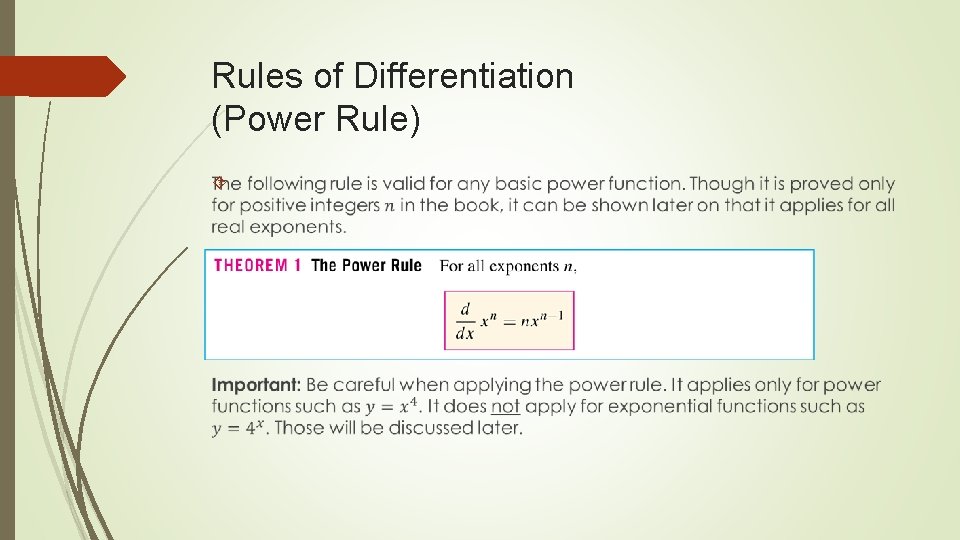
Rules of Differentiation (Power Rule)
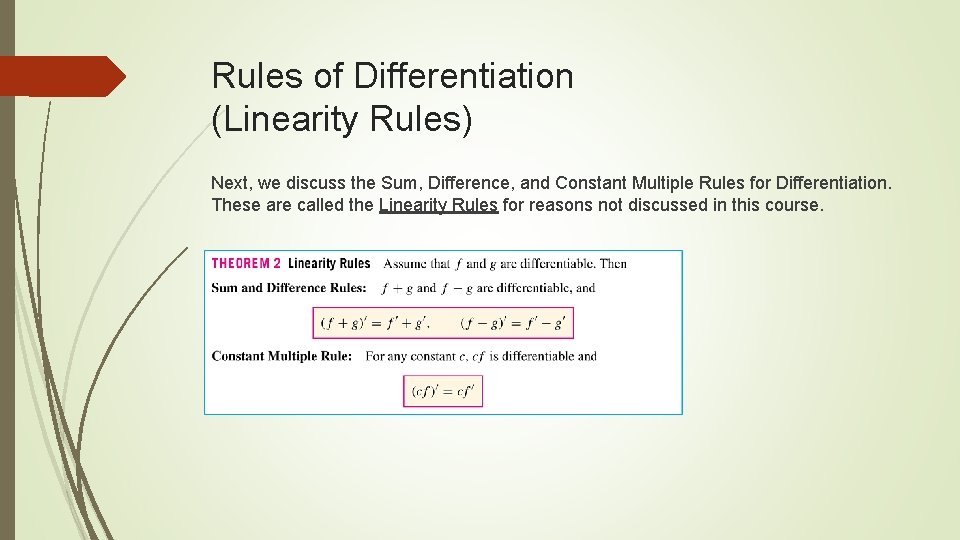
Rules of Differentiation (Linearity Rules) Next, we discuss the Sum, Difference, and Constant Multiple Rules for Differentiation. These are called the Linearity Rules for reasons not discussed in this course.
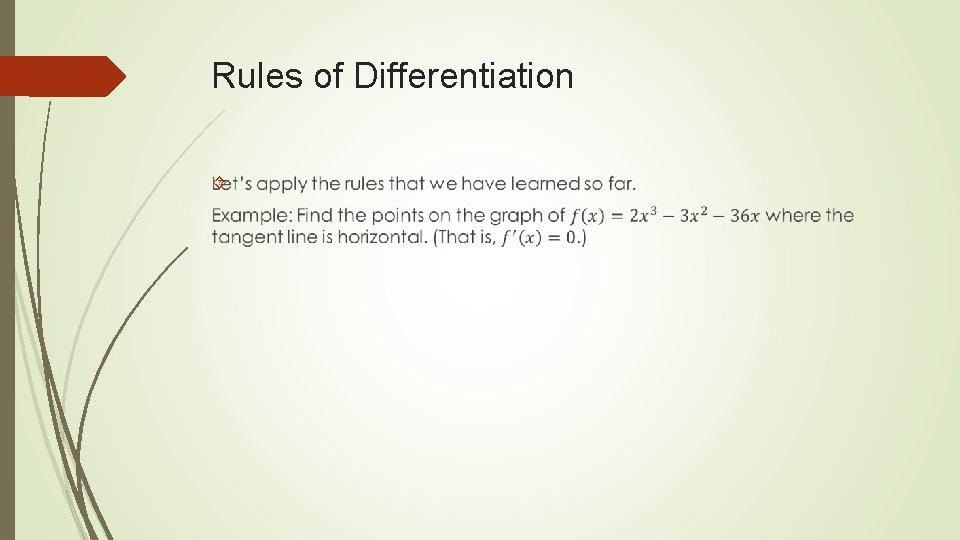
Rules of Differentiation
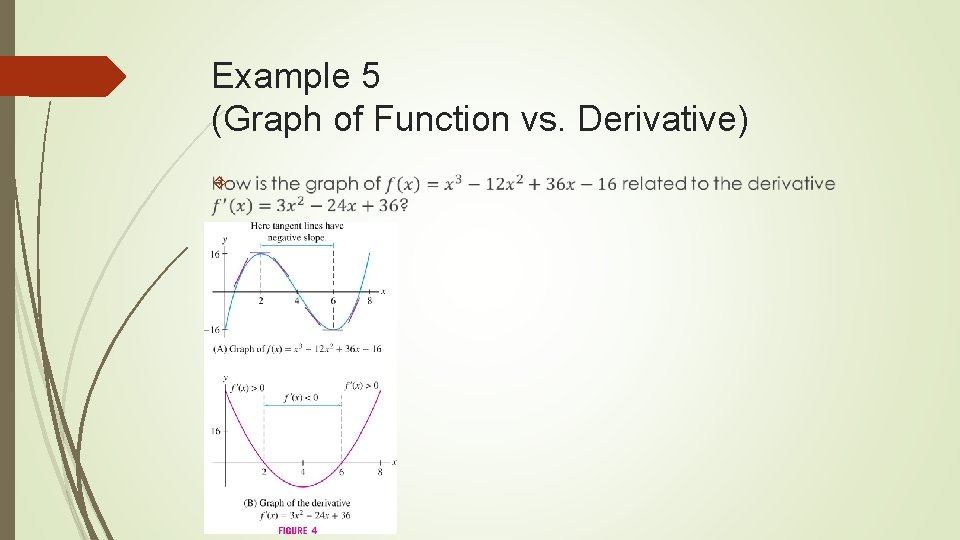
Example 5 (Graph of Function vs. Derivative)
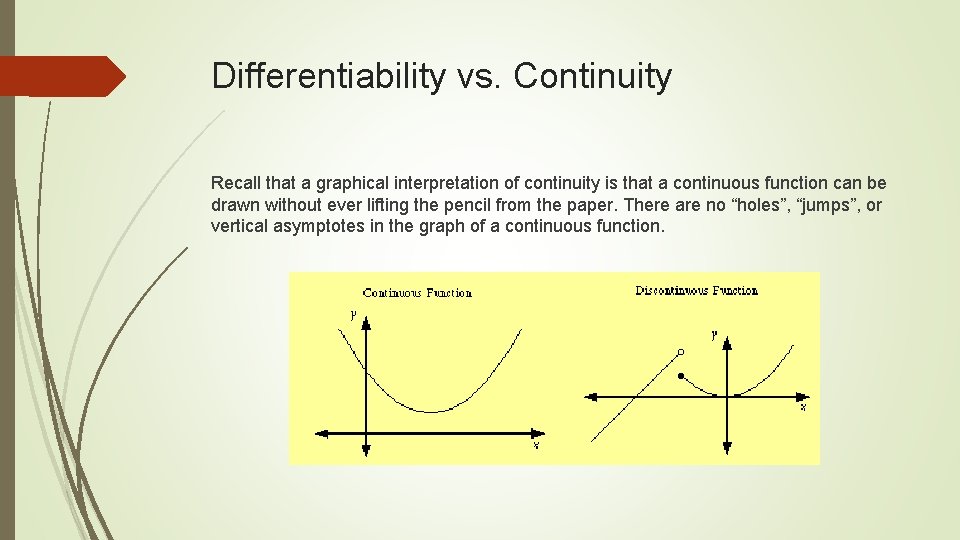
Differentiability vs. Continuity Recall that a graphical interpretation of continuity is that a continuous function can be drawn without ever lifting the pencil from the paper. There are no “holes”, “jumps”, or vertical asymptotes in the graph of a continuous function.
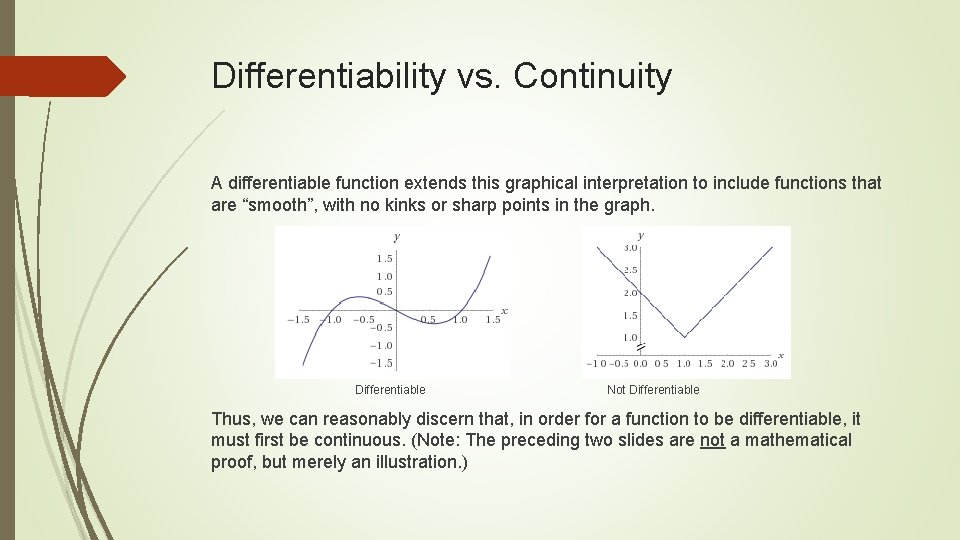
Differentiability vs. Continuity A differentiable function extends this graphical interpretation to include functions that are “smooth”, with no kinks or sharp points in the graph. Differentiable Not Differentiable Thus, we can reasonably discern that, in order for a function to be differentiable, it must first be continuous. (Note: The preceding two slides are not a mathematical proof, but merely an illustration. )
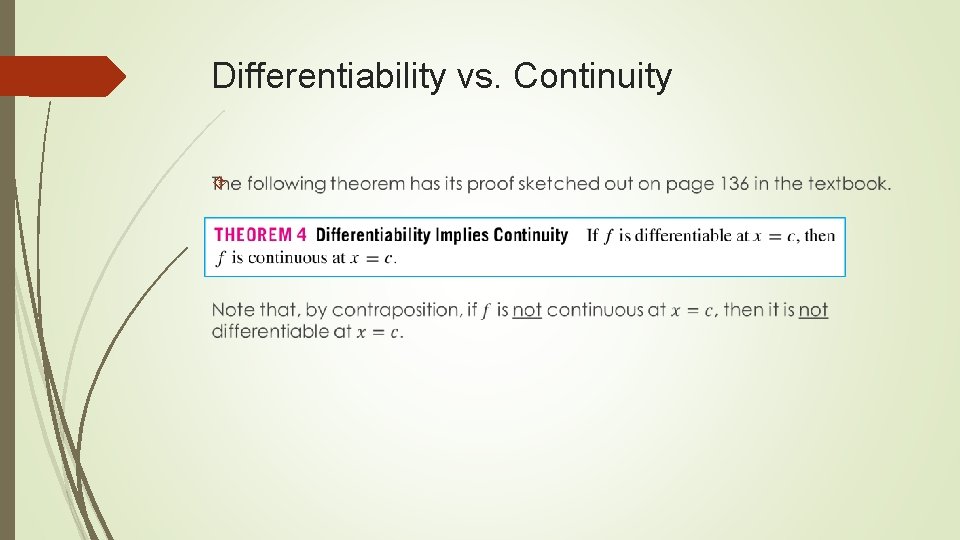
Differentiability vs. Continuity
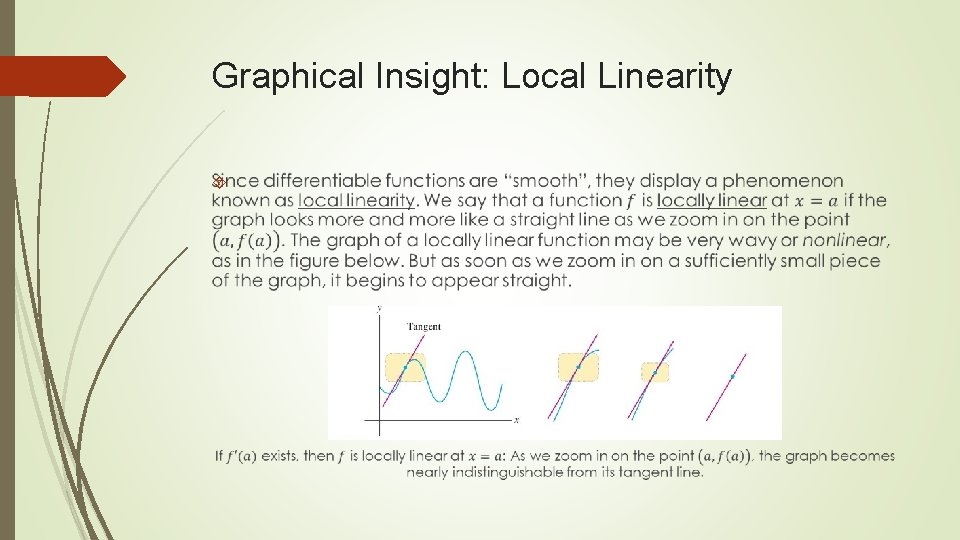
Graphical Insight: Local Linearity