
Calculus refresher First Order Differential Equations Welcome to



- Slides: 34
Calculus refresher: First Order Differential Equations Welcome to the session! • Please use the chat to say hi and let us know which department you are from • Please keep your microphone and video switched off. If you have any questions, ask them in the chat or use the raise hand button • Make sure to sign in with your full name (or a nickname and your ucard number) so that we can send any relevant resources after the session While you are waiting: What is the general form of a first order differential equation? What can we use them to model in real life?
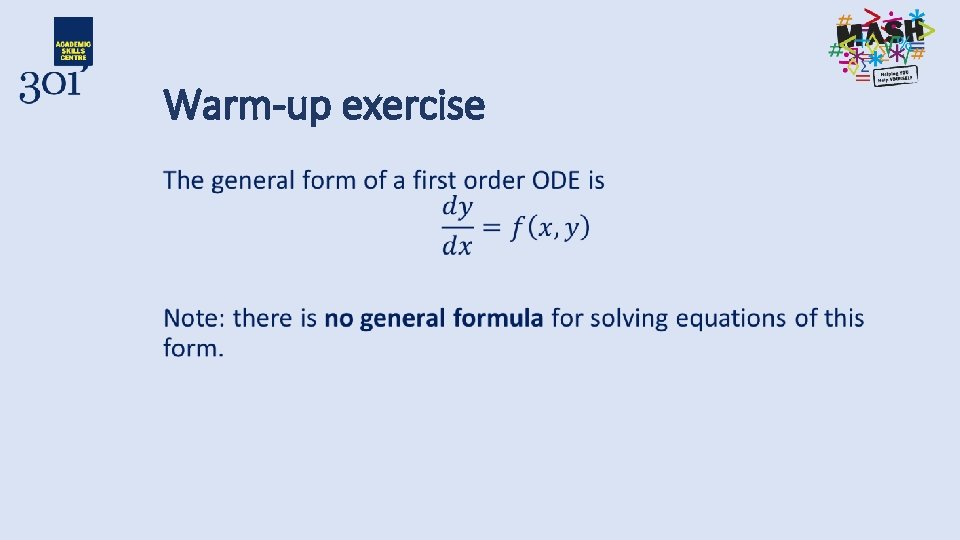
Warm-up exercise •
Warm-up exercise Some applications • Mechanics: equations of motion • Fluid mechanics: streamlines, rate of fluid flow, change in pressure • Electrical: circuits • Thermodynamics and heat transfer
Goals for today • Recap some well-known types of first order differential equations • Refresh some of the methods for solving such equations • Discuss some approaches for determining the appropriate method (and whether a mix of methods is necessary)
Something worth noting First order ODEs may have either: • Analytical solutions: exact solutions described by a function in terms of variables • Numerical solutions: approximate solutions which solve the problem to an accuracy which is deemed “good enough” Or maybe even both!
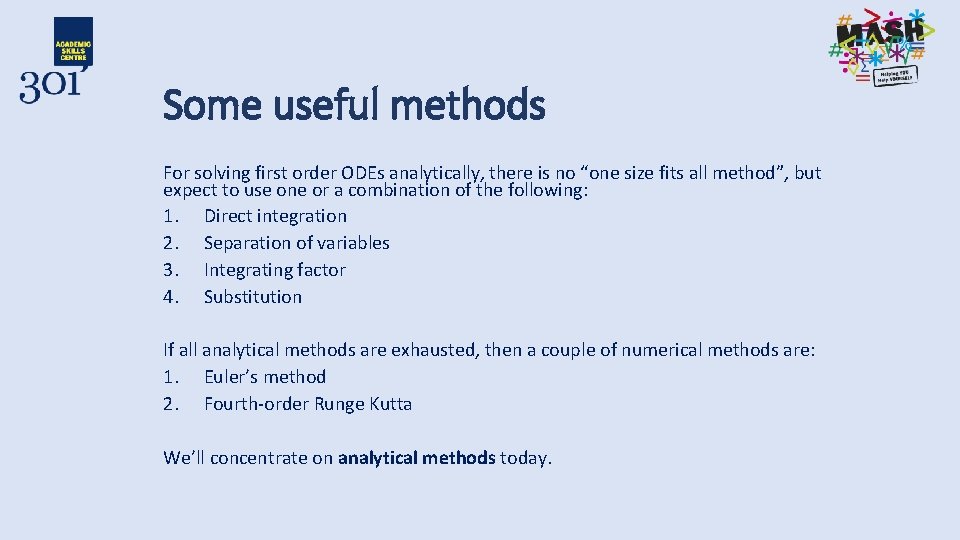
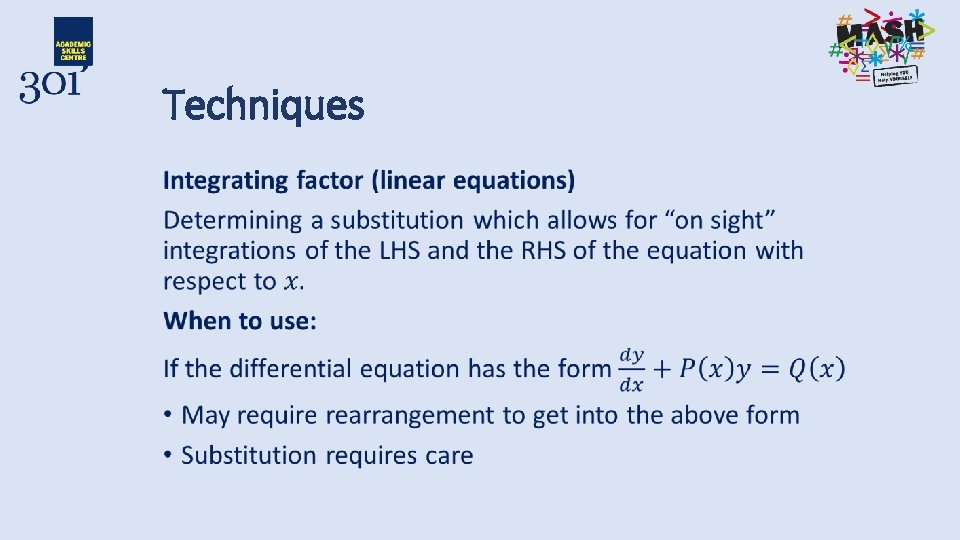
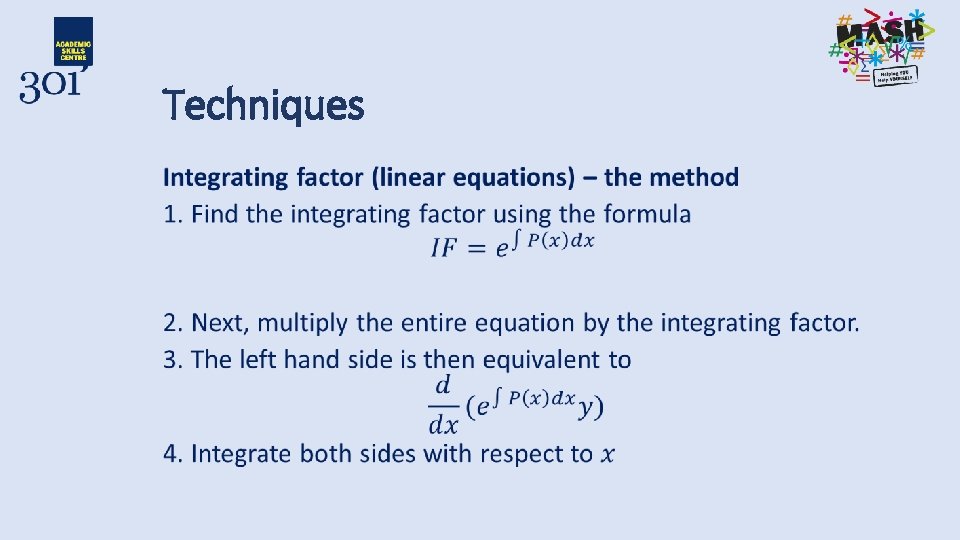
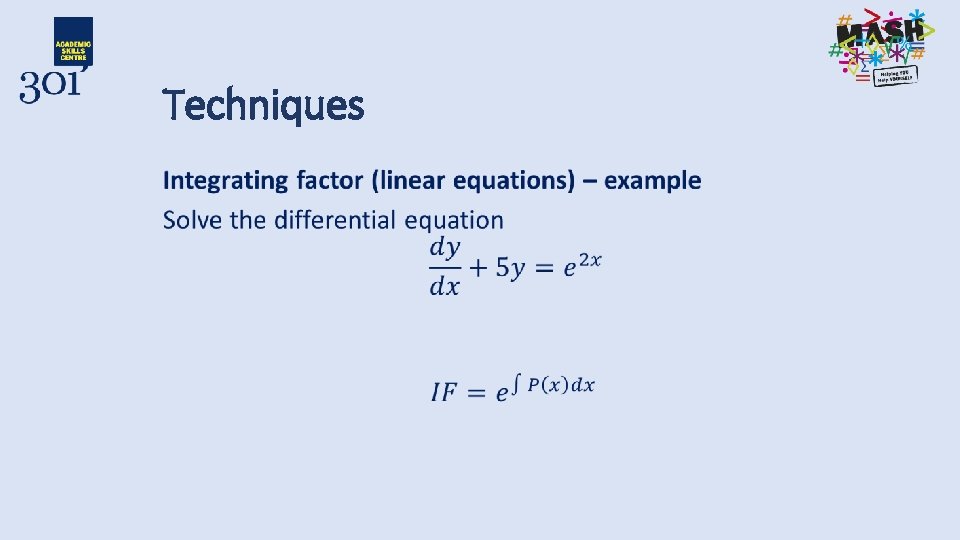
Some useful methods For solving first order ODEs analytically, there is no “one size fits all method”, but expect to use one or a combination of the following: 1. Direct integration 2. Separation of variables 3. Integrating factor 4. Substitution If all analytical methods are exhausted, then a couple of numerical methods are: 1. Euler’s method 2. Fourth-order Runge Kutta We’ll concentrate on analytical methods today.
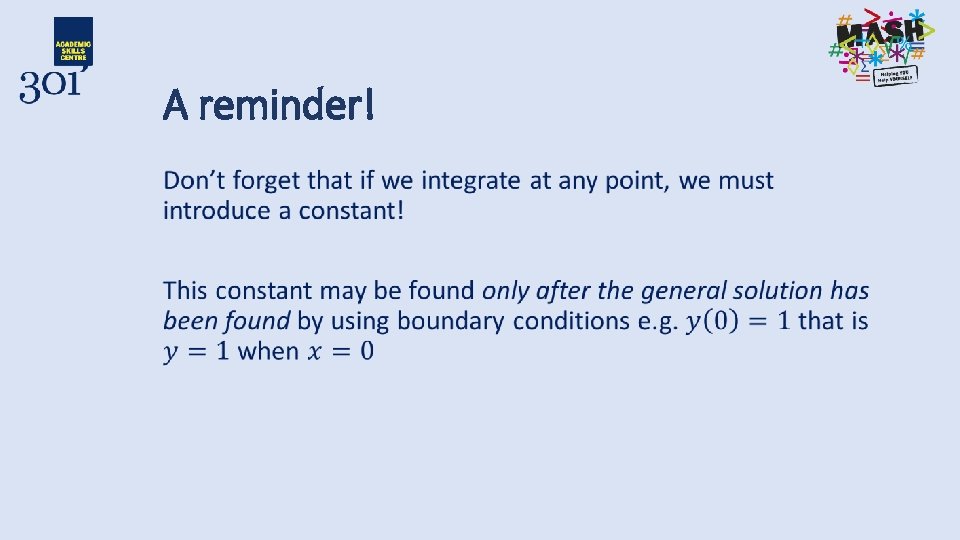
A reminder! •
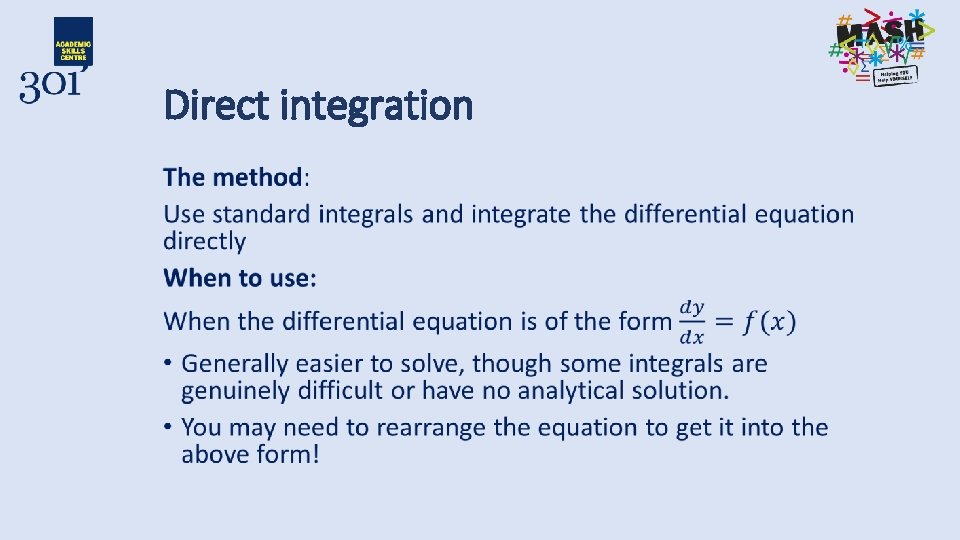
Direct integration •
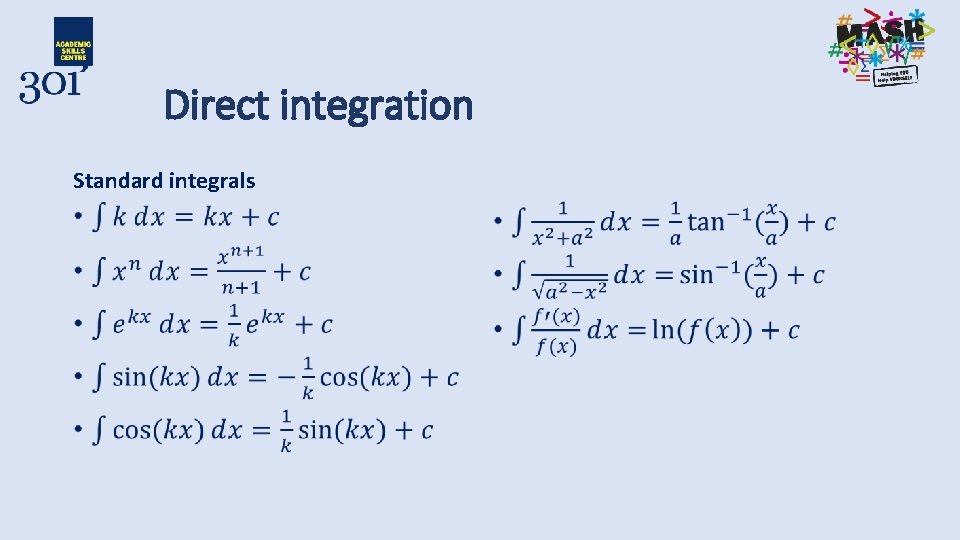
Direct integration Standard integrals • •
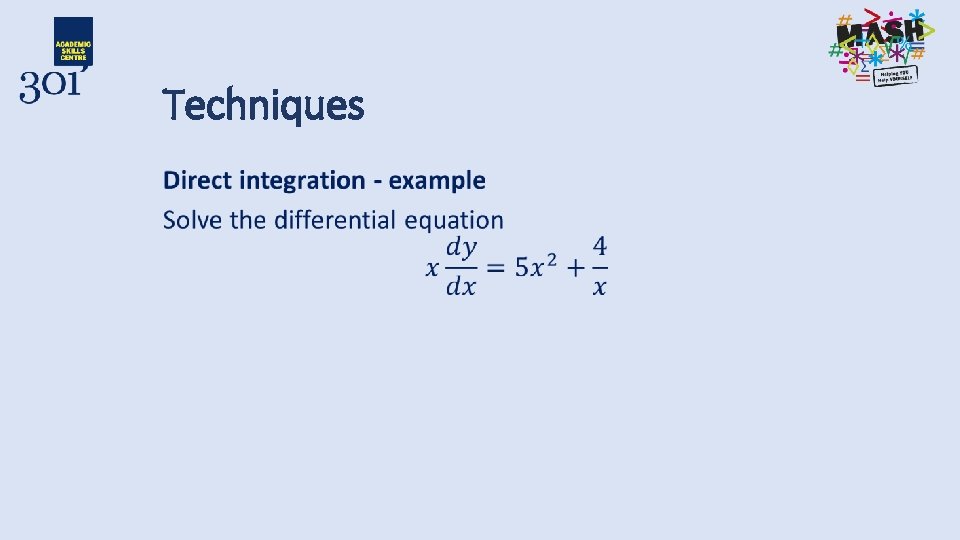
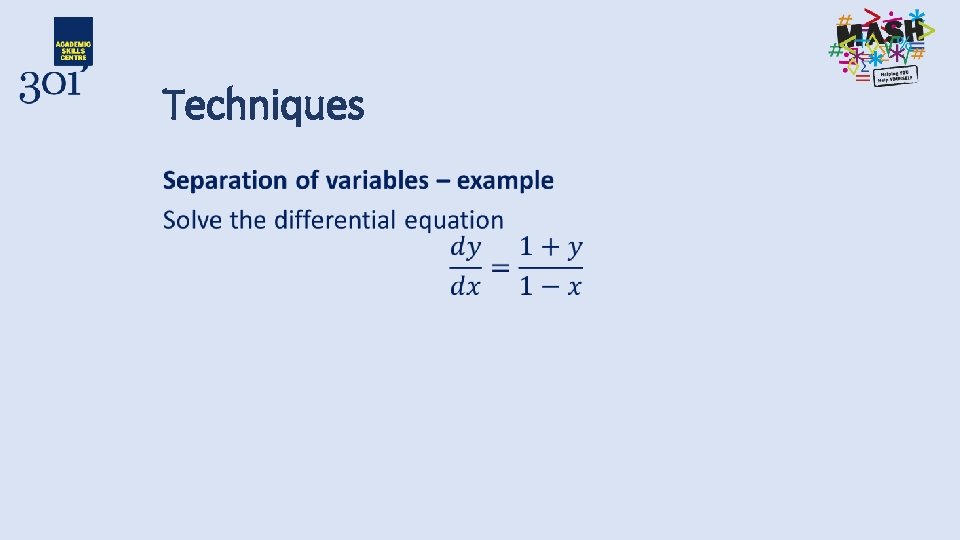
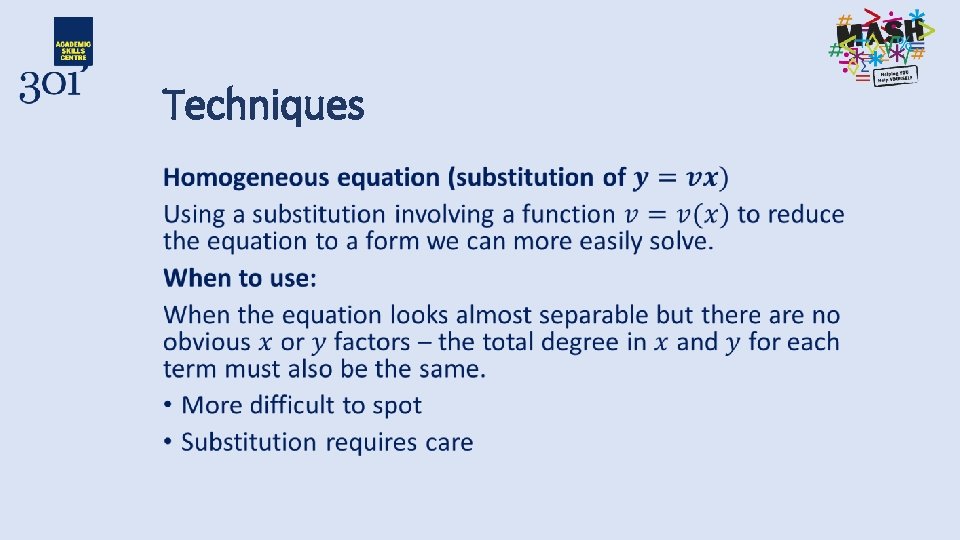
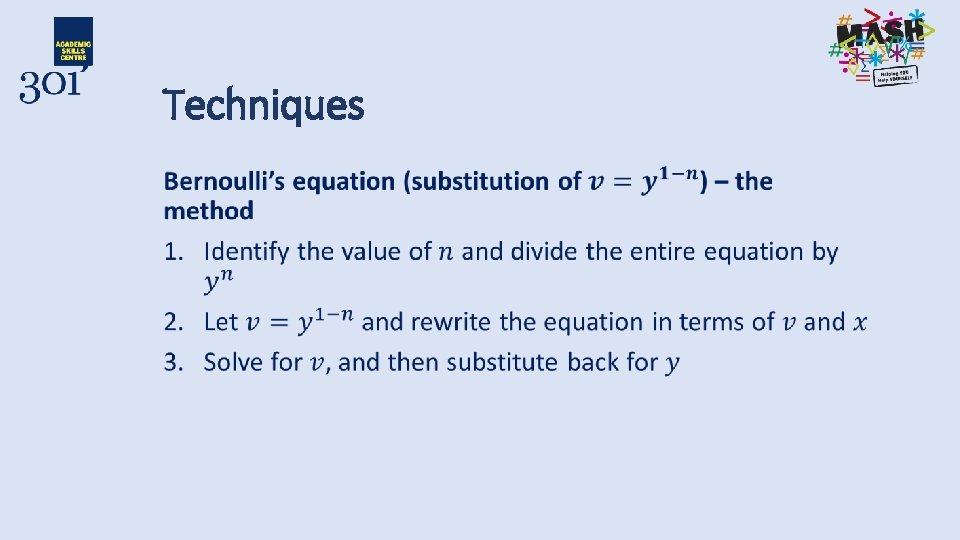
Techniques •
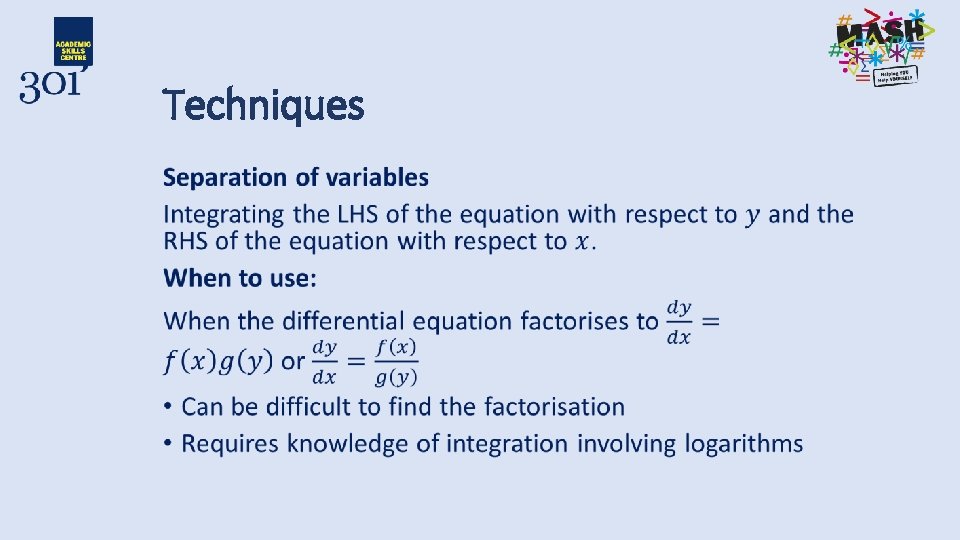
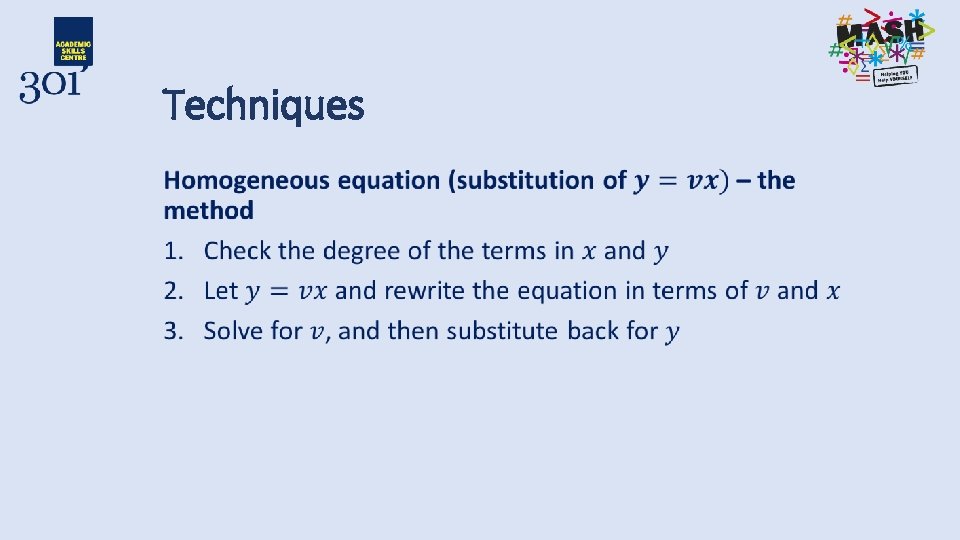
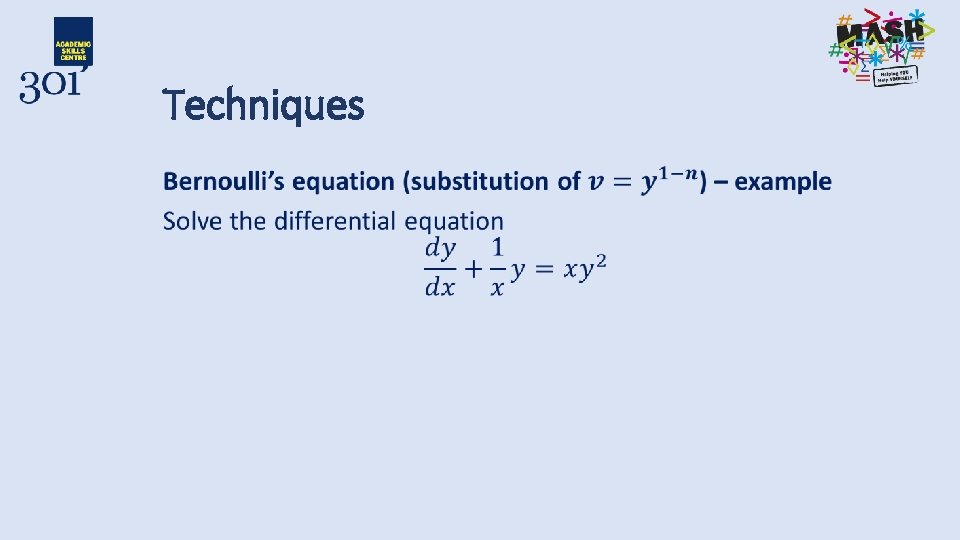
Techniques •
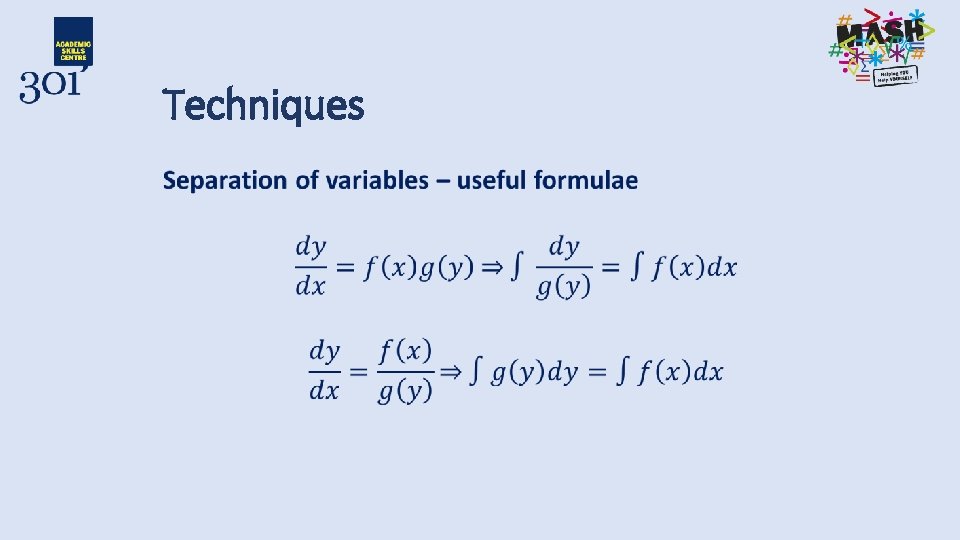
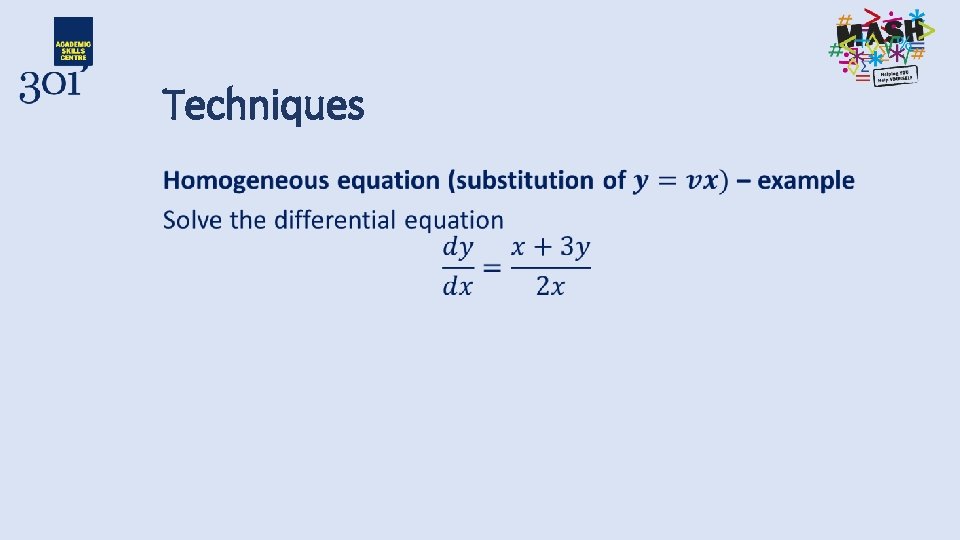
Techniques •
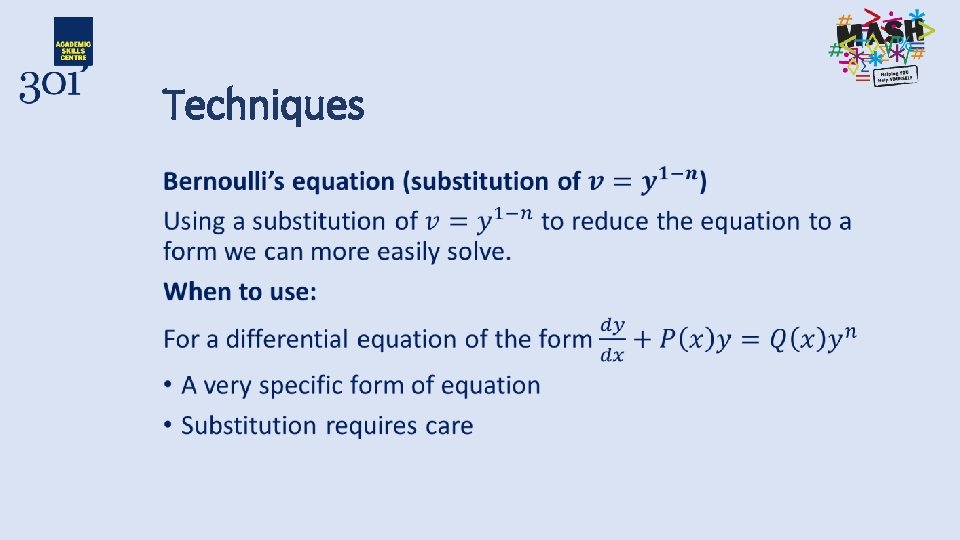
Techniques •
Techniques •
Techniques •
Techniques •
Techniques •
Techniques •
Techniques •
Techniques •
Techniques •
Techniques •
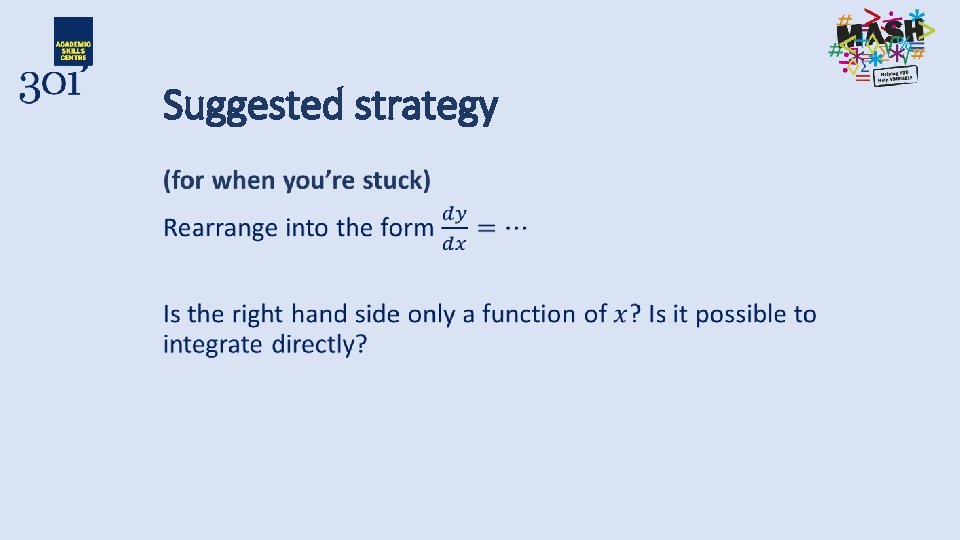
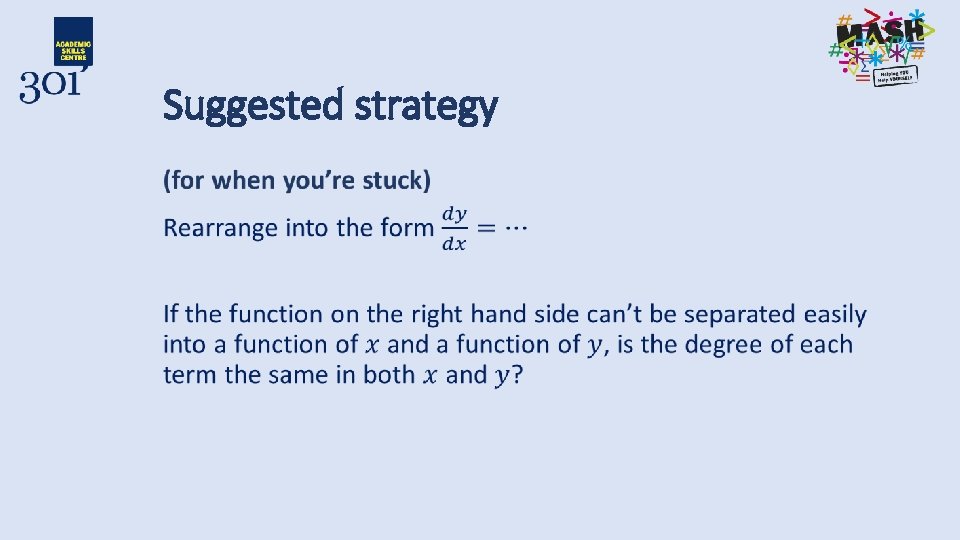
Suggested strategy •
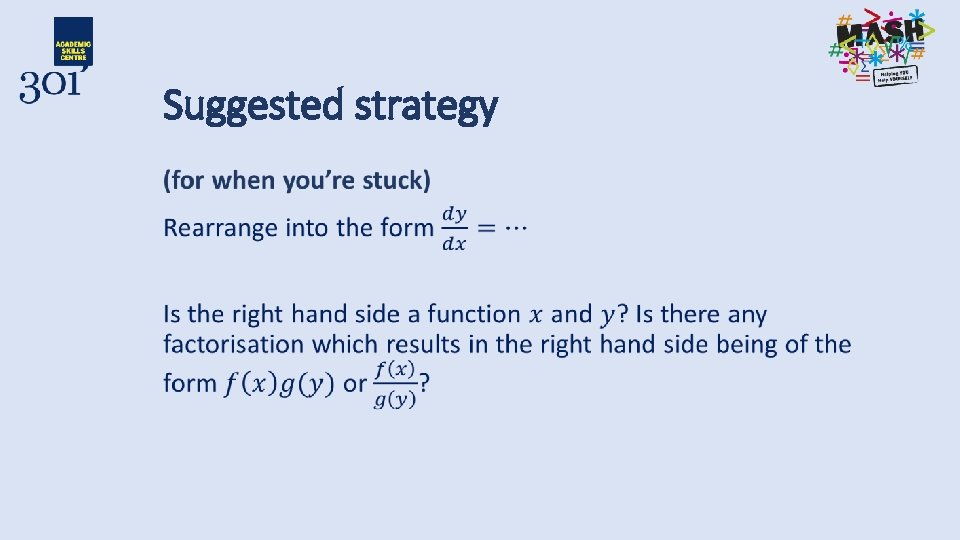
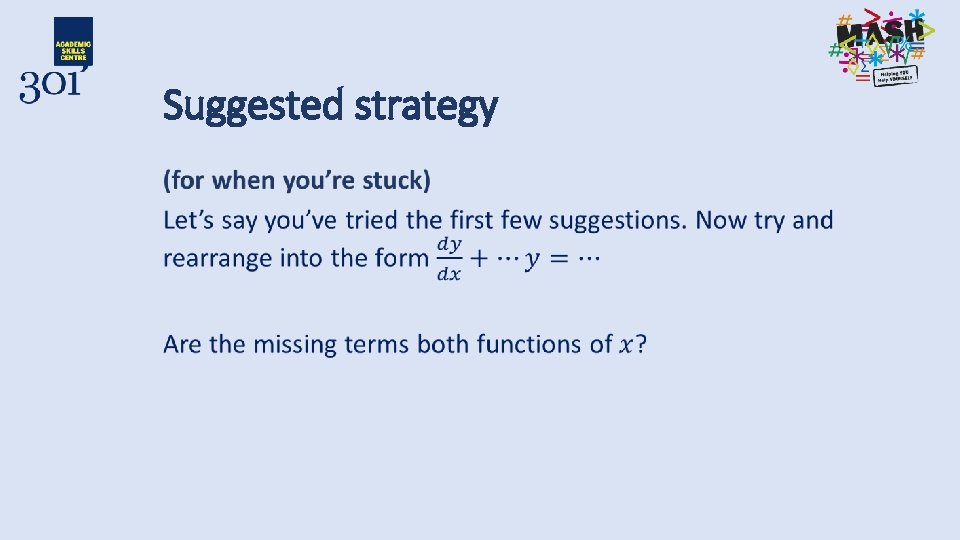
Suggested strategy •
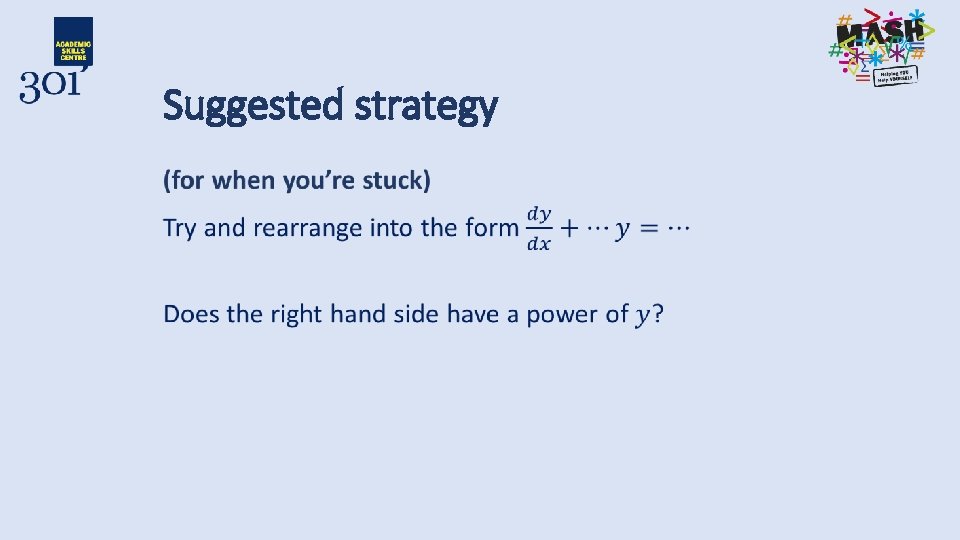
Suggested strategy •
Suggested strategy •
Suggested strategy •
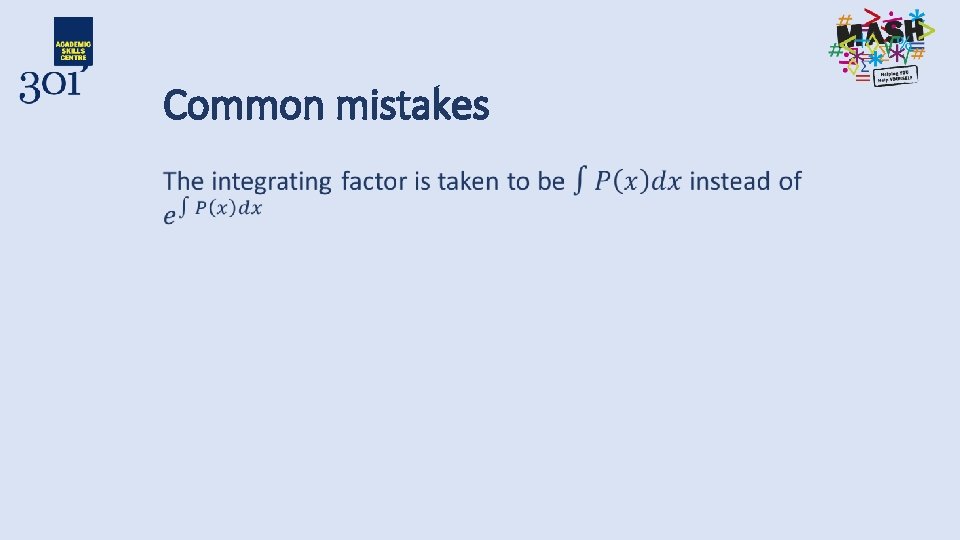
Common mistakes •
Common mistakes •
Common mistakes The constant is neglected after integrating the differential equation through
Tell us what you think! We would love to hear your comments and feedback on this session! Please fill in this very short survey You need to log into MUSE, but it is anonymous Thanks for your input!
Need more help? Why not book a 1: 1 support session? • Free support for any aspect of maths/stats • You can ask questions in a judgement-free environment • Shown to be an effective method for reducing anxiety • Explanations tailored to your learning preference • Immediate feedback from tutors on your understanding
Website links www. sheffield. ac. uk/mash To book a one-to-one help session: www. sheffield. ac. uk/mash/bookings For more online help: www. sheffield. ac. uk/mash/resources
Contact details MASH Advisors Hope Thackray Marta Emmett Pete Hart h. thackray@sheffield. ac. uk m. e. emmett@sheffield. ac. uk peter. hart@sheffield. ac. uk Manager of MASH Jenny Freeman j. v. freeman@sheffield. ac. uk Maths And Statistics Help General enquiries mash@sheffield. ac. uk Resources and appointments at: www. shef. ac. uk/mash