
Calculus MTH 250 Lecture 5 Previous Lectures Summary
- Slides: 26
Calculus (MTH 250) Lecture 5
Previous Lecture’s Summary • Logarithmic functions. • Inverse trigonometric functions • Introduction to limits • One sided limits • Limits that don’t exist • Vertical asymptotes • Laws of limit
Today’s Lecture • Some working rules • Limit at infinity • Horizontal asymptotes • Laws of Limit at infinity • Limits of log and exp functions • Formal definition of limit • Uniqueness of a Limit
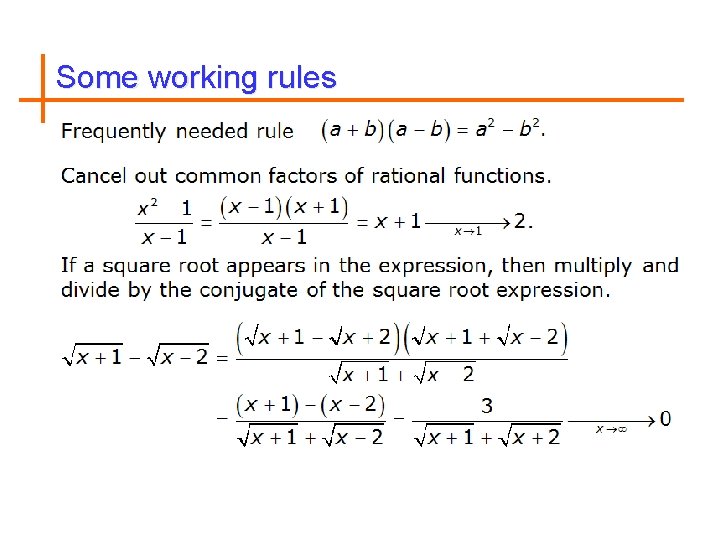
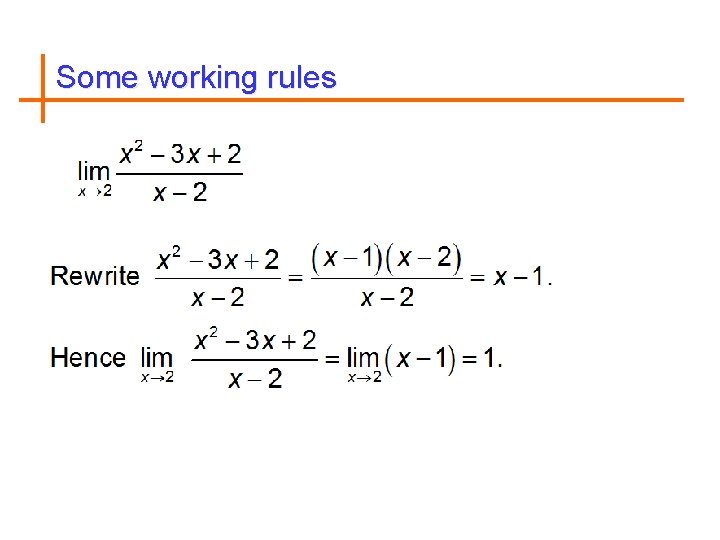
Some working rules
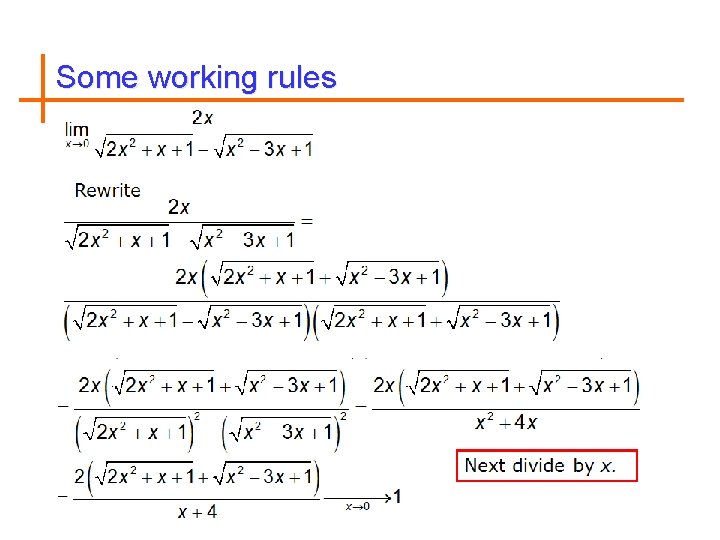
Some working rules
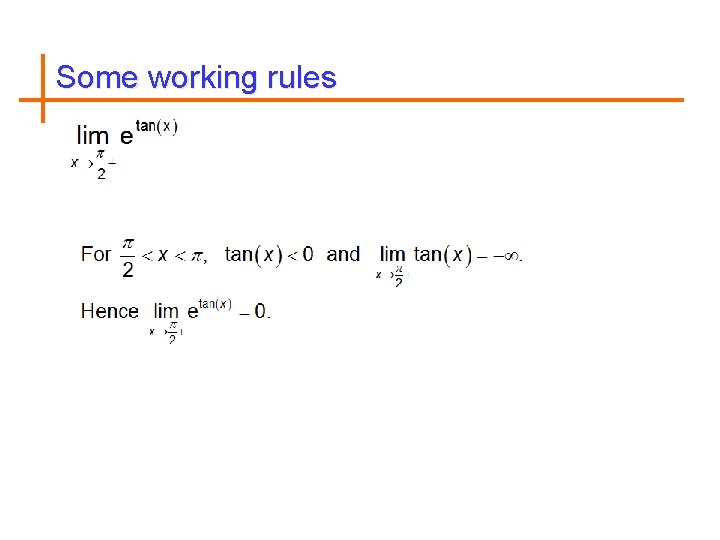
Some working rules
Some working rules
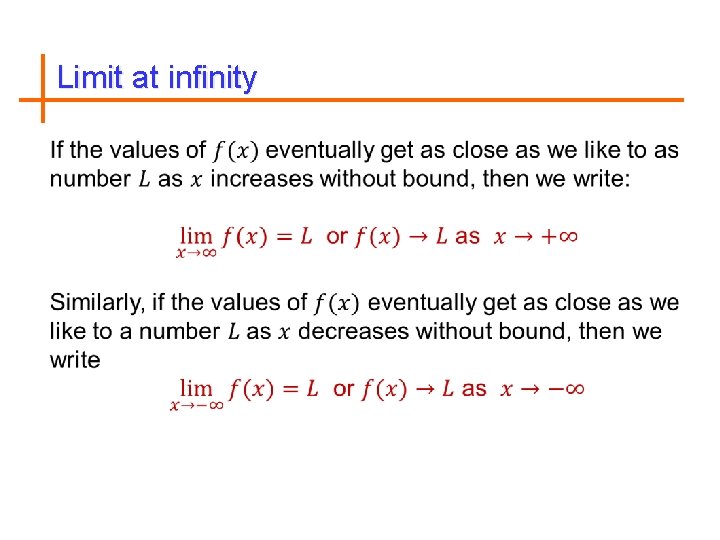
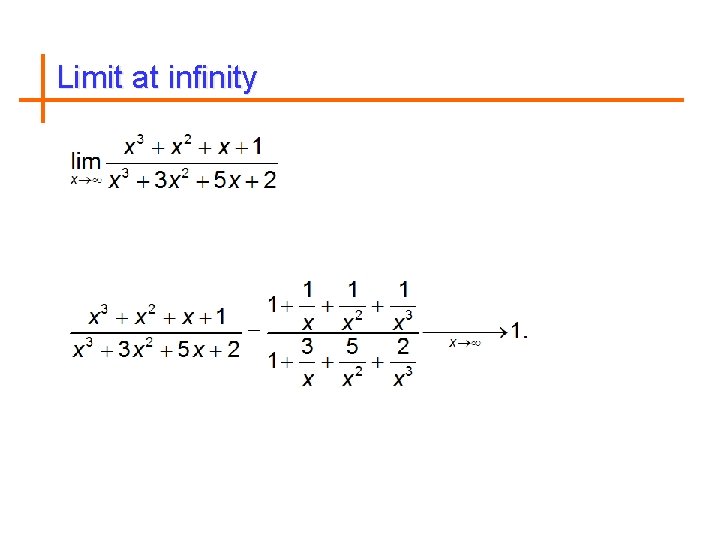
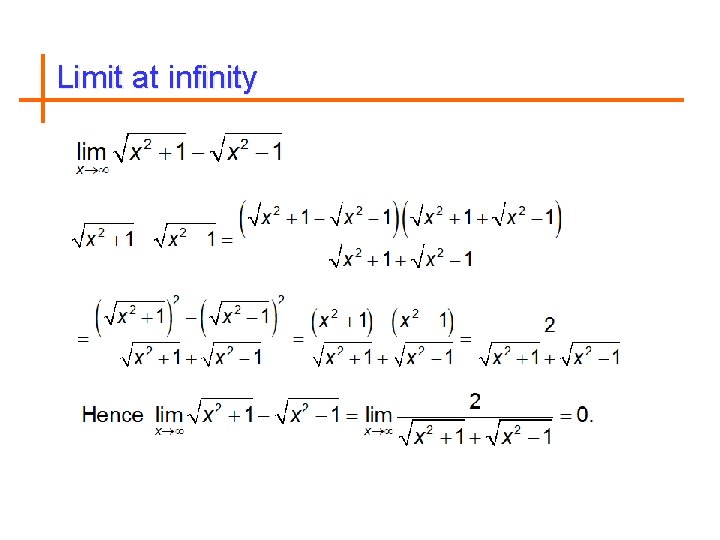
Limit at infinity
Limit at infinity
Limit at infinity
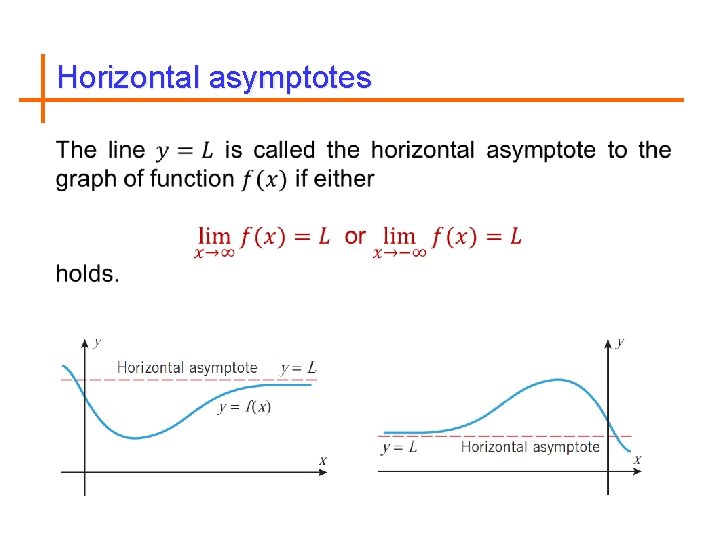
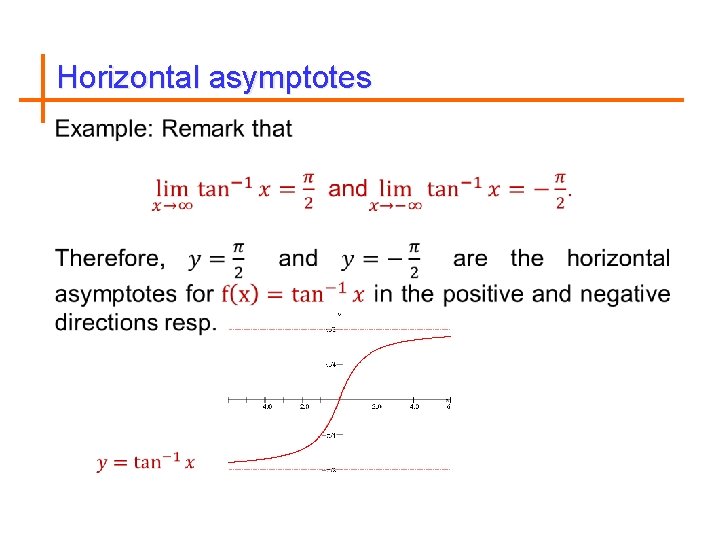
Horizontal asymptotes
Horizontal asymptotes
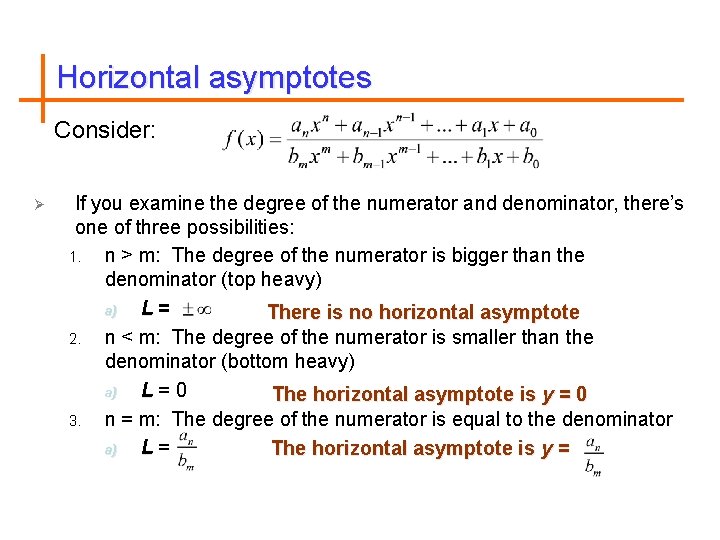
Horizontal asymptotes Consider: Ø If you examine the degree of the numerator and denominator, there’s one of three possibilities: 1. n > m: The degree of the numerator is bigger than the denominator (top heavy) a) L= There is no horizontal asymptote 2. n < m: The degree of the numerator is smaller than the denominator (bottom heavy) a) L=0 The horizontal asymptote is y = 0 3. n = m: The degree of the numerator is equal to the denominator a) L= The horizontal asymptote is y =
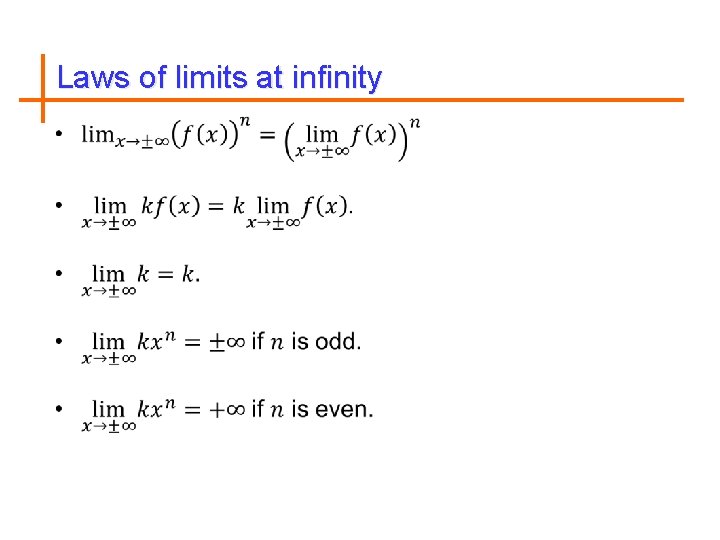
Laws of limits at infinity
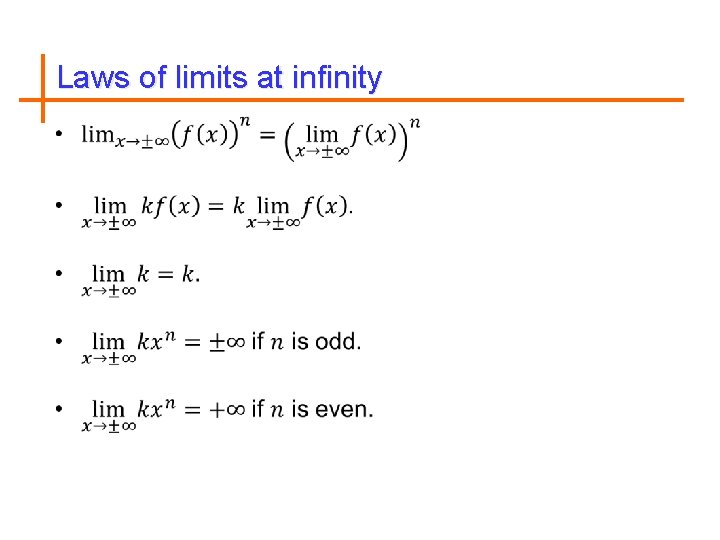
Laws of limits at infinity
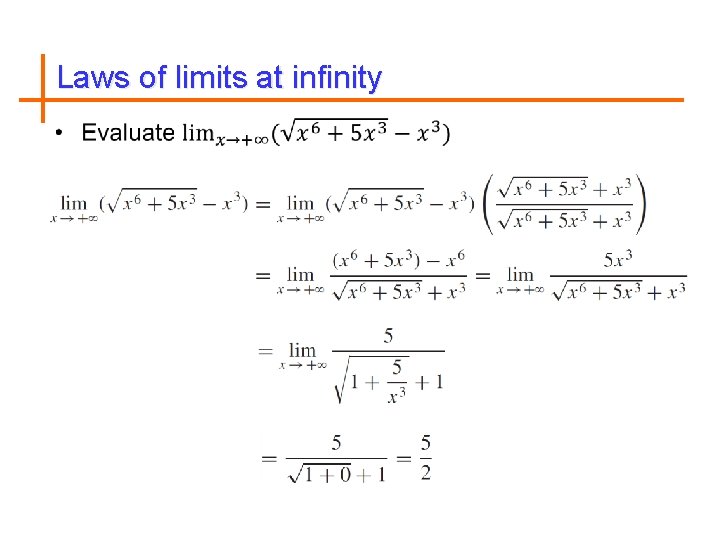
Laws of limits at infinity
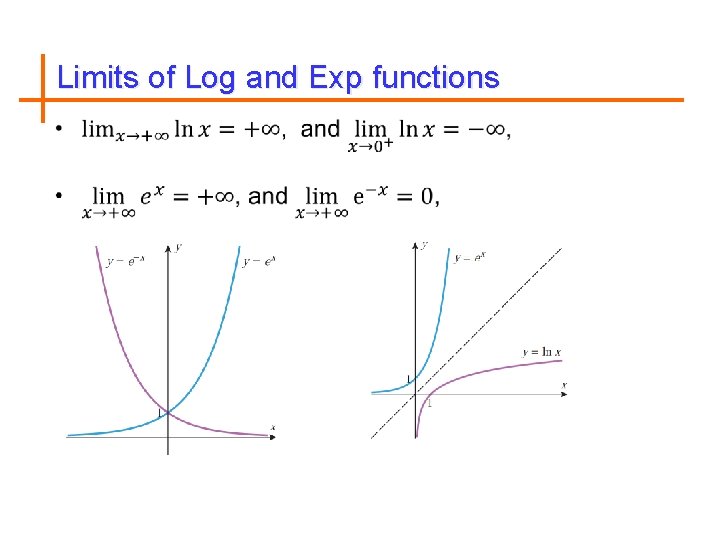
Limits of Log and Exp functions
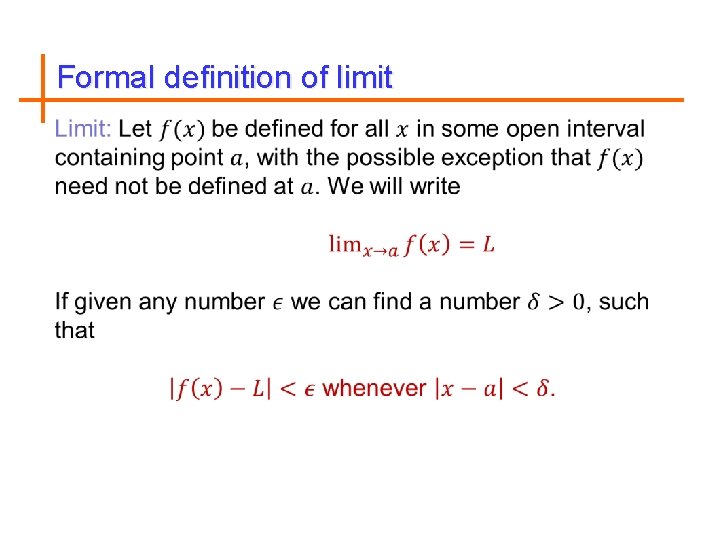
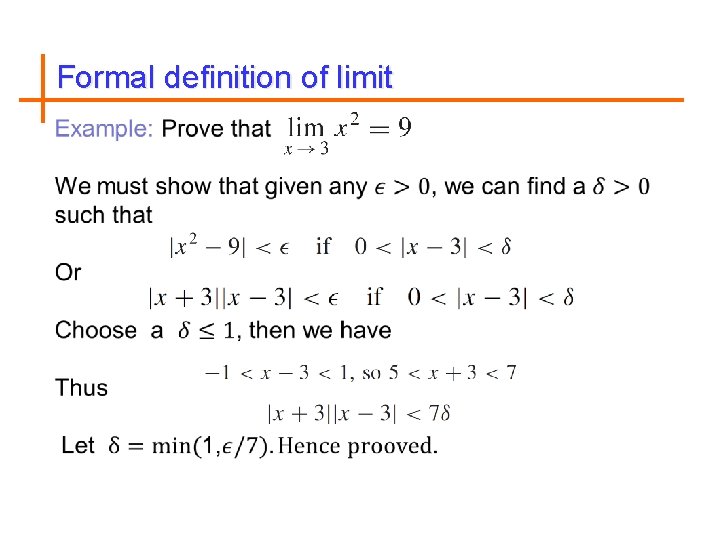
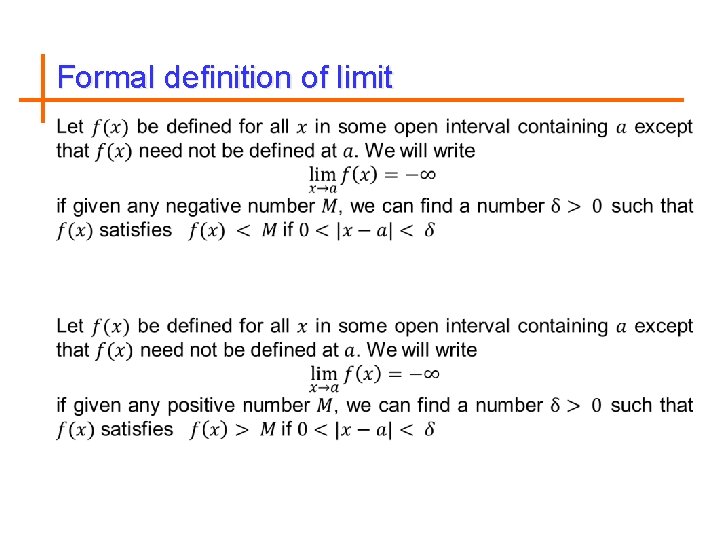
Formal definition of limit
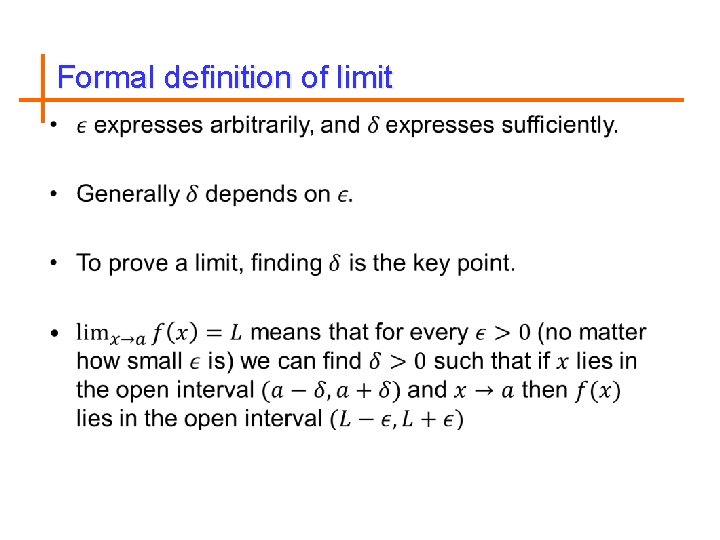
Formal definition of limit
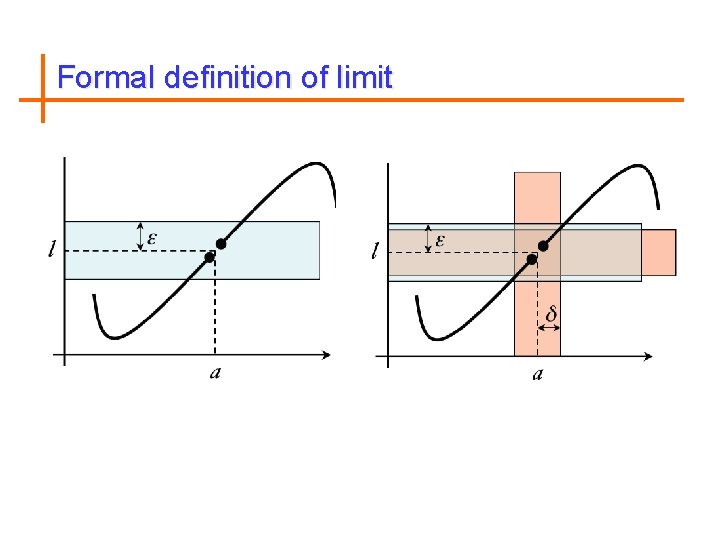
Formal definition of limit
Formal definition of limit
Formal definition of limit
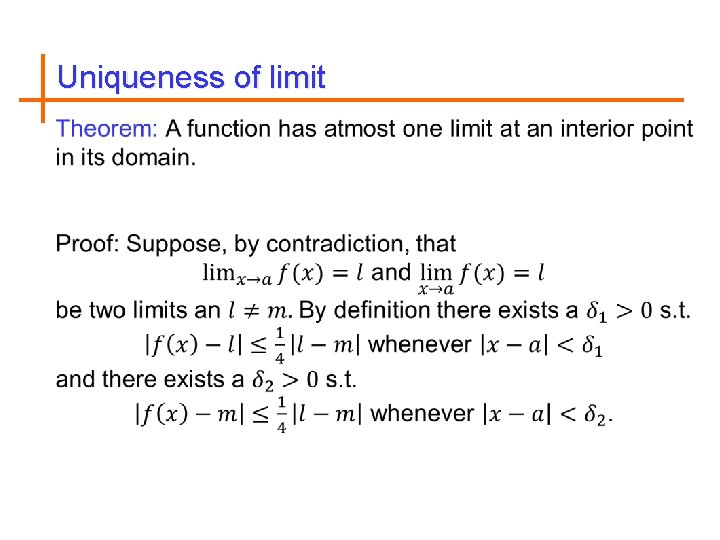
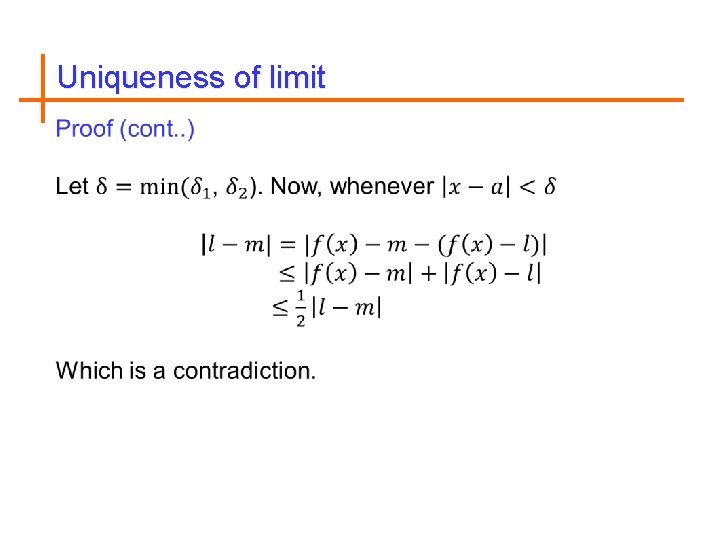
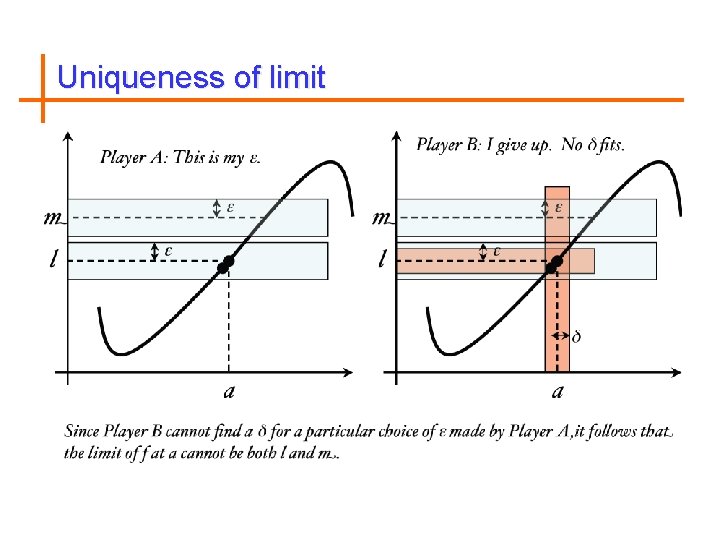
Uniqueness of limit
Uniqueness of limit
Uniqueness of limit
Lecture Summary • Working rules for limits • Limit at infinity • Horizontal asymptotes • Laws of Limit at infinity • Limits of log and exp functions • Formal definition of limit • Uniqueness of a Limit