
Calculus 5 2 Volumes Introduction to Volumes Slicing
- Slides: 17
Calculus 5. 2: Volumes
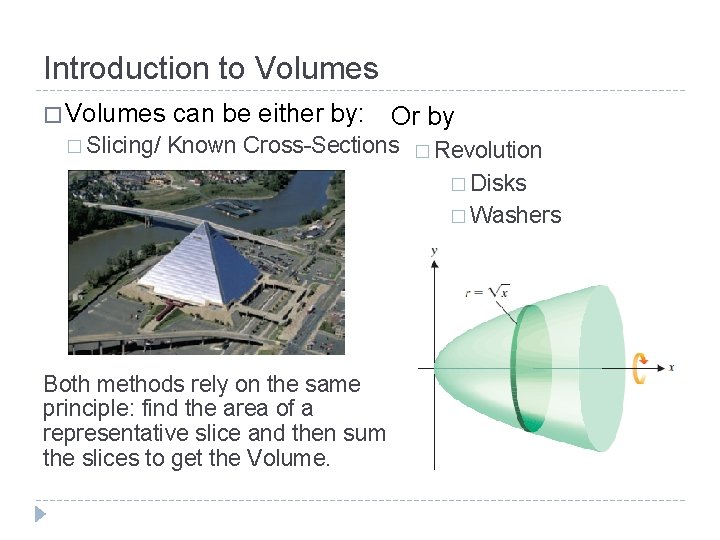
Introduction to Volumes � Slicing/ can be either by: Or by Known Cross-Sections � Revolution � Disks � Washers Both methods rely on the same principle: find the area of a representative slice and then sum the slices to get the Volume.
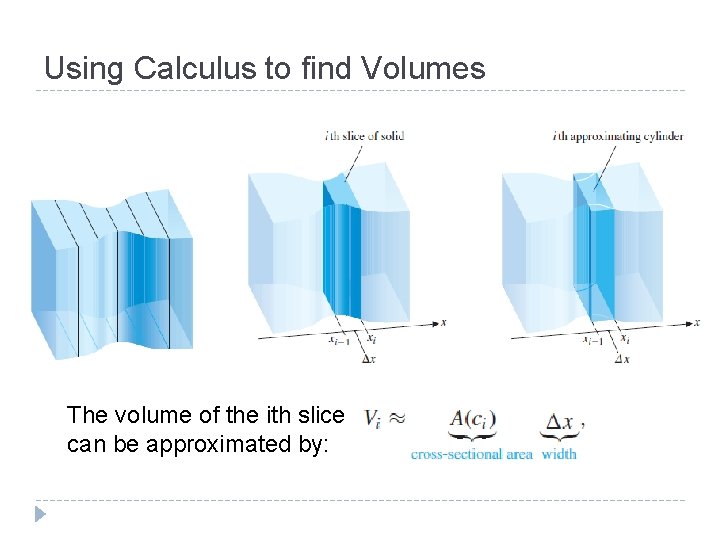
Using Calculus to find Volumes The volume of the ith slice can be approximated by:
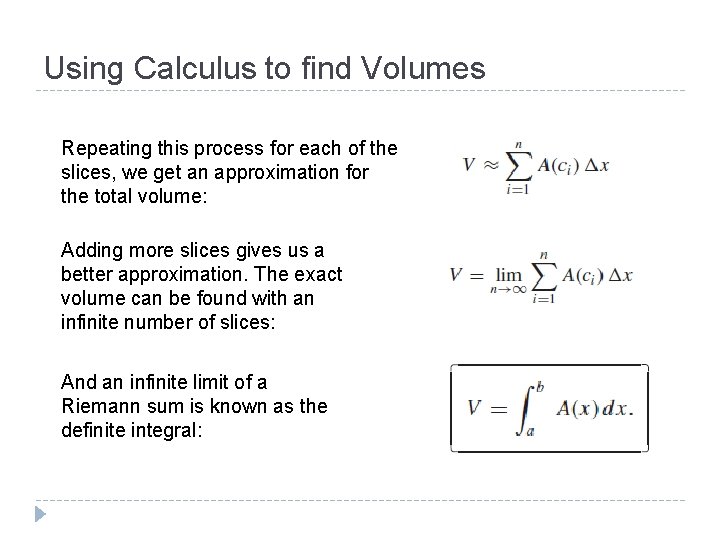
Using Calculus to find Volumes Repeating this process for each of the slices, we get an approximation for the total volume: Adding more slices gives us a better approximation. The exact volume can be found with an infinite number of slices: And an infinite limit of a Riemann sum is known as the definite integral:
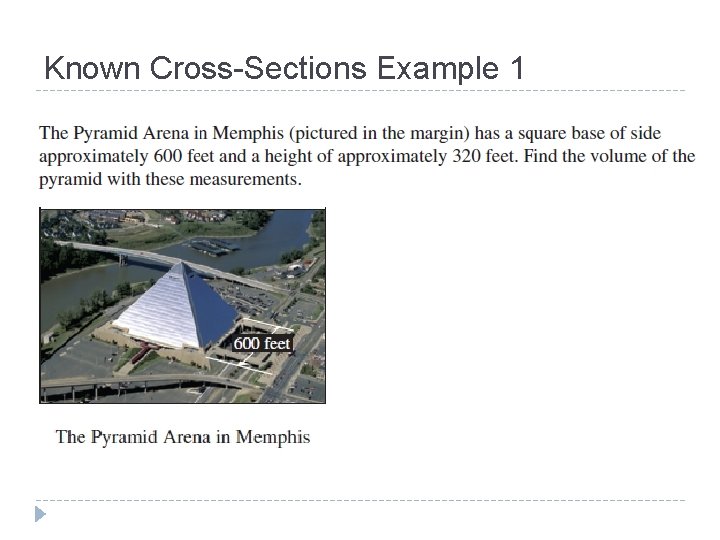
Known Cross-Sections Example 1
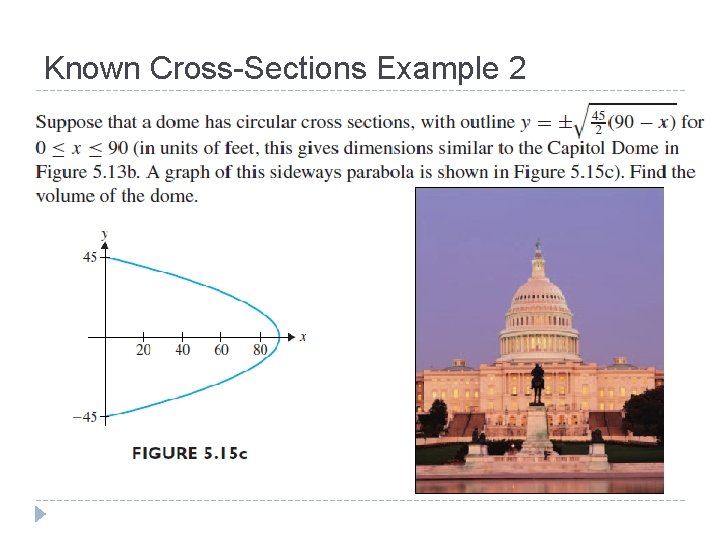
Known Cross-Sections Example 2
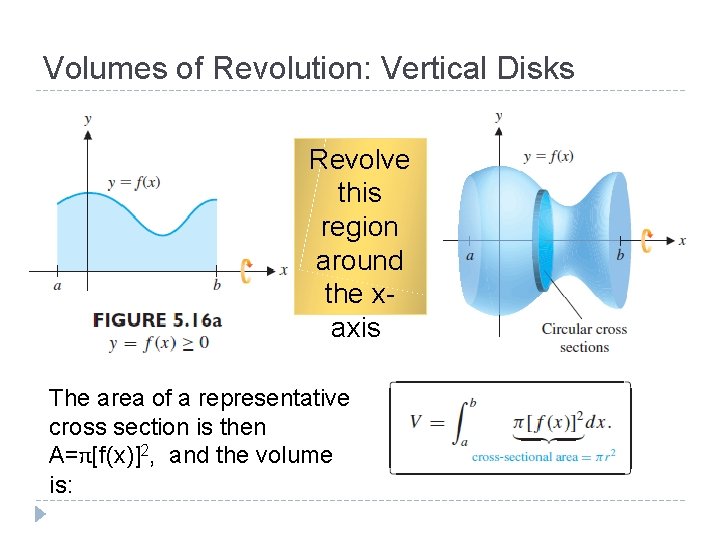
Volumes of Revolution: Vertical Disks Revolve this region around the xaxis: The area of a representative cross section is then A=π[f(x)]2, and the volume is:
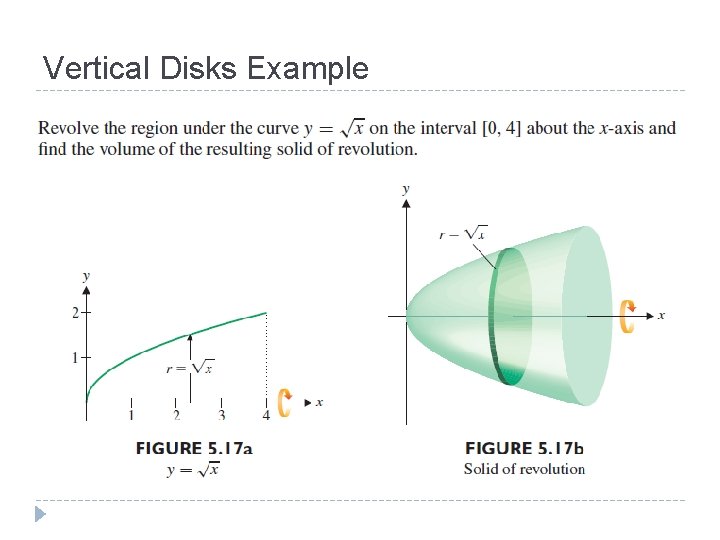
Vertical Disks Example
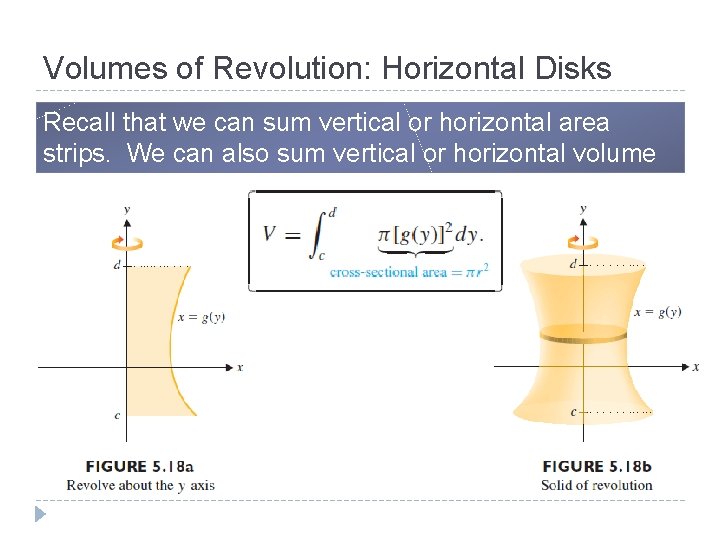
Volumes of Revolution: Horizontal Disks Recall that we can sum vertical or horizontal area strips. We can also sum vertical or horizontal volume slices.
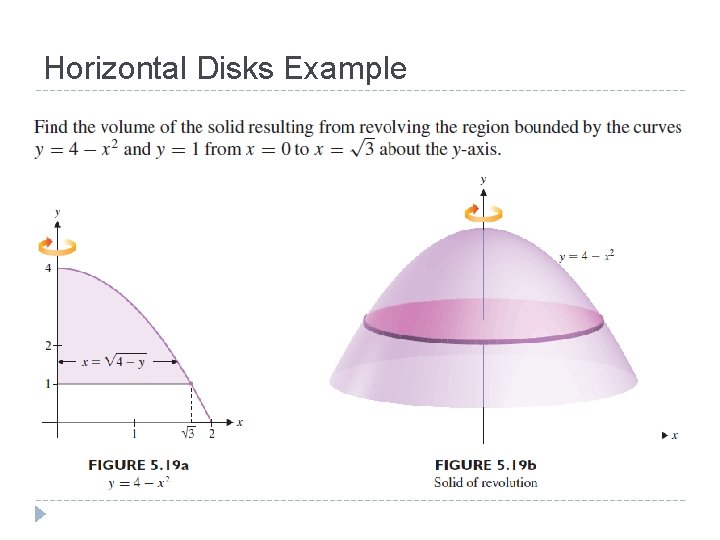
Horizontal Disks Example
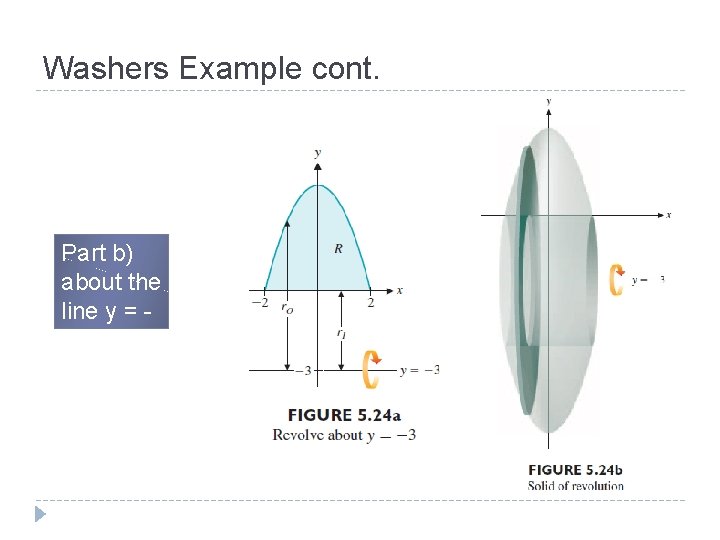
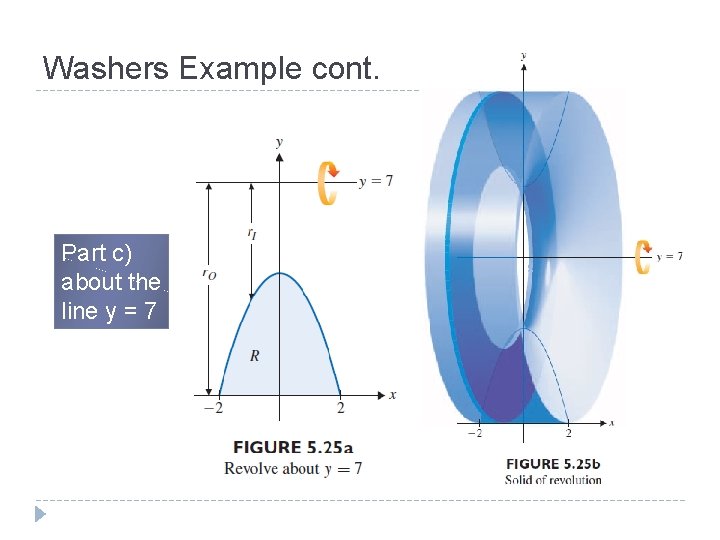
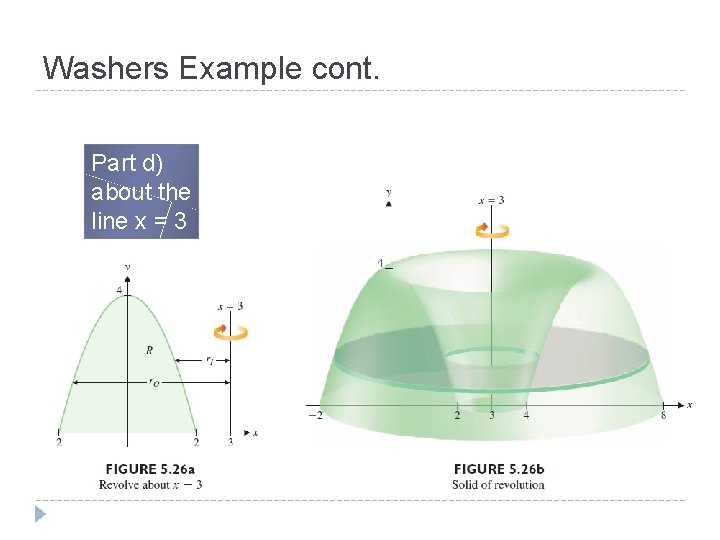
Volumes of Revolution: Washers The problem with washers is that sometimes we have a volume with a hole in it (think donuts, or a jello mold). For regions like this we use washers as the representative cross section.
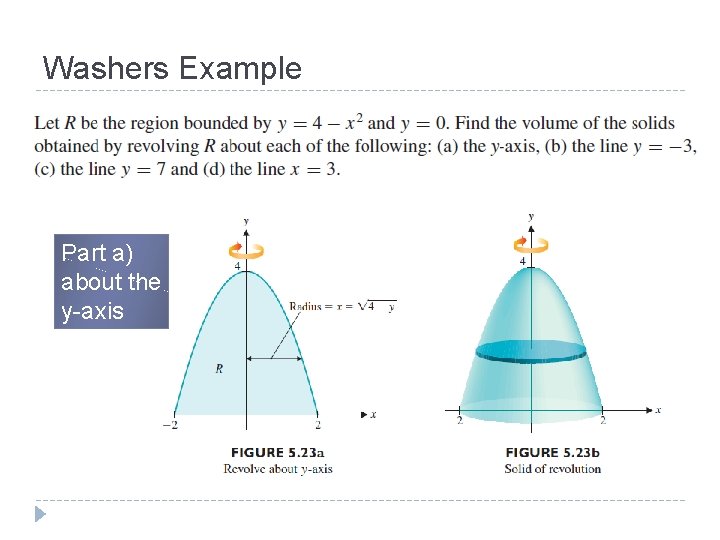
Washers Example Part a) about the y-axis
Washers Example cont. Part b) about the line y = 3
Washers Example cont. Part c) about the line y = 7
Washers Example cont. Part d) about the line x = 3
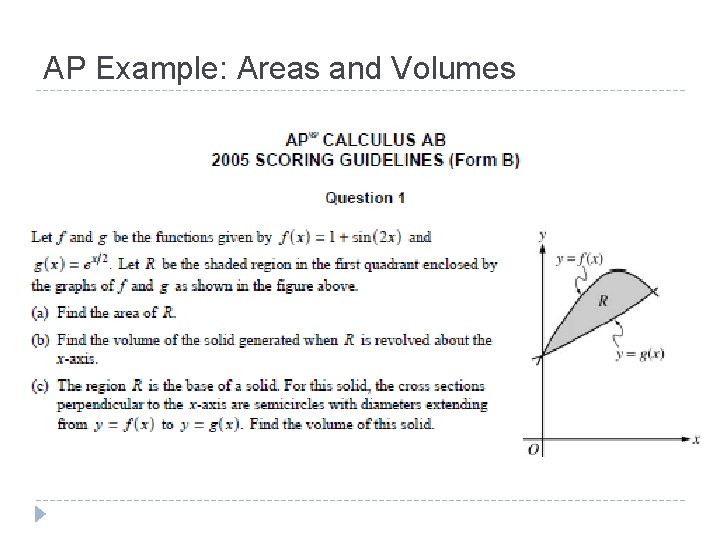
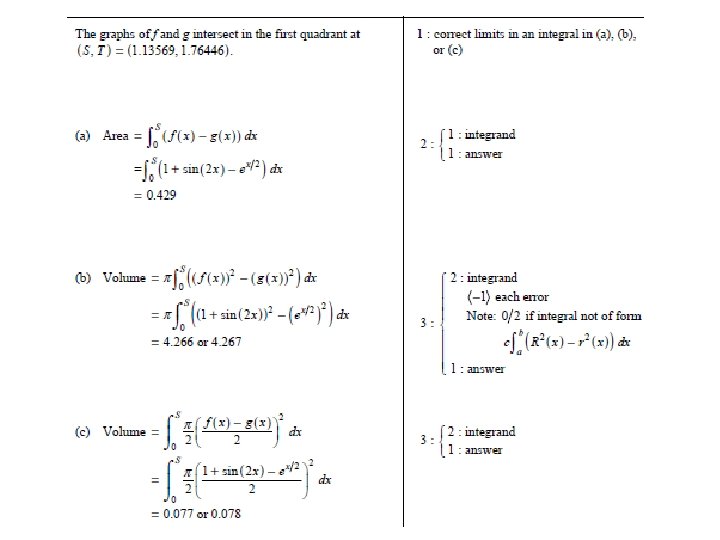
AP Example: Areas and Volumes