
Calculation of image position size and orientation using
![Reference [1] John E. Greivenkamp “Field Guide to Geometrical Optics” SPIE [2] Prof. Jim](https://slidetodoc.com/presentation_image_h/0278a43cf1c792fb167da101f468f833/image-17.jpg "Reference [1] John E. Greivenkamp “Field Guide to Geometrical Optics” SPIE [2] Prof. Jim")
- Slides: 17
Calculation of image position, size and orientation using first order properties OPTI. 521 Tutorial Yuhao Wang
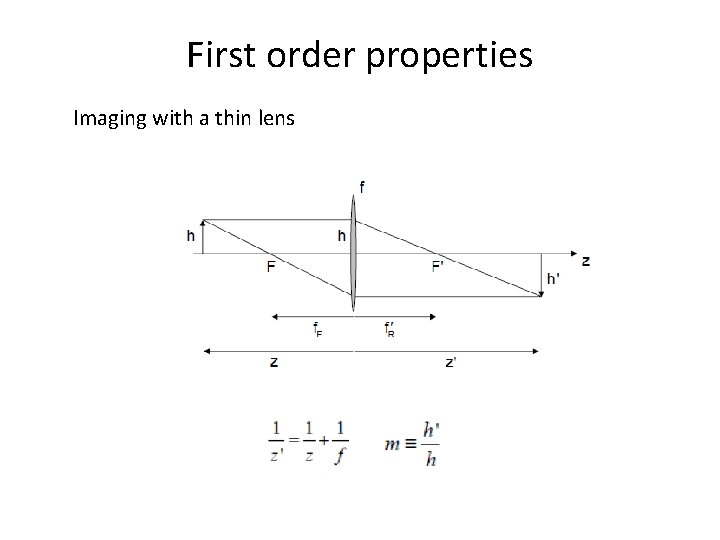
First order properties Imaging with a thin lens
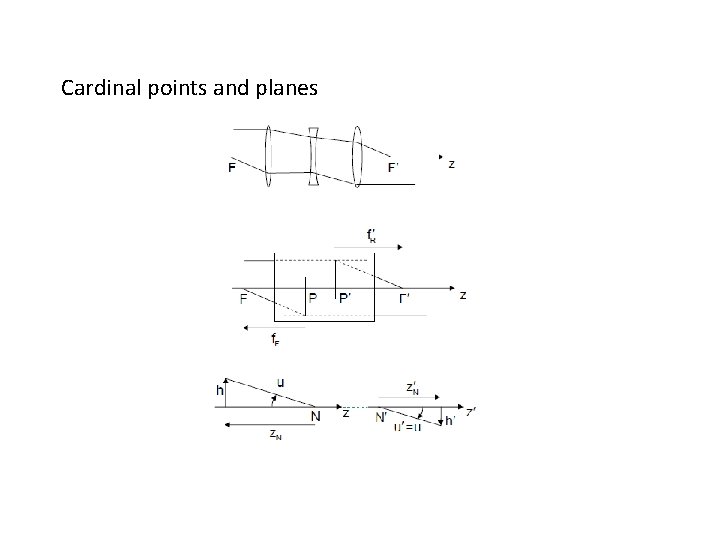
Cardinal points and planes
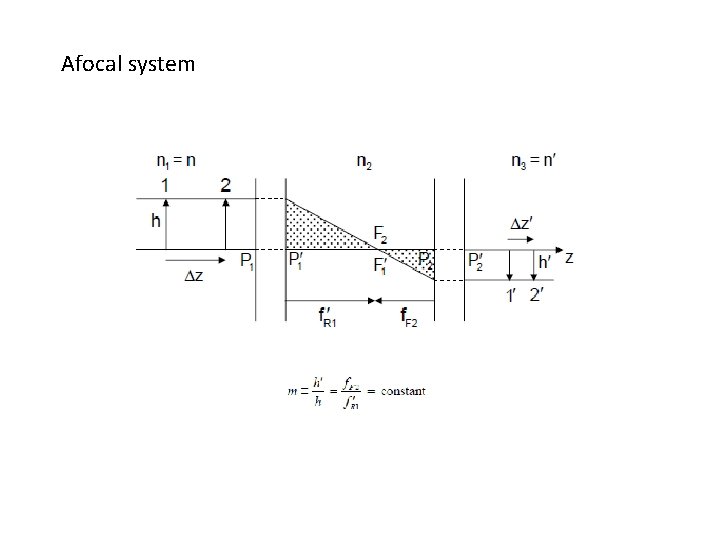
Afocal system
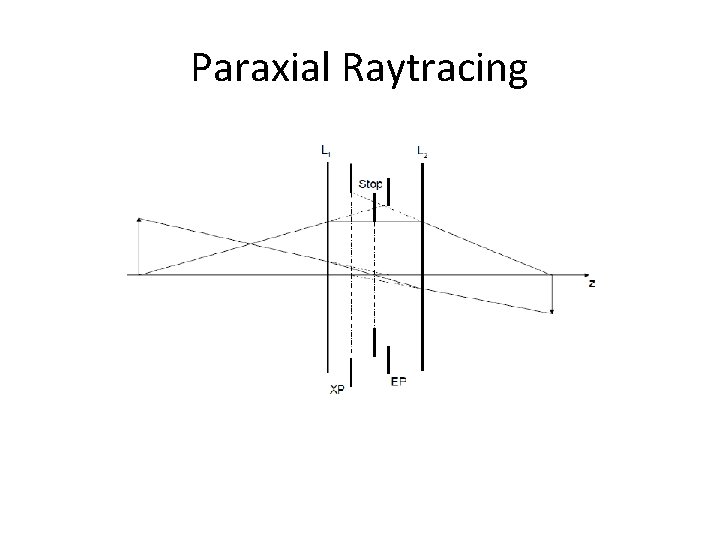
Paraxial Raytracing
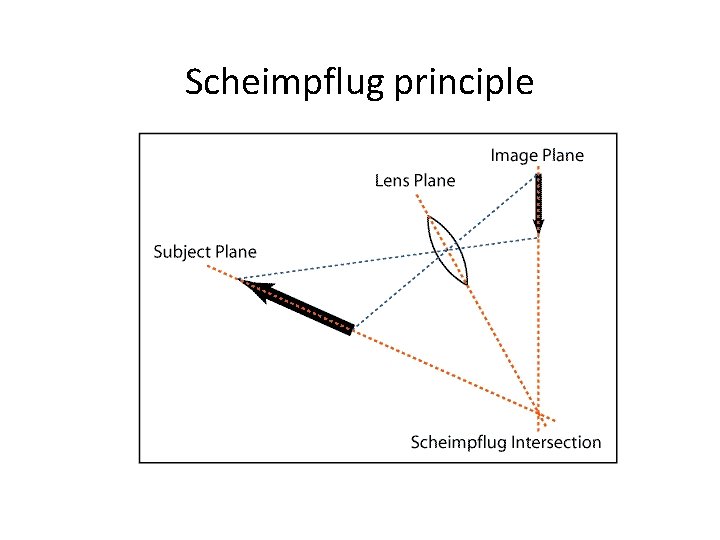
Scheimpflug principle
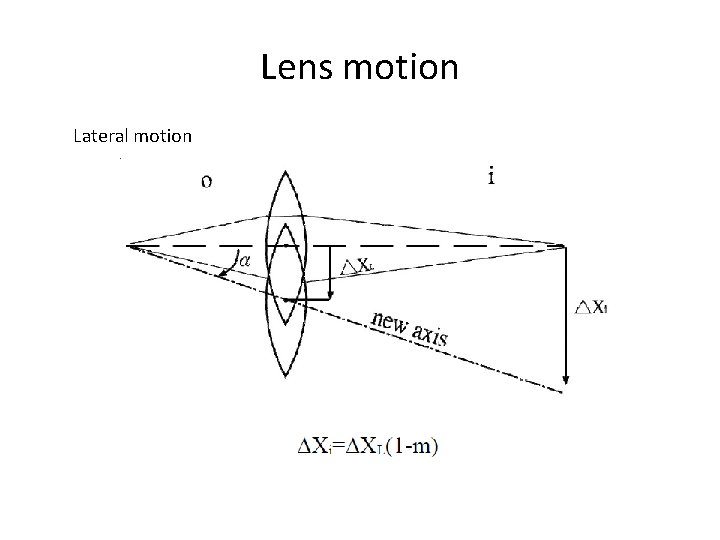
Lens motion Lateral motion
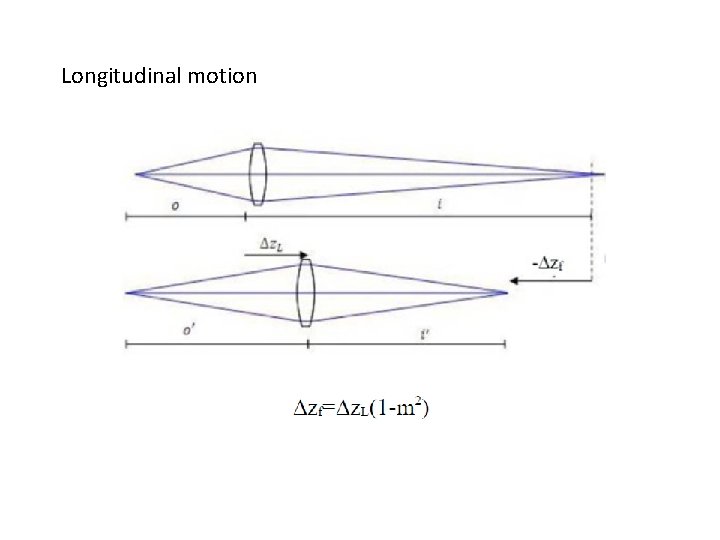
Longitudinal motion
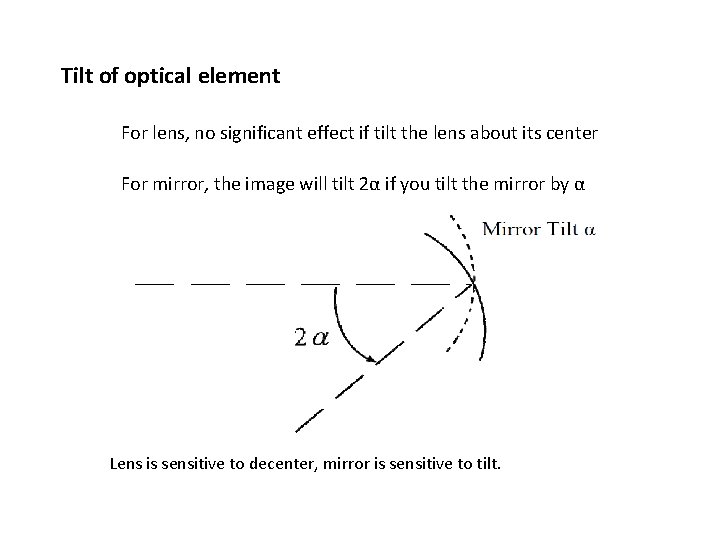
Tilt of optical element For lens, no significant effect if tilt the lens about its center For mirror, the image will tilt 2α if you tilt the mirror by α Lens is sensitive to decenter, mirror is sensitive to tilt.
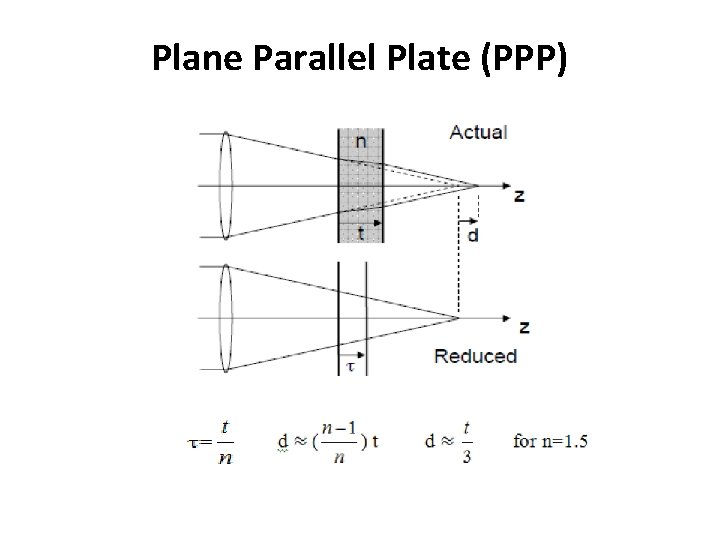
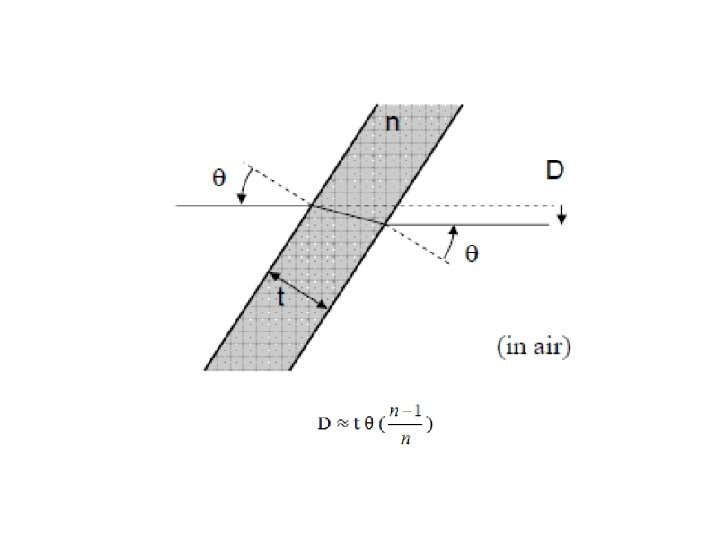
Plane Parallel Plate (PPP)
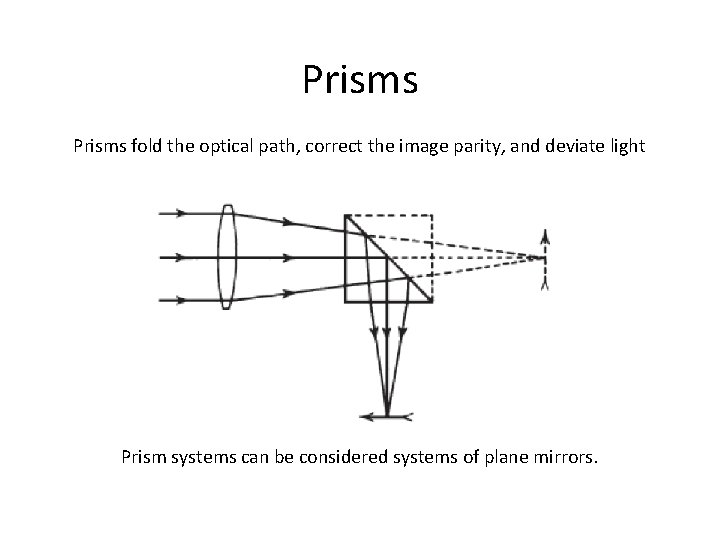
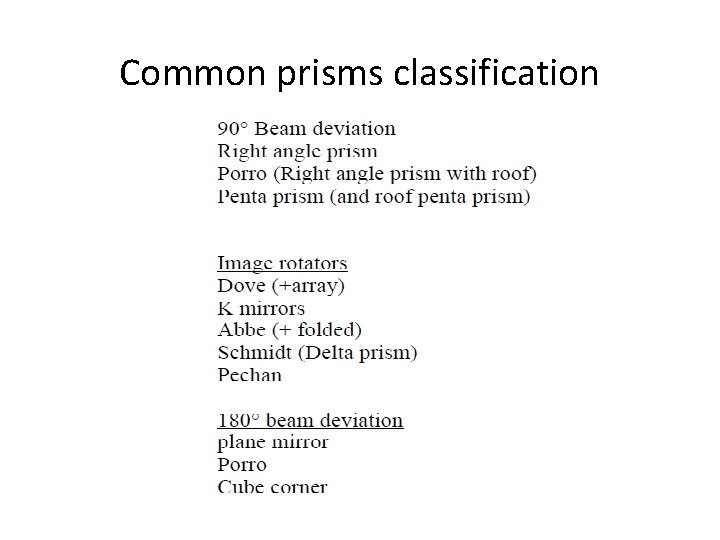
Prisms fold the optical path, correct the image parity, and deviate light Prism systems can be considered systems of plane mirrors.
Common prisms classification
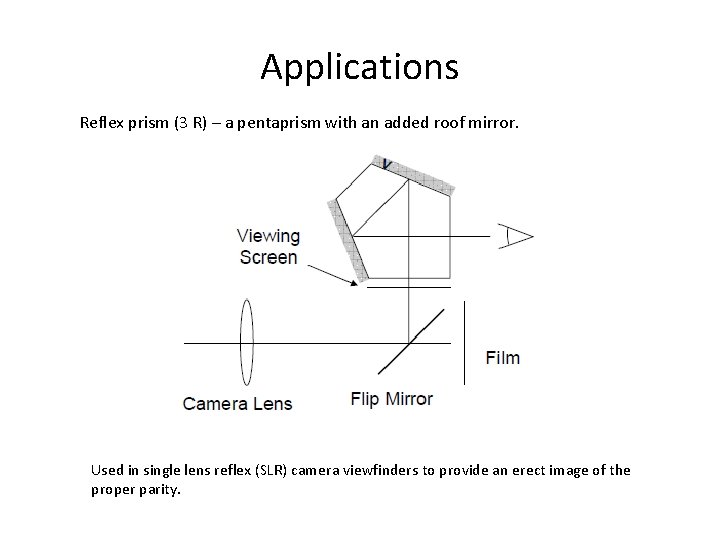
Applications Reflex prism (3 R) – a pentaprism with an added roof mirror. Used in single lens reflex (SLR) camera viewfinders to provide an erect image of the proper parity.
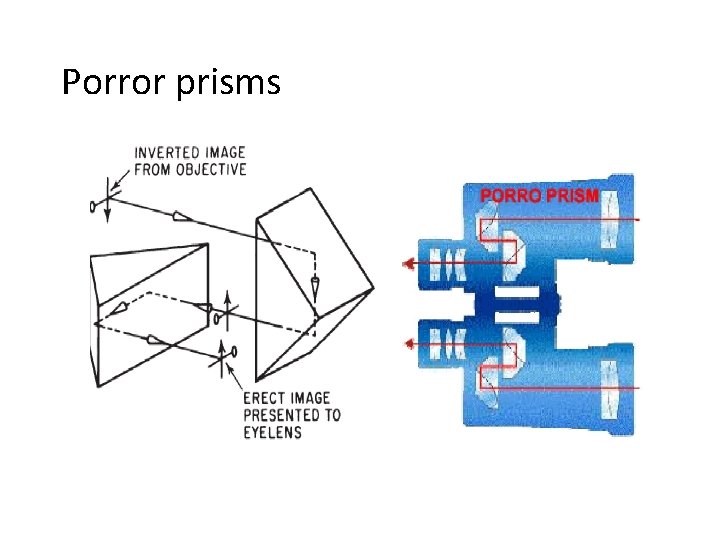
Porror prisms
Conclusion This tutorial discussed the methods to calculation image location, size and orientation using first order properties. Gaussian properties and paraxial raytrace are used. Especially, image orientation and parities are discussed in multiple prism systems. Also, some miscellaneous topics like Scheimpflug principle, lens motion and effects of plane parallel plate are also discussed.
Reference [1] John E. Greivenkamp “Field Guide to Geometrical Optics” SPIE [2] Prof. Jim Burge, class notes and lectures of “Introductory opto-mechanical engineering”, Fall 2010 [3] Prof. John Greivenkamp, class notes and lectures of “Optical Design and Instrumentation I”, Fall 2009 [4] Wikipedia, webpage http: //en. wikipedia. org/wiki/Scheimpflug_principle