
Calculating sample size for a casecontrol study Statistical

- Slides: 14
Calculating sample size for a case-control study
Statistical Power n Statistical power is the probability of finding an effect if it’s real.
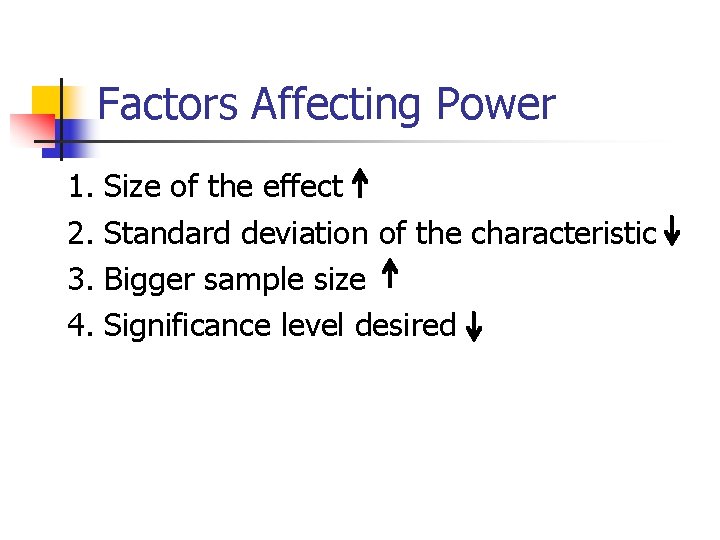
Factors Affecting Power 1. 2. 3. 4. Size of the effect Standard deviation of the characteristic Bigger sample size Significance level desired
Sample size calculations n Based on these elements, you can write a formal mathematical equation that relates power, sample size, effect size, standard deviation, and significance level.
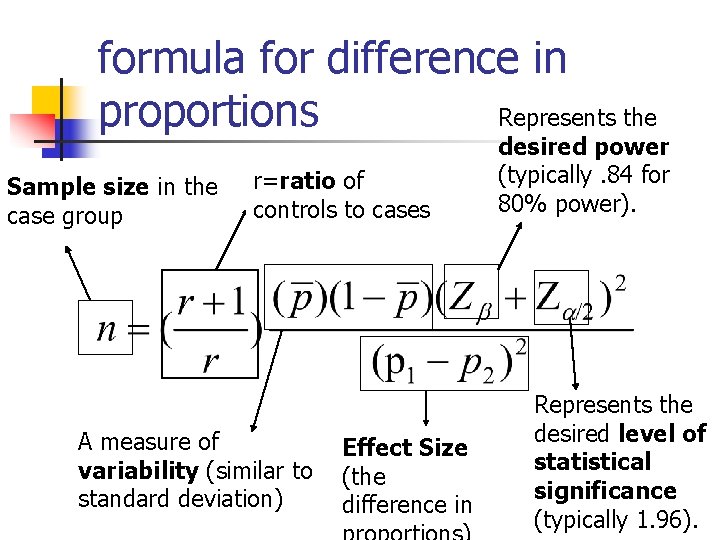
Calculating sample size for a casecontrol study: binary exposure n Use difference in proportions formula…
formula for difference in Represents the proportions Sample size in the case group r=ratio of controls to cases A measure of variability (similar to standard deviation) Effect Size (the difference in desired power (typically. 84 for 80% power). Represents the desired level of statistical significance (typically 1. 96).
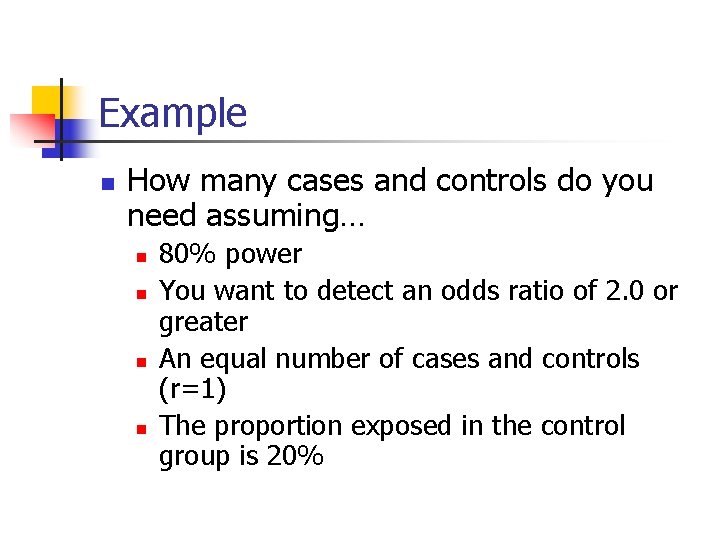
Example n How many cases and controls do you need assuming… n n 80% power You want to detect an odds ratio of 2. 0 or greater An equal number of cases and controls (r=1) The proportion exposed in the control group is 20%
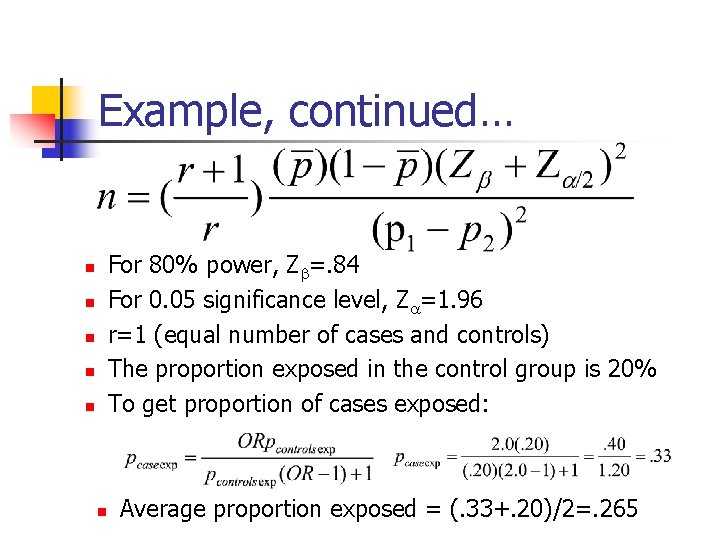
Example, continued… For 80% power, Z =. 84 For 0. 05 significance level, Z =1. 96 r=1 (equal number of cases and controls) The proportion exposed in the control group is 20% To get proportion of cases exposed: n n n Average proportion exposed = (. 33+. 20)/2=. 265
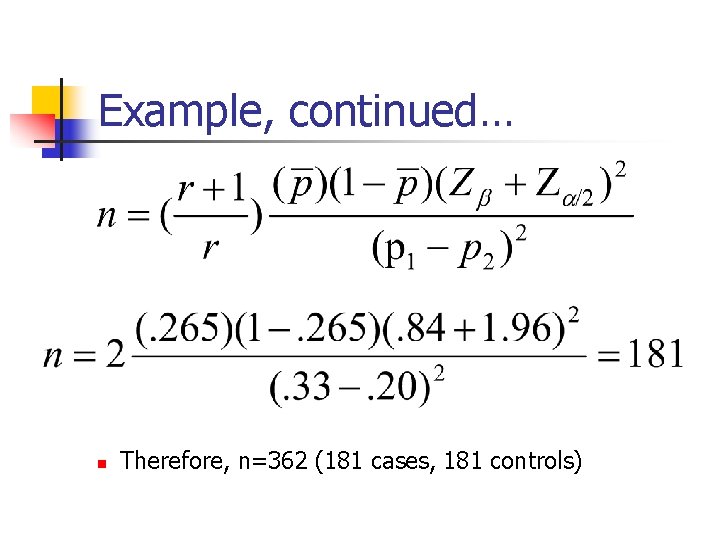
Example, continued… n Therefore, n=362 (181 cases, 181 controls)
Calculating sample size for a casecontrol study: continuous exposure n Use difference in means formula…
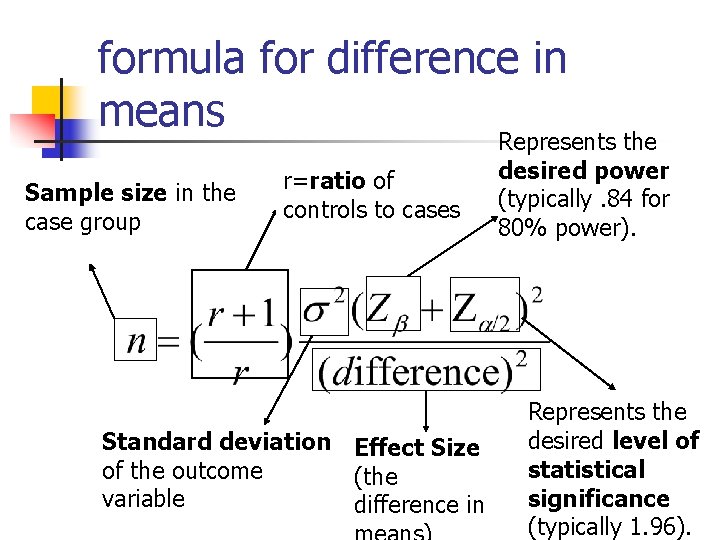
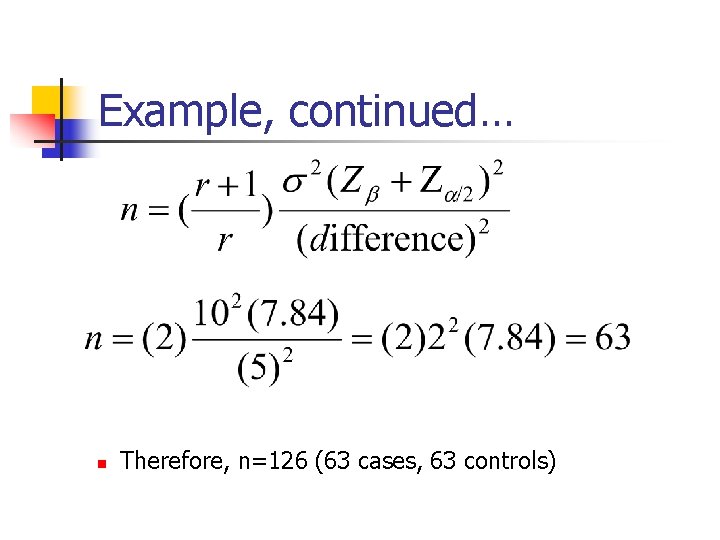
formula for difference in means Sample size in the case group r=ratio of controls to cases Standard deviation Effect Size of the outcome (the variable difference in Represents the desired power (typically. 84 for 80% power). Represents the desired level of statistical significance (typically 1. 96).
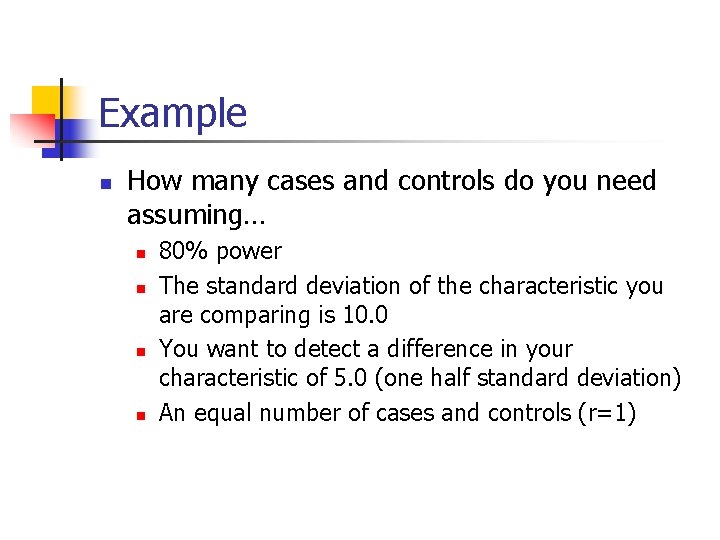
Example n How many cases and controls do you need assuming… n n 80% power The standard deviation of the characteristic you are comparing is 10. 0 You want to detect a difference in your characteristic of 5. 0 (one half standard deviation) An equal number of cases and controls (r=1)
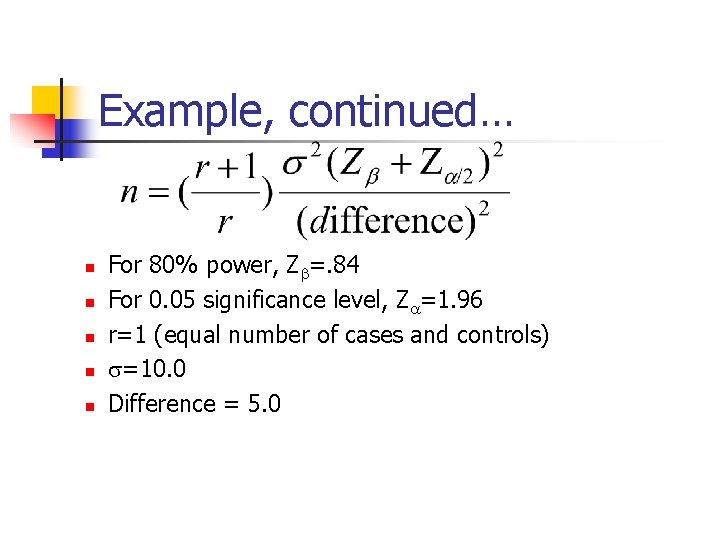
Example, continued… n n n For 80% power, Z =. 84 For 0. 05 significance level, Z =1. 96 r=1 (equal number of cases and controls) =10. 0 Difference = 5. 0
Example, continued… n Therefore, n=126 (63 cases, 63 controls)