
Calculating heat stress index from routine weather station
- Slides: 21
Calculating heat stress index from routine weather station data to model climate change impacts on worker productivity Bruno Lemke, Tord Kjellstrom
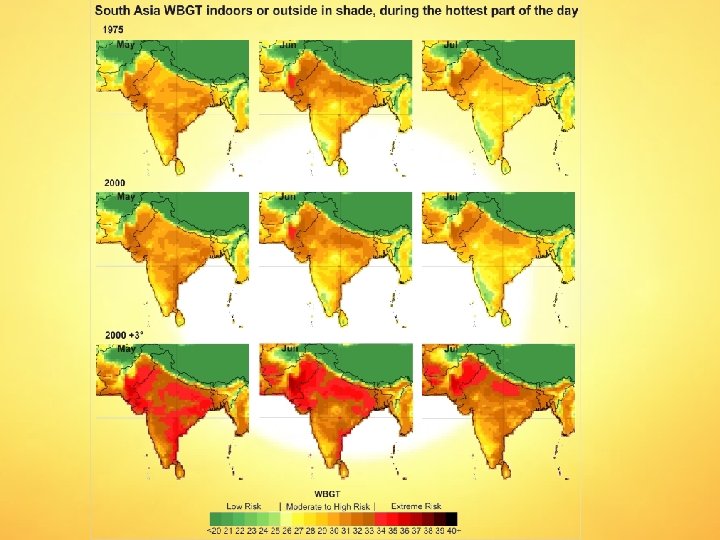
Quantifying Climate Change • Climate change will increase temperatures in most places around the world in the coming decades. Temperatures in urban areas will go even higher due to the “heat island effect”. In order to measure the effect of climate change on worker productivity a heat stress index that incorporates temperature, humidity, wind speed and solar radiation is needed.
What Heat index to use? • • Effective Temperature: CET, NET, PET, SET WBGT: most comprehensively studied UTCI: for both hot and cold temperatures ETVO: all components separately identified Humidex: Canada HI: USA Comfort indexes: PMV Physiological models: PHS, Fiala etc
The four environmental variables • • • You need an index that includes: Temperature Humidity Wind speed Solar radiation
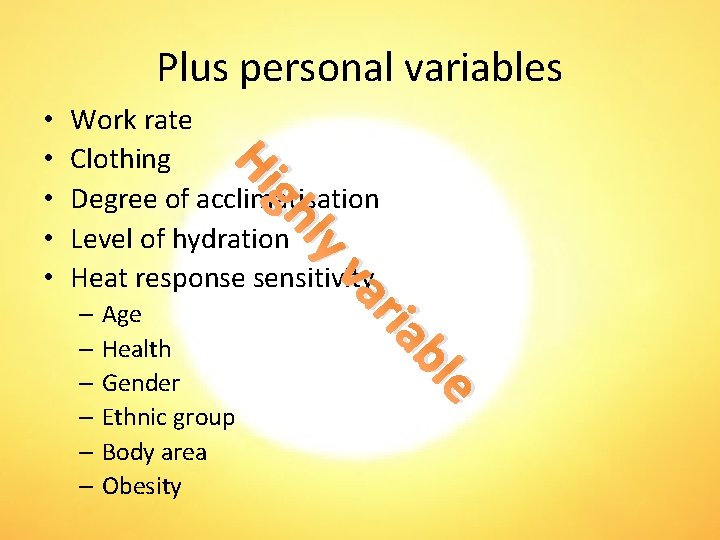
Plus personal variables Work rate Clothing Degree of acclimatisation Level of hydration Heat response sensitivity ly gh Hi ria bl e – Age – Health – Gender – Ethnic group – Body area – Obesity va • • •
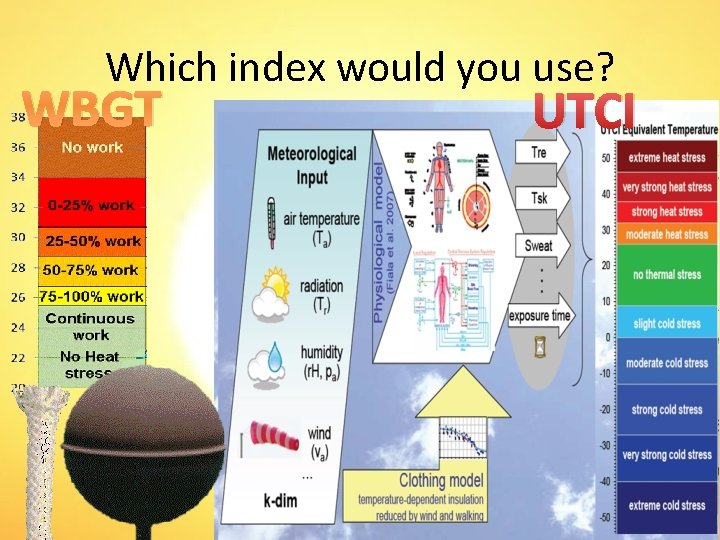
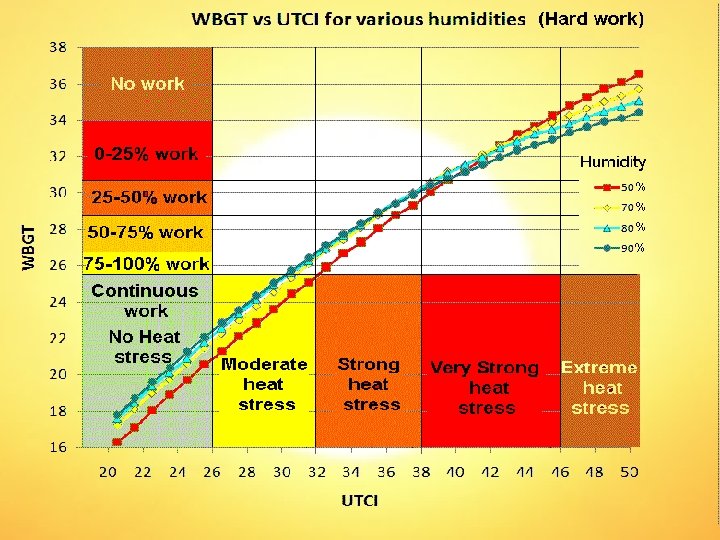
Main contenders for heat index • UTCI: new index with laboratory validation • WBGT: older extensively field tested index • Many other indexes do not include all the climatic variables
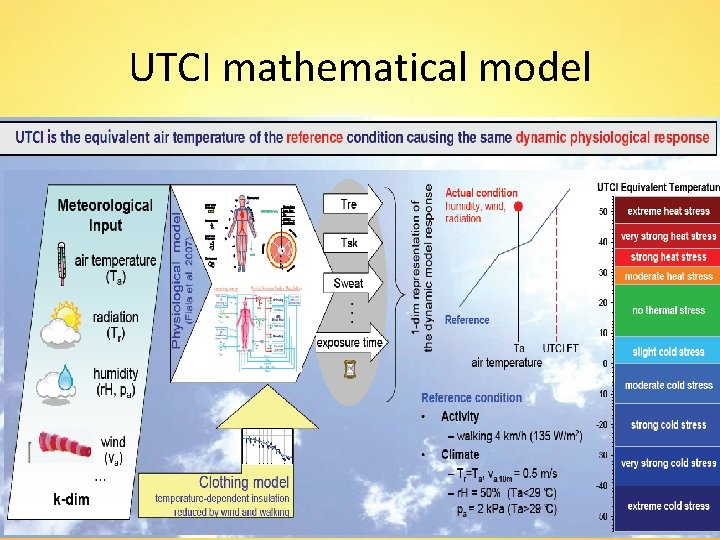
UTCI mathematical model
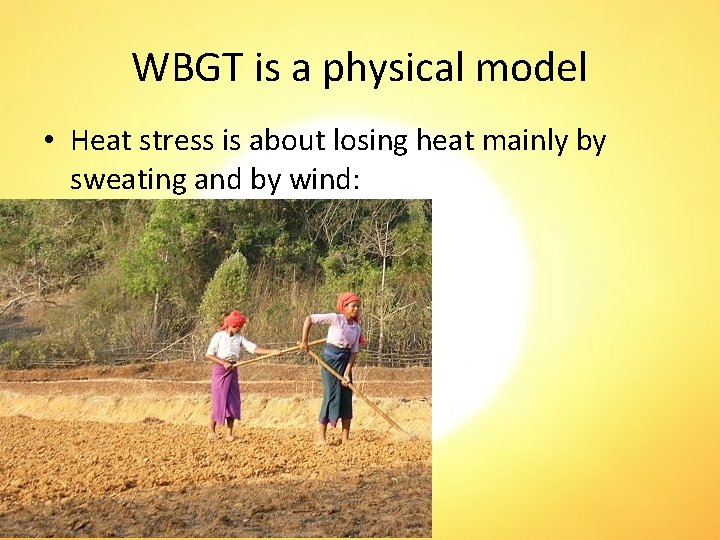
WBGT is a physical model • Heat stress is about losing heat mainly by sweating and by wind:
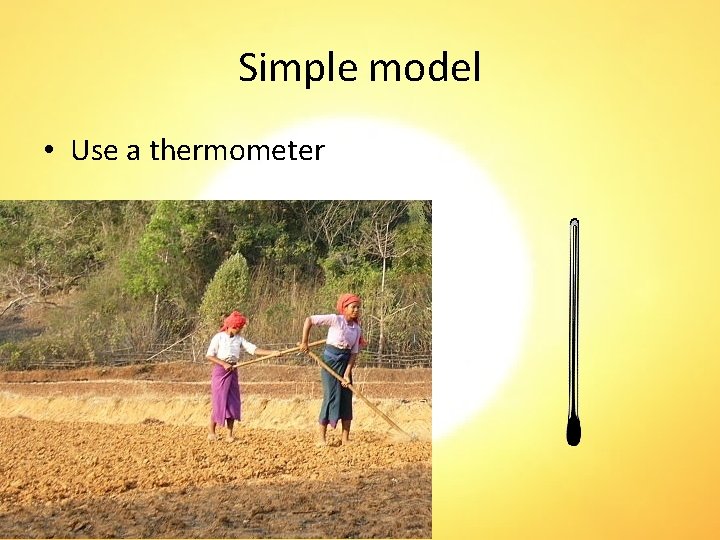
Simple model • Use a thermometer
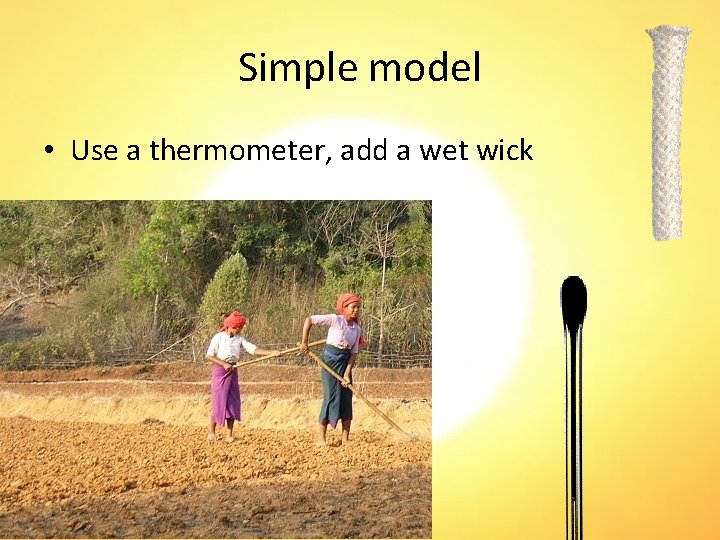
Simple model • Use a thermometer, add a wet wick
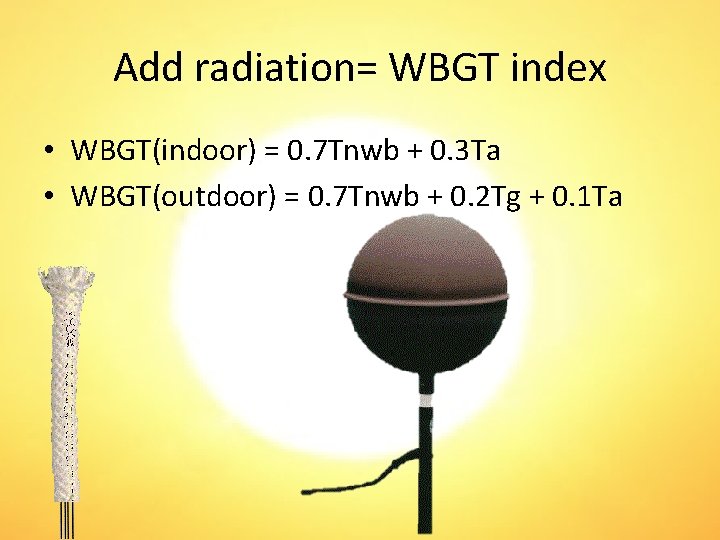
Add radiation= WBGT index • WBGT(indoor) = 0. 7 Tnwb + 0. 3 Ta • WBGT(outdoor) = 0. 7 Tnwb + 0. 2 Tg + 0. 1 Ta
Which index would you use? WBGT UTCI
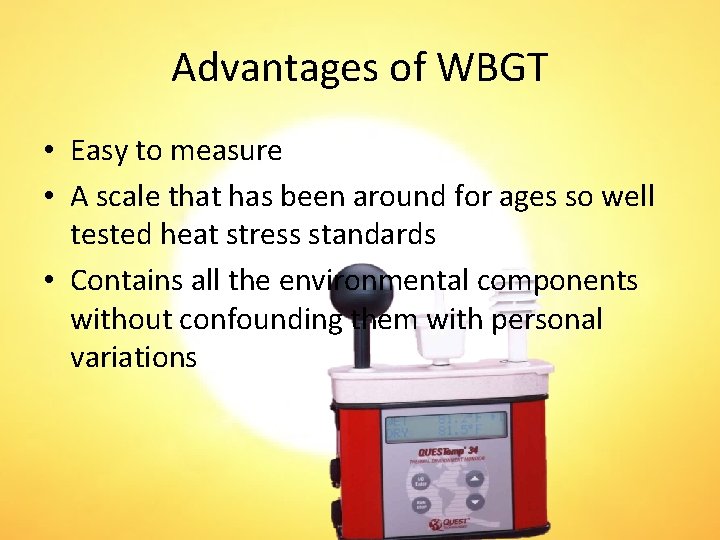
Advantages of WBGT • Easy to measure • A scale that has been around for ages so well tested heat stress standards • Contains all the environmental components without confounding them with personal variations
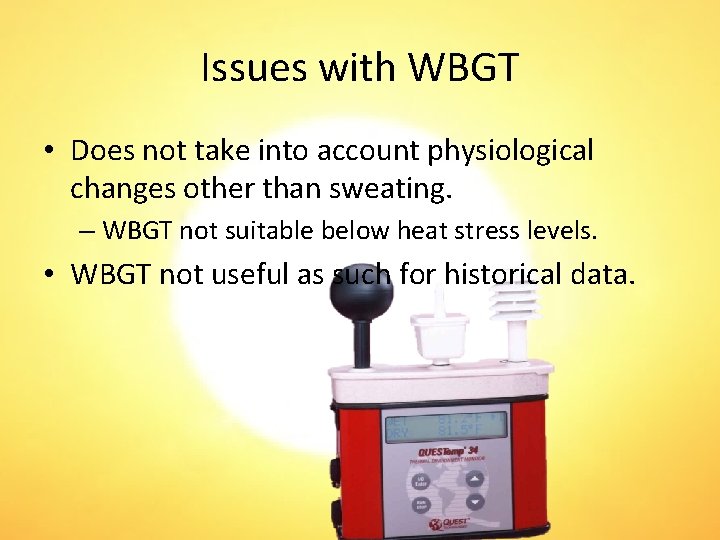
Issues with WBGT • Does not take into account physiological changes other than sweating. – WBGT not suitable below heat stress levels. • WBGT not useful as such for historical data.
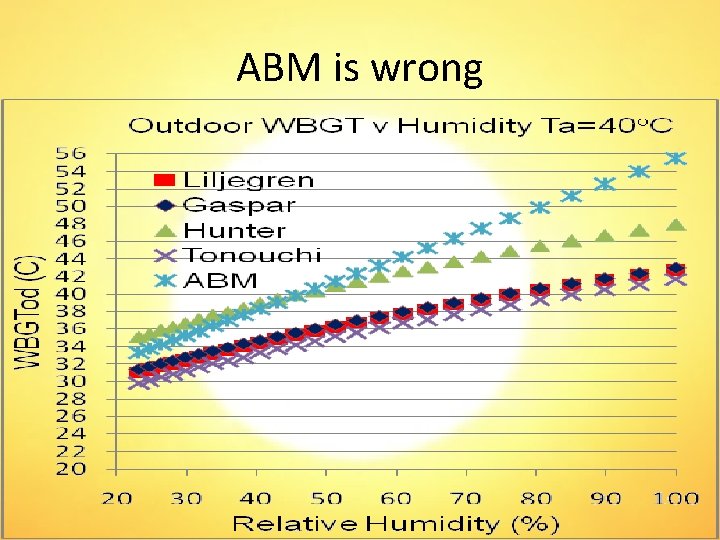
WBGT from meteorological data • We compare published models that generate the WBGT heat stress index from standard hourly weather station data.
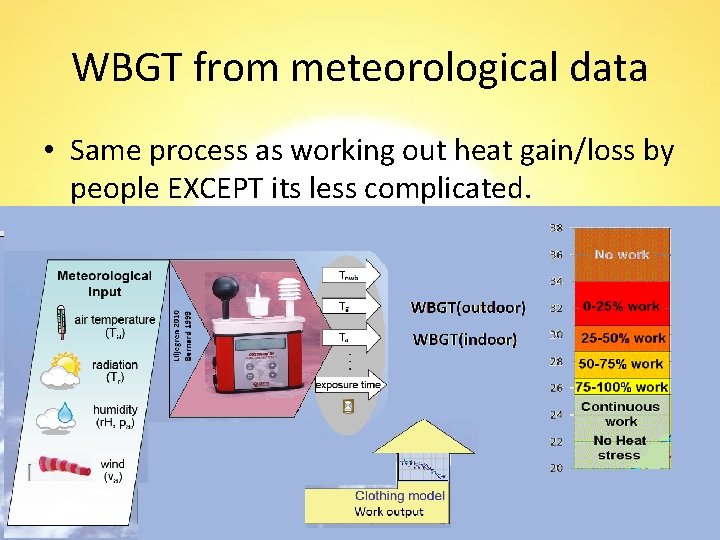
WBGT from meteorological data • Same process as working out heat gain/loss by people EXCEPT its less complicated.
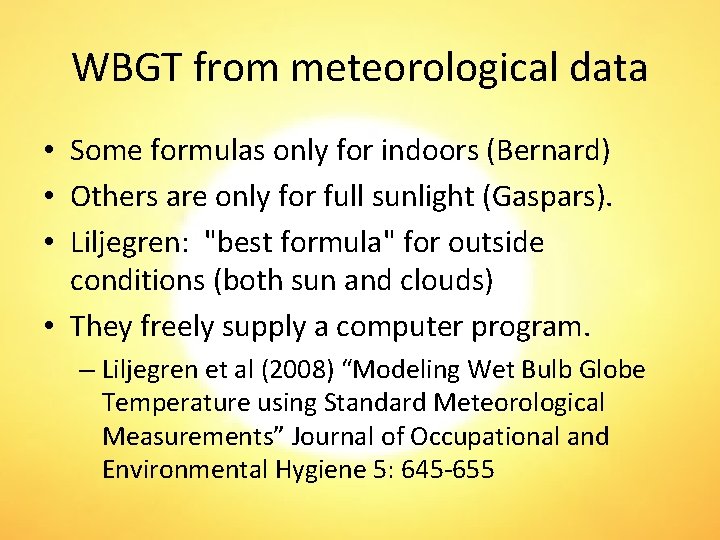
WBGT from meteorological data • Some formulas only for indoors (Bernard) • Others are only for full sunlight (Gaspars). • Liljegren: "best formula" for outside conditions (both sun and clouds) • They freely supply a computer program. – Liljegren et al (2008) “Modeling Wet Bulb Globe Temperature using Standard Meteorological Measurements” Journal of Occupational and Environmental Hygiene 5: 645 -655
ABM is wrong
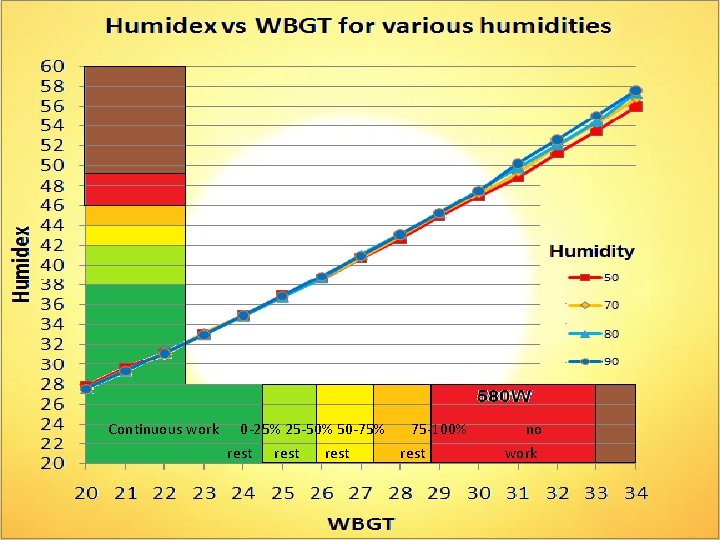
Continuous work 0 -25% 25 -50% 50 -75% 75 -100% rest no work