
Calculating Gap Calculating Growth Presented by Jan Stone

Calculating Gap Calculating Growth Presented by: Jan Stone Director of Assessment, Data & Research Bullitt County Public Schools

Calculating Gap

Calculating Gap Non. Duplicated Gap Points (50%) Novice Reduction Points (50%) Total Gap Points
Non-Duplicated GAP Group (50%)
Who’s in the Non-Duplicated Gap? A student is included in the non-duplicated gap group if the student is a member of one of the following groups: • African American • Hispanic • American Indian/Alaska Native • Limited English Proficiency • Free/Reduced-Price Lunch • Disability – with IEP

How the Non-Duplicated Gap is Calculated? • Minimum for reporting is 10 students • The percentage of students scoring proficient and distinguished in ALL CONTENT AREAS • Based on school population, not grade-by-grade enrollment • The student only counts once in each content area 6
Novice Reduction Targets (50%)
Who’s in the Novice Reduction Target Group? The following demographic groups are eligible to have a target: • African American • Hispanic • American Indian/Alaska Native • Limited English Proficiency • Free/Reduced-Price Lunch • Disability – with IEP • NON-DUPLICATED GAP GROUP AS A WHOLE 8
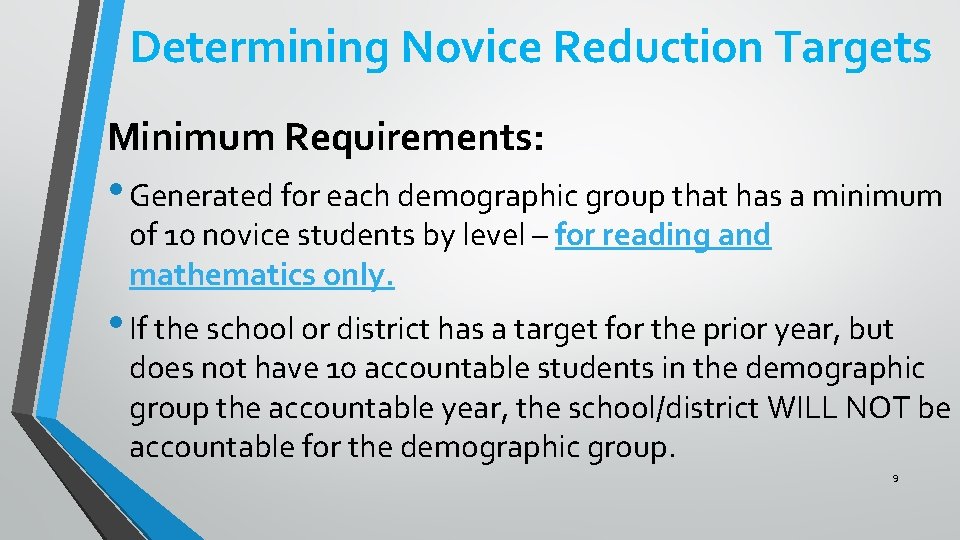
Determining Novice Reduction Targets Minimum Requirements: • Generated for each demographic group that has a minimum of 10 novice students by level – for reading and mathematics only. • If the school or district has a target for the prior year, but does not have 10 accountable students in the demographic group the accountable year, the school/district WILL NOT be accountable for the demographic group. 9
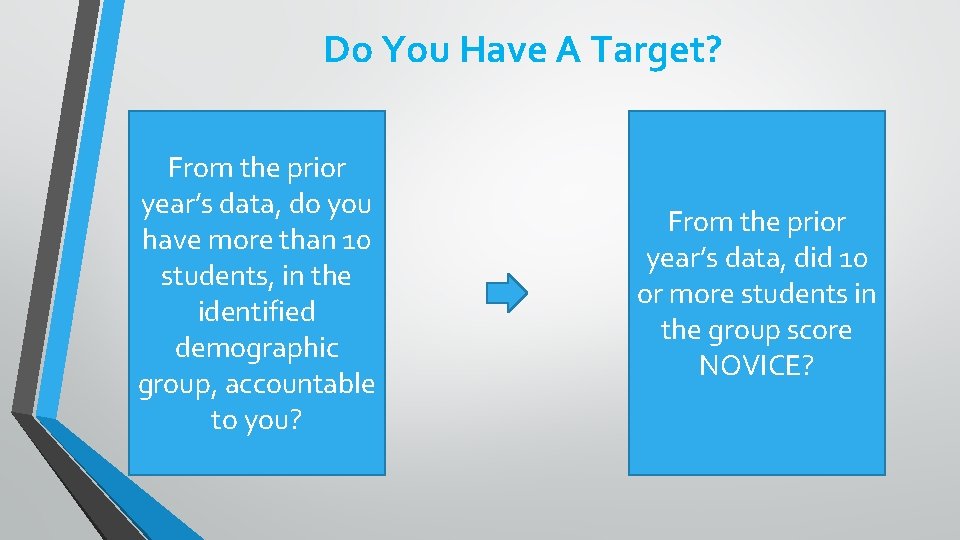
Do You Have A Target? From the prior year’s data, do you have more than 10 students, in the identified demographic group, accountable to you? From the prior year’s data, did 10 or more students in the group score NOVICE?

If you made it through both doors (answered yes to both), congratulations! YOU HAVE A TARGET!
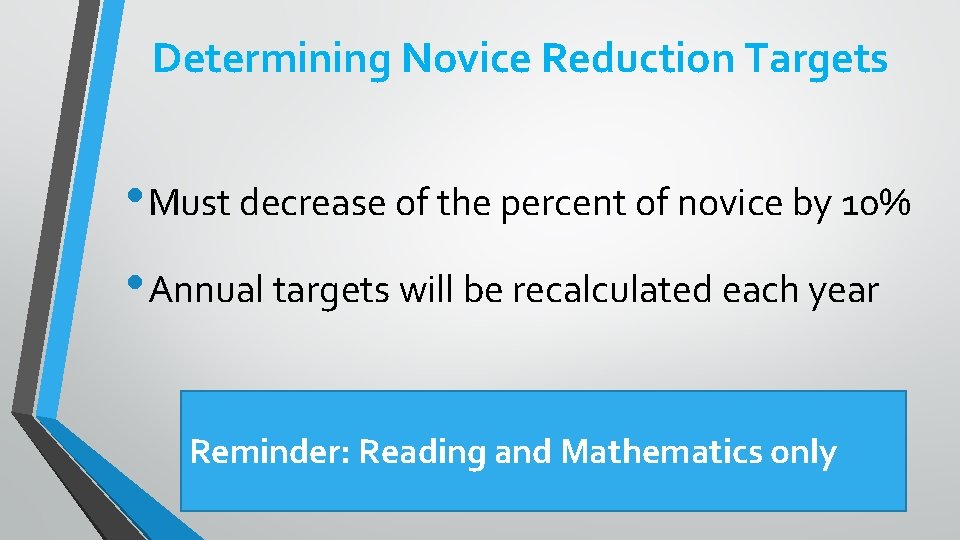
Determining Novice Reduction Targets • Must decrease of the percent of novice by 10% • Annual targets will be recalculated each year Reminder: Reading and Mathematics only 12
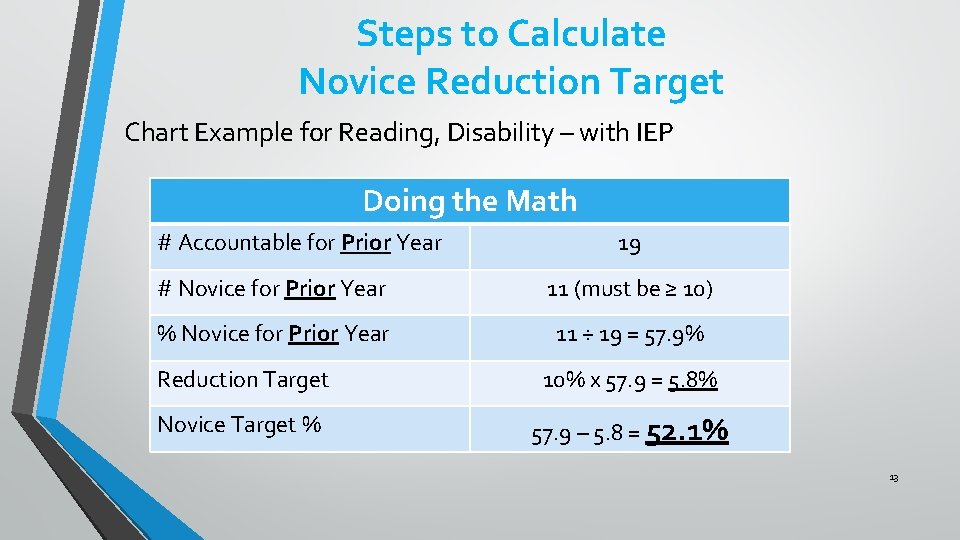
Steps to Calculate Novice Reduction Target Chart Example for Reading, Disability – with IEP Doing the Math # Accountable for Prior Year 19 # Novice for Prior Year 11 (must be ≥ 10) % Novice for Prior Year 11 ÷ 19 = 57. 9% Reduction Target 10% x 57. 9 = 5. 8% Novice Target % 57. 9 – 5. 8 = 52. 1% 13
Calculating Novice Reduction Points In the current year’s data, do you have more than 10 students, in the identified demographic group, accountable to you?
Calculating ANNUAL Novice Reduction Points • If a demographic group has both a prior year target and a current year population, the percentage of the target met is calculated. • Reporting values for each category is capped at 100%. 15
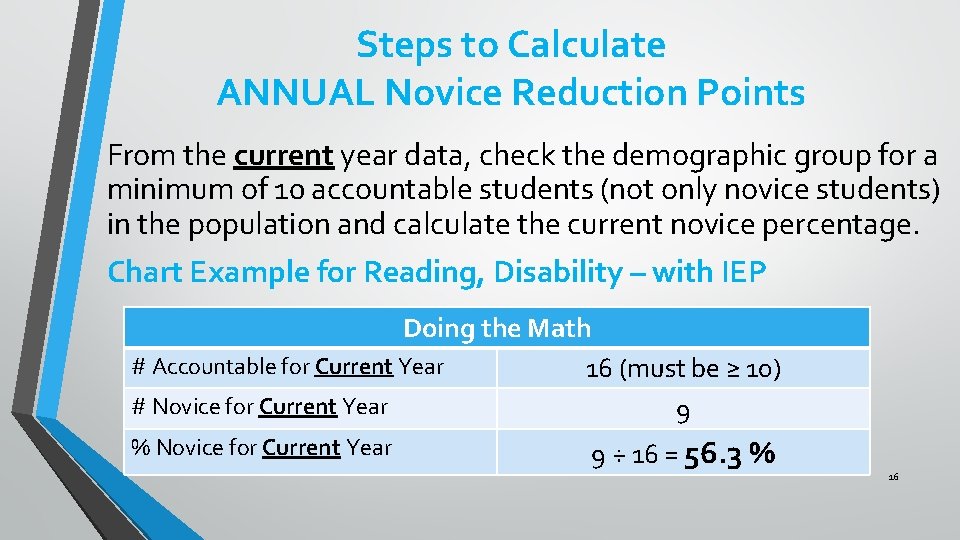
Steps to Calculate ANNUAL Novice Reduction Points From the current year data, check the demographic group for a minimum of 10 accountable students (not only novice students) in the population and calculate the current novice percentage. Chart Example for Reading, Disability – with IEP Doing the Math # Accountable for Current Year 16 (must be ≥ 10) # Novice for Current Year 9 % Novice for Current Year 9 ÷ 16 = 56. 3 % 16
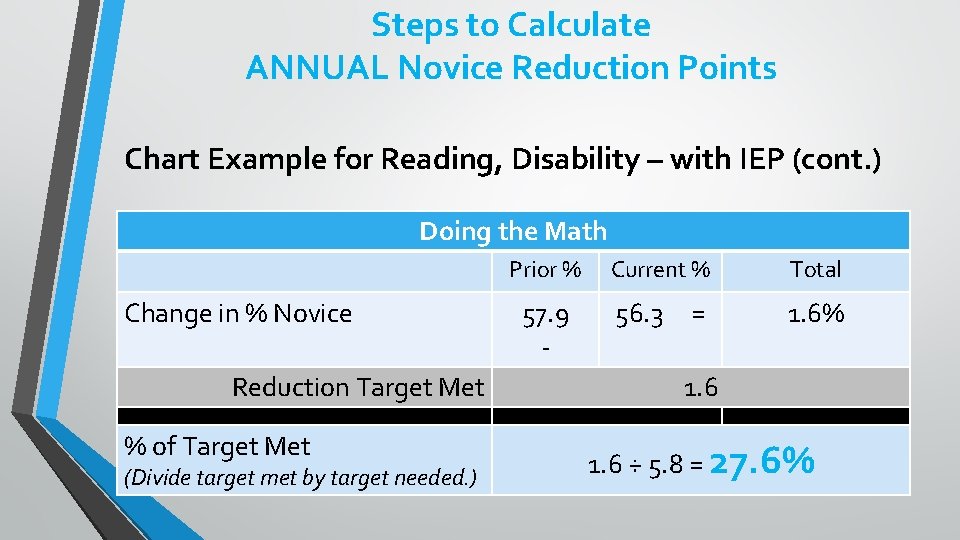
Steps to Calculate ANNUAL Novice Reduction Points Chart Example for Reading, Disability – with IEP (cont. ) Doing the Math Prior % Change in % Novice Reduction Target Met % of Target Met (Divide target met by target needed. ) 57. 9 - Current % Total 56. 3 1. 6% = 1. 6 ÷ 5. 8 = 27. 6%
Steps to Calculate ANNUAL Novice Reduction Points Average the percentages for the reported annual target groups to calculate the novice reduction points for each content area (reading and mathematics separately). Doing the math: • Add the percentages of the targets met for each accountable group. • Divide by total number of targets for which you are accountable. 18
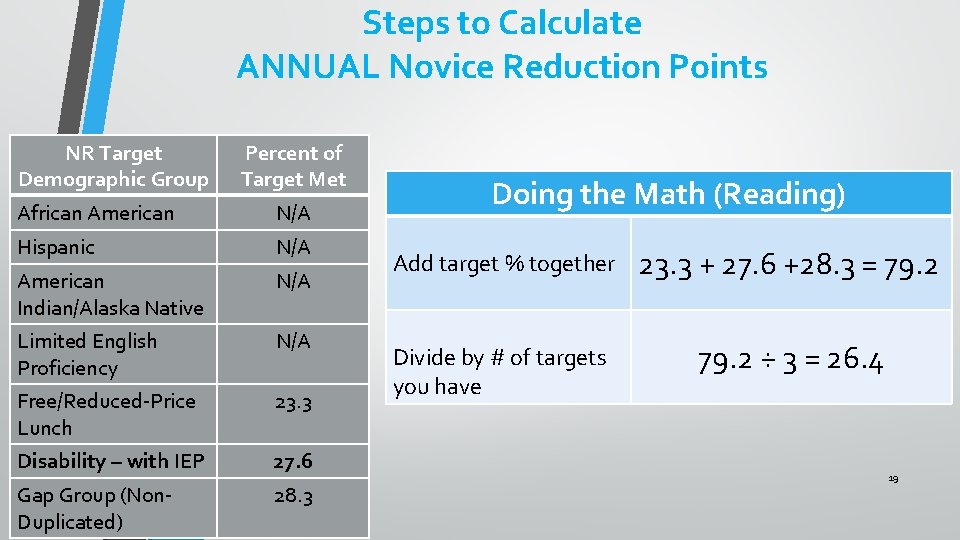
Steps to Calculate ANNUAL Novice Reduction Points NR Target Demographic Group Percent of Target Met African American N/A Hispanic N/A American Indian/Alaska Native N/A Limited English Proficiency N/A Free/Reduced-Price Lunch 23. 3 Disability – with IEP 27. 6 Gap Group (Non. Duplicated) 28. 3 Doing the Math (Reading) Add target % together 23. 3 + 27. 6 +28. 3 = 79. 2 Divide by # of targets you have 79. 2 ÷ 3 = 26. 4 19
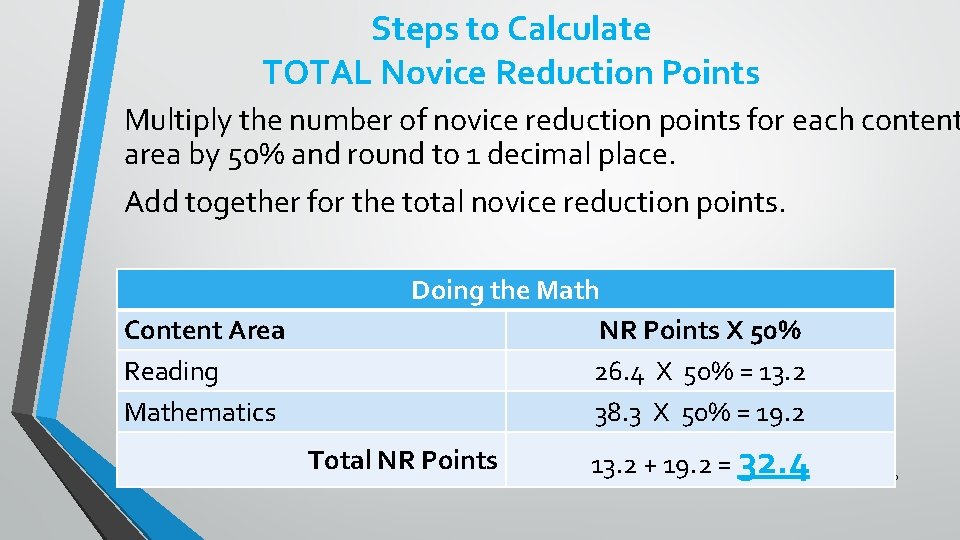
Steps to Calculate TOTAL Novice Reduction Points Multiply the number of novice reduction points for each content area by 50% and round to 1 decimal place. Add together for the total novice reduction points. Content Area Reading Mathematics Doing the Math NR Points X 50% 26. 4 X 50% = 13. 2 38. 3 X 50% = 19. 2 Total NR Points 13. 2 + 19. 2 = 32. 4 20
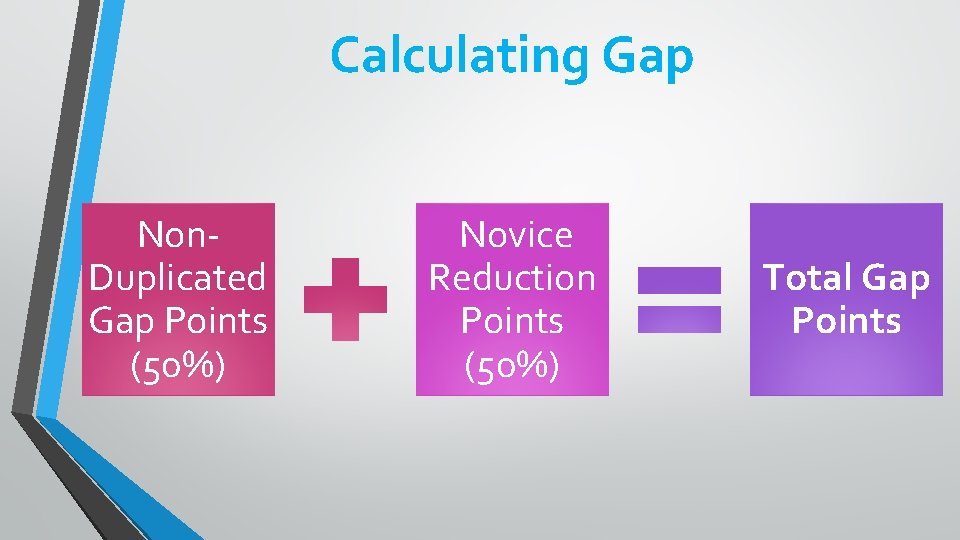
Calculating Gap Non. Duplicated Gap Points (50%) Novice Reduction Points (50%) Total Gap Points
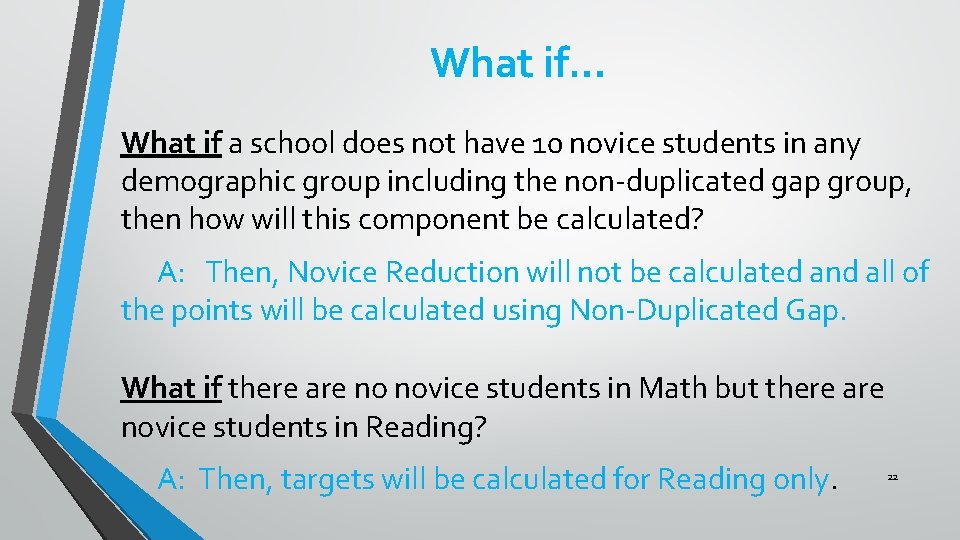
What if… What if a school does not have 10 novice students in any demographic group including the non-duplicated gap group, then how will this component be calculated? A: Then, Novice Reduction will not be calculated and all of the points will be calculated using Non-Duplicated Gap. What if there are no novice students in Math but there are novice students in Reading? A: Then, targets will be calculated for Reading only. 22

Calculating Growth
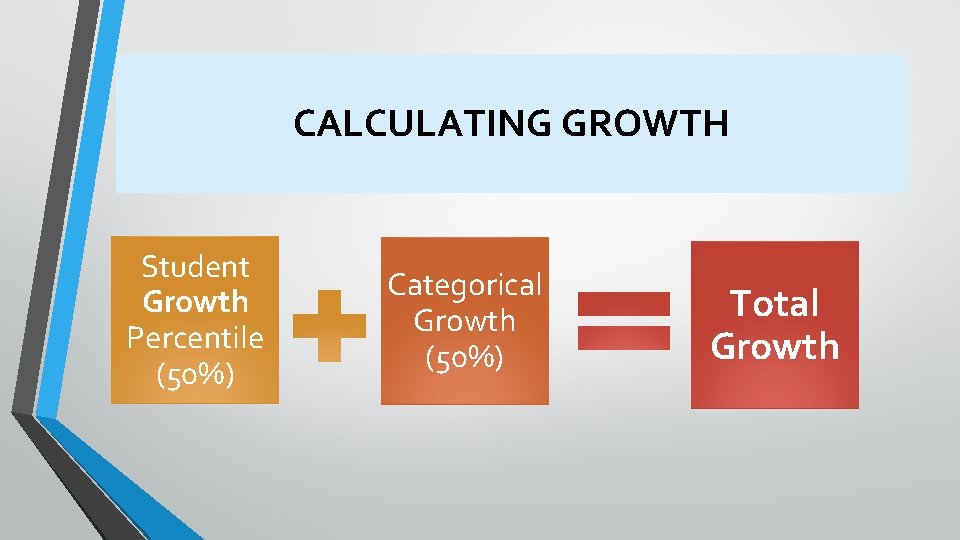
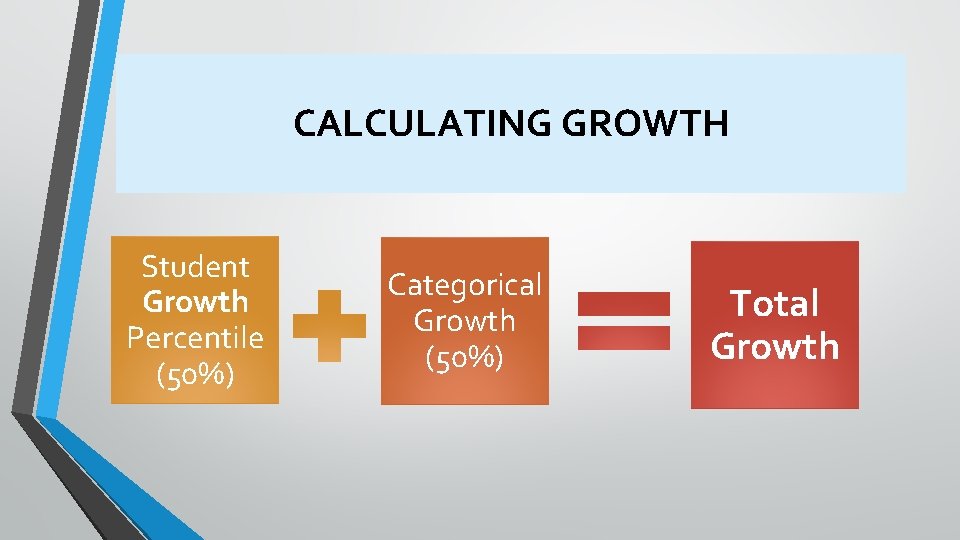
CALCULATING GROWTH Student Growth Percentile (50%) Categorical Growth (50%) Total Growth
Calculating Growth Percentile Percentage
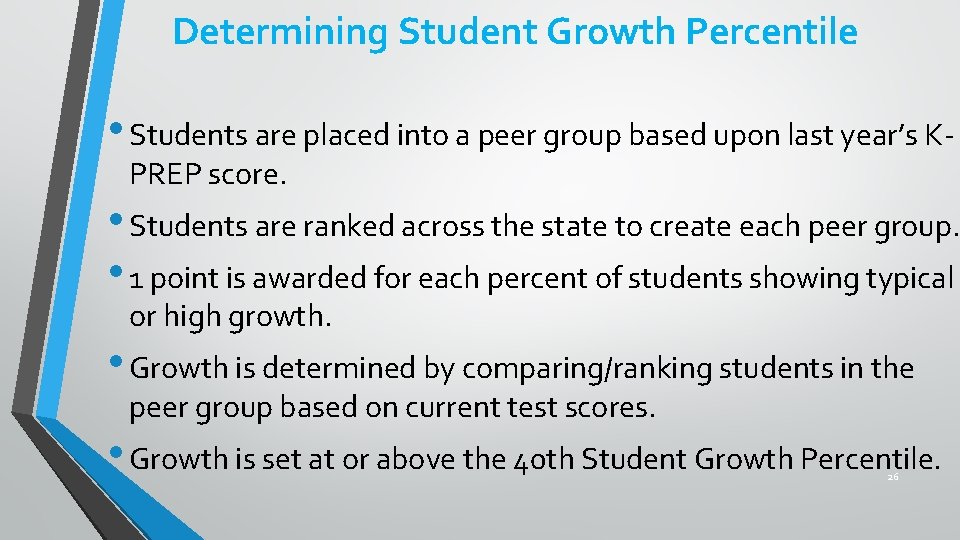
Determining Student Growth Percentile • Students are placed into a peer group based upon last year’s KPREP score. • Students are ranked across the state to create each peer group. • 1 point is awarded for each percent of students showing typical or high growth. • Growth is determined by comparing/ranking students in the peer group based on current test scores. • Growth is set at or above the 40 th Student Growth Percentile. 26
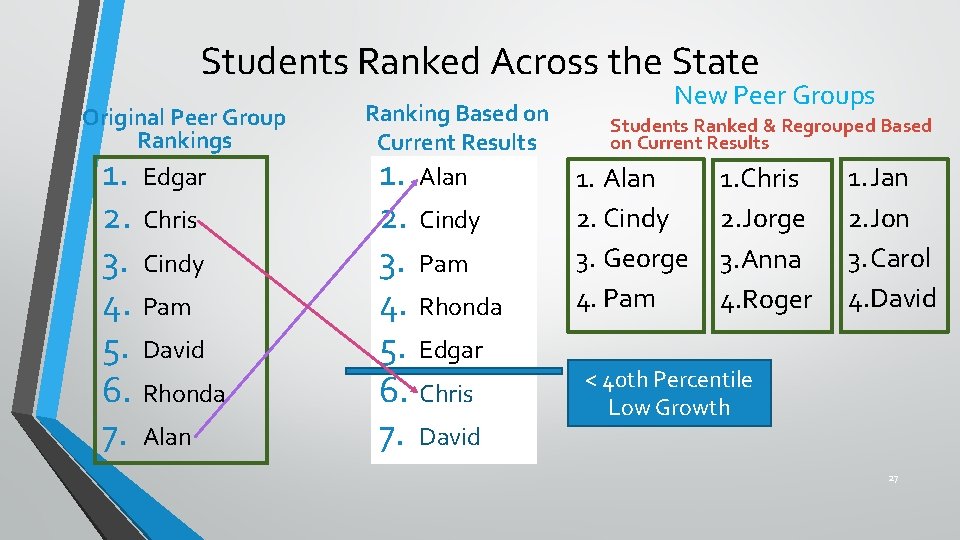
Students Ranked Across the State Original Peer Group Rankings 1. Edgar 2. Chris 3. Cindy 4. Pam 5. David 6. Rhonda 7. Alan Ranking Based on Current Results 1. Alan 2. Cindy 3. Pam 4. Rhonda 5. Edgar 6. Chris 7. David New Peer Groups Students Ranked & Regrouped Based on Current Results 1. Alan 2. Cindy 3. George 4. Pam 1. Chris 2. Jorge 3. Anna 4. Roger 1. Jan 2. Jon 3. Carol 4. David < 40 th Percentile Low Growth 27
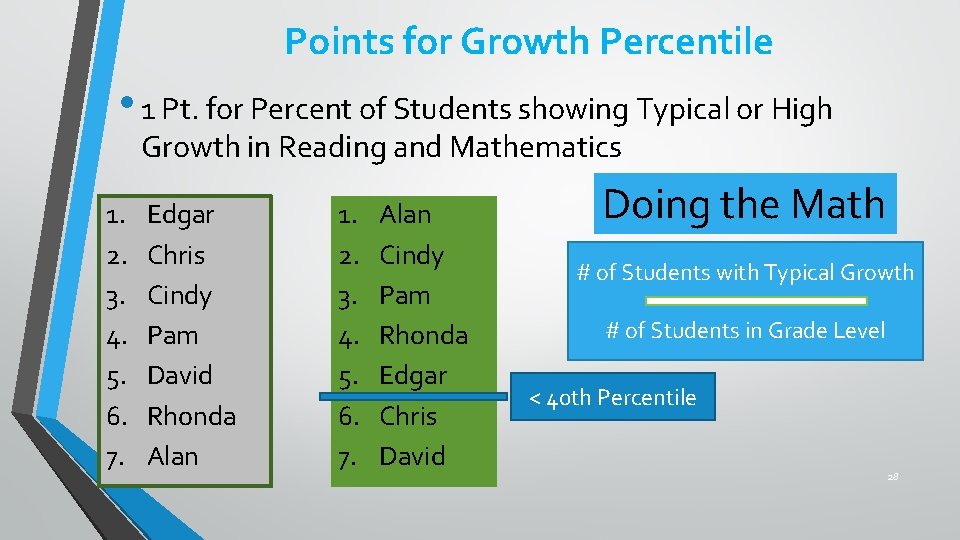
Points for Growth Percentile • 1 Pt. for Percent of Students showing Typical or High Growth in Reading and Mathematics 1. 2. 3. 4. 5. 6. 7. Edgar Chris Cindy Pam David Rhonda Alan 1. 2. 3. 4. 5. 6. 7. Alan Cindy Pam Rhonda Edgar Chris David Doing the Math # of Students with Typical Growth # of Students in Grade Level < 40 th Percentile 28

Calculating Categorical Student Growth
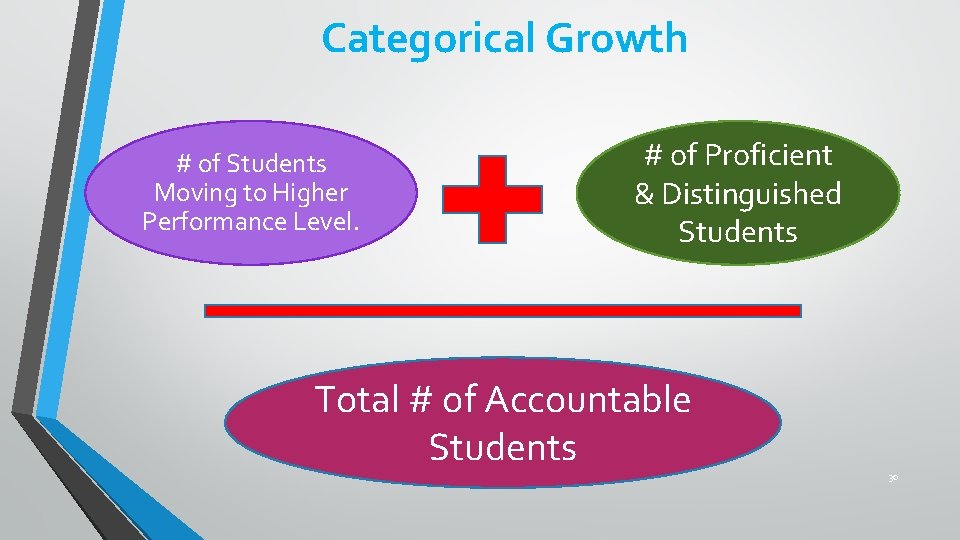
Categorical Growth # of Students Moving to Higher Performance Level. # of Proficient & Distinguished Students Total # of Accountable Students 30
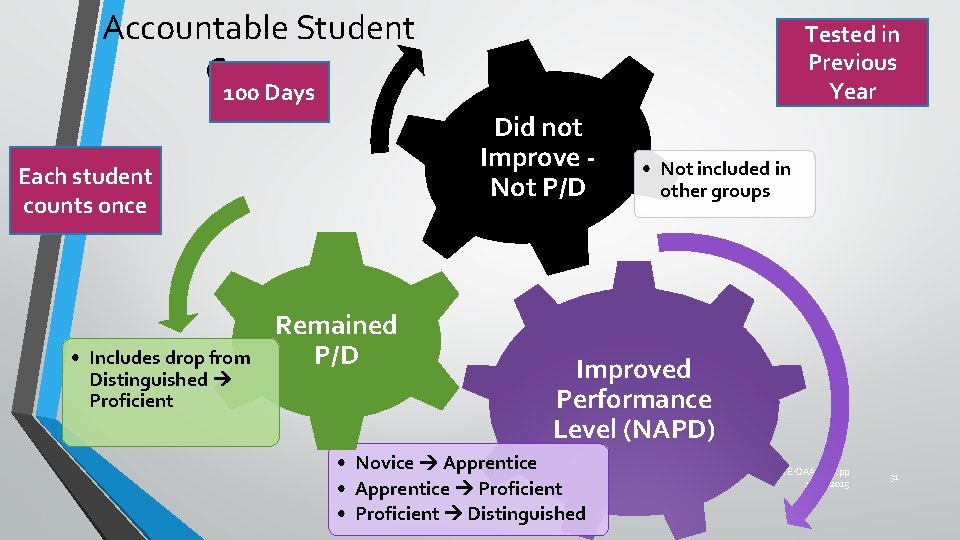
Accountable Student Groups Tested in Previous Year 100 Days Did not Improve Not P/D Each student counts once • Includes drop from Distinguished Proficient Remained P/D • Not included in other groups Improved Performance Level (NAPD) • Novice Apprentice • Apprentice Proficient • Proficient Distinguished KDE: OAA: DSR: pp : 12/15/2015 31
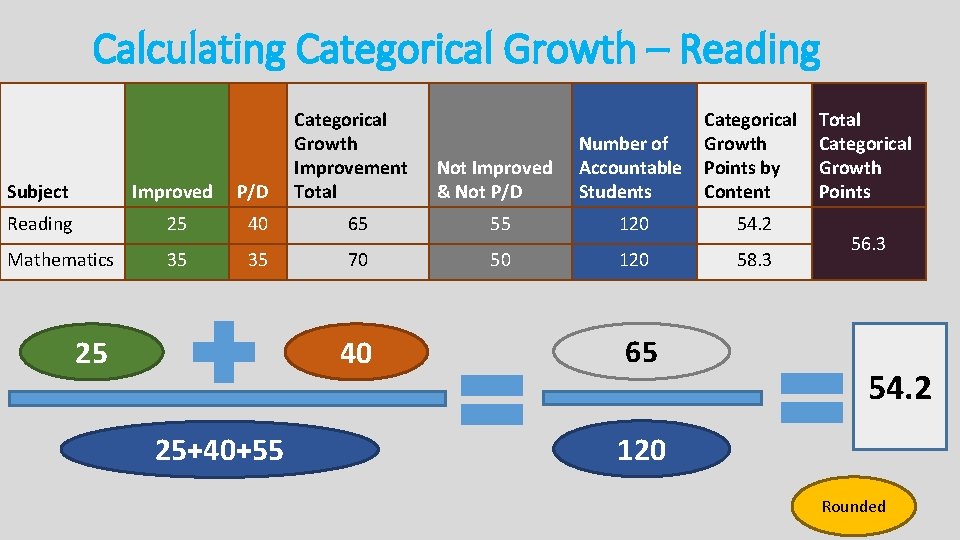
Calculating Categorical Growth – Reading Categorical Growth Improvement Total Not Improved & Not P/D Number of Accountable Students Categorical Growth Points by Content Subject Improved P/D Reading 25 40 65 55 120 54. 2 Mathematics 35 35 70 50 120 58. 3 25 40 25+40+55 65 Total Categorical Growth Points 56. 3 54. 2 120 Rounded
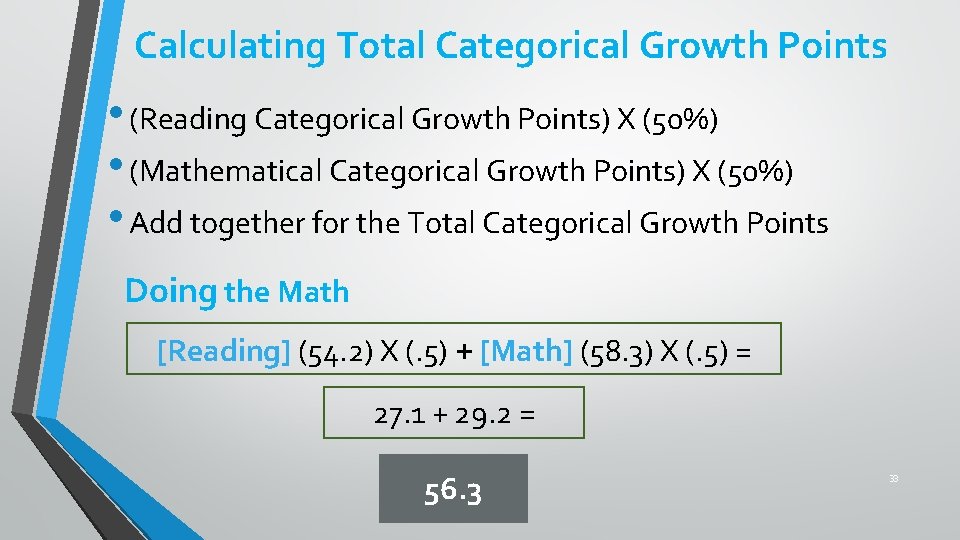
Calculating Total Categorical Growth Points • (Reading Categorical Growth Points) X (50%) • (Mathematical Categorical Growth Points) X (50%) • Add together for the Total Categorical Growth Points Doing the Math [Reading] (54. 2) X (. 5) + [Math] (58. 3) X (. 5) = 27. 1 + 29. 2 = 56. 3 33
CALCULATING GROWTH Student Growth Percentile (50%) Categorical Growth (50%) Total Growth

Questions/Comments
- Slides: 35