
Calculating Energy Changes at Phase Changes heating rate

- Slides: 15
Calculating Energy Changes at Phase Changes
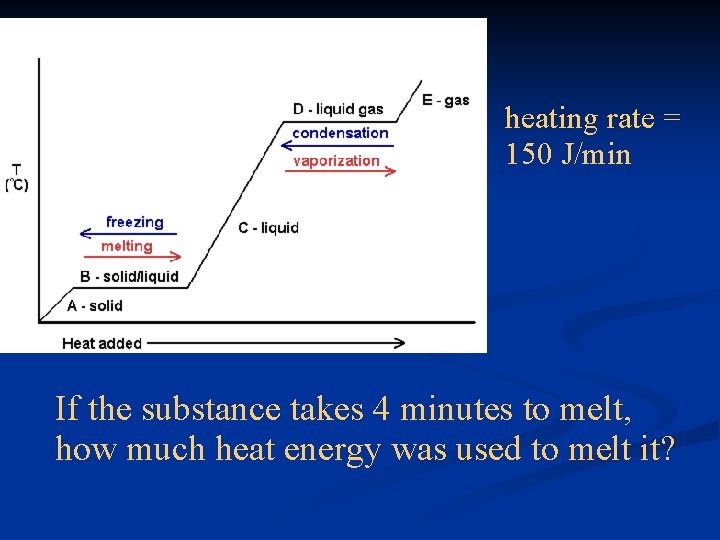
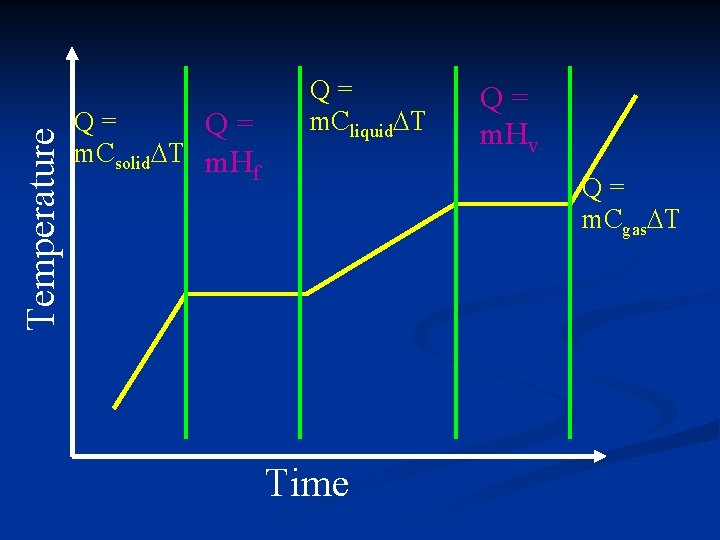
heating rate = 150 J/min If the substance takes 4 minutes to melt, how much heat energy was used to melt it?
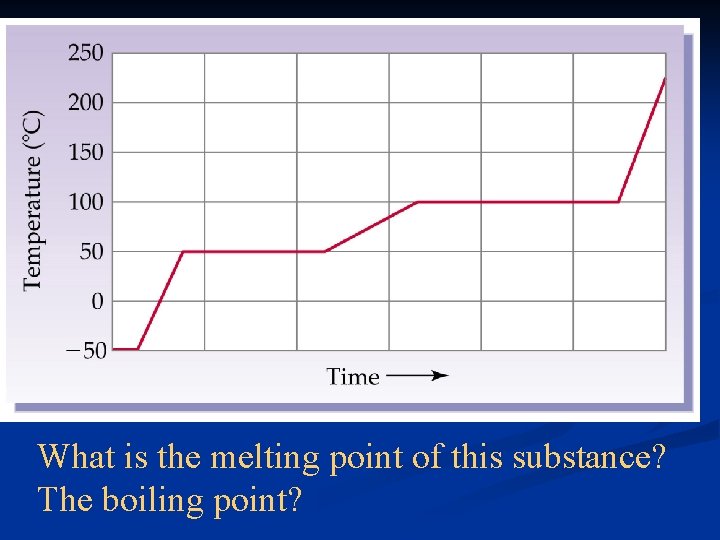
What is the melting point of this substance? The boiling point?
Heat of Fusion = amount energy required to change 1 gram of pure substance from solid to liquid at its mp Heat of Fusion = Hf = physical constant for water = 334 J/g (Table B)
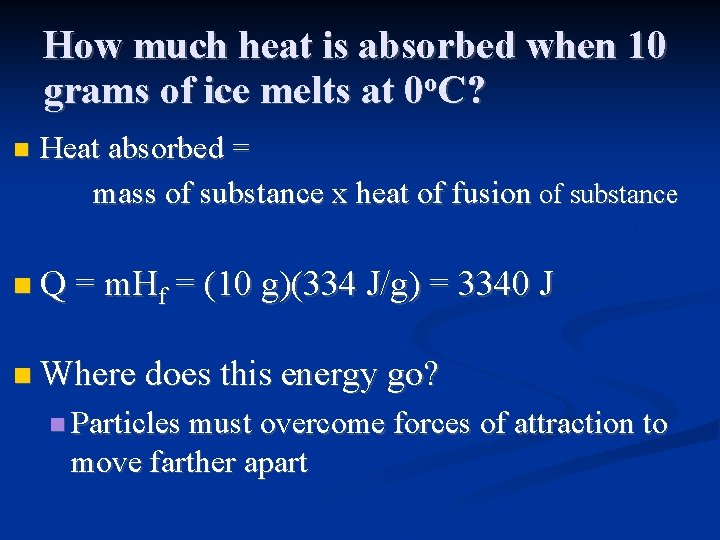
How much heat is absorbed when 10 grams of ice melts at 0 o. C? Heat absorbed = mass of substance x heat of fusion of substance Q = m. Hf = (10 g)(334 J/g) = 3340 J Where does this energy go? Particles must overcome forces of attraction to move farther apart
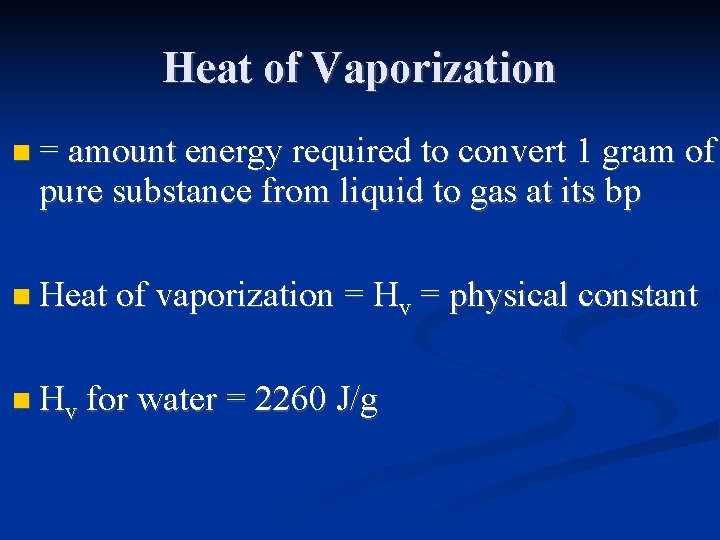
Heat of Vaporization = amount energy required to convert 1 gram of pure substance from liquid to gas at its bp Heat of vaporization = Hv for water = 2260 J/g = physical constant
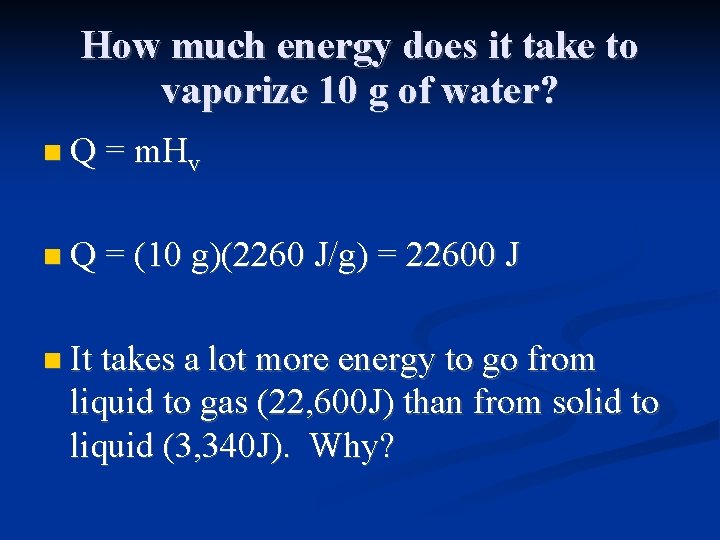
How much energy does it take to vaporize 10 g of water? Q = m. Hv Q = (10 g)(2260 J/g) = 22600 J It takes a lot more energy to go from liquid to gas (22, 600 J) than from solid to liquid (3, 340 J). Why?
H 2 O changing from solid to liquid requires 3, 340 J/g
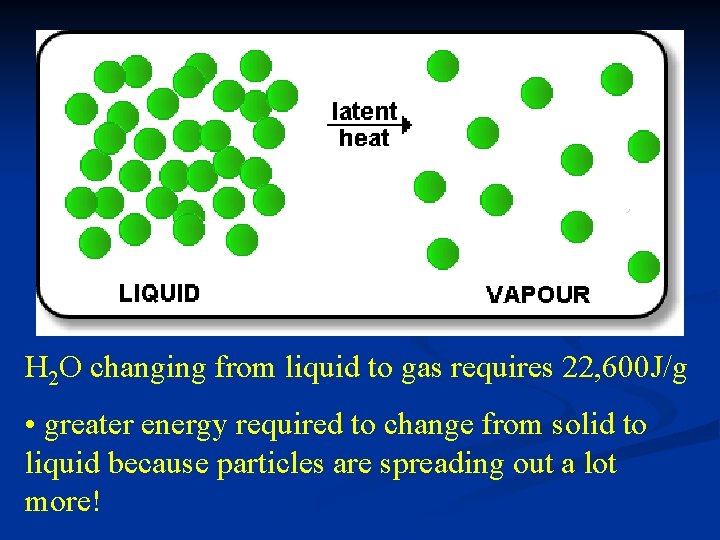
H 2 O changing from liquid to gas requires 22, 600 J/g • greater energy required to change from solid to liquid because particles are spreading out a lot more!
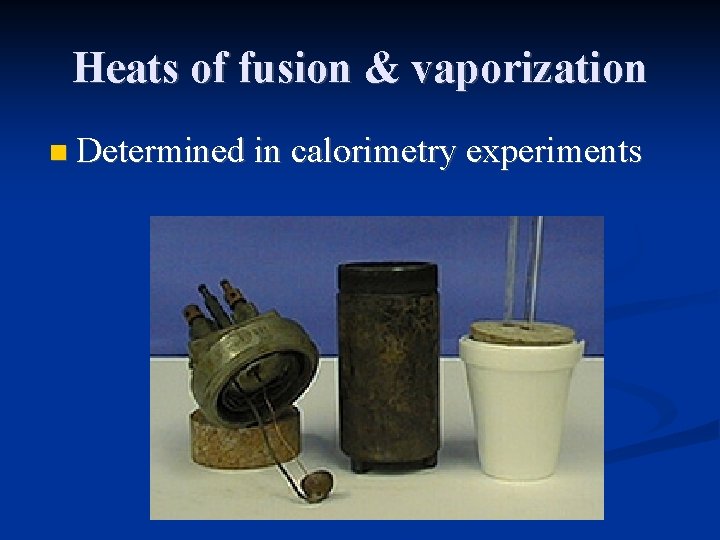
Heats of fusion & vaporization Determined in calorimetry experiments
Temperature Q= Q= m. Csolid T m. H Q= m. Cliquid T f Q= m. Hv Q= m. Cgas T Time
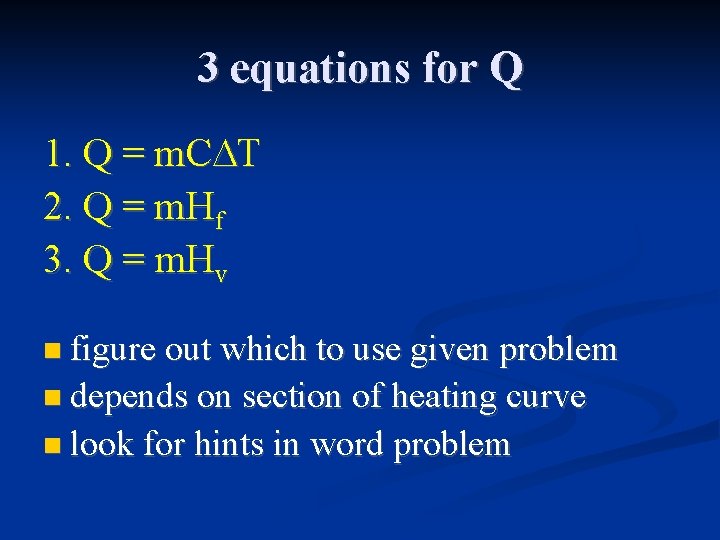
3 equations for Q 1. Q = m. C T 2. Q = m. Hf 3. Q = m. Hv figure out which to use given problem depends on section of heating curve look for hints in word problem
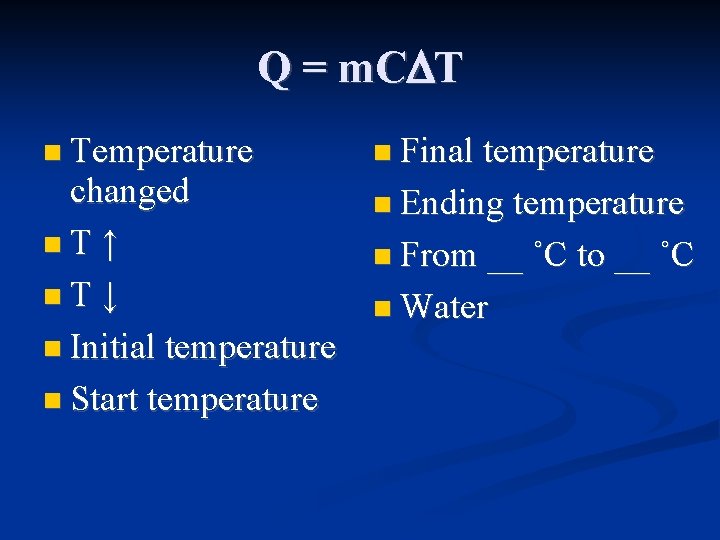
Q = m. C T Temperature changed T↑ T↓ Initial temperature Start temperature Final temperature Ending temperature From __ ˚C to __ ˚C Water
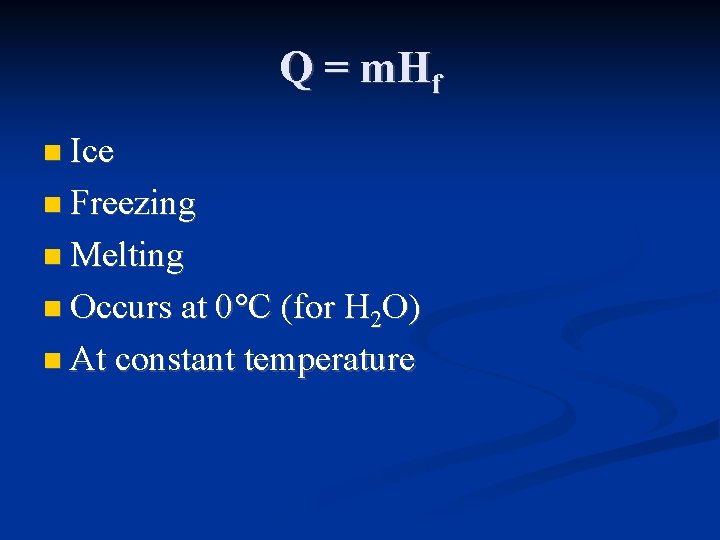
Q = m. Hf Ice Freezing Melting Occurs at 0 C (for H 2 O) At constant temperature
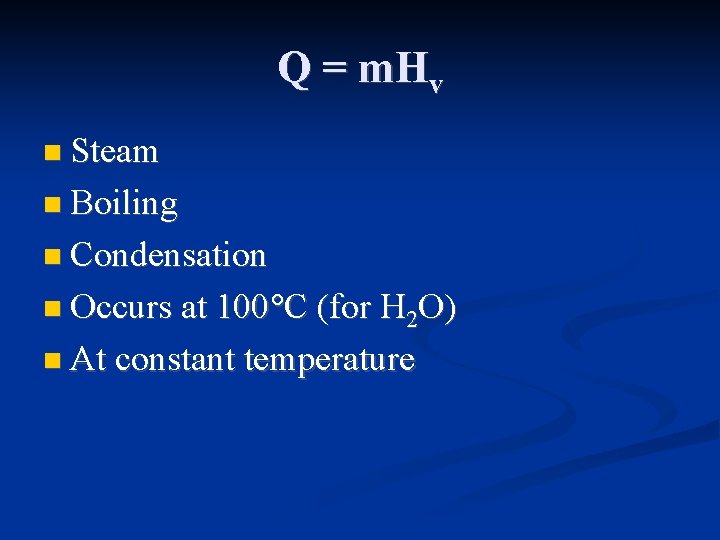
Q = m. Hv Steam Boiling Condensation Occurs at 100 C (for H 2 O) At constant temperature