
CALCAREA CARBONICA Dr C R KRISHNA KUMARI AMMA
CALCAREA CARBONICA Dr. C. R. KRISHNA KUMARI AMMA HOD & PROF Dept Of Materia Medica
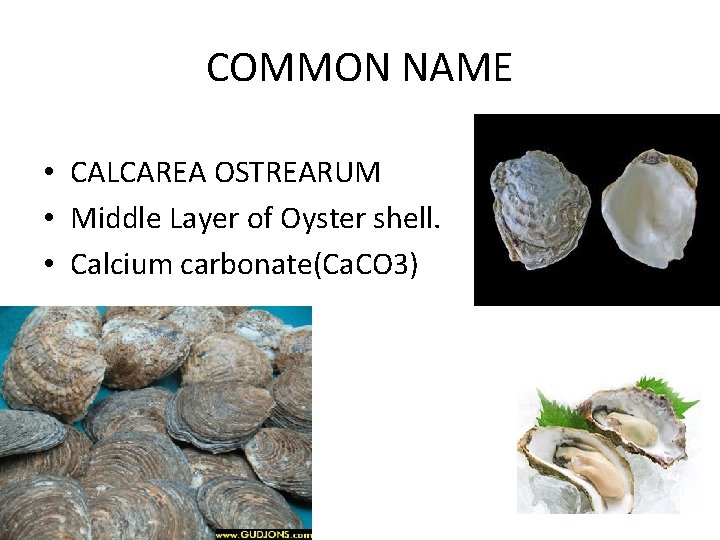
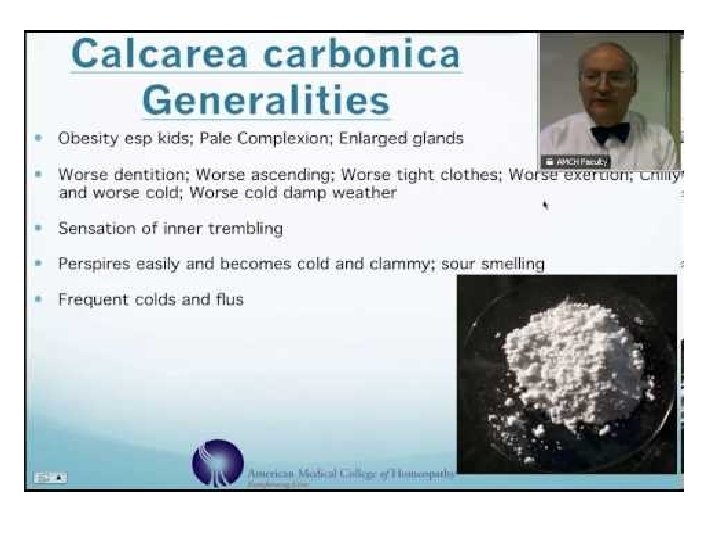
COMMON NAME • CALCAREA OSTREARUM • Middle Layer of Oyster shell. • Calcium carbonate(Ca. CO 3)
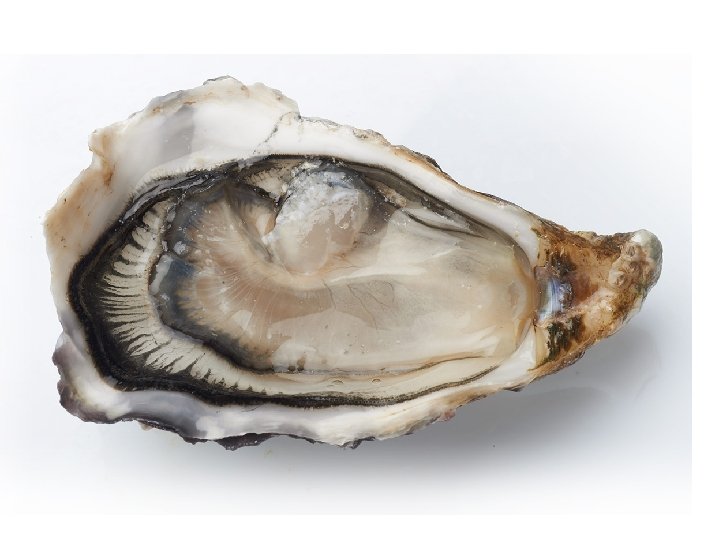
PREPARATION • For Hahnemann's provings, trituration of the middle layer of the oyster-shell. • For Dr. Koch's provings, precipitated carbonate of lime from a solution of chalk in hydrochloric acid, is triturated with an equal quantity of sugar of milk; twenty parts of this are mixed with one hundred parts of alcohol, and this is termed the tincture.
• This great Hahnemannian anti-psoric is a constitutional remedy par excellence. • Moreover, Calcarea is one of the polychrest remedies, and ranks with Sulphur and Lycopodium at the head of the antipsorics.
• All three have a very wide range and deep action. • They have many symptoms in common, but Calc. is somewhat sharply distinguished from Sulphur in that it is a chilly remedy, the patient seeking warmth, whilst the Sulphur patient is agg. by heat, and >> by cold. • Calc. has cold, clammy feet, "as if there were damp stockings on"; Sulphur has characteristically hot, sweaty feet. • The "sinking sensation" common to all three is most marked with Sulphur at 11 a. m. , with Lycopod. at 4 p. m. , with Calcarea at any time
SOURCE • Milk and milk products are main source of calcium. Fish, vegetable, fruits, cereals (ragi rich in calcium) and drinking water are other sources. • (Green leafy vegetables are the cheapest natural source of calcium but the bio availability of calcium is poor. • Presence of oxalic acid, which forms an insoluble substance with calcium, namely calcium oxalate, which make the complete absorption of impossible. • Availability of calcium from a good source like milk is adversely affected by the simultaneous consumption of green leafy vegetable) • Recommended in take of calcium (adult) – 400 – 500 mg / day.
CLARKE SAYS, • "Calcarea is one of the greatest monuments to Dr. Hahnemann's genius. • The triad of remedies, viz. , Sulphur, Calcarea and Lycopodium can be called Hahnemann's magnificient gifts to humanity. • The excellent remedies - Sulphur, the predominant antipsoric, Calc-c, the excellent antisycotic and Lyc. , the marvellous antisyphilitic. "
SPHERES OF ACTION • Through the great vegetative nervous system, Calcarea has five special centers of action: • OSSEOUS SYSTEM. Non-Ossification, Rachitis, and Caries. • LYMPHATIC GLANDULAR SYSTEM. Atony and Hypertrophy. • SKIN. Pale, Atonic, Flabby; Copious Perspiration. • MUCOUS MEMBRANES. Catarrhal Mucorrhoea. • BLOOD. Hydraemia; Anaemia; Water Increased.
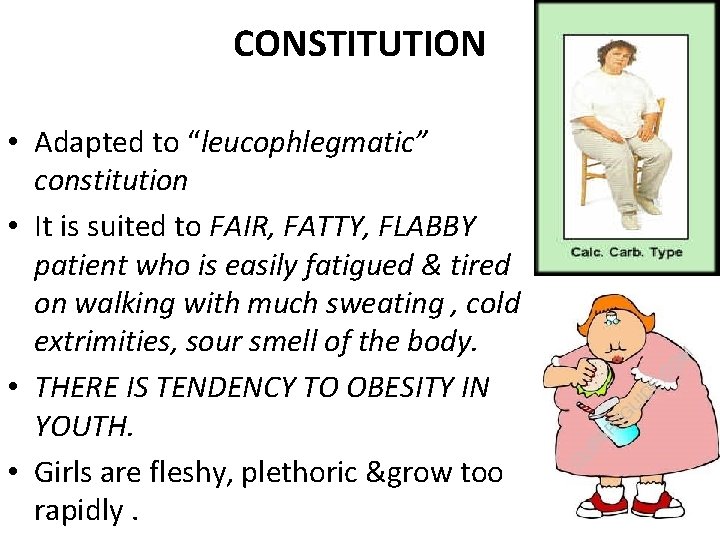
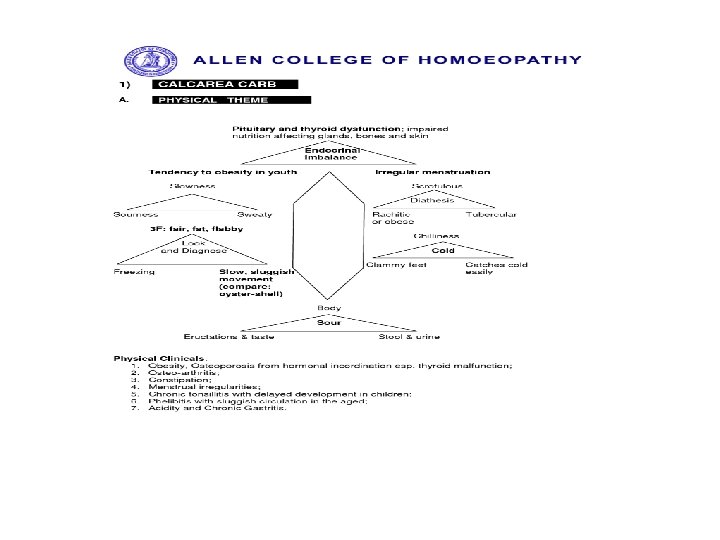
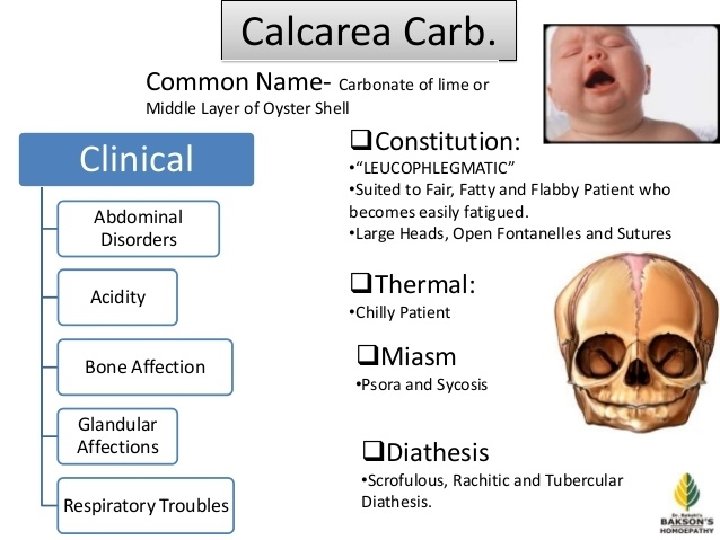
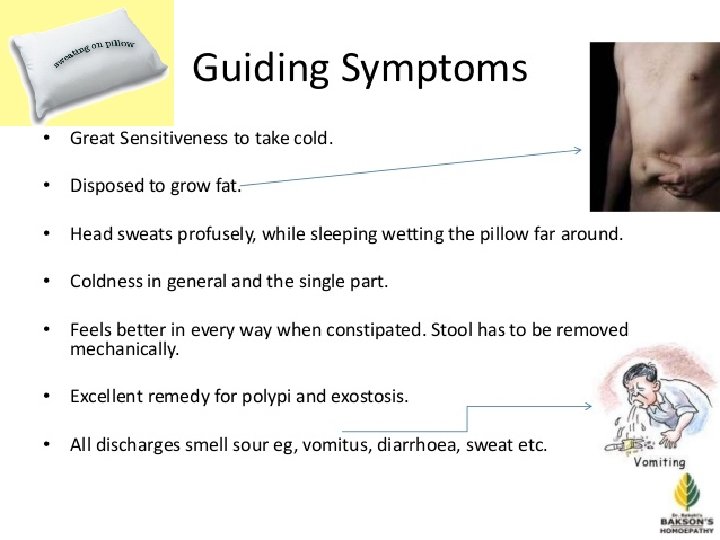
CONSTITUTION • Adapted to “leucophlegmatic” constitution • It is suited to FAIR, FATTY, FLABBY patient who is easily fatigued & tired on walking with much sweating , cold extrimities, sour smell of the body. • THERE IS TENDENCY TO OBESITY IN YOUTH. • Girls are fleshy, plethoric &grow too rapidly.
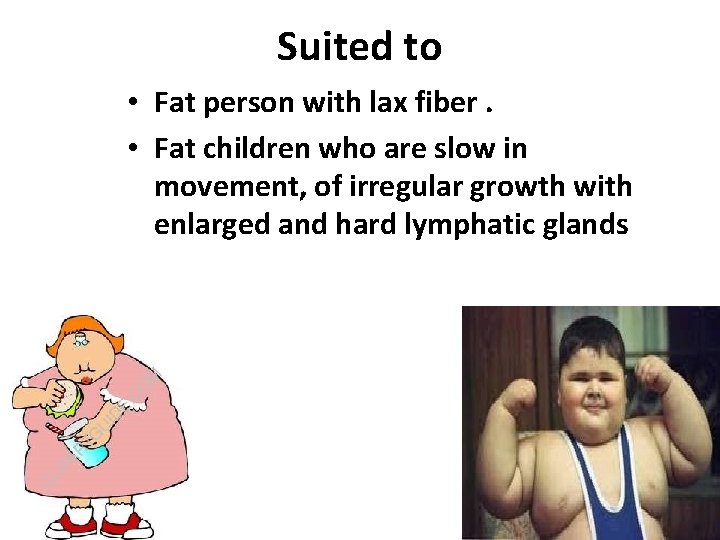
Suited to • Fat person with lax fiber. • Fat children who are slow in movement, of irregular growth with enlarged and hard lymphatic glands
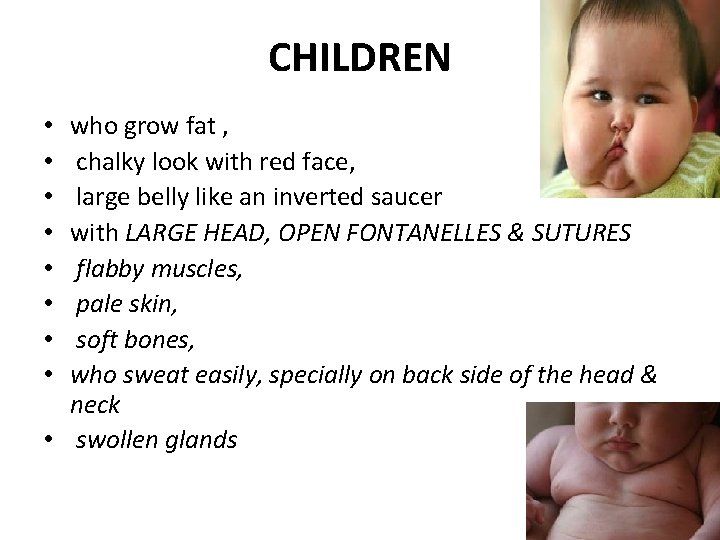
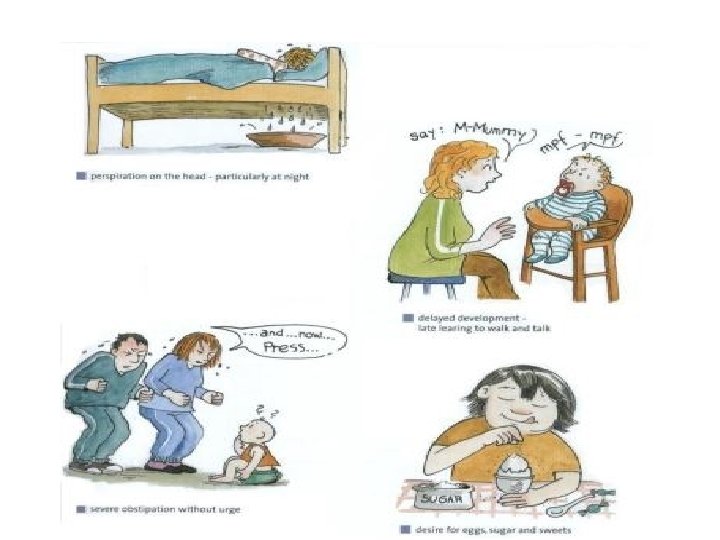
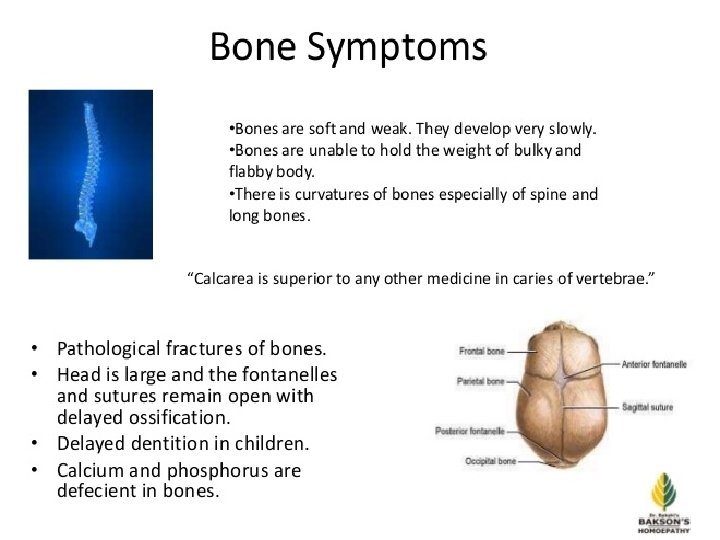
CHILDREN who grow fat , chalky look with red face, large belly like an inverted saucer with LARGE HEAD, OPEN FONTANELLES & SUTURES flabby muscles, pale skin, soft bones, who sweat easily, specially on back side of the head & neck • swollen glands • •
THERMALS CHILLY PATIENT, DISPOSED TO CATCH COLD VERY EASILY • DIATHESIS • Scrofulous, rachitic & tubercular diathesis lymphatic,
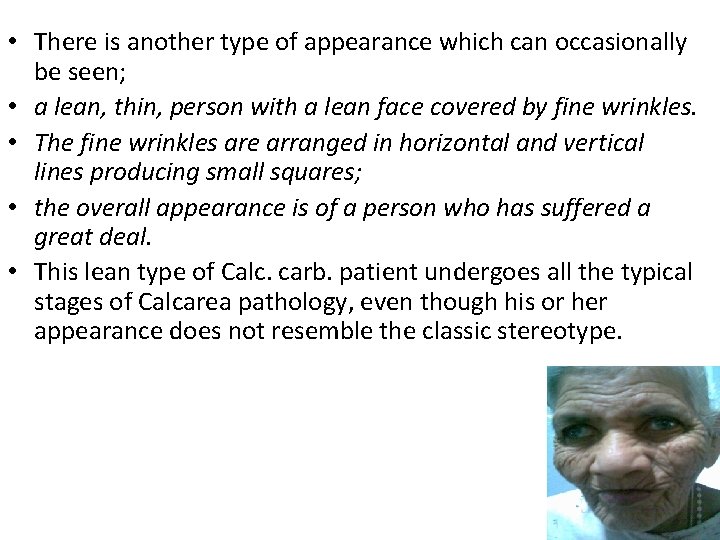
• There is another type of appearance which can occasionally be seen; • a lean, thin, person with a lean face covered by fine wrinkles. • The fine wrinkles are arranged in horizontal and vertical lines producing small squares; • the overall appearance is of a person who has suffered a great deal. • This lean type of Calc. carb. patient undergoes all the typical stages of Calcarea pathology, even though his or her appearance does not resemble the classic stereotype.
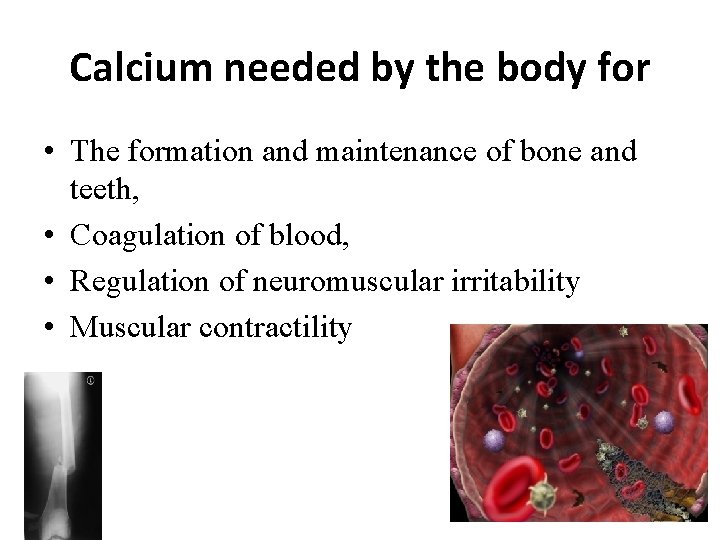
Calcium needed by the body for • The formation and maintenance of bone and teeth, • Coagulation of blood, • Regulation of neuromuscular irritability • Muscular contractility
Miasm • psora and syphilitic are predominant. • Posra -- Calc carb, Calc acet, Calc flour, Calc pho and Calc sul • Syphilitic—Calc flour, Calc iod Sycotic – Calc carb
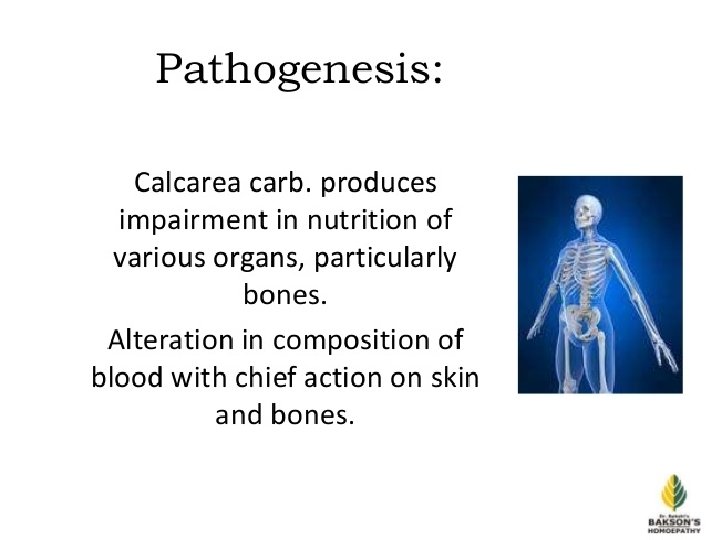
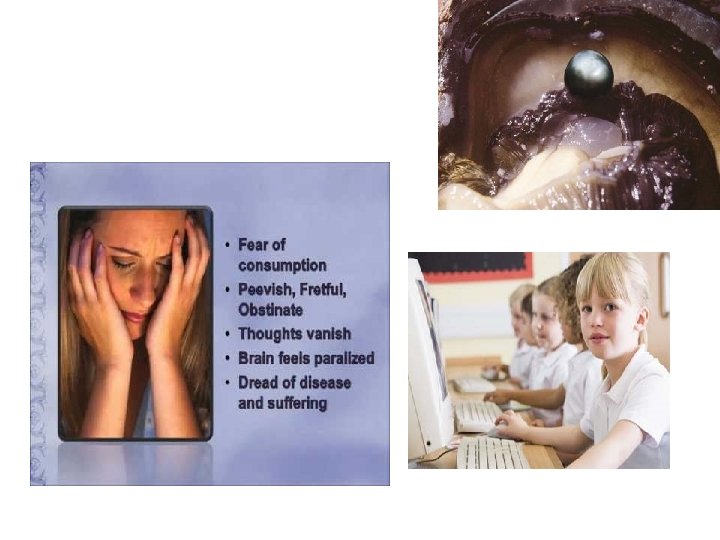
Mind • • • He is full of fear. Weary of life; hopelessness, anxiety. The world is black. "Fear that something sad or terrible will happen. Fears that she will lose her reason, or that people will observe her confusion of mind. " "Fear of death; of consumption; of contagious disease, of misfortune; of being alone. “ Apprehensive; worse towards evening; Fear anxiety, and vertigo. If his emotions stir him up he becomes dizzy. From going upstairs the blood mounts to the head, and he becomes dizzy. Confusion of mind and vertigo from mental exertion.
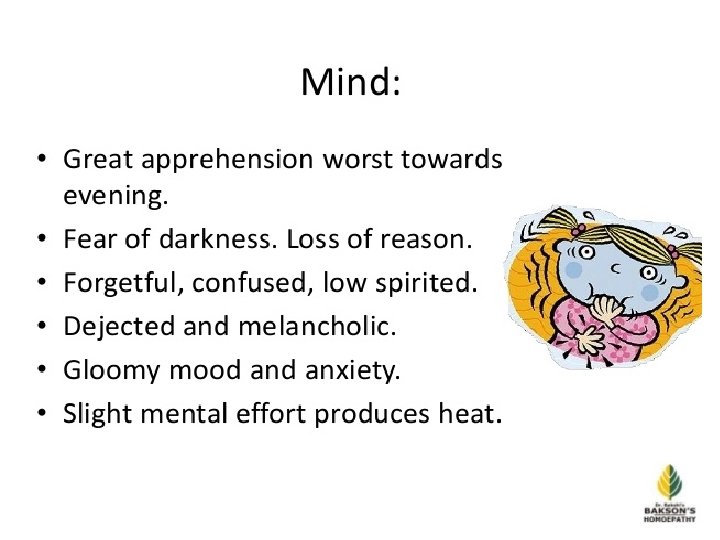
• Mentally they are sad, depressed and melancholic with great anxiety • Anxiety with palpitation • Mental effort produces hot head • Averse to work
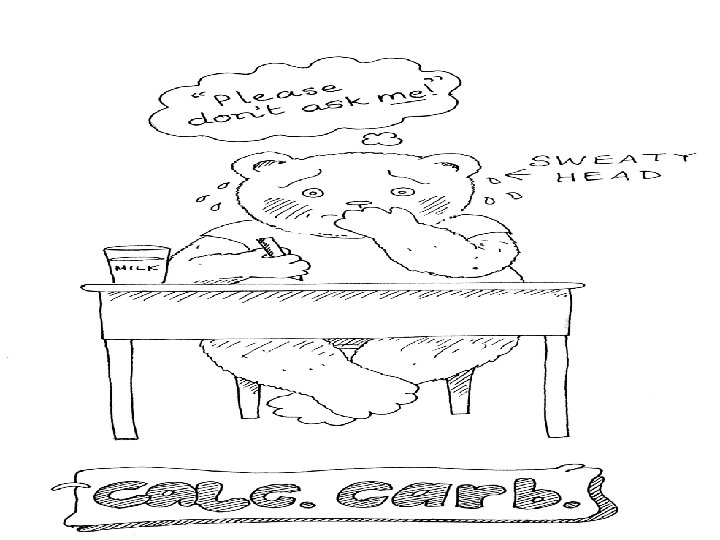
From Kent’s lectures • All the mind symptoms represent Calcarea as in a state of great weakness; inability to prolong mental operation. • He is tired mentally, and physically, from mental work and breaks down in a sweat, and becomes excited and irritable and disturbed. • Great disturbance of the emotions; • It is very useful in complaints from prolonged worry, from prolonged application to business, • from excitement.
HEAD • Vertigo on ascending and on turning head • Headache from overlifting , from mental exertion, with nausea • Head feels hot and heavy with pale face • Icycoldness in and on the head esp right side • Perspiration wets the pillow
EYES • • Sports and ulcers on cornea Dimness of vision as if looking through a mist Chronic dilatation off pupil Far sighted, cataract
EARS • Deafness from working in water • Srofulous inflammation with mucopurulent otorrhoea and enlarged glands
NOSE • • • Nostrils dry, sore, ulcerated Polypi, swelling at the root of nose Takes cold at every change of wether Catarrhal symptoms with hunger, Coryza alternates with colic
Face • - Pale, with deep-seated eyes, surrounded by dark rings. • Swelling of upper lip. • - Crusta lactea; itching, burning after washing. • - Submaxillary glands swollen. • - Goitre. • - Itching of pimples in whiskers. • - Pain from right mental foramen along lower jaw to ear.
Mouth Persistent sour taste. - Mouth fills with sour water. - Dryness of tongue at night. - Bleeding of gums. - Difficult and delayed dentition. - Teeth ache; excited by current of air, anything cold or hot. • - Offensive smell from mouth. • - Burning pain at tip of tongue; worse, anything warm taken into stomach. • • •
Throat • - Swelling of tonsils and submaxillary glands; stitches on swallowing. • - Hawking-up of mucus. • - Difficult swallowing. • - Goitre. • - Parotid fistula.
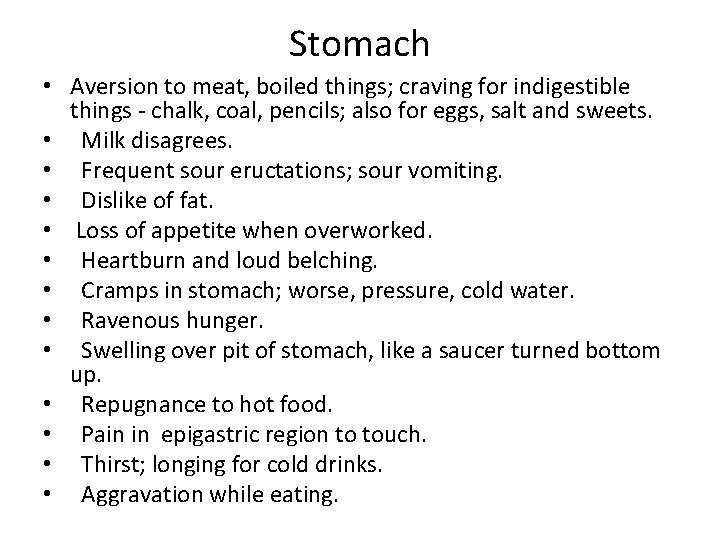
Stomach • Aversion to meat, boiled things; craving for indigestible things - chalk, coal, pencils; also for eggs, salt and sweets. • Milk disagrees. • Frequent sour eructations; sour vomiting. • Dislike of fat. • Loss of appetite when overworked. • Heartburn and loud belching. • Cramps in stomach; worse, pressure, cold water. • Ravenous hunger. • Swelling over pit of stomach, like a saucer turned bottom up. • Repugnance to hot food. • Pain in epigastric region to touch. • Thirst; longing for cold drinks. • Aggravation while eating.
Abdomen • • • • Hyperchlorhydria [Phos. ]. - Sensitive to slightest pressure. - Liver region painful when stooping. - Cutting in abdomen; swollen abdomen. - Incarcerated flatulence. - Inguinal and mesenteric glands swollen and painful. - Cannot bear tight clothing around the waist. - Distention with hardness. - Gall-stone colic. - Increase of fat in abdomen. - Umbilical hernia. - Trembling; weakness, as if sprained. - Children are late in learning to walk.
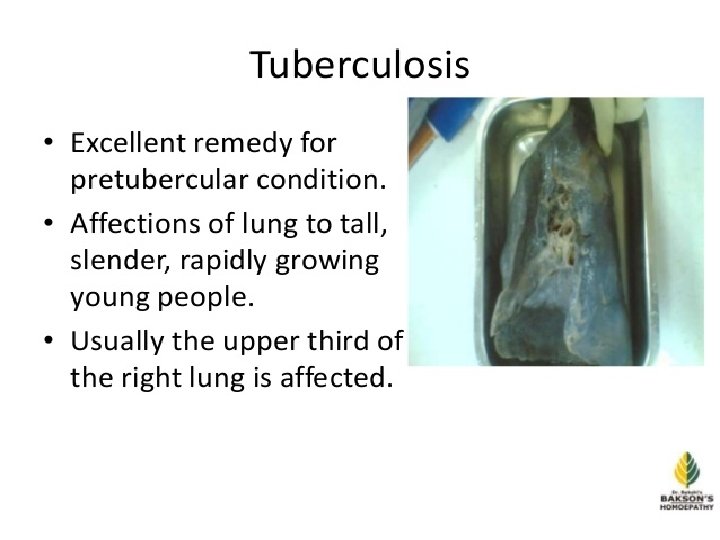
Respiratory • - Tickling cough troublesome at night, dry and free expectoration in morning; cough when playing piano, or by eating. • - Persistent, irritating cough from arsenical wall paper. (Clarke. ) • - Extreme dyspnoea. • - Painless hoarseness; worse in the morning. • - Expectoration only during the day; thick, yellow, sour mucus. • - Bloody expectoration; with sour sensation in chest. • - Suffocating spells; tightness, burning and soreness in chest; worse going upstairs or slightest ascent, must sit down. • - Sharp pains in chest from before backwards. • - Chest very sensitive to touch, percussion, or pressure. • - Longing for fresh air. • - Scanty, salty expectoration. [Lyc. ]
Heart • - Palpitation at night and after eating. • - Palpitation with feeling of coldness, with restless , oppression of chest; after suppressed eruption.
Back • - Pain as if sprained; can scarcely rise; from overlifting. • - Pain between shoulder-blades, impeding breathing. • - Rheumatism in lumbar region; weakness in small of back. • - Curvature of dorsal vertebrae. • - Nape of neck stiff and rigid. • - Renal colic.
Extremities • • • • - Rheumatoid pains, as after exposure to wet. - Sharp sticking, as if parts were wrenched or sprained. - Cold, damp feet; feel as if damp stockings were worn. - Cold knees cramps in calves. - Sour foot-sweat. - Weakness of extremities. - Swelling of joints, especially knee. - Burning of soles of feet. - Sweat of hands. - Arthritic nodosities. - Soles of feet raw. - Feet feel cold and dead at night. - Old sprains. - Tearing in muscles.
Sleep - Ideas crowding in her mind prevent sleep. - Horrid visions when opening eyes. - Starts at every noise; fears that she will go crazy. - Drowsy in early part of evening. - Frequent waking at night. - Same disagreeable idea always arouses from light slumber. • - Night terrors [Kali phos. ] Dreams of the dead. • • •
Fever • - Chill at 2 p. m. begins internally in stomach region. Fever with sweat. • - Pulse full and frequent. • - Chilliness and heat. • - Partial sweats. • - Night sweats, especially on head, neck and chest. • - Hectic fever. • - Heat at night during menstruation, with restless sleep. • - Sweat over head in children, so that pillow becomes wet.
Skin • • - Unhealthy; readily ulcerating; flaccid. - Small wounds do not heal readily. - Glands swollen. - Nettle rash; better in cold air. - Warts on face and hands. - Petechial eruptions. - Chilblains. - Boils.
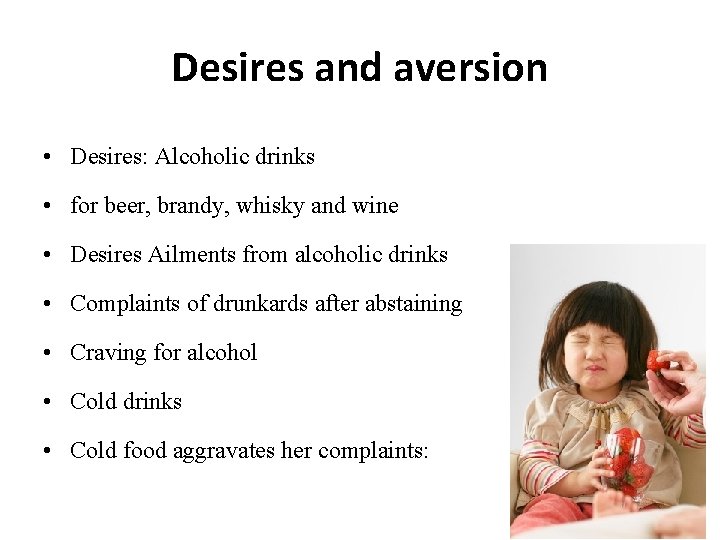
Desires and aversion • Desires: Alcoholic drinks • for beer, brandy, whisky and wine • Desires Ailments from alcoholic drinks • Complaints of drunkards after abstaining • Craving for alcohol • Cold drinks • Cold food aggravates her complaints:
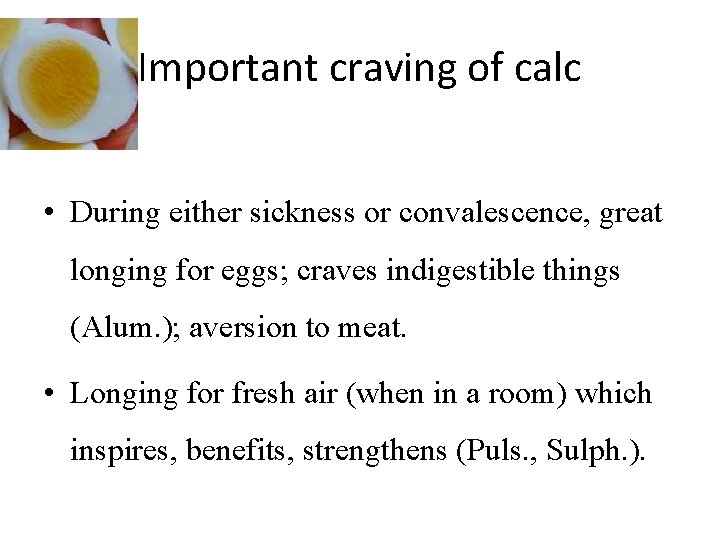
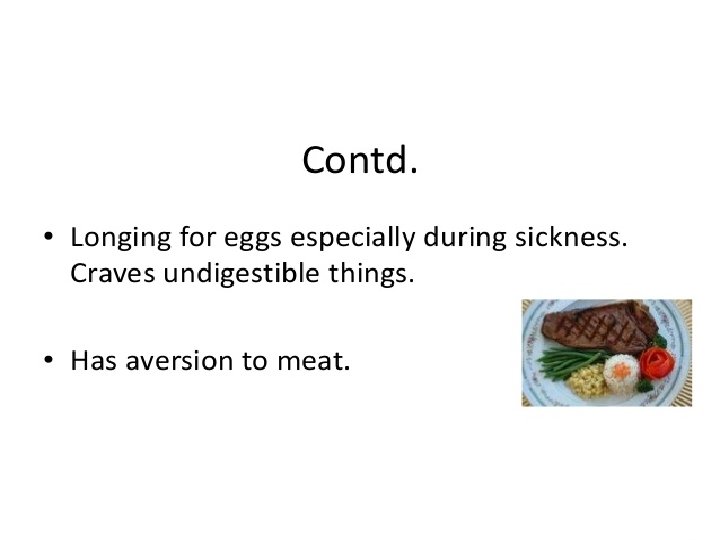
Important craving of calc • During either sickness or convalescence, great longing for eggs; craves indigestible things (Alum. ); aversion to meat. • Longing for fresh air (when in a room) which inspires, benefits, strengthens (Puls. , Sulph. ).
• All most all calcarea group medicines have a general weakness, • aggravation from motion or aversion to motion, • Amelioration by lying down • ailments from either mental or physical exertion. • All these features contributing to indolent, sluggish nature of the calcarea
pain • Almost all calcarea have stitching type of pain both internally and externally.
Dreams • Anxious , Frightful , Dead of Fantastic—coloured, Fire , Amorous dreams, With pollutions
hunger • Ravenous hunger with weak digestion Calc carb, Calc iod, Calc phos
Aversion • Meat • Milk agg • Calc group has a general aggravation from milk and aversion to milk
• Almost all calcarea medicines are anaemic -Calc carb, Calc • Many of them are anticonvulsant
Convulsion • Convulsion after suppressed eruption • Convulsion after exertion • Convulsion from fear (fright from) • Convulsion with hydrocephalus
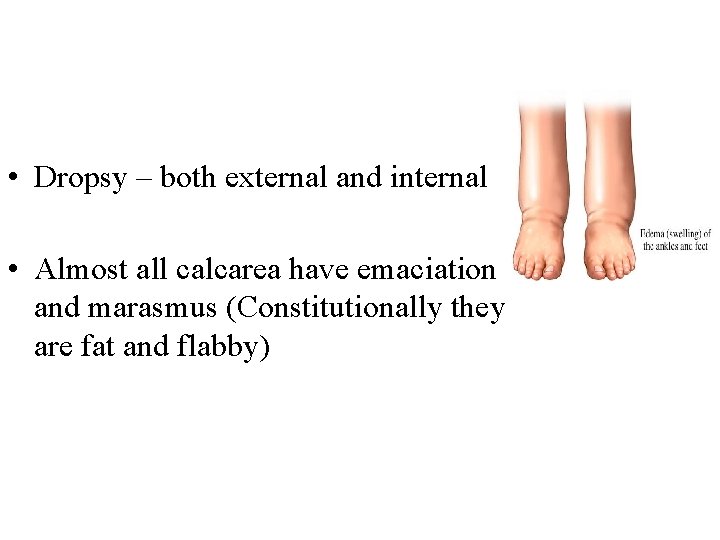
• Dropsy – both external and internal • Almost all calcarea have emaciation and marasmus (Constitutionally they are fat and flabby)
Emaciation: Calc carb, Calc ars, Calc flour, • Ravenous appetite with emaciation • Emaciation of the affected parts: Calc carb Marasmus of the children
• Tumors cystic Calc carb, Calc flour, Calc • Haemorrhagic tendency • Perspiration cold and profuse Profuse: Calc carb, Calc ars
sleep. • Sleeplessness Calcarea group has restless and disturbed sleep. • Frequent waking from sleep. • Sleep disturbed by fright, anxiety, dreams or thoughts.
stool • - Crawling and constriction in rectum. • - Stool large and hard [Bry. ]; whitish, watery, sour. • - Prolapse ani, and burning, stinging haemorrhoids. • - Diarrhoea of undigested, food, fetid, with ravenous appetite. • - Children's diarrhoea. • - Constipation; stool at first hard, then pasty, then liquid.
Urine • - Dark, brown, sour, fetid, abundant, with white sediment, bloody. • - Irritable bladder. • - Enuresis. (Use 30 th, also Tuberculin. 1 m. )
Male • • - Frequent emissions. - Increased desire. - Semen emitted too soon. - Coition followed by weakness and irritability.
Menses • Menses too frequent, copious and protracted • • - Before menses, headache, colic, chilliness and leucorrhoea. • - Cutting pains in uterus during menstruation. • - Menses too early, too profuse, too long, with vertigo, toothache and cold, damp feet; the least excitement causes their return. • - Uterus easily displaced. • - Leucorrhoea, milky [Sepia. ]. • - Burning and itching of parts before and after menstruation; in little girls.
Female - Increased sexual desire; easy conception. - Hot swelling breasts. - Breasts tender and swollen before menses. - Milk too abundant; disagreeable to child. - Deficient lactation, with distended breasts in lymphatic women. • - Much sweat about external genitals. • - Sterility with copious menses. • - Uterine polypi. • • •
Modalities • - Worse, from exertion, mental or physical; ascending; cold in every form; water, washing, moist air, wet weather; during full moon; standing. • - Better, dry climate and weather; lying on painful side. • - Sneezing (pain in head and nape).
aggravation • General aggravation at night and evening • Aggravation on ascending -Calc carb, Calc ars, Calc pho, • Aggravation after bathing
• Relationship • - Antidotes : Camph. ; Ipec. ; Nit ac. ; Nux. • - Complementary : Bell. ; Rhus; Lycop. ; Silica. • - Calcar. is useful after Sulphur where the pupils remain dilated. • - When Pulsatilla failed in school girls. • - Incompatible : Bry. ; Sulphur should not be given after Calc. • - Compare : Aqua calcar. • - -Lime-water - (1/2 teaspoonful in milk); (as injection for oxyuris vermicularis), and Calc. caust. • - - slaked lime - (pain in back and heels, jaws and malar bones; also symptoms of influenza). • - Calc. brom. (removes inflammatory products from uterus; children of lax fiber, nervous and irritable, with gastric and cerebral irritation. Tendency to brain disease. Insomnia and cerebral congestion. Give 1 x trituration).

• THANK YOU
- Slides: 76