
CAHPS Survey Items Assessing How Well Healthcare Providers

- Slides: 20
CAHPS® Survey Items Assessing How Well Healthcare Providers Address Health Literacy Ron D. Hays 13 th RCMI International Symposium December 13, 2012 (10: 45 am-12: 30 pm) Convention Center 208 A-C San Juan, Puerto Rico
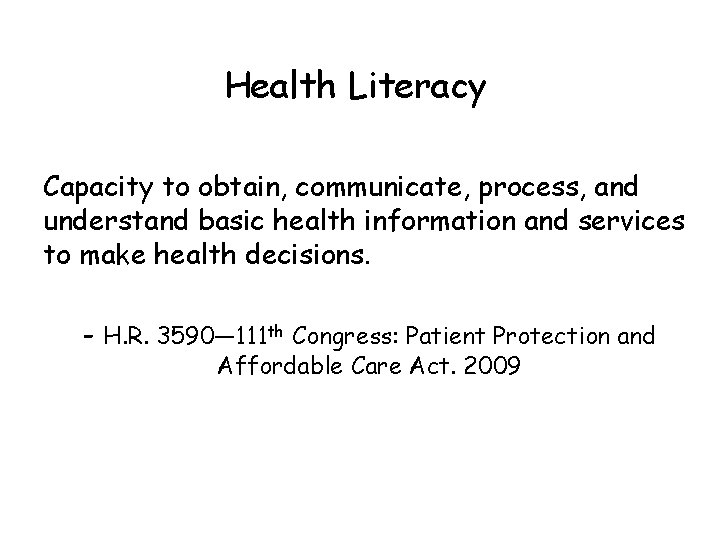
Health Literacy Capacity to obtain, communicate, process, and understand basic health information and services to make health decisions. - H. R. 3590— 111 th Congress: Patient Protection and Affordable Care Act. 2009
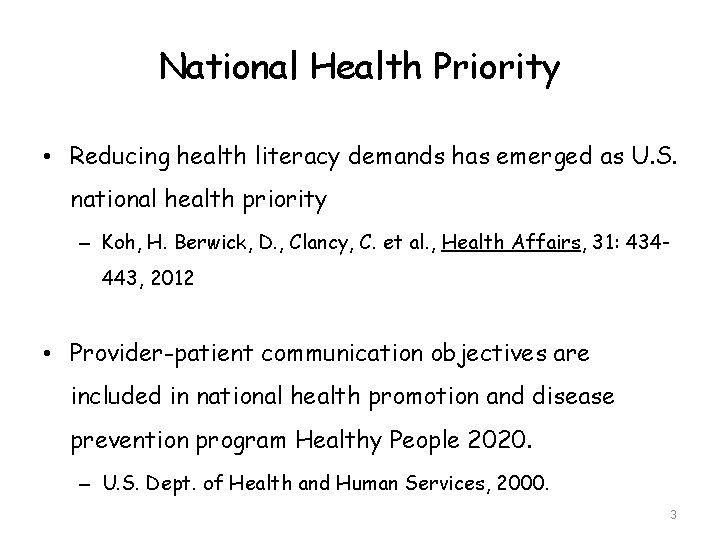
National Health Priority • Reducing health literacy demands has emerged as U. S. national health priority – Koh, H. Berwick, D. , Clancy, C. et al. , Health Affairs, 31: 434443, 2012 • Provider-patient communication objectives are included in national health promotion and disease prevention program Healthy People 2020. – U. S. Dept. of Health and Human Services, 2000. 3
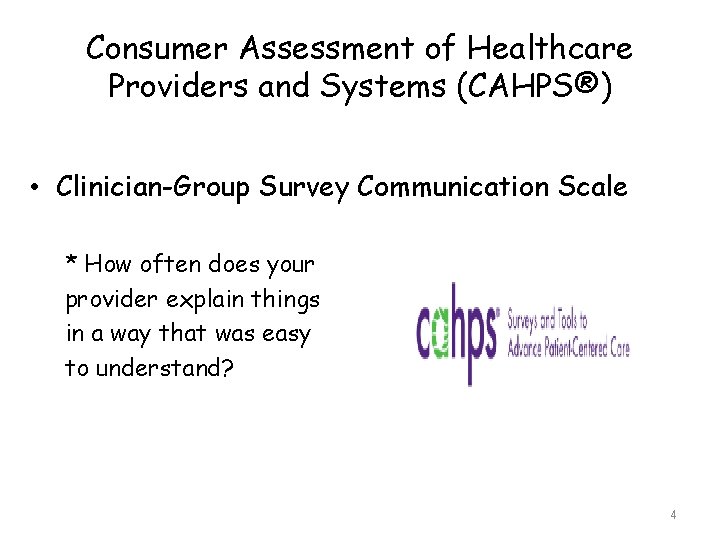
Consumer Assessment of Healthcare Providers and Systems (CAHPS®) • Clinician-Group Survey Communication Scale * How often does your provider explain things in a way that was easy to understand? 4
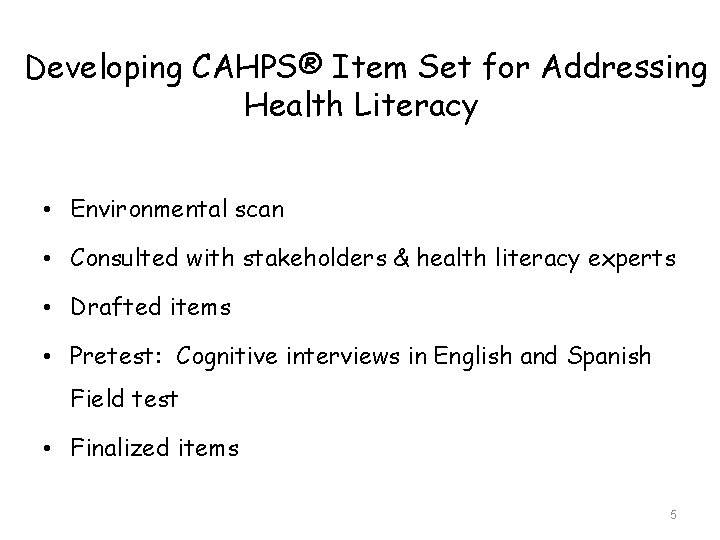
Developing CAHPS® Item Set for Addressing Health Literacy • Environmental scan • Consulted with stakeholders & health literacy experts • Drafted items • Pretest: Cognitive interviews in English and Spanish Field test • Finalized items 5
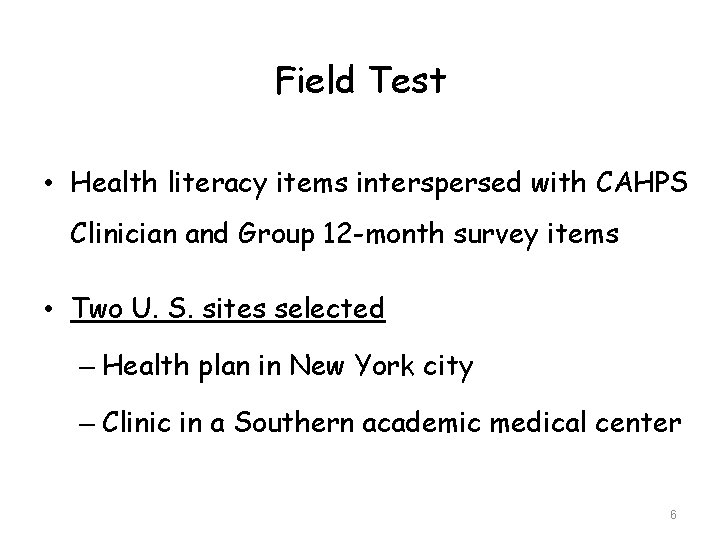
Field Test • Health literacy items interspersed with CAHPS Clinician and Group 12 -month survey items • Two U. S. sites selected – Health plan in New York city – Clinic in a Southern academic medical center 6
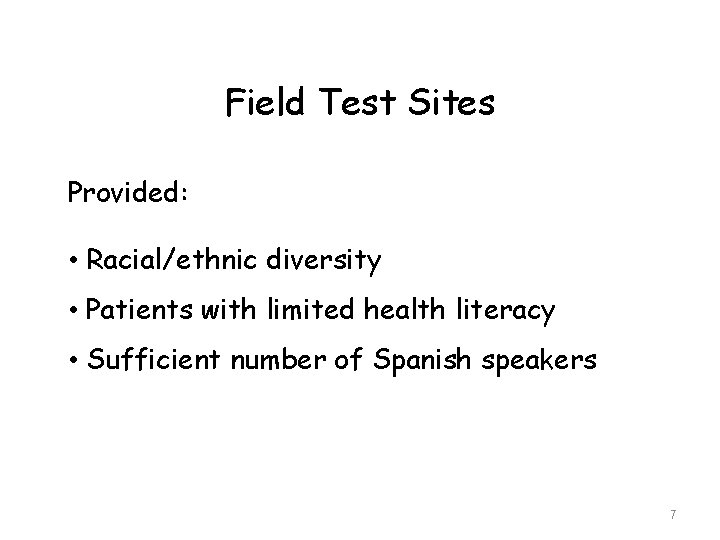
Field Test Sites Provided: • Racial/ethnic diversity • Patients with limited health literacy • Sufficient number of Spanish speakers 7
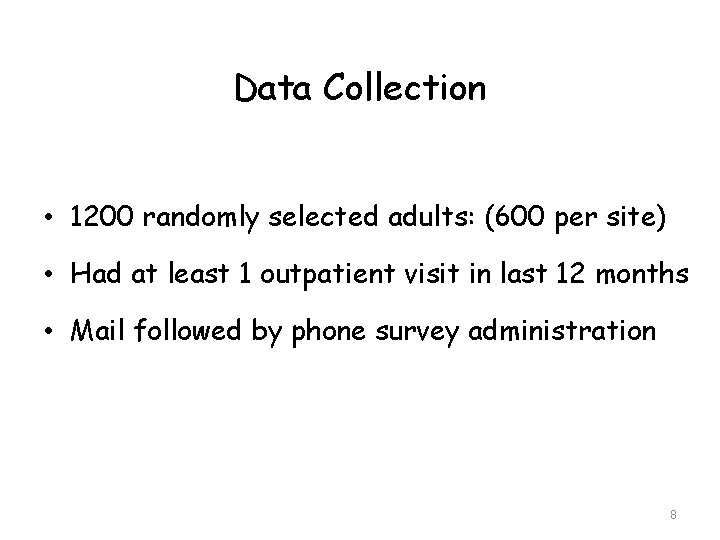
Data Collection • 1200 randomly selected adults: (600 per site) • Had at least 1 outpatient visit in last 12 months • Mail followed by phone survey administration 8
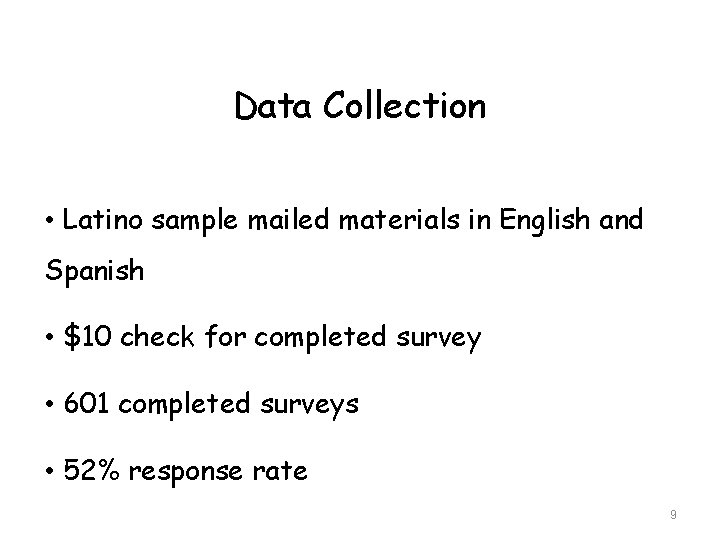
Data Collection • Latino sample mailed materials in English and Spanish • $10 check for completed survey • 601 completed surveys • 52% response rate 9
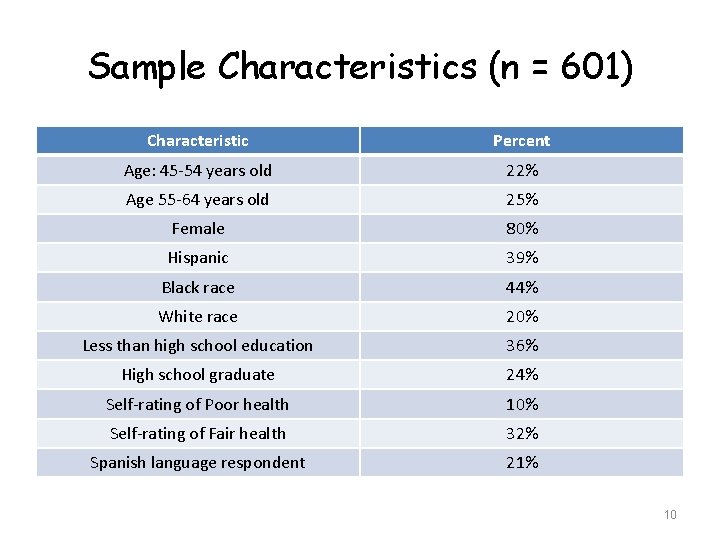
Sample Characteristics (n = 601) Characteristic Percent Age: 45 -54 years old 22% Age 55 -64 years old 25% Female 80% Hispanic 39% Black race 44% White race 20% Less than high school education 36% High school graduate 24% Self-rating of Poor health 10% Self-rating of Fair health 32% Spanish language respondent 21% 10
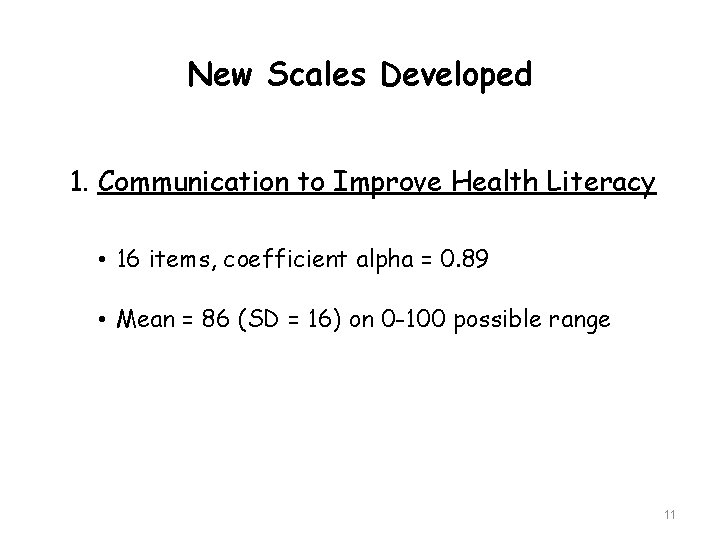
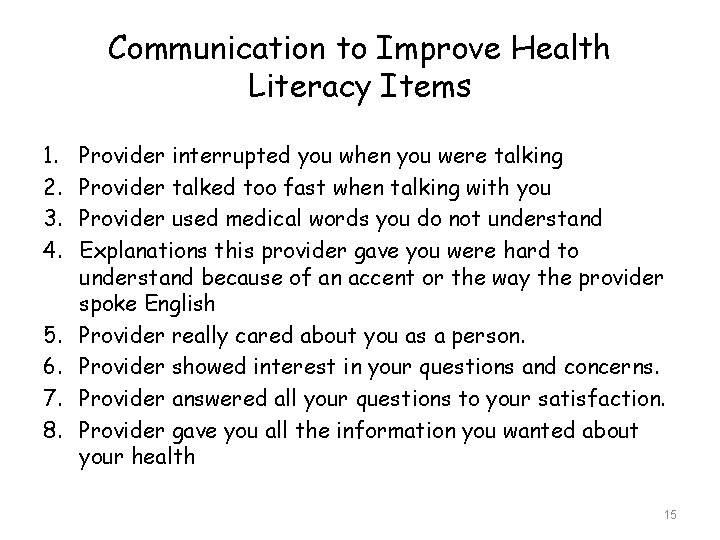
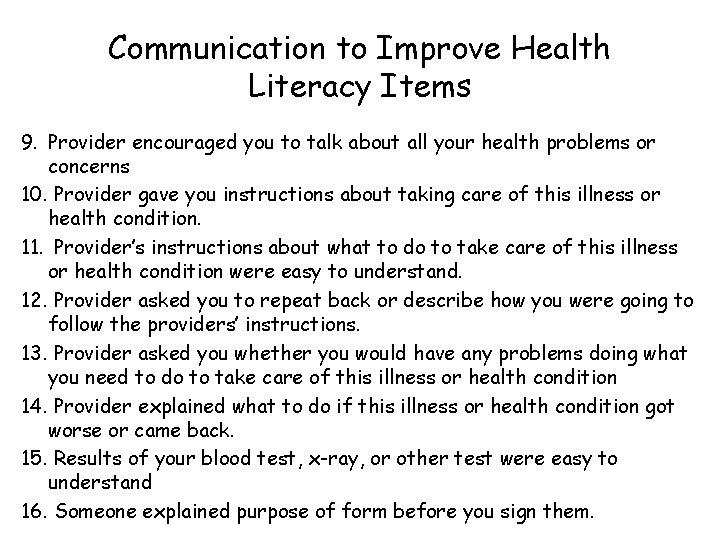
New Scales Developed 1. Communication to Improve Health Literacy • 16 items, coefficient alpha = 0. 89 • Mean = 86 (SD = 16) on 0 -100 possible range 11
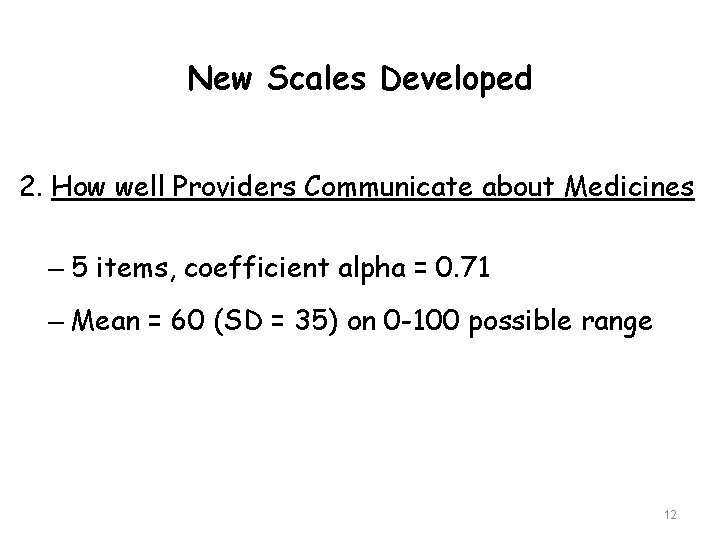
New Scales Developed 2. How well Providers Communicate about Medicines – 5 items, coefficient alpha = 0. 71 – Mean = 60 (SD = 35) on 0 -100 possible range 12
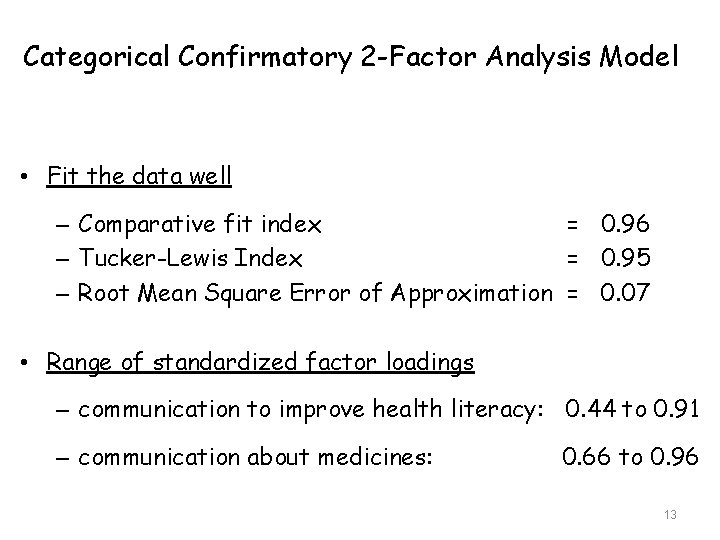
Categorical Confirmatory 2 -Factor Analysis Model • Fit the data well – Comparative fit index = 0. 96 – Tucker-Lewis Index = 0. 95 – Root Mean Square Error of Approximation = 0. 07 • Range of standardized factor loadings – communication to improve health literacy: 0. 44 to 0. 91 – communication about medicines: 0. 66 to 0. 96 13
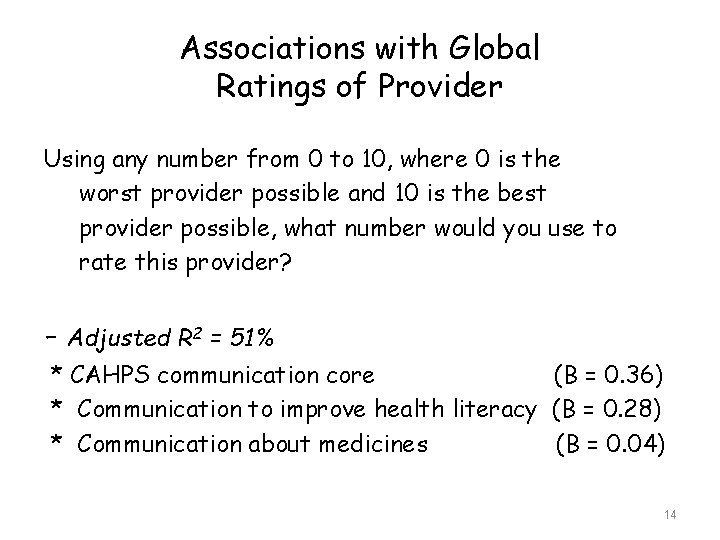
Associations with Global Ratings of Provider Using any number from 0 to 10, where 0 is the worst provider possible and 10 is the best provider possible, what number would you use to rate this provider? - Adjusted R 2 = 51% * CAHPS communication core (B = 0. 36) * Communication to improve health literacy (B = 0. 28) * Communication about medicines (B = 0. 04) 14
Communication to Improve Health Literacy Items 1. 2. 3. 4. 5. 6. 7. 8. Provider interrupted you when you were talking Provider talked too fast when talking with you Provider used medical words you do not understand Explanations this provider gave you were hard to understand because of an accent or the way the provider spoke English Provider really cared about you as a person. Provider showed interest in your questions and concerns. Provider answered all your questions to your satisfaction. Provider gave you all the information you wanted about your health 15
Communication to Improve Health Literacy Items 9. Provider encouraged you to talk about all your health problems or concerns 10. Provider gave you instructions about taking care of this illness or health condition. 11. Provider’s instructions about what to do to take care of this illness or health condition were easy to understand. 12. Provider asked you to repeat back or describe how you were going to follow the providers’ instructions. 13. Provider asked you whether you would have any problems doing what you need to do to take care of this illness or health condition 14. Provider explained what to do if this illness or health condition got worse or came back. 15. Results of your blood test, x-ray, or other test were easy to understand 16. Someone explained purpose of form before you sign them.
Communication about Medicines Items 1. Provider gave instructions about how to take your medicines. 2. Provider’s instructions about how to take your medicines were easy to understand 3. Provider explained possible side effects of medicines 4. Provider’s instructions about possible side effects of medicines were easy to understand 5. Provider suggested ways to help you remember to take your medicines. 17
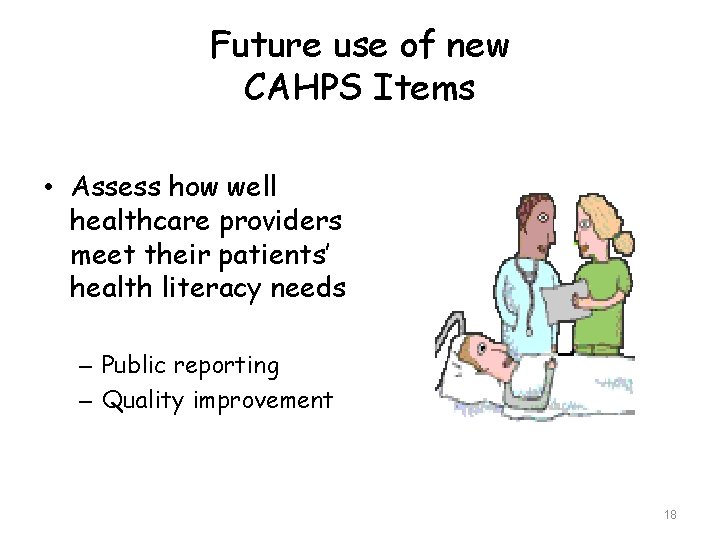
Future use of new CAHPS Items • Assess how well healthcare providers meet their patients’ health literacy needs – Public reporting – Quality improvement 18
Acknowledgements Supported by a contract from the Agency for Healthcare Research and Quality (HHSP 233200600332 P). Ron Hays (drhays@ucla. edu) was also supported in part by grants from AHRQ (U 18 HS 016980), NIA (P 30 AG 021684), and the NIMHD (2 P 20 MD 000182). Weidmer, B. A. , Brach, C. , & Hays, R. D. (2012). Development and evaluation of CAHPS survey items assessing how well healthcare providers address health literacy. Medical Care, 50 (9), S 3 -11. 19
20