
CAESARIAN SECTION Submitted to Dr Mithilesh kumar Context
CAESARIAN SECTION Submitted to Dr. Mithilesh kumar

Context v Information. v Indication. v Anesthesia. v Site. v Technique. v Post- operative.
Dystocia Surgical removal of a full term foetus / foetuses other than by the normal vaginal route. Protocol 1. History Predisposing factor such as breed, age, size of litter must be considered. Establish the following information : § The time of onset of stage II. § The frequency & intensity of expulsive efforts. § The time since the last delivered fetus. § General health of the bitch. 2. Genital exam. Vaginoscopy – Digital exam to determine location of puppy.
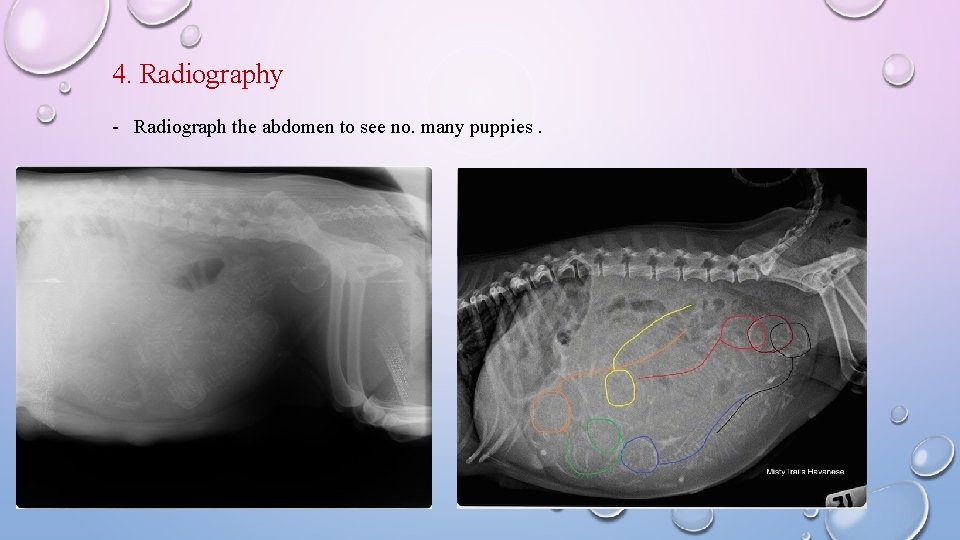
4. Radiography - Radiograph the abdomen to see no. many puppies.
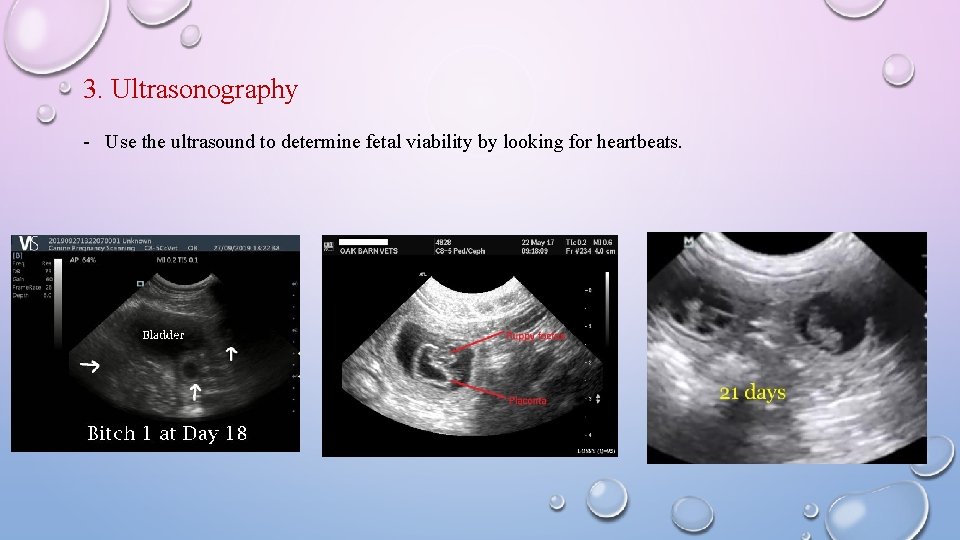
3. Ultrasonography - Use the ultrasound to determine fetal viability by looking for heartbeats.
5. Laboratory tests • • • PCV WBC BUN Glucose CBC Progesterone – bitches will whelp with progesterone over 2 ng/ml.
Plan of Action The plan is determined by the etiology and presenting complaint. Ø Primary uterine inertia • Primary uterine inertia is a delay in starting the second stage of labor after the first stage signs have been established. The occurs because the uterus is not contracting. Ø Prolonged gestation • Diagnosis of prolonged gestation information from the owner. • Rule out pseudopregnancy , incorrect breeding date , incorrect calculation of breeding date in determining if gestation is prolonged. • If ultrasound or radiographs indicate viable fetuses, then waiting may be the best course.
Indication • Uterine inertia unresponsive to oxytocin. • Pelvic obstruction. • Fetal oversize. • Vaginal obstruction that can not be manipulated. • In utero fetal death. • Planned surgery.
Secondary uterine inertia v Secondary uterine inertia is the delay in resuming stage II labor after one or more births ( for example more than 4 -6 hours since the preceding delivery ). v Obstructive dystocia is when the bitch is pushing hard but there are no puppies. ( not pushing= inertia ). v 30 minutes of strong onractions with no pups delivered. v 2 -3 hours of weak and infrequent expulsive eorts falling to produce a pup. v 4 of more hours between pups. v Obvious problem ( pup hanging out etc. ).
CS- procedure
Anesthesia q Preanesthesia • • • Atropine sulphate Glycopyrrulate Butorphanol Xylazine Diazepam q Induction & Maintainance • • Ketamine Propofol Isoflurane Tiletamine + Zolazepam
v General anesthesia v Epidural anesthesia combined with local infiltration; dorsal recumbent position. v The pet will not cooperate & lie still for surgery even if all pain is relieved. Thus general anesthesia is needed to induce pain relief, unconsciousness & relaxation. In the usual case , the pet will receive a pre- anesthetic sedative – analgesic drug to help relax , a brief intravenous anesthetic to allow placement of a breathing tube in the windpipe and subsequently inhalation ( gas ) anesthesia in oxygen during the actual surgery.
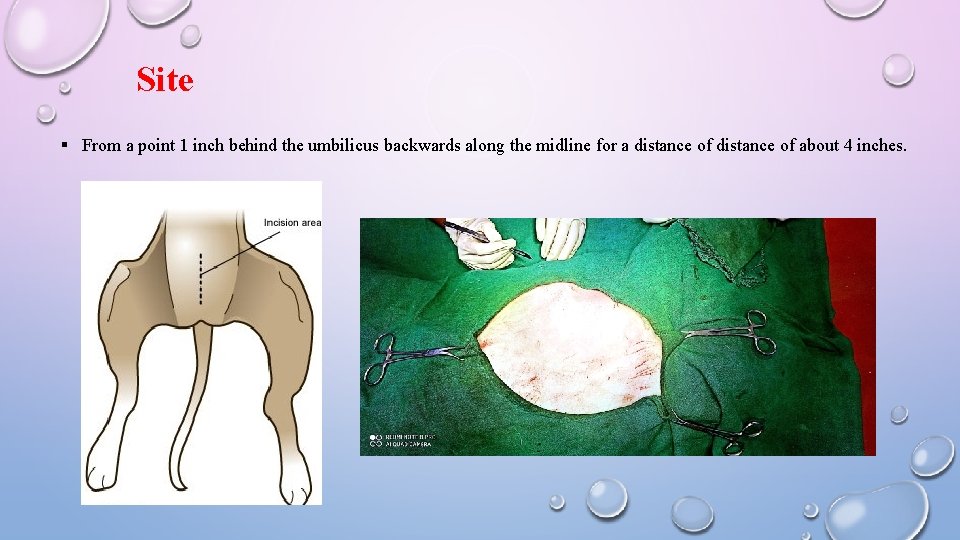
Site § From a point 1 inch behind the umbilicus backwards along the midline for a distance of about 4 inches.
Technique • Give anesthesia. • The pet is place in surgical table lying on her back. • The hair is clipped over the lower abdomen , the skin is scrubbed with surgical soap to disinfect the area & a sterile drape is placed over the surgical site. • Give midline incision. • Skin is tensed using thumb forceps. • A scalpel is used to incise the skin of the lower abdomen & then open the abdominal cavity. • The uterus will be exposed , bifurcation located and then incision mad to remove the fetus. • Then incision is closed with suture that dissolve over time. • The abdominal incision is then closed with one or two layers of self- dissolving suture. • The outer layer of skin closed with suture that must be removed in about 10 to 14 days.
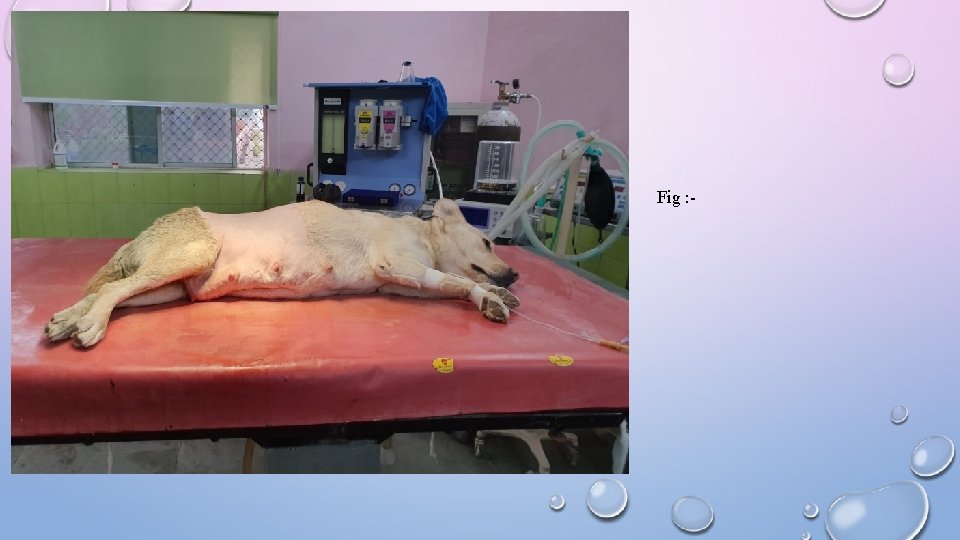
Fig : -
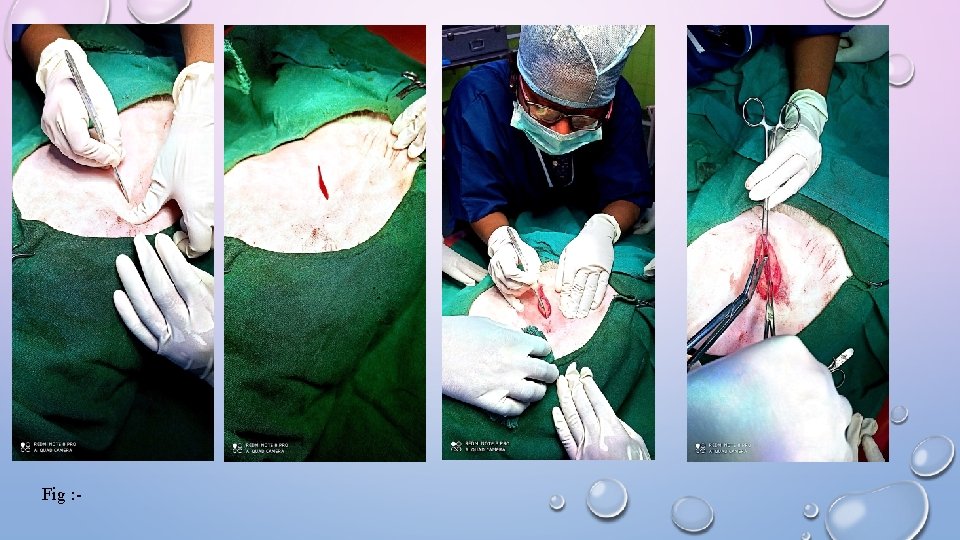
Fig : -
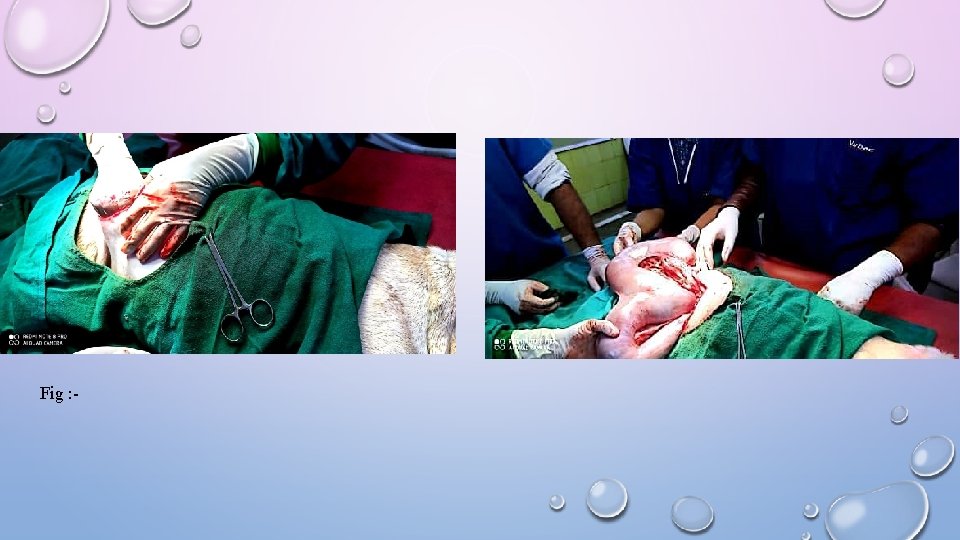
Fig : -
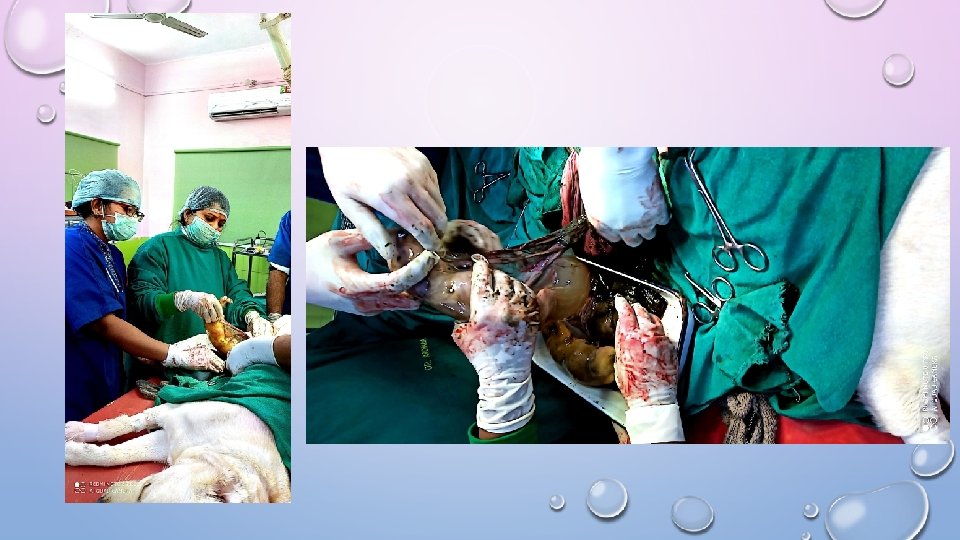
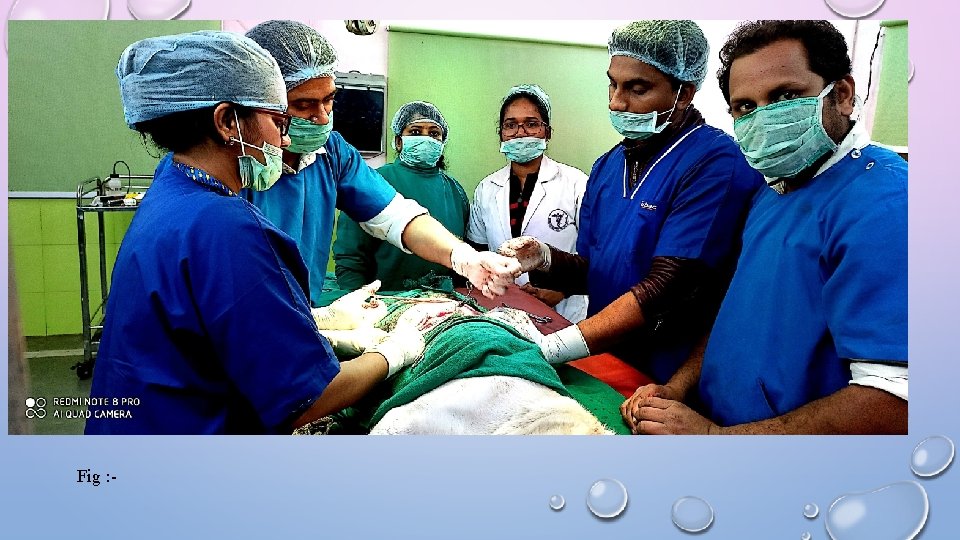
Fig : -
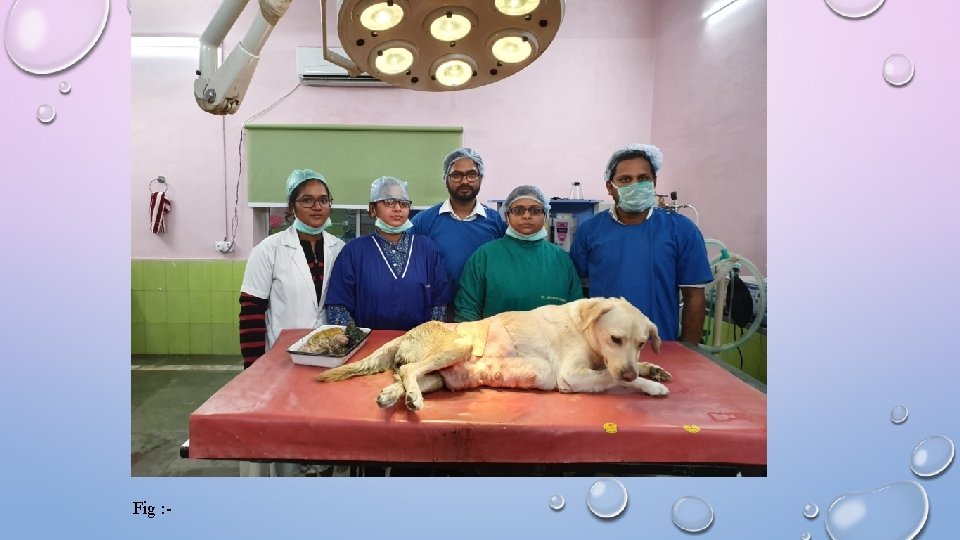
Fig : -
Discussion • The overall risk of this surgery is very low. • The major risks are those of general anesthesia, bleeding ( hemorrhage ) , infection ( peritonitis ) , post – opertative infection & wound breakdown ( dehiscence ) over the incision. • Overall complication rate is low, but serious complications can result in death or the need for additional surgery.

- Slides: 22