
CAE Career Paths Characteristics and Competencies of Todays
- Slides: 27
CAE Career Paths Characteristics and Competencies of Today’s Internal Audit Leaders Venkataraman Iyer Ph. D, CPA Available free of charge: www. theiia. org/goto/CBOK
CBOK 2015 Practitioner Study • CBOK is the Global Internal Audit Common Body of Knowledge: – The global practitioner survey is the largest ongoing study of internal audit professionals in the world. – More than 25 free reports about practitioners and the profession will be released beginning July 2015. – Download free reports from the CBOK Resource Exchange at The IIA website at any time (www. theiia. org/goto/CBOK).
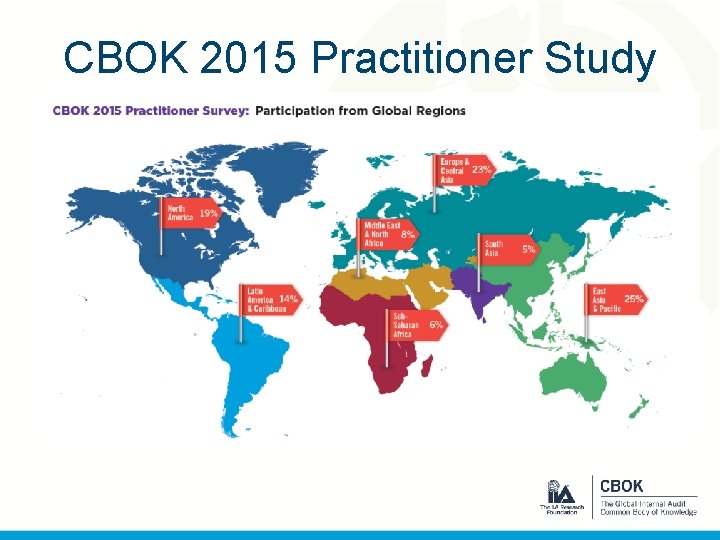
CBOK 2015 Practitioner Survey • Practitioner Survey Results – Survey completed April 1, 2015 – 14, 518 usable survey responses • Participation Levels – 100% representation from IIA institutes – Responses from 166 countries – 23 languages
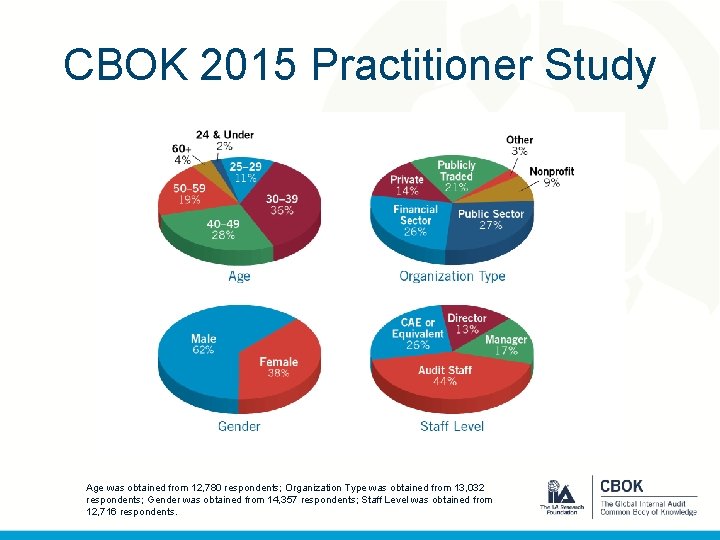
CBOK 2015 Practitioner Study
CBOK 2015 Practitioner Study Age was obtained from 12, 780 respondents; Organization Type was obtained from 13, 032 respondents; Gender was obtained from 14, 357 respondents; Staff Level was obtained from 12, 716 respondents.
Importance of CAEs • They provide leadership to the internal audit function. • They are the link between the internal audit function and top management. • Their role is expanding. • They project the tone at the top.
CAE Career Insights • Highlights the demographics of CAEs worldwide. • Provides a benchmark for comparison. • Shows qualifications, experience, and soft skills that, in general, are needed to become a CAE.
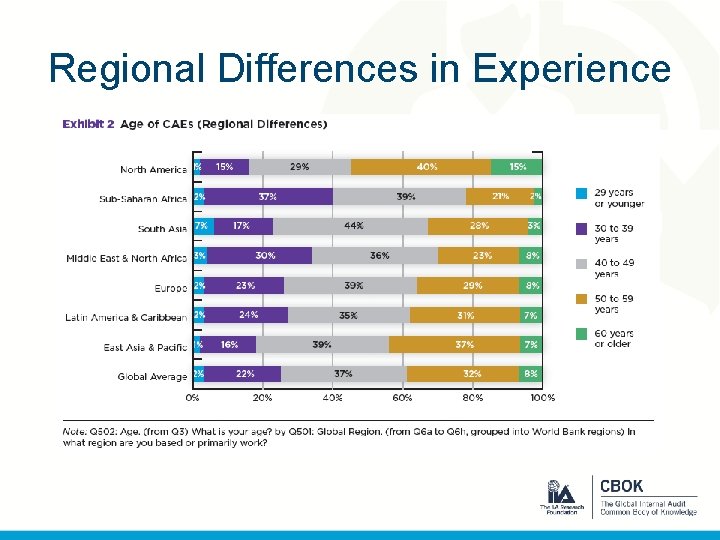
Demographics • Median age of the CAEs surveyed in 2015 is between 40 and 49, and more than twothirds of CAEs are male. • Average of CAEs in North America is significantly higher compared to CAEs in other regions.
Gender • The proportion of female CAEs worldwide increased from 28% in 2010 to 31% in 2015. • Highest percentage of male CAEs: – South Asia (93%) – Middle East & North Africa (92%) • The highest percentage of female CAEs: – North America (39%) – Europe (36%)
Education • Almost all CAEs (94%) hold at least a bachelor’s degree. • More than half (64%) majored in accounting, followed by internal auditing (44%) and business (43%).
Experience • CAEs report higher levels of experience in 2015 compared to 2010 and 2006 CBOK studies. • Average internal audit experience of a CAE (13. 4 years): – 6. 8 as CAE – 2. 1 as director – 1. 6 as manager – 2. 9 as staff member
Regional Differences in Experience
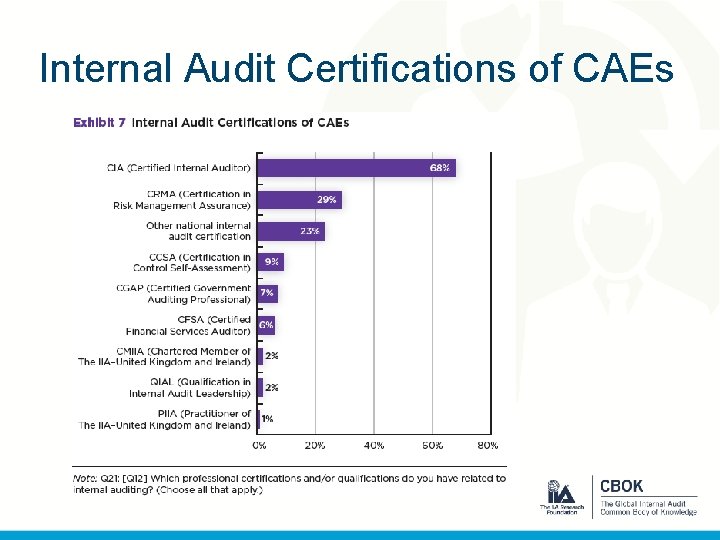
Certification • Two-thirds of North American CAEs are certified, which is significantly higher than other regions. • Increase in CAEs with internal audit certification: – 41% in 2006 to 53% in 2015
Internal Audit Certifications of CAEs
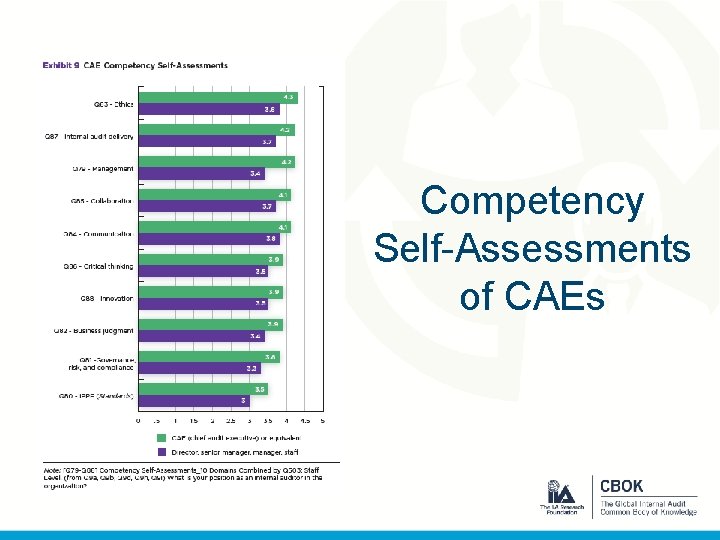
Competencies of CAEs • CAEs report an advanced level of competency in their self-assessment against 10 core competencies published by The IIA. • CAEs scored significantly higher in all domains compared to non-CAEs.
Competency Self-Assessments of CAEs
Training • CAEs spend a significant amount of time in training – 46. 1 hours each year. This is similar to the amount of training received by internal auditors at other experience levels and job titles. • Mentoring is essential for junior auditors to climb the career ladder.
How Do You Develop the Skills and Experiences of Your Senior Staff? • Use executives outside internal audit to mentor or coach. • Provide the audit staff with opportunities to gain exposure to the audit committee. • Grant senior staff with broader audit responsibilities so they can see more of the organization.
How Do You Develop the Skills and Experiences of Your Senior Staff? • Provide senior staff with opportunities to serve on committees or task forces that deal with broader issues outside of internal audit. • Create new or temporary titles that position possible candidates for broader responsibilities. • Have a succession plan and share it with the audit committee.
Characteristics and Skills Needed to Become a CAE • • Understanding of Business and Risks Leadership and Ethics Strategic Thinking Critical Thinking Breadth of Knowledge Executive Presence Excellent Communication
How Does One Become a Successful CAE? • Requirements vary across regions and types and size of the organizations. • Education, experience, and certification are important but do not necessarily qualify someone to be a CAE. • Soft skills such as strong leadership, critical thinking, and communicating effectively are critical.
Role of Organizations • Identify and groom potential CAEs. • Have a succession plan. • Provide relevant training, including mentorship.
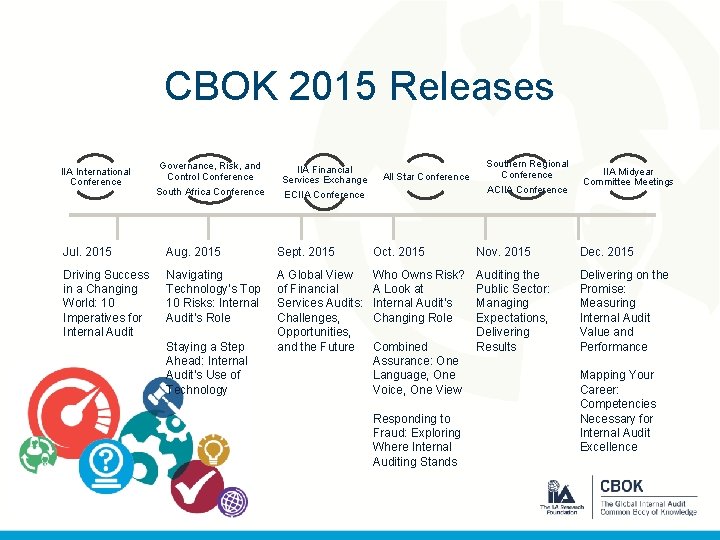
CBOK 2015 Releases IIA International Conference Governance, Risk, and Control Conference South Africa Conference IIA Financial Services Exchange ECIIA Conference All Star Conference Southern Regional Conference ACIIA Conference IIA Midyear Committee Meetings Jul. 2015 Aug. 2015 Sept. 2015 Oct. 2015 Nov. 2015 Dec. 2015 Driving Success in a Changing World: 10 Imperatives for Internal Audit Navigating Technology’s Top 10 Risks: Internal Audit’s Role A Global View of Financial Services Audits: Challenges, Opportunities, and the Future Who Owns Risk? A Look at Internal Audit’s Changing Role Auditing the Public Sector: Managing Expectations, Delivering Results Delivering on the Promise: Measuring Internal Audit Value and Performance Staying a Step Ahead: Internal Audit’s Use of Technology Combined Assurance: One Language, One Voice, One View Responding to Fraud: Exploring Where Internal Auditing Stands Mapping Your Career: Competencies Necessary for Internal Audit Excellence
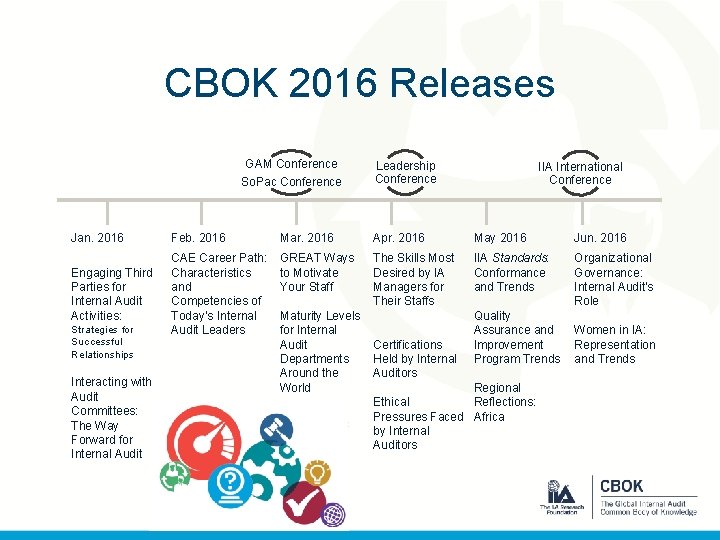
CBOK 2016 Releases GAM Conference So. Pac Conference Leadership Conference IIA International Conference Jan. 2016 Feb. 2016 Mar. 2016 Apr. 2016 May 2016 Jun. 2016 Engaging Third Parties for Internal Audit Activities: CAE Career Path: Characteristics and Competencies of Today’s Internal Audit Leaders GREAT Ways to Motivate Your Staff The Skills Most Desired by IA Managers for Their Staffs IIA Standards: Conformance and Trends Organizational Governance: Internal Audit's Role Strategies for Successful Relationships Interacting with Audit Committees: The Way Forward for Internal Audit Maturity Levels for Internal Audit Departments Around the World Certifications Held by Internal Auditors Quality Assurance and Improvement Program Trends Regional Ethical Reflections: Pressures Faced Africa by Internal Auditors Women in IA: Representation and Trends
YOUR DONATION DOLLARS AT WORK FREE thanks to generous contributions from individuals, organizations, IIA chapters, and IIA institutes around the world. Download your FREE copy today at the CBOK Resource Exchange. www. theiia. org/goto/CBOK This report was generously sponsored by:
About The IIA Research Foundation CBOK is administered through The IIA Research Foundation (IIARF), which has provided groundbreaking research for the internal audit profession for nearly four decades. Through initiatives that explore current issues, emerging trends, and future needs, The IIARF has been a driving force behind the evolution and advancement of the profession. For more information, visit: www. theiia. org/Research
Copyright and Disclaimer • The IIARF publishes this document for information and educational purposes only. IIARF does not provide legal or accounting advice and makes no warranty as to any legal or accounting results through its publication of this document. When legal or accounting issues arise, professional assistance should be sought and retained. • Copyright © 2016 by The Institute of Internal Auditors Research Foundation (IIARF). All rights reserved. For permission to reproduce or quote, please contact research@theiia. org.