
CA Nanotherapeutics Safer treatments for cancer patients NANODOC
- Slides: 24
CA Nanotherapeutics Safer treatments for cancer patients. NANODOC – a new multifunctional nanoparticle platform for cancer treatment Prof Dmitry Pshezhetskiy, MBBS, BSc, MSc, Ph. D, FHEA CSO CA Nanotherapeutics
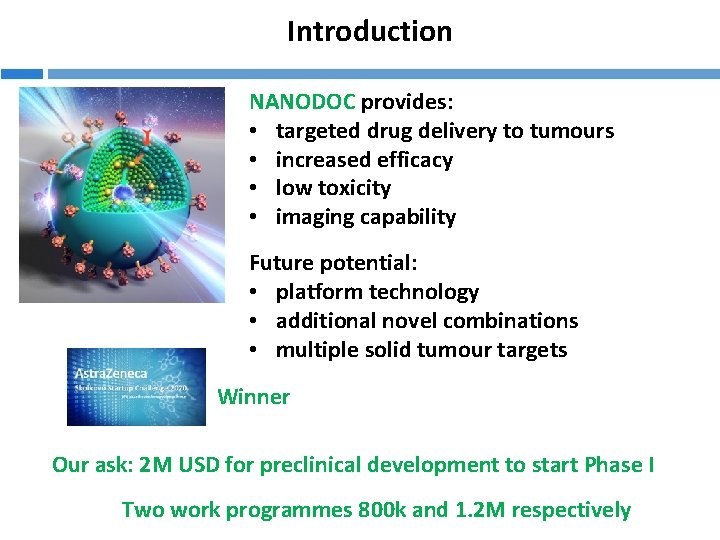
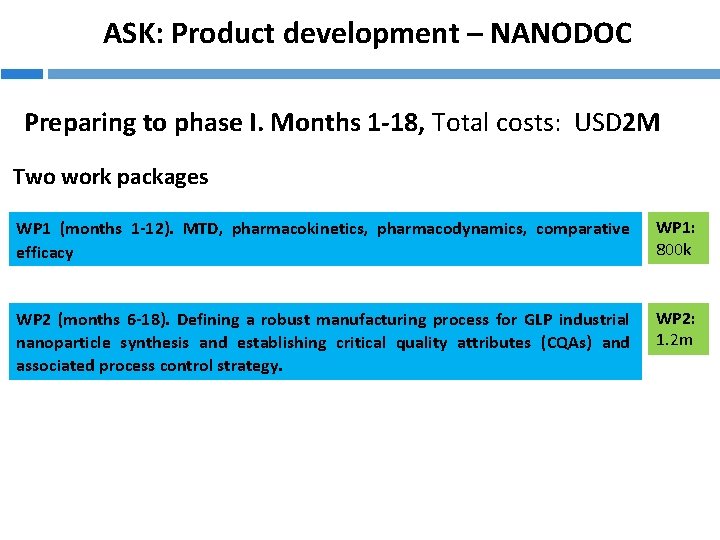
Introduction NANODOC provides: • targeted drug delivery to tumours • increased efficacy • low toxicity • imaging capability Future potential: • platform technology • additional novel combinations • multiple solid tumour targets Winner Our ask: 2 M USD for preclinical development to start Phase I Two work programmes 800 k and 1. 2 M respectively
Need/Market • Jane has advanced breast cancer • Current gold-standard chemotherapy is however not curative due to chemoresistance. • There are currently 4. 6 million patients with breast and prostate cancers in the US and UK alone. • Nanoformulations can deliver drugs to tumours and provide better efficacy and toxicity • Cancer therapeutics market: $220 b estimated in 2024 ($50 b prostate and breast cancers).
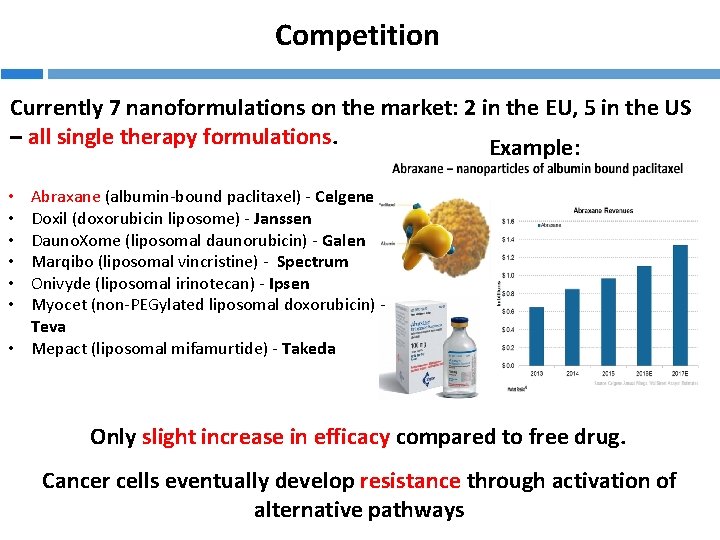
Competition Currently 7 nanoformulations on the market: 2 in the EU, 5 in the US – all single therapy formulations. Example: Abraxane (albumin-bound paclitaxel) - Celgene Doxil (doxorubicin liposome) - Janssen Dauno. Xome (liposomal daunorubicin) - Galen Marqibo (liposomal vincristine) - Spectrum Onivyde (liposomal irinotecan) - Ipsen Myocet (non-PEGylated liposomal doxorubicin) Teva • Mepact (liposomal mifamurtide) - Takeda • • • Only slight increase in efficacy compared to free drug. Cancer cells eventually develop resistance through activation of alternative pathways
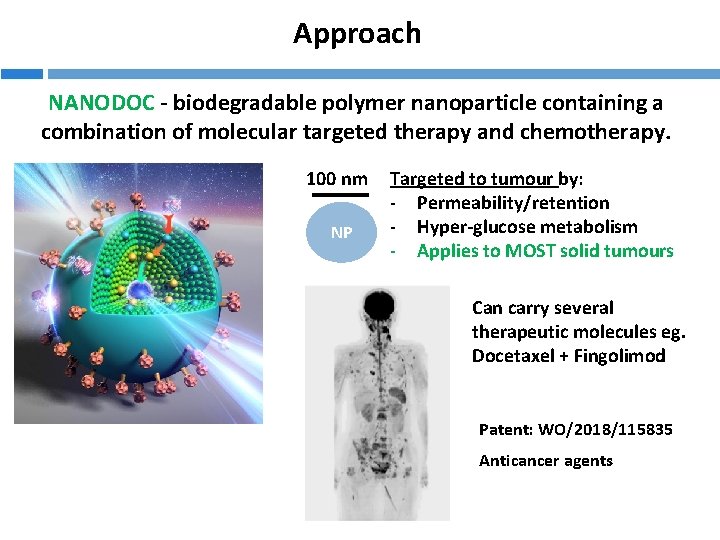
Approach NANODOC - biodegradable polymer nanoparticle containing a combination of molecular targeted therapy and chemotherapy. 100 nm NP Targeted to tumour by: - Permeability/retention - Hyper-glucose metabolism - Applies to MOST solid tumours Can carry several therapeutic molecules eg. Docetaxel + Fingolimod Patent: WO/2018/115835 Anticancer agents
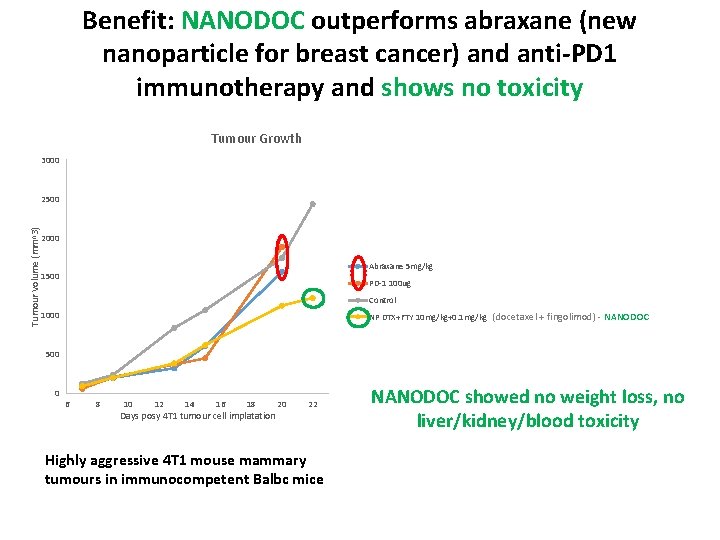
Benefit: NANODOC outperforms abraxane (new nanoparticle for breast cancer) and anti-PD 1 immunotherapy and shows no toxicity Tumour Growth 3000 Tumour Volume (mm^3) 2500 2000 Abraxane 5 mg/kg 1500 PD-1 100 ug Control 1000 NP DTX+FTY 10 mg/kg+0. 1 mg/kg (docetaxel + fingolimod) - NANODOC 500 0 6 8 10 12 14 16 18 Days posy 4 T 1 tumour cell implatation 20 22 Highly aggressive 4 T 1 mouse mammary tumours in immunocompetent Balbc mice NANODOC showed no weight loss, no liver/kidney/blood toxicity
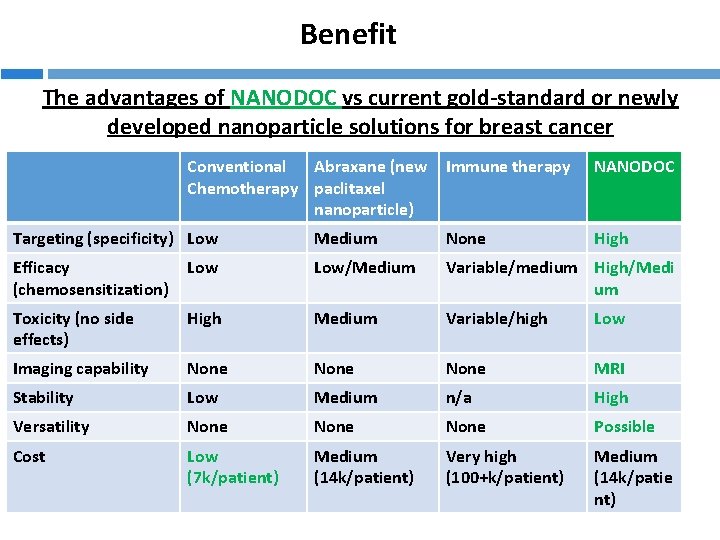
Benefit The advantages of NANODOC vs current gold-standard or newly developed nanoparticle solutions for breast cancer Conventional Abraxane (new Chemotherapy paclitaxel nanoparticle) Immune therapy NANODOC High Targeting (specificity) Low Medium None Efficacy (chemosensitization) Low/Medium Variable/medium High/Medi um Toxicity (no side effects) High Medium Variable/high Low Imaging capability None MRI Stability Low Medium n/a High Versatility None Possible Cost Low (7 k/patient) Medium (14 k/patient) Very high (100+k/patient) Medium (14 k/patie nt)
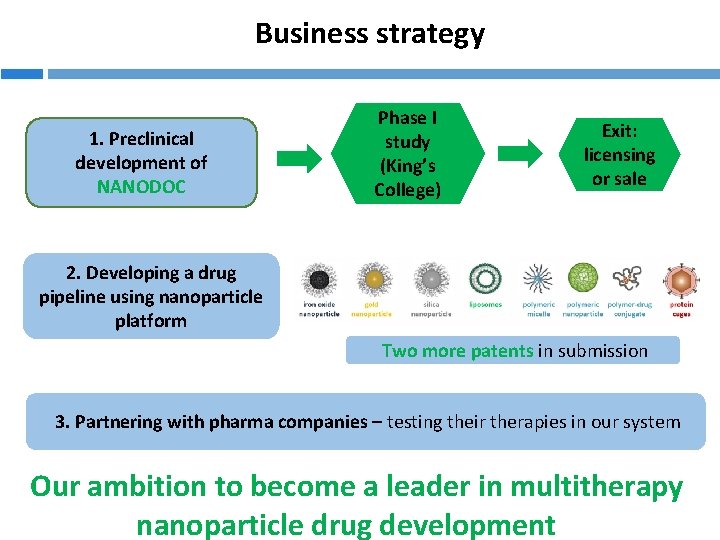
Business strategy 1. Preclinical development of NANODOC Phase I study (King’s College) Exit: licensing or sale 2. Developing a drug pipeline using nanoparticle platform Two more patents in submission 3. Partnering with pharma companies – testing their therapies in our system Our ambition to become a leader in multitherapy nanoparticle drug development
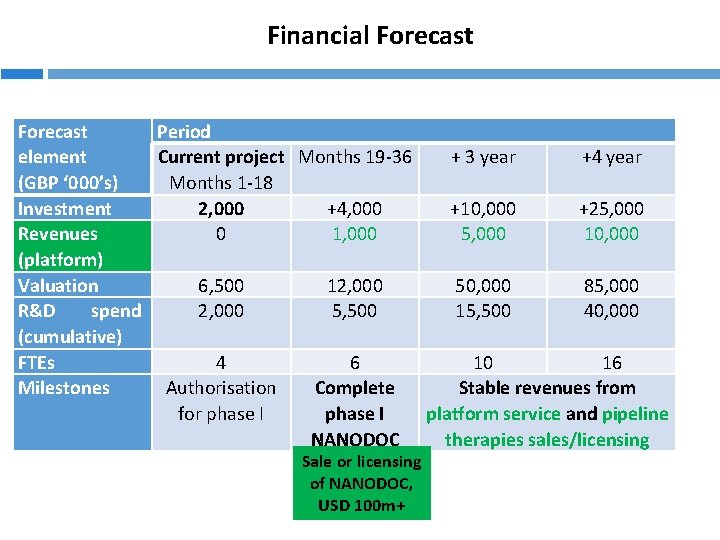
Financial Forecast Period Current project Months 19 -36 + 3 year +4 year element Months 1 -18 (GBP ‘ 000’s) Investment 2, 000 +4, 000 +10, 000 +25, 000 Revenues 0 1, 000 5, 000 10, 000 (platform) Valuation 6, 500 12, 000 50, 000 85, 000 R&D spend 2, 000 5, 500 15, 500 40, 000 (cumulative) FTEs 4 6 10 16 Milestones Authorisation Complete Stable revenues from for phase I platform service and pipeline NANODOC therapies sales/licensing Sale or licensing of NANODOC, USD 100 m+
ASK: Product development – NANODOC Preparing to phase I. Months 1 -18, Total costs: USD 2 M Two work packages WP 1 (months 1 -12). MTD, pharmacokinetics, pharmacodynamics, comparative efficacy WP 1: 800 k WP 2 (months 6 -18). Defining a robust manufacturing process for GLP industrial nanoparticle synthesis and establishing critical quality attributes (CQAs) and associated process control strategy. WP 2: 1. 2 m
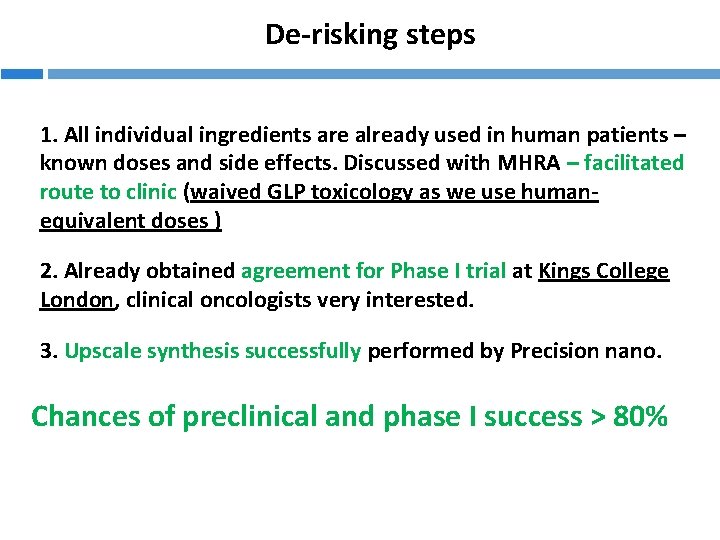
De-risking steps 1. All individual ingredients are already used in human patients – known doses and side effects. Discussed with MHRA – facilitated route to clinic (waived GLP toxicology as we use humanequivalent doses ) 2. Already obtained agreement for Phase I trial at Kings College London, clinical oncologists very interested. 3. Upscale synthesis successfully performed by Precision nano. Chances of preclinical and phase I success > 80%
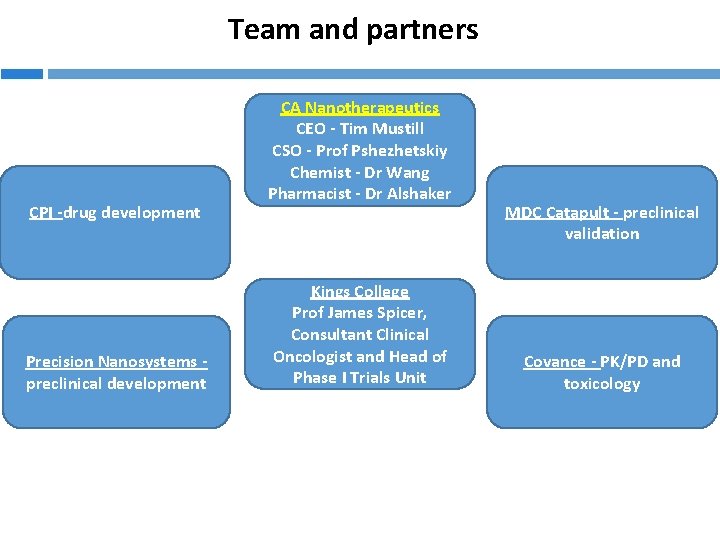
Team and partners CPI -drug development Precision Nanosystems preclinical development CA Nanotherapeutics CEO - Tim Mustill CSO - Prof Pshezhetskiy Chemist - Dr Wang Pharmacist - Dr Alshaker Kings College Prof James Spicer, Consultant Clinical Oncologist and Head of Phase I Trials Unit MDC Catapult - preclinical validation Covance - PK/PD and toxicology
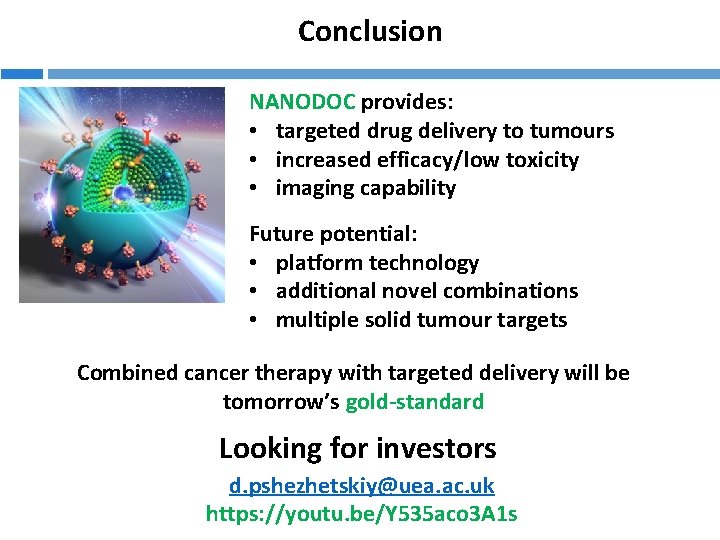
Conclusion NANODOC provides: • targeted drug delivery to tumours • increased efficacy/low toxicity • imaging capability Future potential: • platform technology • additional novel combinations • multiple solid tumour targets Combined cancer therapy with targeted delivery will be tomorrow’s gold-standard Looking for investors d. pshezhetskiy@uea. ac. uk https: //youtu. be/Y 535 aco 3 A 1 s
Appendix follows
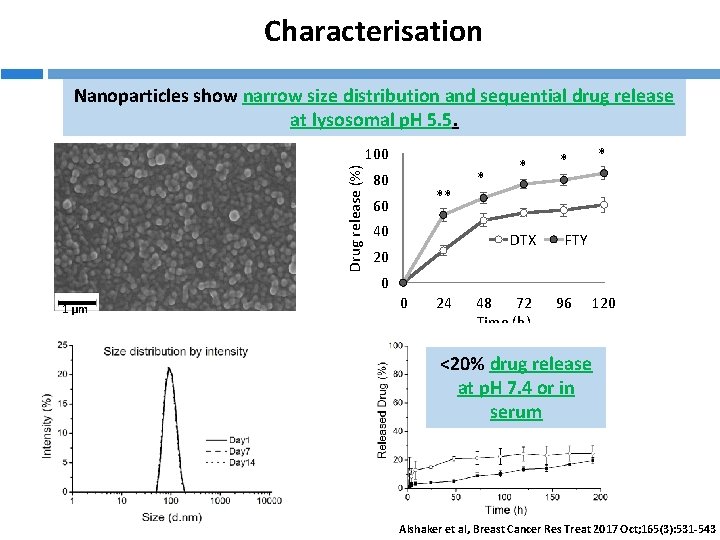
Characterisation Nanoparticles show narrow size distribution and sequential drug release at lysosomal p. H 5. 5. Drug release (%) 100 80 ** 60 40 * * DTX 20 * * FTY 0 1 µm 0 24 48 72 Time (h) 96 120 <20% drug release at p. H 7. 4 or in serum Alshaker et al, Breast Cancer Res Treat 2017 Oct; 165(3): 531 -543
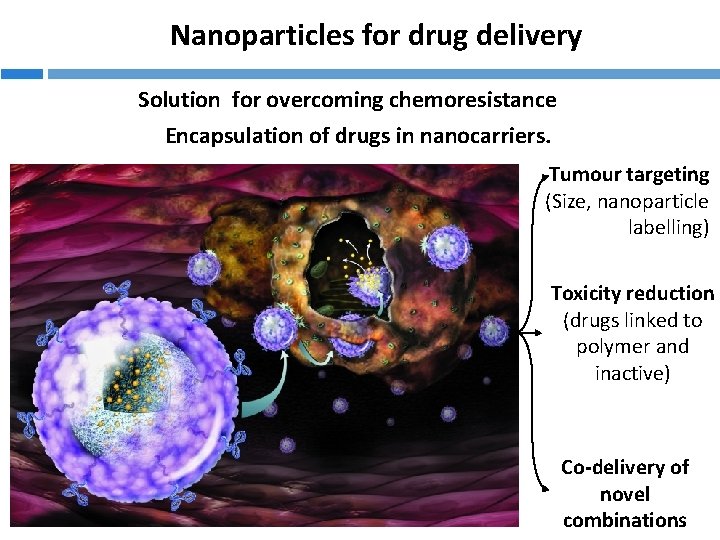
Nanoparticles for drug delivery Solution for overcoming chemoresistance Encapsulation of drugs in nanocarriers. Tumour targeting (Size, nanoparticle labelling) Toxicity reduction (drugs linked to polymer and inactive) Co-delivery of novel combinations
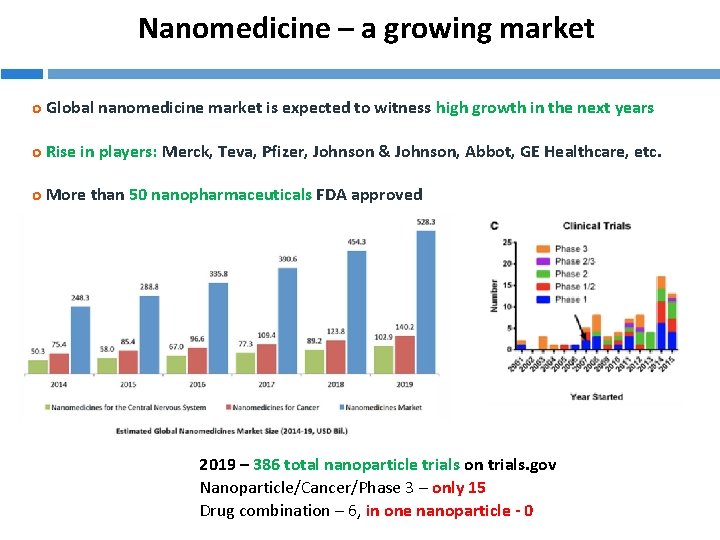
Nanomedicine – a growing market o Global nanomedicine market is expected to witness high growth in the next years o Rise in players: Merck, Teva, Pfizer, Johnson & Johnson, Abbot, GE Healthcare, etc. o More than 50 nanopharmaceuticals FDA approved 2019 – 386 total nanoparticle trials on trials. gov Nanoparticle/Cancer/Phase 3 – only 15 Drug combination – 6, in one nanoparticle - 0
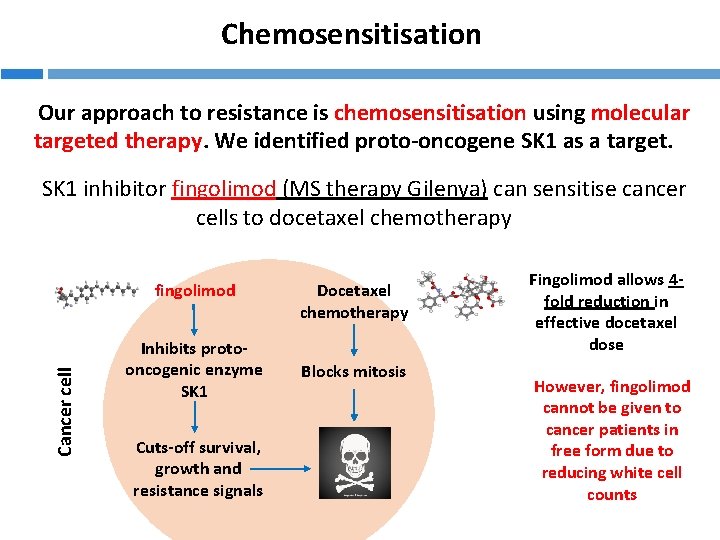
Chemosensitisation Our approach to resistance is chemosensitisation using molecular targeted therapy. We identified proto-oncogene SK 1 as a target. SK 1 inhibitor fingolimod (MS therapy Gilenya) can sensitise cancer cells to docetaxel chemotherapy Cancer cell fingolimod Inhibits protooncogenic enzyme SK 1 Cuts-off survival, growth and resistance signals Docetaxel chemotherapy Blocks mitosis Fingolimod allows 4 fold reduction in effective docetaxel dose However, fingolimod cannot be given to cancer patients in free form due to reducing white cell counts
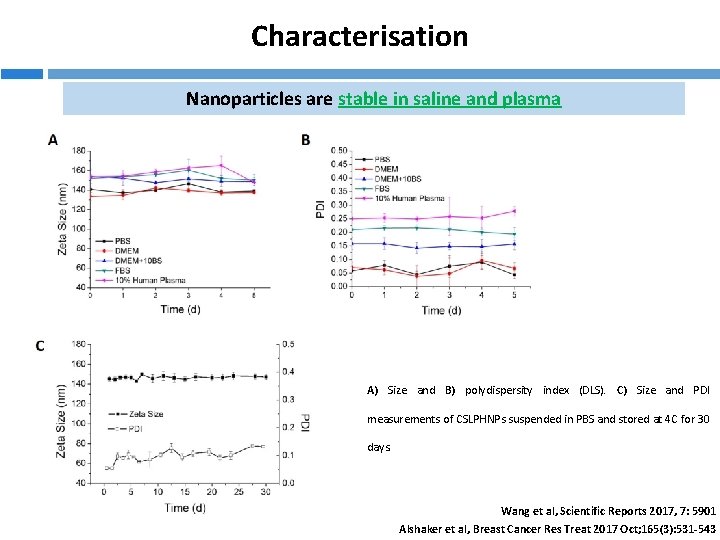
Characterisation Nanoparticles are stable in saline and plasma A) Size and B) polydispersity index (DLS). C) Size and PDI measurements of CSLPHNPs suspended in PBS and stored at 4 C for 30 days. Wang et al, Scientific Reports 2017, 7: 5901 Alshaker et al, Breast Cancer Res Treat 2017 Oct; 165(3): 531 -543
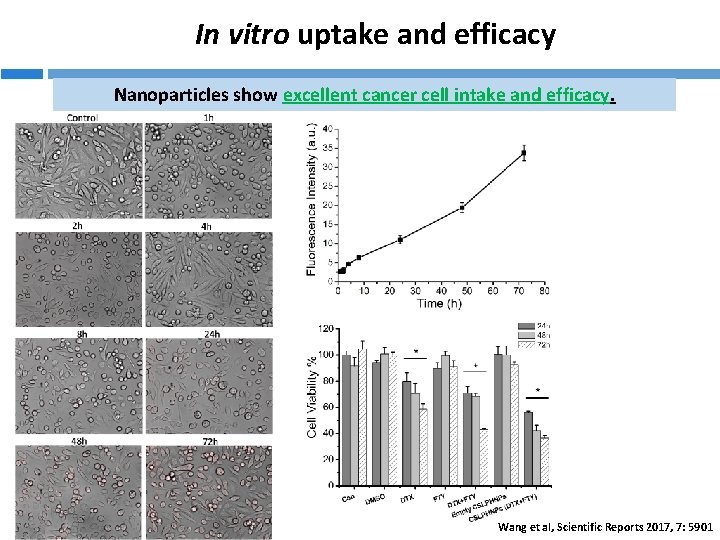
In vitro uptake and efficacy Nanoparticles show excellent cancer cell intake and efficacy. Wang et al, Scientific Reports 2017, 7: 5901
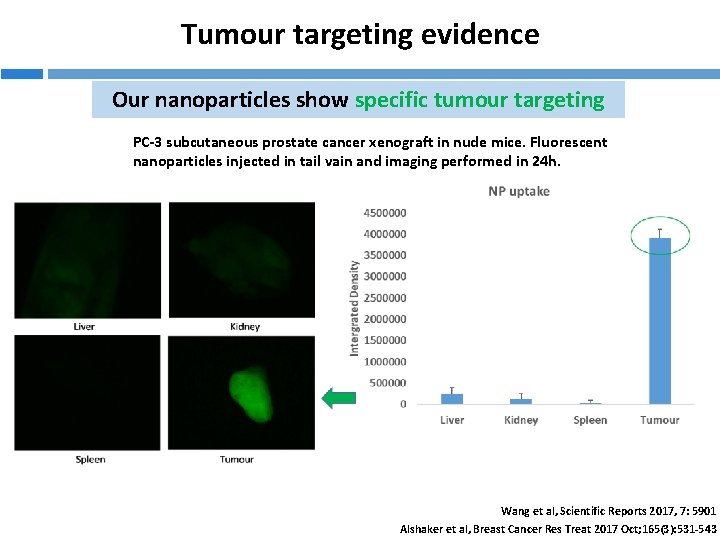
Tumour targeting evidence Our nanoparticles show specific tumour targeting PC-3 subcutaneous prostate cancer xenograft in nude mice. Fluorescent nanoparticles injected in tail vain and imaging performed in 24 h. Wang et al, Scientific Reports 2017, 7: 5901 Alshaker et al, Breast Cancer Res Treat 2017 Oct; 165(3): 531 -543
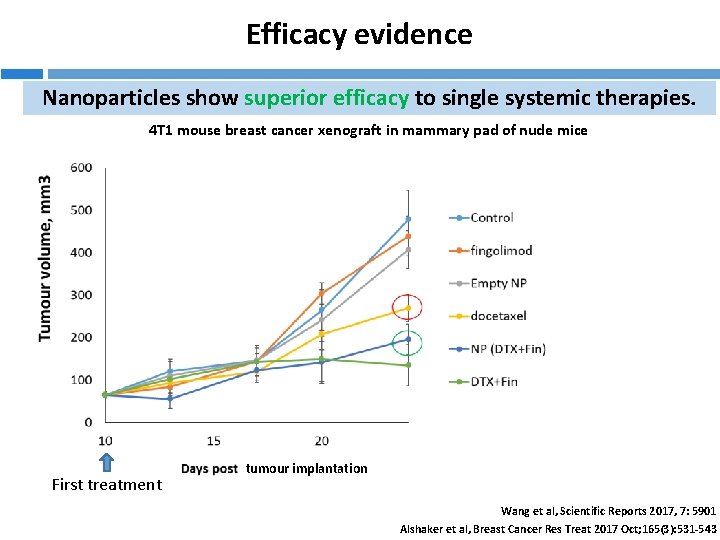
Efficacy evidence Nanoparticles show superior efficacy to single systemic therapies. 4 T 1 mouse breast cancer xenograft in mammary pad of nude mice First treatment tumour implantation Wang et al, Scientific Reports 2017, 7: 5901 Alshaker et al, Breast Cancer Res Treat 2017 Oct; 165(3): 531 -543
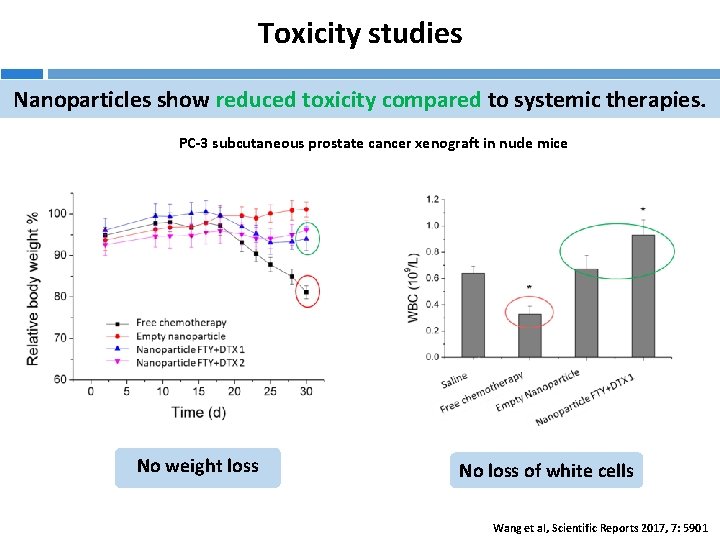
Toxicity studies Nanoparticles show reduced toxicity compared to systemic therapies. PC-3 subcutaneous prostate cancer xenograft in nude mice No weight loss No loss of white cells Wang et al, Scientific Reports 2017, 7: 5901
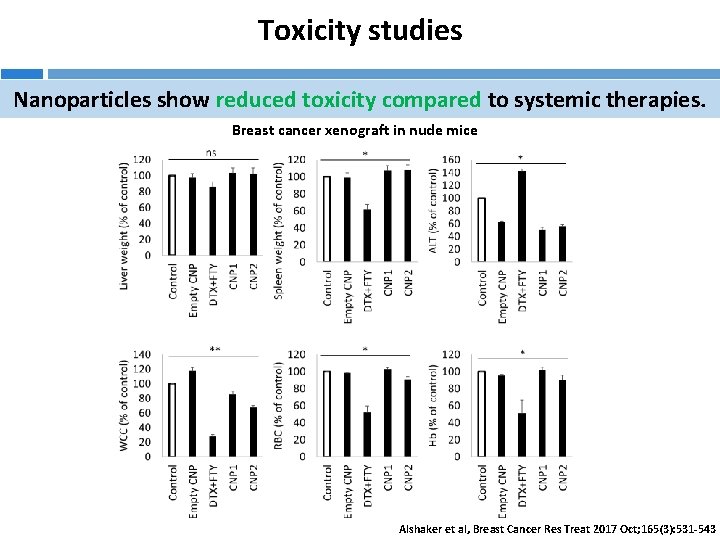
Toxicity studies Nanoparticles show reduced toxicity compared to systemic therapies. Breast cancer xenograft in nude mice Alshaker et al, Breast Cancer Res Treat 2017 Oct; 165(3): 531 -543