
C9 2 Photosynthesis Photosynthesis process by which plants
C-9 -2 Photosynthesis
Photosynthesis – process by which plants use light energy to convert water and carbon dioxide into oxygen and carbohydrates (glucose)
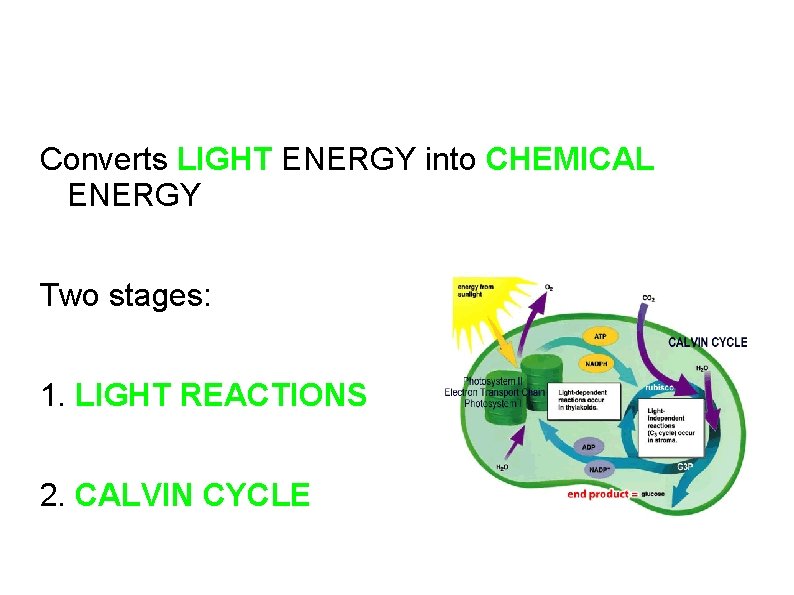
Converts LIGHT ENERGY into CHEMICAL ENERGY Two stages: 1. LIGHT REACTIONS 2. CALVIN CYCLE
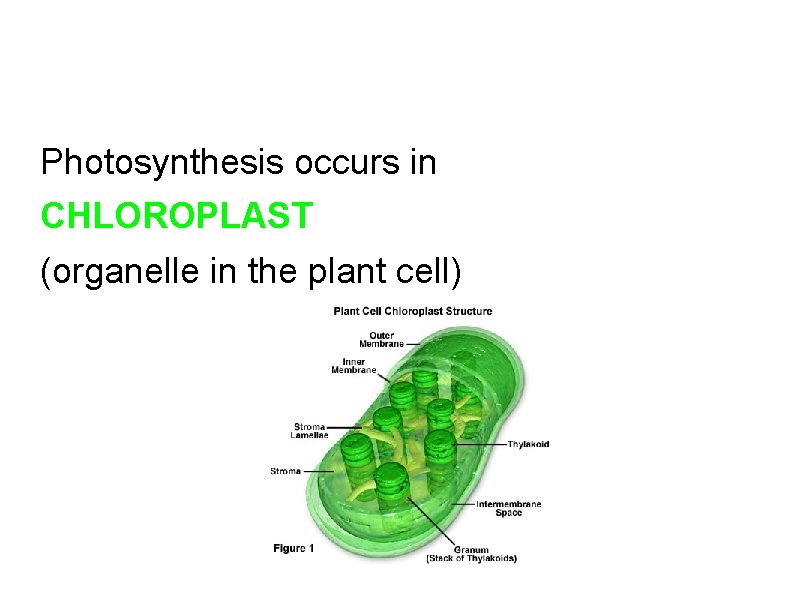
Photosynthesis occurs in CHLOROPLAST (organelle in the plant cell)
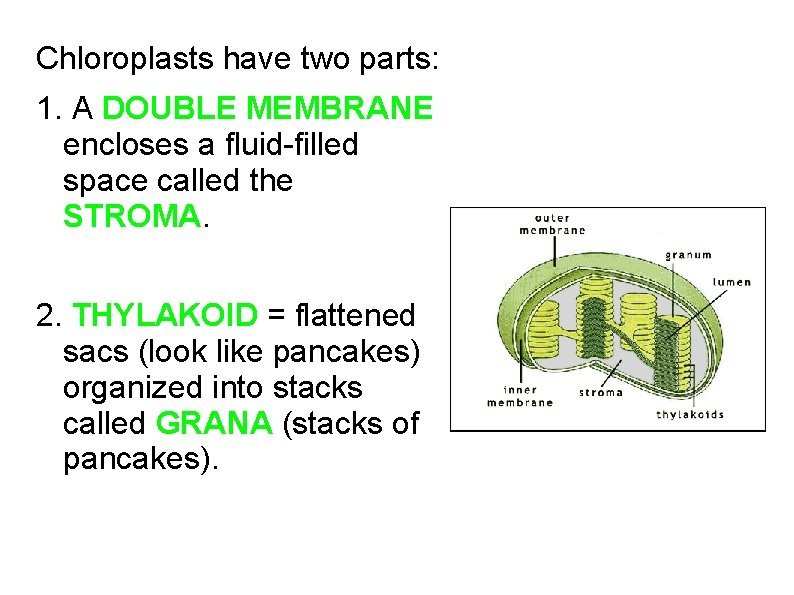
Chloroplasts have two parts: 1. A DOUBLE MEMBRANE encloses a fluid-filled space called the STROMA. 2. THYLAKOID = flattened sacs (look like pancakes) organized into stacks called GRANA (stacks of pancakes).

CHLOROPHYLL and other pigments involved in absorption of solar energy are embedded within the thylakoid membranes; these pigments absorb solar energy
Light Reactions (need LIGHT)
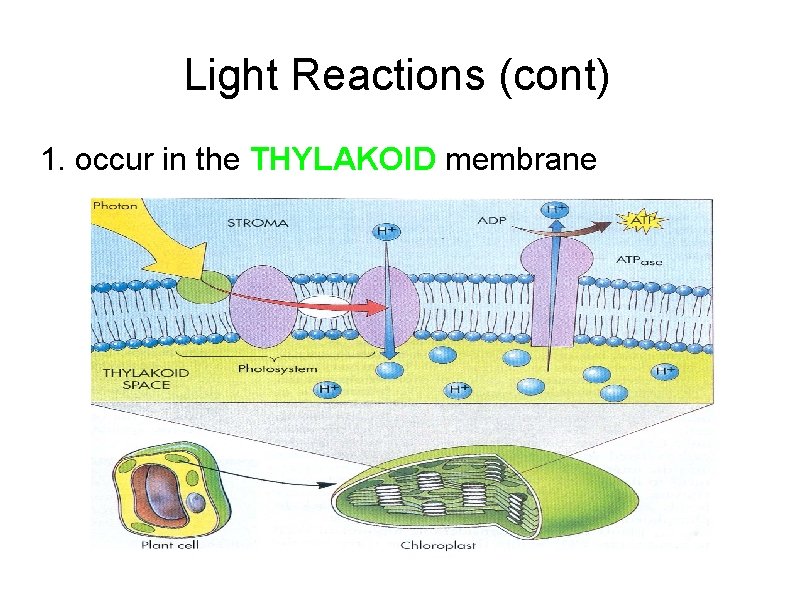
Light Reactions (cont) 1. occur in the THYLAKOID membrane
Light Reaction (cont) 2. CHLOROPHYL absorbs light from the sun and H 2 O is taken in through the plants roots (causes electrons to be passed down the chain- provides energy for the hydrogen ions to be pumped across the thylakoid membrane)
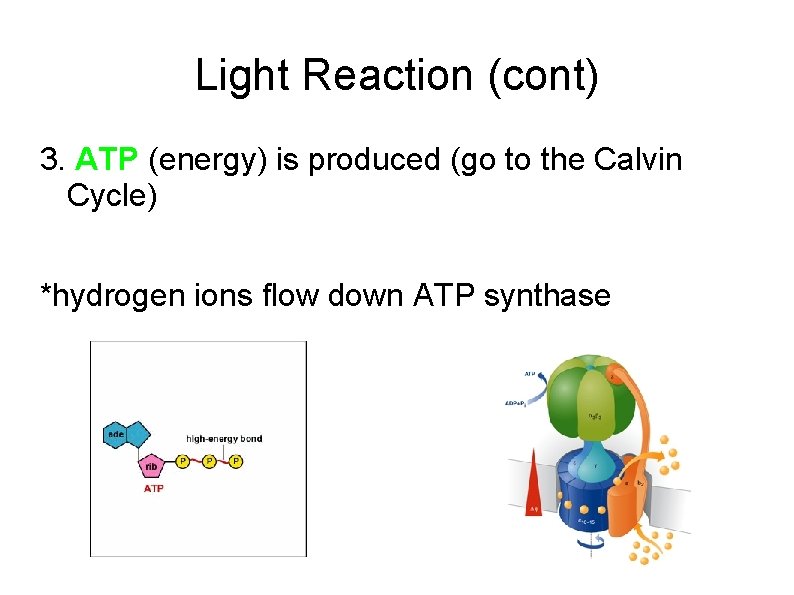
Light Reaction (cont) 3. ATP (energy) is produced (go to the Calvin Cycle) *hydrogen ions flow down ATP synthase
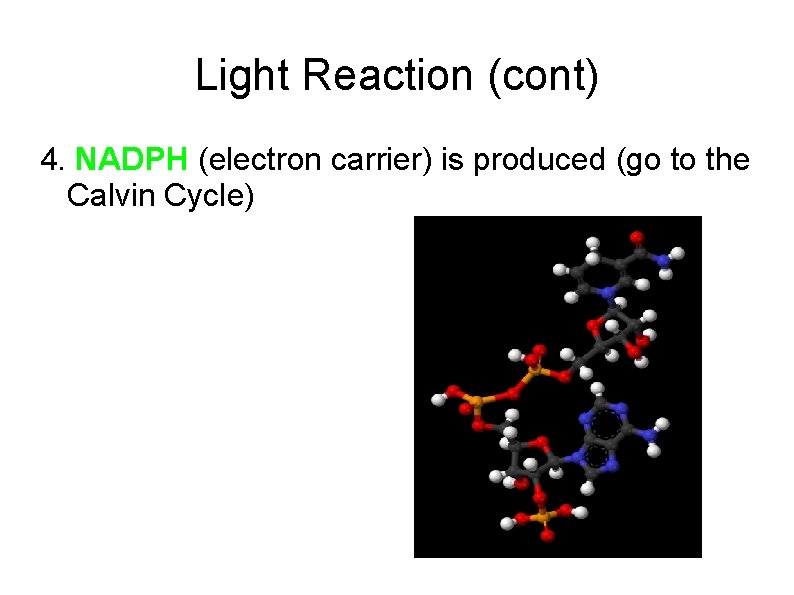
Light Reaction (cont) 4. NADPH (electron carrier) is produced (go to the Calvin Cycle)
Light Reaction (cont) 5. OXYGEN gas is released
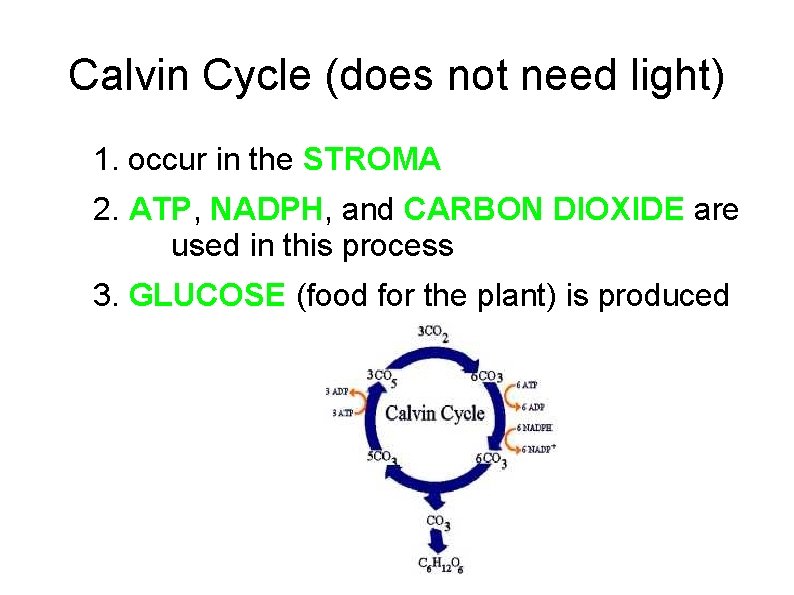
Calvin Cycle (does not need light) 1. occur in the STROMA 2. ATP, NADPH, and CARBON DIOXIDE are used in this process 3. GLUCOSE (food for the plant) is produced
- Slides: 13