
C H A P T E R 12

- Slides: 42
C H A P T E R 12 Temperature and Heat
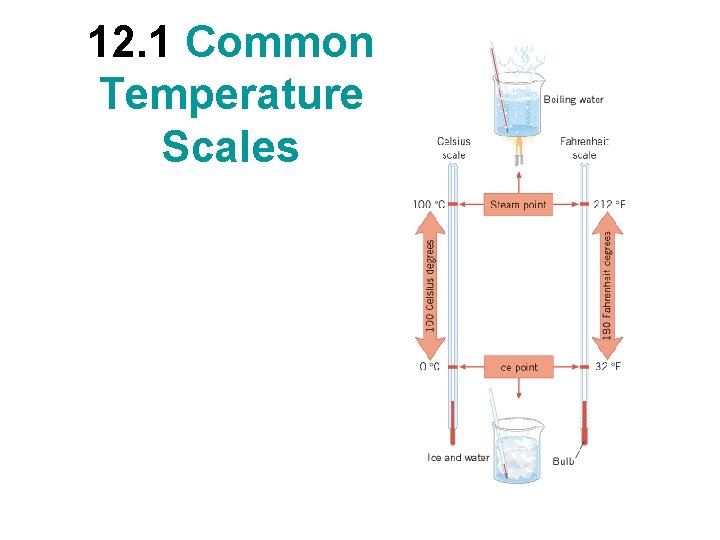
12. 1 Common Temperature Scales
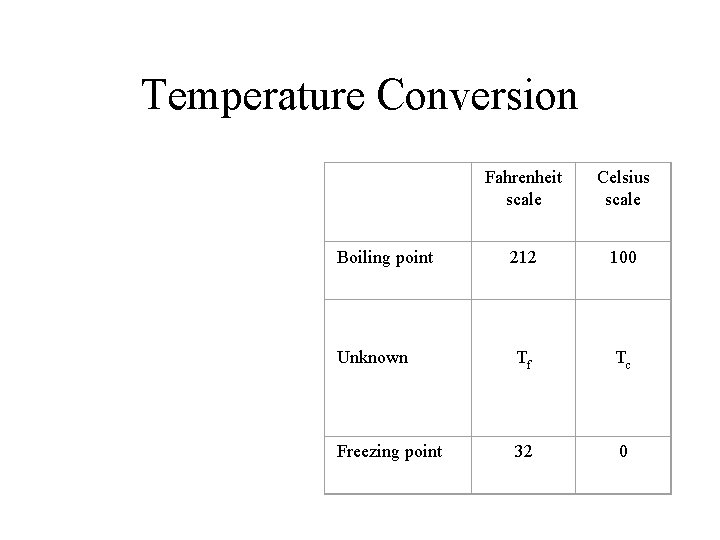
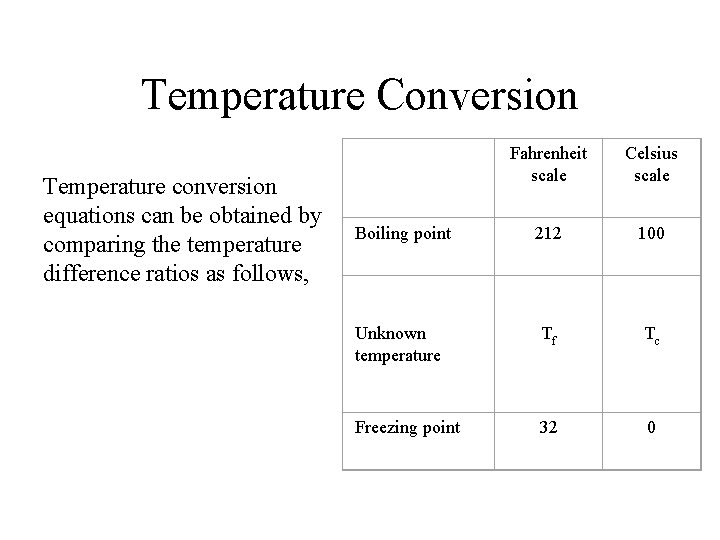
Temperature Conversion Boiling point Unknown Fahrenheit scale Celsius scale 212 100 Tf Tc Freezing point 32 0
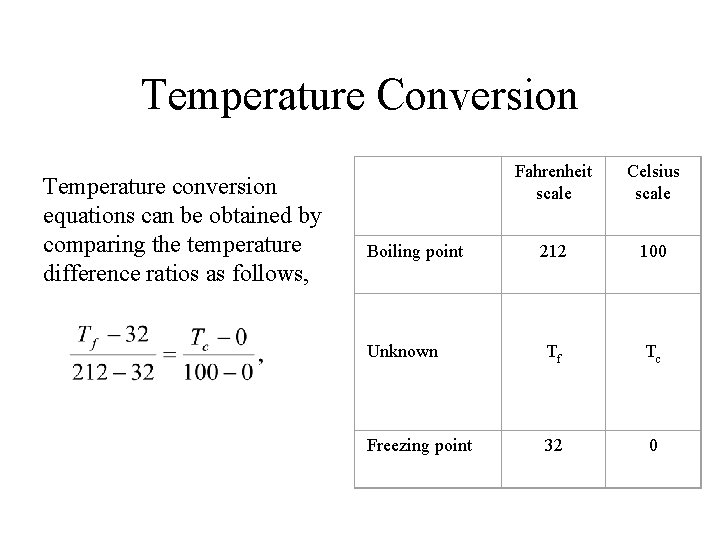
Temperature Conversion Temperature conversion equations can be obtained by comparing the temperature difference ratios as follows, Boiling point Unknown temperature Fahrenheit scale Celsius scale 212 100 Tf Tc Freezing point 32 0
Temperature Conversion Temperature conversion equations can be obtained by comparing the temperature difference ratios as follows, Boiling point Unknown Fahrenheit scale Celsius scale 212 100 Tf Tc Freezing point 32 0
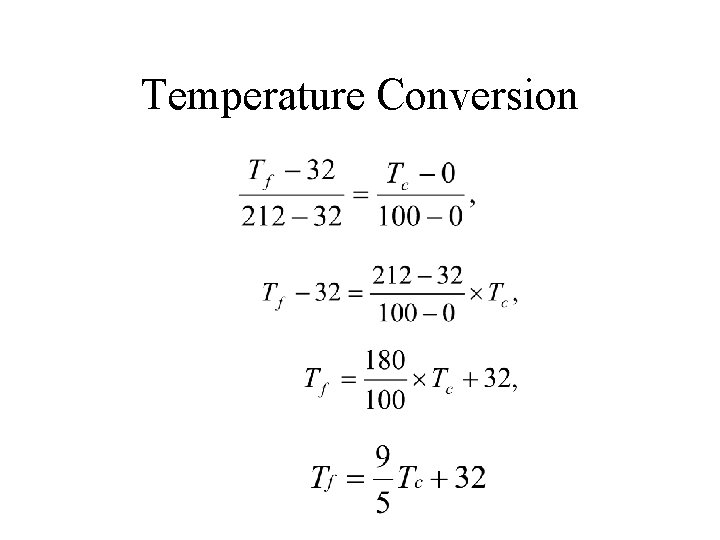
Temperature Conversion
12. 2 The Kelvin Temperature Scale Kelvin temperature scale has greater scientific significance. It was introduced by Kelvin (1824– 1907). A temperature of 300 K (not 300 °K) is read as “three hundred kelvins, ” not “three hundred degrees kelvin. ” The kelvin is the SI base unit for temperature.
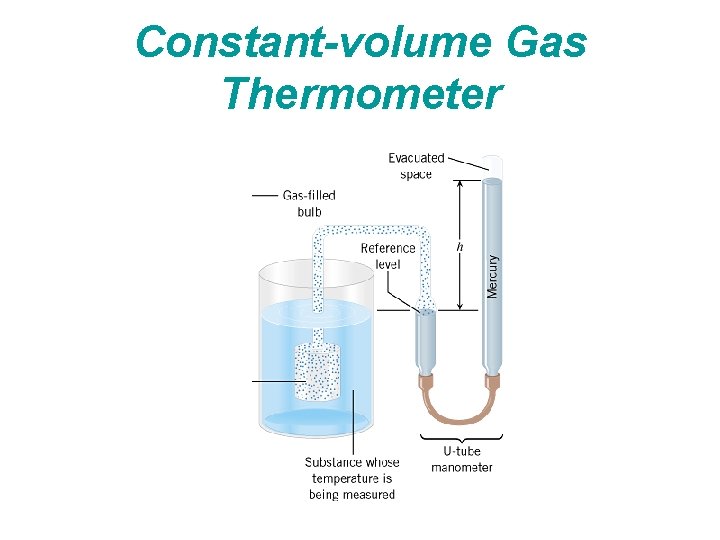
Constant-volume Gas Thermometer
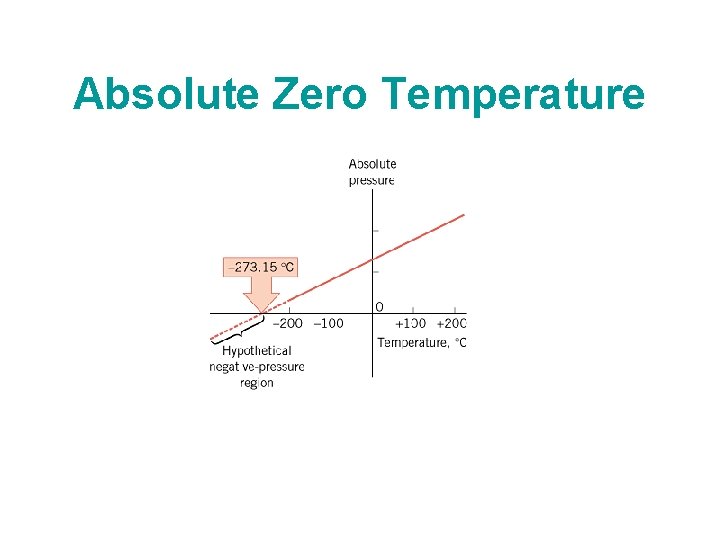
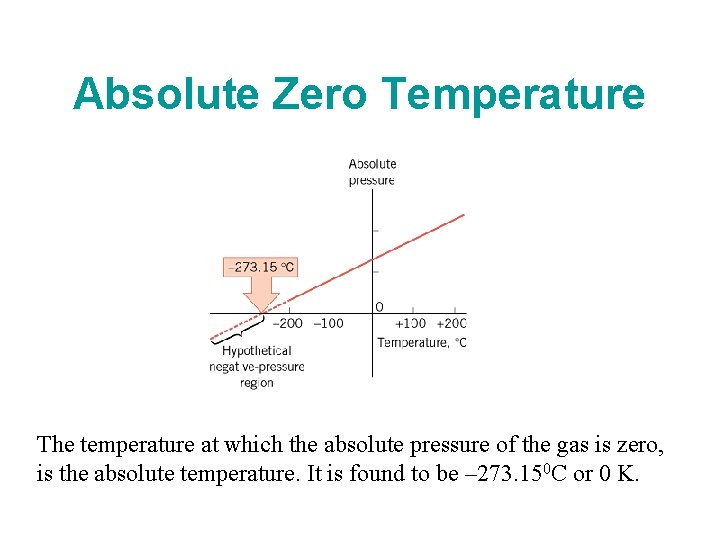
Absolute Zero Temperature
Absolute Zero Temperature The temperature at which the absolute pressure of the gas is zero, is the absolute temperature. It is found to be – 273. 150 C or 0 K.
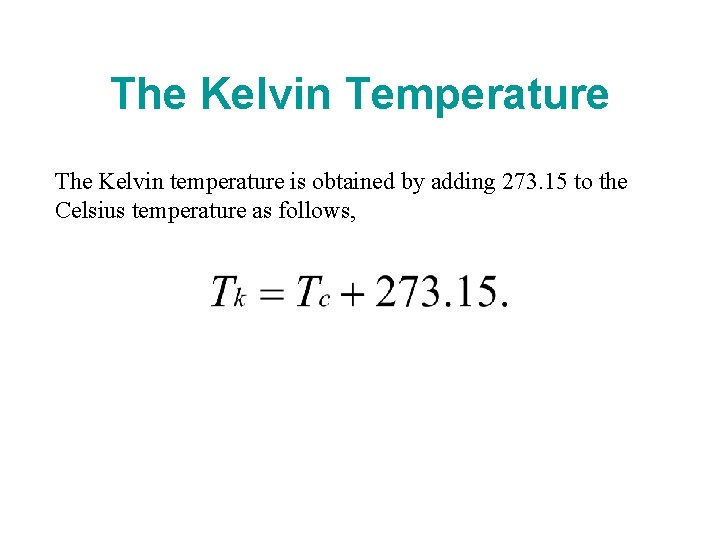
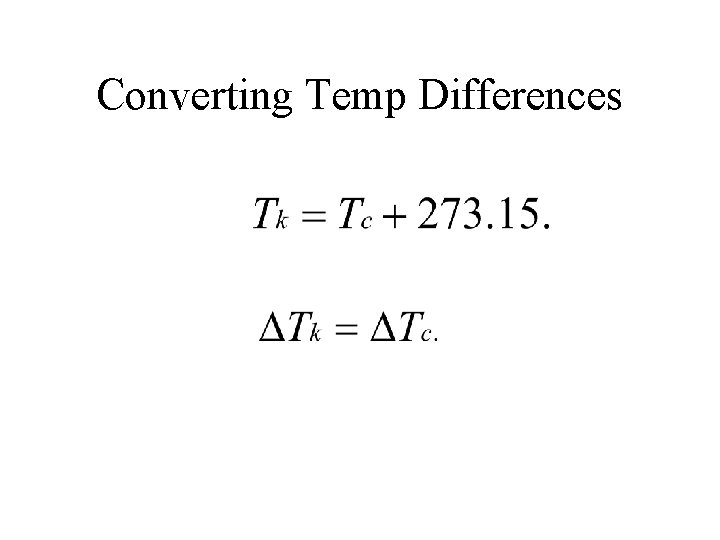
The Kelvin Temperature The Kelvin temperature is obtained by adding 273. 15 to the Celsius temperature as follows,
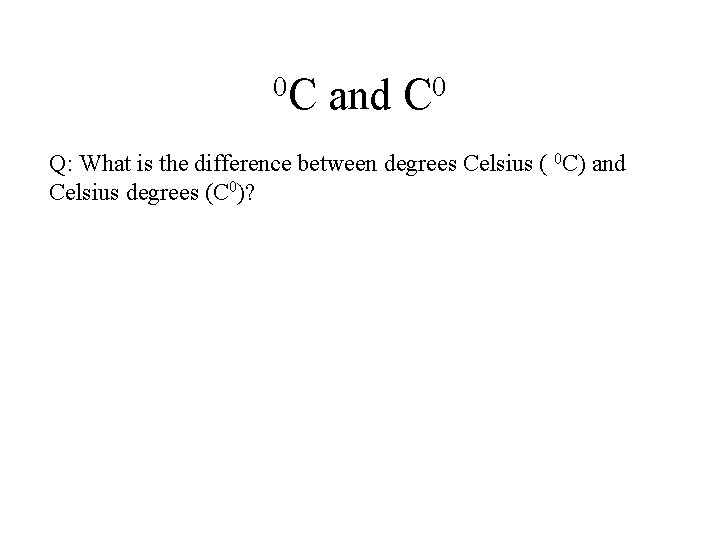
0 C and C 0 Q: What is the difference between degrees Celsius ( 0 C) and Celsius degrees (C 0)?
0 C and C 0 Q: What is the difference between degrees Celsius ( 0 C) and Celsius degrees (C 0)? A: Temperature is expressed in degrees Celsius ( 0 C) and temperature difference is expressed in Celsius degrees (C 0).
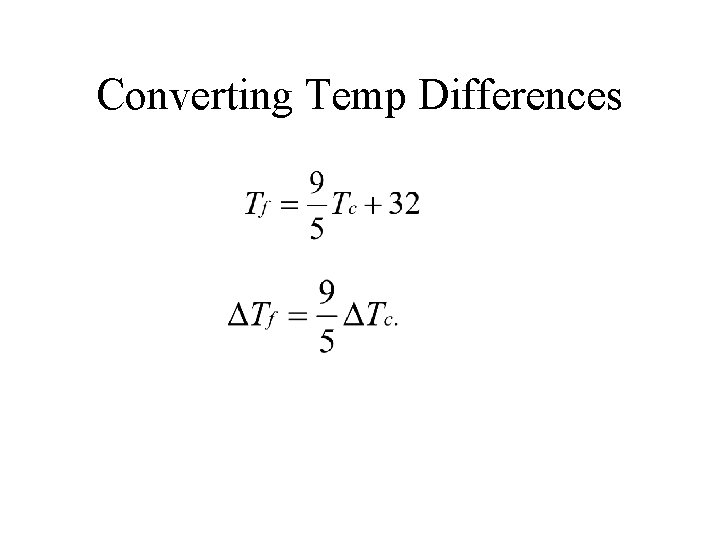
Converting Temp Differences
Converting Temp Differences
12. 3 Thermometers All thermometers make use of the change in some physical property with temperature. A property that changes with temperature is called a thermometric property.
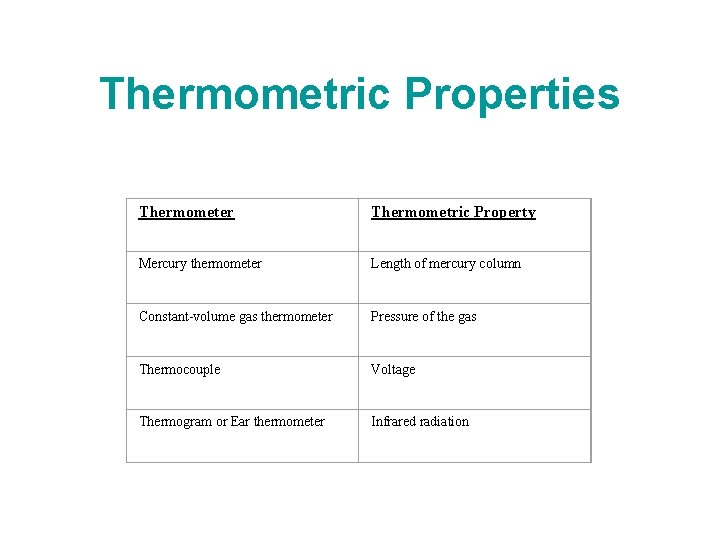
Thermometric Properties Thermometer Thermometric Property Mercury thermometer Length of mercury column Constant-volume gas thermometer Pressure of the gas Thermocouple Voltage Thermogram or Ear thermometer Infrared radiation
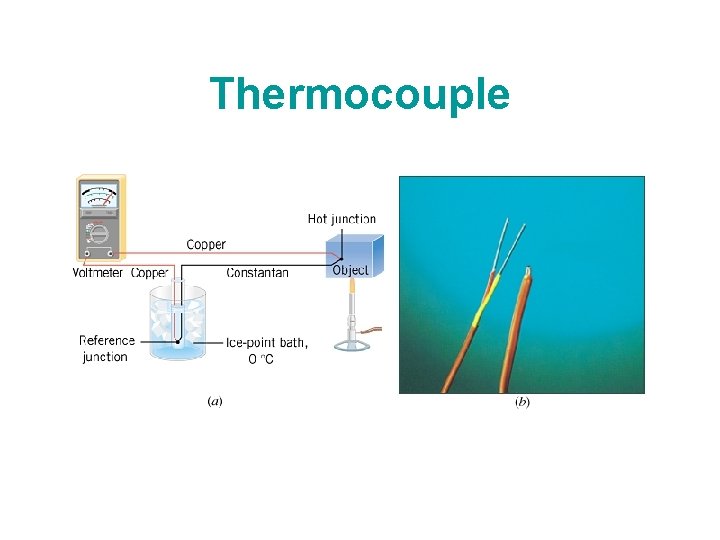
Thermocouple
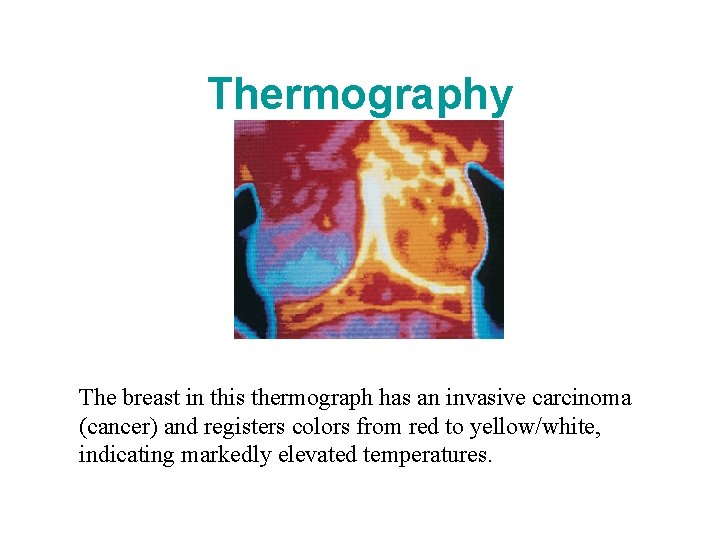
Thermography The breast in this thermograph has an invasive carcinoma (cancer) and registers colors from red to yellow/white, indicating markedly elevated temperatures.
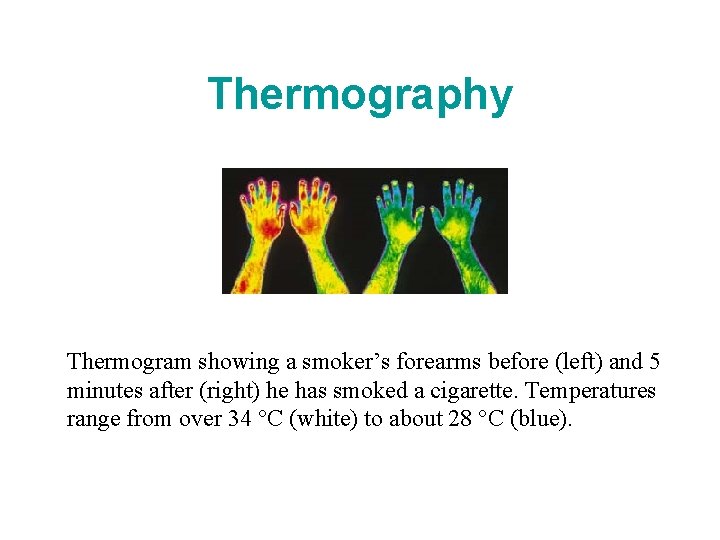
Thermography Thermogram showing a smoker’s forearms before (left) and 5 minutes after (right) he has smoked a cigarette. Temperatures range from over 34 °C (white) to about 28 °C (blue).
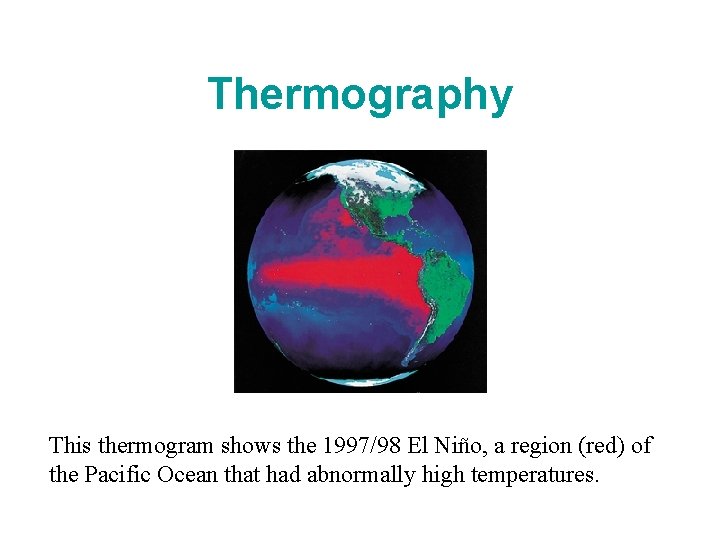
Thermography This thermogram shows the 1997/98 El Niño, a region (red) of the Pacific Ocean that had abnormally high temperatures.
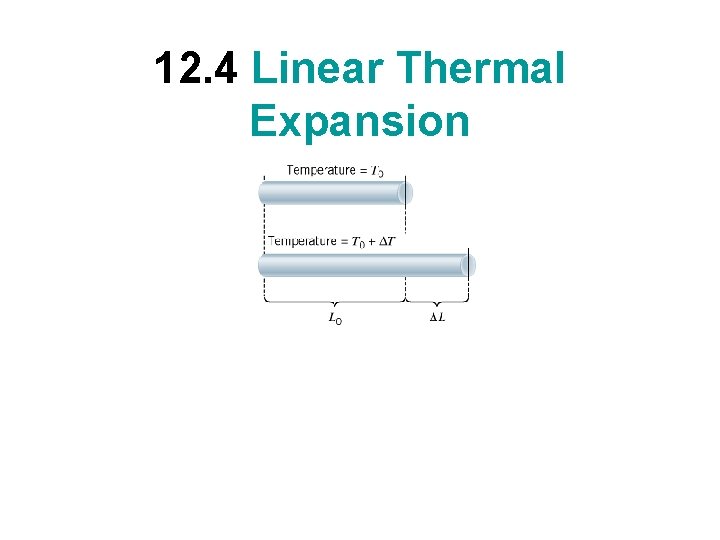
12. 4 Linear Thermal Expansion
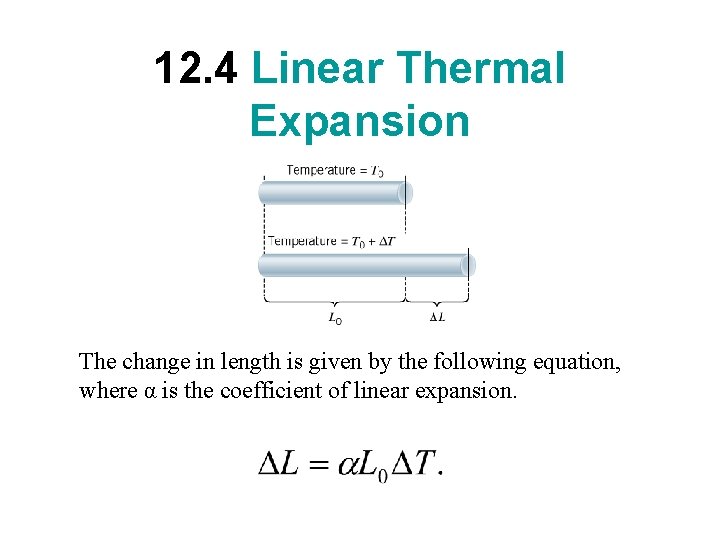
12. 4 Linear Thermal Expansion The change in length is given by the following equation, where α is the coefficient of linear expansion.
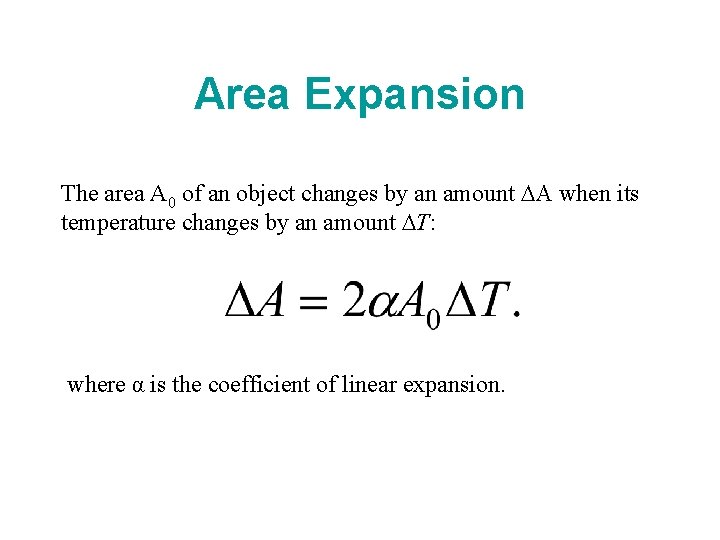
Area Expansion The area A 0 of an object changes by an amount DA when its temperature changes by an amount DT: where α is the coefficient of linear expansion.
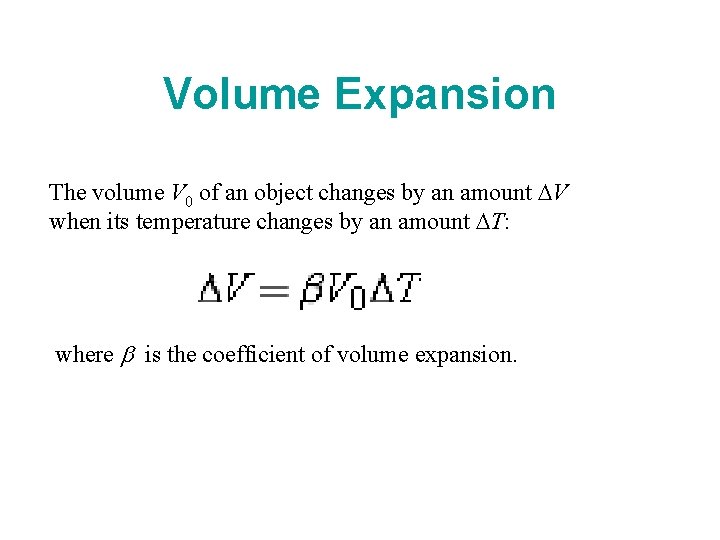
Volume Expansion The volume V 0 of an object changes by an amount DV when its temperature changes by an amount DT: where b is the coefficient of volume expansion.
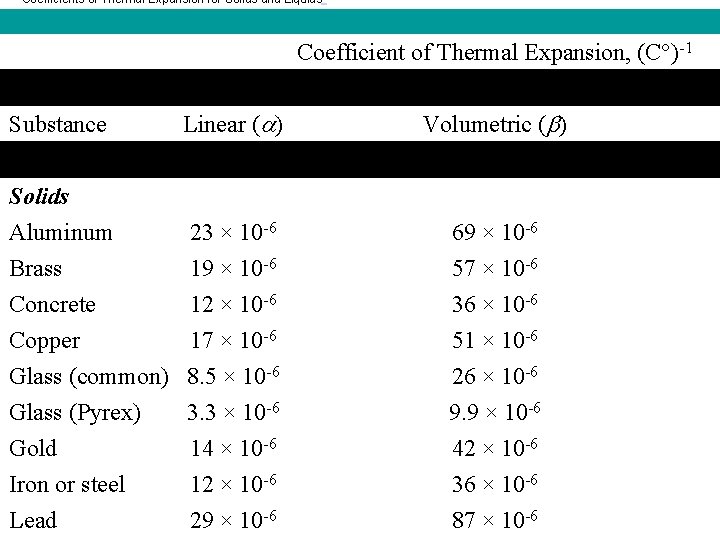
Coefficients of Thermal Expansion for Solids and Liquids Coefficient of Thermal Expansion, (C°)-1 Substance Linear (a) Volumetric (b) Solids Aluminum Brass 23 × 10 -6 19 × 10 -6 69 × 10 -6 57 × 10 -6 Concrete 12 × 10 -6 Copper 17 × 10 -6 Glass (common) 8. 5 × 10 -6 36 × 10 -6 51 × 10 -6 26 × 10 -6 Glass (Pyrex) Gold 3. 3 × 10 -6 14 × 10 -6 9. 9 × 10 -6 42 × 10 -6 Iron or steel Lead 12 × 10 -6 29 × 10 -6 36 × 10 -6 87 × 10 -6
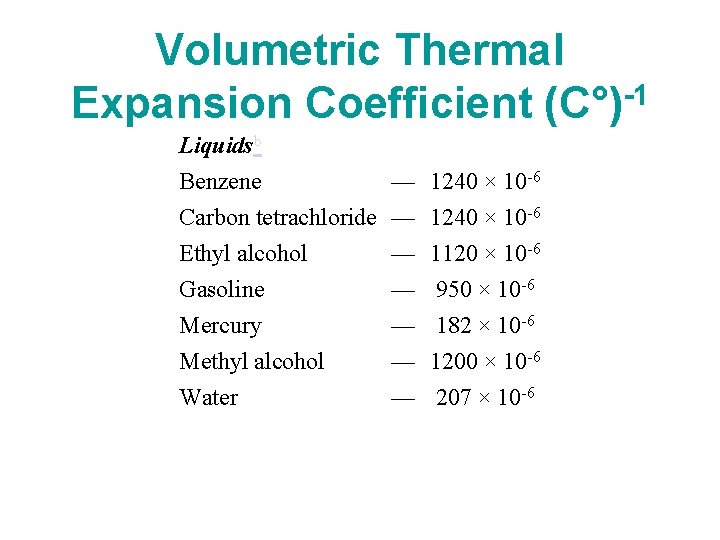
Volumetric Thermal Expansion Coefficient (C°)-1 Liquidsb Benzene — 1240 × 10 -6 Carbon tetrachloride — 1240 × 10 -6 Ethyl alcohol — 1120 × 10 -6 Gasoline Mercury Methyl alcohol Water — — 950 × 10 -6 182 × 10 -6 1200 × 10 -6 207 × 10 -6
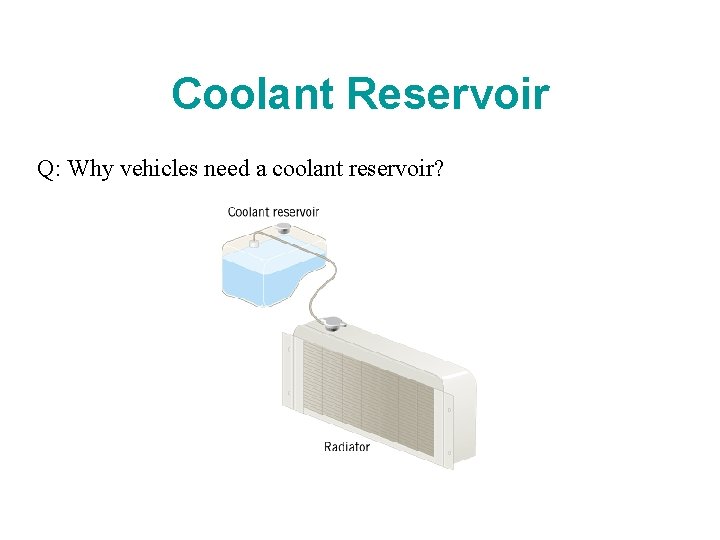
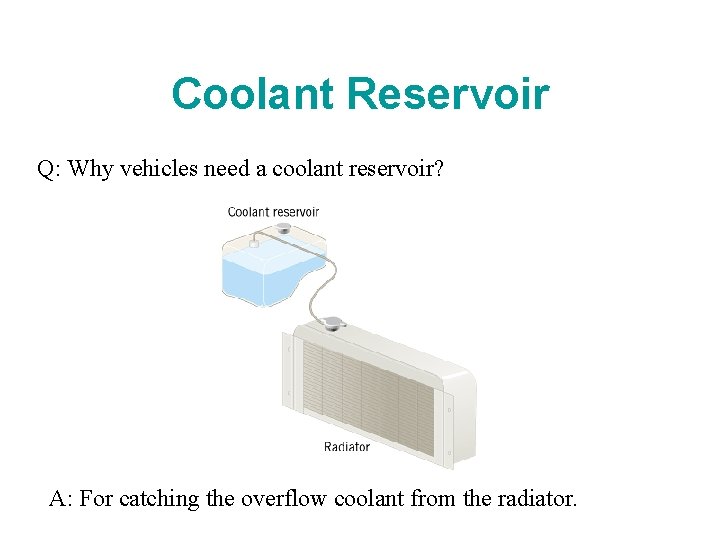
Coolant Reservoir Q: Why vehicles need a coolant reservoir?
Coolant Reservoir Q: Why vehicles need a coolant reservoir? A: For catching the overflow coolant from the radiator.
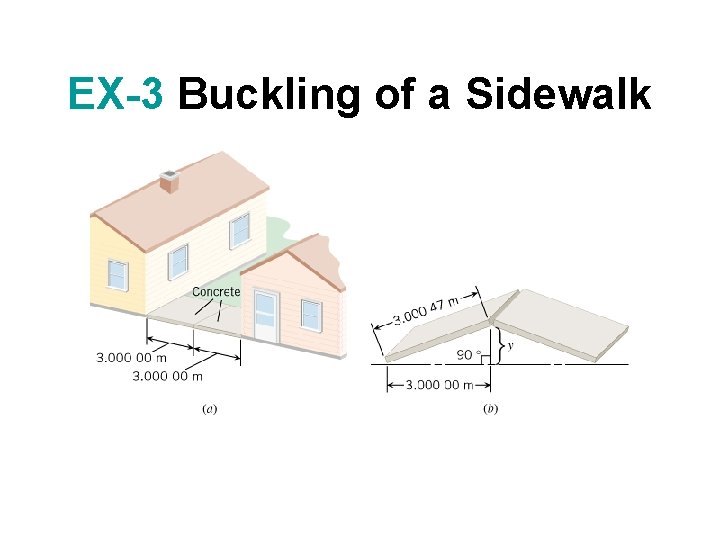
EX-3 Buckling of a Sidewalk
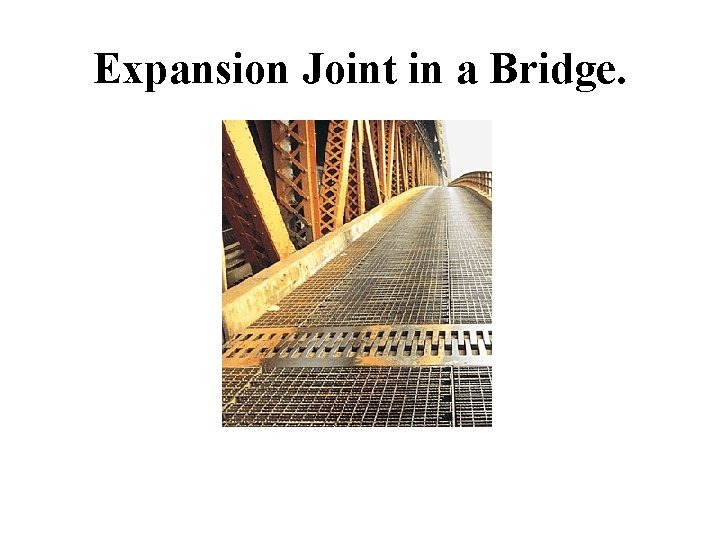
Expansion Joint in a Bridge.
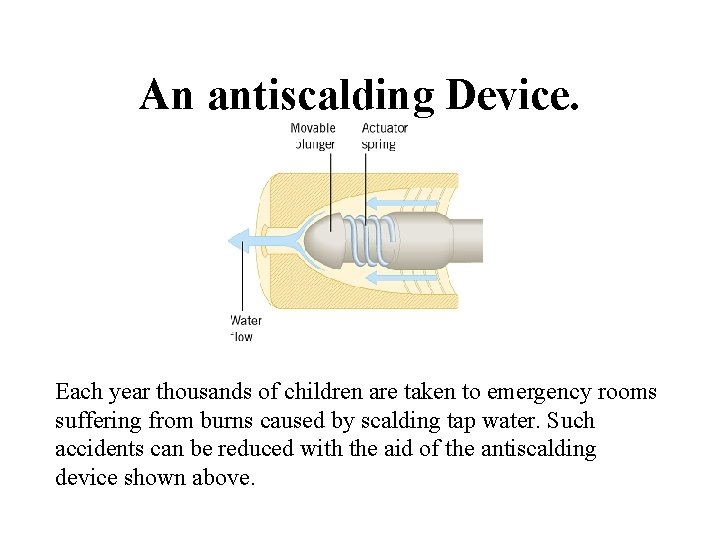
An antiscalding Device. Each year thousands of children are taken to emergency rooms suffering from burns caused by scalding tap water. Such accidents can be reduced with the aid of the antiscalding device shown above.
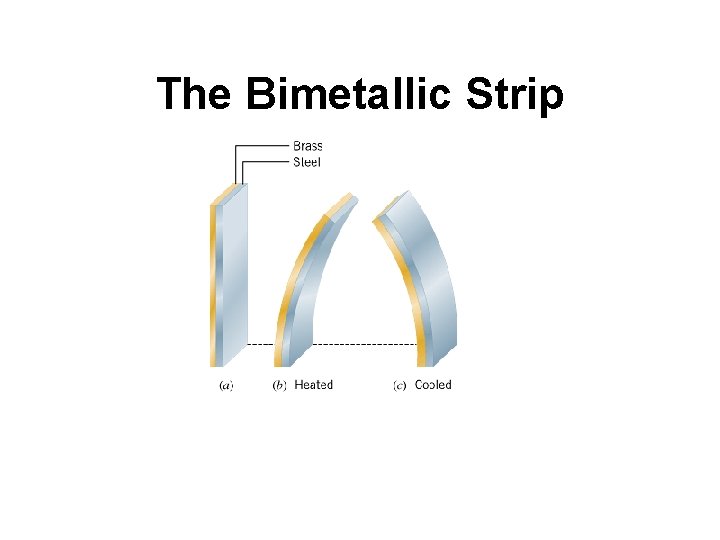
The Bimetallic Strip
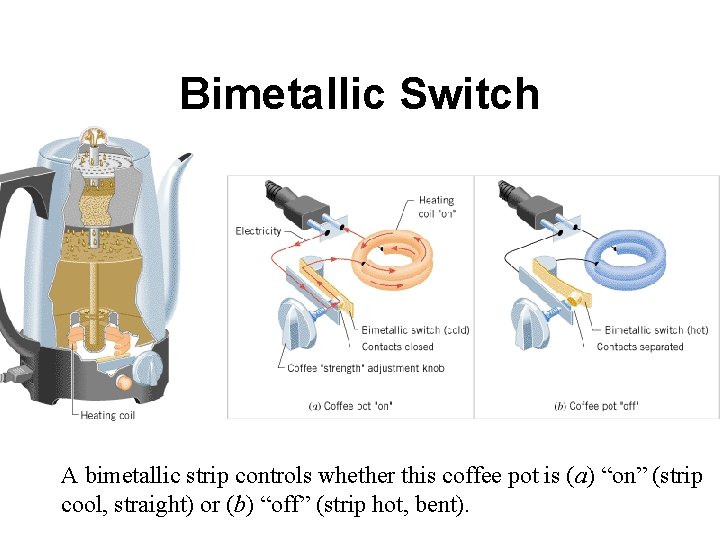
Bimetallic Switch A bimetallic strip controls whether this coffee pot is (a) “on” (strip cool, straight) or (b) “off” (strip hot, bent).
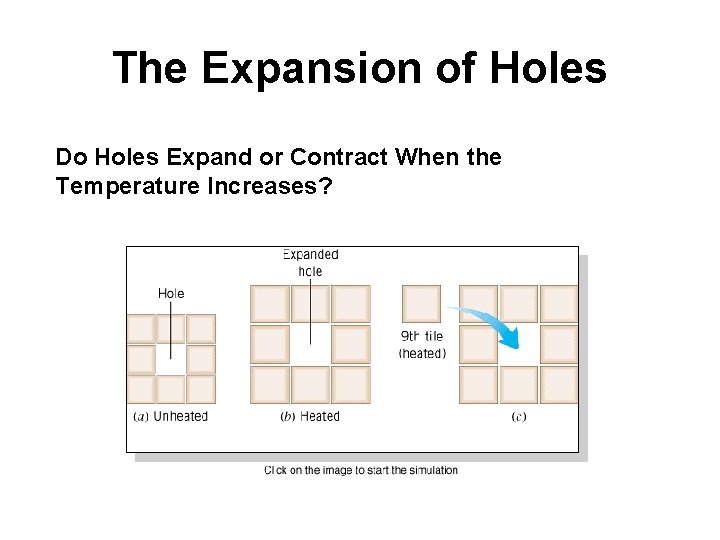
The Expansion of Holes Do Holes Expand or Contract When the Temperature Increases?
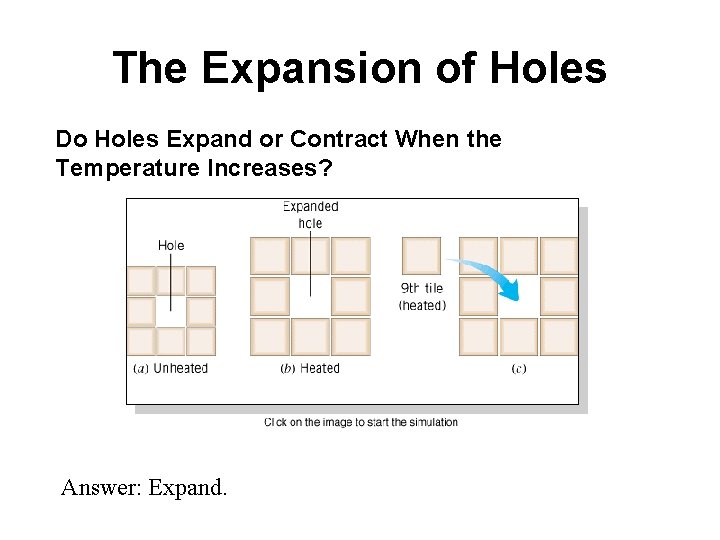
The Expansion of Holes Do Holes Expand or Contract When the Temperature Increases? Answer: Expand.
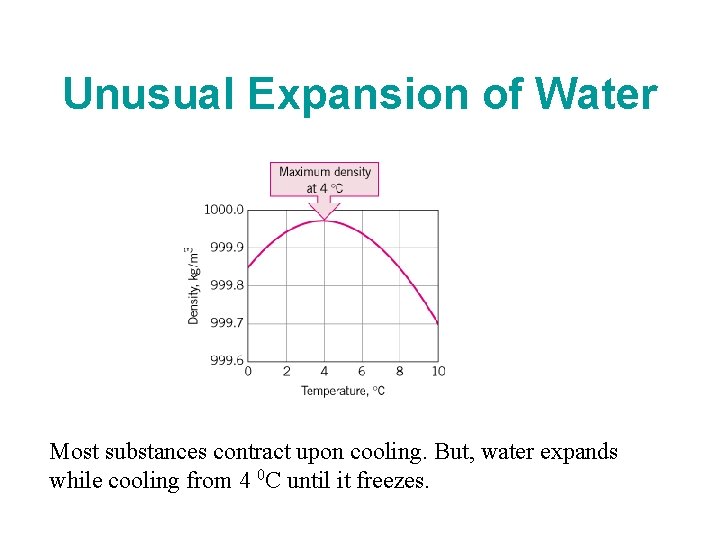
Unusual Expansion of Water Most substances contract upon cooling. But, water expands while cooling from 4 0 C until it freezes.
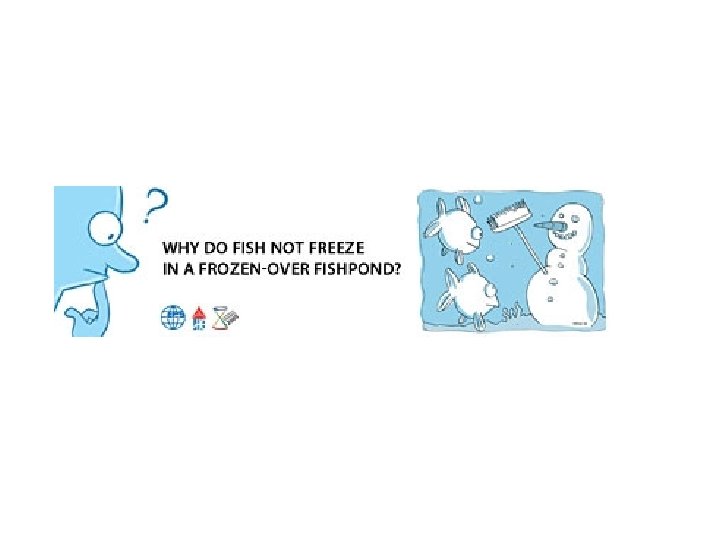
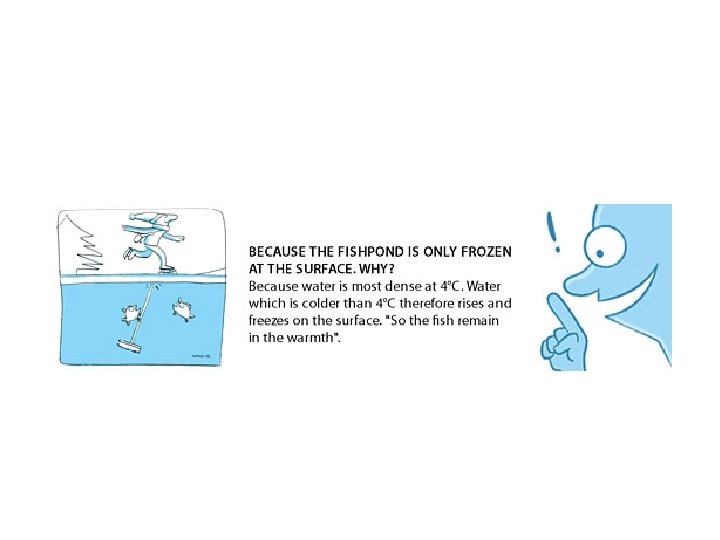
Water Temperature of a Frigid Cold Lake The fact that water has its greatest density at 4 °C, rather than at 0 °C, has important consequences for the way in which a lake freezes. When the air temperature drops, the surface layer of water is chilled. As the temperature of the surface layer drops toward 4 °C, this layer becomes more dense than the warmer water below. The denser water sinks and pushes up the deeper and warmer water, which in turn is chilled at the surface. This process continues until the temperature of the entire lake reaches 4 °C. Further cooling of the surface water below 4 °C makes it less dense than the deeper layers; consequently, the surface layer does not sink but stays on top. Continued cooling of the top layer to 0 °C leads to the formation of ice hat floats on the water, because ice has a smaller density than water at any temperature. Below the ice, however, the water temperature remains above 0 °C. The sheet of ice acts as an insulator that reduces the loss of heat from the lake, especially if the ice is covered with a blanket of . As a result, lakes usually do not freeze solid, even during prolonged cold spells, so fish and other aquatic life can survive. snow, which is also an insulator
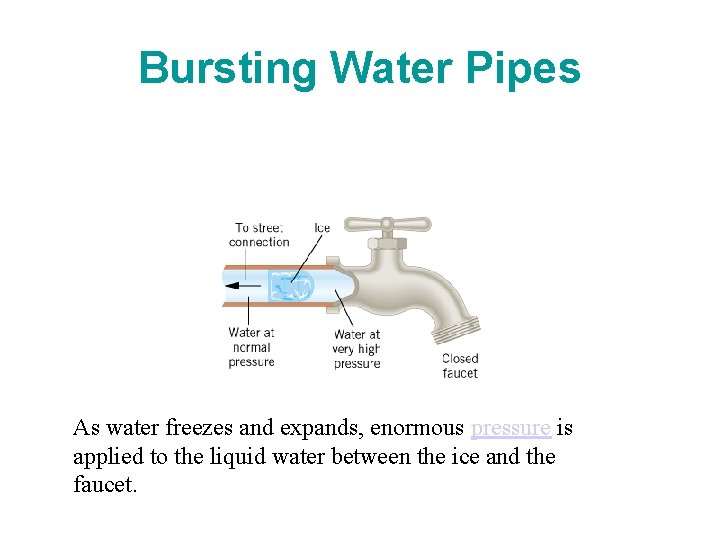
Bursting Water Pipes As water freezes and expands, enormous pressure is applied to the liquid water between the ice and the faucet.