
C ELEGANS BEHAVIOR BACKGROUND INFORMATION Anatomy of the

C. ELEGANS BEHAVIOR

BACKGROUND INFORMATION

Anatomy of the Worm XX

Most worms are which sex?
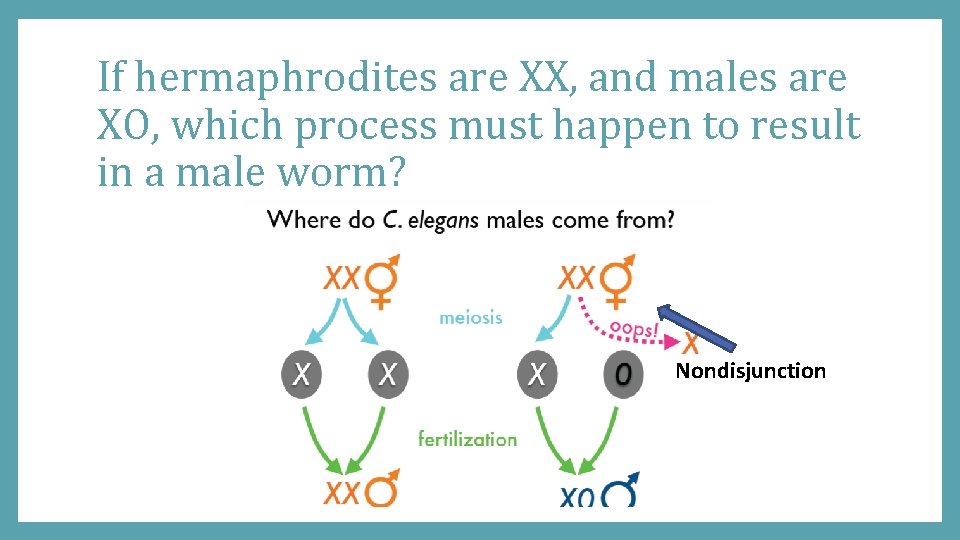
If hermaphrodites are XX, and males are XO, which process must happen to result in a male worm? Nondisjunction
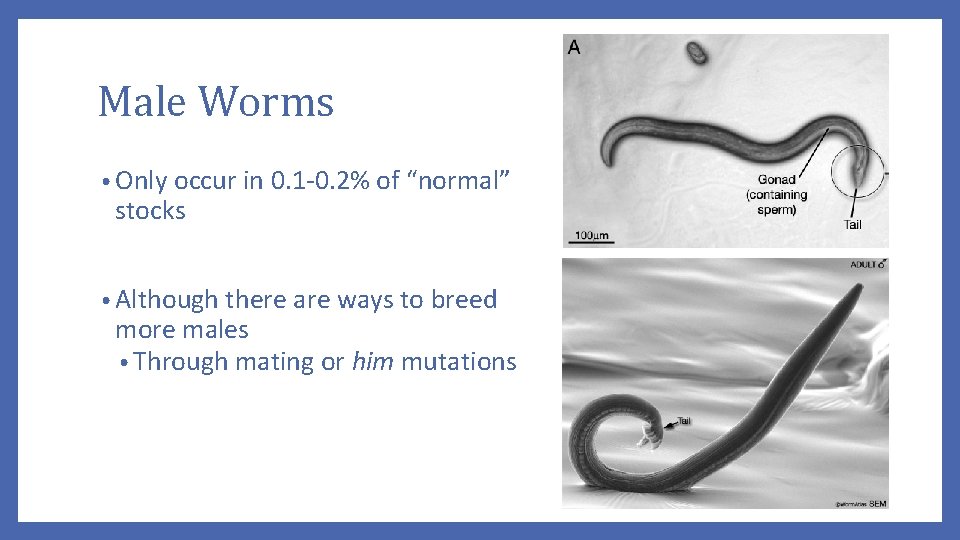
Male Worms • Only occur in 0. 1 -0. 2% of “normal” stocks • Although there are ways to breed more males • Through mating or him mutations
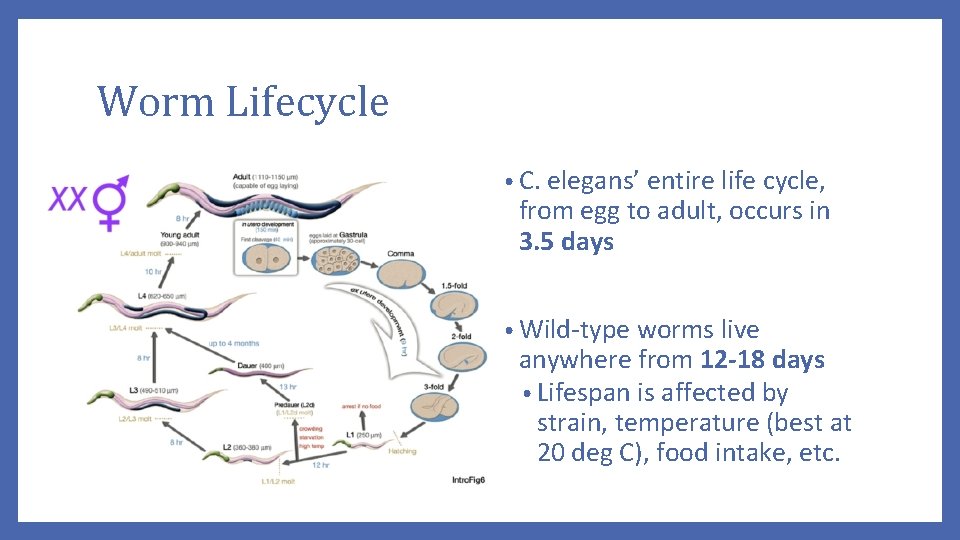
Worm Lifecycle • C. elegans’ entire life cycle, from egg to adult, occurs in 3. 5 days • Wild-type worms live anywhere from 12 -18 days • Lifespan is affected by strain, temperature (best at 20 deg C), food intake, etc.
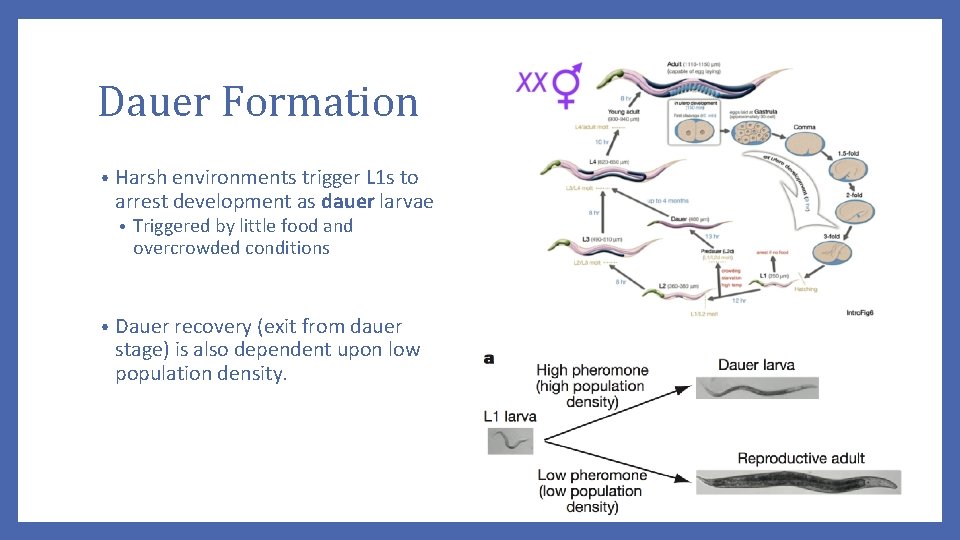
Dauer Formation • Harsh environments trigger L 1 s to arrest development as dauer larvae • • Triggered by little food and overcrowded conditions Dauer recovery (exit from dauer stage) is also dependent upon low population density.
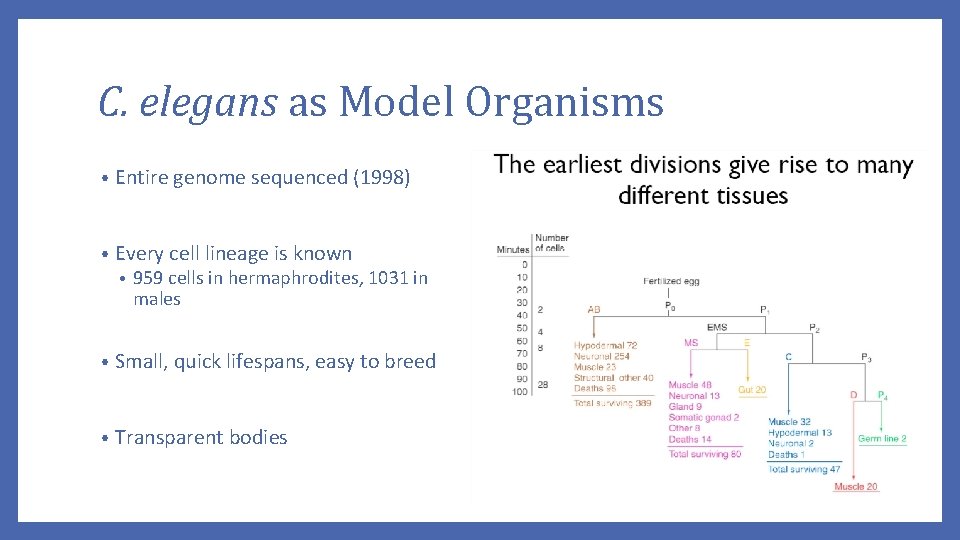
C. elegans as Model Organisms • Entire genome sequenced (1998) • Every cell lineage is known • 959 cells in hermaphrodites, 1031 in males • Small, quick lifespans, easy to breed • Transparent bodies
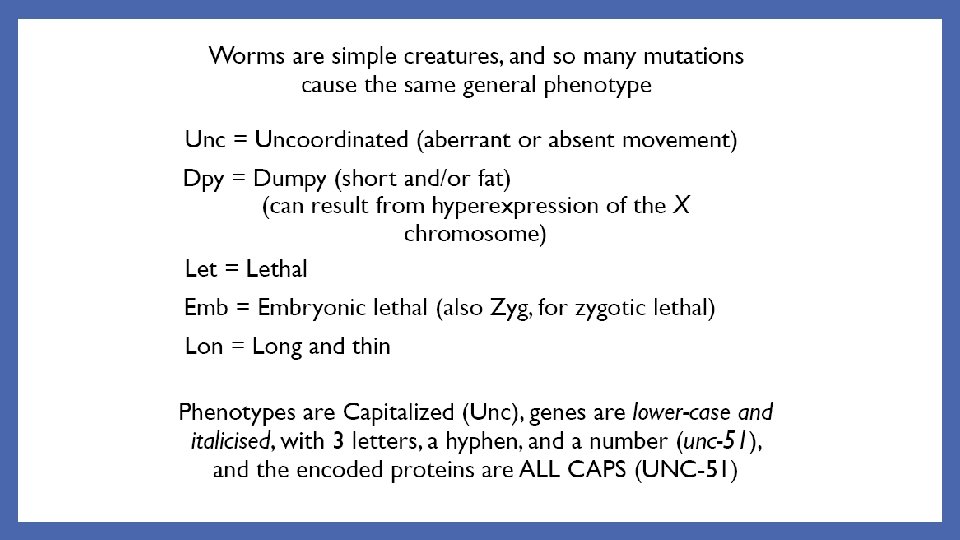
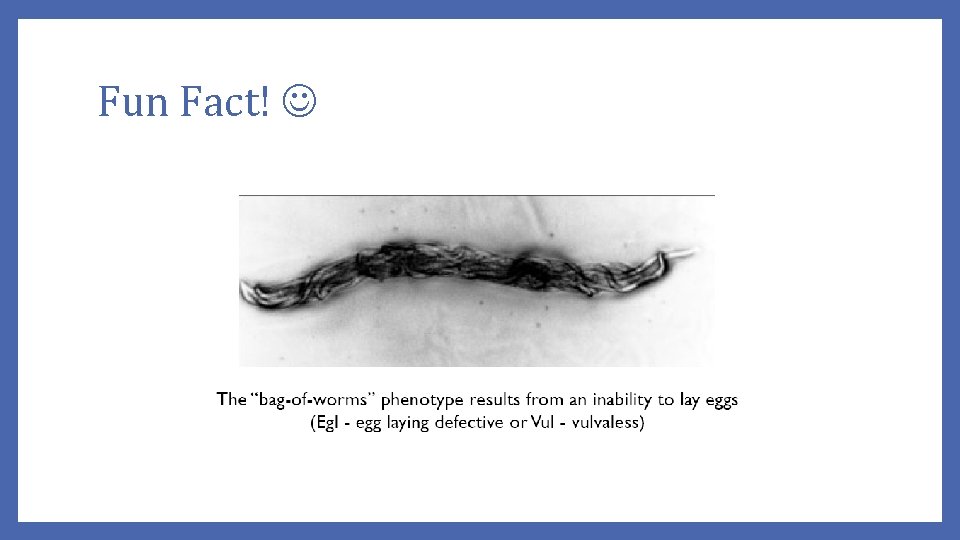
Fun Fact!

YOUR EXPERIMENT
What is the daf-18 gene? What are we looking for?

Day 1: Subculture
Tips • Make sure you wait for the pellet and GET PLENTY OF WORMS ON THE PLATE • Check under a microscope to make sure • Label well: Don’t mix up your strains

Day 2: Chemotaxis Experiment

Tips • Kimwipe up all M 9 buffer!!! • Counting: Use a compound light microscope

Calculate Chemotaxis Index

What are you expecting?
- Slides: 19