
C Classify feed types and identify animal feeds







- Slides: 28
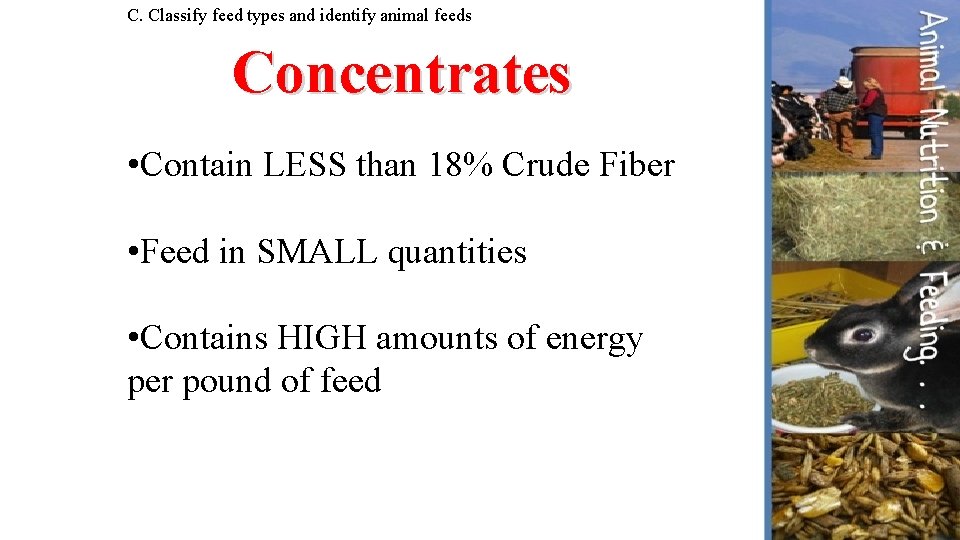
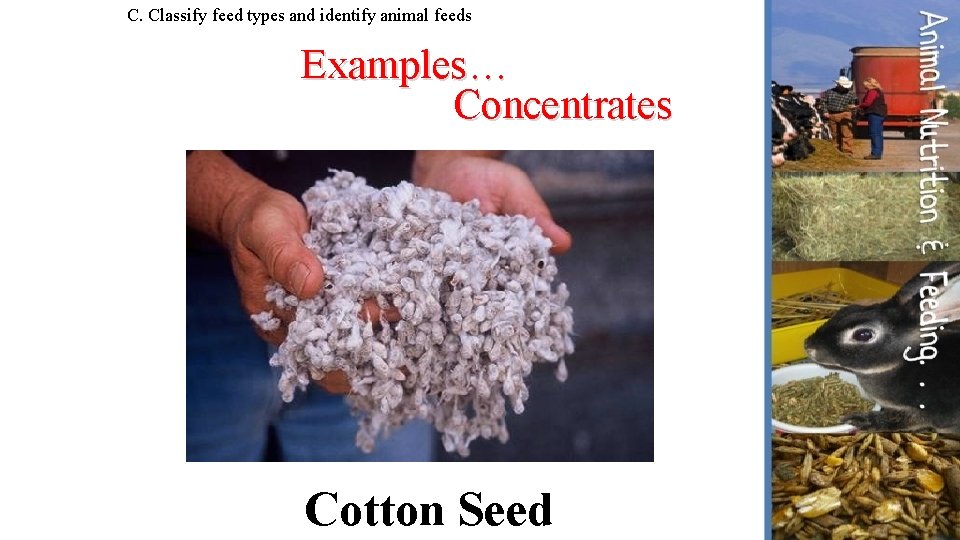
C. Classify feed types and identify animal feeds Concentrates • Contain LESS than 18% Crude Fiber • Feed in SMALL quantities • Contains HIGH amounts of energy per pound of feed
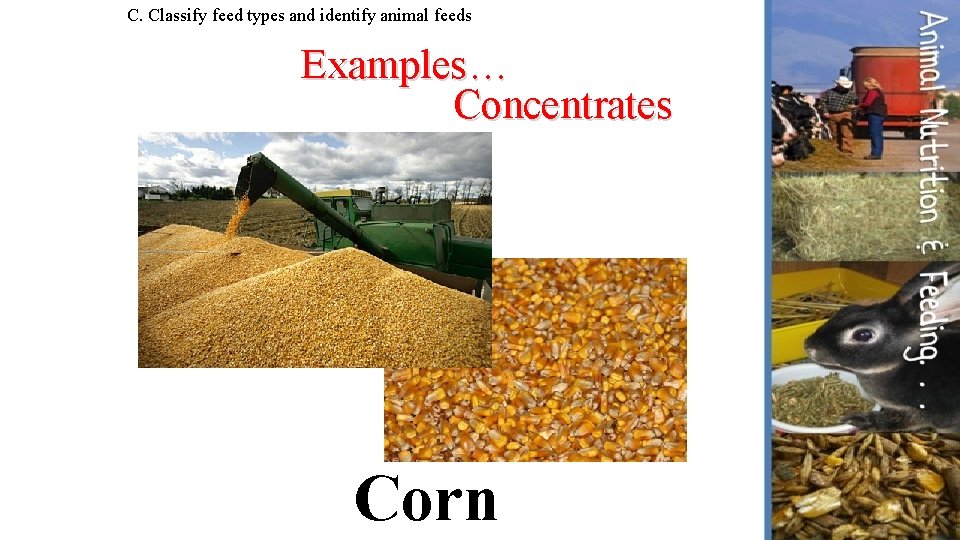
C. Classify feed types and identify animal feeds Examples… Concentrates Corn
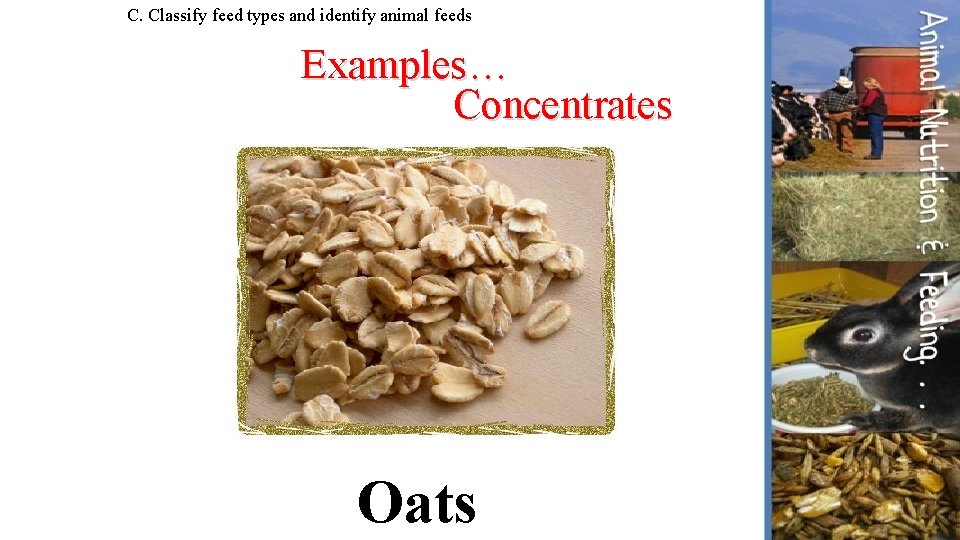
C. Classify feed types and identify animal feeds Examples… Concentrates Oats
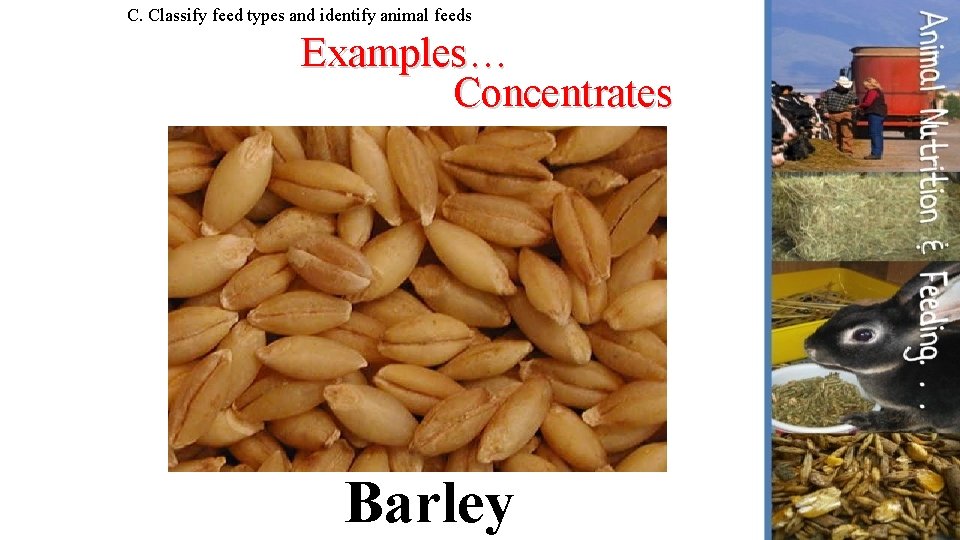
C. Classify feed types and identify animal feeds Examples… Concentrates Barley
C. Classify feed types and identify animal feeds Examples… Concentrates Cotton Seed
C. Classify feed types and identify animal feeds Examples… Concentrates Grain FYI: “Grain” is a general term for a mixture of specific grains such as corn, oats, barley, etc.
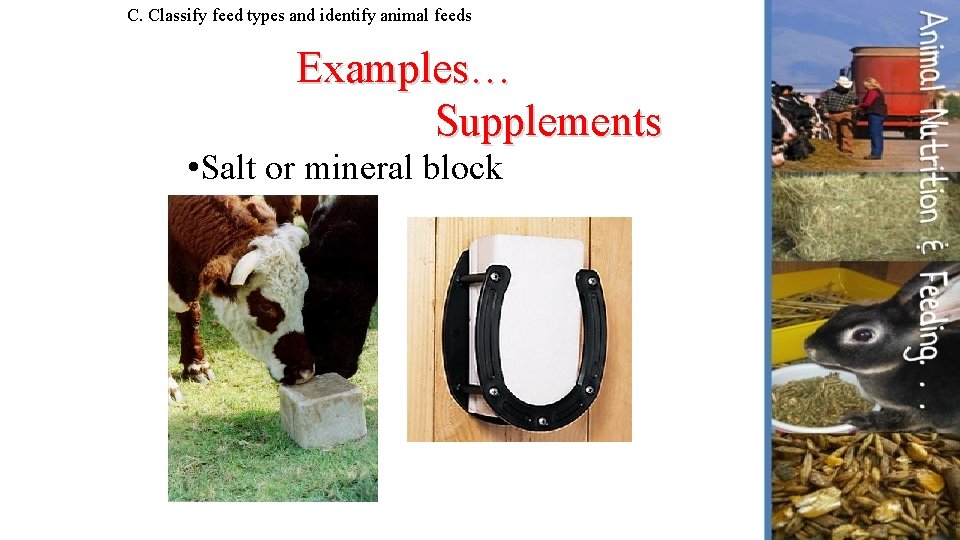
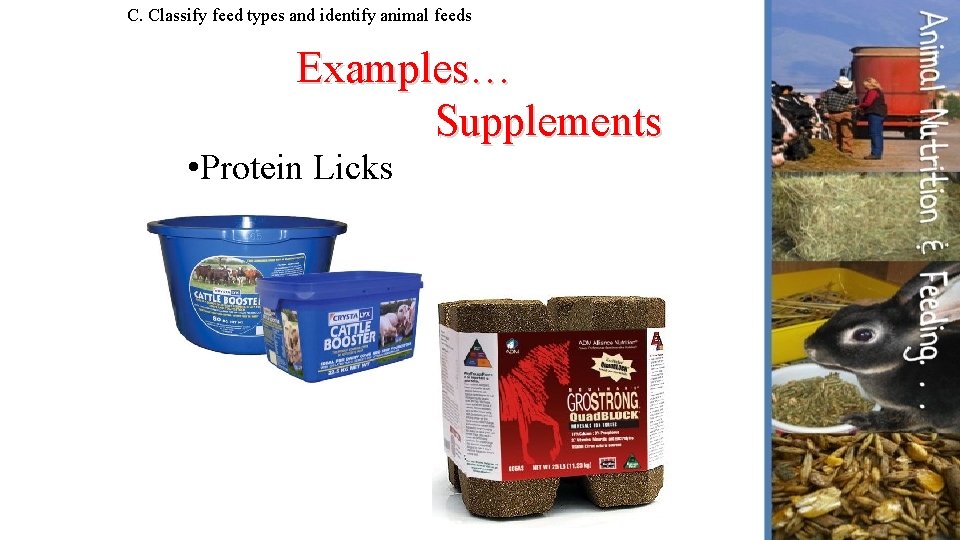
C. Classify feed types and identify animal feeds Supplements • Nutritional Boost to a ration: • Usually vitamins, minerals, or protein in form of: o Powders o Lick blocks
C. Classify feed types and identify animal feeds Examples… Supplements • Salt or mineral block
C. Classify feed types and identify animal feeds Examples… Supplements • Protein Licks
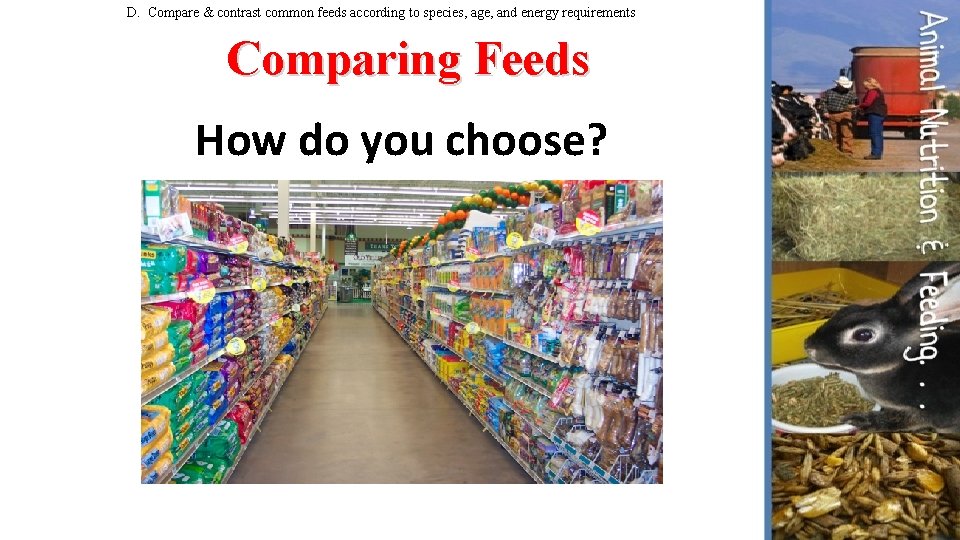
D. Compare & contrast common feeds according to species, age, and energy requirements Comparing Feeds How do you choose?
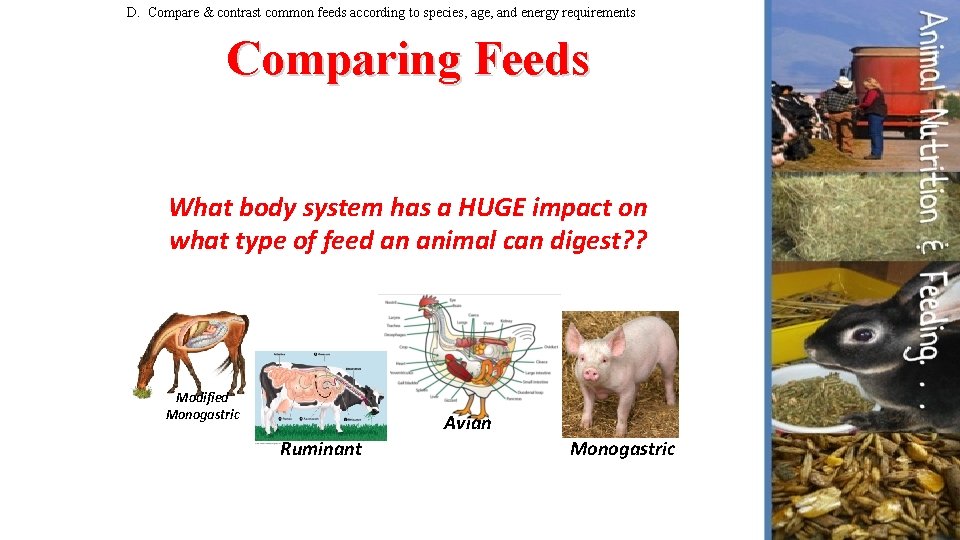
D. Compare & contrast common feeds according to species, age, and energy requirements Comparing Feeds What body system has a HUGE impact on what type of feed an animal can digest? ? Modified Monogastric Avian Ruminant Monogastric
D. Compare & contrast common feeds according to species, age, and energy requirements Comparing Feeds Things to consider… 1 - Species • Premixed feeds are formulated specifically for the nutrient requirements of each species • Type of digestive system determines which feeds an animal can digest • Ruminants can digest roughages • Monogastrics cannot break down roughage
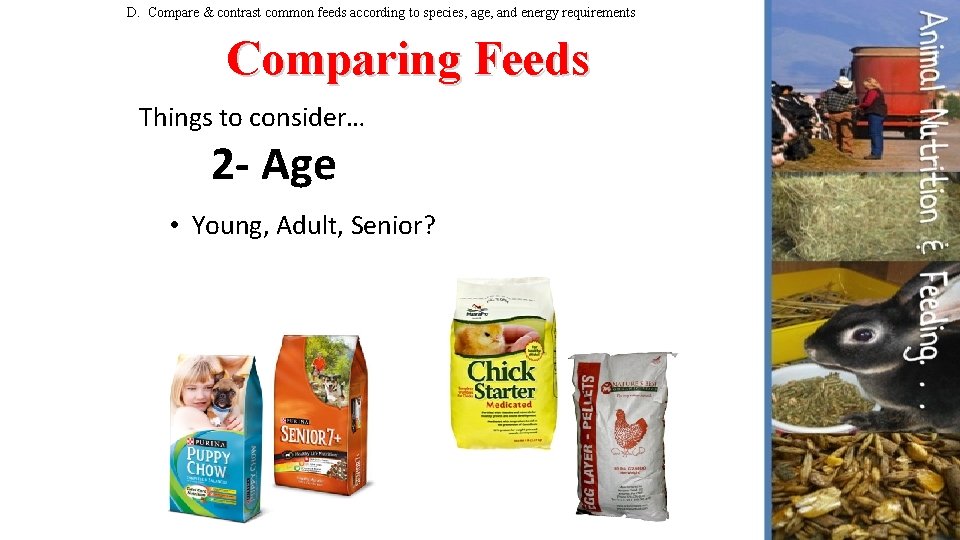
D. Compare & contrast common feeds according to species, age, and energy requirements Comparing Feeds Things to consider… 2 - Age • Young, Adult, Senior?
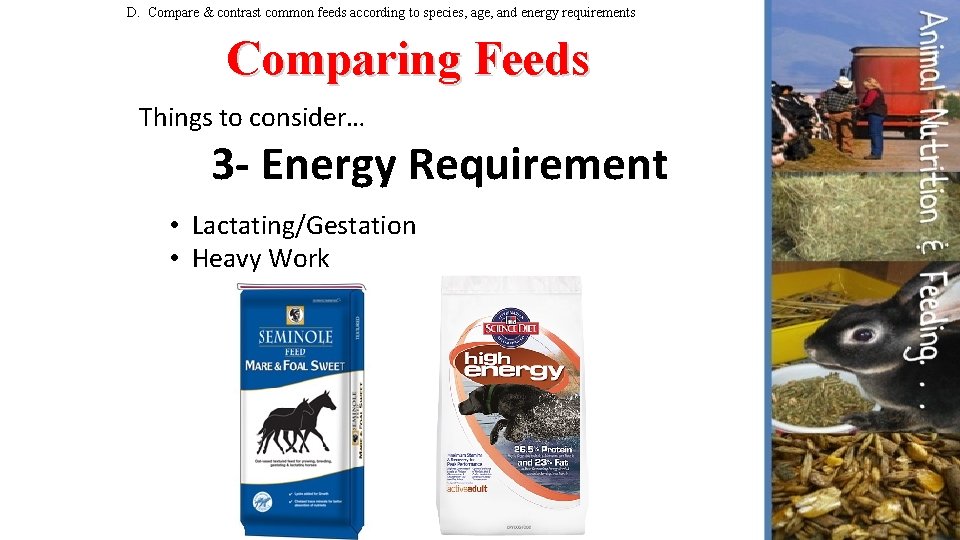
D. Compare & contrast common feeds according to species, age, and energy requirements Comparing Feeds Things to consider… 3 - Energy Requirement • Lactating/Gestation • Heavy Work
D. Compare & contrast common feeds according to species, age, and energy requirements Comparing Dog & Cat Foods
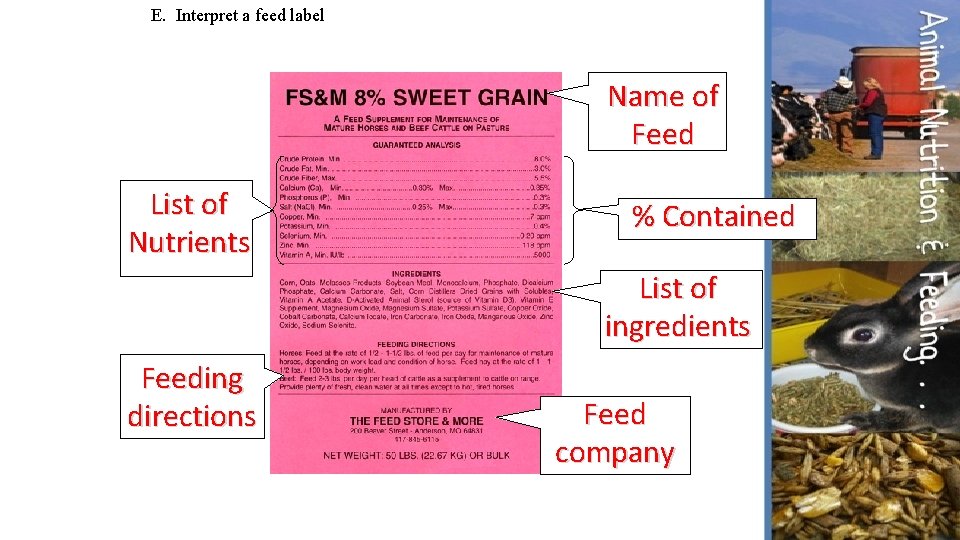
E. Interpret a feed label Name of Feed List of Nutrients % Contained List of ingredients Feeding directions Feed company
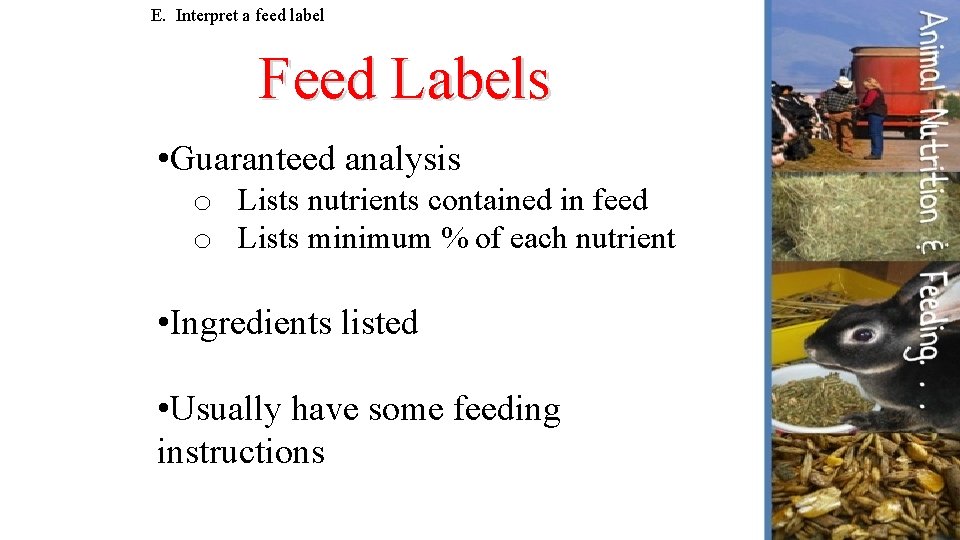
E. Interpret a feed label Feed Labels • Guaranteed analysis o Lists nutrients contained in feed o Lists minimum % of each nutrient • Ingredients listed • Usually have some feeding instructions
E. Interpret a feed label Feed Label Shuffle Directions: Each student should have 1 feed label. As a class we will establish a pattern of rotating the feed labels. With each pass you will record the name of the feed, crude fiber, protein content, type of feed, and list the first 3 ingredients. Note that the labels are color coded according to species. If the feed is MEDICATED, put a star by the name of the feed.
F. Balance a ration How to Balance a Ration • Ration = Daily Intake of food • Successful ration must: 1. 2. 3. 4. Fill them up Taste Good Provide required nutrients/energy Be cost effective
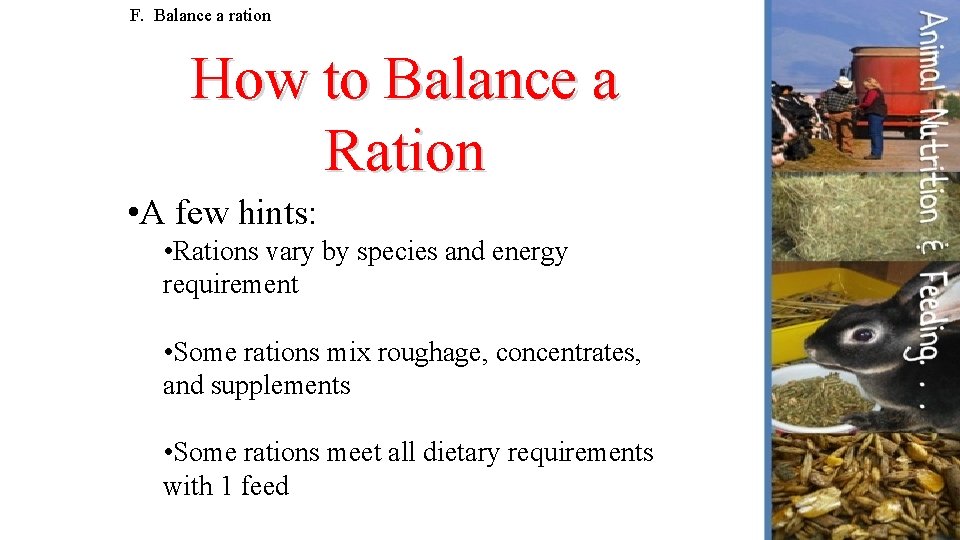
F. Balance a ration How to Balance a Ration • A few hints: • Rations vary by species and energy requirement • Some rations mix roughage, concentrates, and supplements • Some rations meet all dietary requirements with 1 feed
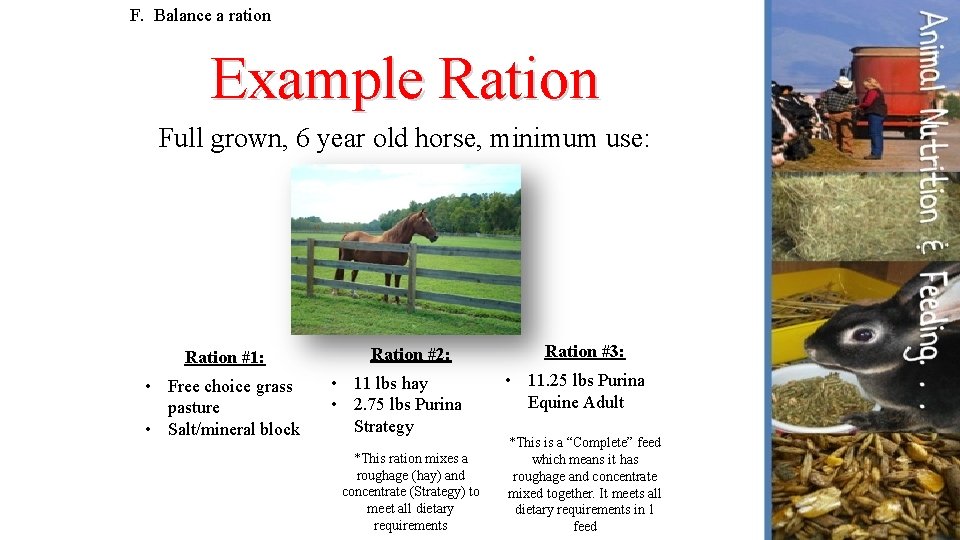
F. Balance a ration Example Ration Full grown, 6 year old horse, minimum use: Ration #1: • Free choice grass pasture • Salt/mineral block Ration #2: • 11 lbs hay • 2. 75 lbs Purina Strategy *This ration mixes a roughage (hay) and concentrate (Strategy) to meet all dietary requirements Ration #3: • 11. 25 lbs Purina Equine Adult *This is a “Complete” feed which means it has roughage and concentrate mixed together. It meets all dietary requirements in 1 feed
F. Balance a ration Example Ration Laying Hens Ration #1: • Free choice Lay Mash or Pellets *This is a complete feed, premixed to exact nutrition requirements
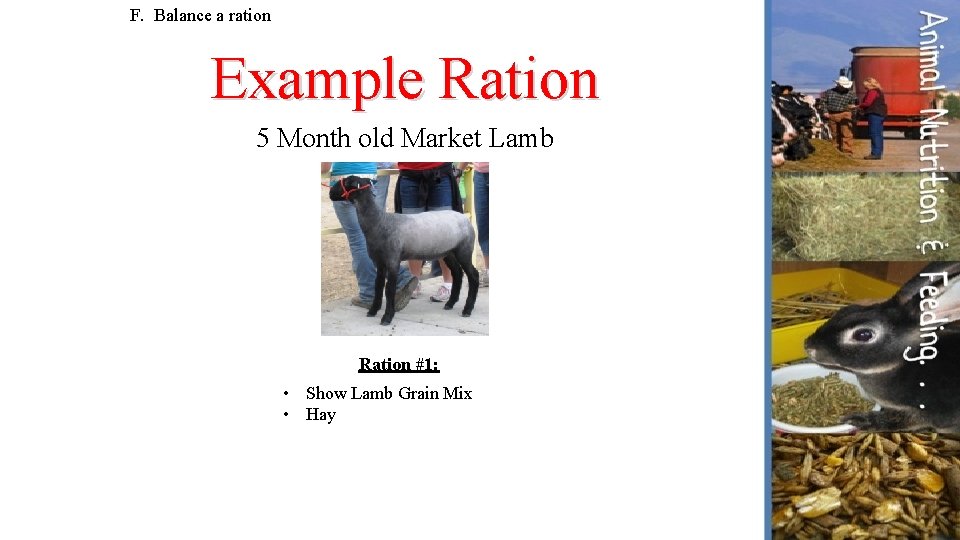
F. Balance a ration Example Ration 5 Month old Market Lamb Ration #1: • Show Lamb Grain Mix • Hay
F. Balance a ration Protein content is an important factor in most rations How is protein content calculated when mixing feeds?
Bell Quiz Objective A & B 1. What are 3 reasons it’s important to have a good understanding of animal nutrition & feeding? 2. Which essential nutrient builds and repairs muscle? 3. Name the 6 essential nutrients 4. List 4 factors that effect an animals nutrition requirement. 5. Which essential nutrients are needed in the smallest amounts?
Bell Quiz Objective C & D 1. What is the difference between a roughage and a concentrate? 2. Give 2 examples of a roughage. 3. When comparing animal feeds, what 3 things should you consider when choosing a feed? 4. Which body system has a huge effect on what types of feed an animal can digest? 5. Give an example of an animal supplement.
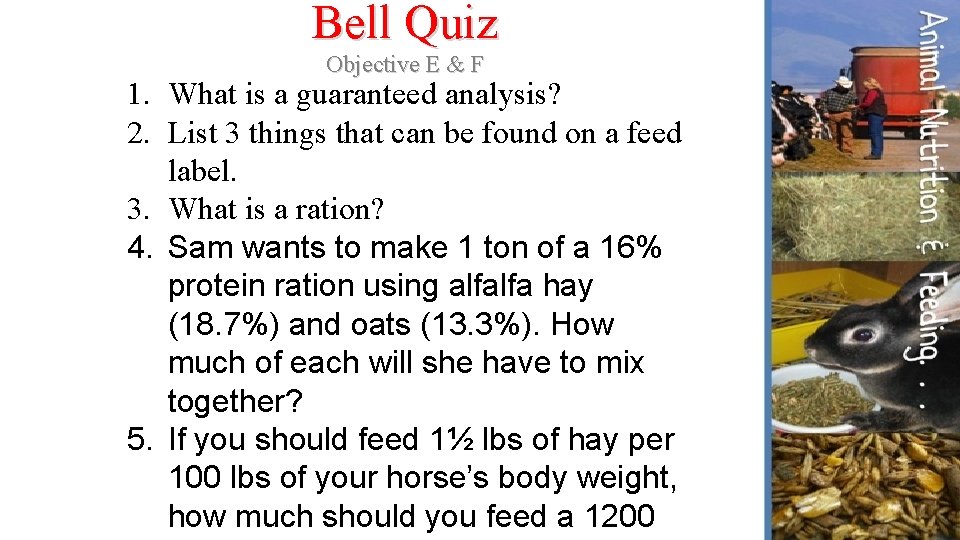
Bell Quiz Objective E & F 1. What is a guaranteed analysis? 2. List 3 things that can be found on a feed label. 3. What is a ration? 4. Sam wants to make 1 ton of a 16% protein ration using alfalfa hay (18. 7%) and oats (13. 3%). How much of each will she have to mix together? 5. If you should feed 1½ lbs of hay per 100 lbs of your horse’s body weight, how much should you feed a 1200