
C A N REPORTS Models for Improved Fire
- Slides: 34
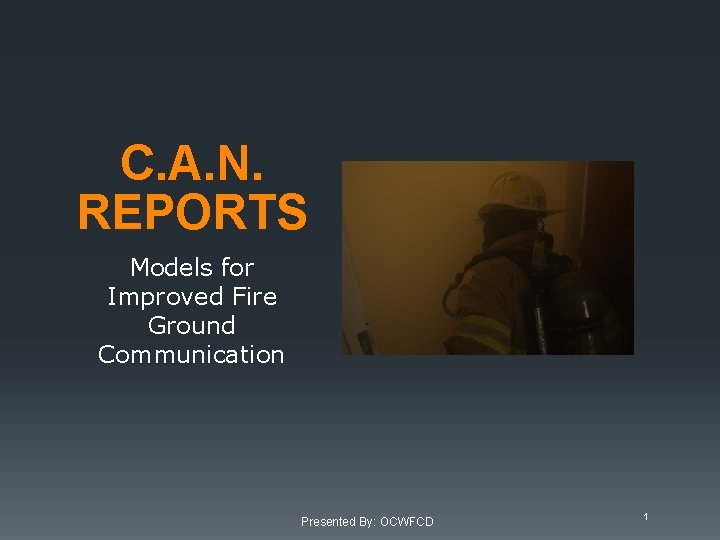
C. A. N. REPORTS Models for Improved Fire Ground Communication Presented By: OCWFCD 1
Communication Models • C. A. N. Reports • Order Intent • P. A. R. (Personnel Accountability Report) Presented By: OCWFCD 2
Communication Models OBJECTIVES Improve Overall Incident Communication through: § Understanding C. A. N. Reports § Understanding “Order Intent” § Understanding how to deliver a P. A. R. § Learning to combine elements for advanced communication on emergency scenes. Presented By: OCWFCD 3
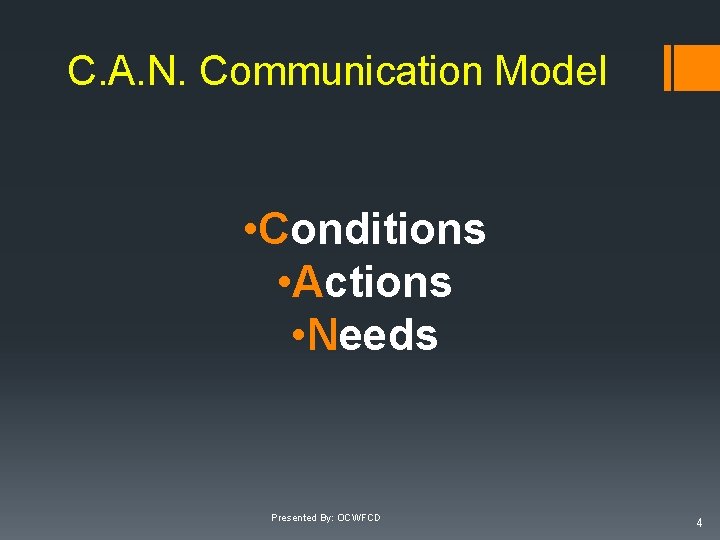
C. A. N. Communication Model • Conditions • Actions • Needs Presented By: OCWFCD 4
C. A. N. Communication Model Phoenix Fire Department: Following a fatal fire at the Southwest Supermarket the Phoenix Fire Department made it mandatory for all officers to attend a communications class with the following objectives: - Phoenix Fire Report review, page 94 Presented By: OCWFCD 5
C. A. N. Communication Model Phoenix Fire Department: The C. A. N. System was developed and demonstrated to all Officers. This system was taught to reinforce the need for accurate and regular reports at the task, tactical, and strategic levels to ensure safe and successful fire ground operations. Presented By: OCWFCD 6
C. A. N. Communication Model Phoenix Fire Department: C. A. N. Reports are transmitted by Officers on the fire ground. These reports are transmitted without the Incident Commander requesting them. Presented By: OCWFCD 7
C. A. N. Communication Model Phoenix Fire Department: The Phoenix C. A. N. System is an example of ICS Information Flow. The IC is able to use all available resources to “see” the incident with regular, unsolicited updates. Presented By: OCWFCD 8
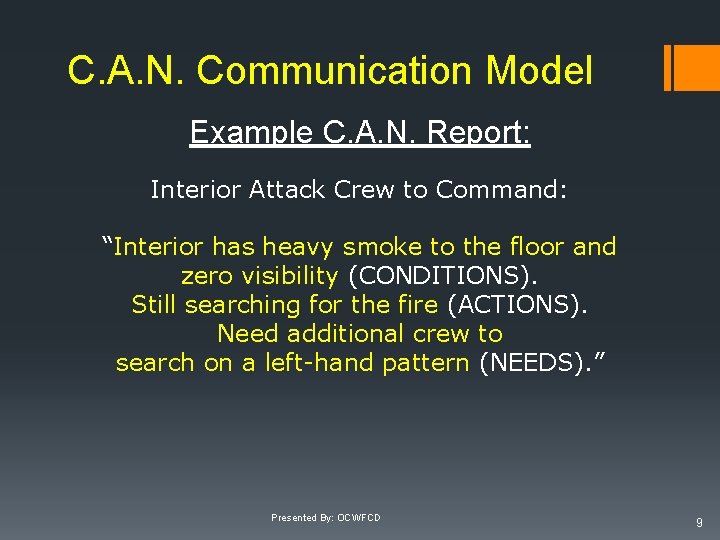
C. A. N. Communication Model Example C. A. N. Report: Interior Attack Crew to Command: “Interior has heavy smoke to the floor and zero visibility (CONDITIONS). Still searching for the fire (ACTIONS). Need additional crew to search on a left-hand pattern (NEEDS). ” Presented By: OCWFCD 9
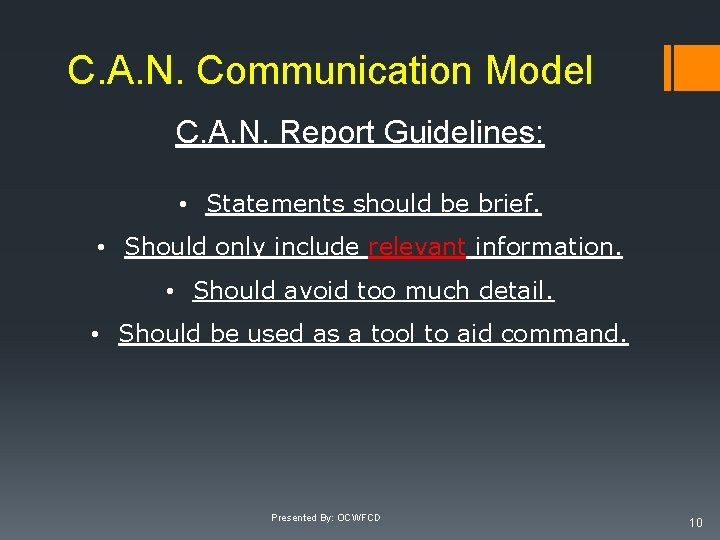
C. A. N. Communication Model C. A. N. Report Guidelines: • Statements should be brief. • Should only include relevant information. • Should avoid too much detail. • Should be used as a tool to aid command. Presented By: OCWFCD 10
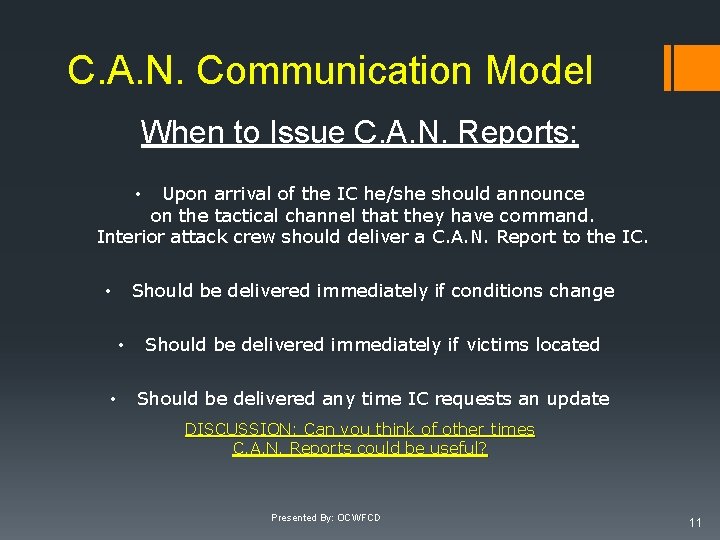
C. A. N. Communication Model When to Issue C. A. N. Reports: Upon arrival of the IC he/she should announce on the tactical channel that they have command. Interior attack crew should deliver a C. A. N. Report to the IC. • Should be delivered immediately if conditions change • • • Should be delivered immediately if victims located Should be delivered any time IC requests an update DISCUSSION: Can you think of other times C. A. N. Reports could be useful? Presented By: OCWFCD 11
Order Intent - Communication Order Intent: Order intent is a process of providing additional information to the message receiver to allow them to understand the strategic plan. Presented By: OCWFCD 12
Order Intent - Communication Order Intent: Order Intent is used by the Military during combat. Order Intent allows participants to understand the overall mission intent. Presented By: OCWFCD 13
Order Intent - Communication Order Intent IS NOT: An opportunity to micro-manage. IC should avoid explaining the “how-to” of tactics. For example, Ventilation: GOOD: “Perform a trench-cut between units 3 and 4. Notify me if the fire is past that location. BAD: “Perform a trench cut between units 3 and 4. Be sure to take a hose line and sound the roof. If it feels soft come back down so we can try something else. ” Officers should already know HOW TO perform a trench cut. With “Order Intent” command is BRIEFLY explaining strategy. Presented By: OCWFCD 14
Order Intent - Communication Order Intent (Military): Example - WITHOUT INTENT Commander advises troops: “Go over to that ridge and hold position. Attack the enemy as they approach” Example - WITH INTENT “Go take position on that ridge. Attack the enemy as they approach. You must prevent the enemy from flanking us on that side” Presented By: OCWFCD 15
Order Intent - Communication Order Intent in the Fire Service: (Emergency Scene) Example - WITHOUT INTENT “Stretch a hose line to side Charlie. ) Example - WITH INTENT “Go to side Charlie with a 2 ½” for exposure protection. Notify me of any condition changes. ” Presented By: OCWFCD 16
Order Intent - Communication Order Intent in the Fire Service: Order Intent allows participants to understand the overall mission intent and strategy. Order Intent makes everyone an “Owner” in the operation. Order Intent can help eliminate the “Mushrooms in the dark syndrome. ” Order Intent helps ensure mission success through briefly conveying strategy. With order intent Company Officers will be able to issue relevant C. A. N. reports that affect command strategy. Presented By: OCWFCD 17
C. A. N. and Order Intent Combining the Elements: The combination of C. A. N. Reports and Order Intent creates a powerful two-way communication model. ALL participants receive ALL relevant information. Company Officers better understand assignments and “big picture. ” The IC better understands the overall incident. Presented By: OCWFCD 18
C. A. N. and Order Intent Combining the Elements: Example Returning to a previous communication example: “Go to side Charlie with a 2 ½” for exposure protection. Notify me of any condition changes. ” Crew advances to the Charlie side with a better understanding their overall mission. Crew issues C. A. N. Reports to IC as needed based on Order Intent. IC can focus on other tactical operations without worrying about exposures. Presented By: OCWFCD 19
C. A. N. and Order Intent Combining the Elements: Example Order Intent combined with appropriate C. A. N. Reports improves communication Eliminates repetitive radio traffic. For example, Command does not have to continually request exposure updates. Command can rely on Officer with order intent to deliver updates as needed. Presented By: OCWFCD 20
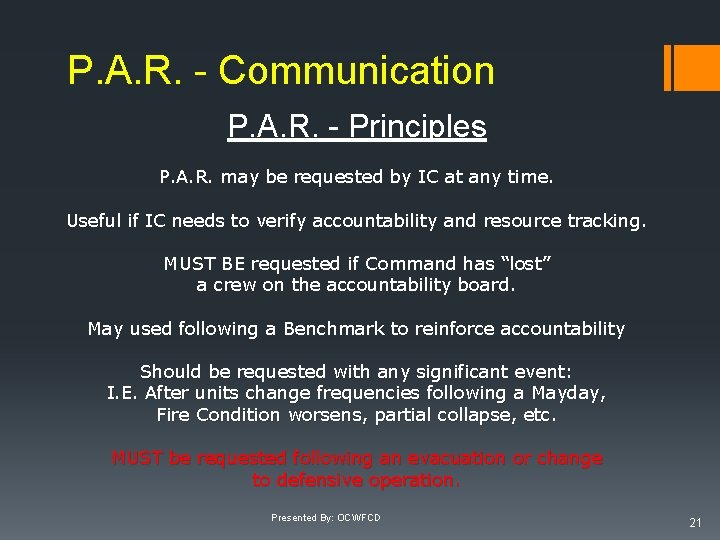
P. A. R. - Communication P. A. R. - Principles P. A. R. may be requested by IC at any time. Useful if IC needs to verify accountability and resource tracking. MUST BE requested if Command has “lost” a crew on the accountability board. May used following a Benchmark to reinforce accountability Should be requested with any significant event: I. E. After units change frequencies following a Mayday, Fire Condition worsens, partial collapse, etc. MUST be requested following an evacuation or change to defensive operation. Presented By: OCWFCD 21
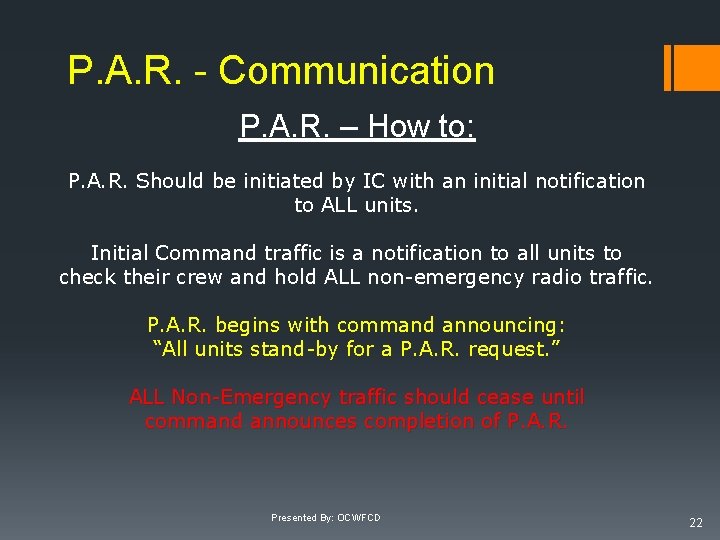
P. A. R. - Communication P. A. R. – How to: P. A. R. Should be initiated by IC with an initial notification to ALL units. Initial Command traffic is a notification to all units to check their crew and hold ALL non-emergency radio traffic. P. A. R. begins with command announcing: “All units stand-by for a P. A. R. request. ” ALL Non-Emergency traffic should cease until command announces completion of P. A. R. Presented By: OCWFCD 22
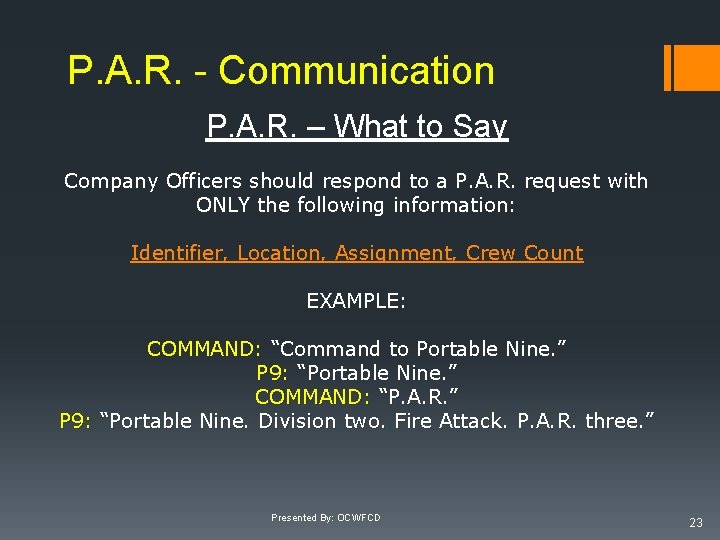
P. A. R. - Communication P. A. R. – What to Say Company Officers should respond to a P. A. R. request with ONLY the following information: Identifier, Location, Assignment, Crew Count EXAMPLE: COMMAND: “Command to Portable Nine. ” P 9: “Portable Nine. ” COMMAND: “P. A. R. ” P 9: “Portable Nine. Division two. Fire Attack. P. A. R. three. ” Presented By: OCWFCD 23
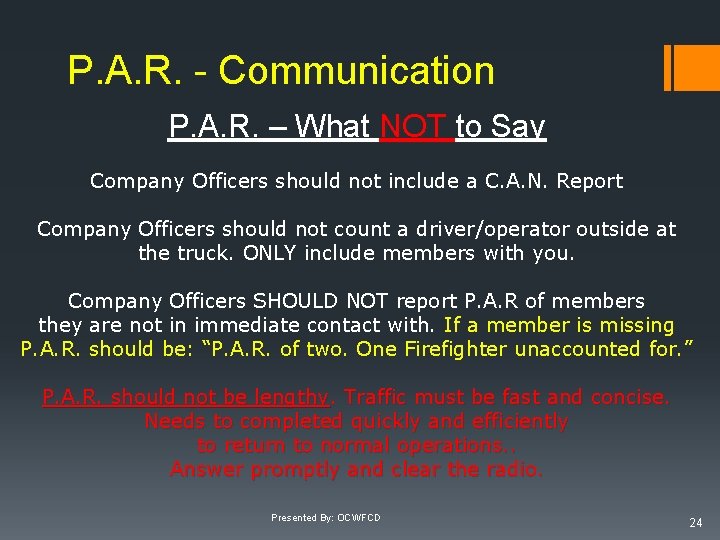
P. A. R. - Communication P. A. R. – What NOT to Say Company Officers should not include a C. A. N. Report Company Officers should not count a driver/operator outside at the truck. ONLY include members with you. Company Officers SHOULD NOT report P. A. R of members they are not in immediate contact with. If a member is missing P. A. R. should be: “P. A. R. of two. One Firefighter unaccounted for. ” P. A. R. should not be lengthy. Traffic must be fast and concise. Needs to completed quickly and efficiently to return to normal operations. . Answer promptly and clear the radio. Presented By: OCWFCD 24
P. A. R. - Communication P. A. R. – Summary Command announces upcoming P. A. R. Request. Command calls each company. Each company announces: Identifier, Location, Assignment, Crew Count. Command announces: “P. A. R. complete. Resume normal radio traffic. ” Presented By: OCWFCD 25
Communication Models Summary and Review Q: What does C. A. N. stand for? Q: Conditions. Actions. Needs. Presented By: OCWFCD 26
Communication Models Summary and Review Q: What are some benefits of “Order Intent” A: Order Intent is useful to: • Allow participants to understand the overall strategy. • Makes everyone a “Owner” in the operation. • Helps eliminate the “Mushrooms in the dark syndrome” • Help ensure mission success through briefly conveying strategy. Presented By: OCWFCD 27
Communication Models Summary and Review Q: What is the first step in conducting a P. A. R. ? A: Command announces pending P. A. R. “All units stand-by for a P. A. R. ” Presented By: OCWFCD 28
Communication Models Summary and Review Q: When is it appropriate to deliver an unrequested C. A. N. to Command? A: A C. A. N. should be delivered when: • • Upon arrival of IC • • If victims located Conditions change Any time IC requests an update . Presented By: OCWFCD 29
Communication Models Summary and Review Q: What are the ONLY four elements delivered in a P. A. R. ? A: Company Identifier, Location, Assignment, Crew Count I. E. – “Portable Nine. Division Two. Fire Attack. P. A. R. three. ” Presented By: OCWFCD 30
CONCLUSION These Communication Models improve accountability. Presented By: OCWFCD 31
CONCLUSION These Communication Models improve teamwork. Presented By: OCWFCD 32
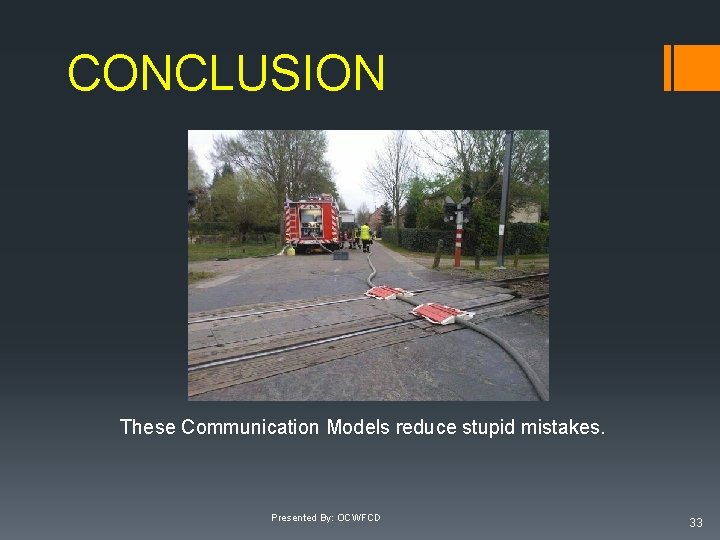
CONCLUSION These Communication Models reduce stupid mistakes. Presented By: OCWFCD 33
CONCLUSION Comments Questions Concerns? Presented By: OCWFCD 34