
C 3 Framework and Essential Questions Betsy Lantka
C 3 Framework and Essential Questions Betsy Lantka
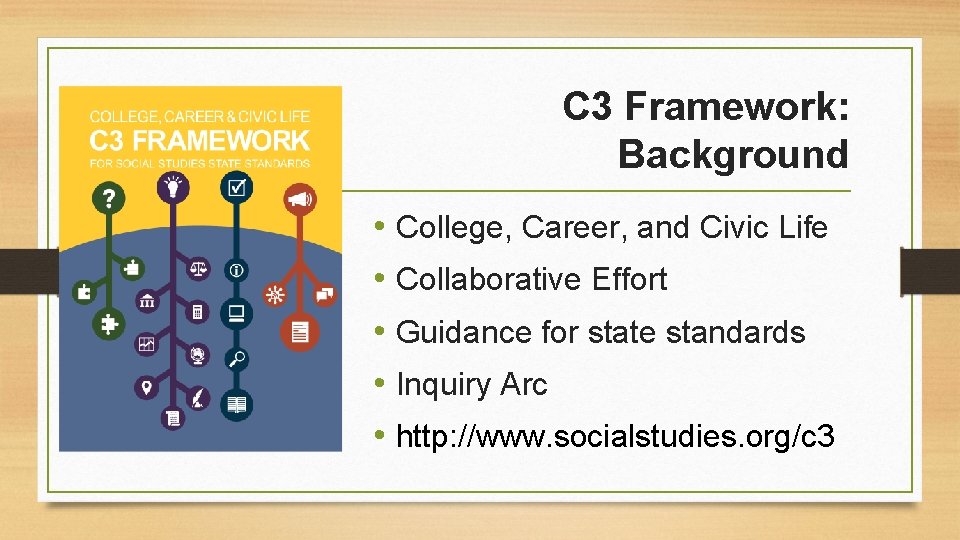
C 3 Framework: Background • College, Career, and Civic Life • Collaborative Effort • Guidance for state standards • Inquiry Arc • http: //www. socialstudies. org/c 3
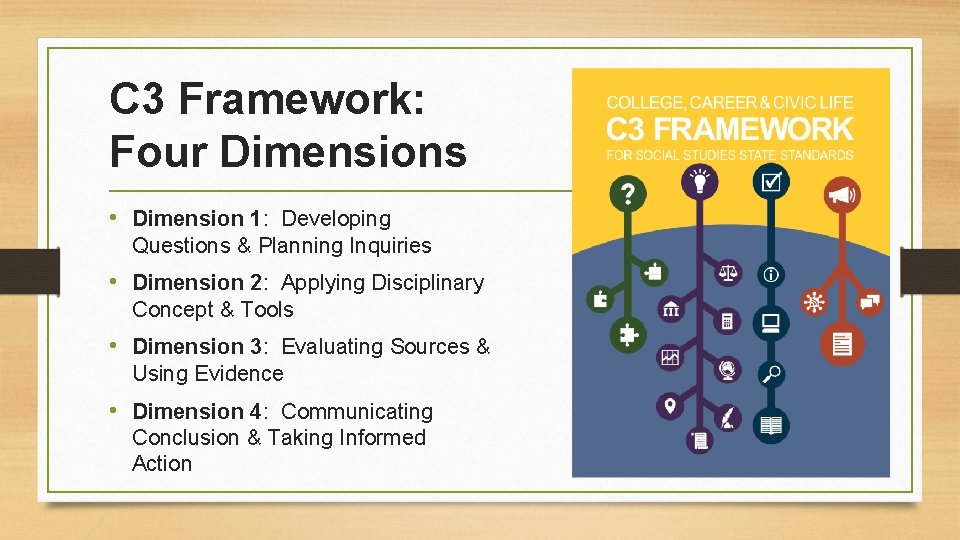
C 3 Framework: Four Dimensions • Dimension 1: Developing Questions & Planning Inquiries • Dimension 2: Applying Disciplinary Concept & Tools • Dimension 3: Evaluating Sources & Using Evidence • Dimension 4: Communicating Conclusion & Taking Informed Action

C 3 Framework: Geography • Geographic Representations : Spatial Views of the World • Human. Environment Interaction: Place, Regions, and Culture • Human Population: Spatial Patterns and Movements • Global Interconnections : Changing Spatial Patterns
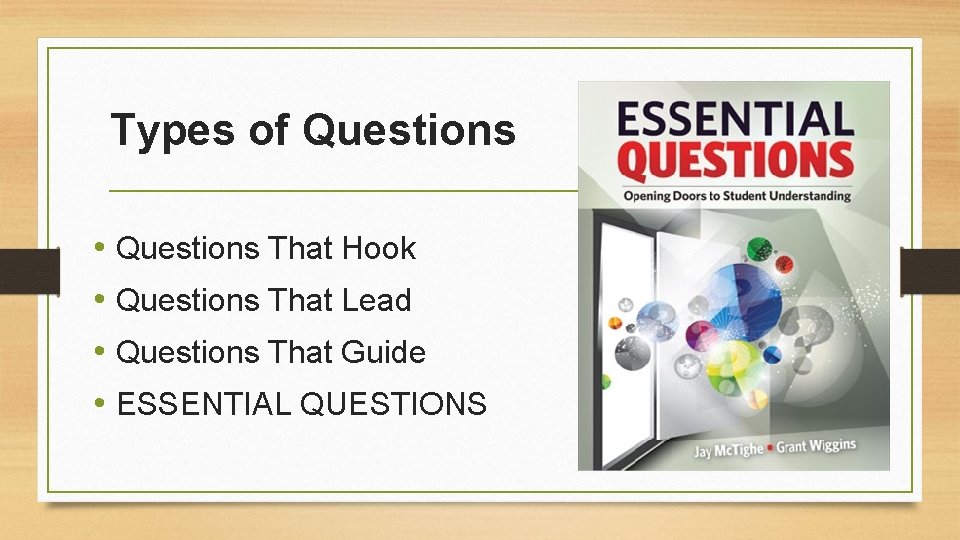
Types of Questions • Questions That Hook • Questions That Lead • Questions That Guide • ESSENTIAL QUESTIONS
Essential Questions • Asked to stimulate ongoing thinking • • • and inquiry Raise more questions Spark discussion and debate Asked and re-asked throughout the unit (and maybe the year) Demand justification and support “Answers” may change as understanding deepens
What Makes a Question “ESSENTIAL? ” • • • go to the heart of a discipline. have no one obvious "right" answer: are higher-order, in Bloom's sense recur throughout one's learning. are framed to provoke and sustain student interest. • link to other essential questions.
Criteria for Essential Questions • Each student should be able to understand the essential question(s). • The language of the questions should be in broad terms. • There should be a logical sequence to a set of essential questions. • Essential questions should be posted in the classroom.
- Slides: 8