
C 11 DNA and Genes Chapter 11 Contents
- Slides: 50
C 11 - DNA and Genes Chapter 11
Contents • • 11 -1 DNA: The Molecule of Heredity 11 -2 From DNA to Protein Synthesis video 11 -3 Genetic Changes
11 -1 DNA: The Molecule of Heredity • Genetic info in DNA controls organism’s traits
11 -1 DNA: The Molecule of Heredity • Genetic info in DNA controls organism’s traits • Determines structure of proteins built
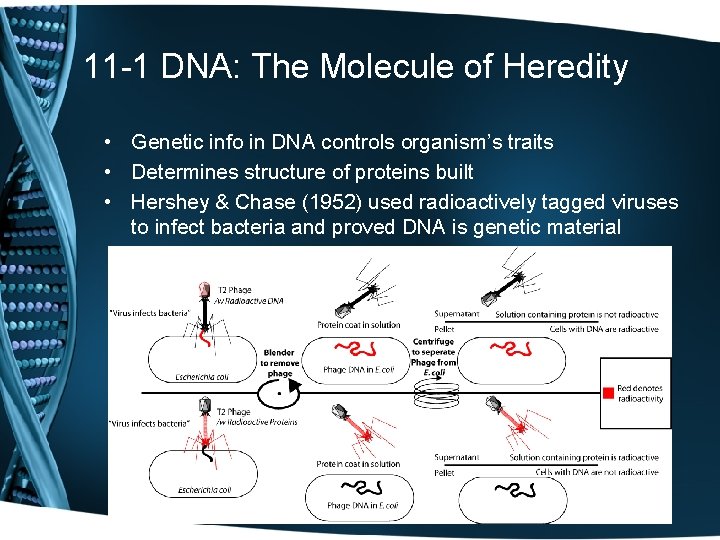
11 -1 DNA: The Molecule of Heredity • Genetic info in DNA controls organism’s traits • Determines structure of proteins built • Hershey & Chase (1952) used radioactively tagged viruses to infect bacteria and proved DNA is genetic material
11 -1 DNA: The Molecule of Heredity • Genetic info in DNA controls organism’s traits • Determines structure of proteins built • Hershey & Chase (1952) used radioactively tagged viruses to infect bacteria and proved DNA is genetic material
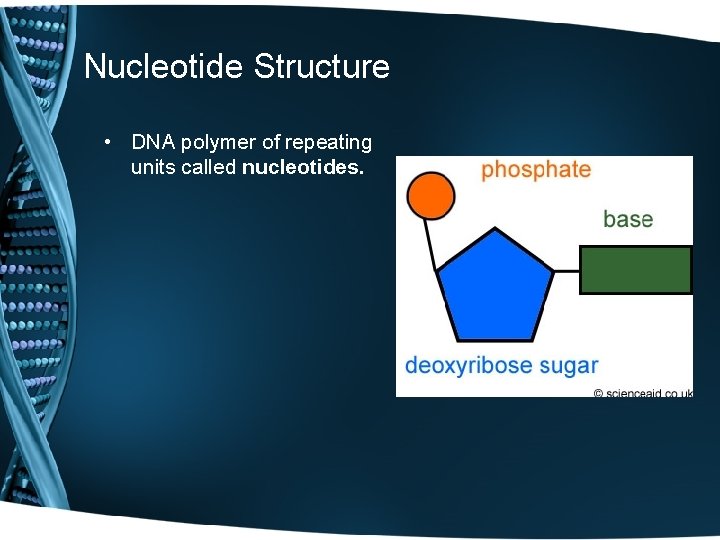
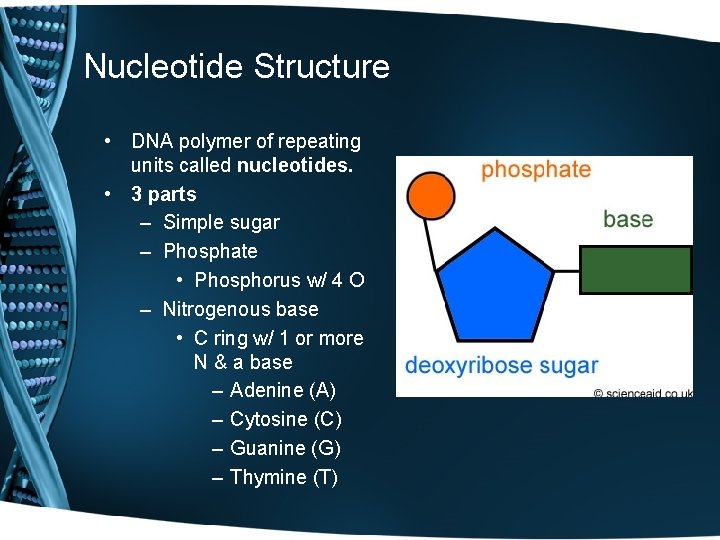
Nucleotide Structure • DNA polymer of repeating units called nucleotides.
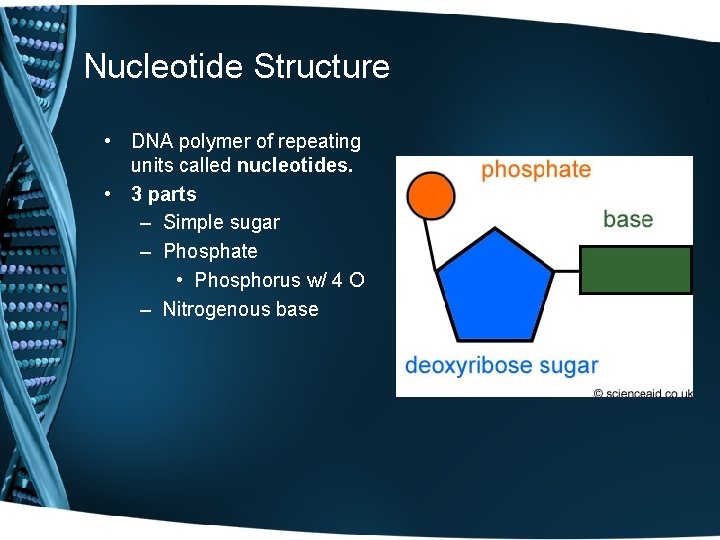
Nucleotide Structure • DNA polymer of repeating units called nucleotides. • 3 parts – Simple sugar – Phosphate • Phosphorus w/ 4 O – Nitrogenous base
Nucleotide Structure • DNA polymer of repeating units called nucleotides. • 3 parts – Simple sugar – Phosphate • Phosphorus w/ 4 O – Nitrogenous base • C ring w/ 1 or more N & a base – Adenine (A) – Cytosine (C) – Guanine (G) – Thymine (T)
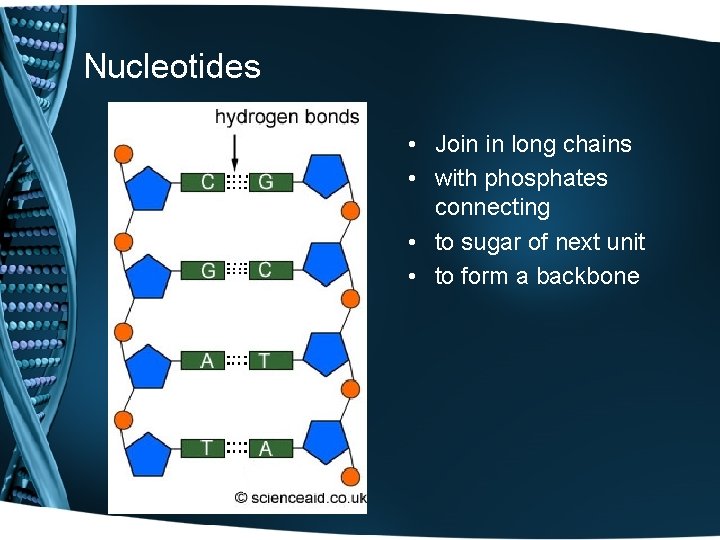
Nucleotides • Join in long chains • with phosphates connecting • to sugar of next unit • to form a backbone
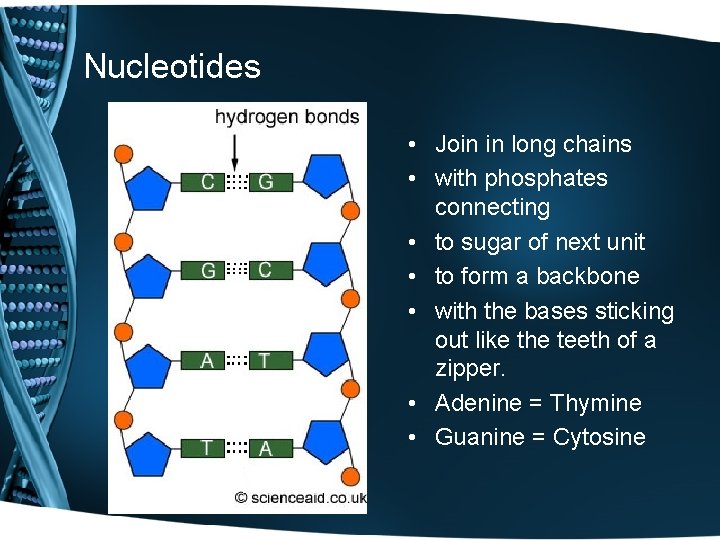
Nucleotides • Join in long chains • with phosphates connecting • to sugar of next unit • to form a backbone • with the bases sticking out like the teeth of a zipper. • Adenine = Thymine • Guanine = Cytosine
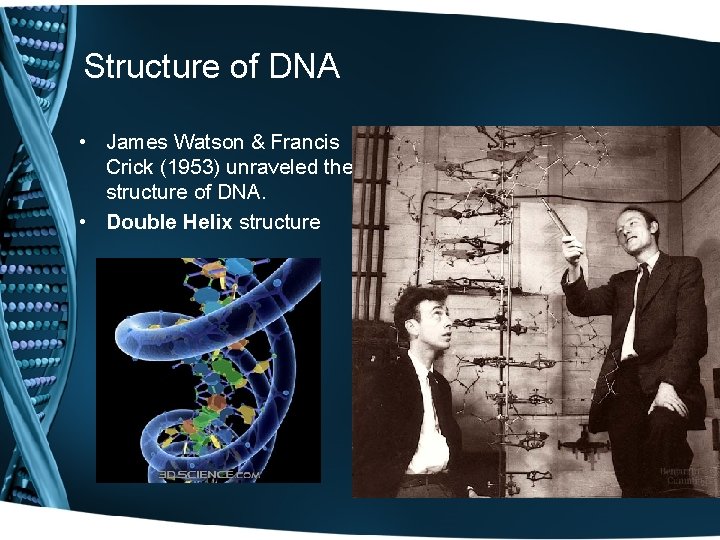
Structure of DNA • James Watson & Francis Crick (1953) unraveled the structure of DNA. • Double Helix structure
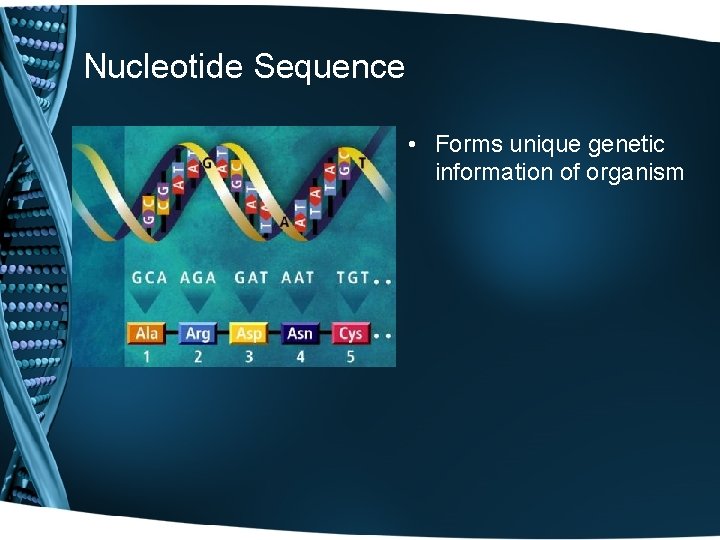
Nucleotide Sequence • Forms unique genetic information of organism
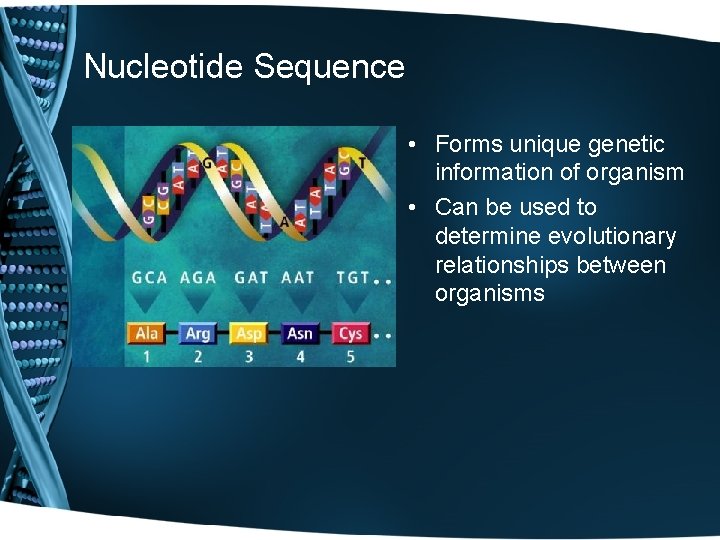
Nucleotide Sequence • Forms unique genetic information of organism • Can be used to determine evolutionary relationships between organisms
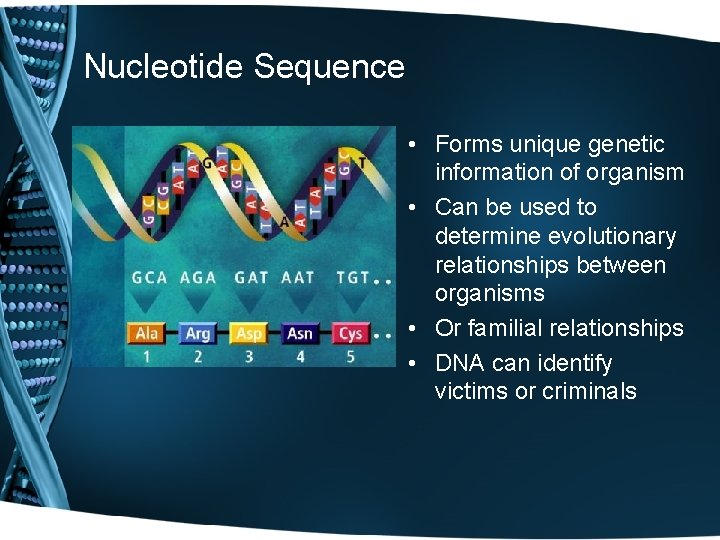
Nucleotide Sequence • Forms unique genetic information of organism • Can be used to determine evolutionary relationships between organisms • Or familial relationships • DNA can identify victims or criminals
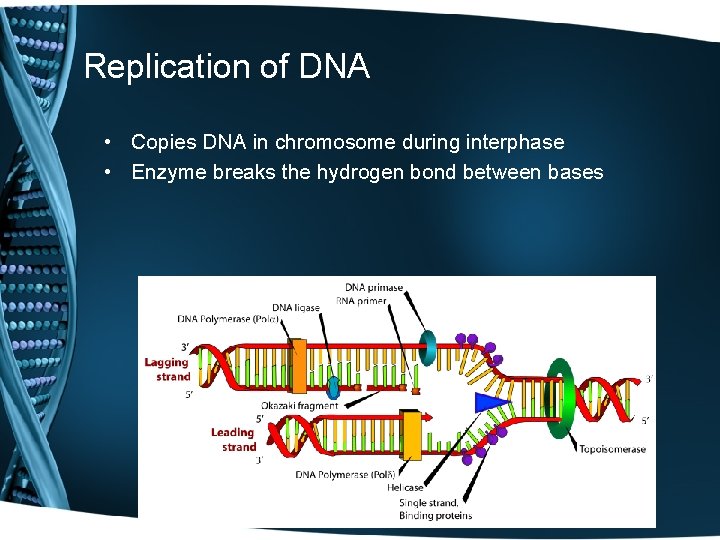
Replication of DNA • Copies DNA in chromosome during interphase
Replication of DNA • Copies DNA in chromosome during interphase • Enzyme breaks the hydrogen bond between bases
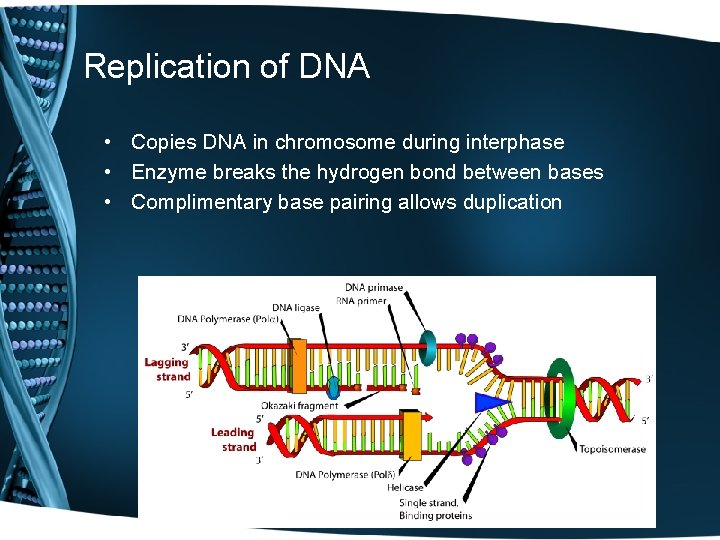
Replication of DNA • Copies DNA in chromosome during interphase • Enzyme breaks the hydrogen bond between bases • Complimentary base pairing allows duplication
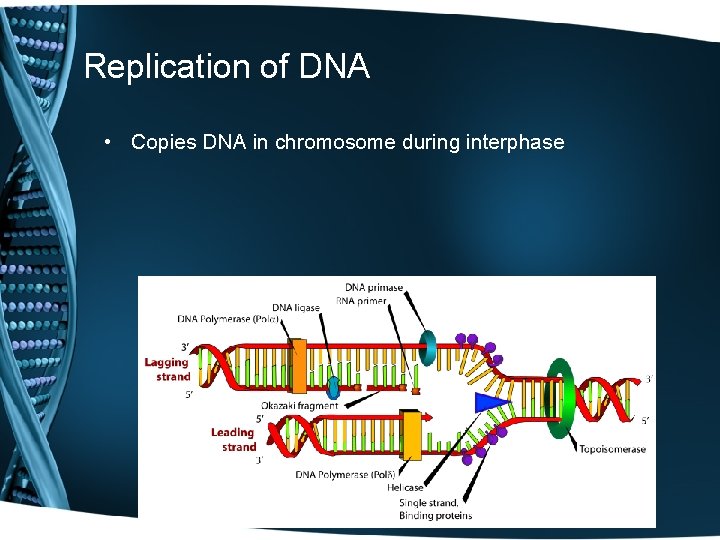
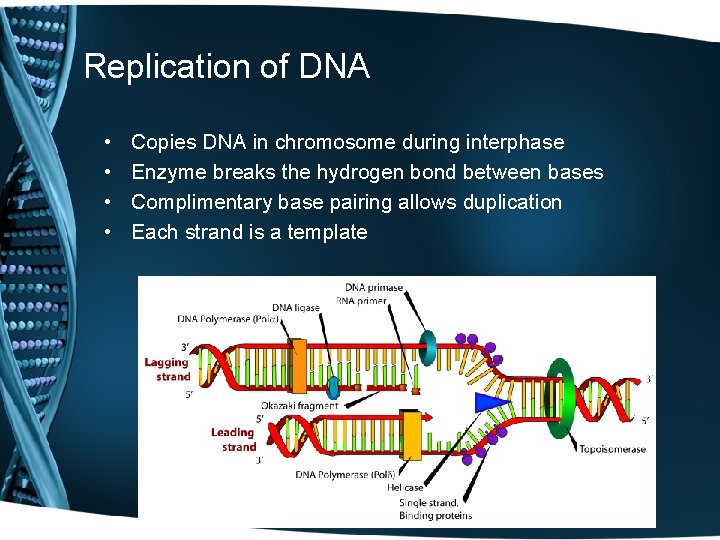
Replication of DNA • • Copies DNA in chromosome during interphase Enzyme breaks the hydrogen bond between bases Complimentary base pairing allows duplication Each strand is a template
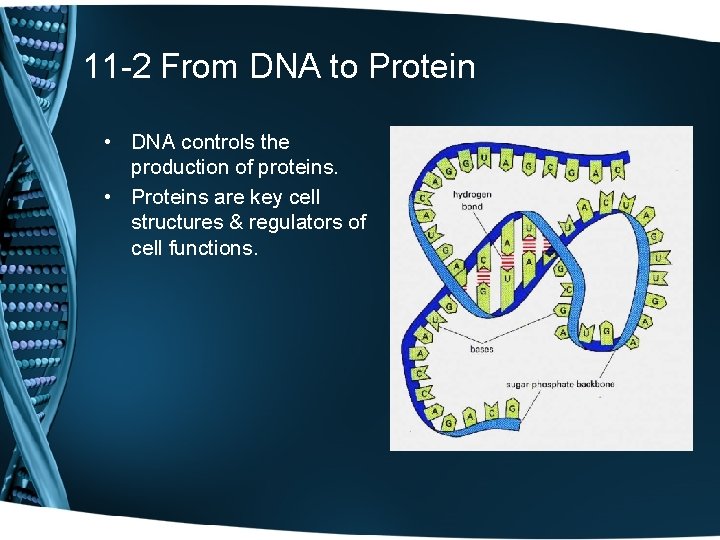
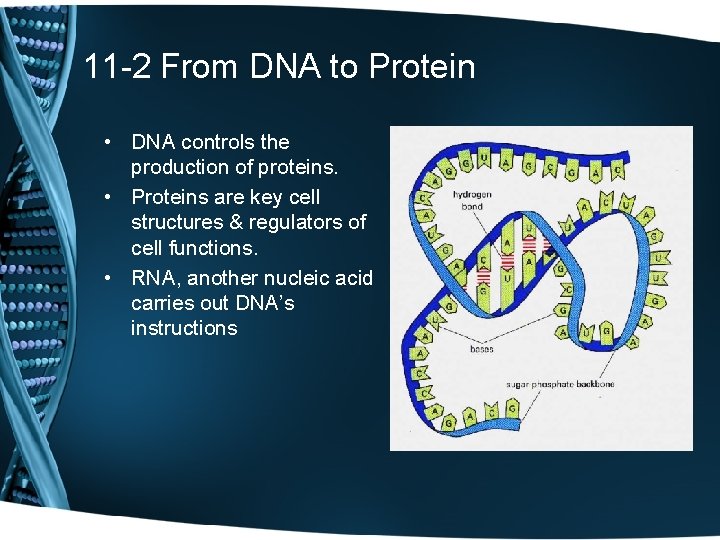
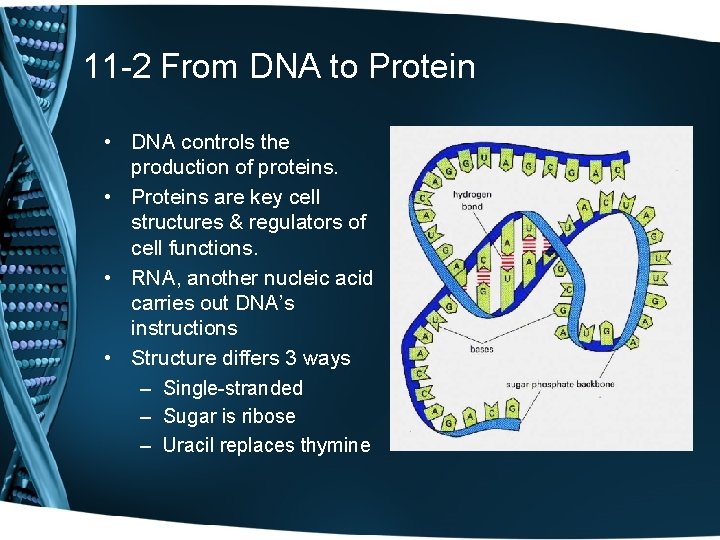
11 -2 From DNA to Protein • DNA controls the production of proteins. • Proteins are key cell structures & regulators of cell functions.
11 -2 From DNA to Protein • DNA controls the production of proteins. • Proteins are key cell structures & regulators of cell functions. • RNA, another nucleic acid carries out DNA’s instructions
11 -2 From DNA to Protein • DNA controls the production of proteins. • Proteins are key cell structures & regulators of cell functions. • RNA, another nucleic acid carries out DNA’s instructions • Structure differs 3 ways – Single-stranded – Sugar is ribose – Uracil replaces thymine
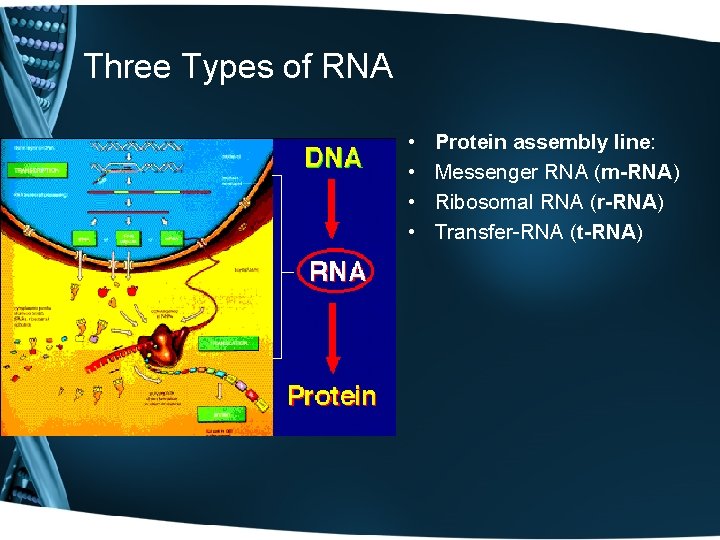
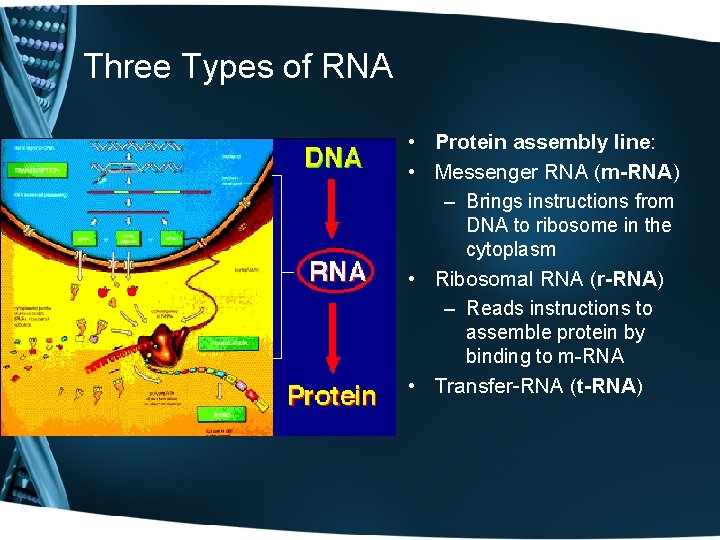
Three Types of RNA • • Protein assembly line: Messenger RNA (m-RNA) Ribosomal RNA (r-RNA) Transfer-RNA (t-RNA)
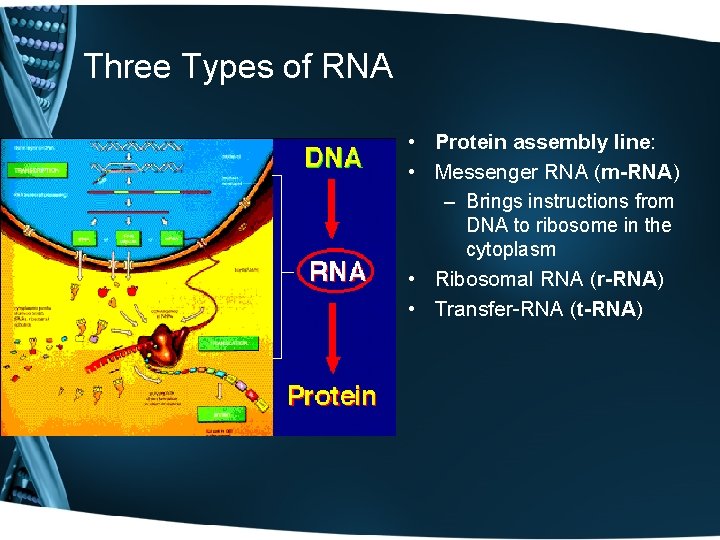
Three Types of RNA • Protein assembly line: • Messenger RNA (m-RNA) – Brings instructions from DNA to ribosome in the cytoplasm • Ribosomal RNA (r-RNA) • Transfer-RNA (t-RNA)
Three Types of RNA • Protein assembly line: • Messenger RNA (m-RNA) – Brings instructions from DNA to ribosome in the cytoplasm • Ribosomal RNA (r-RNA) – Reads instructions to assemble protein by binding to m-RNA • Transfer-RNA (t-RNA)
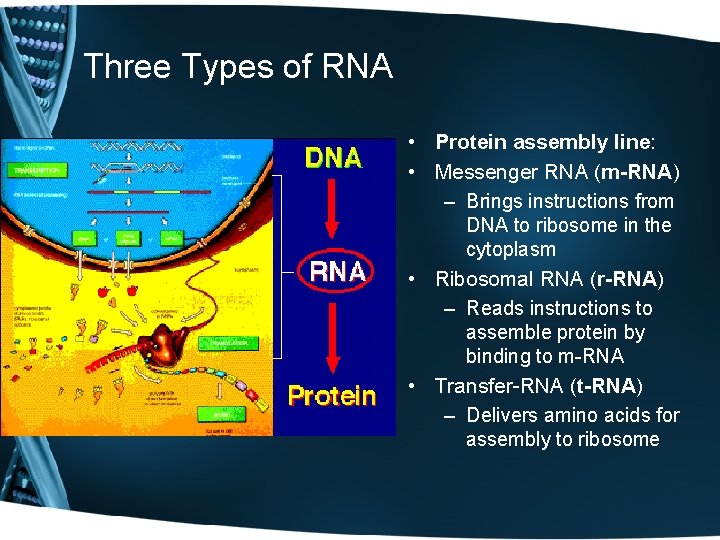
Three Types of RNA • Protein assembly line: • Messenger RNA (m-RNA) – Brings instructions from DNA to ribosome in the cytoplasm • Ribosomal RNA (r-RNA) – Reads instructions to assemble protein by binding to m-RNA • Transfer-RNA (t-RNA) – Delivers amino acids for assembly to ribosome
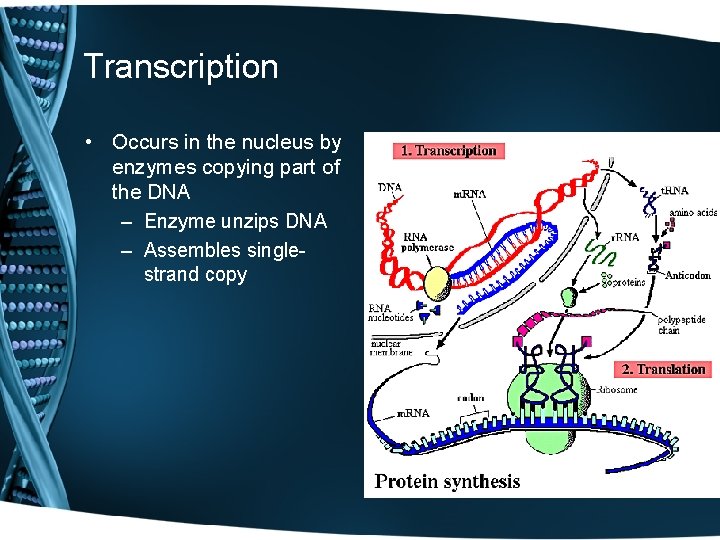
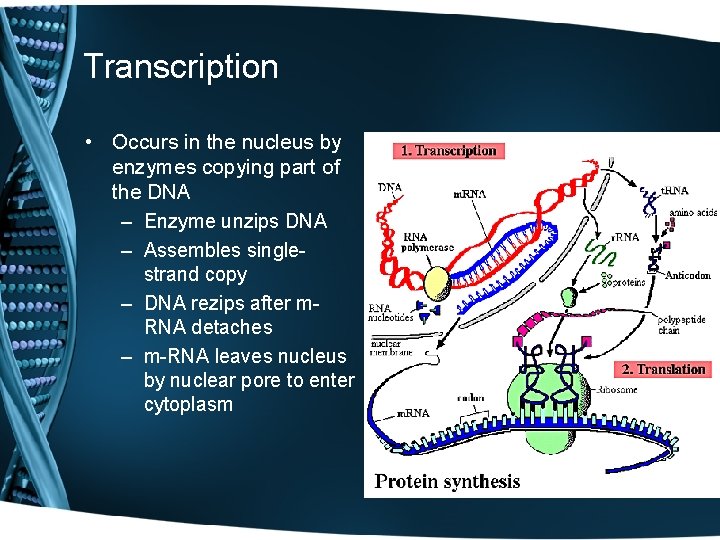
Transcription • Occurs in the nucleus by enzymes copying part of the DNA – Enzyme unzips DNA – Assembles singlestrand copy
Transcription • Occurs in the nucleus by enzymes copying part of the DNA – Enzyme unzips DNA – Assembles singlestrand copy – DNA rezips after m. RNA detaches
Transcription • Occurs in the nucleus by enzymes copying part of the DNA – Enzyme unzips DNA – Assembles singlestrand copy – DNA rezips after m. RNA detaches – m-RNA leaves nucleus by nuclear pore to enter cytoplasm
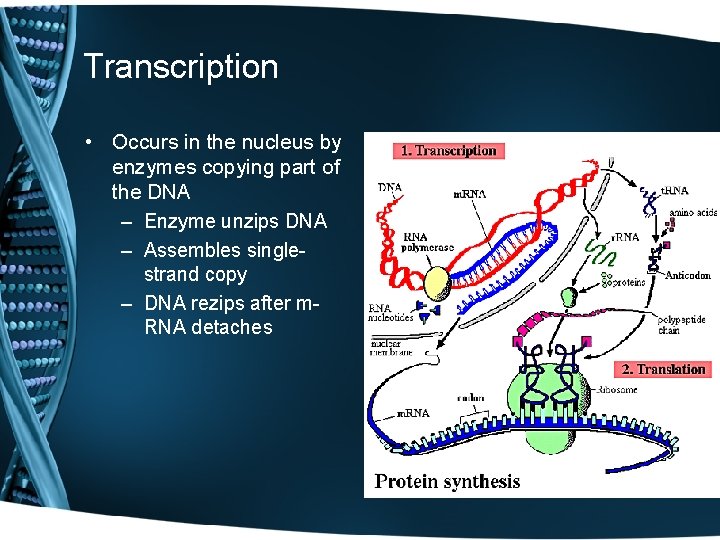
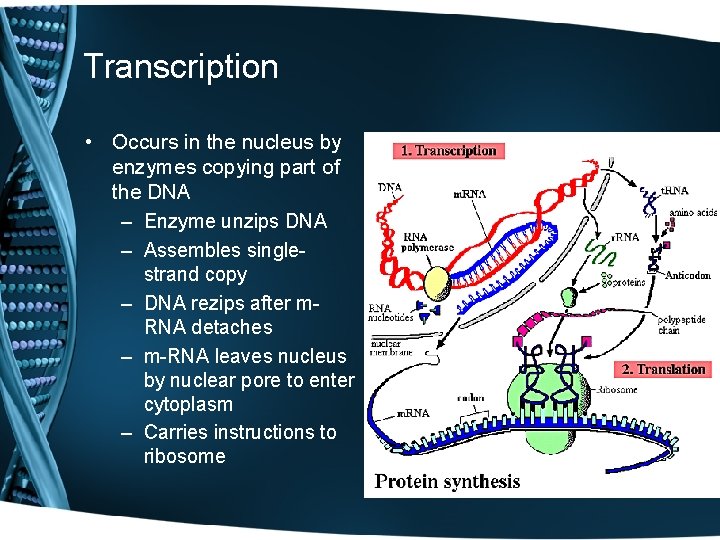
Transcription • Occurs in the nucleus by enzymes copying part of the DNA – Enzyme unzips DNA – Assembles singlestrand copy – DNA rezips after m. RNA detaches – m-RNA leaves nucleus by nuclear pore to enter cytoplasm – Carries instructions to ribosome
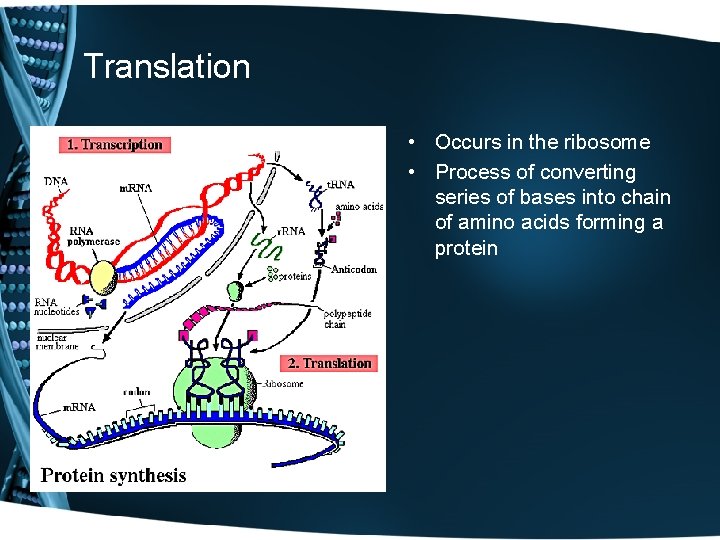
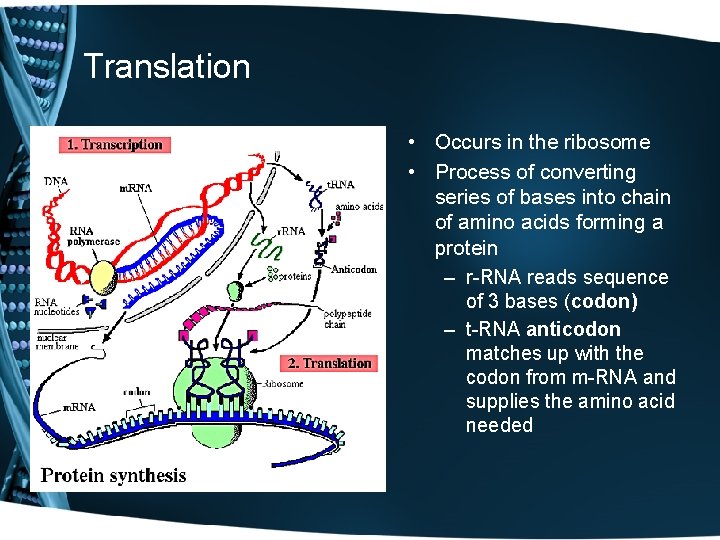
Translation • Occurs in the ribosome • Process of converting series of bases into chain of amino acids forming a protein
Translation • Occurs in the ribosome • Process of converting series of bases into chain of amino acids forming a protein – r-RNA reads sequence of 3 bases (codon)
Translation • Occurs in the ribosome • Process of converting series of bases into chain of amino acids forming a protein – r-RNA reads sequence of 3 bases (codon) – t-RNA anticodon matches up with the codon from m-RNA and supplies the amino acid needed
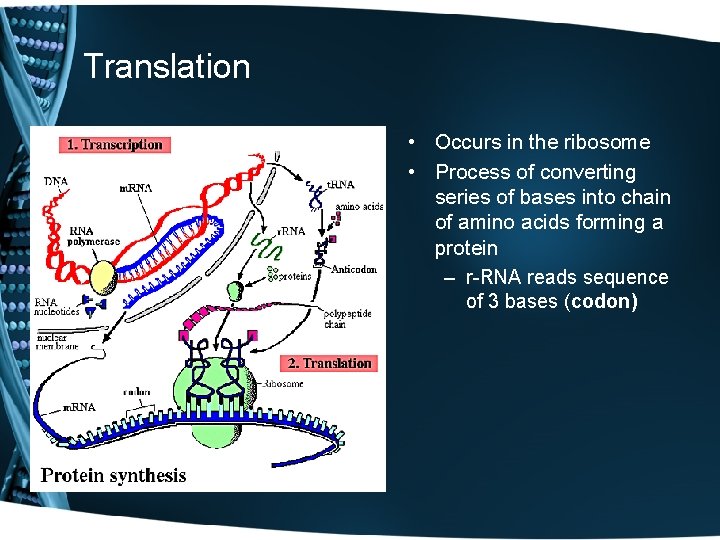
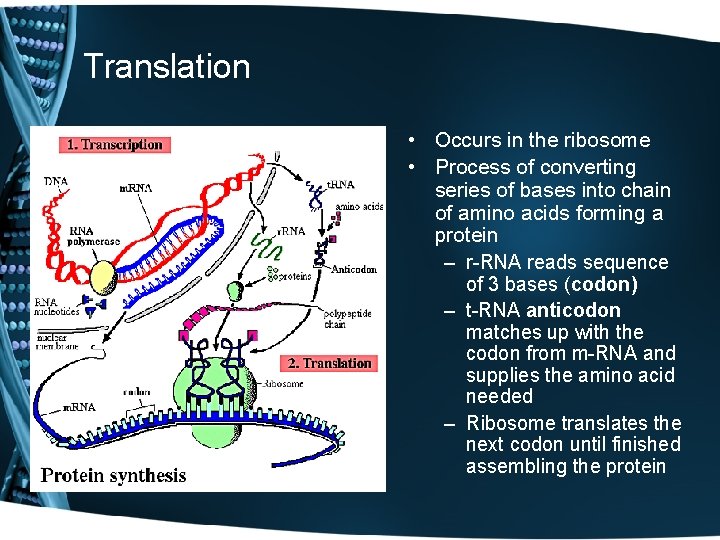
Translation • Occurs in the ribosome • Process of converting series of bases into chain of amino acids forming a protein – r-RNA reads sequence of 3 bases (codon) – t-RNA anticodon matches up with the codon from m-RNA and supplies the amino acid needed – Ribosome translates the next codon until finished assembling the protein
RNA & Protein Synthesis
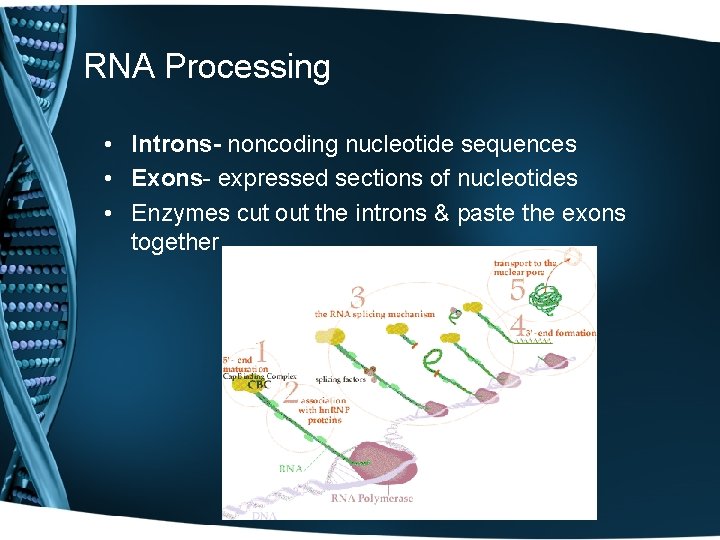
RNA Processing • Introns- noncoding nucleotide sequences • Exons- expressed sections of nucleotides • Enzymes cut out the introns & paste the exons together
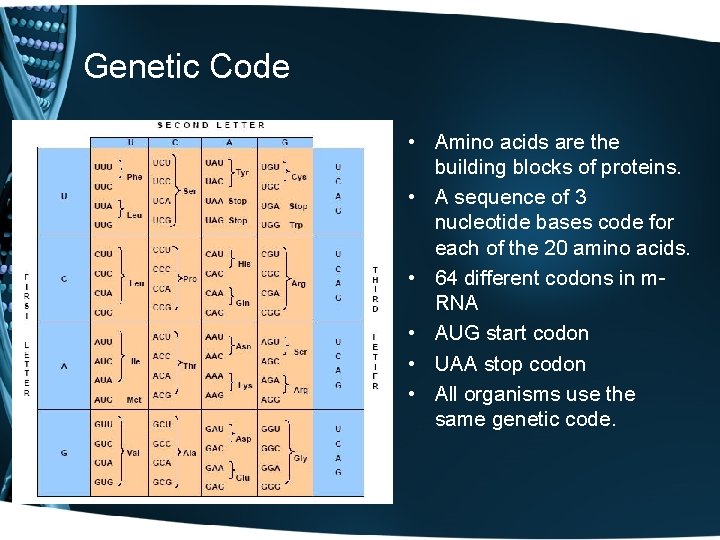
Genetic Code • Amino acids are the building blocks of proteins. • A sequence of 3 nucleotide bases code for each of the 20 amino acids. • 64 different codons in m. RNA • AUG start codon • UAA stop codon • All organisms use the same genetic code.
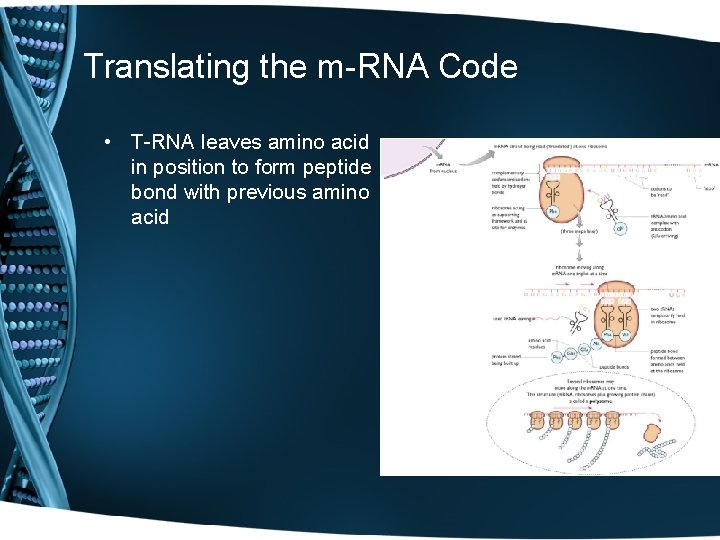
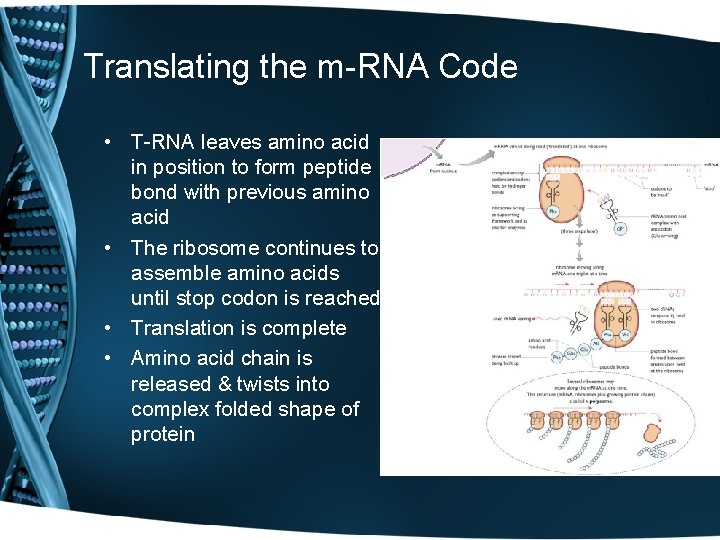
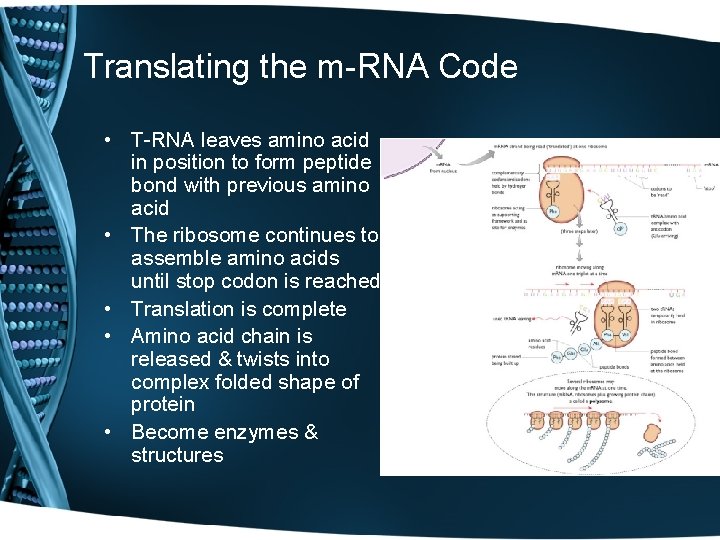
Translating the m-RNA Code • T-RNA leaves amino acid in position to form peptide bond with previous amino acid
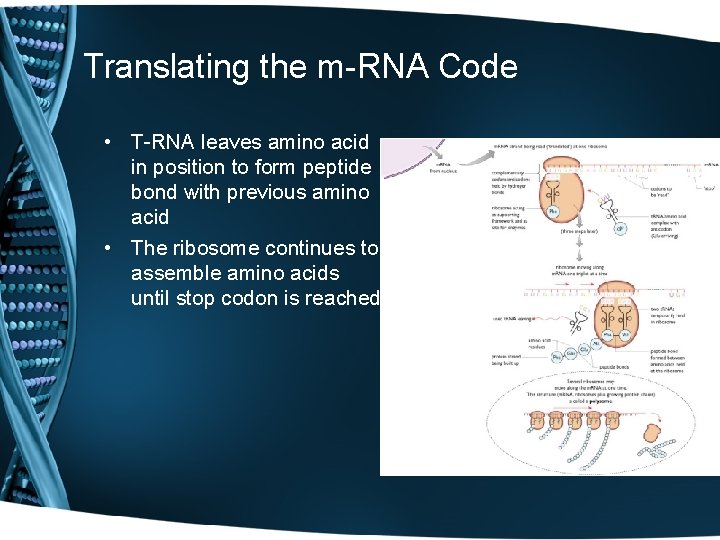
Translating the m-RNA Code • T-RNA leaves amino acid in position to form peptide bond with previous amino acid • The ribosome continues to assemble amino acids until stop codon is reached.
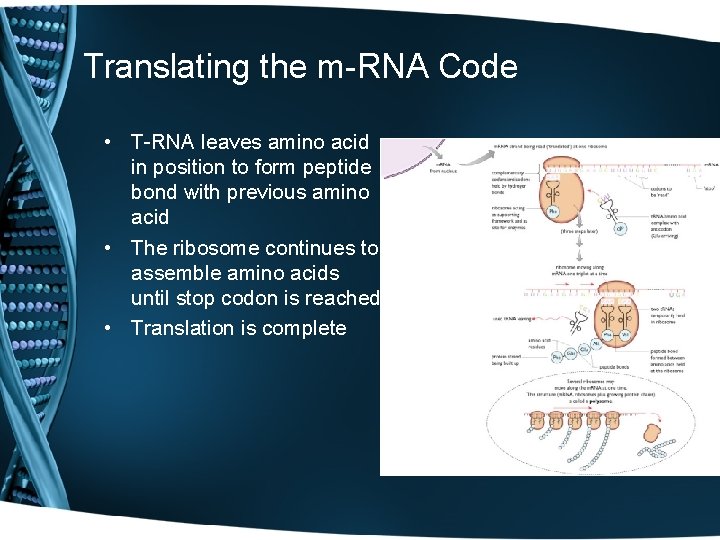
Translating the m-RNA Code • T-RNA leaves amino acid in position to form peptide bond with previous amino acid • The ribosome continues to assemble amino acids until stop codon is reached. • Translation is complete
Translating the m-RNA Code • T-RNA leaves amino acid in position to form peptide bond with previous amino acid • The ribosome continues to assemble amino acids until stop codon is reached. • Translation is complete • Amino acid chain is released & twists into complex folded shape of protein
Translating the m-RNA Code • T-RNA leaves amino acid in position to form peptide bond with previous amino acid • The ribosome continues to assemble amino acids until stop codon is reached. • Translation is complete • Amino acid chain is released & twists into complex folded shape of protein • Become enzymes & structures
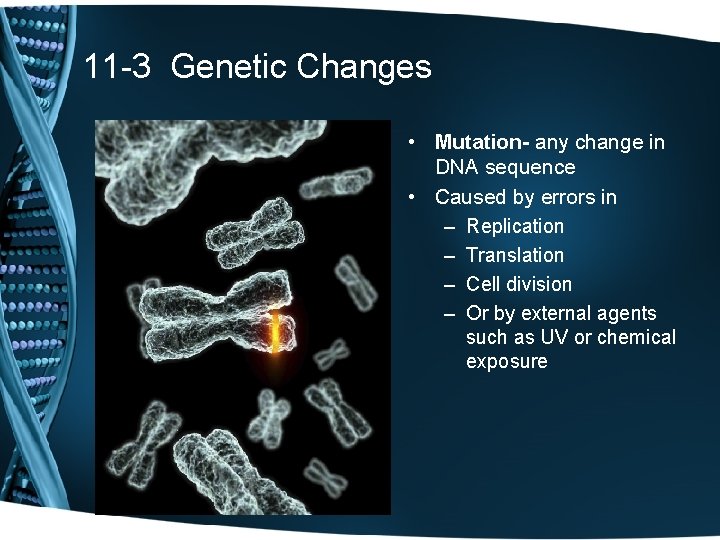
11 -3 Genetic Changes • Mutation- any change in DNA sequence • Caused by errors in – Replication – Translation – Cell division – Or by external agents such as UV or chemical exposure
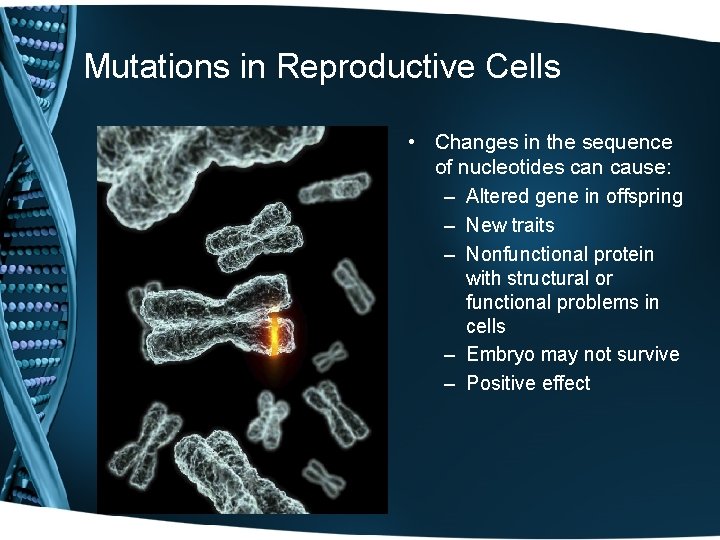
Mutations in Reproductive Cells • Changes in the sequence of nucleotides can cause: – Altered gene in offspring – New traits – Nonfunctional protein with structural or functional problems in cells – Embryo may not survive – Positive effect
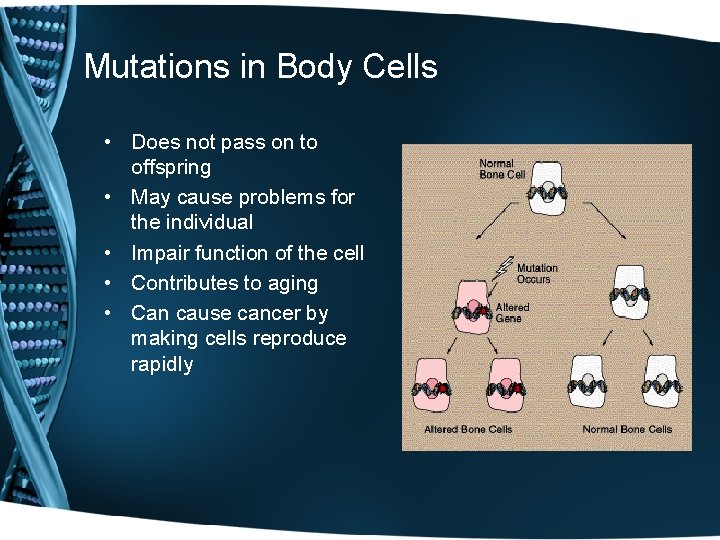
Mutations in Body Cells • Does not pass on to offspring • May cause problems for the individual • Impair function of the cell • Contributes to aging • Can cause cancer by making cells reproduce rapidly
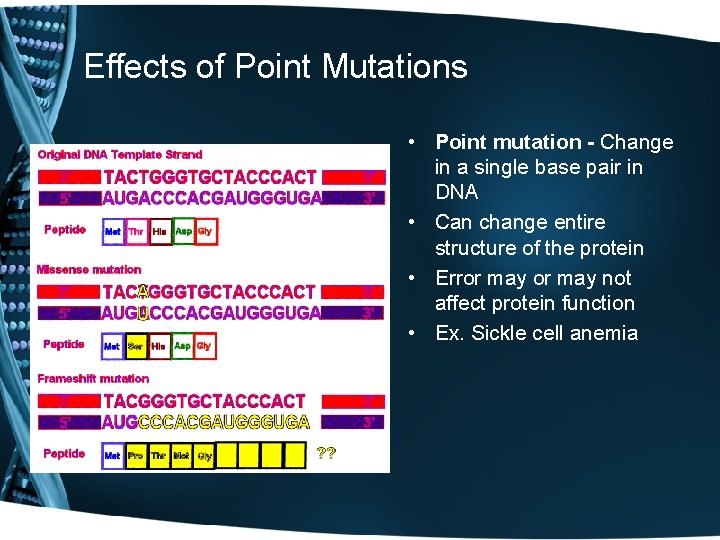
Effects of Point Mutations • Point mutation - Change in a single base pair in DNA • Can change entire structure of the protein • Error may not affect protein function • Ex. Sickle cell anemia
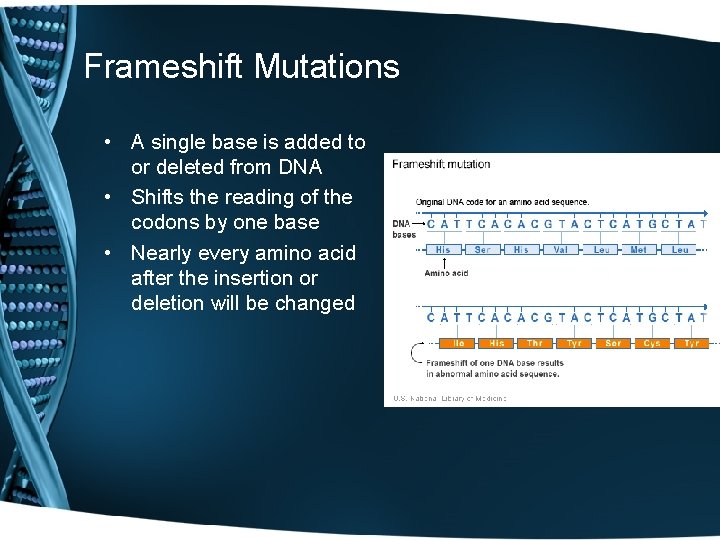
Frameshift Mutations • A single base is added to or deleted from DNA • Shifts the reading of the codons by one base • Nearly every amino acid after the insertion or deletion will be changed
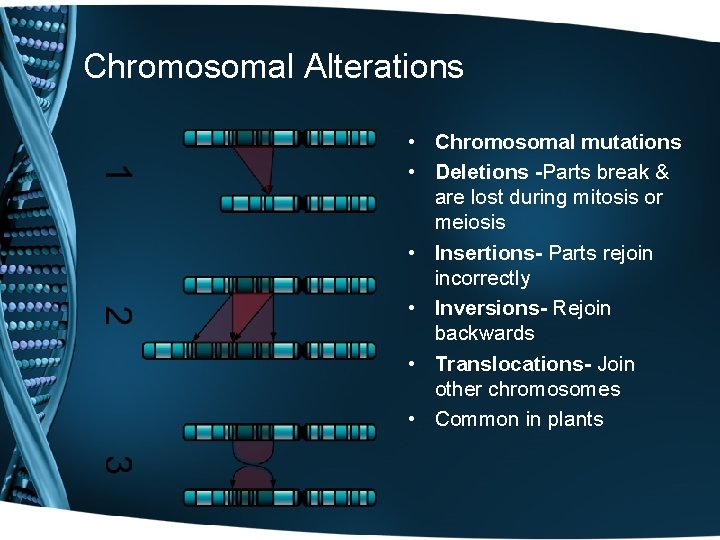
Chromosomal Alterations • Chromosomal mutations • Deletions -Parts break & are lost during mitosis or meiosis • Insertions- Parts rejoin incorrectly • Inversions- Rejoin backwards • Translocations- Join other chromosomes • Common in plants
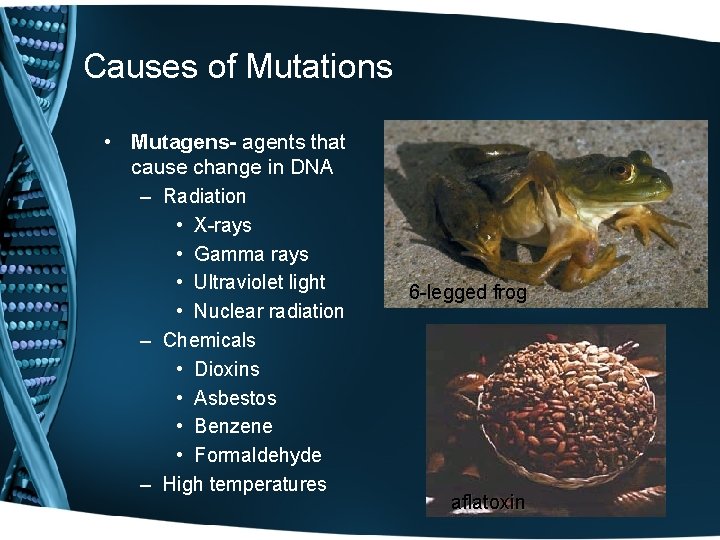
Causes of Mutations • Mutagens- agents that cause change in DNA – Radiation • X-rays • Gamma rays • Ultraviolet light • Nuclear radiation – Chemicals • Dioxins • Asbestos • Benzene • Formaldehyde – High temperatures 6 -legged frog aflatoxin
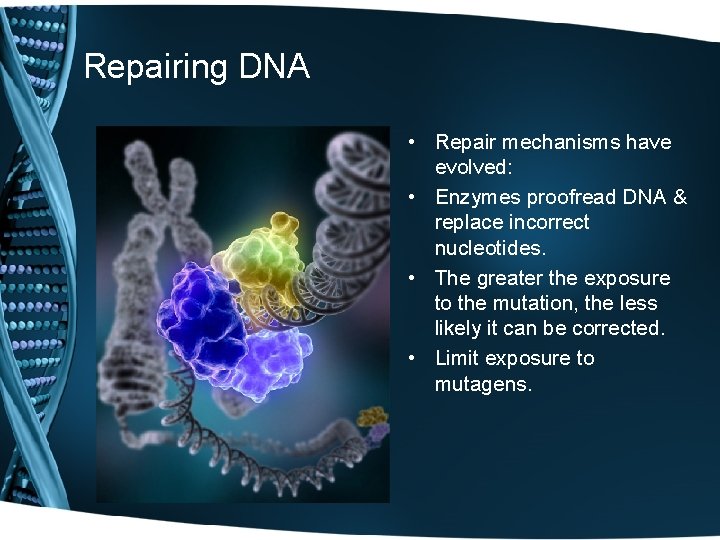
Repairing DNA • Repair mechanisms have evolved: • Enzymes proofread DNA & replace incorrect nucleotides. • The greater the exposure to the mutation, the less likely it can be corrected. • Limit exposure to mutagens.