
C 1 2 1 Intercultural Dimensions Level L
- Slides: 67
C. 1. 2. 1 Intercultural Dimensions
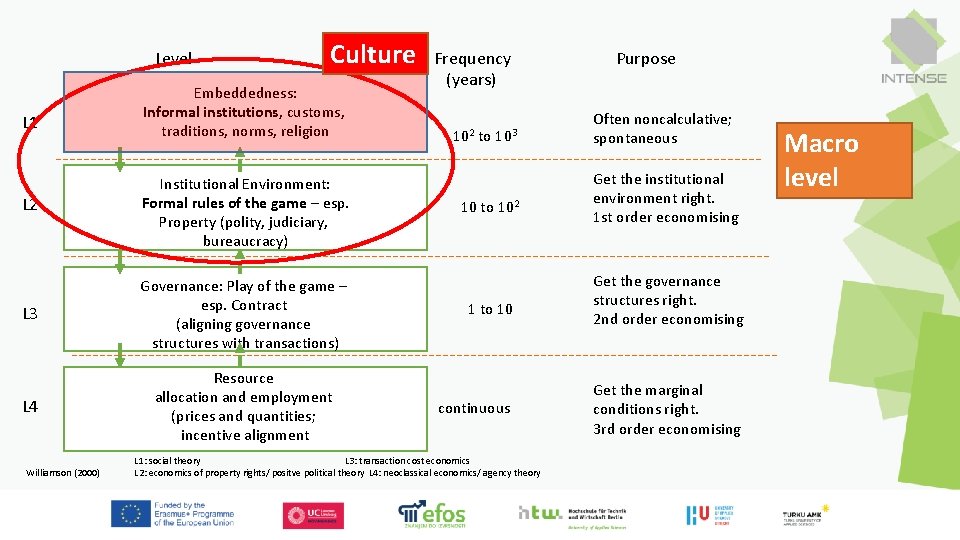
Level L 1 L 2 Culture Embeddedness: Informal institutions, customs, traditions, norms, religion Institutional Environment: Formal rules of the game – esp. Property (polity, judiciary, bureaucracy) L 3 Governance: Play of the game – esp. Contract (aligning governance structures with transactions) L 4 Resource allocation and employment (prices and quantities; incentive alignment Williamson (2000) Frequency (years) 102 to 103 10 to 102 1 to 10 continuous Purpose Often noncalculative; spontaneous Get the institutional environment right. 1 st order economising Macro level Get the governance structures right. 2 nd order economising Get the marginal conditions right. 3 rd order economising L 1: social theory L 3: transaction cost economics L 2: economics of property rights/ positve political theory L 4: neoclassical economics/ agency theory 2
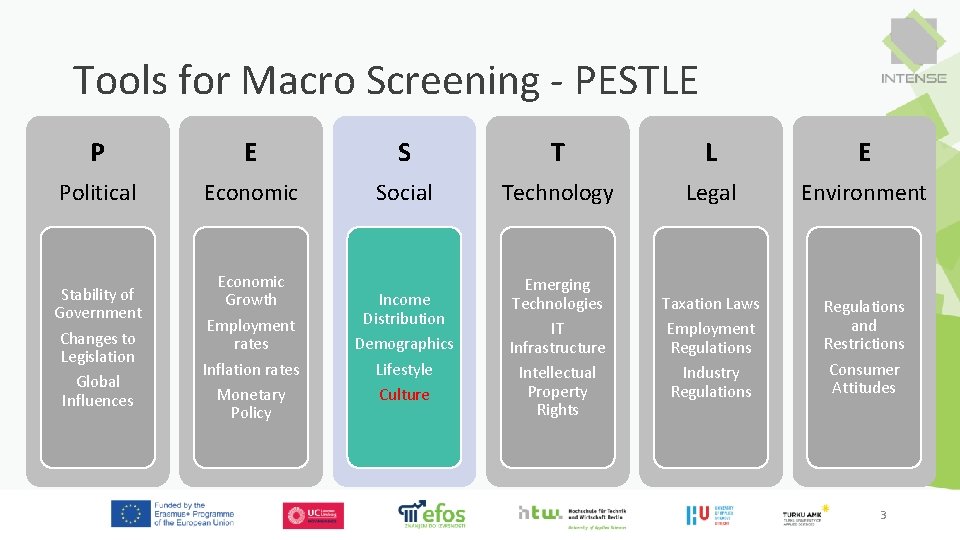
Tools for Macro Screening - PESTLE P E S T L E Political Economic Social Technology Legal Environment Stability of Government Changes to Legislation Global Influences Economic Growth Employment rates Inflation rates Monetary Policy Emerging Technologies IT Infrastructure Intellectual Property Rights Taxation Laws Employment Regulations Industry Regulations and Restrictions Consumer Attitudes Income Distribution Demographics Lifestyle Culture 3
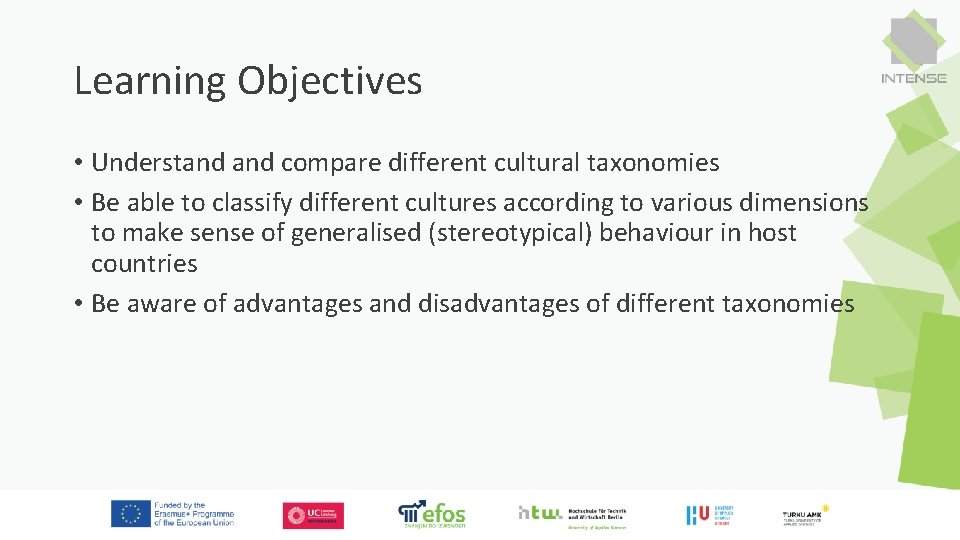
Learning Objectives • Understand compare different cultural taxonomies • Be able to classify different cultures according to various dimensions to make sense of generalised (stereotypical) behaviour in host countries • Be aware of advantages and disadvantages of different taxonomies
Daniel Schmidt in China
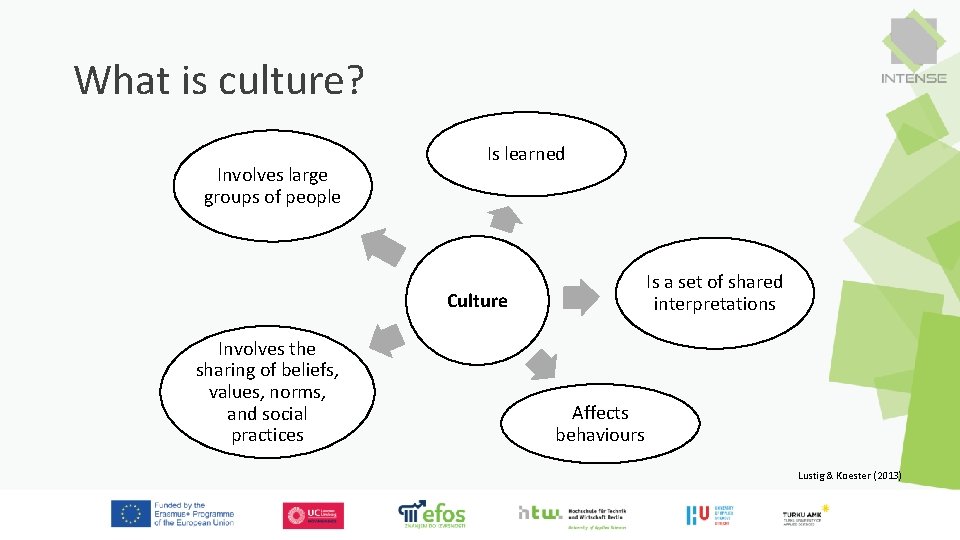
What is culture? Involves large groups of people Is learned Is a set of shared interpretations Culture Involves the sharing of beliefs, values, norms, and social practices Affects behaviours Lustig & Koester (2013)
What is national culture? • Culture is a group-level concept • It can thus be applied to various groups, such as: • • An organisation (group of employees) A certain age group A group of people interested in a particular sport A group of nationals from a specific country etc. • The following material is focused on the national context
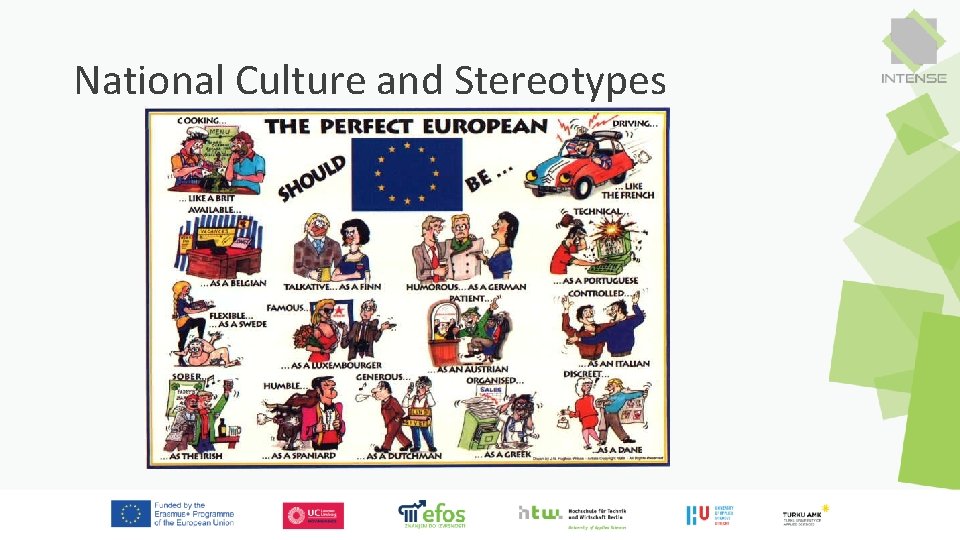
National Culture and Stereotypes • A stereotype is a commonly held notion or image of a group, based on an oversimplification • It assumes that members of this group share the same characteristics
National Culture and Stereotypes
Exercise • What do you consider to be typical characteristics of your ‚national‘ culture? • What is (stereo)typical German behaviour? • What is (stereo)typical Belgian behaviour? • Do you know a citizen that is not behaving according to the characteristics of the culture would suggest?
Exercise – self-study • Online test • • https: //implicit. harvard. edu/implicit/ Your results? Did you expect them to turn out that way? What do you think about the method of the study?
National Culture and Stereotypes • Is stereotyping a good thing? • It is necessary to reduce complexity • It helps to organise the world • Is stereotyping a bad thing? • Underestimation of individuality • Classifying national characteristics is “sophisticated” stereotyping and should be done cautiously!
Concepts of National Culture • Kluckhohn & Strodbeck • Hall • Hofstede • Globe • Trompenaars
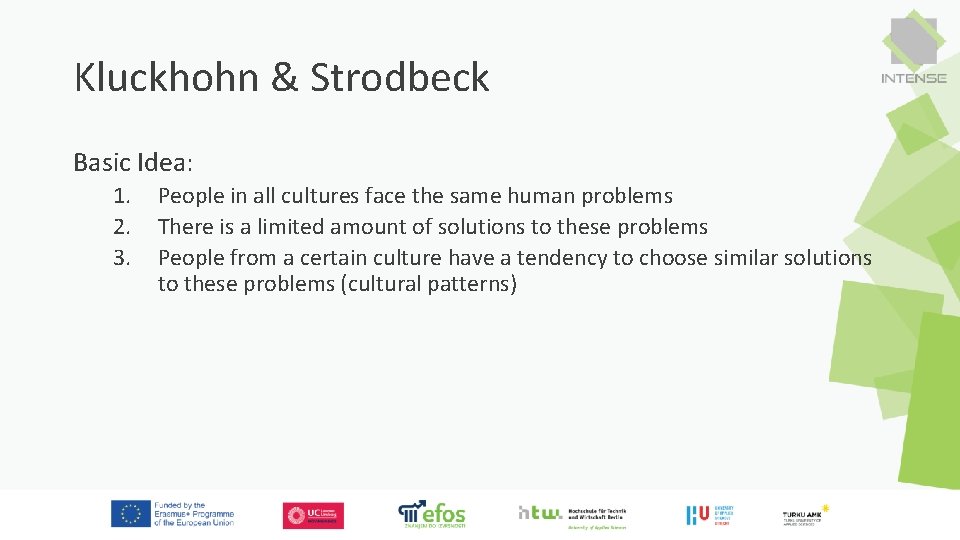
Kluckhohn & Strodbeck Basic Idea: 1. 2. 3. People in all cultures face the same human problems There is a limited amount of solutions to these problems People from a certain culture have a tendency to choose similar solutions to these problems (cultural patterns)
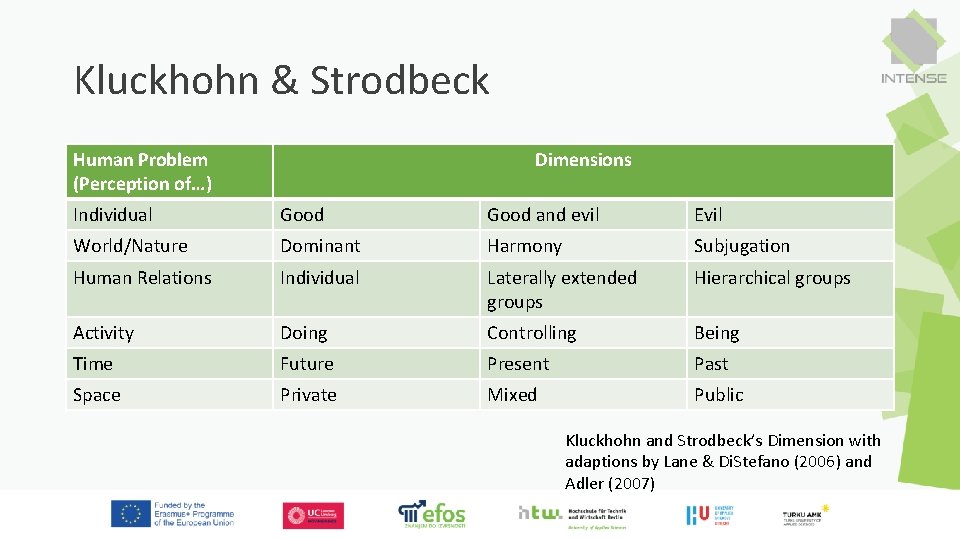
Kluckhohn & Strodbeck Human Problem (Perception of…) Dimensions Individual Good and evil Evil World/Nature Dominant Harmony Subjugation Human Relations Individual Laterally extended groups Hierarchical groups Activity Doing Controlling Being Time Future Present Past Space Private Mixed Public Kluckhohn and Strodbeck’s Dimension with adaptions by Lane & Di. Stefano (2006) and Adler (2007)
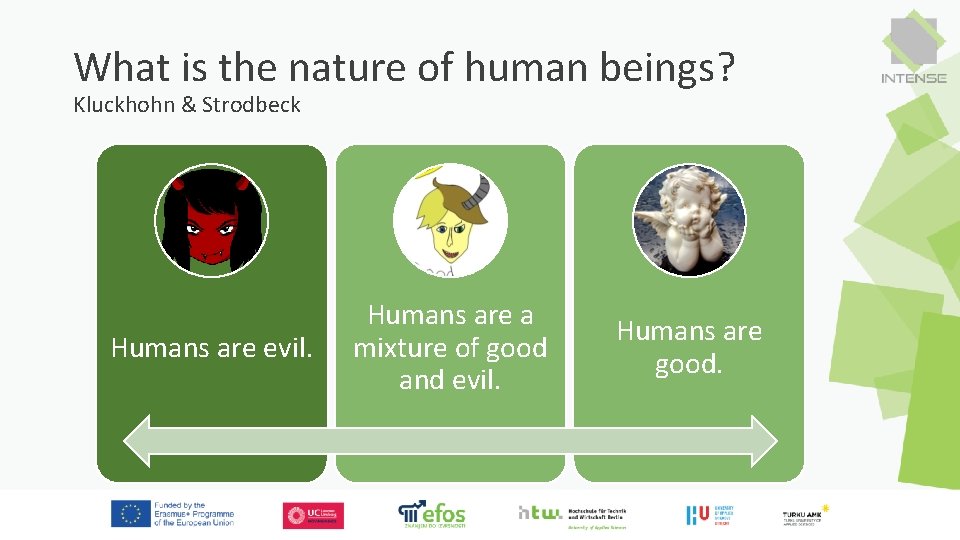
What is the nature of human beings? Kluckhohn & Strodbeck Humans are evil. Humans are a mixture of good and evil. Humans are good.
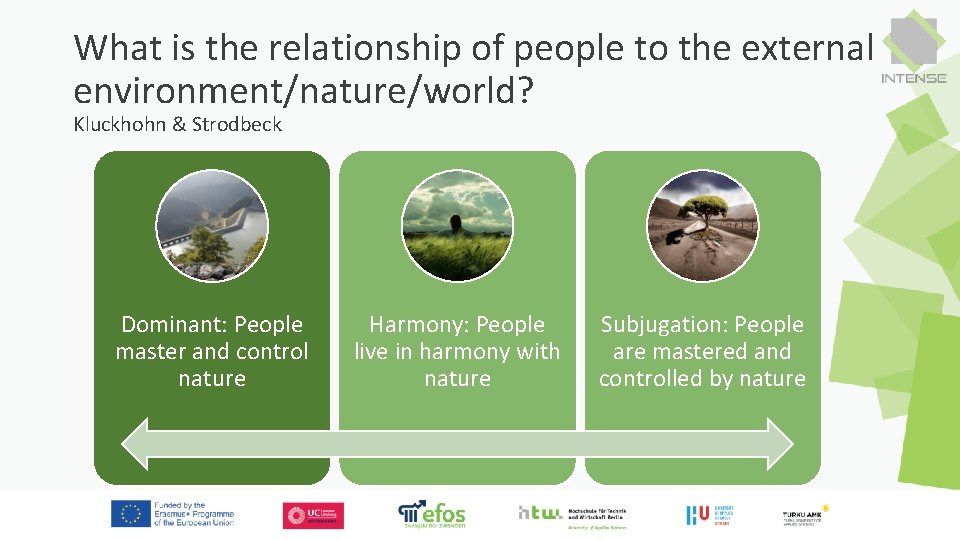
What is the relationship of people to the external environment/nature/world? Kluckhohn & Strodbeck Dominant: People master and control nature Harmony: People live in harmony with nature Subjugation: People are mastered and controlled by nature
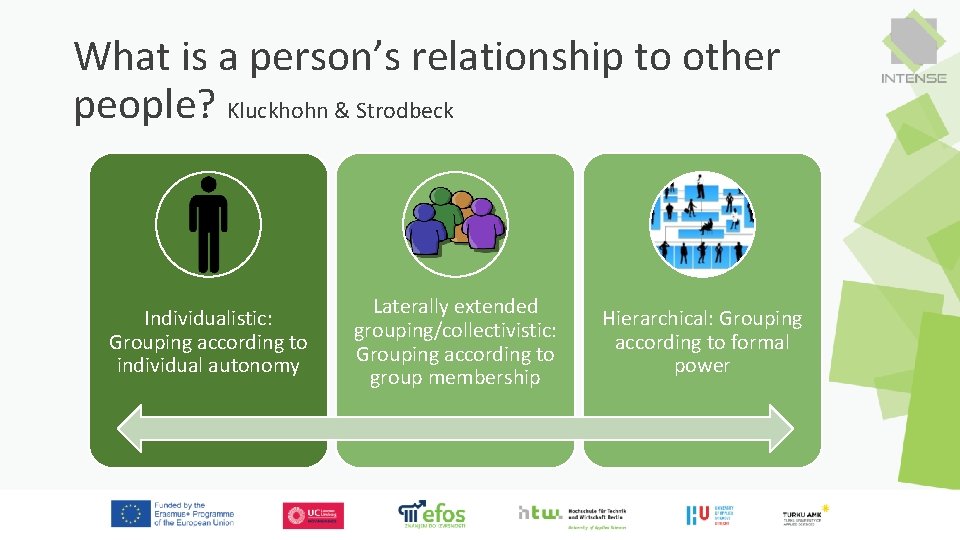
What is a person’s relationship to other people? Kluckhohn & Strodbeck Individualistic: Grouping according to individual autonomy Laterally extended grouping/collectivistic: Grouping according to group membership Hierarchical: Grouping according to formal power
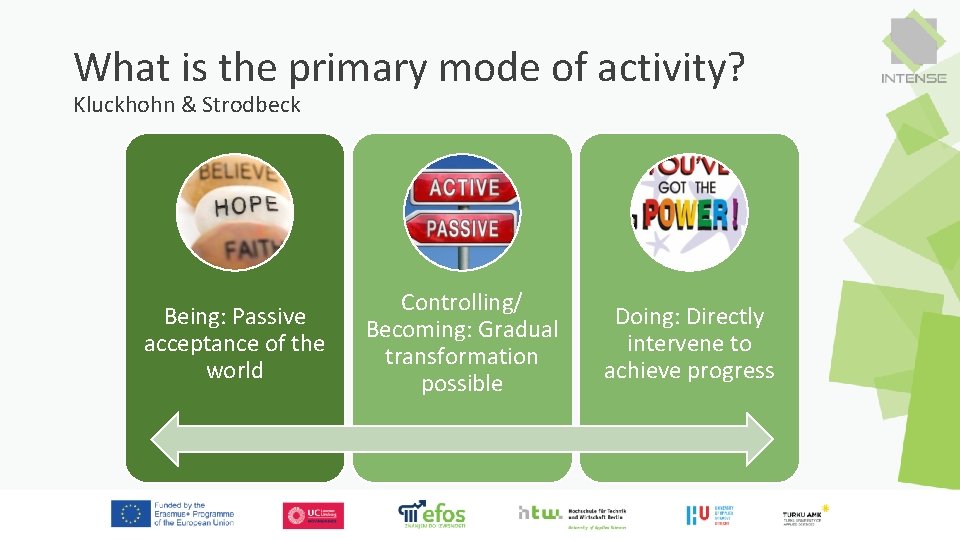
What is the primary mode of activity? Kluckhohn & Strodbeck Being: Passive acceptance of the world Controlling/ Becoming: Gradual transformation possible Doing: Directly intervene to achieve progress
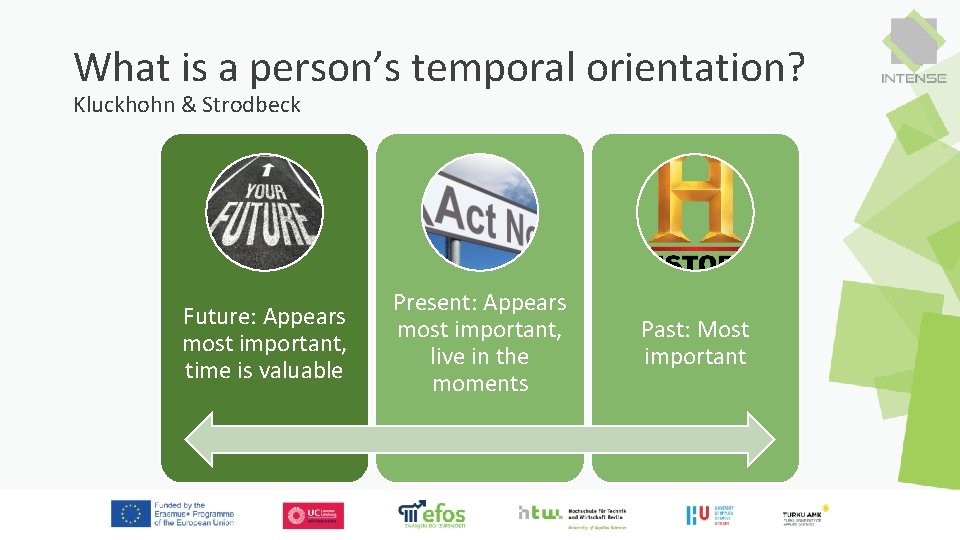
What is a person’s temporal orientation? Kluckhohn & Strodbeck Future: Appears most important, time is valuable Present: Appears most important, live in the moments Past: Most important
Exercise - Kluckhohn & Strodbeck • Please try to find example countries for all categories and argue why you consider those to be fitting.
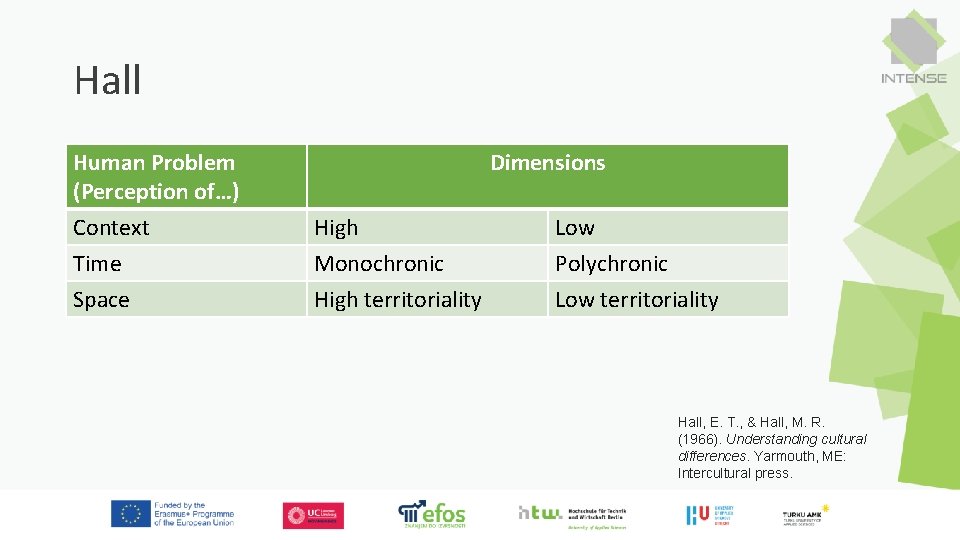
Hall Human Problem (Perception of…) Dimensions Context Time High Monochronic Low Polychronic Space High territoriality Low territoriality Hall, E. T. , & Hall, M. R. (1966). Understanding cultural differences. Yarmouth, ME: Intercultural press.
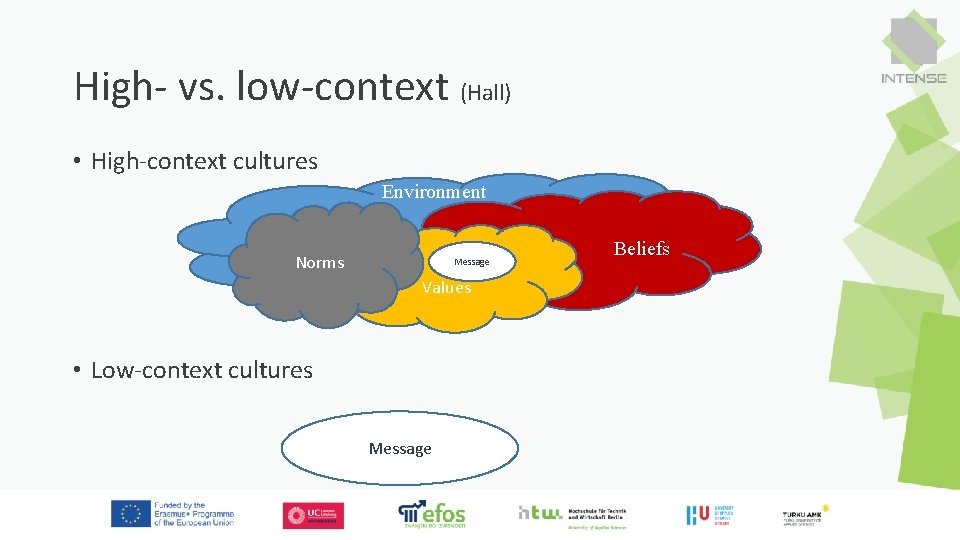
High- vs. low-context (Hall) • High-context cultures Environment Norms Message Values • Low-context cultures Message Beliefs
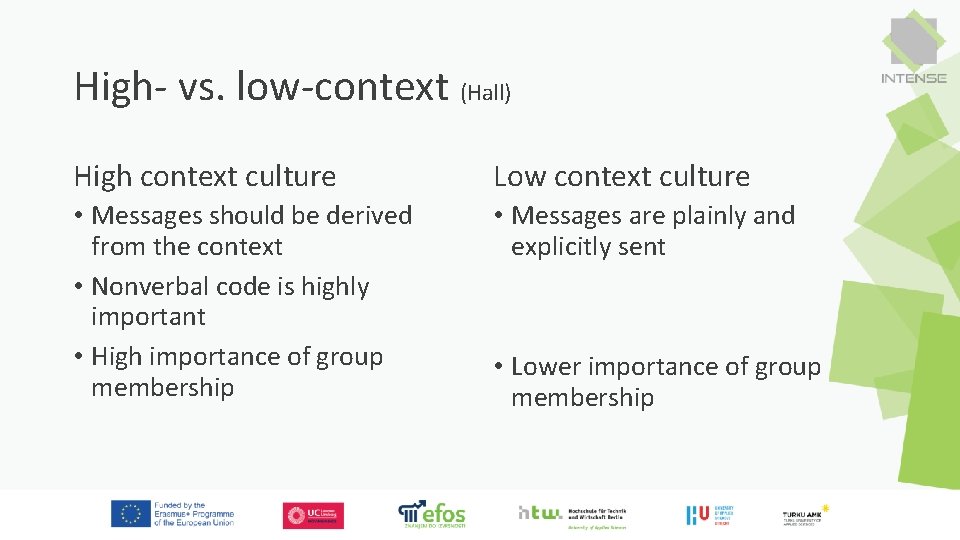
High- vs. low-context (Hall) High context culture Low context culture • Messages should be derived from the context • Nonverbal code is highly important • High importance of group membership • Messages are plainly and explicitly sent • Lower importance of group membership
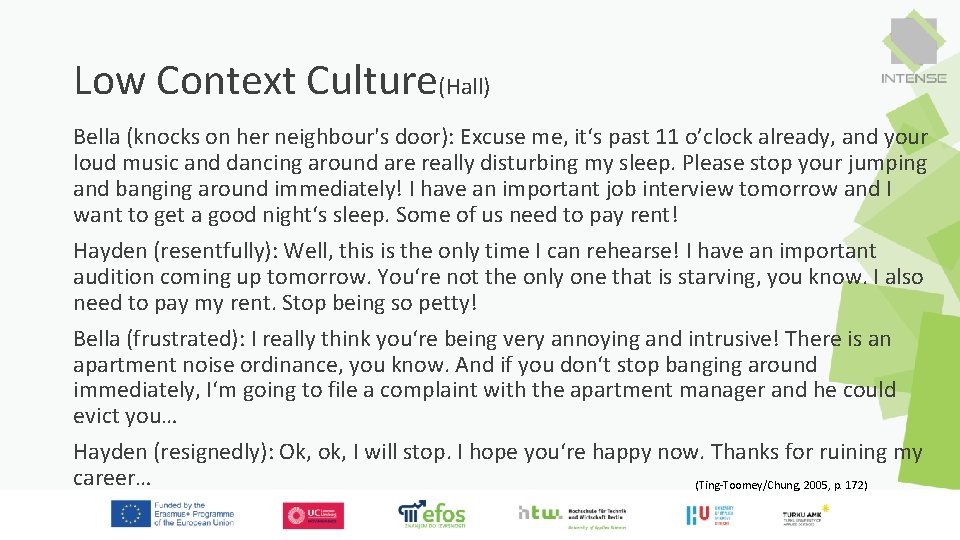
Low Context Culture(Hall) Bella (knocks on her neighbour's door): Excuse me, it‘s past 11 o’clock already, and your loud music and dancing around are really disturbing my sleep. Please stop your jumping and banging around immediately! I have an important job interview tomorrow and I want to get a good night‘s sleep. Some of us need to pay rent! Hayden (resentfully): Well, this is the only time I can rehearse! I have an important audition coming up tomorrow. You‘re not the only one that is starving, you know. I also need to pay my rent. Stop being so petty! Bella (frustrated): I really think you‘re being very annoying and intrusive! There is an apartment noise ordinance, you know. And if you don‘t stop banging around immediately, I‘m going to file a complaint with the apartment manager and he could evict you… Hayden (resignedly): Ok, ok, I will stop. I hope you‘re happy now. Thanks for ruining my career… (Ting-Toomey/Chung, 2005, p. 172)
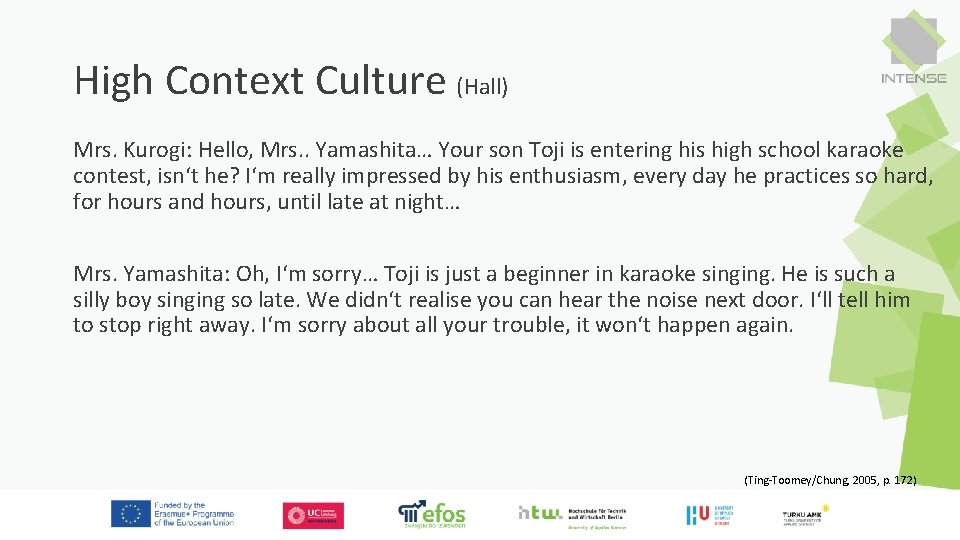
High Context Culture (Hall) Mrs. Kurogi: Hello, Mrs. . Yamashita… Your son Toji is entering his high school karaoke contest, isn‘t he? I‘m really impressed by his enthusiasm, every day he practices so hard, for hours and hours, until late at night… Mrs. Yamashita: Oh, I‘m sorry… Toji is just a beginner in karaoke singing. He is such a silly boy singing so late. We didn‘t realise you can hear the noise next door. I‘ll tell him to stop right away. I‘m sorry about all your trouble, it won‘t happen again. (Ting-Toomey/Chung, 2005, p. 172)
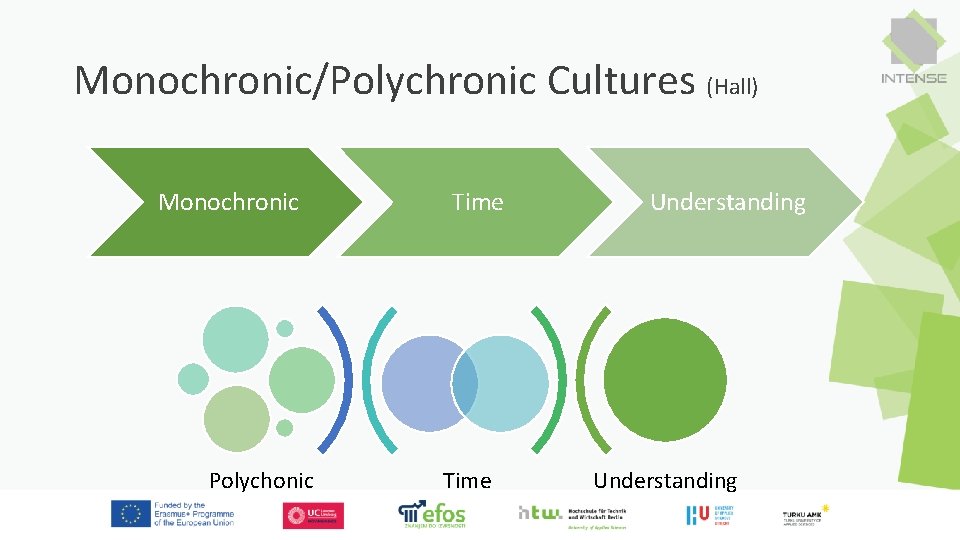
Monochronic/Polychronic Cultures (Hall) Monochronic Polychonic Time Understanding
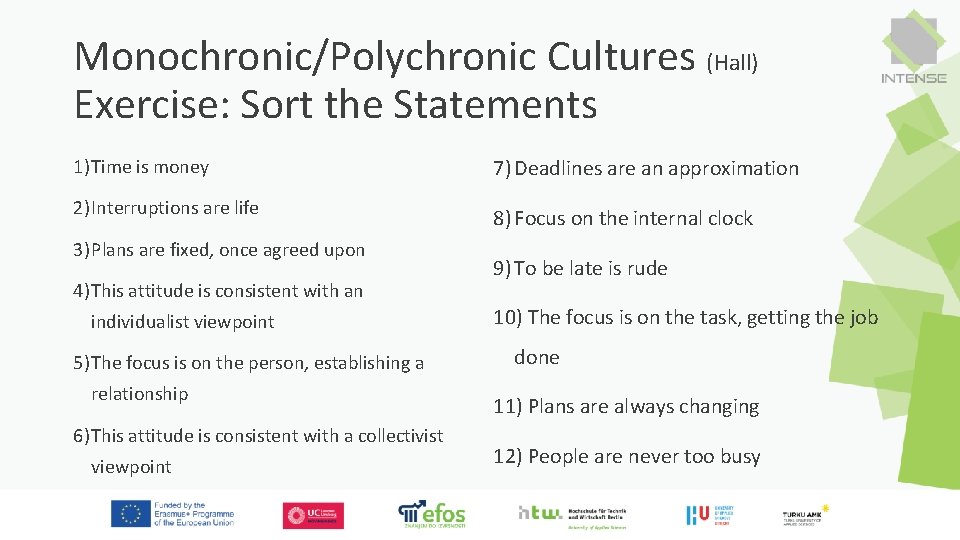
Monochronic/Polychronic Cultures (Hall) Exercise: Sort the Statements 1) Time is money 7) Deadlines are an approximation 2) Interruptions are life 8) Focus on the internal clock 3) Plans are fixed, once agreed upon 4) This attitude is consistent with an individualist viewpoint 5) The focus is on the person, establishing a relationship 6) This attitude is consistent with a collectivist viewpoint 9) To be late is rude 10) The focus is on the task, getting the job done 11) Plans are always changing 12) People are never too busy
Proxemics (Space) (Hall) Low territoriality High territoriality • https: //www. youtube. com/watc h? v=Hk. WPDYFsynw • http: //adsoftheworld. com/medi a/digital/klm_personal_space_e xperiment
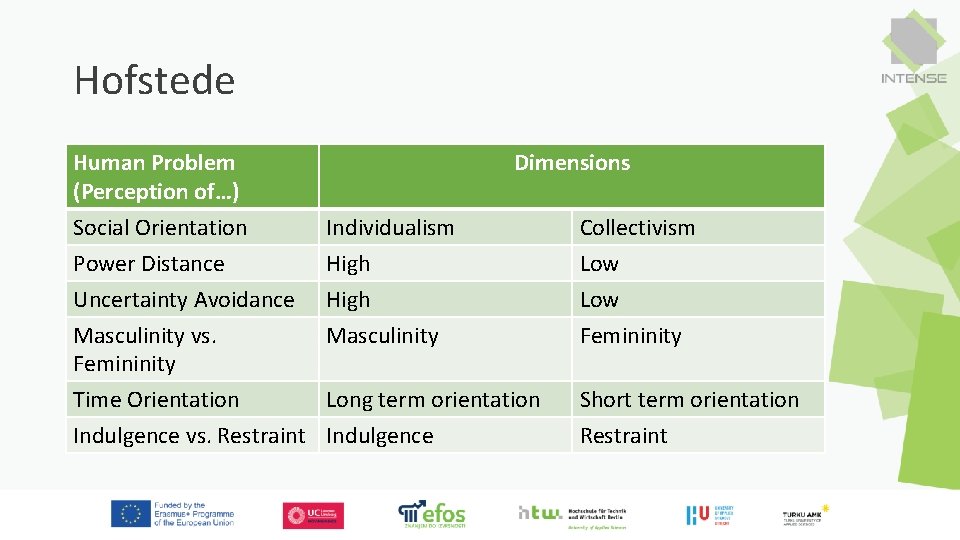
Hofstede Human Problem (Perception of…) Dimensions Social Orientation Power Distance Individualism High Collectivism Low Uncertainty Avoidance Masculinity vs. Femininity Time Orientation Indulgence vs. Restraint High Masculinity Low Femininity Long term orientation Indulgence Short term orientation Restraint
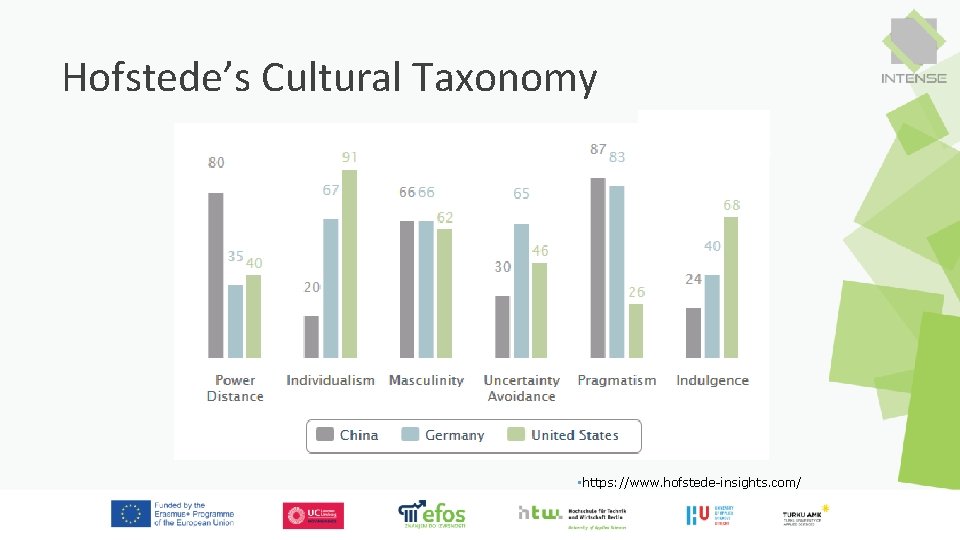
Hofstede’s Cultural Taxonomy • https: //www. hofstede-insights. com/
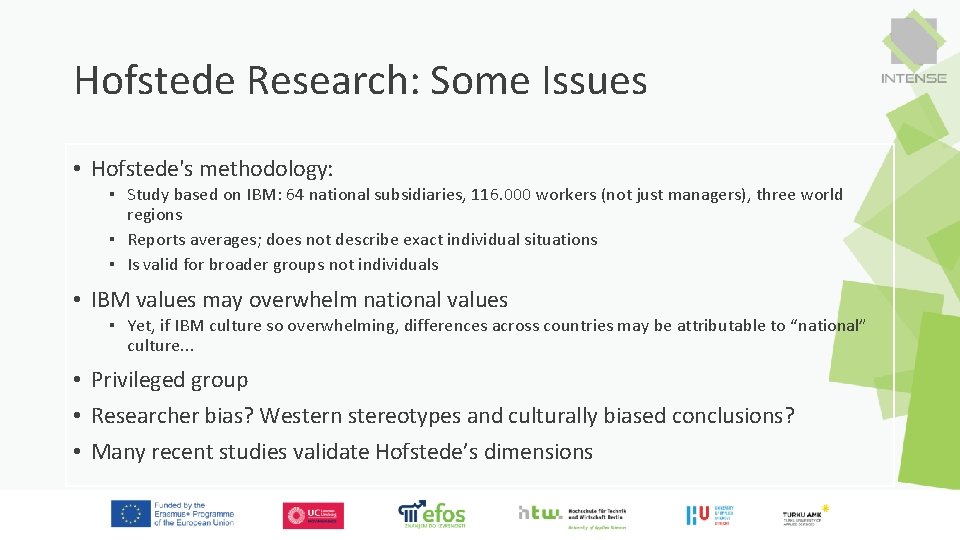
Hofstede Research: Some Issues • Hofstede's methodology: Study based on IBM: 64 national subsidiaries, 116. 000 workers (not just managers), three world regions § Reports averages; does not describe exact individual situations § Is valid for broader groups not individuals § • IBM values may overwhelm national values § Yet, if IBM culture so overwhelming, differences across countries may be attributable to “national” culture. . . • Privileged group • Researcher bias? Western stereotypes and culturally biased conclusions? • Many recent studies validate Hofstede’s dimensions
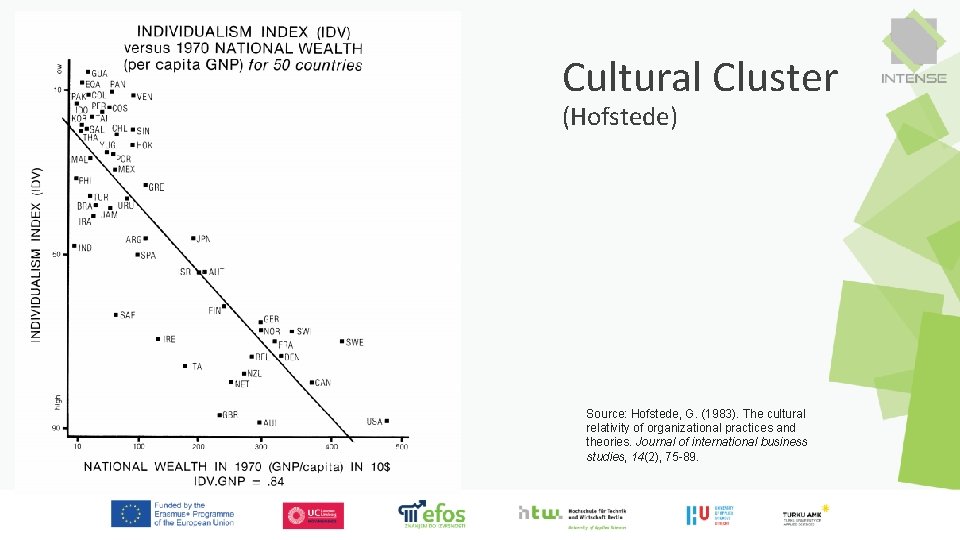
Cultural Cluster (Hofstede) Source: Hofstede, G. (1983). The cultural relativity of organizational practices and theories. Journal of international business studies, 14(2), 75 -89.
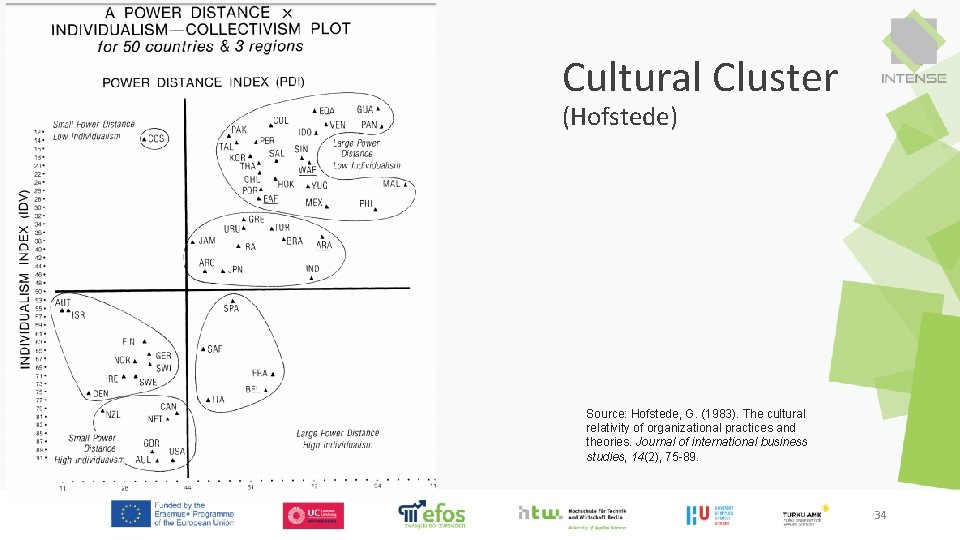
Cultural Cluster (Hofstede) Source: Hofstede, G. (1983). The cultural relativity of organizational practices and theories. Journal of international business studies, 14(2), 75 -89. 34
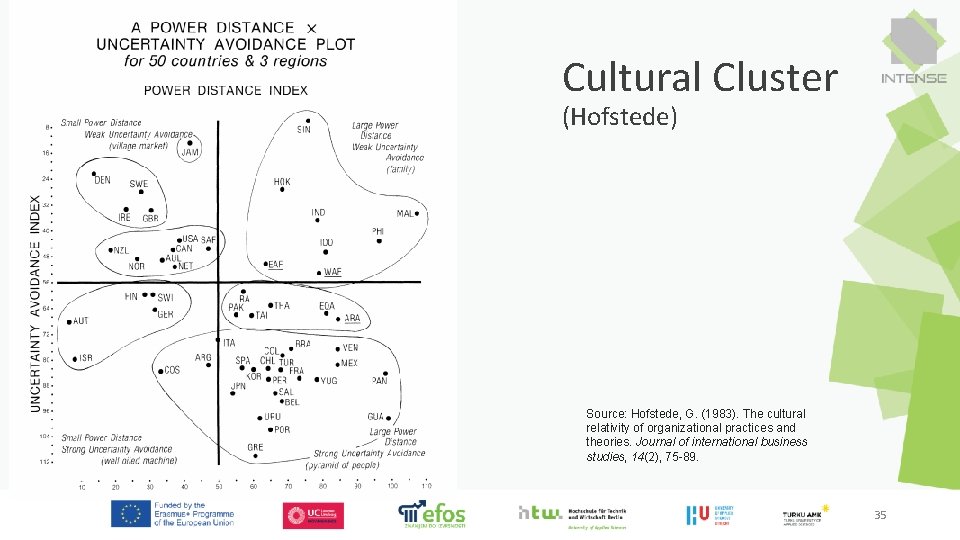
Cultural Cluster (Hofstede) Source: Hofstede, G. (1983). The cultural relativity of organizational practices and theories. Journal of international business studies, 14(2), 75 -89. 35
Discussion 1. What would these correlations imply for the political and economic development of countries? 2. Given that these are results of studies, but are in the end “sophisticated stereotyping”, would you agree on these correlations based on your own experience? 36
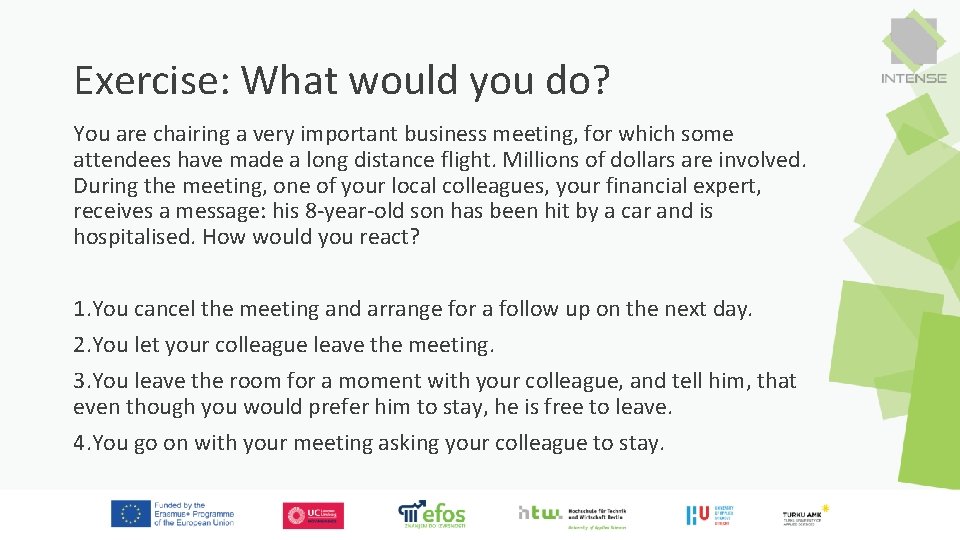
Exercise: What would you do? You are chairing a very important business meeting, for which some attendees have made a long distance flight. Millions of dollars are involved. During the meeting, one of your local colleagues, your financial expert, receives a message: his 8 -year-old son has been hit by a car and is hospitalised. How would you react? 1. You cancel the meeting and arrange for a follow up on the next day. 2. You let your colleague leave the meeting. 3. You leave the room for a moment with your colleague, and tell him, that even though you would prefer him to stay, he is free to leave. 4. You go on with your meeting asking your colleague to stay.
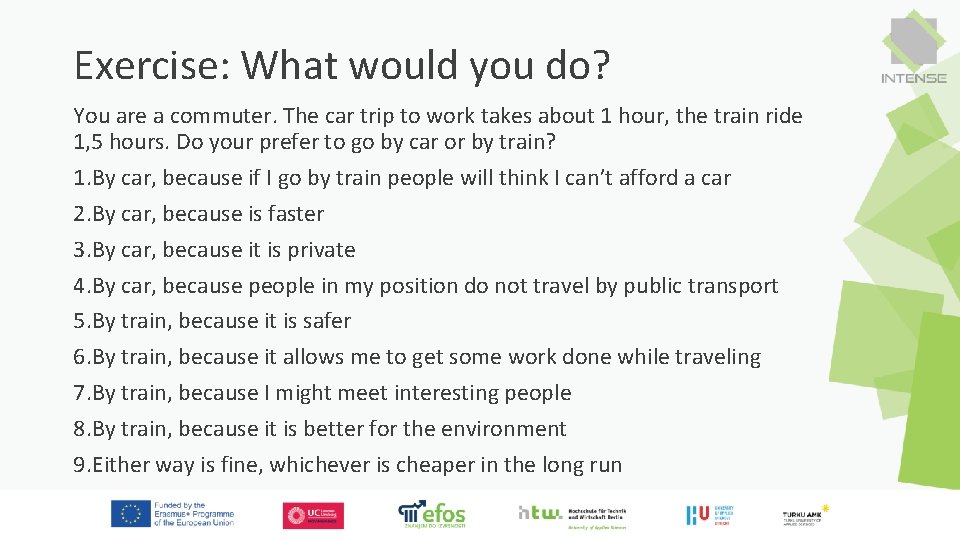
Exercise: What would you do? You are a commuter. The car trip to work takes about 1 hour, the train ride 1, 5 hours. Do your prefer to go by car or by train? 1. By car, because if I go by train people will think I can’t afford a car 2. By car, because is faster 3. By car, because it is private 4. By car, because people in my position do not travel by public transport 5. By train, because it is safer 6. By train, because it allows me to get some work done while traveling 7. By train, because I might meet interesting people 8. By train, because it is better for the environment 9. Either way is fine, whichever is cheaper in the long run
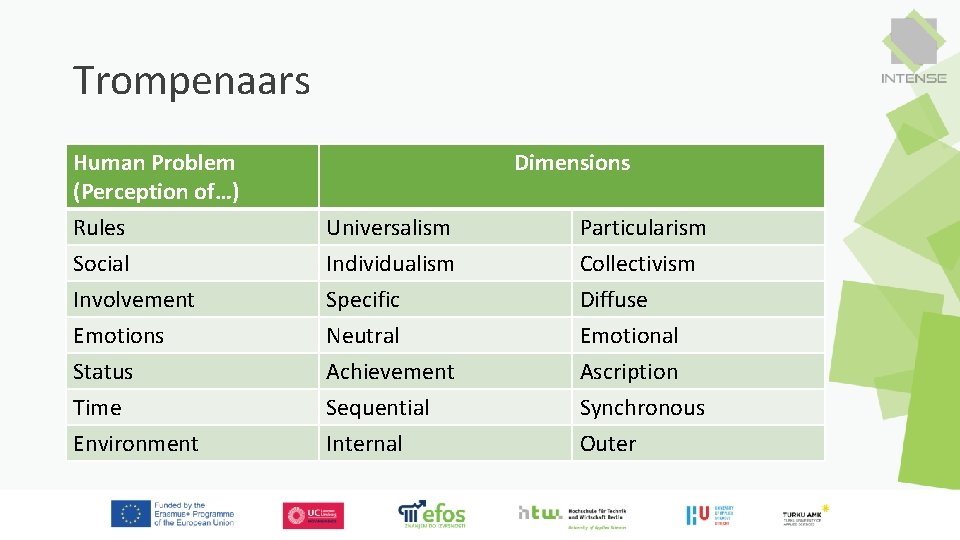
Trompenaars Human Problem (Perception of…) Dimensions Rules Social Universalism Individualism Particularism Collectivism Involvement Emotions Status Time Environment Specific Neutral Achievement Sequential Internal Diffuse Emotional Ascription Synchronous Outer
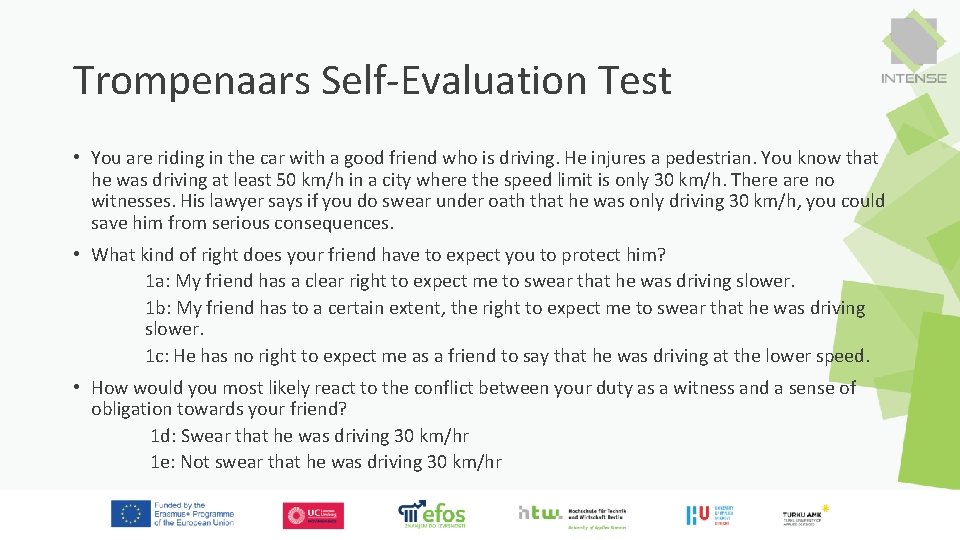
Trompenaars Self-Evaluation Test • You are riding in the car with a good friend who is driving. He injures a pedestrian. You know that he was driving at least 50 km/h in a city where the speed limit is only 30 km/h. There are no witnesses. His lawyer says if you do swear under oath that he was only driving 30 km/h, you could save him from serious consequences. • What kind of right does your friend have to expect you to protect him? 1 a: My friend has a clear right to expect me to swear that he was driving slower. 1 b: My friend has to a certain extent, the right to expect me to swear that he was driving slower. 1 c: He has no right to expect me as a friend to say that he was driving at the lower speed. • How would you most likely react to the conflict between your duty as a witness and a sense of obligation towards your friend? 1 d: Swear that he was driving 30 km/hr 1 e: Not swear that he was driving 30 km/hr
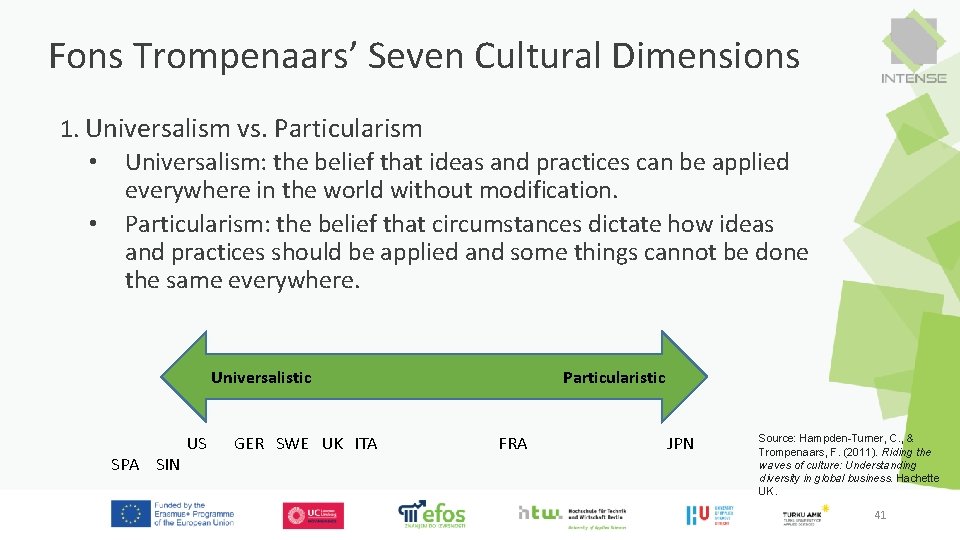
Fons Trompenaars’ Seven Cultural Dimensions 1. Universalism vs. Particularism • Universalism: the belief that ideas and practices can be applied everywhere in the world without modification. • Particularism: the belief that circumstances dictate how ideas and practices should be applied and some things cannot be done the same everywhere. Universalistic SPA SIN US GER SWE UK ITA Particularistic FRA JPN Source: Hampden-Turner, C. , & Trompenaars, F. (2011). Riding the waves of culture: Understanding diversity in global business. Hachette UK. 41
Trompenaars Self-Evaluation Test (2) Discuss which answer is most reasonable for you: 1. It is clearly obvious that if individuals have as much freedom as possible and the most opportunities for personal development that there would be an increase in the quality of life. 2. If individuals take the needs of others into consideration, the quality of life increases for everyone, even if this reduces individual freedom and individual development. Source: Hampden-Turner, C. , & Trompenaars, F. (2011). Riding the waves of culture: Understanding diversity in global business. Hachette UK. 42
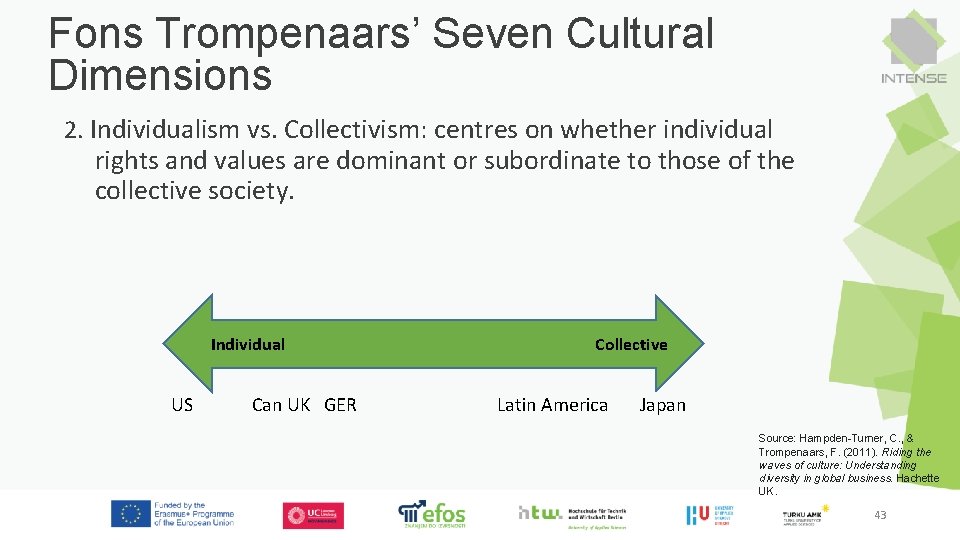
Fons Trompenaars’ Seven Cultural Dimensions 2. Individualism vs. Collectivism: centres on whether individual rights and values are dominant or subordinate to those of the collective society. Individual US Can UK GER Collective Latin America Japan Source: Hampden-Turner, C. , & Trompenaars, F. (2011). Riding the waves of culture: Understanding diversity in global business. Hachette UK. 43
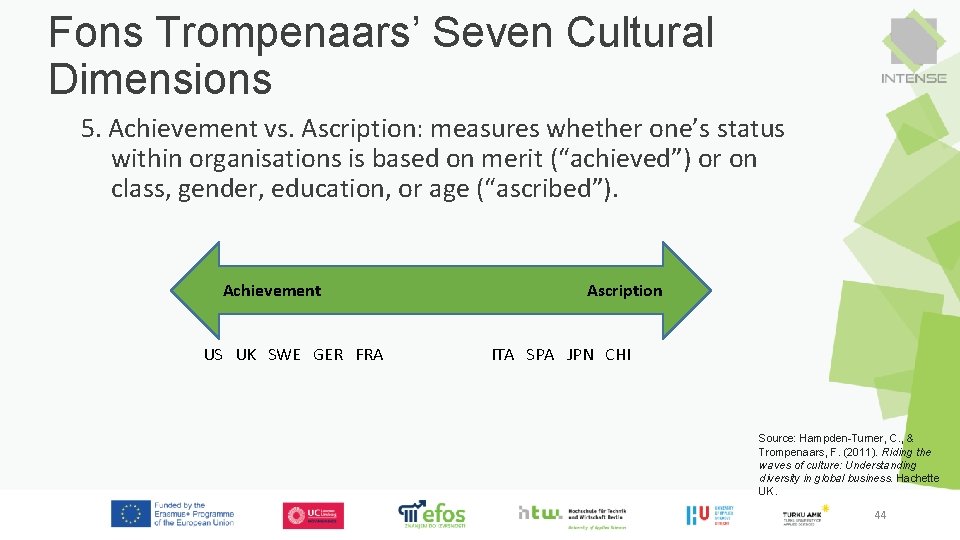
Fons Trompenaars’ Seven Cultural Dimensions 5. Achievement vs. Ascription: measures whether one’s status within organisations is based on merit (“achieved”) or on class, gender, education, or age (“ascribed”). Achievement US UK SWE GER FRA Ascription ITA SPA JPN CHI Source: Hampden-Turner, C. , & Trompenaars, F. (2011). Riding the waves of culture: Understanding diversity in global business. Hachette UK. 44
Trompenaars Self-Evaluation Test (3) Case Study 3: Business Visit You expect a business visit from one of your clients with whom you want to finalise an important business deal. How would you approach this? 1. You take a week to get to know your business partner. You plan to invite him to your house and to take part in many of your activities. Your initial goal is to get to know him. That includes learning about his private interests and preferences. When you are sure that you can trust him, you will discuss the business contract. 2. You reserve some time for contract negotiations. You will welcome your business partner in the office and negotiate the planned business contract. Later you will invite him to lunch. If the negotiation is successful and you personally like your business partner, you are willing to talk about some private issues and even invite him to your house. Which of the two behaviours described is more like you? Source: Hampden-Turner, C. , & Trompenaars, F. (2011). Riding the waves of culture: Understanding diversity in global business. Hachette UK. 45
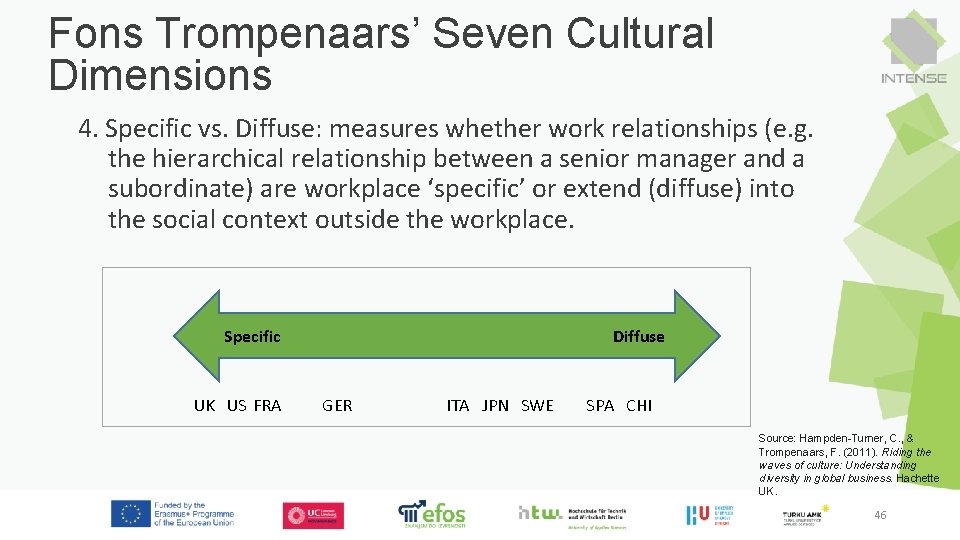
Fons Trompenaars’ Seven Cultural Dimensions 4. Specific vs. Diffuse: measures whether work relationships (e. g. the hierarchical relationship between a senior manager and a subordinate) are workplace ‘specific’ or extend (diffuse) into the social context outside the workplace. Specific UK US FRA Diffuse GER ITA JPN SWE SPA CHI Source: Hampden-Turner, C. , & Trompenaars, F. (2011). Riding the waves of culture: Understanding diversity in global business. Hachette UK. 46
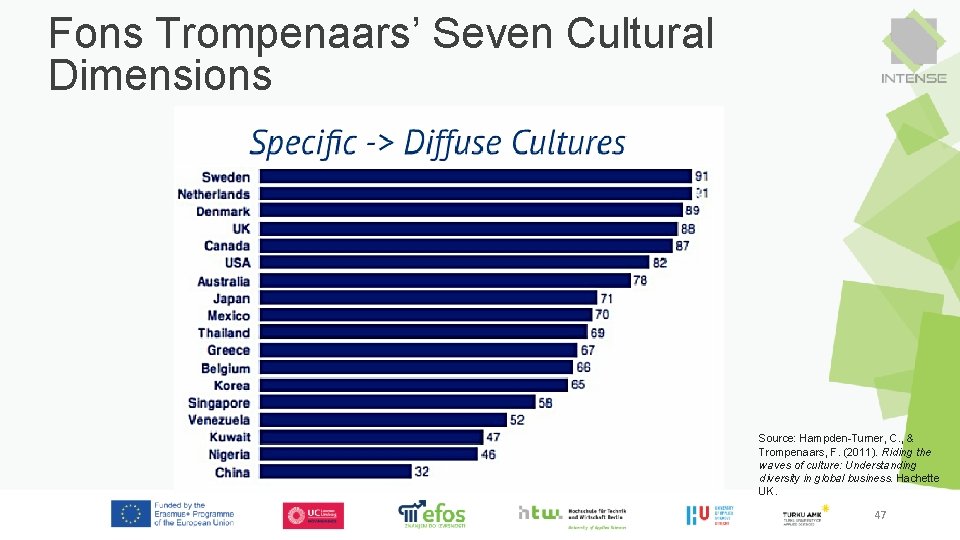
Fons Trompenaars’ Seven Cultural Dimensions Source: Hampden-Turner, C. , & Trompenaars, F. (2011). Riding the waves of culture: Understanding diversity in global business. Hachette UK. 47
Trompenaars • Please watch the Trompenaars TED speech: https: //www. youtube. com/watch? v=hmyfj. Kjcbm 0 • According to Trompenaars, how are current crises related to culture? • Trompenaars talks about dilemmas. Can you define a dilemma in your own words? • He uses the metaphor of a “Japanese garden“. What does he refer to? • What role did Trompenaars play in the development of Chips at AMD Dresden? • Collect the examples for German and US-American culture.
GLOBE Read: House, R. , et al. (2002). Understanding cultures and implicit leadership theories across the globe: an introduction to project GLOBE. Journal of World Business 37, 1, pp. 3 -10. Objective: • Understand the methodology of GLOBE project • Understand dimensions elaborated in GLOBE project • Being able to apply GLOBE’s dimensions • Being able to differentiate the research from other studies Present!
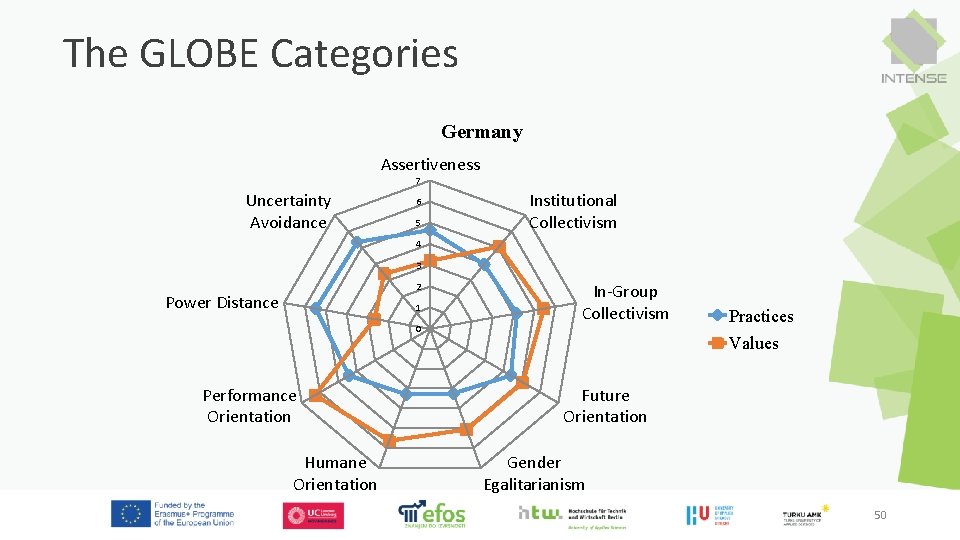
The GLOBE Categories Germany Assertiveness 7 Uncertainty Avoidance 6 5 Institutional Collectivism 4 3 2 Power Distance 1 0 Performance Orientation Humane Orientation In-Group Collectivism Practices Values Future Orientation Gender Egalitarianism 50
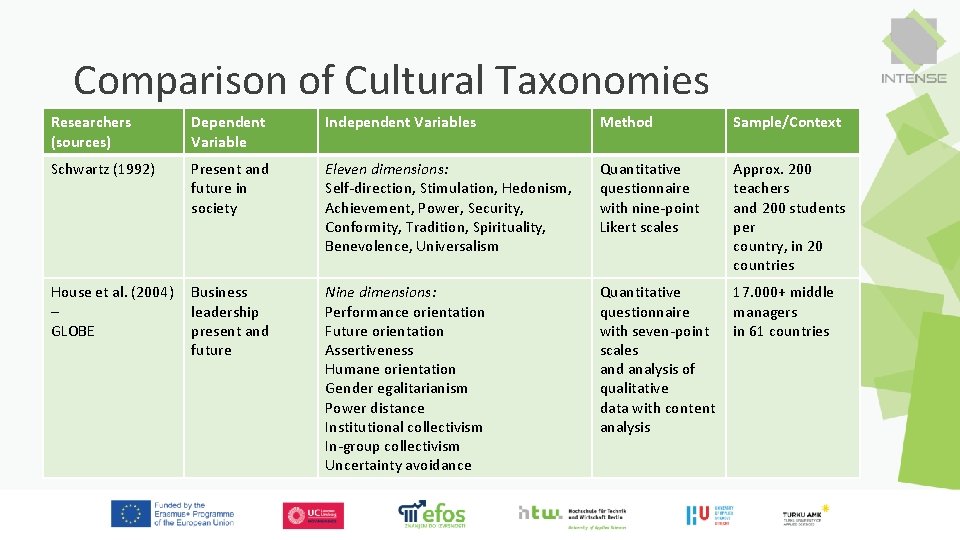
Comparison of Cultural Taxonomies Researchers (sources) Dependent Variable Independent Variables Method Sample/Context Schwartz (1992) Present and future in society Eleven dimensions: Self-direction, Stimulation, Hedonism, Achievement, Power, Security, Conformity, Tradition, Spirituality, Benevolence, Universalism Quantitative questionnaire with nine-point Likert scales Approx. 200 teachers and 200 students per country, in 20 countries House et al. (2004) – GLOBE Business leadership present and future Nine dimensions: Performance orientation Future orientation Assertiveness Humane orientation Gender egalitarianism Power distance Institutional collectivism In-group collectivism Uncertainty avoidance Quantitative questionnaire with seven-point scales and analysis of qualitative data with content analysis 17. 000+ middle managers in 61 countries
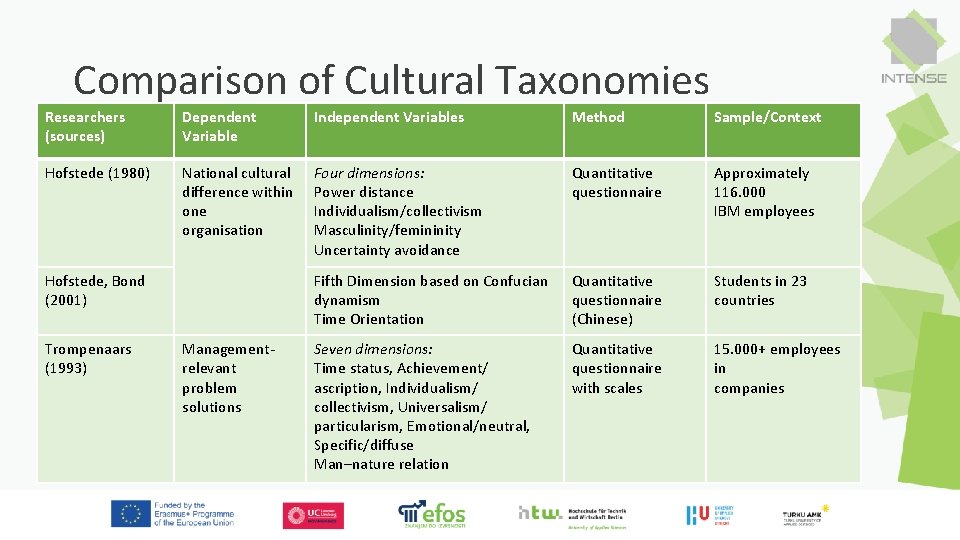
Comparison of Cultural Taxonomies Researchers (sources) Dependent Variable Independent Variables Method Sample/Context Hofstede (1980) National cultural difference within one organisation Four dimensions: Power distance Individualism/collectivism Masculinity/femininity Uncertainty avoidance Quantitative questionnaire Approximately 116. 000 IBM employees Fifth Dimension based on Confucian dynamism Time Orientation Quantitative questionnaire (Chinese) Students in 23 countries Seven dimensions: Time status, Achievement/ ascription, Individualism/ collectivism, Universalism/ particularism, Emotional/neutral, Specific/diffuse Man–nature relation Quantitative questionnaire with scales 15. 000+ employees in companies Hofstede, Bond (2001) Trompenaars (1993) Managementrelevant problem solutions
Intercultural Dimensions Comparison • Where do you see overlaps? Where idiosyncrasies? • Which model do you consider superior? • Hofstede‘s model is (arguably) the most popular. Why do you think is the case?
Summary - Learning Objectives • Understand compare different cultural taxonomies • Be able to classify different cultures according to various dimensions to make sense of generalised (stereotypical) behaviour in host countries • Be aware of advantages and disadvantages of different taxonomies
Cross-Cultural Sensitivity
Learning Objectives • Familiarise you with Bennett’s stages of cultural sensitivity • Provide you with a realistic picture of where you currently stand on that scale • Raise your awareness for conflicts that have occurred (and will occur) based on your cultural sensitivity stage • (Hopefully) reduce the amount of potential frustration within your team collaborations
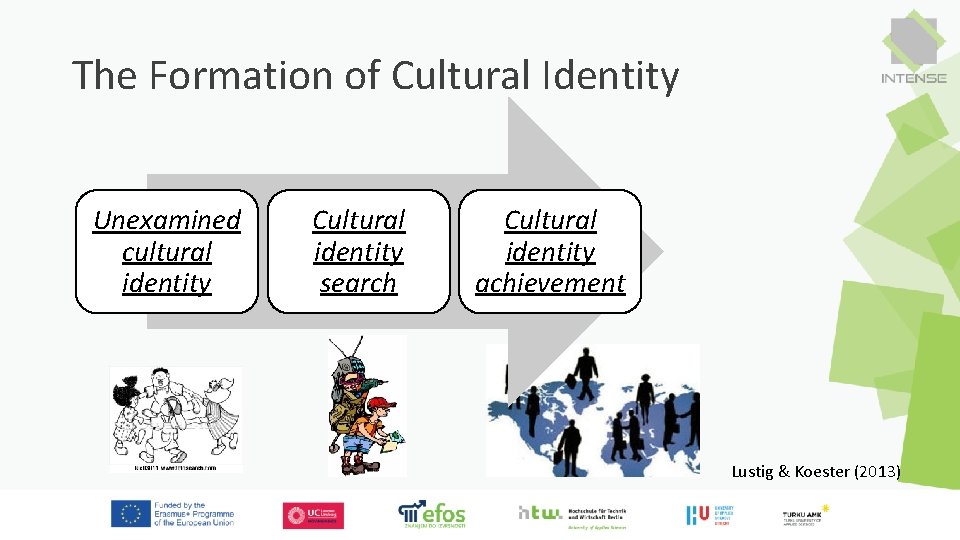
The Formation of Cultural Identity Unexamined cultural identity Cultural identity search Cultural identity achievement Lustig & Koester (2013)
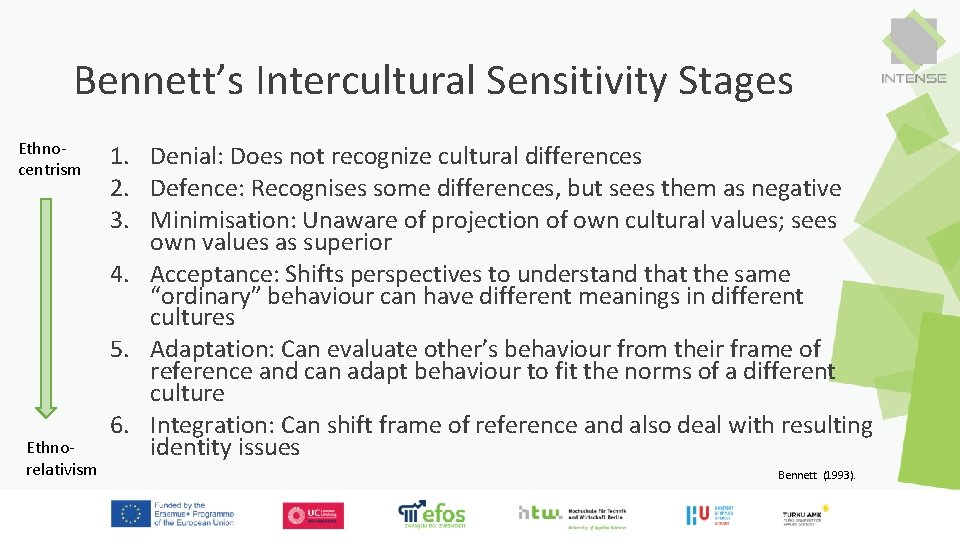
Bennett’s Intercultural Sensitivity Stages Ethnocentrism Ethnorelativism 1. Denial: Does not recognize cultural differences 2. Defence: Recognises some differences, but sees them as negative 3. Minimisation: Unaware of projection of own cultural values; sees own values as superior 4. Acceptance: Shifts perspectives to understand that the same “ordinary” behaviour can have different meanings in different cultures 5. Adaptation: Can evaluate other’s behaviour from their frame of reference and can adapt behaviour to fit the norms of a different culture 6. Integration: Can shift frame of reference and also deal with resulting identity issues Bennett (1993).
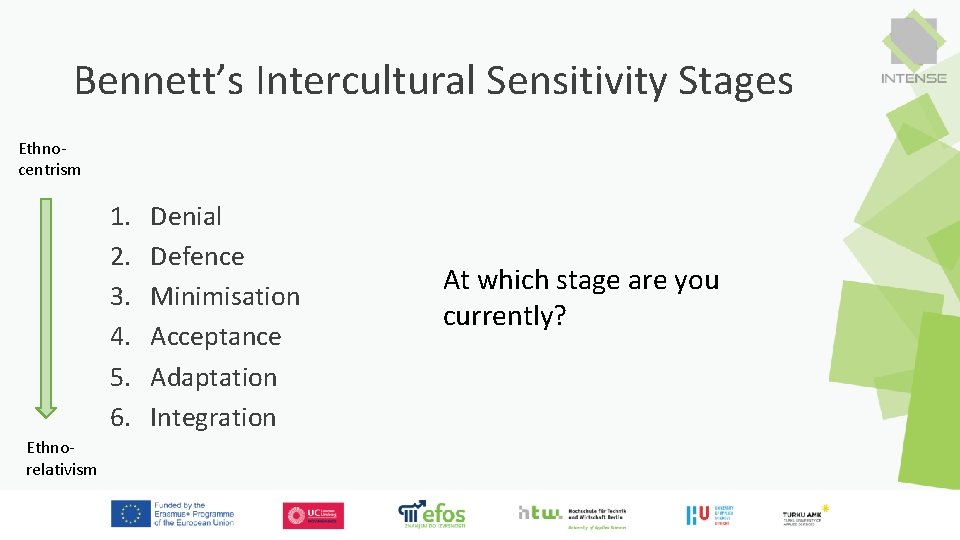
Bennett’s Intercultural Sensitivity Stages Ethnocentrism 1. 2. 3. 4. 5. 6. Ethnorelativism Denial Defence Minimisation Acceptance Adaptation Integration At which stage are you currently?
Instruction: Part 1 (Writing) • Please write down 3 stories related to your current collaboration with the teams from the other universities (alternatively: other crosscultural encounters with people from those cultures) • Bad memory: red post • Neutral memory: yellow post • Positive memory: green post • Stick your stories to the appropriate stage of the Bennett model
Instruction: Part 2 (Reading) • Please read the other’s stories and point out which you consider to be noteworthy
Instruction: Part 3 (Discussion) • Provide details on some of the noteworthy stories (of different stages and colours) in a class discussion • Do you believe this is (stereo)typical for the other’s culture? • Can someone from the host-culture ‘defend’ the observed behaviour? • How can we prevent/enforce such a situation in our future team collaborations?
Instruction: Part 4 (Debrief) • Would you adjust your evaluation of the cultural sensitivity stage you are in currently after this exercise? • Are we born aware of other cultures? • Where does knowledge of other cultures come from? • How can we master our cross-cultural sensitivity? • How can we use this information for our team collaborations?
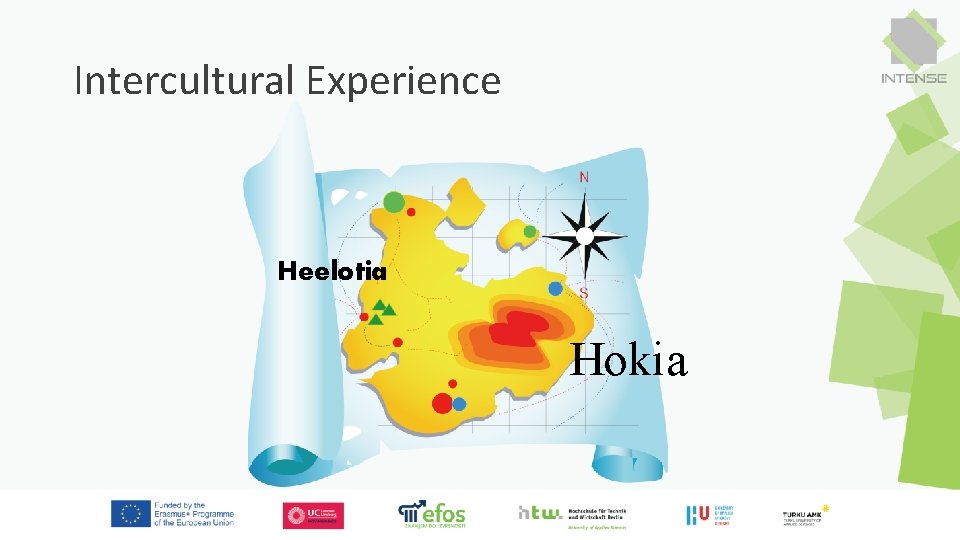
Intercultural Experience Heelotia Hokia
Summary - Learning Objectives • Familiarise you with Bennett‘s stages of cultural sensitivity • Provide you with a realistic picture of where you currently stand on that scale • Raise your awareness for conflicts that have occurred (and will occur) based on your cultural sensitivity stage • (Hopefully) reduce the amount of potential frustration within your team collaborations
Summary Culture is a learned set of of shared interpretations that affects behaviours and involves sharing norms, values, beliefs. Working with cultural taxonomies can be considered “sophisticated“ stereotyping There are different cultural studies, the most known are developed by Hall, Hofstede, and Trompenaars All taxonomies work with cultural dimensions of extremes Intercultural competence develops over time and is context related
List of References • Bennett, M. J. (1993). Towards ethnorelativism: A developmental model of intercultural sensitivity. Education for the intercultural experience, 2, 21 -71. • Bluedorn, A. C. ; Felker Kaufman, C. ; Lane, P. M. (1992). How many things do you like to do at once? An introduction to monochronic and polychronic time, in: Academy of Management Executive, 6. , 4, p. 17 -26. • Hall, E. T. , & Hall, M. R. (1966). Understanding cultural differences. Yarmouth, ME: Intercultural press. • Hampden-Turner, C. , & Trompenaars, F. (2011). Riding the waves of culture: Understanding diversity in global business. Hachette UK. • Hofstede, G. (1991). Cultures and organizations. Intercultural cooperation and its importance for survival. Software of the mind. London: Mc Iraw-Hill • Hofstede, G. (1983). The cultural relativity of organizational practices and theories. Journal of international business studies, 14(2), 75 -89. • House, R. , et al. (2002): Understanding cultures and implicit leadership theories across the globe: an introduction to project GLOBE, in: Journal of World Business 37, 1, pp. 3 -10. • Lustig, M. W. , & Koester, J. (2013). Intercultural competence. Interpersona Communication across Cultures. Pearson Education. • Williamson, O. E. (2000). The new institutional economics: taking stock, looking ahead. Journal of economic literature, 38(3), 595 -613. 67