
C 0 Basic Safeguarding Awareness Parish Pack Please
C 0 Basic Safeguarding Awareness Parish Pack

Please take care
Some starting points
Learning Aim and Objectives • Aim: to place safeguarding in the context of the Church and Christian pastoral care. • Objectives - By the end of the session you should: – Be able to describe the scope of safeguarding in the Church context – Be able to recognise safeguarding concerns – Be aware of how to respond well to safeguarding information, including who to inform – Be aware of when to make a record, what to include and the boundaries of confidentiality
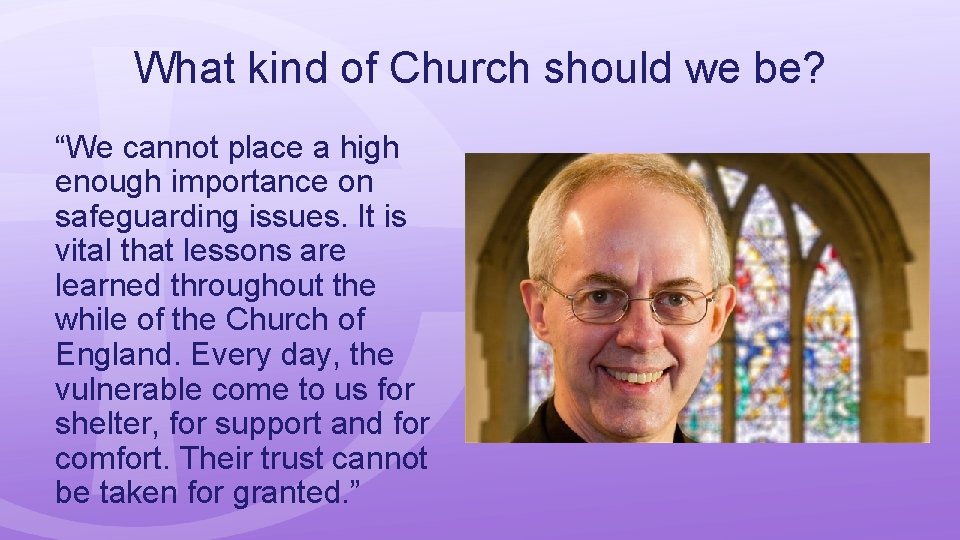
What kind of Church should we be? “We cannot place a high enough importance on safeguarding issues. It is vital that lessons are learned throughout the while of the Church of England. Every day, the vulnerable come to us for shelter, for support and for comfort. Their trust cannot be taken for granted. ”
What kind of Church should we be? The Church of England, in Promoting a Safer Church set out the following principles for its safeguarding work: • We respect all children, young people and adults, and are committed to their care and nurture, the provision of respectful pastoral ministry and establishing safer, caring communities which provide an environment of love where there is informed vigilance as to the risk of harm. • We shall select and train carefully all those with any responsibility related to children or adults within the Church, in line with safer recruitment principles. • We shall respond promptly to every concern raised which suggests that a child, young person or adult may have been harmed or be at risk of harm. We will cooperate with the statutory authorities in their safeguarding work. • We shall endeavour to work with anyone who is suffering or who has suffered abuse or harm, developing with them and others appropriate support and care. • We shall challenge any abuse of power in our Church and communities. • We shall endeavour to offer pastoral care and support, including managed oversight and referral to the proper authorities, to any member of our church community who may present a risk to a child, young person or adult. • We shall promote safeguarding as everyone’s responsibility.
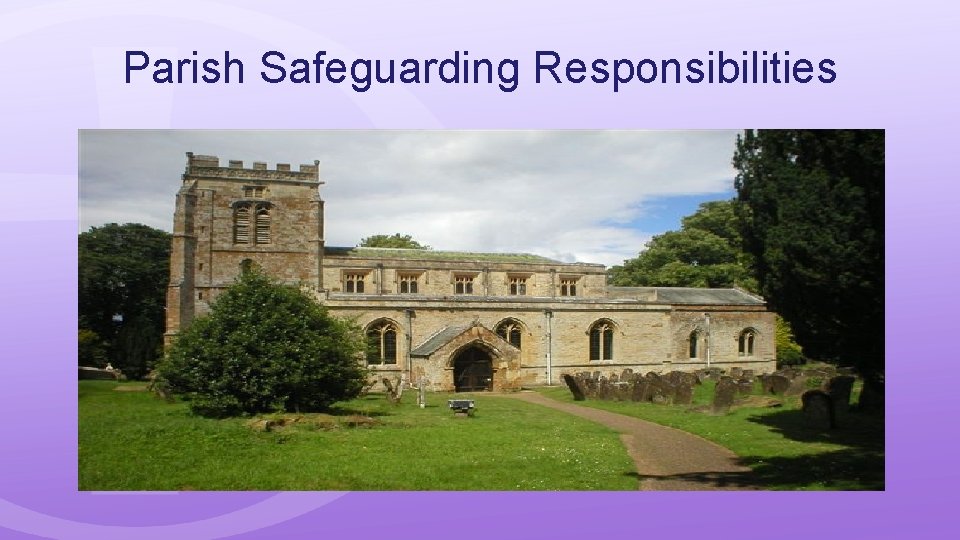
Parish Safeguarding Responsibilities

Promoting a Safer Church Safeguarding is the action the Church can take to promote a safer culture. This means we will promote the welfare of children, young people and adults, work to prevent abuse from occurring, seek to protect those that are at risk of being abused and respond well to those who have been abused.
The Church’s mission in delivering the Gospel as the body of Christ Near to the broken-hearted Psalm Do justice, love kindness, walk humbly Micah 6. 8 34: 18 The good shepherd: rescue, feed, seek the lost, bind the injured, strengthen the weak, seek justice Ezekiel 34: 16 Become like children, let the children come 19. 14 Matt
What is Safeguarding? Safeguarding means protecting people's health, wellbeing and human rights, and enabling them to live free from harm, abuse and neglect. It's fundamental to flourishing Christian communities and is evidenced in good pastoral care. Safeguarding children, young people and adults who may be vulnerable includes: • Protecting their rights to live in safety, free from abuse and neglect • Protecting them from maltreatment or things that are bad for their health or development • People and organisations working together to prevent the risk of abuse or neglect, and to stop them from happening • Making sure people's wellbeing is promoted, taking their views, wishes, feelings and beliefs into account
What is Child Abuse? Abuse and neglect are forms of maltreatment of a child. Somebody may abuse or neglect a child by inflicting harm, or by failing to act to prevent harm. Children may be abused in a family or in an institutional or community setting, by those known to them or, more rarely, by a stranger for example, via the internet. They may be abused by an adult or adults, or another child or children. (For more information see Working Together to Safeguard Children: A guide to inter-agency working to safeguard and promote the welfare of children, July 2018)
Who would abuse a child? Abusers may be anyone: • Any age • Male or female (including sexual abuse) • From any social class, culture or faith • ‘Nice’ people • Professionals such as teachers, religious leaders or social workers • Related to the child • Other children • Those in a position of power or trust
What is Adult Abuse? Abuse and neglect are forms of maltreatment of an adult. Somebody may abuse or neglect an adult by inflicting harm, or by failing to act to prevent harm. Adults may be abused in a family or in an institutional or community setting, by those known to them or by a stranger, including over the internet. They may be abused by another adult or adults, or by a child or children.
Who would abuse an adult? Abusers may be anyone: • Any age • Male or female (including sexual abuse) • From any social class, culture or faith • ‘Nice’ people • Professionals such as carers, religious leaders or social workers • Related to the adult • Those in a position of power or trust
Where does abuse happen? Abuse can occur in any setting: • A child, young person or adult’s own home • A carer’s home, or in a care setting • A day centre, youth centre or other place of activity • At school, an education centre or work • A hospital • At Church • Any public place
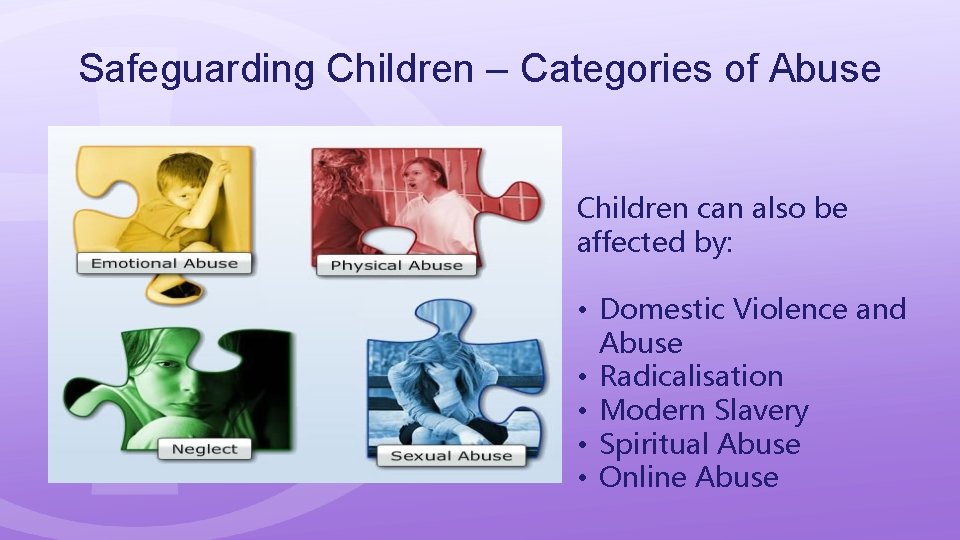
Safeguarding Children – Categories of Abuse Children can also be affected by: • Domestic Violence and Abuse • Radicalisation • Modern Slavery • Spiritual Abuse • Online Abuse
Safeguarding Adults – Categories of Abuse • • • Physical Abuse Sexual Abuse Psychological Abuse (including Emotional Abuse) Neglect (and acts of omission), and Self-Neglect Financial Abuse (or Material Abuse) Discriminatory Abuse Organisational Abuse Domestic Violence and Abuse Hate Crime
How you might find out abuse • A child, young person or adult tells you what has happened or you witness abuse directly • You see injury or behaviour consistent with abuse and which is unlikely to be caused in another way • Abuse is disclosed by someone else who knows the child, young person or adult • Indications of abuse are seen in artwork, play or creative writing • Through posts on social media or the internet • Anonymous sources tell of abuse
Why someone might suffer in silence … Some victims and survivors do not report abuse because they: • Are afraid of retaliation • Think it's their own fault • Think they will be put in an institution • Are afraid of the consequences of disclosure • Are ashamed • Think that the Police and Social Care agencies cannot really help them • Think that no one will believe them • It happened a long time ago If you are aware of, or suspect abuse, it is your duty to take action to protect others even if the person doesn't agree.
Listening to someone who is being abused What NOT to do if someone confides in you about abuse: • It is NOT your role to investigate allegations • Do NOT ask leading questions, probe for details, prompt someone or try and establish who is to blame • Do NOT rush the person, give them the time they need • Do NOT make judgements about whether or not you believe the person • Do NOT promise complete confidentiality even if asked • NEVER assume that someone else will recognise and report what you have seen or heard
Listening to someone who is being abused What TO DO if someone confides in you they are being abused: • DO listen carefully and allow the person to tell their story • ACCEPT how they feel, this is different to agreeing how they should feel or being sympathetic • ASSURE the person they will be taken seriously • HELP them by simply being there and listening • PASS ON your concerns without delay • RECORD what you have been told
How to handle a disclosure Follow the 4 R’s: RECEIVE REASSURE REACT
If you are worried
Barriers to sharing concern The most common reasons for individuals not sharing concerns are worrying about: • Existing relationships • Getting it wrong • Political correctness • Fear of reaction Remember these core essentials: • Trust your instincts, you are probably right to be worried • Record your concerns, including the date and time • You have only one responsibility: Are you 100% sure that the person IS SAFE?
1 thing you can do? Action: • Identify one thing you can do in your context in the next month? • All take a moment to think • Write on your notes and maybe tell the person sitting next to you
Thank you for your participation Please complete your evaluation form and return to your trainer
Helplines for further support • • • NSPCC - For adults concerned about a child 0808 800 5000 Child. Line - For children and young people on 0800 1111 Action on Elder Abuse helpline 0808 8141 24 -hour National Domestic Violence Helpline 0808 2000 247 NAPAC – Offer support and advice to adult survivors of childhood abuse 0808 801 0331 • Stop It Now – preventing child sexual abuse 0808 1000 900 • Cruse – bereavement helpline 0808 1677
Websites for further information / resources www. nspcc. org. uk www. womensaid. org. uk www. restoredrelationships. org www. stopitnow. org. uk www. scie. org. uk www. ceop. police. uk www. elderabuse. org. uk www. ageuk. org. uk www. barnardos. org. uk www. spiritualabuse. com www. modernslavery. co. uk
- Slides: 28