
BYZANTIUM RUSSIA BYZANTINE EMPIRE 600 1200 Church and
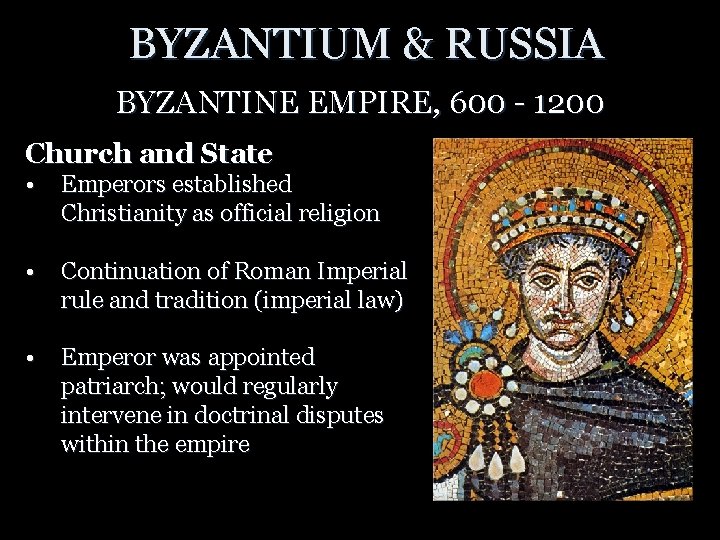
BYZANTIUM & RUSSIA BYZANTINE EMPIRE, 600 - 1200 Church and State • Emperors established Christianity as official religion • Continuation of Roman Imperial rule and tradition (imperial law) • Emperor was appointed patriarch; would regularly intervene in doctrinal disputes within the empire
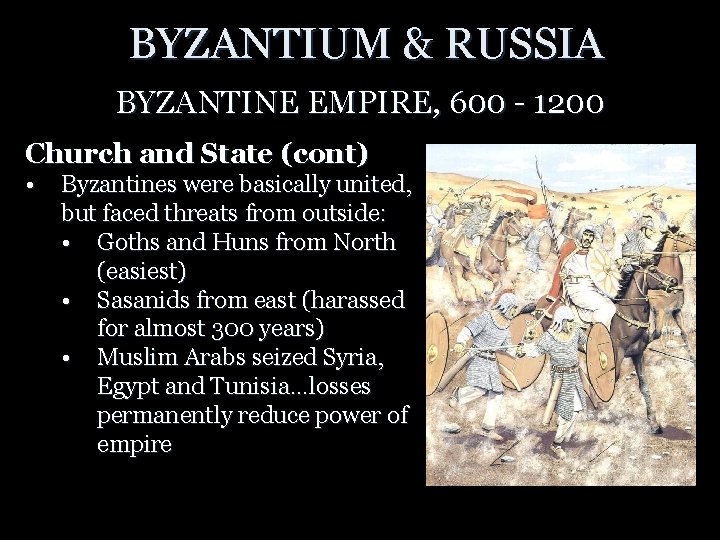
BYZANTIUM & RUSSIA BYZANTINE EMPIRE, 600 - 1200 Church and State (cont) • Byzantines were basically united, but faced threats from outside: • Goths and Huns from North (easiest) • Sasanids from east (harassed for almost 300 years) • Muslim Arabs seized Syria, Egypt and Tunisia…losses permanently reduce power of empire
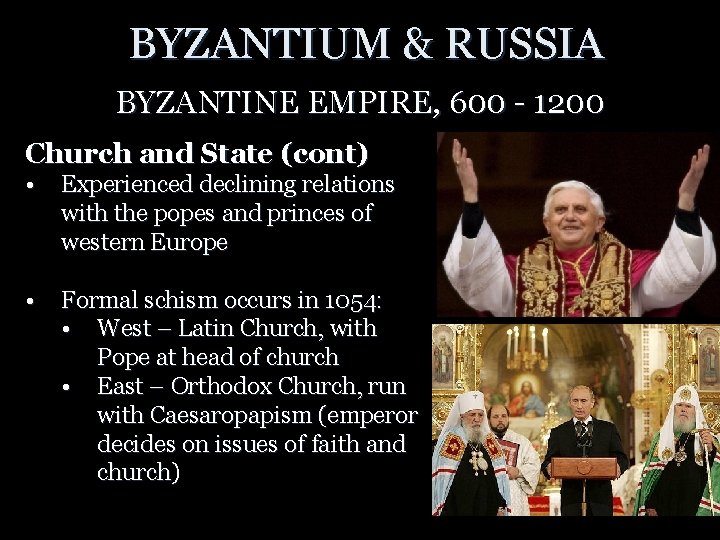
BYZANTIUM & RUSSIA BYZANTINE EMPIRE, 600 - 1200 Church and State (cont) • Experienced declining relations with the popes and princes of western Europe • Formal schism occurs in 1054: • West – Latin Church, with Pope at head of church • East – Orthodox Church, run with Caesaropapism (emperor decides on issues of faith and church)
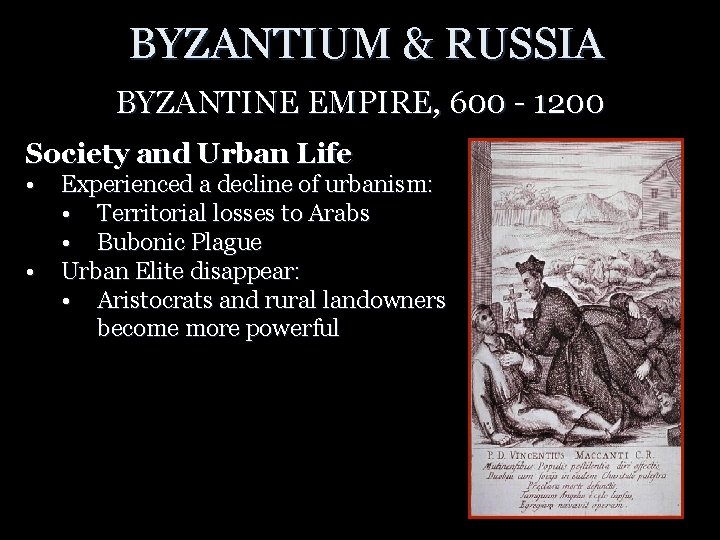
BYZANTIUM & RUSSIA BYZANTINE EMPIRE, 600 - 1200 Society and Urban Life • • Experienced a decline of urbanism: • Territorial losses to Arabs • Bubonic Plague Urban Elite disappear: • Aristocrats and rural landowners become more powerful
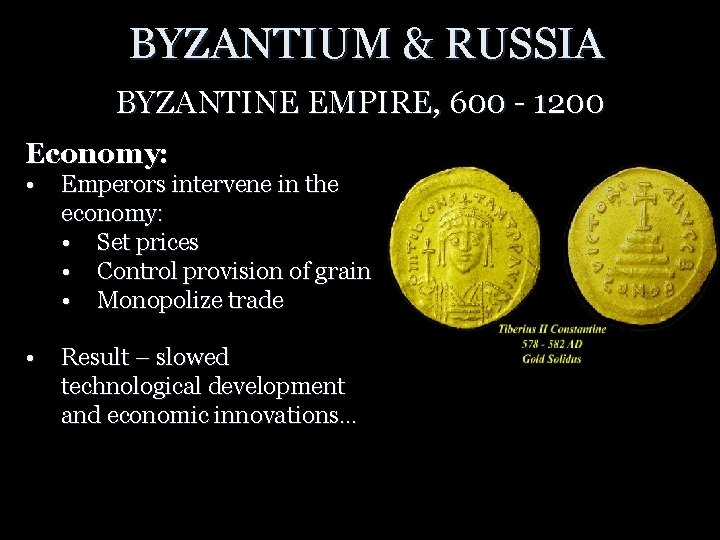
BYZANTIUM & RUSSIA BYZANTINE EMPIRE, 600 - 1200 Economy: • Emperors intervene in the economy: • Set prices • Control provision of grain • Monopolize trade • Result – slowed technological development and economic innovations…
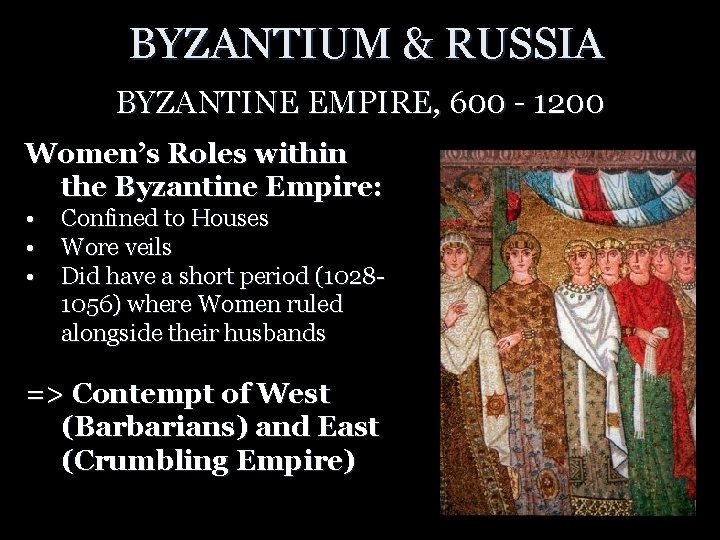
BYZANTIUM & RUSSIA BYZANTINE EMPIRE, 600 - 1200 Women’s Roles within the Byzantine Empire: • • • Confined to Houses Wore veils Did have a short period (10281056) where Women ruled alongside their husbands => Contempt of West (Barbarians) and East (Crumbling Empire)
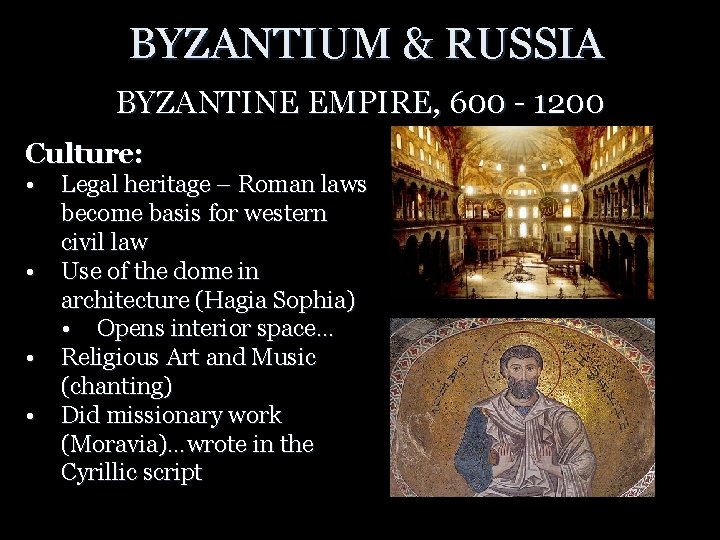
BYZANTIUM & RUSSIA BYZANTINE EMPIRE, 600 - 1200 Culture: • • Legal heritage – Roman laws become basis for western civil law Use of the dome in architecture (Hagia Sophia) • Opens interior space… Religious Art and Music (chanting) Did missionary work (Moravia)…wrote in the Cyrillic script
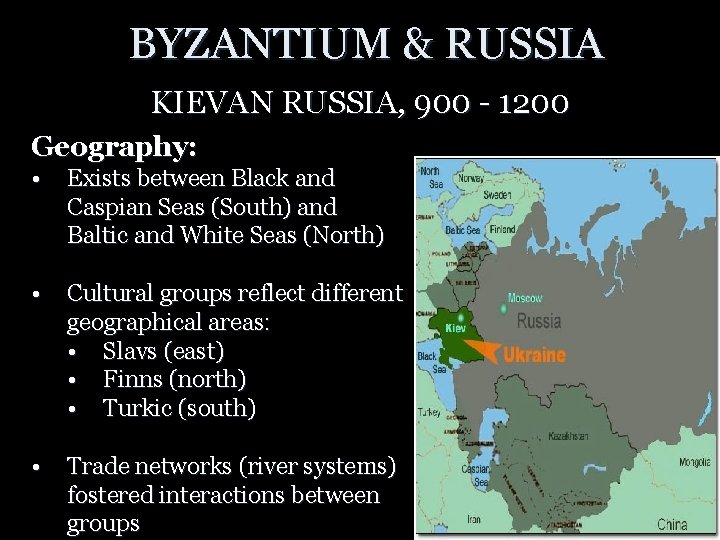
BYZANTIUM & RUSSIA KIEVAN RUSSIA, 900 - 1200 Geography: • Exists between Black and Caspian Seas (South) and Baltic and White Seas (North) • Cultural groups reflect different geographical areas: • Slavs (east) • Finns (north) • Turkic (south) • Trade networks (river systems) fostered interactions between groups
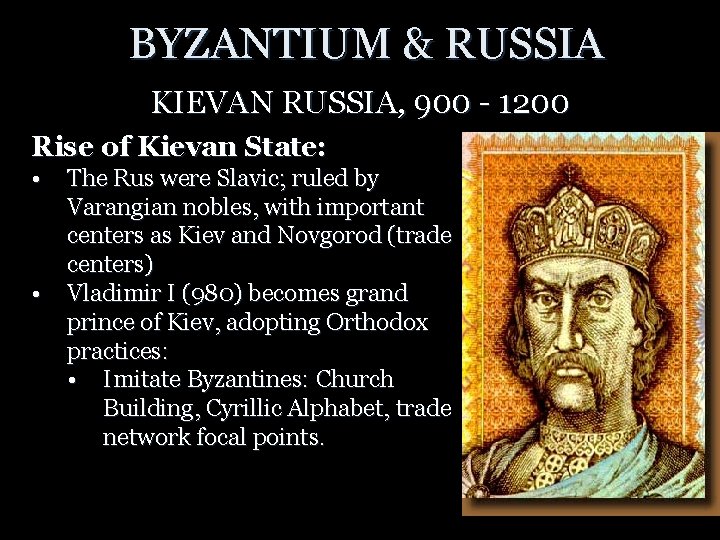
BYZANTIUM & RUSSIA KIEVAN RUSSIA, 900 - 1200 Rise of Kievan State: • • The Rus were Slavic; ruled by Varangian nobles, with important centers as Kiev and Novgorod (trade centers) Vladimir I (980) becomes grand prince of Kiev, adopting Orthodox practices: • Imitate Byzantines: Church Building, Cyrillic Alphabet, trade network focal points.
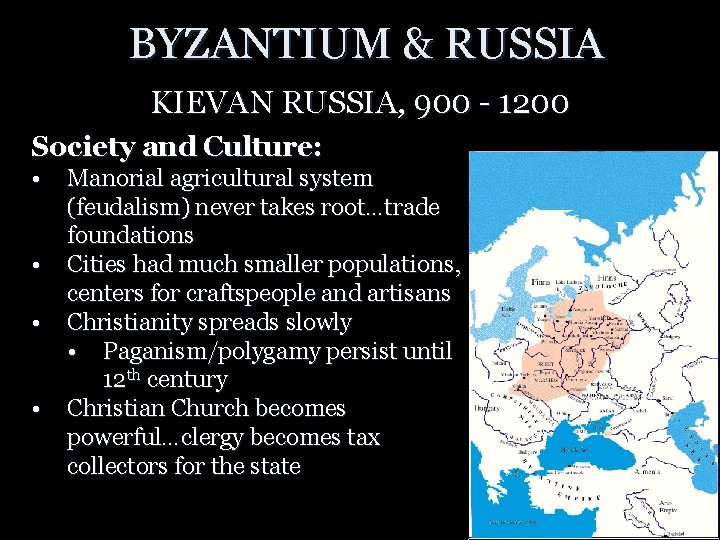
BYZANTIUM & RUSSIA KIEVAN RUSSIA, 900 - 1200 Society and Culture: • • Manorial agricultural system (feudalism) never takes root…trade foundations Cities had much smaller populations, centers for craftspeople and artisans Christianity spreads slowly • Paganism/polygamy persist until 12 th century Christian Church becomes powerful…clergy becomes tax collectors for the state
- Slides: 10