
Byzantines Russians Mongols Standard 4 Standard 4 SSWH
Byzantines, Russians, & Mongols Standard 4
Standard 4 SSWH 4 Analyze impact of the Byzantine and Mongol empires.
Standard 4 a Describe the relationship between the Roman and Byzantine Empires, include: the importance of Justinian and Empress Theodora.
Byzantine Foundation In the waning days of the Roman Empire, Emperor Diocletian enacted reforms that laid the foundation for the creation of a successor state to the Roman Empire, the Byzantine Empire. Diocletian believed that the empire had grown too big and complex for a single man to administer So he divided it into the Latin speaking west and Greek speaking east with a capital in the city of Byzantium.
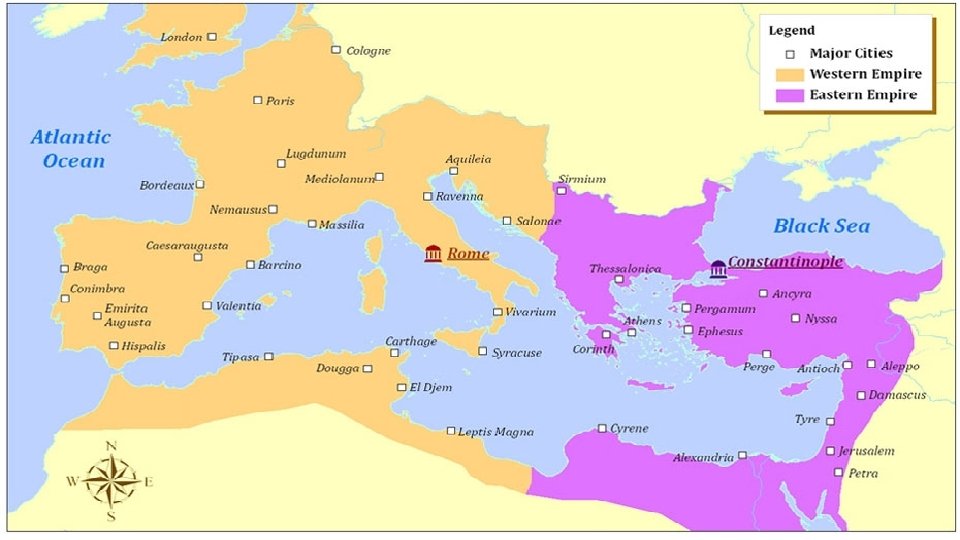
Byzantine Foundation Constantine took power after Diocletian in 312 CE and reunified the empire but moved the capital of the unified Roman Empire to Byzantium, renaming the city Constantinople after himself. At this point Constantinople was considered the New Rome.
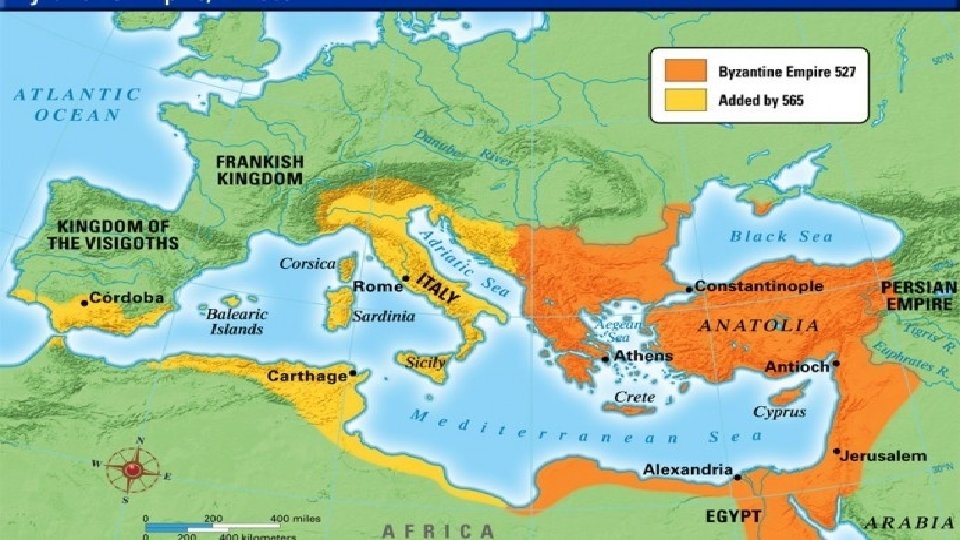
Byzantine Empire 395 CE-1453 CE Some important Roman traditions did survive however. Roman political institutions like the Senate continued basic structure and content of Roman law Byzantine Empire was distinct. Spoke Greek officially a Christian state
Emperor Justinian Came to power in 527 CE Led a successful series of military campaigns to retake much of the former Roman Empire Instituted major legal reforms that included the organization, simplification, and standardization of Roman law. This project produced Corpus Juris Civilis or Justinian’s Code Served as the foundation of many of the law codes of Western Europe after the fall of the Byzantine Empire.
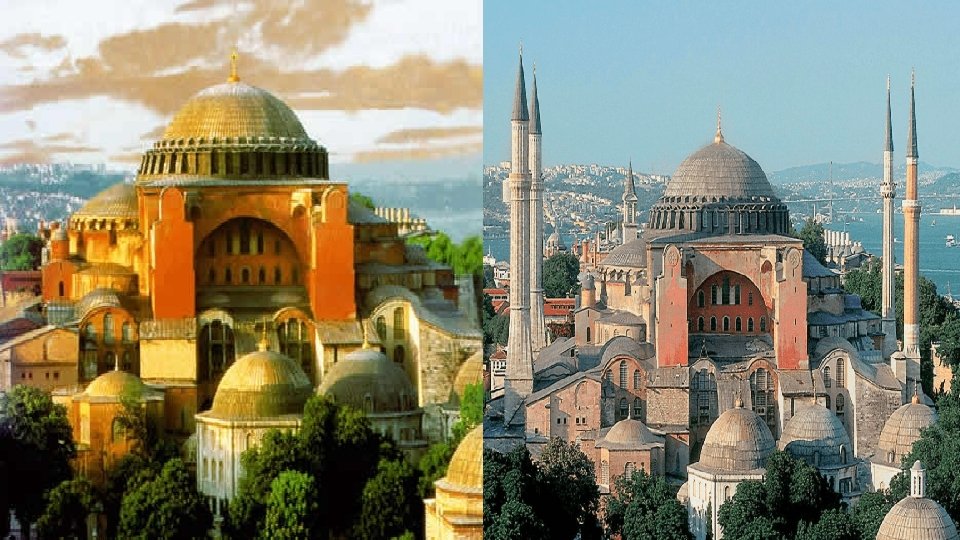
Emperor Justinian Instituted many major infrastructure projects: construction of a 14 mile long city wall public baths Aqueducts law courts Schools hospitals Churches (Hagia Sophia)
Theodora Justinian’s wife she meet with foreign envoys passed laws built churches served as the emperor’s backbone during the violent Nika riots in 532. Secured more rights for women
Standard 4 b Analyze the impact Byzantium had on Kiev, Moscow, and the Russian Empire.
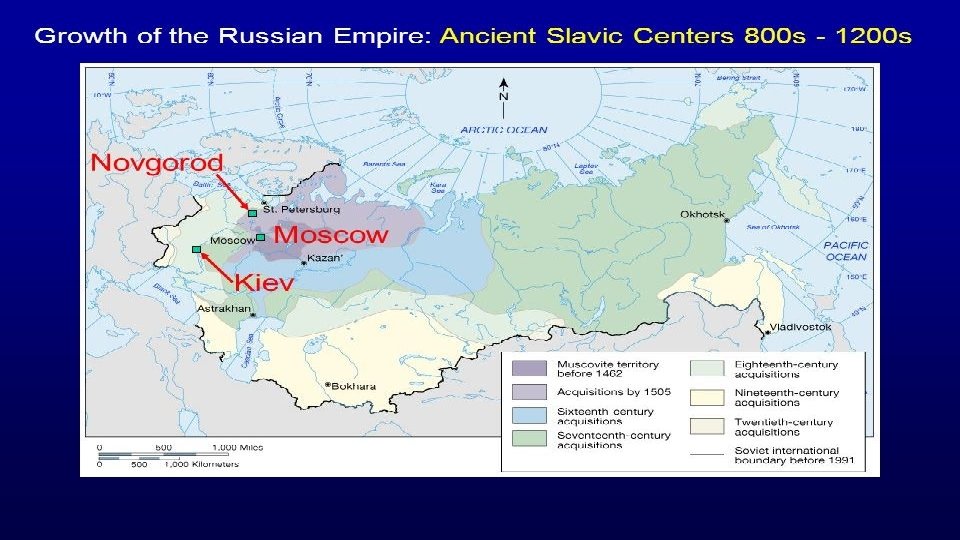
Russian Empire Political unity came to Russia in about 862 when Scandinavian Vikings, called Varangians unified the Slavic peoples and founded the city of Novgorod. In 880, the opportunity for lucrative trade with Byzantium by way of the Dnieper River led the Varangian princes to move their capital south to Kiev. This led to regular economic and cultural contact between the two states.
Russian Empire According to The Primary Chronicle, Prince Vladimir (980 to 1015) decided to seek out a new faith for his people, he sent envoys to investigate the options. The envoys that visited the Orthodox Christians of the Byzantine Empire returned with grand tales of monumental architecture that made them feel that God must dwell among the Byzantines. These stories may have contributed to Vladimir’s decision to order the mass baptism of his people in 989. This conversion ushered in an era of close cultural ties between the Kievan state and Byzantium.
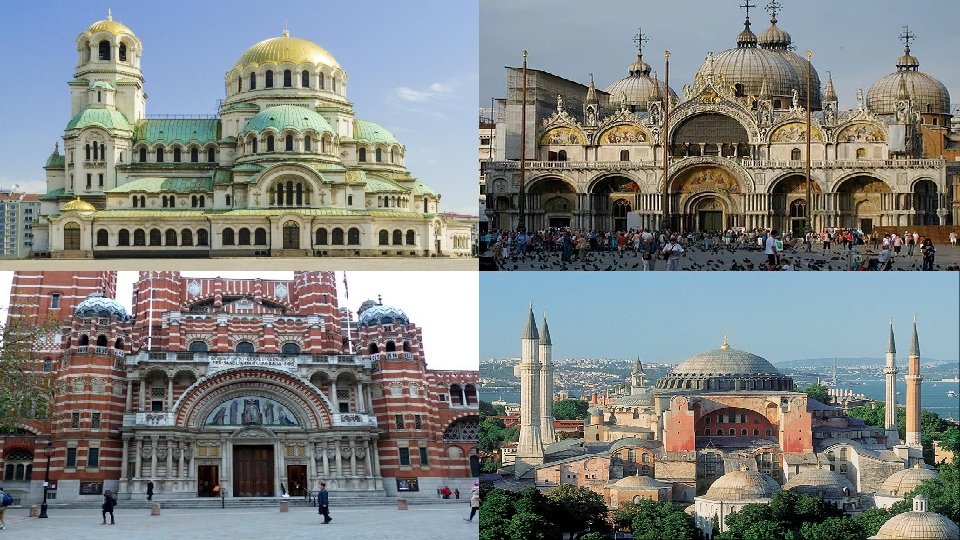
Russian Empire Kiev’s power declined after the Mongol invasion leading to the rise of Moscow. This corresponded to the decline and collapse of the Byzantine Empire in the late 1400 s. The Russian ruler Ivan III used this to his political advantage by announcing publicly that Russia would be the “Third Rome” and claiming for himself the title Czar or Caesar. This claim became an enduring form of political legitimacy in the Russian Empire.
Standard 4 c Explain the Great Schism (East-West Schism) of 1054 CE/AD
Great Schism By the late 300 s Christendom developed two parallel hierarchies of leadership that reflected the growing political divide in the Roman Empire. In the west the church was headquartered in Rome and led by the pope. In the East, the Byzantine Emperors claimed leadership of the church and considered the Patriarch of Constantinople as the highest member of the church clergy. Each of these considered themselves the head of a single unified church and thus believed that they held authority over the other.
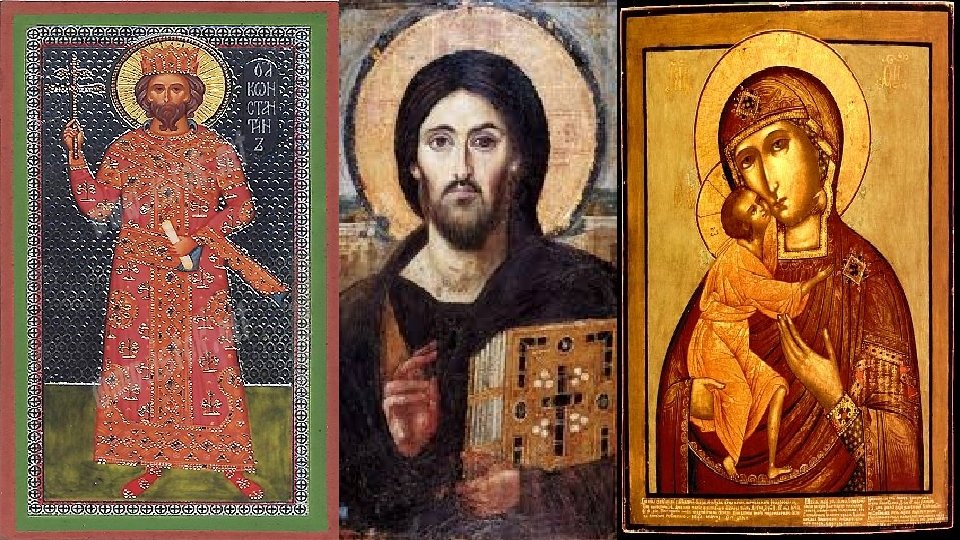
Great Schism Division came to head in 730 when the Byzantine Emperor Leo III banned the use of icons in worship because he believed that their use was a form of idolatry. Pope Gregory II to side with the supporters of icons thus undermining the authority of the Byzantine Emperor. Pope Leo III crowned Charlemagne the Roman Emperor which was a direct affront to the Byzantine Emperor who considered himself the Roman Emperor and the pope his subordinate.
Great Schism In 1054, after years of disagreements, the controversy culminated in the excommunication of the Patriarch of Constantinople by Pope Leo IX. This formally severed the ties between the Christian Churches of the east and west leading to two independent churches, the Eastern Orthodox Church and Roman Catholic Church.
Standard 4 d Explain the decline of Byzantium and the impact of the fall of Constantinople in 1453 CE/AD.
Decline of Byzantium Bubonic Plague Move away from urban areas leads to decentralization and inability to fight off invaders Muslim invasions The Fourth Crusade in 1204, sacked and destroyed much of Constantinople. Civil War Constantinople falls to Ottoman Turks in 1453
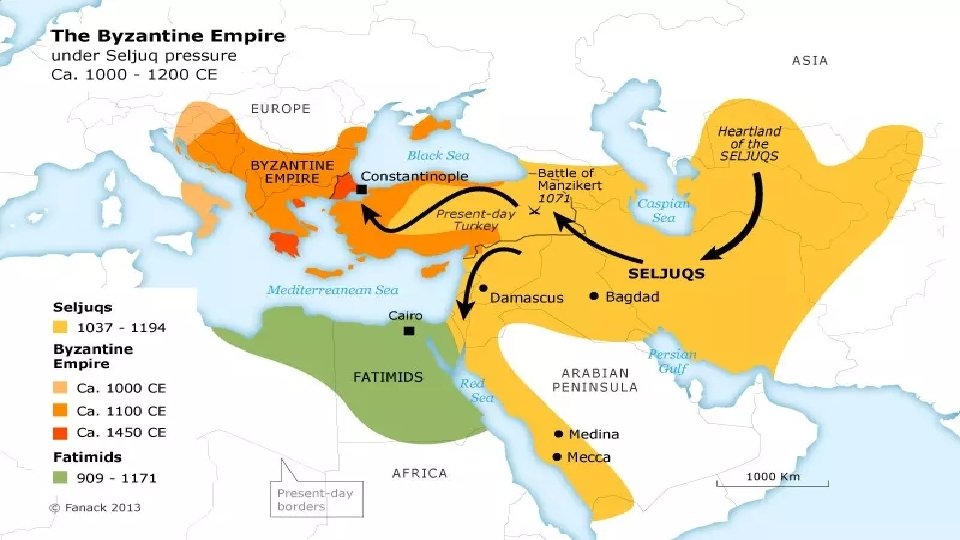
Impact of the Fall of Byzantium Turkic Muslim expansion in the Middle East, North Africa and Southeastern Europe Ottoman Turks held the Bosporus Straits of Istanbul, formally Constantinople The growth of a new powerful Muslim empire in the region The center of Christian Orthodoxy shifted north to Russia
Standard 4 e Describe the impact of the Mongols on Russia, China, and the Middle East, include: the role of Chinggis (Genghis) Khan in developing the Mongol Empire.
The Mongol Empire Nomadic pastoral society Lived on the vast Central Asian steppe United by Chinggis (Genghis) Khan in 1206 Excellent archers-composite bow Expert horsemen Self-sufficient Moved quickly with families and supplies Created largest empire in history
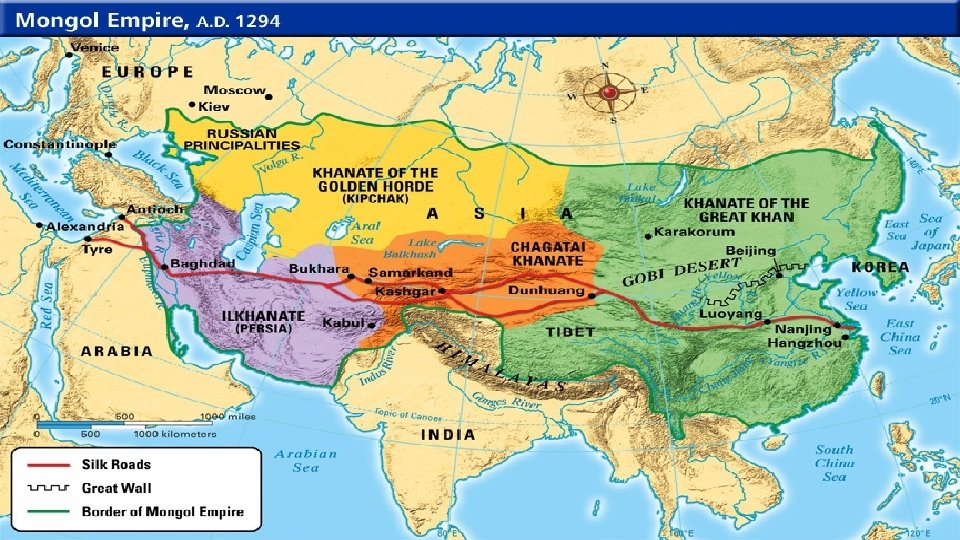
Mongol Empire https: //www. historyonthenet. com/wpcontent/uploads/2014/07/Mongol_Empire_map. gif
Mongol Impact on Russia Conquered Russia easily Mostly concerned with profiting from trade along the Silk Road. Left much of the administration of the Khanate to Muscovite (Russian) princes who served as local administrators, tax collectors and census takers. Mongol tax burden was severe and led to an economic downturn Provided generous support for the Russian Orthodox Church Political power moves to Moscow
Mongol Impact on China Established a short lived but impactful dynasty, the Yuan Mongols of China adopted many Chinese cultural traditions including Confucianism and Buddhism Developed Mandarin, a combination of Mongolian and Chinese Unified China Beijing became the capital Many families became merchants. This facilitated the development of corporate business arrangements and urbanization Instituted economically repressive taxes
Mongol Impact on Middle East Mongolian armies tended to assume power in a region by killing much of the local nobility Placed Baghdad at the heart of the empire This led to major developments in the disciplines of history, painting, algebra, trigonometry, and astronomy that led to advances in calendars, predicting eclipses, and navigation. Over taxation led to economic decline
Mongol Conclusion All regions controlled by the Mongols benefited from a massive expansion in Eurasian trade along the Silk Road. This trade facilitated the diffusion of profoundly important technologies like gunpowder, paper, and movable type. It facilitated the spread of religions like Christianity, Islam and Buddhism. It vastly improved interregional understanding by facilitating the travels of people like Marco Polo and Ibn Battuta and it profoundly transformed the demography of Afro-Eurasia with the spread of the Bubonic Plague.
- Slides: 35