
Byzantine Empire Module 4 Lesson 1 Why it
Byzantine Empire Module 4, Lesson 1
• Why it Matters Now: • Byzantine culture deeply influenced Orthodox Byzantine Empire Christianity, a major branch of modern Christianity. • Key Terms and People: • Justinian • Justininan Code • Hagia Sophia • Patriarch • Icon • Excommunication • Cyrillic alphabet
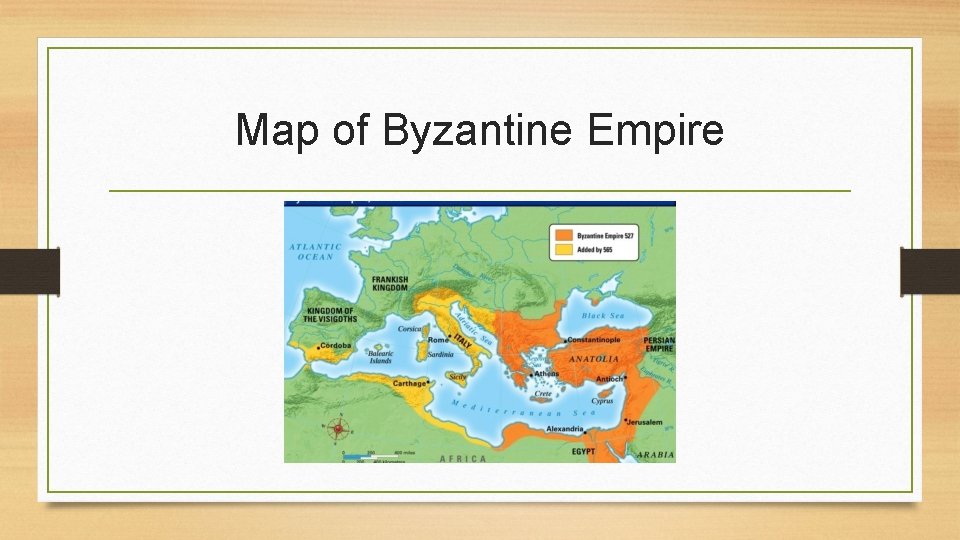
Map of Byzantine Empire

• Justinian becomes ruler 527 AD in a New Setting A Newin Rome • Quickly regained lands in North Africa • Attacked Rome and took control after years of invasions • Ruled with absolute power • This includes the church
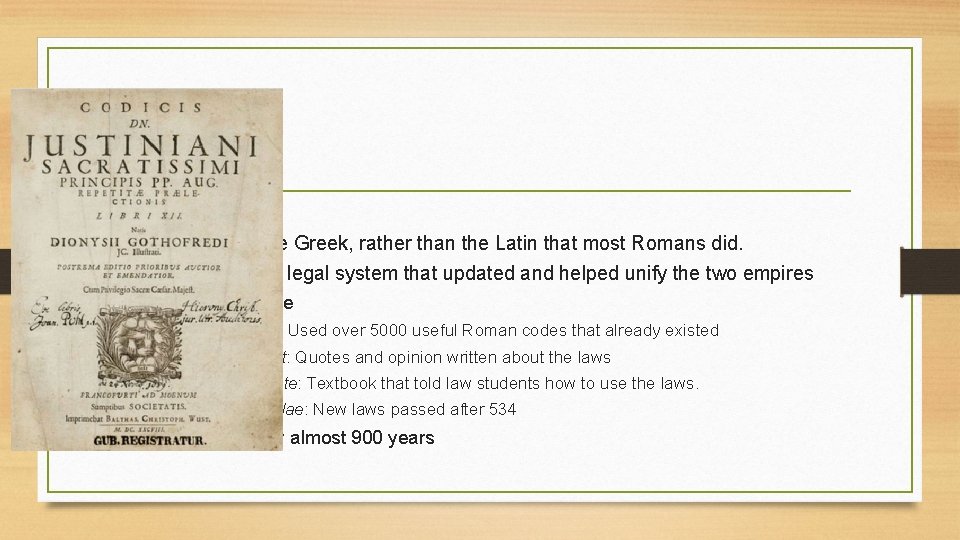
Life in New Rome • Byzantines spoke Greek, rather than the Latin that most Romans did. • Justinian creates legal system that updated and helped unify the two empires • Justinian Code • • The Code: Used over 5000 useful Roman codes that already existed The Digest: Quotes and opinion written about the laws The Institute: Textbook that told law students how to use the laws. The Novellae: New laws passed after 534 • Code lasts for almost 900 years
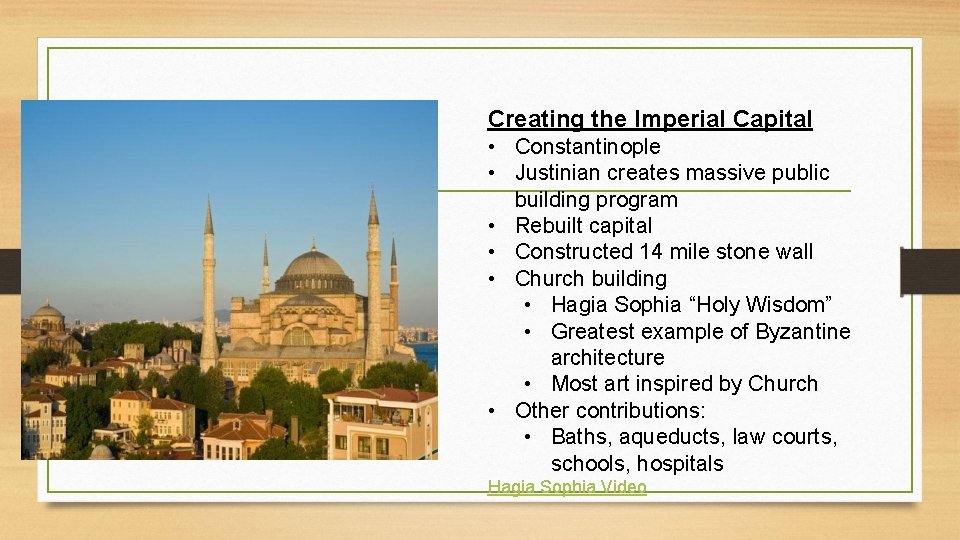
Creating the Imperial Capital • Constantinople • Justinian creates massive public building program • Rebuilt capital • Constructed 14 mile stone wall • Church building • Hagia Sophia “Holy Wisdom” • Greatest example of Byzantine architecture • Most art inspired by Church • Other contributions: • Baths, aqueducts, law courts, schools, hospitals Hagia Sophia Video
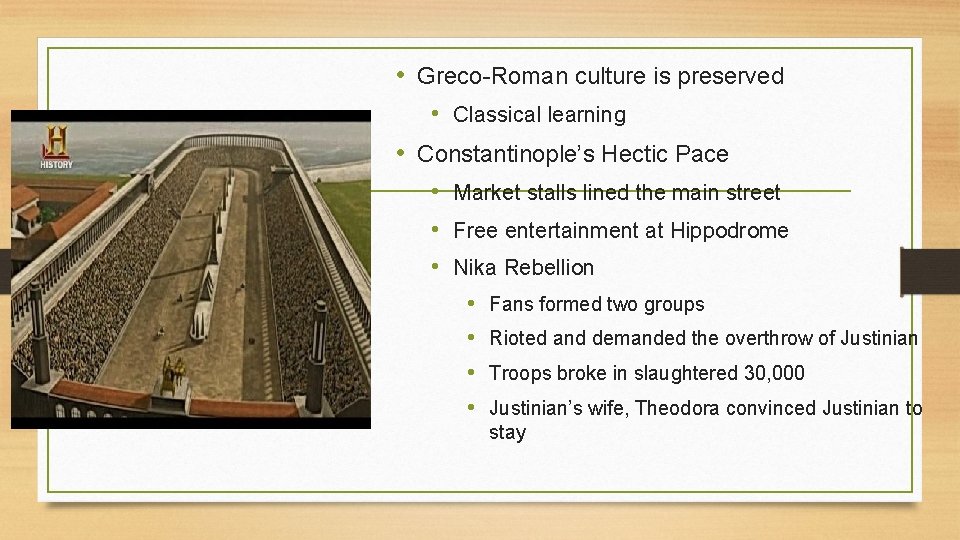
• Greco-Roman culture is preserved • Classical learning • Constantinople’s Hectic Pace • Market stalls lined the main street • Free entertainment at Hippodrome • Nika Rebellion • • Fans formed two groups Rioted and demanded the overthrow of Justinian Troops broke in slaughtered 30, 000 Justinian’s wife, Theodora convinced Justinian to stay
Empire Falls • Plague of Justinian • Approx. 10, 000 people died per day! • Continues till about 700 AD • Attacks • Basically everyone in the area attacked: Slavs, Russians, Muslims, Persians, Avars, Bulgars. • Byzantines tried bribes, diplomacy, marriage, and military • Kingdom shrinks and ends when Ottoman Turks conquer it in 1453.
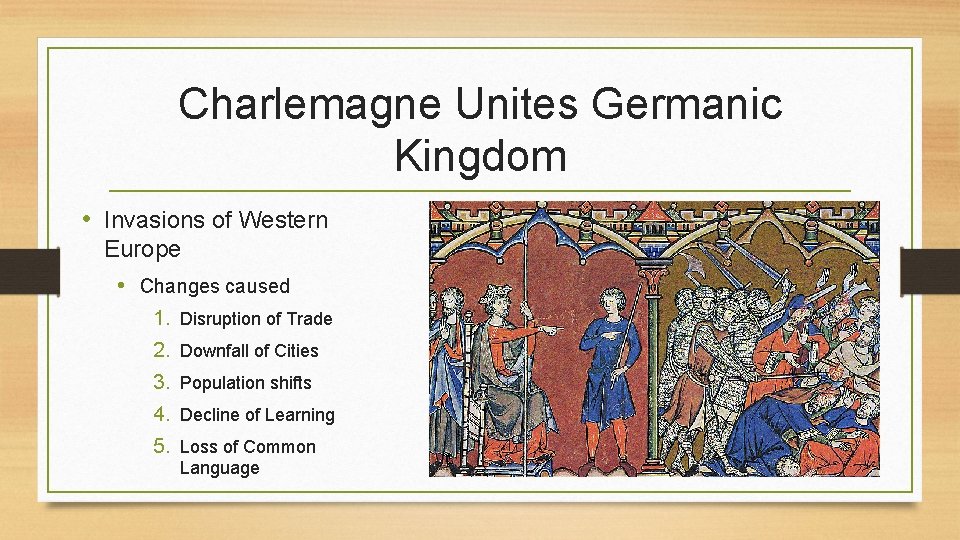
Charlemagne Unites Germanic Kingdom • Invasions of Western Europe • Changes caused 1. Disruption of Trade 2. Downfall of Cities 3. Population shifts 4. Decline of Learning 5. Loss of Common Language
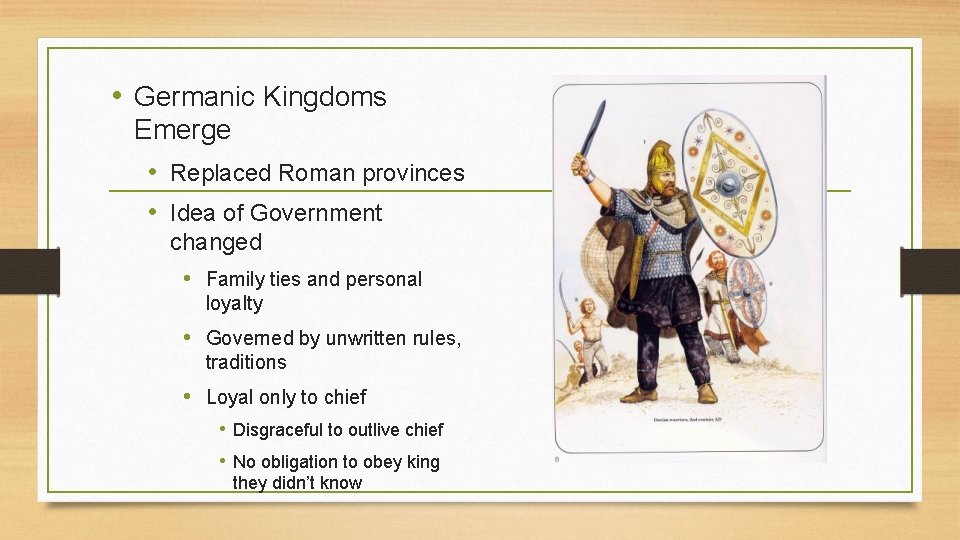
• Germanic Kingdoms Emerge • Replaced Roman provinces • Idea of Government changed • Family ties and personal loyalty • Governed by unwritten rules, traditions • Loyal only to chief • Disgraceful to outlive chief • No obligation to obey king they didn’t know
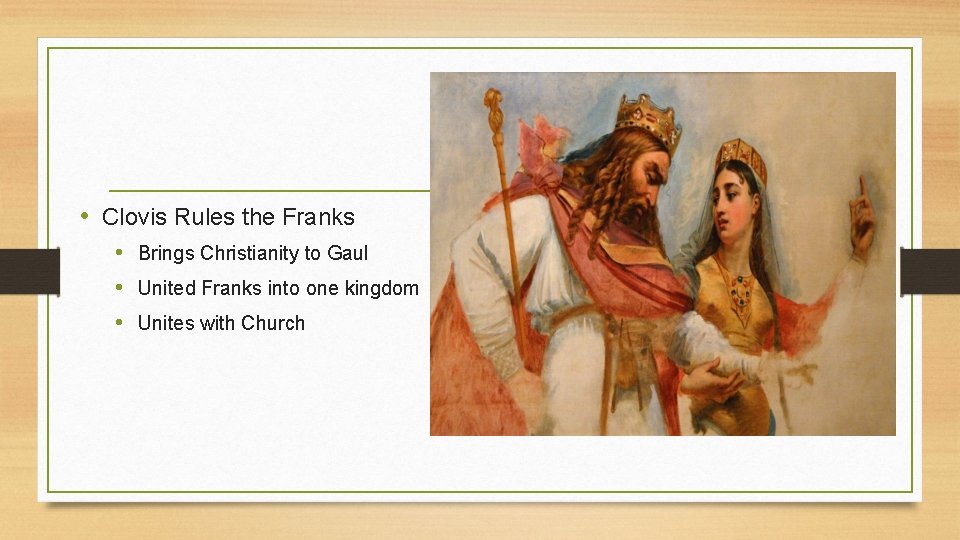
• Clovis Rules the Franks • Brings Christianity to Gaul • United Franks into one kingdom • Unites with Church
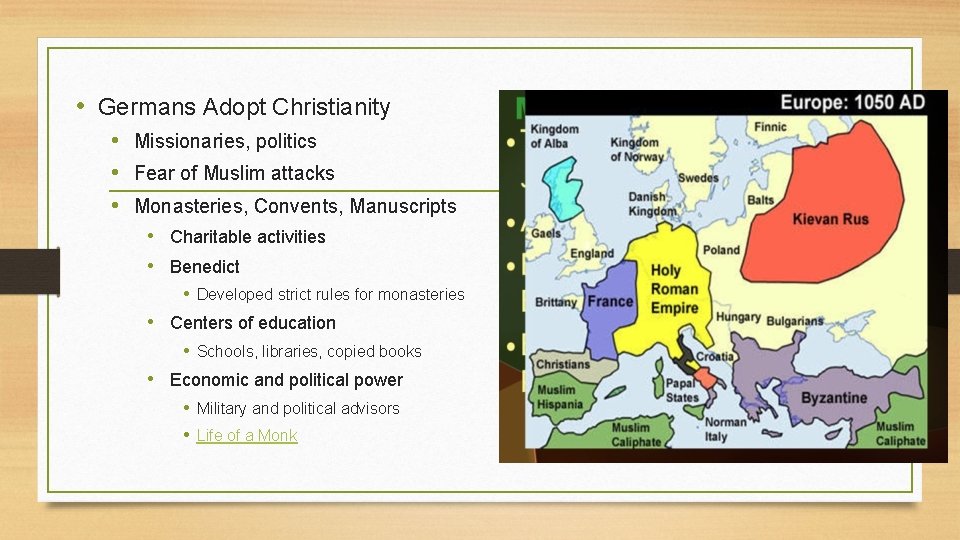
• Germans Adopt Christianity • Missionaries, politics • Fear of Muslim attacks • Monasteries, Convents, Manuscripts • Charitable activities • Benedict • Developed strict rules for monasteries • Centers of education • Schools, libraries, copied books • Economic and political power • Military and political advisors • Life of a Monk
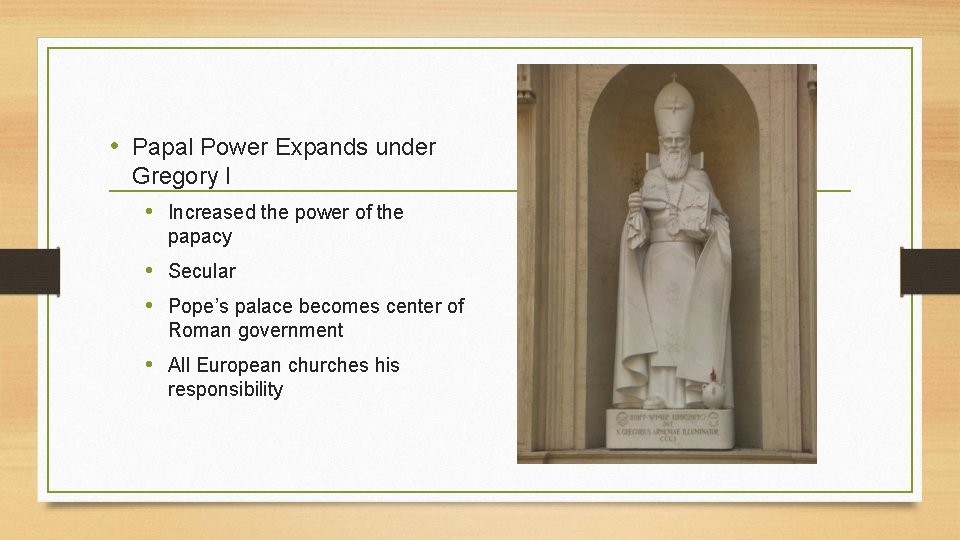
• Papal Power Expands under Gregory I • Increased the power of the papacy • Secular • Pope’s palace becomes center of Roman government • All European churches his responsibility
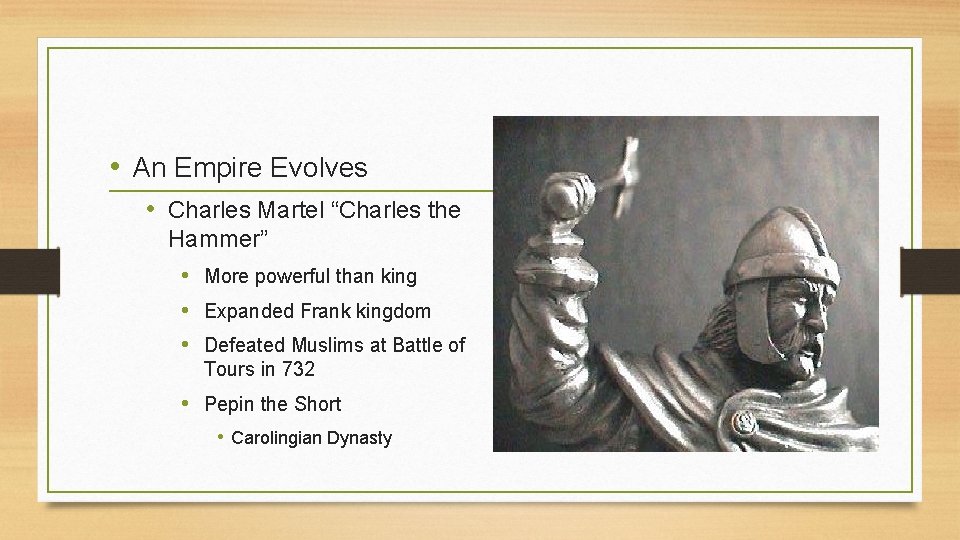
• An Empire Evolves • Charles Martel “Charles the Hammer” • More powerful than king • Expanded Frank kingdom • Defeated Muslims at Battle of Tours in 732 • Pepin the Short • Carolingian Dynasty
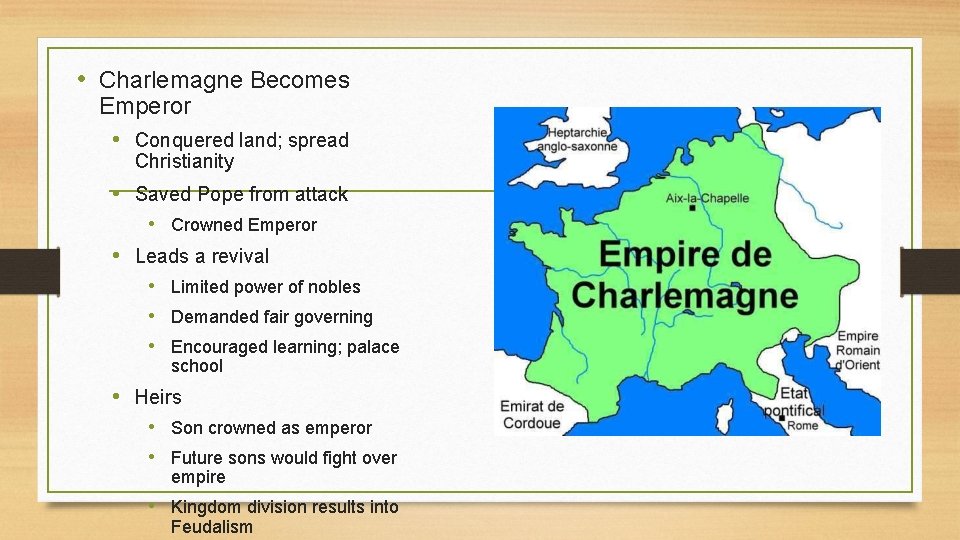
• Charlemagne Becomes Emperor • Conquered land; spread Christianity • Saved Pope from attack • Crowned Emperor • Leads a revival • Limited power of nobles • Demanded fair governing • Encouraged learning; palace school • Heirs • Son crowned as emperor • Future sons would fight over empire • Kingdom division results into Feudalism
- Slides: 15