
bync Leo Reynolds Photo courtesy Robert Sawin KGS
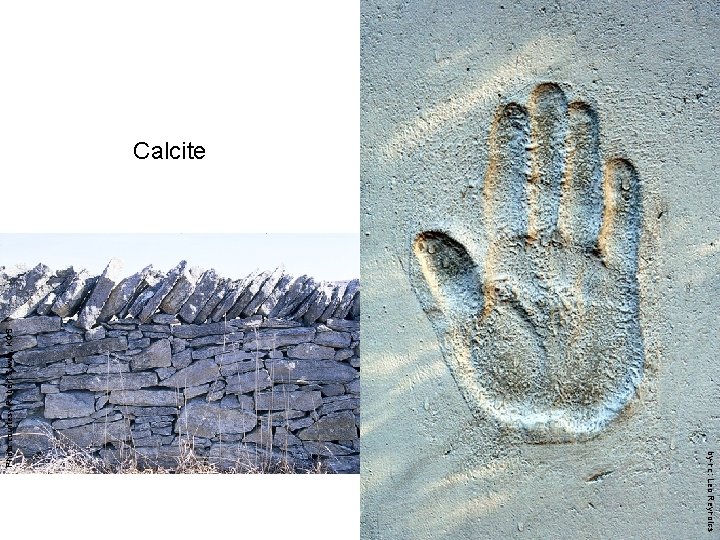
by-nc: Leo Reynolds Photo courtesy Robert Sawin, KGS Calcite
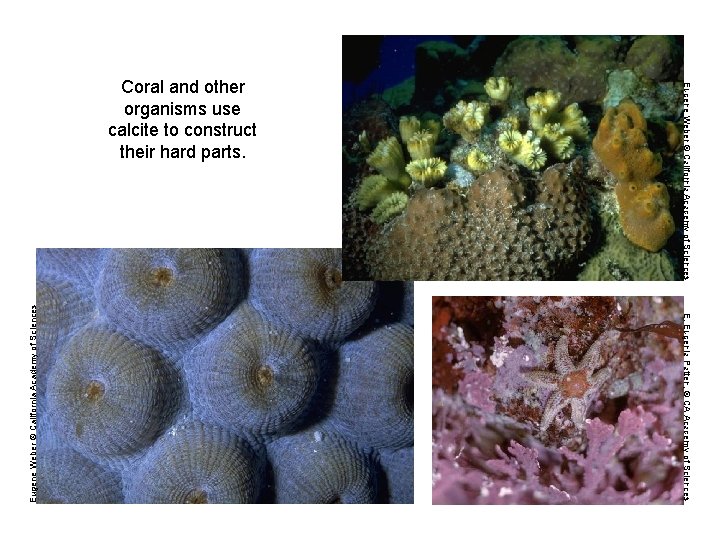
E. Eugenia Patten, © CA Academy of Sciences Eugene Weber © California Academy of Sciences Coral and other organisms use calcite to construct their hard parts.
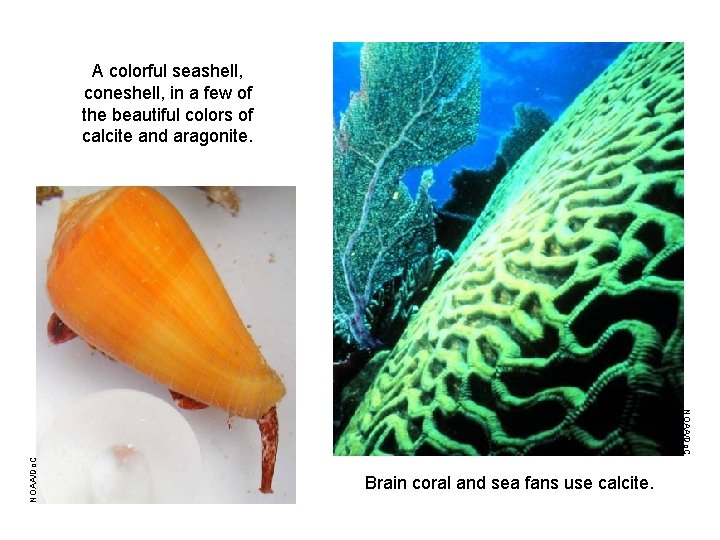
A colorful seashell, coneshell, in a few of the beautiful colors of calcite and aragonite. NOAA/Do. C Brain coral and sea fans use calcite.
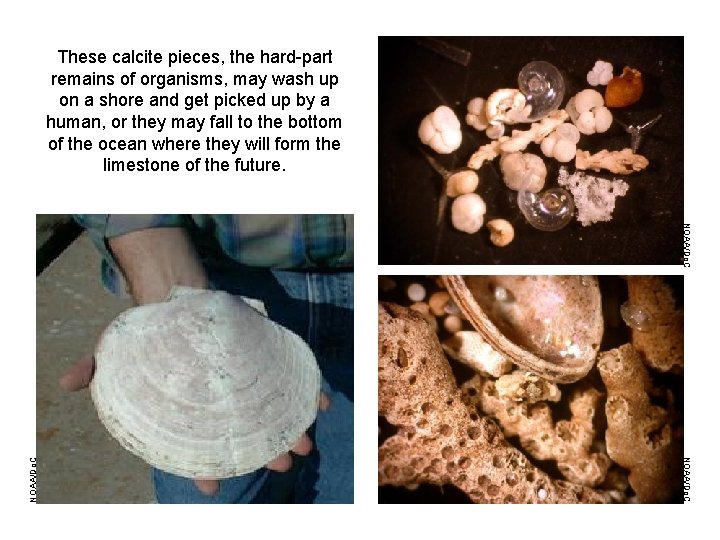
These calcite pieces, the hard-part remains of organisms, may wash up on a shore and get picked up by a human, or they may fall to the bottom of the ocean where they will form the limestone of the future. NOAA/Do. C
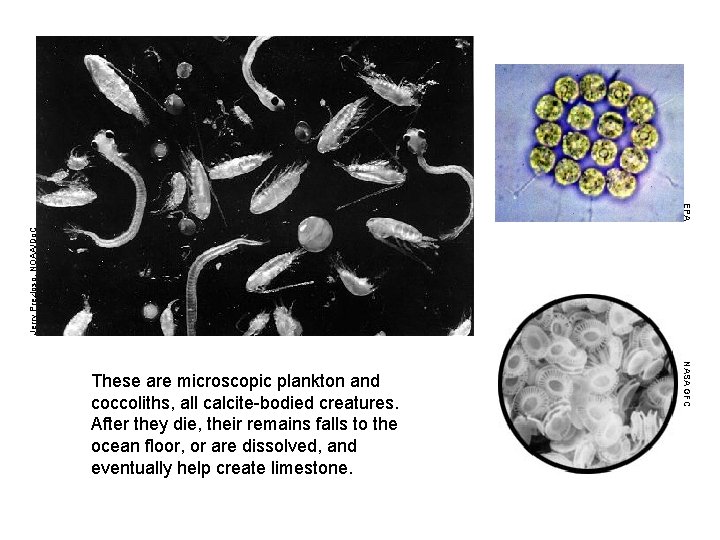
Jerry Prezioso, NOAA/Do. C EPA NASA GFC These are microscopic plankton and coccoliths, all calcite-bodied creatures. After they die, their remains falls to the ocean floor, or are dissolved, and eventually help create limestone.
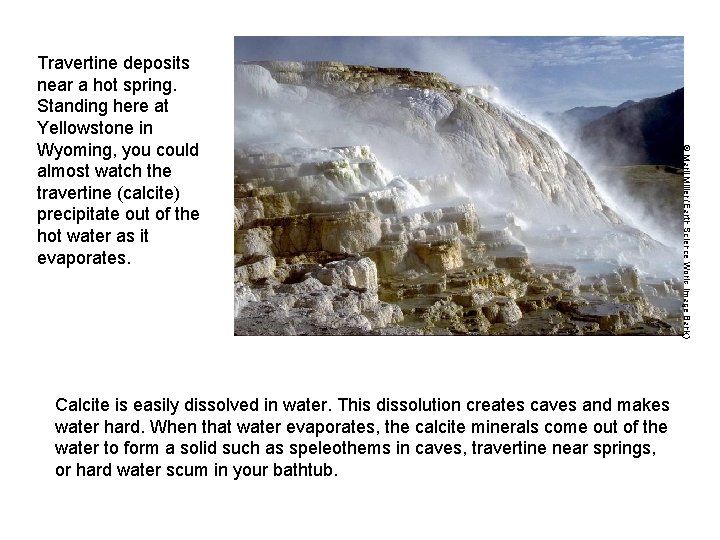
(credit: ) Calcite is easily dissolved in water. This dissolution creates caves and makes water hard. When that water evaporates, the calcite minerals come out of the water to form a solid such as speleothems in caves, travertine near springs, or hard water scum in your bathtub. © Marli Miller (Earth Science World Image Bank) Travertine deposits near a hot spring. Standing here at Yellowstone in Wyoming, you could almost watch the travertine (calcite) precipitate out of the hot water as it evaporates.
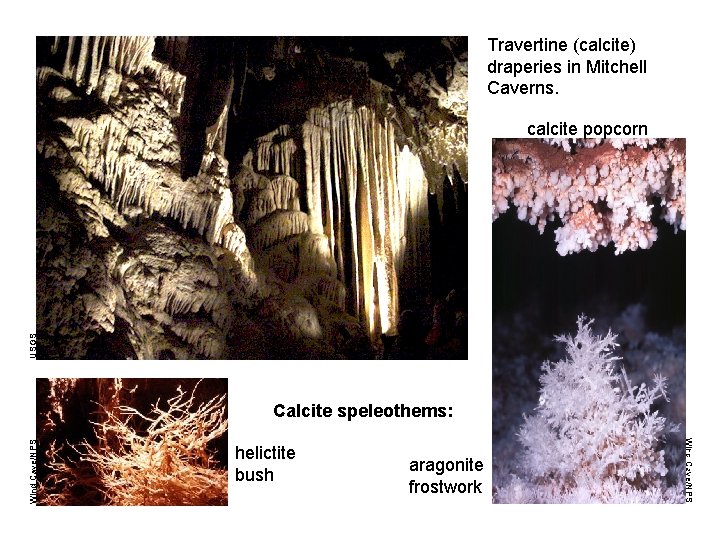
Travertine (calcite) draperies in Mitchell Caverns. USGS calcite popcorn helictite bush aragonite frostwork Wind Cave/NPS Calcite speleothems:
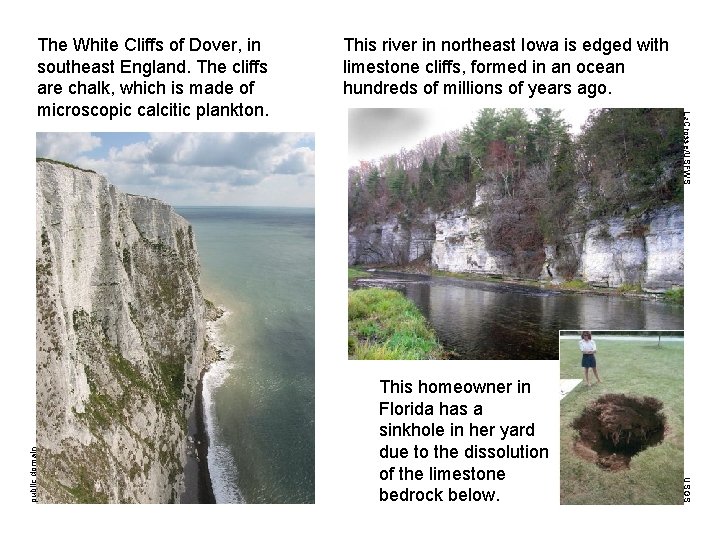
This homeowner in Florida has a sinkhole in her yard due to the dissolution of the limestone bedrock below. USGS public domain This river in northeast Iowa is edged with limestone cliffs, formed in an ocean hundreds of millions of years ago. La. Crosse/USFWS The White Cliffs of Dover, in southeast England. The cliffs are chalk, which is made of microscopic calcitic plankton.
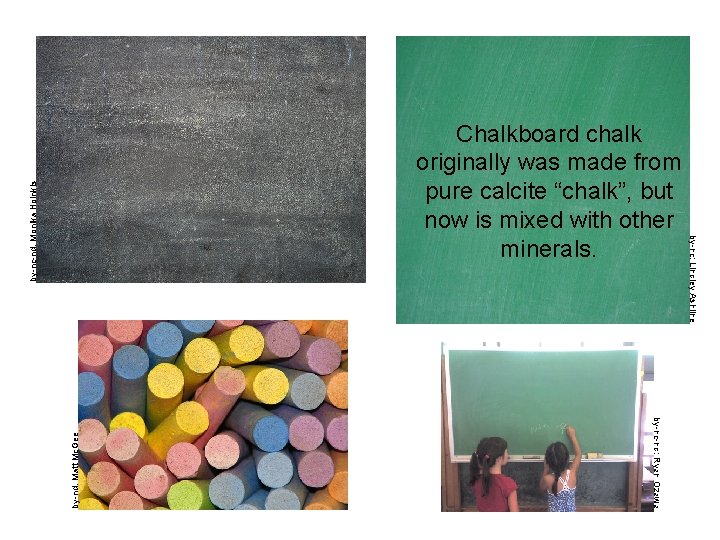
by-nc-nd: Ryan Ozawa by-nd: Matt Mc. Gee by-nc: Lindley Ashline by-nc-nd: Monika Hoinkis Chalkboard chalk originally was made from pure calcite “chalk”, but now is mixed with other minerals.
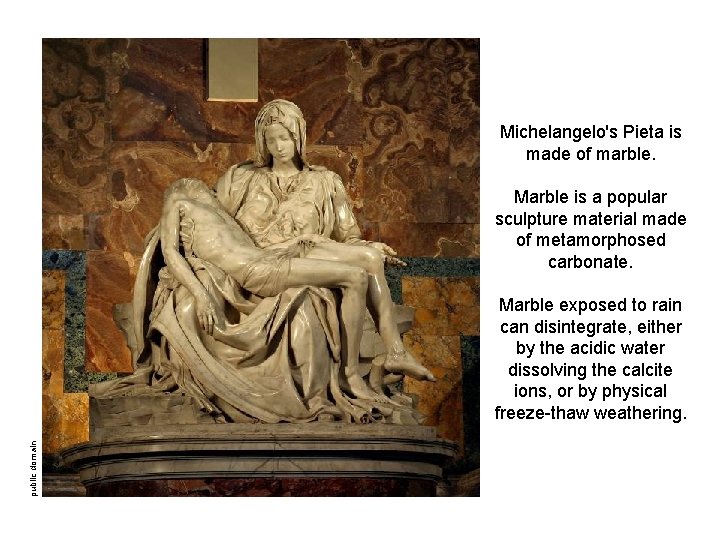
Michelangelo's Pieta is made of marble. Marble is a popular sculpture material made of metamorphosed carbonate. public domain Marble exposed to rain can disintegrate, either by the acidic water dissolving the calcite ions, or by physical freeze-thaw weathering.
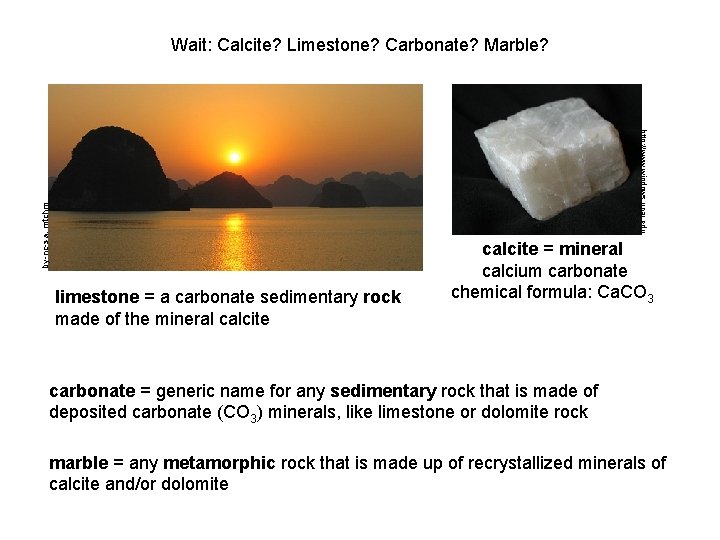
Wait: Calcite? Limestone? Carbonate? Marble? by-nc-sa: mtchm http: //www. windows. ucar. edu limestone = a carbonate sedimentary rock made of the mineral calcite = mineral calcium carbonate chemical formula: Ca. CO 3 carbonate = generic name for any sedimentary rock that is made of deposited carbonate (CO 3) minerals, like limestone or dolomite rock marble = any metamorphic rock that is made up of recrystallized minerals of calcite and/or dolomite
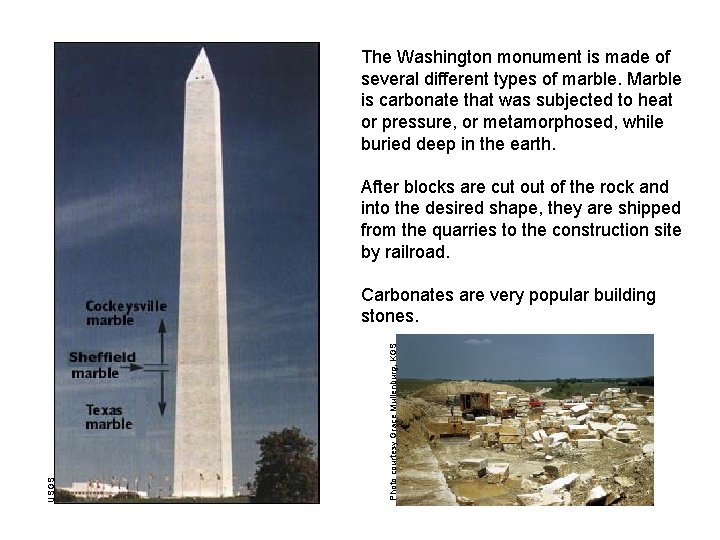
The Washington monument is made of several different types of marble. Marble is carbonate that was subjected to heat or pressure, or metamorphosed, while buried deep in the earth. After blocks are cut of the rock and into the desired shape, they are shipped from the quarries to the construction site by railroad. Photo courtesy Grace Muilenburg, KGS USGS Carbonates are very popular building stones.
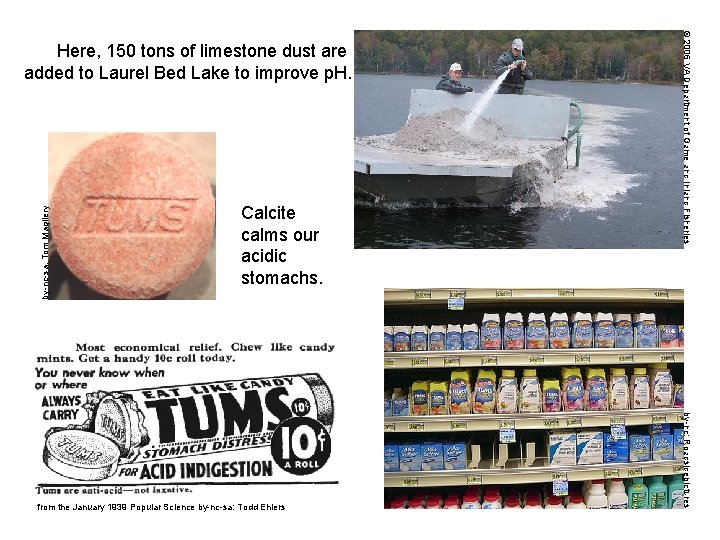
by-nc-sa: Tom Magliery Calcite calms our acidic stomachs. by-nc: Roadsidepictures from the January 1939 Popular Science by-nc-sa: Todd Ehlers © 2006 VA Department of Game and Inland Fisheries Here, 150 tons of limestone dust are added to Laurel Bed Lake to improve p. H.
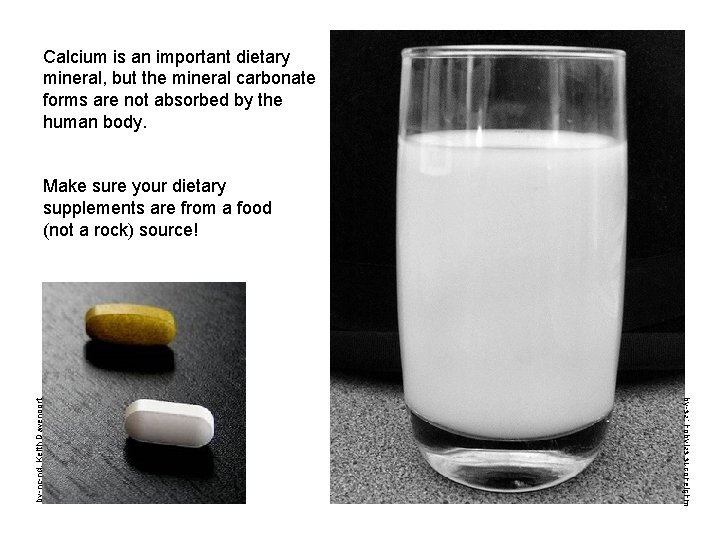
Calcium is an important dietary mineral, but the mineral carbonate forms are not absorbed by the human body. by-sa: hobvias sudoneighm by-nc-nd: Keith Davenport Make sure your dietary supplements are from a food (not a rock) source!
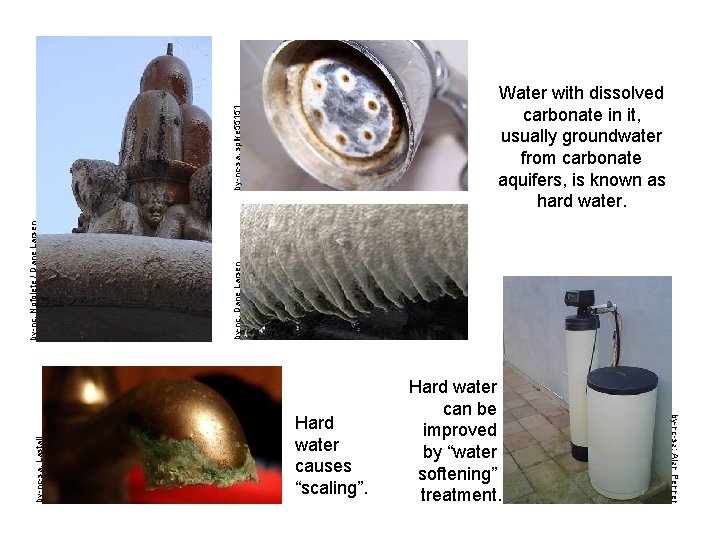
by-nc: Dane Larsen Hard water causes “scaling”. Hard water can be improved by “water softening” treatment. by-nc-sa: Alan Penner by-nc-sa: Lastaii by-nc: Nofolete / Dane Larsen by-nc-sa: spike 55151 Water with dissolved carbonate in it, usually groundwater from carbonate aquifers, is known as hard water.
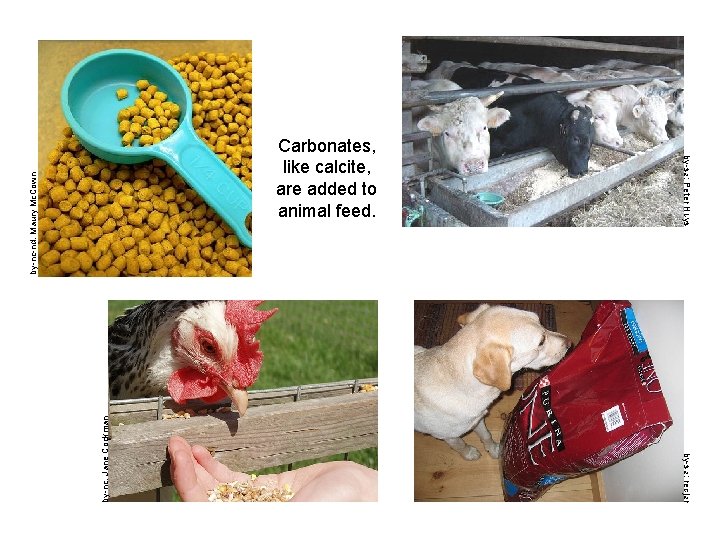
by-sa: redjar by-nc: Jane Cockman by-nc-nd: Maury Mc. Cown by-sa: Peter Huys Carbonates, like calcite, are added to animal feed.
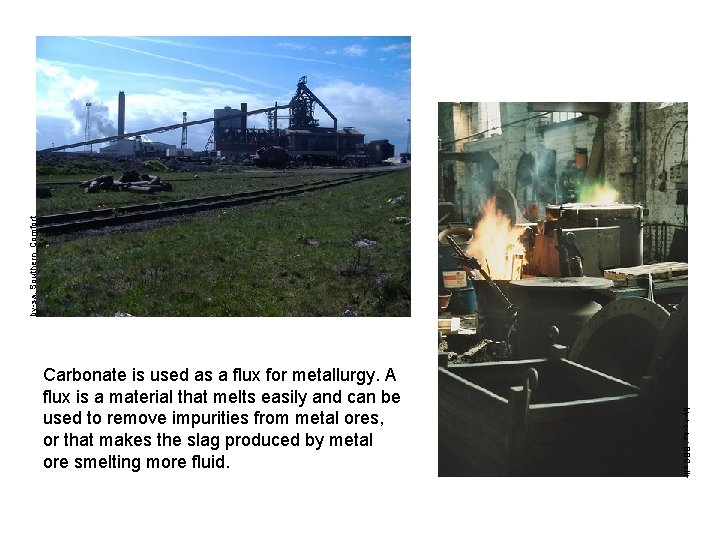
by-sa: Southern_Comfort by-nc-sa: BBColin Carbonate is used as a flux for metallurgy. A flux is a material that melts easily and can be used to remove impurities from metal ores, or that makes the slag produced by metal ore smelting more fluid.
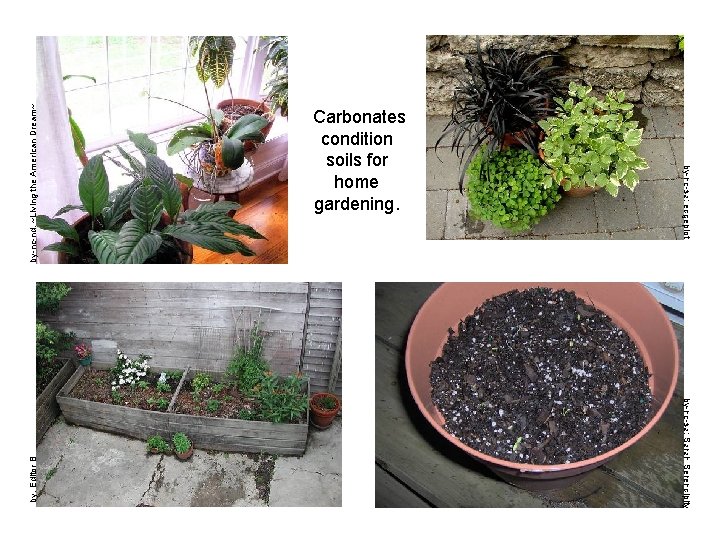
by-nc-sa: Sarah Serendipity by: Editor B by-nc-nd: ~Living the American Dream~ by-nc-sa: edgeplot Carbonates condition soils for home gardening.
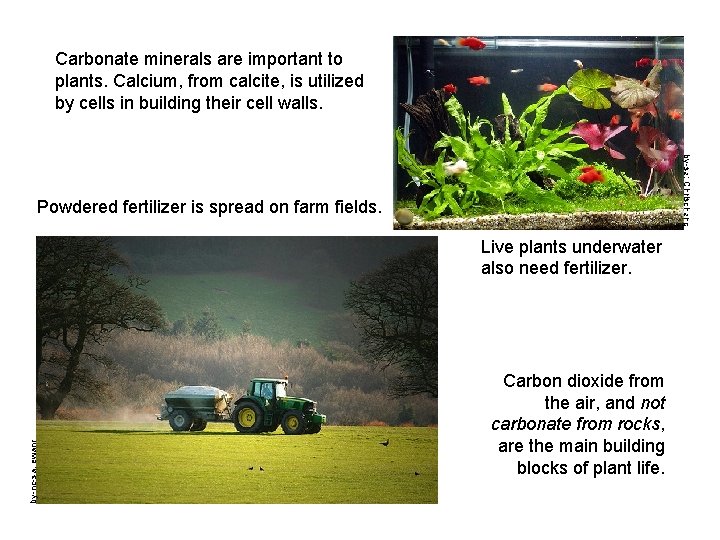
Carbonate minerals are important to plants. Calcium, from calcite, is utilized by cells in building their cell walls. by-sa: Chrischang Powdered fertilizer is spread on farm fields. by-nc-sa: ewanr Live plants underwater also need fertilizer. Carbon dioxide from the air, and not carbonate from rocks, are the main building blocks of plant life.
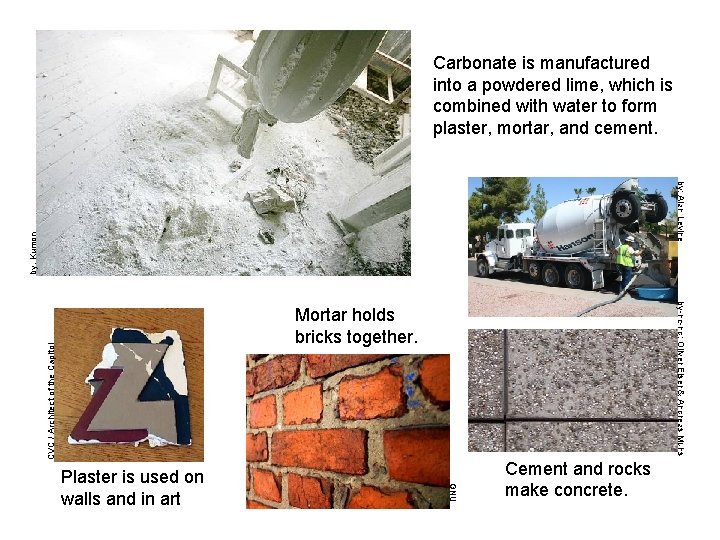
Carbonate is manufactured into a powdered lime, which is combined with water to form plaster, mortar, and cement. by: Kumon by: Alan Levine by-nc-nd: Oliver Elser & Andreas Muhs CVC / Architect of the Capitol Mortar holds bricks together. GNU Plaster is used on walls and in art Cement and rocks make concrete.
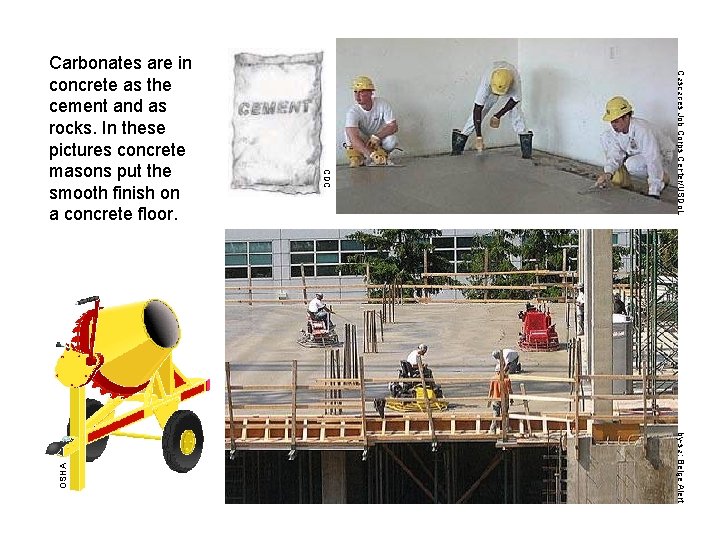
by-sa: Beige Alert OSHA Cascades Job Corps Center/USDo. L CDC Carbonates are in concrete as the cement and as rocks. In these pictures concrete masons put the smooth finish on a concrete floor.
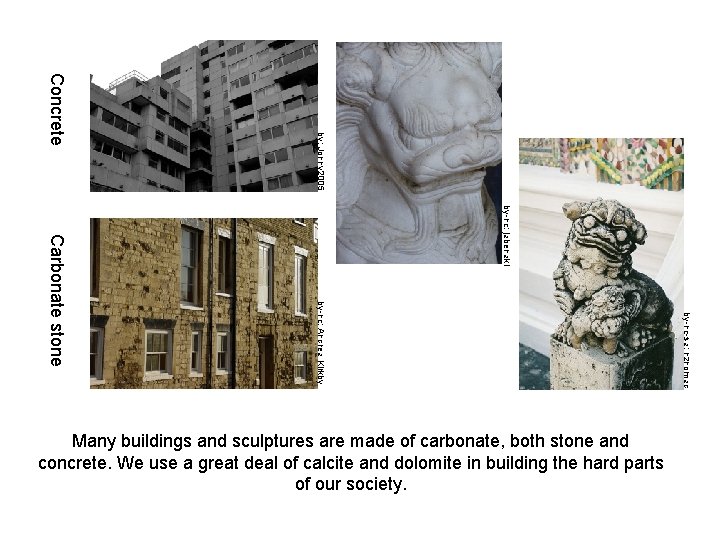
by: Jonny 2005 Concrete by-nc: jabenaki by-nc-sa: nznomad by-nc: Andrea Kirkby Carbonate stone Many buildings and sculptures are made of carbonate, both stone and concrete. We use a great deal of calcite and dolomite in building the hard parts of our society.

MN DOT Caltran by-nc: Adam Henning FHA/US DOT Think of all the roads you have ever been on: carbonates make them all possible.
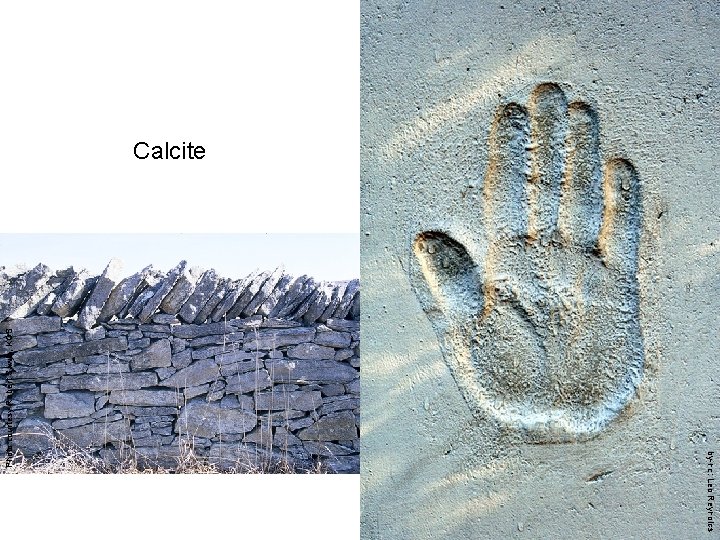
by-nc: Leo Reynolds Photo courtesy Robert Sawin, KGS Calcite
media rights Our notation description Creative Commons Licenses public domain (none) by by-sa by-nc-sa by-nd by-nc-nd GNU © GNU Free Documentation License Copyright. All rights reserved Many of the photos in this presentation were obtained through Flickr and Wikipedia. Funded by FIPSE and by the University of Minnesota. Compiled for Dr. Kent Kirkby, Department of Geology and Geophysics, by Kate Rosok, 2007. Each displayed image retains its original media rights. For educational purposes only; not to be used commercially.
- Slides: 25