
By the end of todays lesson we will
By the end of today’s lesson we will be able to: Recognise, read and write adjectives of colour in French.
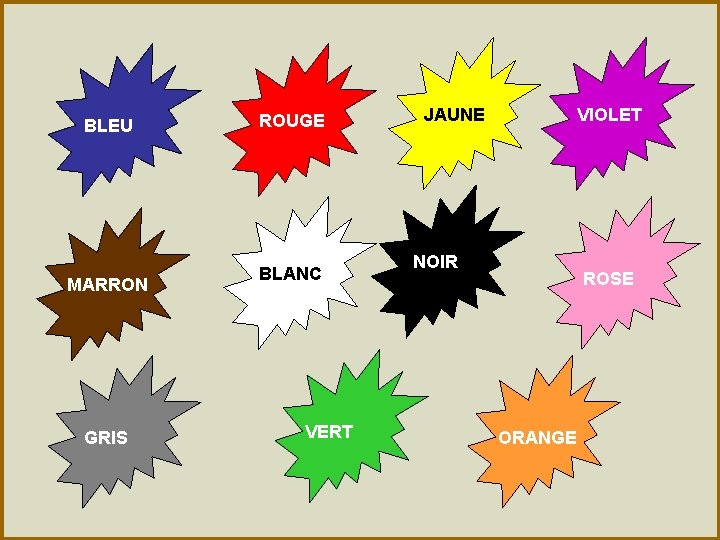
BLEU MARRON GRIS ROUGE BLANC VERT JAUNE VIOLET NOIR ROSE ORANGE
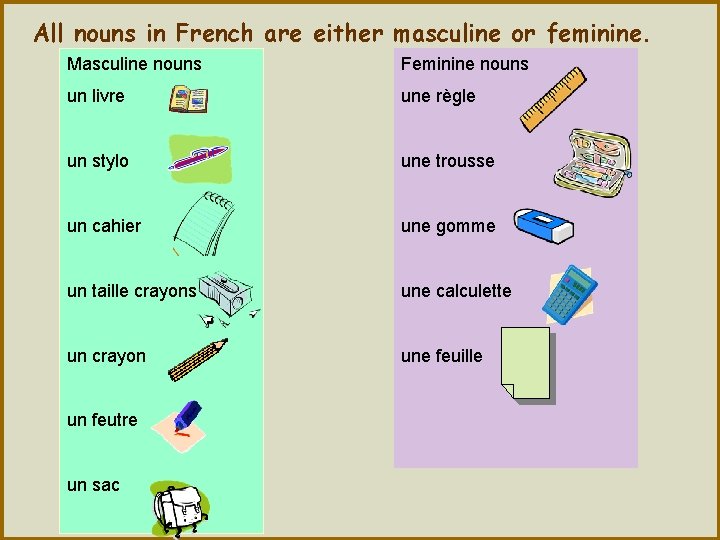
All nouns in French are either masculine or feminine. Masculine nouns Feminine nouns un livre une règle un stylo une trousse un cahier une gomme un taille crayons une calculette un crayon une feuille un feutre un sac
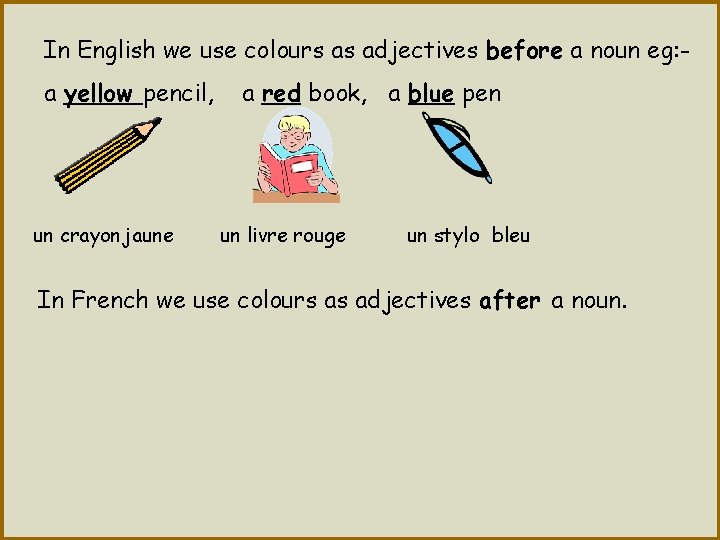
In English we use colours as adjectives before a noun eg: a yellow pencil, un crayon jaune a red book, a blue pen un livre rouge un stylo bleu In French we use colours as adjectives after a noun.
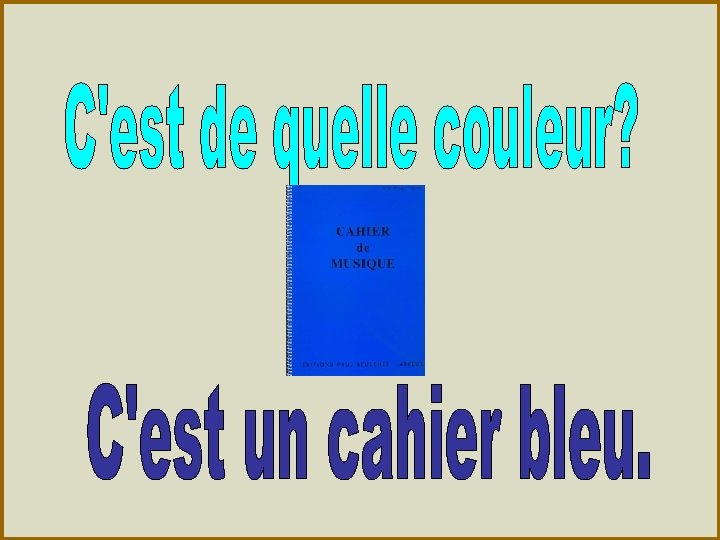
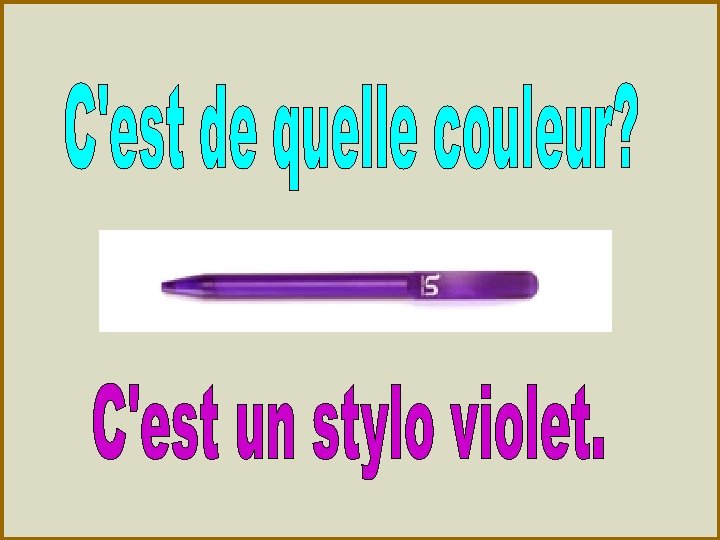
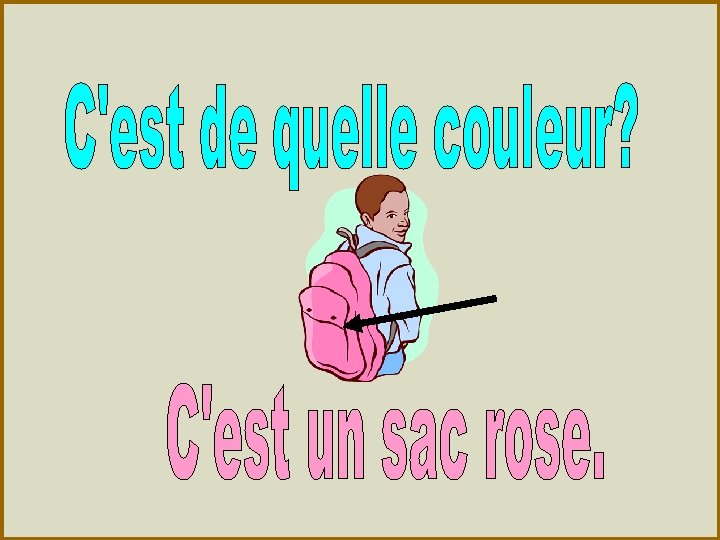
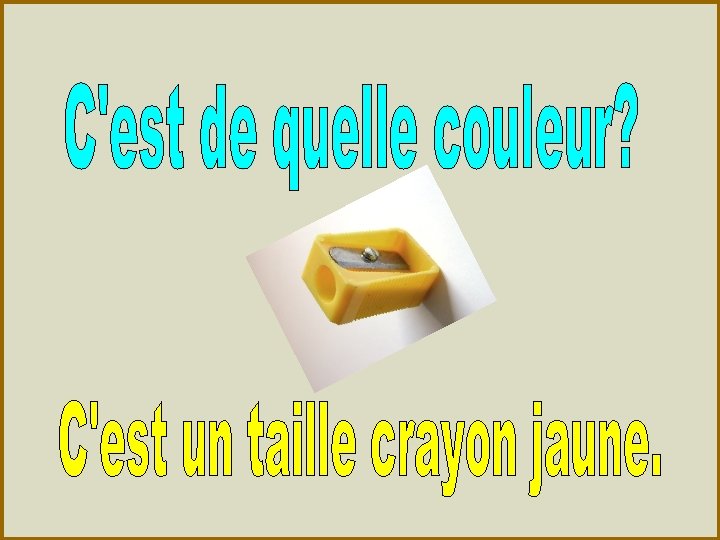
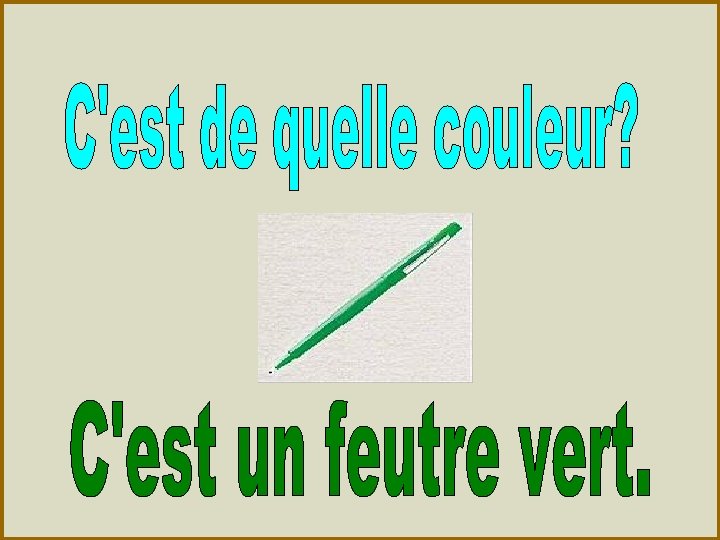
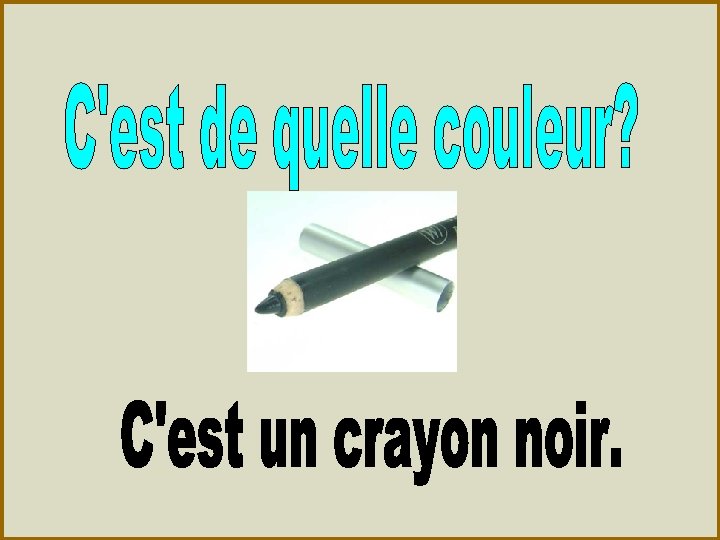
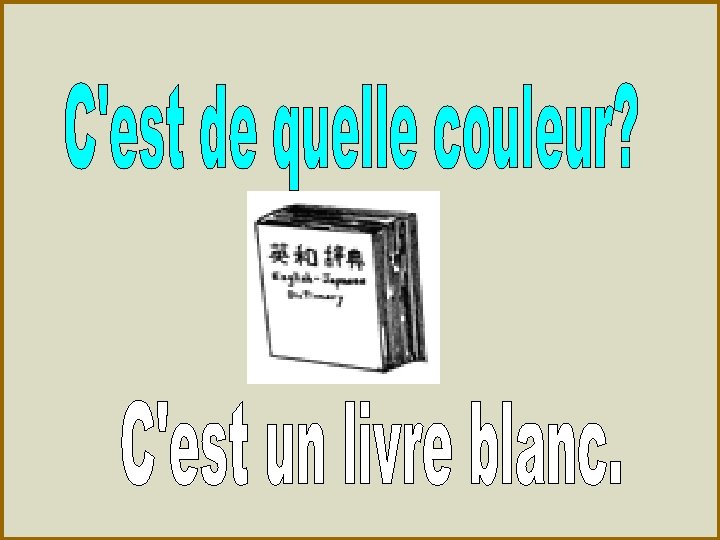
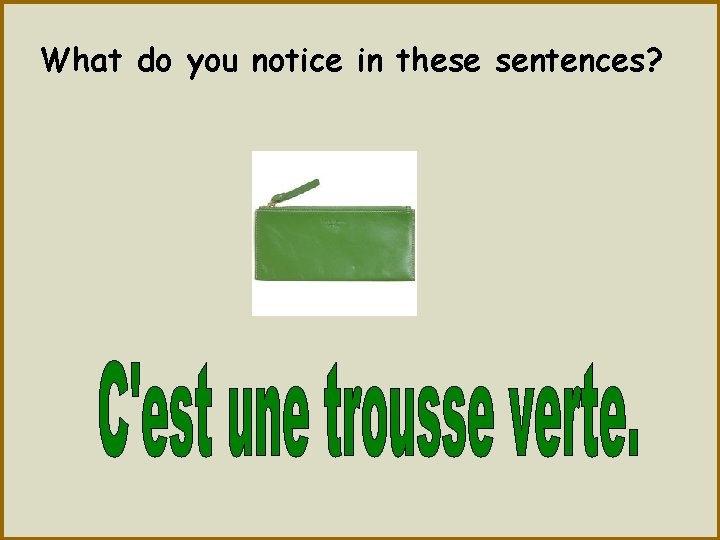
What do you notice in these sentences?
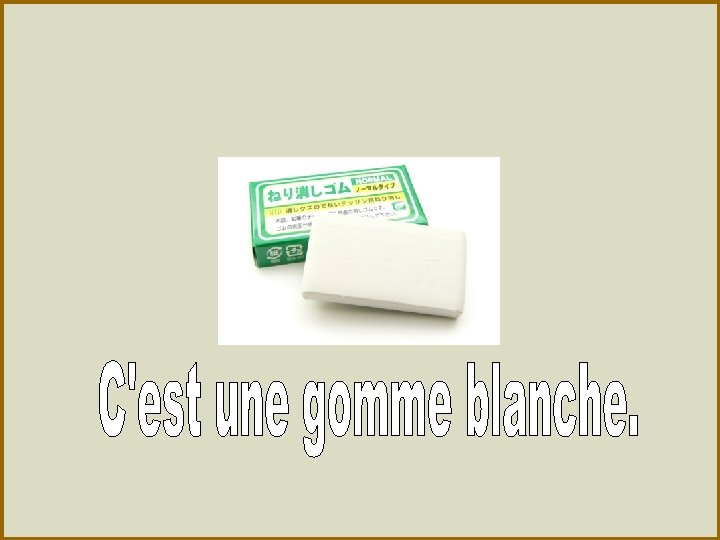
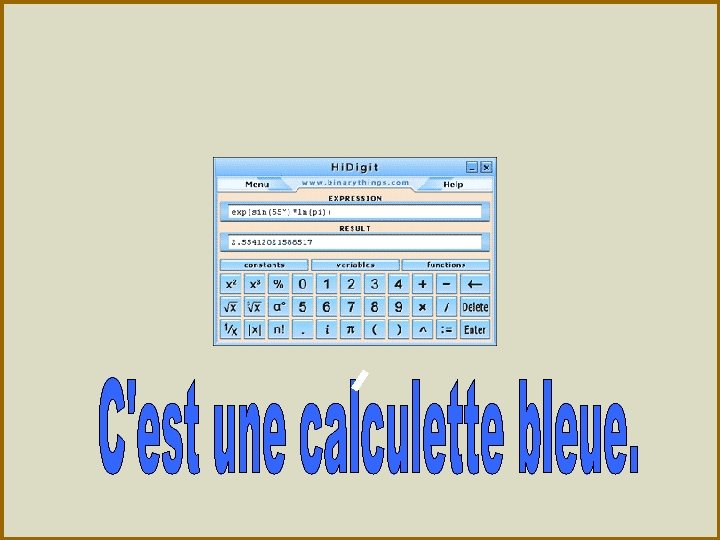
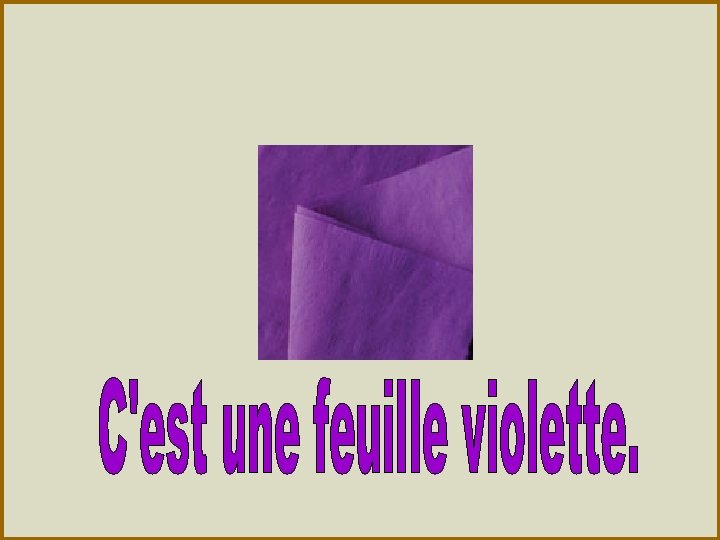
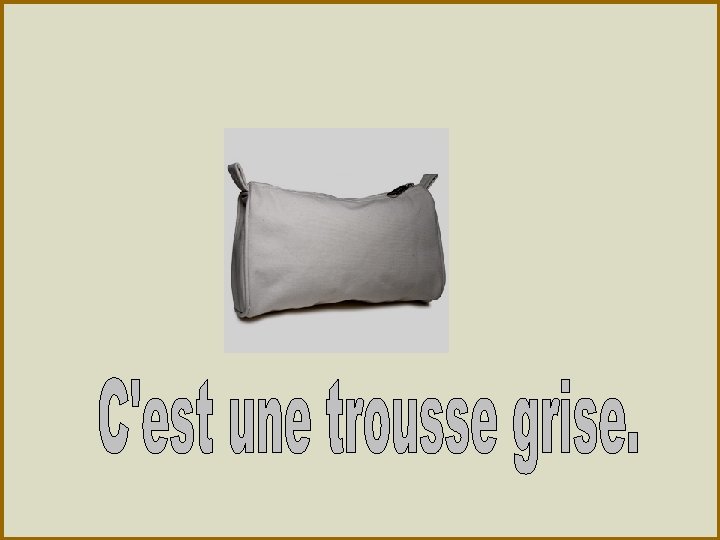

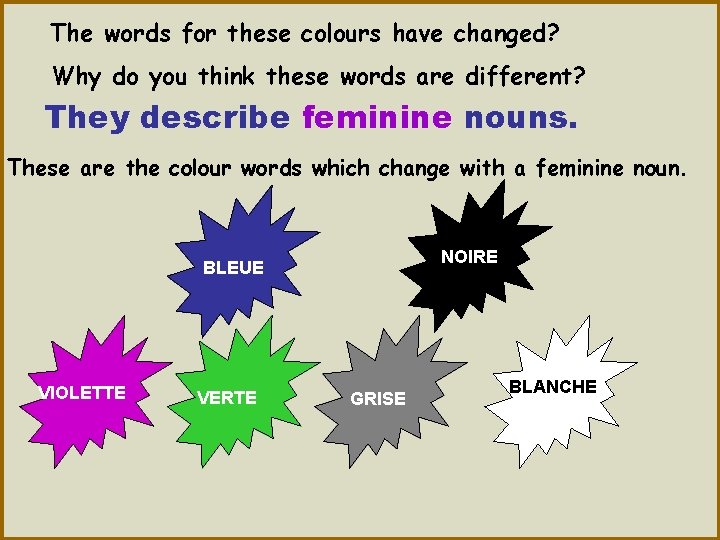
The words for these colours have changed? Why do you think these words are different? They describe feminine nouns. These are the colour words which change with a feminine noun. NOIRE BLEUE VIOLETTE VERTE GRISE BLANCHE
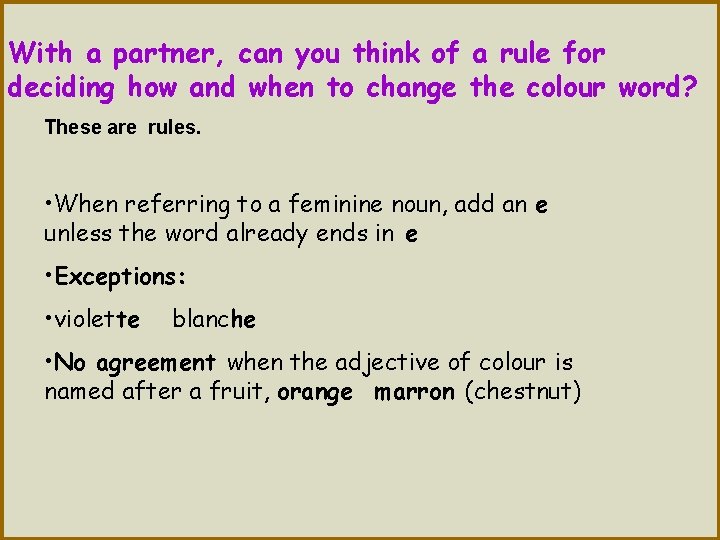
With a partner, can you think of a rule for deciding how and when to change the colour word? These are rules. • When referring to a feminine noun, add an e unless the word already ends in e • Exceptions: • violette blanche • No agreement when the adjective of colour is named after a fruit, orange marron (chestnut)
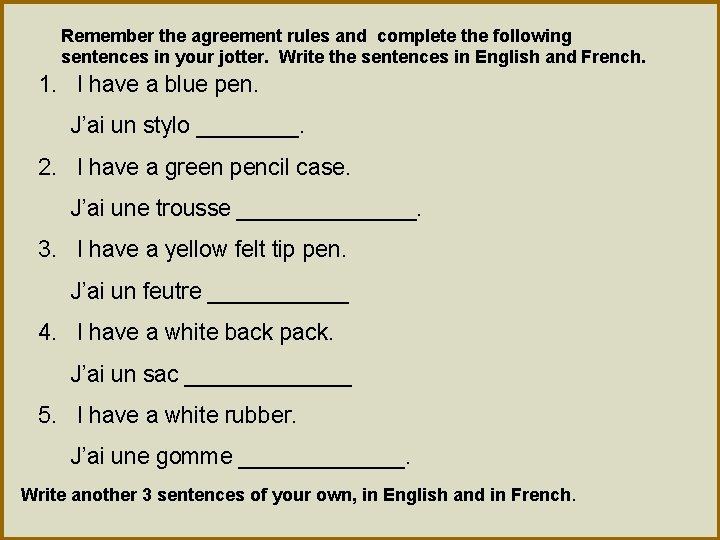
Remember the agreement rules and complete the following sentences in your jotter. Write the sentences in English and French. 1. I have a blue pen. J’ai un stylo ____. 2. I have a green pencil case. J’ai une trousse _______. 3. I have a yellow felt tip pen. J’ai un feutre ______ 4. I have a white back pack. J’ai un sac _______ 5. I have a white rubber. J’ai une gomme _______. Write another 3 sentences of your own, in English and in French.
Today we have learned that: In French, adjectives of colour are written after the noun. Colour adjectives agree gender with the noun they describe. There are rules to help us remember how and when to do this. We can use these rules
- Slides: 22