
By the 1800 s huge ranches spread throughout
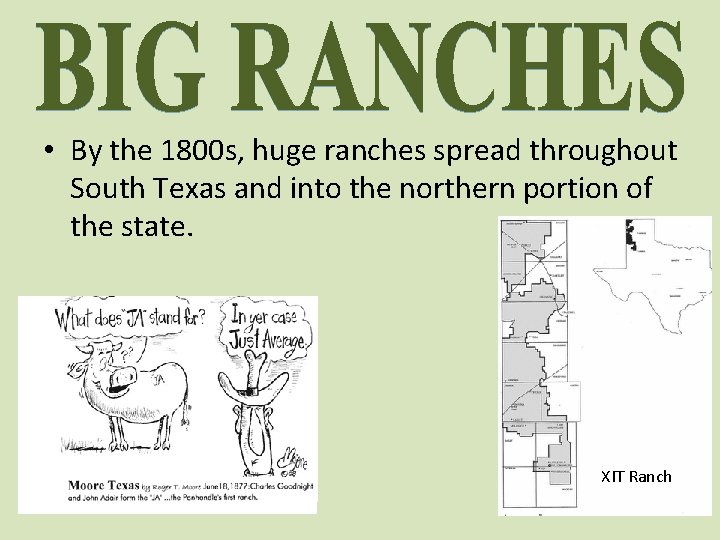
• By the 1800 s, huge ranches spread throughout South Texas and into the northern portion of the state. XIT Ranch
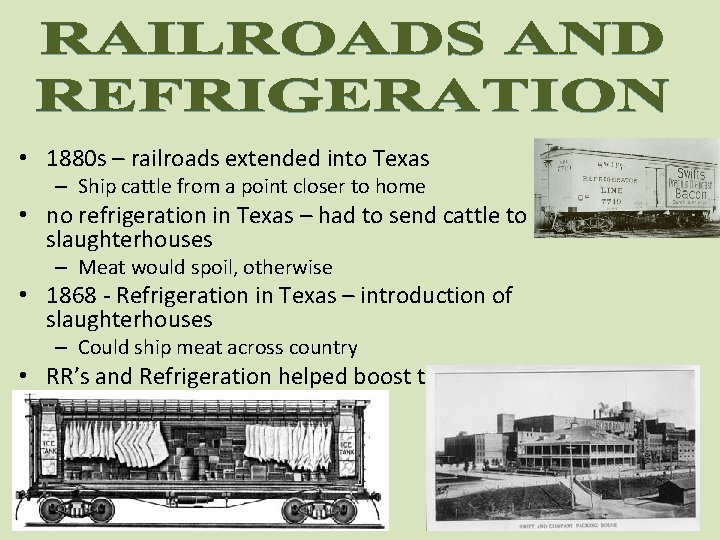
• 1880 s – railroads extended into Texas – Ship cattle from a point closer to home • no refrigeration in Texas – had to send cattle to slaughterhouses – Meat would spoil, otherwise • 1868 - Refrigeration in Texas – introduction of slaughterhouses – Could ship meat across country • RR’s and Refrigeration helped boost the cattle industry – supported each other
– Ranches • King Ranch – founded by Richard King and Mifflin Kenedy in 1852; South Texas (expanded to more than 1 million acres) one of the first to fence land • JA Ranch – established by Charles Goodnight and John Adair in 1876; Palo Duro Canyon (more than 1 million acres, 100, 000 cattle) • Matador Ranch – founded by investors, A. M. Britton and H. H. Campbell in 1878; Matador land Cattle Co. bought and expanded • XIT Ranch – largest; located in Panhandle (3 million acres); XIT “ten in Texas” because it covered 10 counties

King Ranch, Kingsville, TX

JA Ranch Goodnight, TX

XIT Ranch
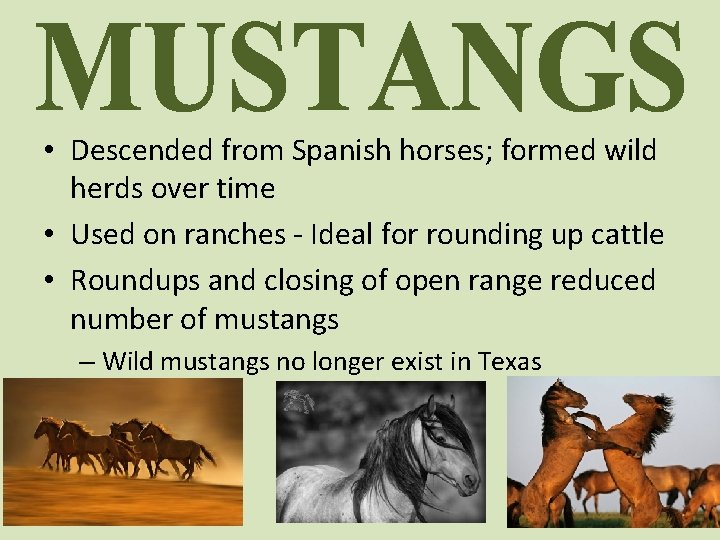
• Descended from Spanish horses; formed wild herds over time • Used on ranches - Ideal for rounding up cattle • Roundups and closing of open range reduced number of mustangs – Wild mustangs no longer exist in Texas
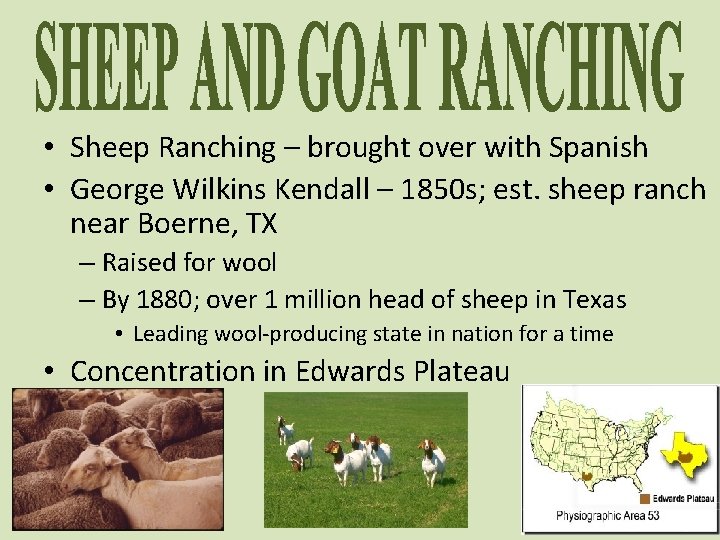
• Sheep Ranching – brought over with Spanish • George Wilkins Kendall – 1850 s; est. sheep ranch near Boerne, TX – Raised for wool – By 1880; over 1 million head of sheep in Texas • Leading wool-producing state in nation for a time • Concentration in Edwards Plateau
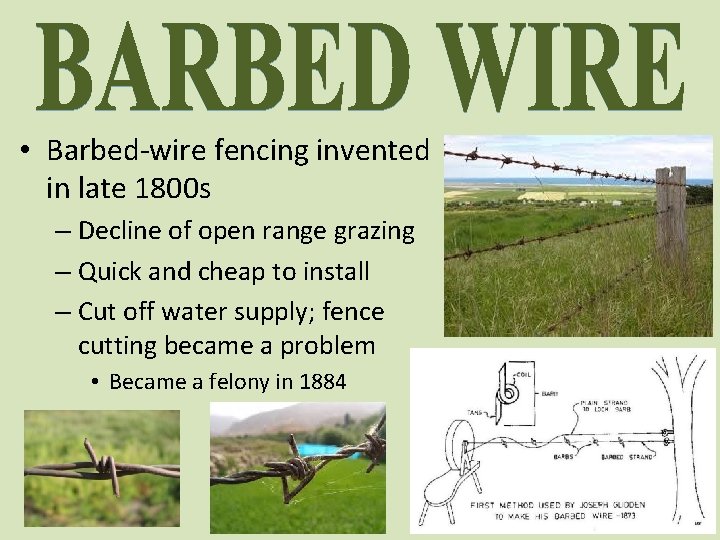
• Barbed-wire fencing invented in late 1800 s – Decline of open range grazing – Quick and cheap to install – Cut off water supply; fence cutting became a problem • Became a felony in 1884
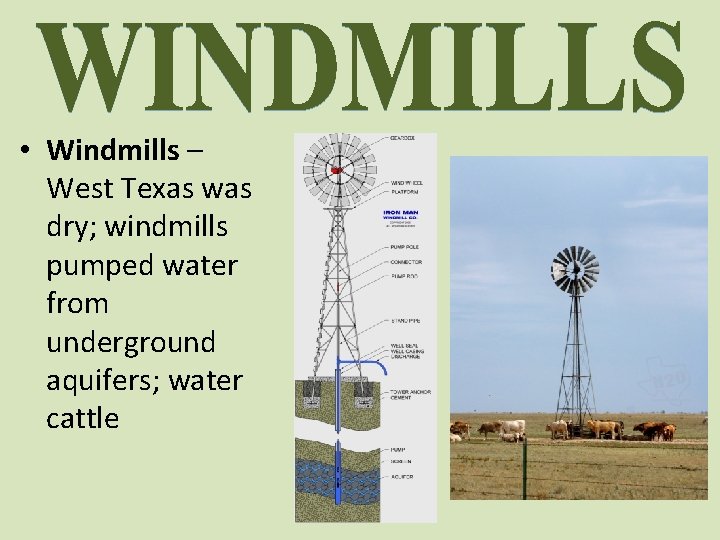
• Windmills – West Texas was dry; windmills pumped water from underground aquifers; water cattle
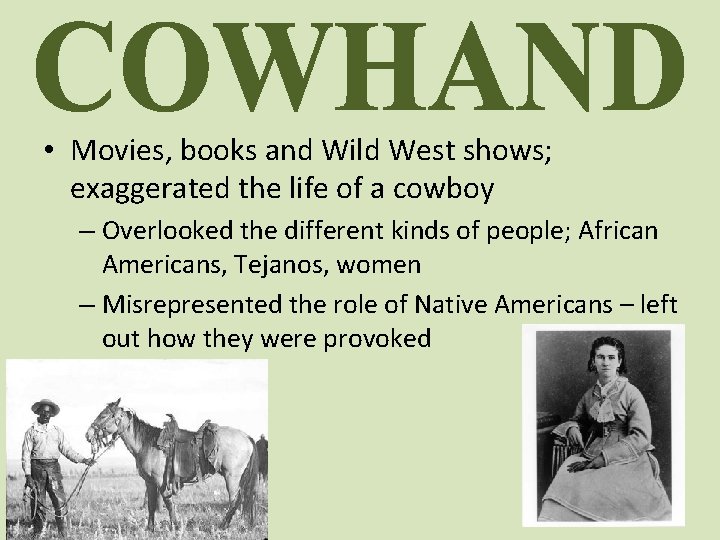
• Movies, books and Wild West shows; exaggerated the life of a cowboy – Overlooked the different kinds of people; African Americans, Tejanos, women – Misrepresented the role of Native Americans – left out how they were provoked
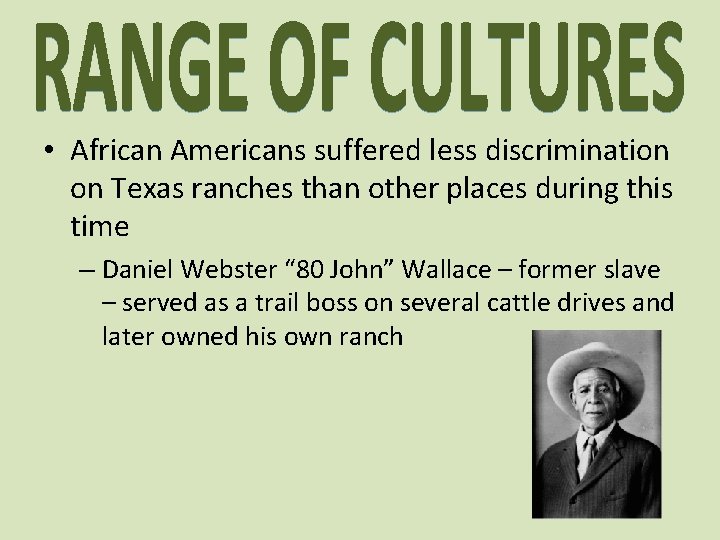
• African Americans suffered less discrimination on Texas ranches than other places during this time – Daniel Webster “ 80 John” Wallace – former slave – served as a trail boss on several cattle drives and later owned his own ranch
- Slides: 13