
By School of Allied Health Sciences City University

By: School of Allied Health Sciences City University College of Science and Technology
Elements form compound because compounds are more stable than elements Only inert gases DO NOT form compound because they have STABLE electron arrangements A duplet or octet electron arrangement is VERY STABLE. They DO NOT release, accept or share electrons with other elements. Two example of chemical bonds are: 1. 2. Ionic bonds (transfer of electron) Covalent bonds (sharing electron)
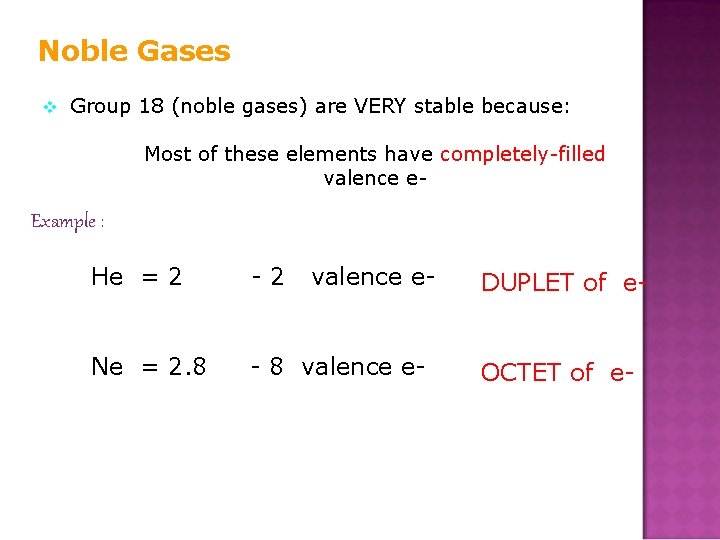
Noble Gases v Group 18 (noble gases) are VERY stable because: Most of these elements have completely-filled valence e- Example : He = 2 -2 valence e- Ne = 2. 8 - 8 valence e- DUPLET of e- OCTET of e-
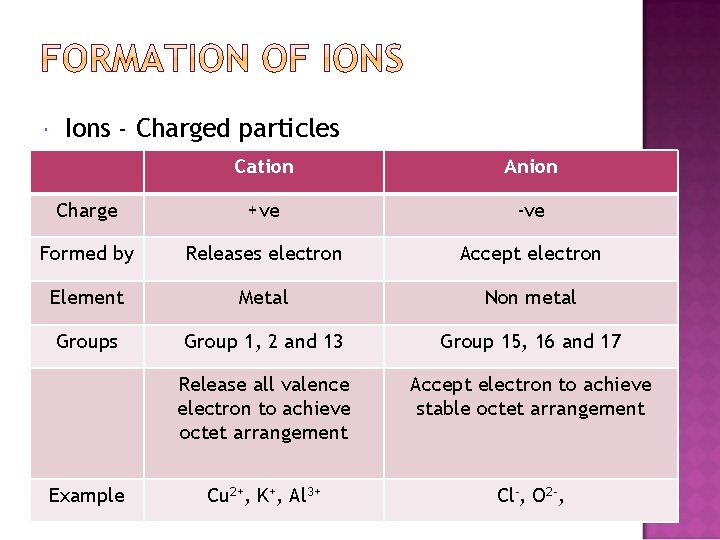
Ions - Charged particles Cation Anion Charge +ve -ve Formed by Releases electron Accept electron Element Metal Non metal Groups Group 1, 2 and 13 Group 15, 16 and 17 Release all valence electron to achieve octet arrangement Accept electron to achieve stable octet arrangement Cu 2+, K+, Al 3+ Cl-, O 2 -, Example
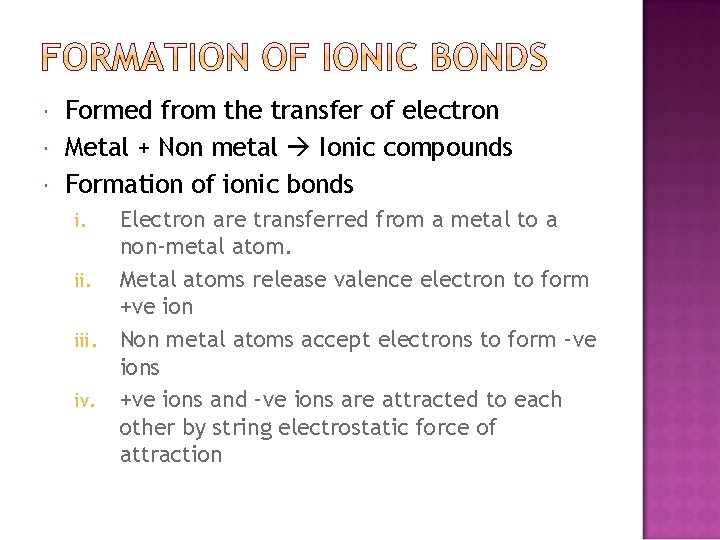
Formed from the transfer of electron Metal + Non metal Ionic compounds Formation of ionic bonds Electron are transferred from a metal to a non-metal atom. ii. Metal atoms release valence electron to form +ve ion iii. Non metal atoms accept electrons to form –ve ions iv. +ve ions and –ve ions are attracted to each other by string electrostatic force of attraction i.
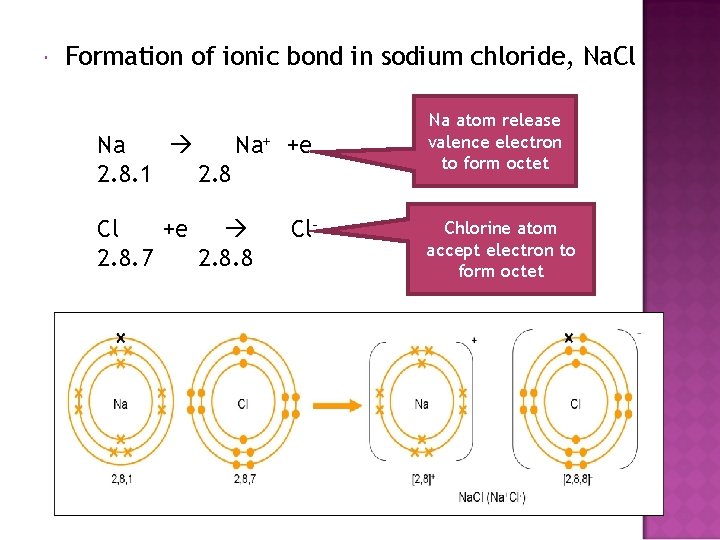
Formation of ionic bond in sodium chloride, Na. Cl Na Na+ +e 2. 8. 1 2. 8 Cl +e 2. 8. 7 2. 8. 8 Cl- Na atom release valence electron to form octet Chlorine atom accept electron to form octet
Formed from the sharing of electron between non metal and non metal atom. Hydrogen, Group 14, 15, 16 and 17 Three types of covalent bonds Single bond – One pair of electron shared ii. Double bonds – Two pairs of electron shared iii. Triple bonds – Three pairs of electron shared i.
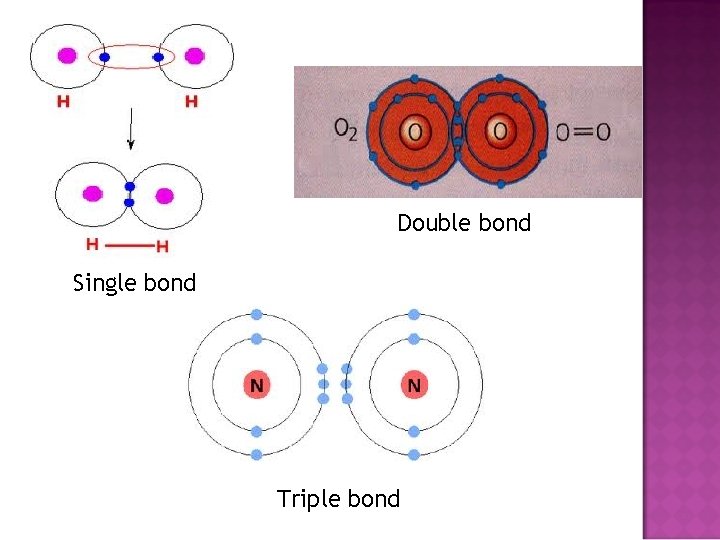
Double bond Single bond Triple bond
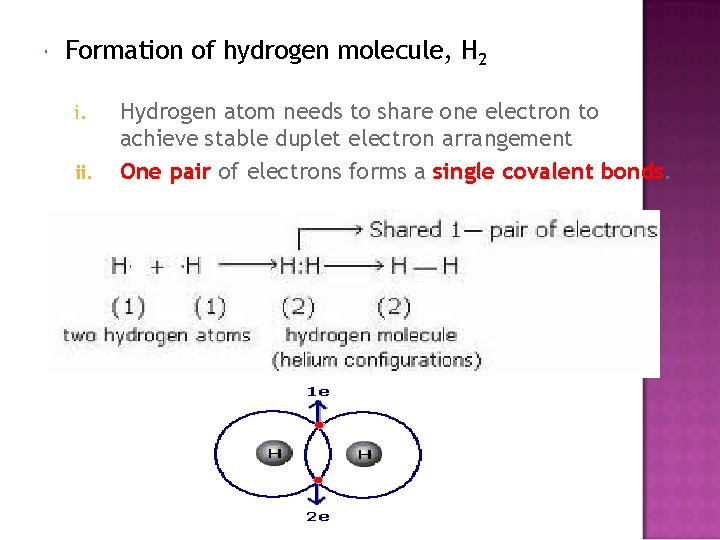
Formation of hydrogen molecule, H 2 i. ii. Hydrogen atom needs to share one electron to achieve stable duplet electron arrangement One pair of electrons forms a single covalent bonds.
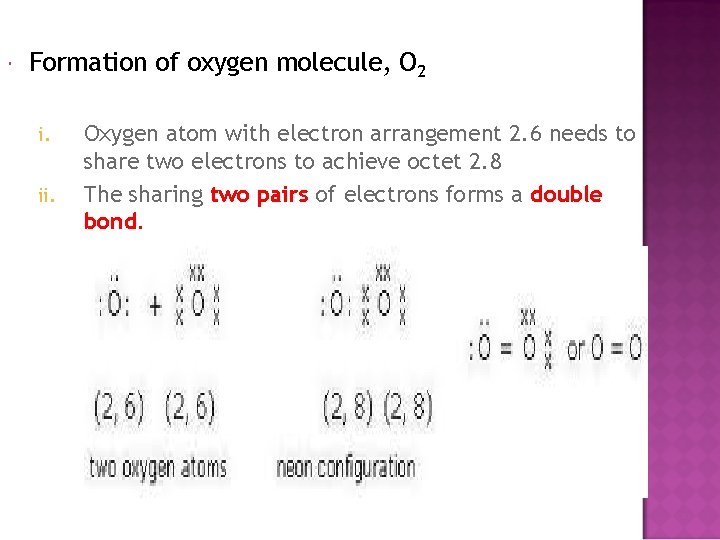
Formation of oxygen molecule, O 2 i. ii. Oxygen atom with electron arrangement 2. 6 needs to share two electrons to achieve octet 2. 8 The sharing two pairs of electrons forms a double bond.
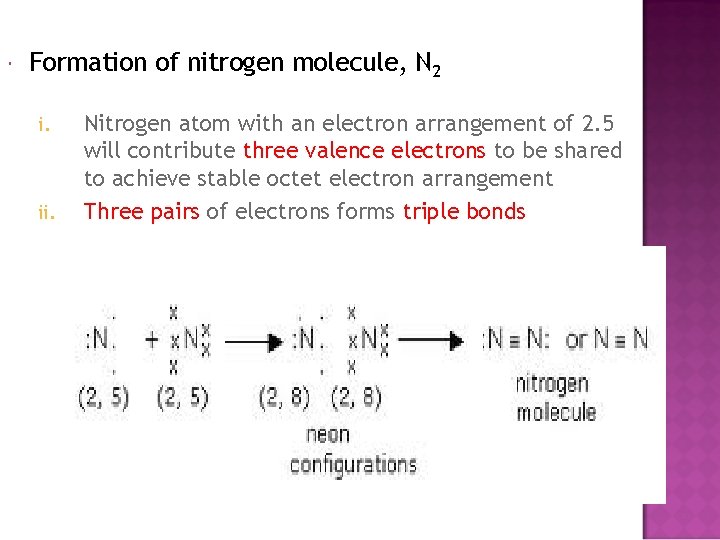
Formation of nitrogen molecule, N 2 i. ii. Nitrogen atom with an electron arrangement of 2. 5 will contribute three valence electrons to be shared to achieve stable octet electron arrangement Three pairs of electrons forms triple bonds
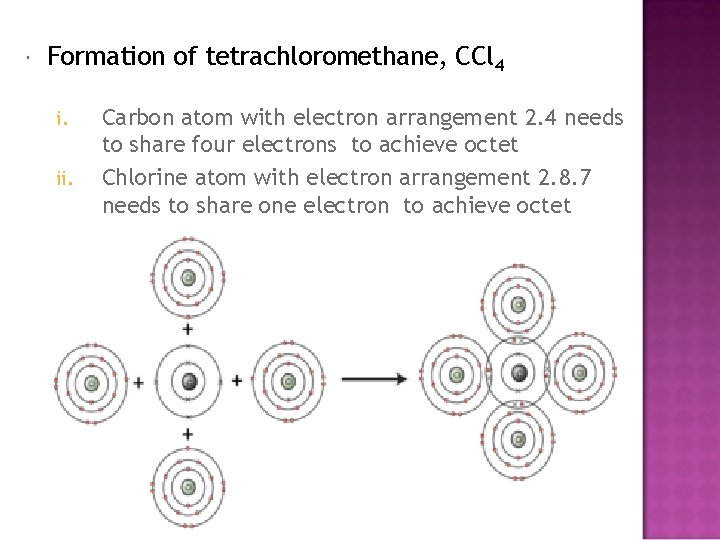
Formation of tetrachloromethane, CCl 4 i. ii. Carbon atom with electron arrangement 2. 4 needs to share four electrons to achieve octet Chlorine atom with electron arrangement 2. 8. 7 needs to share one electron to achieve octet
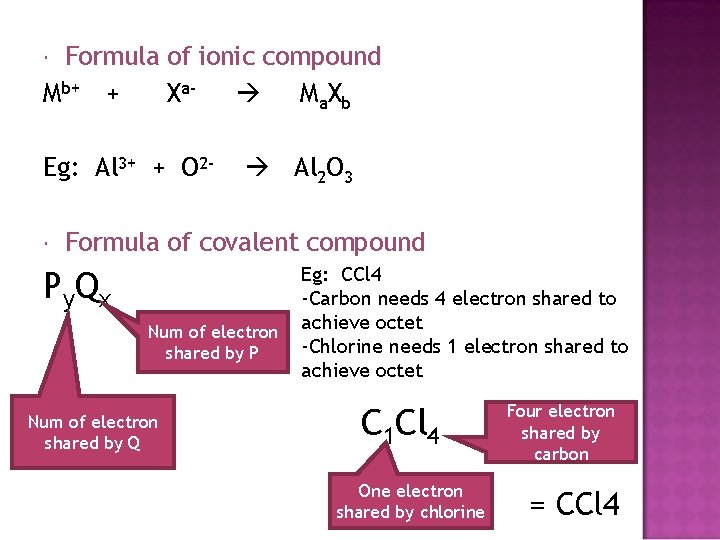
Formula of ionic compound Mb+ + Xa M a. X b Eg: Al 3+ + O 2 Al 2 O 3 Formula of covalent compound P y. Q x Num of electron shared by P Num of electron shared by Q Eg: CCl 4 -Carbon needs 4 electron shared to achieve octet -Chlorine needs 1 electron shared to achieve octet C 1 Cl 4 One electron shared by chlorine Four electron shared by carbon = CCl 4
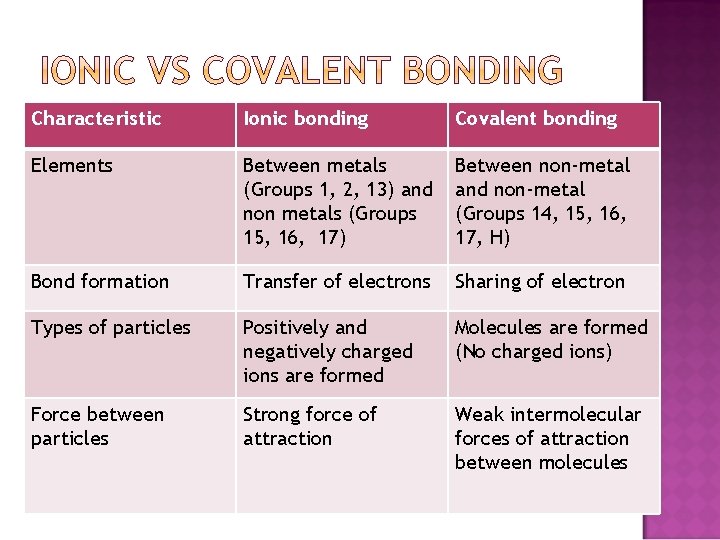
Characteristic Ionic bonding Covalent bonding Elements Between metals (Groups 1, 2, 13) and non metals (Groups 15, 16, 17) Between non-metal and non-metal (Groups 14, 15, 16, 17, H) Bond formation Transfer of electrons Sharing of electron Types of particles Positively and negatively charged ions are formed Molecules are formed (No charged ions) Force between particles Strong force of attraction Weak intermolecular forces of attraction between molecules
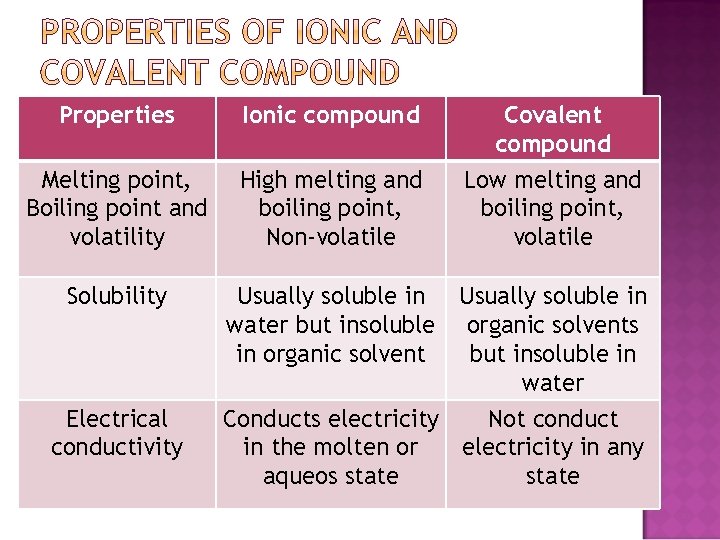
Properties Ionic compound Melting point, Boiling point and volatility High melting and boiling point, Non-volatile Covalent compound Low melting and boiling point, volatile Solubility Usually soluble in water but insoluble organic solvents in organic solvent but insoluble in water Electrical conductivity Conducts electricity Not conduct in the molten or electricity in any aqueos state

- Slides: 16