
By Mrs Jill Tanner Inventor Samuel Slater Invention

By: Mrs. Jill Tanner
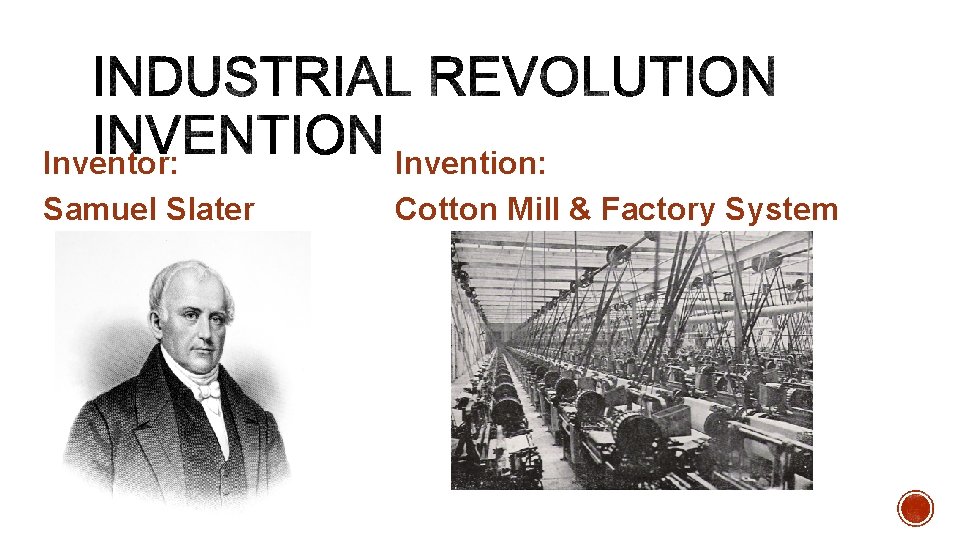
Inventor: Samuel Slater Invention: Cotton Mill & Factory System
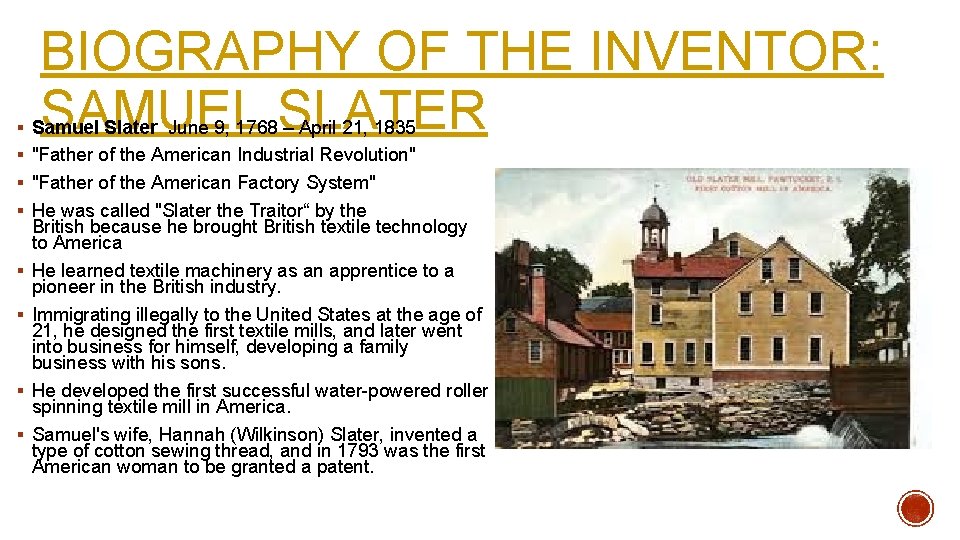
BIOGRAPHY OF THE INVENTOR: SAMUEL SLATER § Samuel Slater June 9, 1768 – April 21, 1835 § "Father of the American Industrial Revolution" § "Father of the American Factory System" § He was called "Slater the Traitor“ by the § § British because he brought British textile technology to America He learned textile machinery as an apprentice to a pioneer in the British industry. Immigrating illegally to the United States at the age of 21, he designed the first textile mills, and later went into business for himself, developing a family business with his sons. He developed the first successful water-powered roller spinning textile mill in America. Samuel's wife, Hannah (Wilkinson) Slater, invented a type of cotton sewing thread, and in 1793 was the first American woman to be granted a patent.
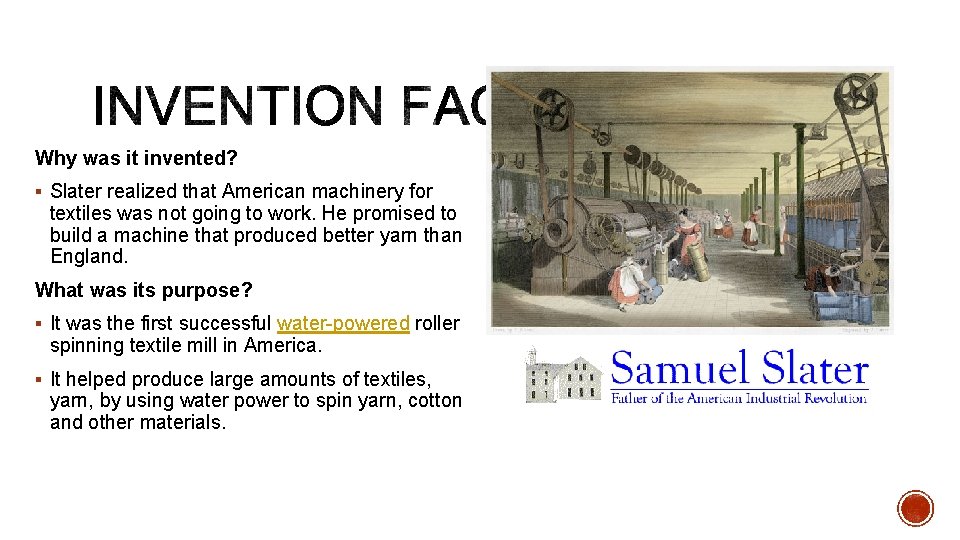
Why was it invented? § Slater realized that American machinery for textiles was not going to work. He promised to build a machine that produced better yarn than England. What was its purpose? § It was the first successful water-powered roller spinning textile mill in America. § It helped produce large amounts of textiles, yarn, by using water power to spin yarn, cotton and other materials.
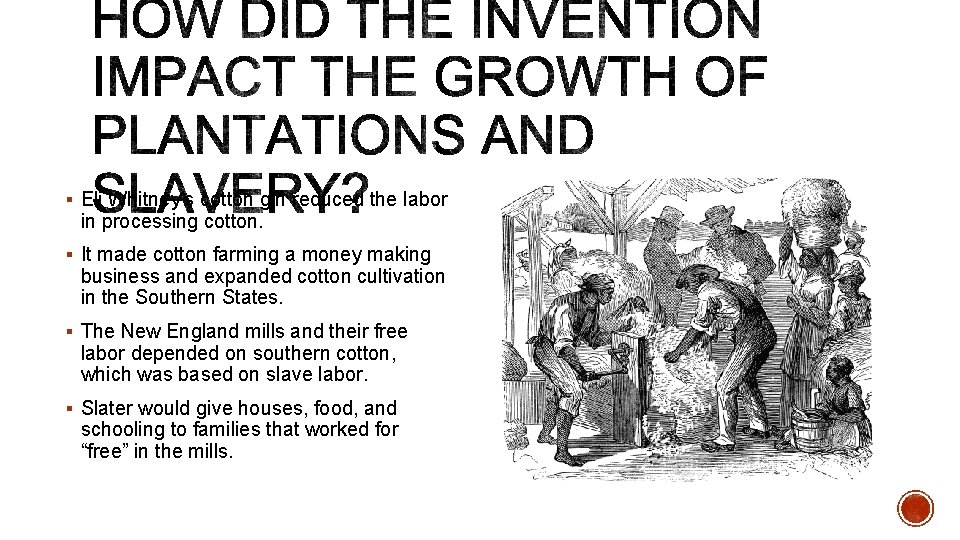
§ Eli Whitney's cotton gin reduced the labor in processing cotton. § It made cotton farming a money making business and expanded cotton cultivation in the Southern States. § The New England mills and their free labor depended on southern cotton, which was based on slave labor. § Slater would give houses, food, and schooling to families that worked for “free” in the mills.
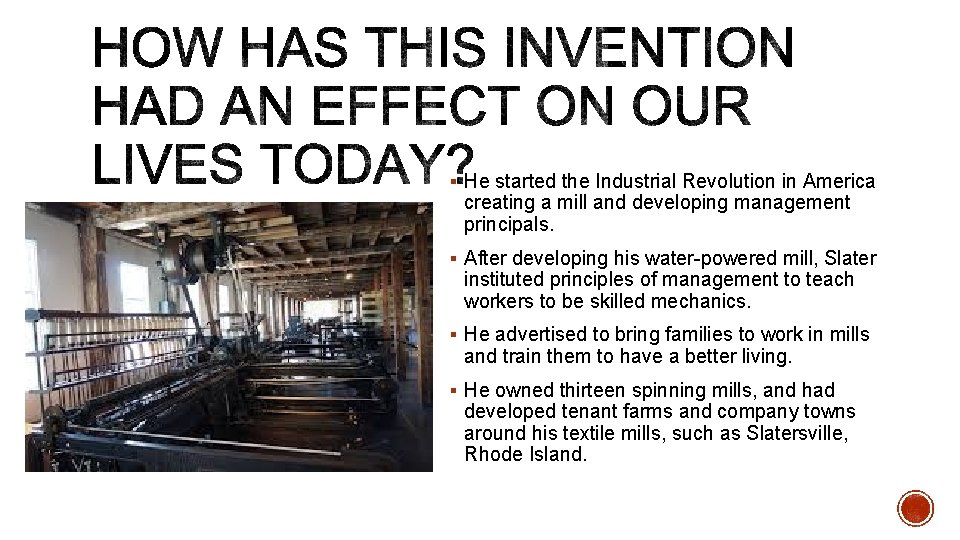
§ He started the Industrial Revolution in America creating a mill and developing management principals. § After developing his water-powered mill, Slater instituted principles of management to teach workers to be skilled mechanics. § He advertised to bring families to work in mills and train them to have a better living. § He owned thirteen spinning mills, and had developed tenant farms and company towns around his textile mills, such as Slatersville, Rhode Island.
- Slides: 6