
By Mark Attalla Amber Watts Osvaldo Mendoza Water
By: Mark Attalla Amber Watts Osvaldo Mendoza
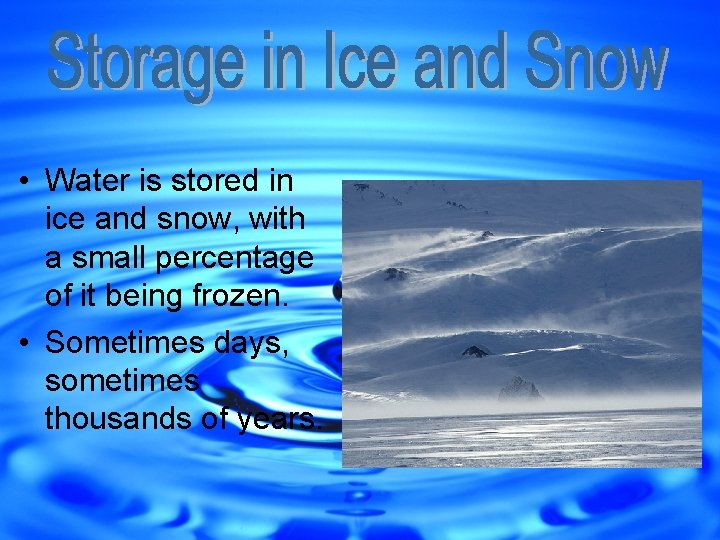
• Water is stored in ice and snow, with a small percentage of it being frozen. • Sometimes days, sometimes thousands of years.
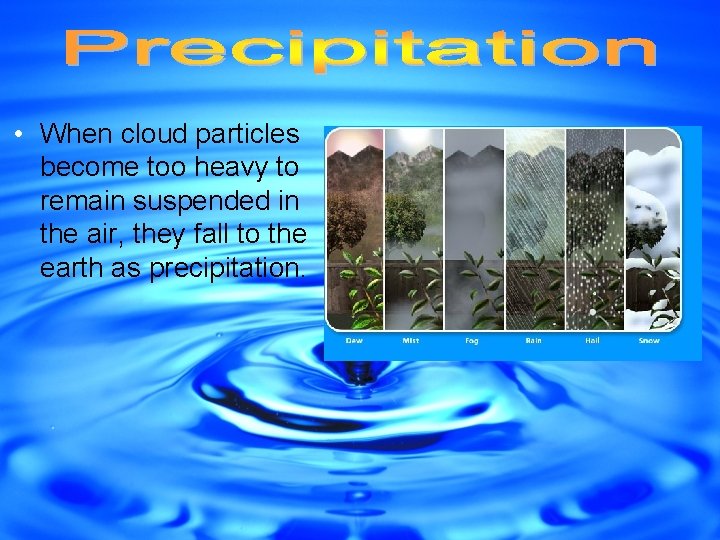
• When cloud particles become too heavy to remain suspended in the air, they fall to the earth as precipitation.
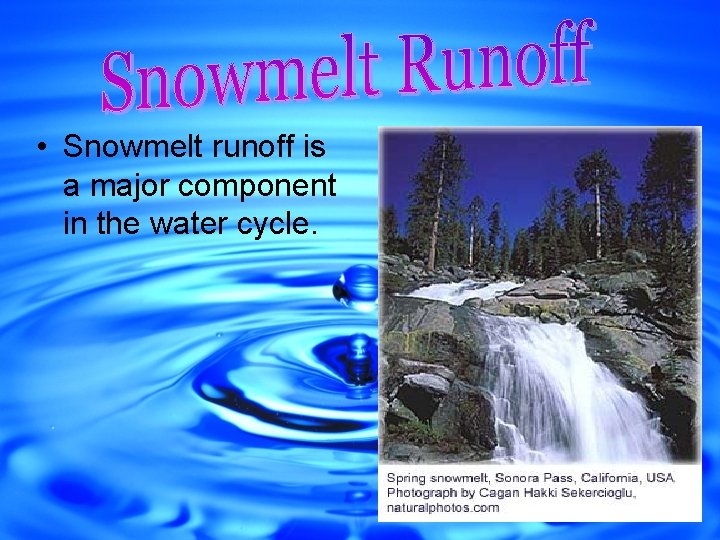
• Snowmelt runoff is a major component in the water cycle.
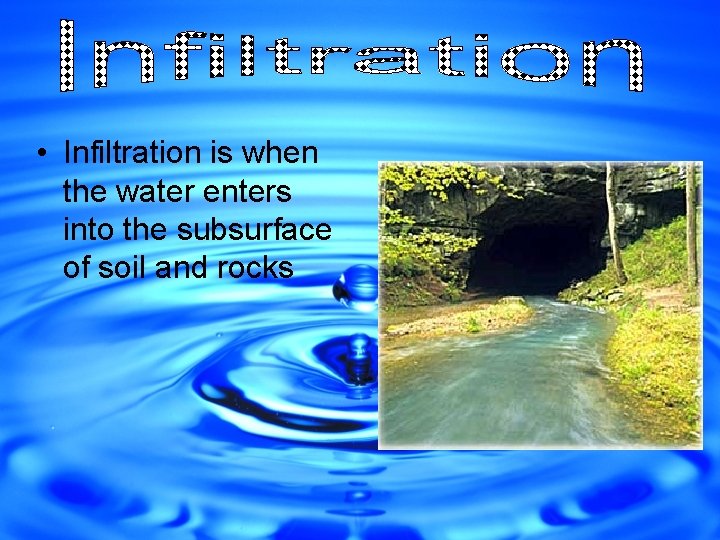
• Infiltration is when the water enters into the subsurface of soil and rocks
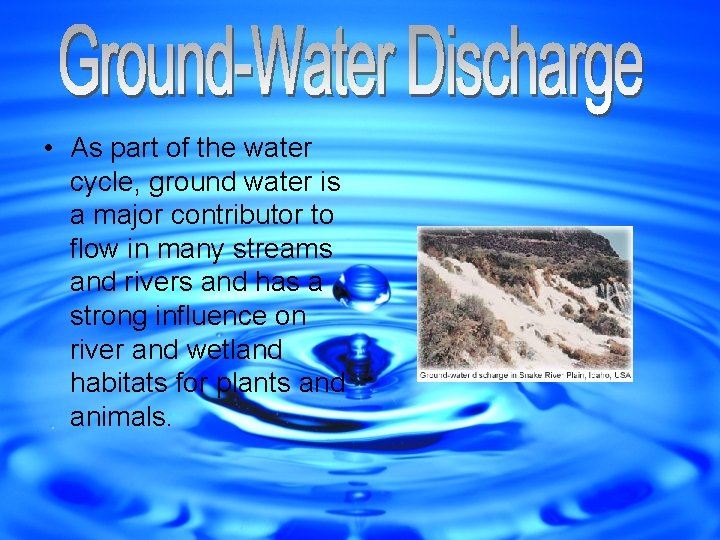
• As part of the water cycle, ground water is a major contributor to flow in many streams and rivers and has a strong influence on river and wetland habitats for plants and animals.
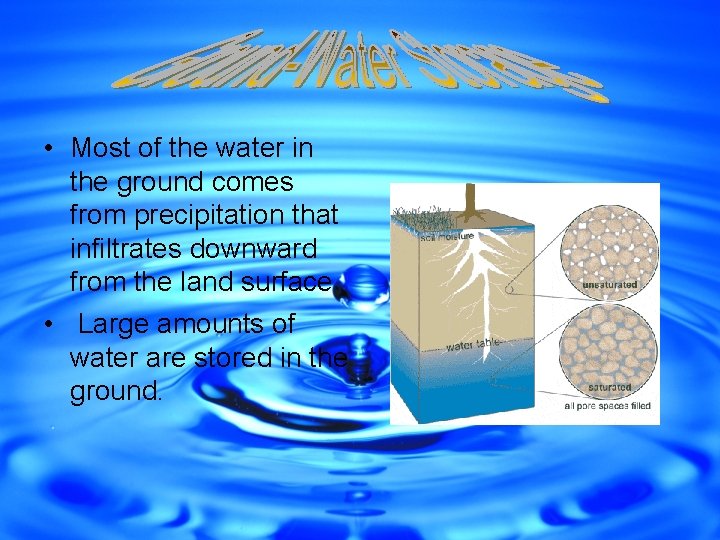
• Most of the water in the ground comes from precipitation that infiltrates downward from the land surface • Large amounts of water are stored in the ground.
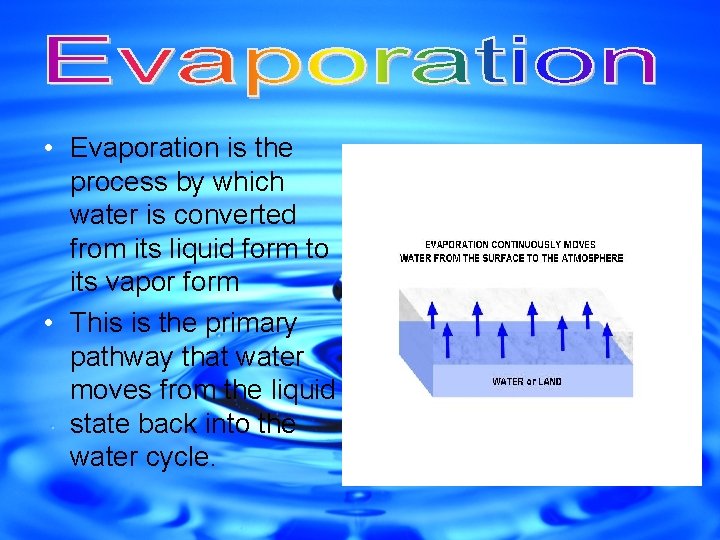
• Evaporation is the process by which water is converted from its liquid form to its vapor form • This is the primary pathway that water moves from the liquid state back into the water cycle.
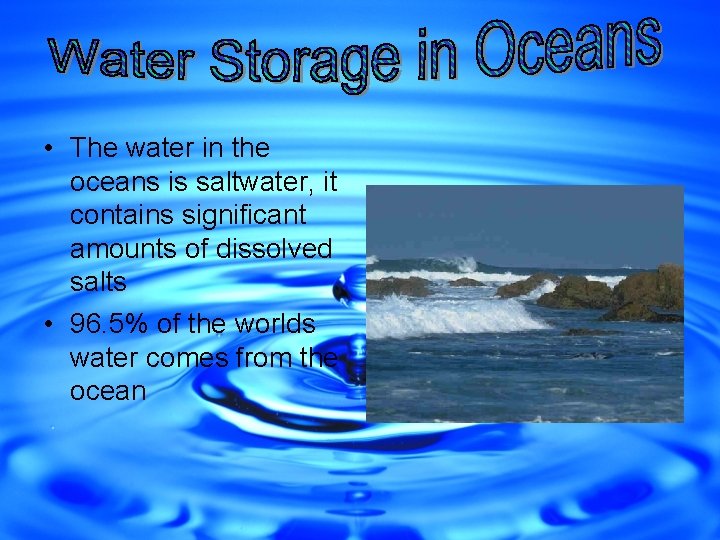
• The water in the oceans is saltwater, it contains significant amounts of dissolved salts • 96. 5% of the worlds water comes from the ocean
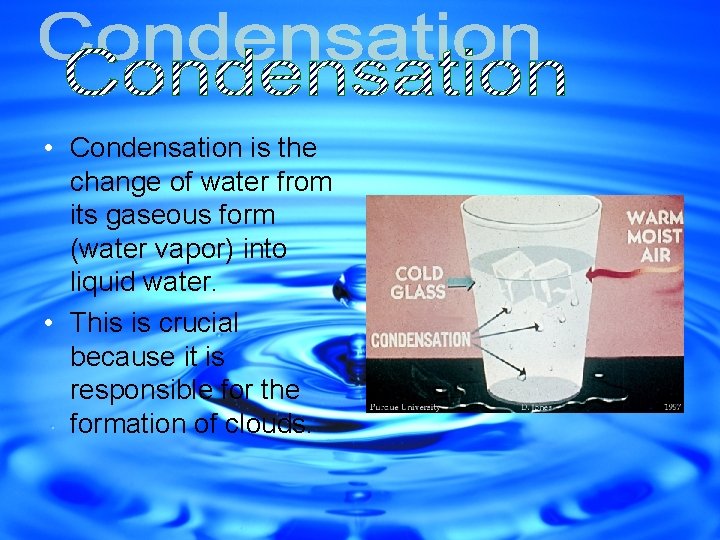
• Condensation is the change of water from its gaseous form (water vapor) into liquid water. • This is crucial because it is responsible for the formation of clouds.
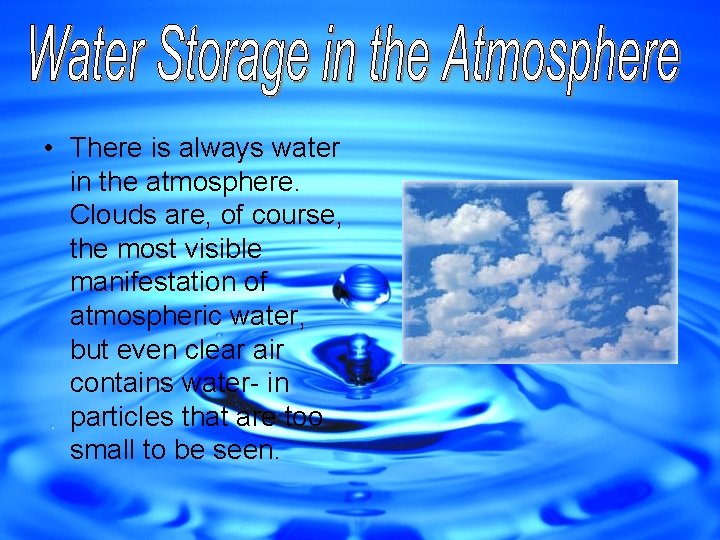
• There is always water in the atmosphere. Clouds are, of course, the most visible manifestation of atmospheric water, but even clear air contains water- in particles that are too small to be seen.
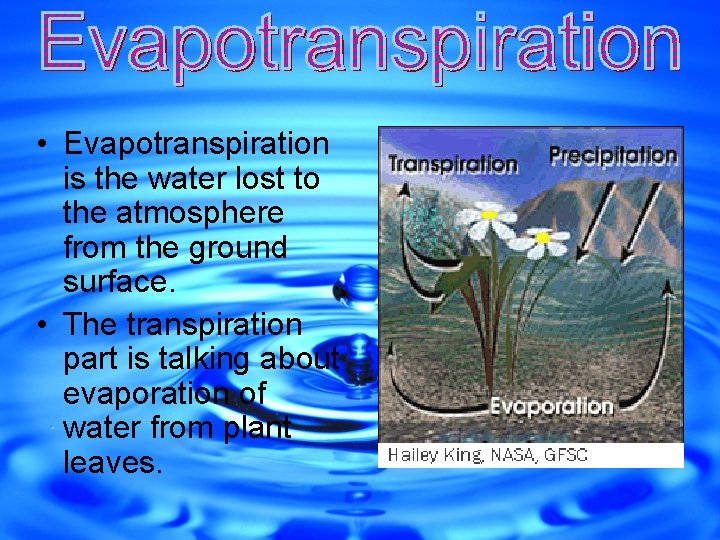
• Evapotranspiration is the water lost to the atmosphere from the ground surface. • The transpiration part is talking about evaporation of water from plant leaves.
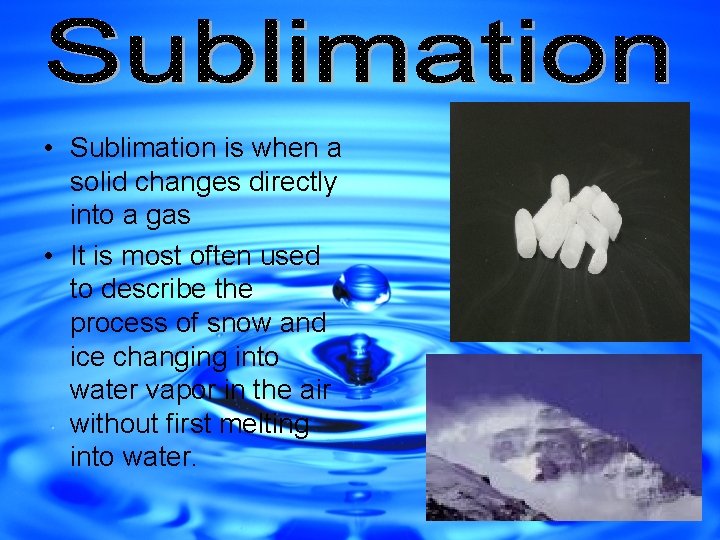
• Sublimation is when a solid changes directly into a gas • It is most often used to describe the process of snow and ice changing into water vapor in the air without first melting into water.
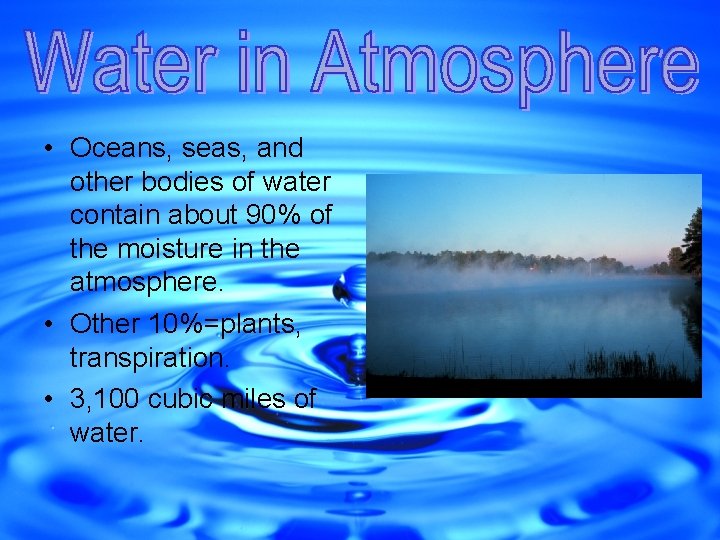
• Oceans, seas, and other bodies of water contain about 90% of the moisture in the atmosphere. • Other 10%=plants, transpiration. • 3, 100 cubic miles of water.
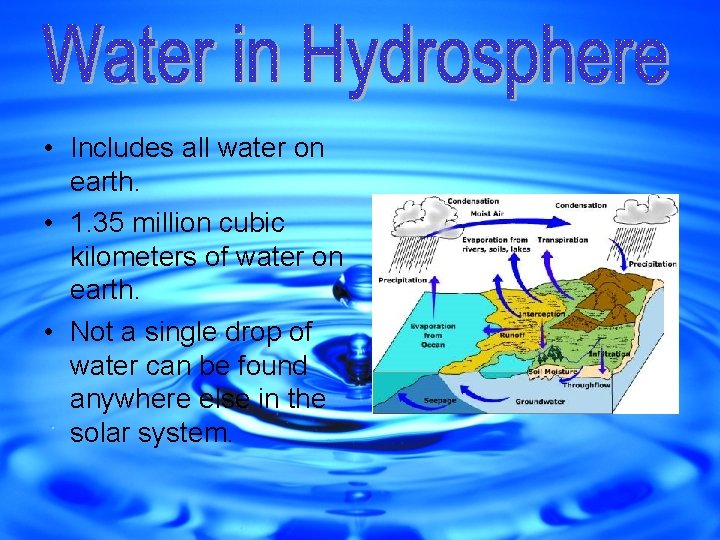
• Includes all water on earth. • 1. 35 million cubic kilometers of water on earth. • Not a single drop of water can be found anywhere else in the solar system.
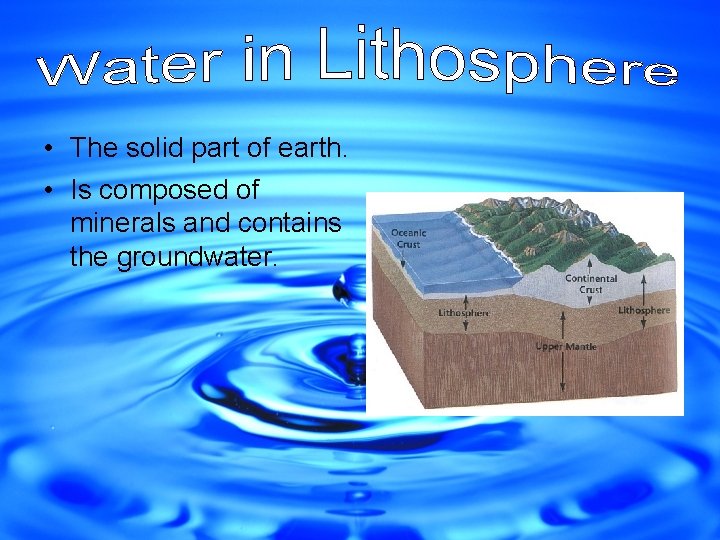
• The solid part of earth. • Is composed of minerals and contains the groundwater.
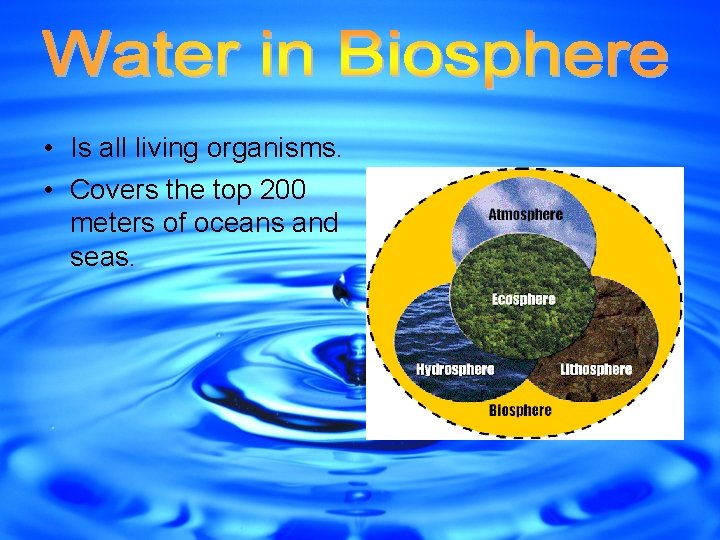
• Is all living organisms. • Covers the top 200 meters of oceans and seas.

• • • http: //techalive. mtu. edu/meec/module 01/Evaporationand. Transpiration. htm http: //ga. water. usgs. gov/edu/watercycleevapotranspiration. html http: //geography. about. com/od/physicalgeography/a/fourspheres. htm http: //www. deafhoosiers. com/sci/soarhigh/lithosphere. Comp. html http: //www. nps. gov/archive/acad/flow/atmosphere. html http: //ga. water. usgs. gov/edu/watercycleatmosphere. html
- Slides: 19