
By Deja Francis The Move in Music Civil
By: Deja Francis The “Move” in Music

Civil Rights Movement/Background � 1954 to 1965 �Racial inequality �Harsh treatment �Non-violence
The “Fight” �Stood up for rights �Nonviolence �Struggles
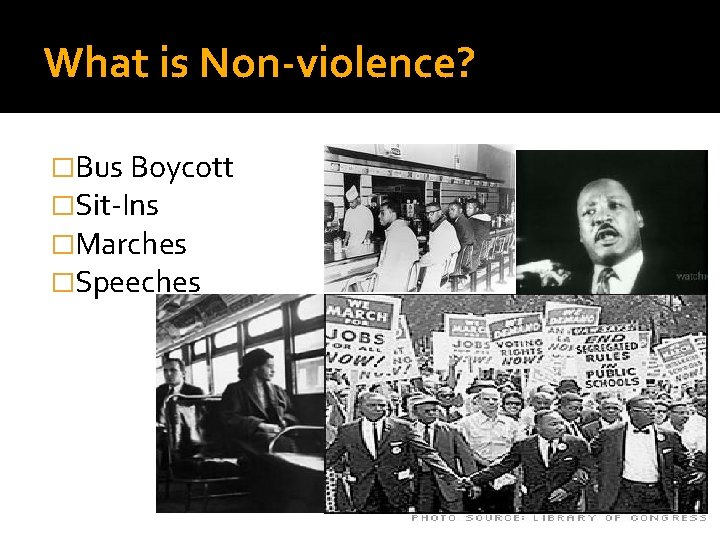
What is Non-violence? �Bus Boycott �Sit-Ins �Marches �Speeches
Why did the Civil Rights Movement work? �Music �Influence of Music on actions �Gospel �“Negro Spirituals”
“Negro Spirituals” �Music gave the African American people drive �Motivation �Faith �Courage �Ambition �“boom”
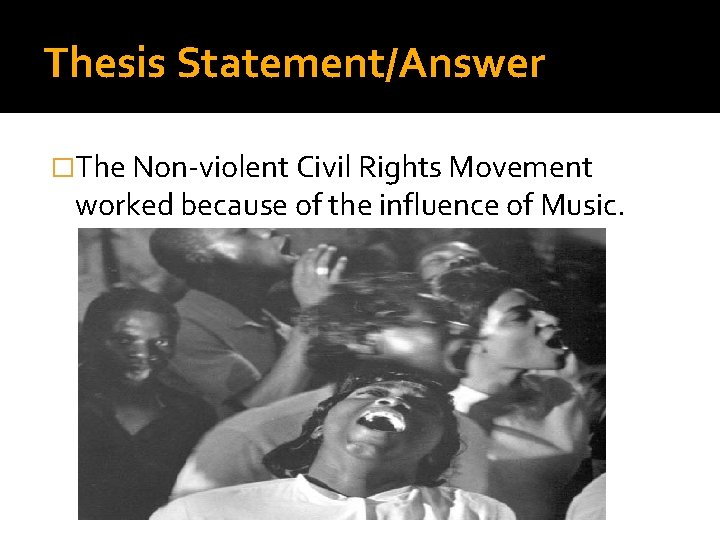
Thesis Statement/Answer �The Non-violent Civil Rights Movement worked because of the influence of Music.
Activist �Dr. Martin Luther King Jr. �Rosa Parks �Malcolm X �Medgar Evers �John Lewis
Psychological Aspect �Studies indicate that music can have profound physical and psychological effects. �Lyrics influence behavior
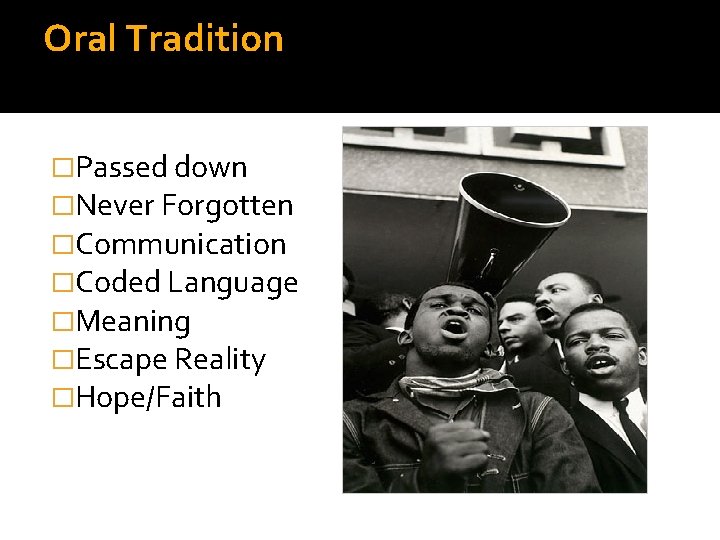
Oral Tradition �Passed down �Never Forgotten �Communication �Coded Language �Meaning �Escape Reality �Hope/Faith
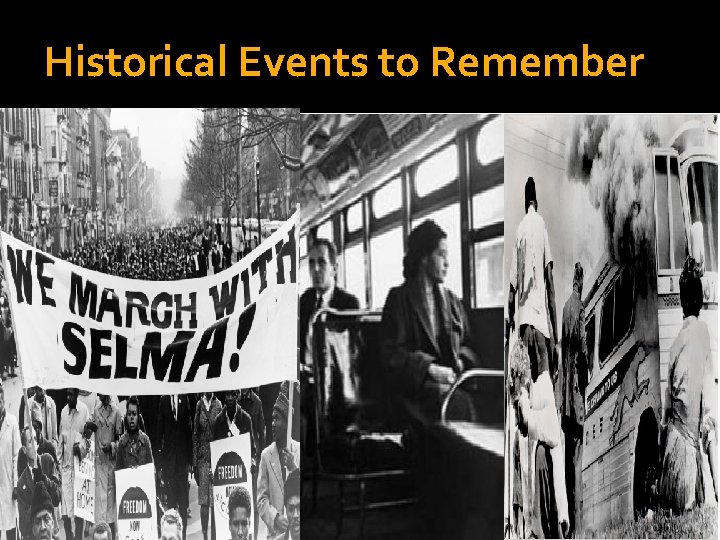
Historical Events to Remember
Cont. �Emmett Till Killing-August 1955 �Bus Boycott-December 1955 �Bloody Sunday- March 1965 �March at Washington-August 1963
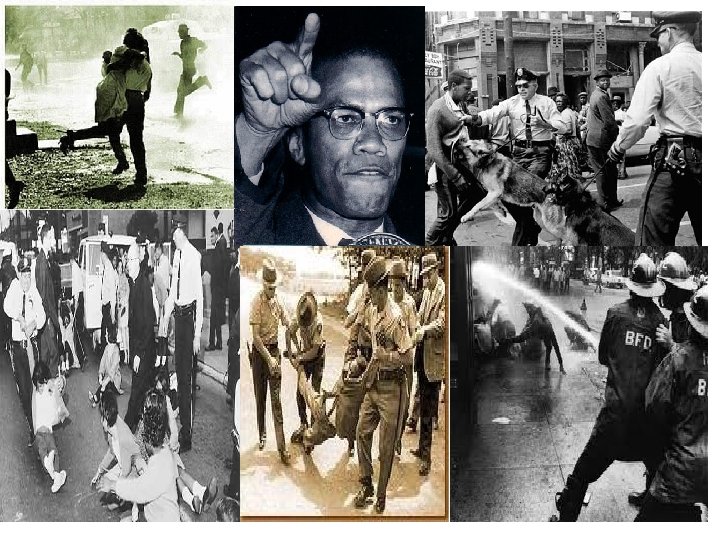
African Americans �Stereotypes �Born to fight �Bread to be WARRIORS �DID NOT PHYSICALLY FIGHT BACK? . . . Hmmmm?
Sources � Allen, Barbara. Martin Luther King's Civil Disobedience and the American Covenant Tradition, Oxford, UK: Oxford University Press, 2000. � Hendrickson, Roberta M. “Remembering the Dream: Alice Walker, Meridian and the Civil Rights Movement. ” Varieties of Ethnic Criticism, no. 3 (Fall 1999): 111 -128 � Moham, Carren. Music’s Role Integral to Civil Rights Movement. Chicago, IL: Wesleyan Press, 2003. University of Illinois
Why this topic? �Intriguing �Attention grabber �Engrossing �Learn more about African American history �Learn about the greatness of MUSIC �Nonviolence in a new light
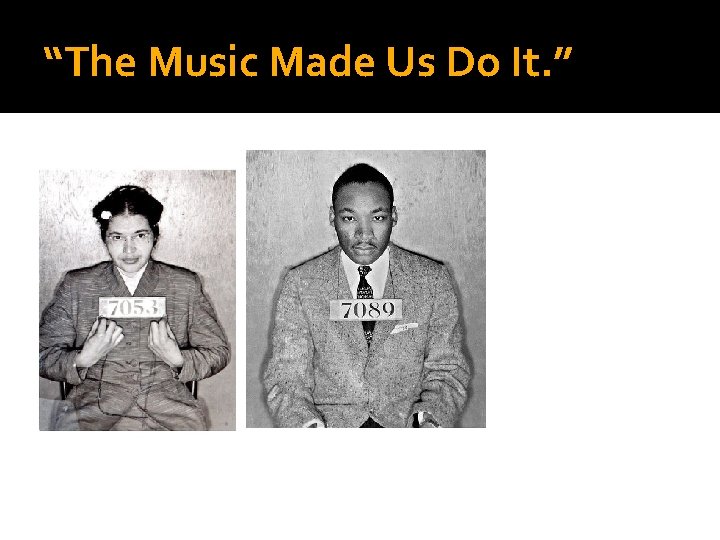
“The Music Made Us Do It. ”
- Slides: 17